

What if your dog's favorite day at the beach is actually the biggest threat to their skin's natural harmony? We all love watching our companions bound through the waves and dig in the sand, but the salt and grit can quickly lead to an itchy, uncomfortable afternoon. If you have noticed a dry, brittle coat or persistent scratching after a seaside trip, you aren't alone. Simply rinsing with a garden hose often isn't enough; bathing a dog after swimming in the ocean requires a thoughtful, restorative approach to remove stubborn salt crystals and trapped sand.
In this guide, you'll learn why ocean water requires a specific bathing ritual and how to restore your dog’s botanical balance using clean, professional-grade care. We will discuss how our concentrated paste formulas, crafted in Greece to high European standards, provide deeper hydration than common watered-down alternatives. From using Pure Wash to lift away minerals to applying Coat Condition for essential amino acid repair, we will show you how to transform post-beach maintenance into a meaningful act of affection. We will also cover how to protect sensitive paws with Barrier Balm, ensuring your pet stays soft, salt-free, and perfectly comfortable.
Key Takeaways
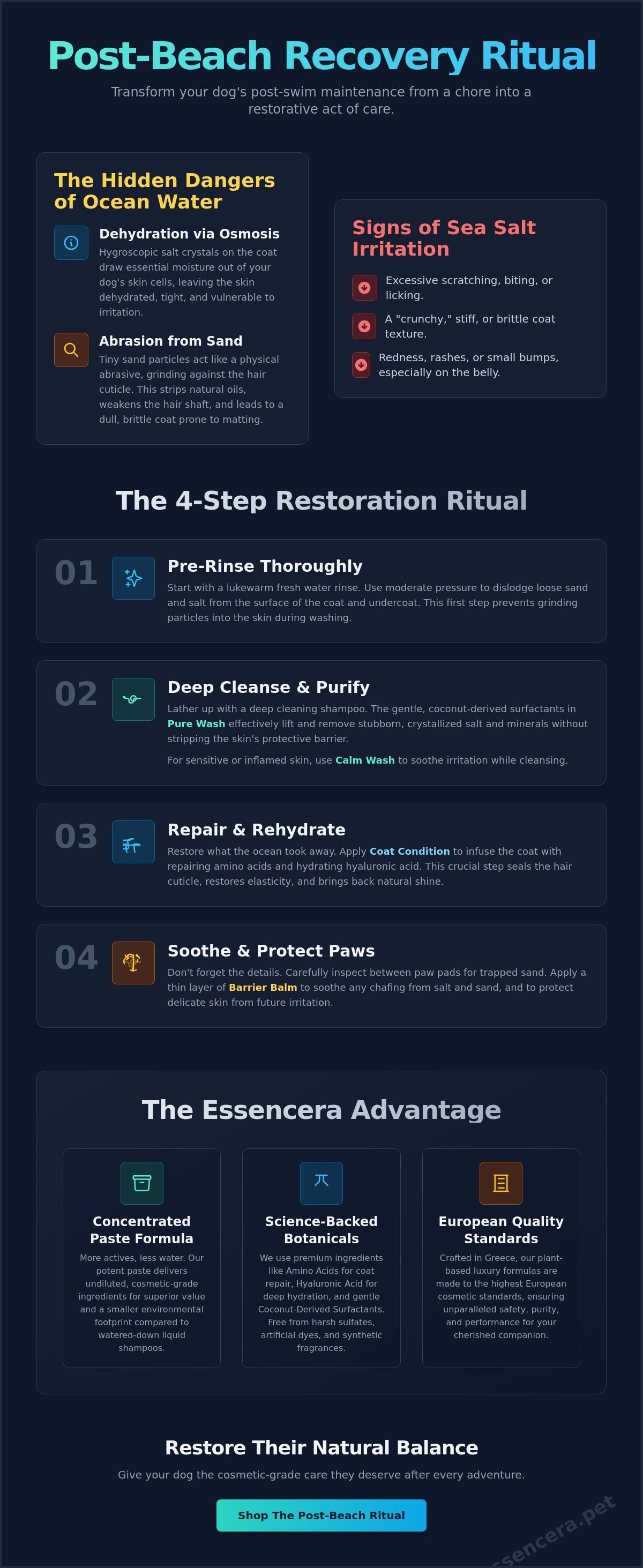
- Understand the science of how salt draws moisture out of skin cells and how sand particles act as a physical abrasive against the hair cuticle.
- Learn the essential steps for bathing a dog after swimming in the ocean to lift stubborn minerals using our deep cleaning Pure Wash.
- Discover how premium botanical ingredients like amino acids and hyaluronic acid work together to repair and hydrate a salt-stressed coat.
- Master the post-beach inspection of paws and ears to prevent irritation and protect delicate skin with the soothing properties of Barrier Balm.
- Explore why our concentrated paste formula offers a more potent and eco-friendly alternative to standard watered-down grooming products.
The Hidden Impact of Ocean Water on Your Dog’s Skin and Coat
A day at the shore is a joyful adventure for any dog. However, the very elements that make the beach beautiful can be quite harsh on a canine's biological balance. The primary concern is the osmotic effect. Salt is naturally hygroscopic, meaning it draws moisture out of the skin cells, leaving the dermis dehydrated and vulnerable. This isn't just a surface issue; it's a physiological process that can lead to long-term sensitivity if ignored.
Sand adds another layer of complexity. While it looks like soft powder, each grain acts as a tiny, physical abrasive against the hair cuticle. When your dog moves, these particles grind against the fur, stripping away natural oils and weakening the hair shaft. This often results in a dull, damaged coat that loses its natural luster. Beyond the physical debris, seawater also harbors various microorganisms and bacteria that can become trapped against the skin. Without proper intervention, these invisible guests can cause infections or "hot spots," especially in humid coastal environments.
Taking immediate action is vital. Waiting even a few hours allows salt to crystallize and sand to settle deep into the undercoat. This makes the eventual cleanup much harder and increases the risk of painful matting. A proactive approach ensures your pet remains comfortable and their skin stays resilient against the elements.
Why a Simple Water Rinse is Often Insufficient
Many owners believe a quick spray with a garden hose is enough. It isn't. Salt crystals are remarkably clingy. They bond to the hair shaft and require gentle, plant-based surfactants to be fully dislodged. Microscopic sand particles also hide in the thickest parts of the undercoat where plain water cannot reach. For a truly effective clean, Pure Wash uses coconut-derived surfactants to lift these minerals without stripping the skin's protective barrier. This process is a core part of a comprehensive guide to dog grooming that focuses on skin health rather than just aesthetics. Residual sea minerals make the coat brittle, leading to breakage and matting that can't be brushed out easily.
Signs Your Dog is Suffering from Sea Salt Irritation
It's important to watch for subtle changes after your beach trip. Bathing a dog after swimming in the ocean becomes urgent if you notice these signs:
- Excessive scratching or licking: This is the most common response to the "sting" of dried salt on the skin.
- A "crunchy" or stiff texture: This indicates that salt has crystallized on the hair, making it prone to snapping.
- Redness or small bumps: Check the belly and groin area, where the skin is thinnest and most sensitive to abrasions.
If your dog has particularly sensitive skin or is already showing signs of redness, using Calm Wash during their recovery bath can help soothe immediate inflammation while restoring botanical hydration. Identifying these symptoms early prevents minor irritation from turning into a more serious dermatological issue.
Step-by-Step Guide: How to Properly Bathe Your Dog After a Beach Day
The Importance of Water Temperature and Pressure
Always use lukewarm water during the bath. Water that is too hot can scald sensitive skin already tender from the sun, while cold water may not effectively open the hair cuticle to release trapped minerals. Maintain moderate water pressure to help push microscopic sand particles through the fur. Be particularly gentle around the face and ears. You want to clear away any sea spray without letting water or salt get directly into the eyes or ear canals, which can lead to discomfort or infection.
Shampooing Techniques for Maximum Salt Removal
Once the coat is saturated, apply a deep cleaning shampoo like Pure Wash. Massage the formula into a rich lather, focusing on high-friction areas like the armpits, the belly, and between the toes where sand causes the most irritation. Pure Wash is the ideal choice for deep cleaning after the ocean because its concentrated, sulfate-free formula effectively encapsulates salt crystals without stripping away essential moisture. If you have been near stagnant coastal tide pools, consider a double wash to ensure all microorganisms are removed.
After rinsing the shampoo, it's essential to follow with a restorative conditioner. Using Coat Condition helps seal the hair cuticle that was opened during the wash. This step locks in hydration and provides the amino acids needed for coat repair. While it won't magically dissolve severe mats, it makes the post-beach brush-out significantly smoother and prevents future brittleness. If your adventures take you through dunes where pests are common, finishing with Shield Wash can provide botanical protection, though remember this formula is for dogs only and not safe for cats.
The final step is a complete dry. Moisture trapped against the skin can lead to hot spots or fungal issues, especially after exposure to seawater. Use a soft towel to pat the fur dry rather than rubbing vigorously, which can damage fragile hair shafts. For those who travel frequently to the coast, keeping a Travel Fresh Bundle in your car ensures you have everything needed for immediate recovery.
Choosing the Right Ingredients to Restore Botanical Balance
Selecting the right ingredients is the most critical part of the recovery process. While a standard wash might remove visible dirt, it often fails to address the microscopic damage caused by salt. When bathing a dog after swimming in the ocean, you need ingredients that actively repair the protein bonds in the hair. Amino acids are the building blocks of the coat. They penetrate the hair shaft to strengthen it from within. This is why we prioritize these components in our formulations. They ensure your pet's fur regains its natural elasticity and shine after the drying effects of saltwater.
Why Cosmetic-Grade Ingredients Matter for Pets
We believe your companion deserves the same level of care you give yourself. Cosmetic-grade refers to a standard of purity and safety typically reserved for premium human skincare. By manufacturing our products in Greece under strict European regulations, we ensure every batch meets these high expectations. Many commercial pet products rely on synthetic fragrances that can irritate a dog's sensitive nose. Instead, we use natural botanical scents. These provide a calming, spa-like experience without the use of harsh chemicals or artificial dyes. This commitment to transparency and animal welfare is at the heart of everything we create.
The Science of Hydration: Hyaluronic Acid and Beyond
One of the most powerful tools in ocean recovery is hyaluronic acid. This remarkable molecule can hold up to 1000 times its weight in water, acting as a moisture magnet for skin parched by salt. While many competitors use watered-down liquid formulas, our concentrated paste provides a much higher density of active ingredients. This means more hyaluronic acid and plant-based oils reach the skin to replace lost sebum. It's a more potent and sustainable choice for those who value ingredient integrity.
You should always avoid products containing harsh sulfates. These chemicals only add to the stress of ocean-parched skin. We use gentle surfactants derived from coconut to lift debris while keeping the skin's barrier intact. For a truly restorative finish, Coat Condition delivers these essential nutrients directly to the fur. If your dog has a particularly reactive coat after beach trips, starting with Calm Wash provides a soothing foundation built on plant-based luxury. This intentional choice of ingredients ensures that the bath is a healing ritual rather than just a routine task. Our formulas are designed to bridge the gap between scientific standards and your personal happiness as a devoted pet parent.
Post-Swim Paw and Ear Care: Protecting Against Salt and Sand
A beach run is the ultimate freedom, but it can be taxing on the most delicate parts of your companion's body. For owners of highly active dogs, Ruff Bar provides excellent guidance on using natural botanicals to support skin healing and overall vitality. While the coat often gets the most attention when bathing a dog after swimming in the ocean, the paws and ears are frequently the most vulnerable to coastal elements. Salt and sand are a harsh combination that can lead to hidden discomfort long after the sun has set. Taking the time to inspect these areas is a meaningful act of affection that ensures your pet's recovery is complete and painless.
Managing Abrasions and Dryness on Paw Pads
Salt can act like high-grit sandpaper on soft paw pads during a vigorous beach run. As your dog sprints across the shoreline, the friction between the sand and their skin can cause micro-tears and significant irritation. Hot sand poses an additional risk, as it can cause thermal burns that make walking uncomfortable. After your rinse, carefully examine each paw for small cuts from broken shells or hidden debris. Applying Barrier Balm to the paw pads and nose provides immediate relief for salt-worn skin. This organic, botanical formula creates a breathable shield that locks in moisture while protecting against future irritants. It's a gentle way to soothe minor coastal abrasions and prevent the cracking that often follows exposure to harsh sea minerals.
Ear Cleaning: Preventing "Swimmer’s Ear" in Dogs
Seawater is rarely just salt and water; it contains various microorganisms that thrive in warm, moist environments. When your dog dives into the waves, seawater can become trapped deep within the ear canal. This residual moisture, combined with salt, creates a perfect breeding ground for yeast and bacteria. To prevent "swimmer’s ear," use a soft, dry cloth to gently wipe the visible part of the inner ear. Avoid using cotton swabs deep in the canal, as this can push debris further inside. Watch for signs of infection in the following days, such as persistent head shaking, a distinct odor, or redness inside the ear flap. If your dog spent a significant amount of time underwater, a thorough cleaning is essential to maintain their comfort and health.
By integrating these steps into your post-beach ritual, you protect your pet from the invisible side effects of their seaside adventures. Keeping their most sensitive areas hydrated and clean is the best way to ensure they are ready for the next trip to the waves. Protect your dog's delicate paws and nose from the drying effects of the coast by applying our Barrier Balm after every beach visit.
The Essencera Ritual: A Professional Approach to Ocean Recovery
Choosing a professional approach transforms a routine chore into a meaningful act of affection for your companion. Our recovery ritual is built on the foundation of plant-based luxury and ethical integrity. Unlike standard liquid products that are often mostly water, our concentrated paste formulas offer a potent and sustainable choice for families who spend their summers by the sea. This unique density means you're using more active botanical ingredients and less packaging. It provides exceptional value for those who find themselves bathing a dog after swimming in the ocean several times a week during the warmer months.
Pure Wash for Deep Mineral Removal
The first step in our professional ritual focuses on purification. Pure Wash is specifically formulated to target the stubborn mineral residues left behind by seawater. While common shampoos might struggle to lift salt crystals, our concentrated formula uses gentle coconut-derived surfactants to cleanse deeply without causing irritation. It's an ideal solution for frequent summer use. You'll find that a small amount of this potent paste goes much further than traditional watered-down options, making it a responsible choice for both your pet and the planet.
Restoring Shine with Coat Condition
After the salt is gone, the coat requires deep hydration to regain its natural luster. Using Coat Condition helps seal the hair cuticle and replace the moisture lost to the sun and salt. This step is essential for preventing the brittle texture that often follows a beach day. We want to be transparent with you; while this conditioner makes the post-bath brush-out significantly easier and silkier, it isn't a magic detangler for severe mats. Instead, it works to strengthen the hair and provide a soft, healthy shine that lasts until your next adventure.
A Note on Safety: Shield Wash and Cats
Shield Wash is a wonderful deterrent for dogs but must never be used on cats due to its essential oil content. For dog owners, Shield Wash is a vital tool for beach-goers in tick-prone coastal areas. Coastal dunes and seaside grasses are often home to pests that can hitch a ride on your pet's fur. This formula provides an extra layer of botanical protection, ensuring your outdoor adventures remain safe and worry-free. It bridges the gap between scientific standards and the peace of mind every pet parent deserves.
Every Essencera product reflects our steadfast vegan and organic commitment. We manufacture all our products in Greece to high European standards, ensuring your companion receives cosmetic-grade care that is both safe and effective. By choosing these pure formulations, you're not just cleaning a coat; you're nurturing a deep bond and protecting the environment we all share. This intentional approach to bathing a dog after swimming in the ocean ensures your pet stays comfortable, healthy, and ready for their next dip in the waves.
Embrace Your Next Coastal Adventure with Confidence
Your dog's joy at the beach shouldn't be followed by days of itching or dry fur. By understanding the science of how salt affects the skin and following a dedicated recovery ritual, you can keep their coat as vibrant as their spirit. We have explored how a simple rinse isn't enough to combat the osmotic drying effect of seawater. True recovery requires the right botanical ingredients to repair the hair cuticle and soothe sensitive paw pads. Bathing a dog after swimming in the ocean becomes a seamless, rewarding experience when you use professional-grade care designed for their unique biology.
Our formulas are made in Greece to high European cosmetic standards, ensuring every ingredient is safe, vegan, and organic. Because we use a concentrated paste formula, you receive superior value and potency compared to watered-down alternatives. Whether you are using Pure Wash for deep cleaning or Barrier Balm to protect salt-worn paws, you are choosing a path of transparency and affection. Ready to restore your pup’s glow? Discover our botanical Pure Wash for the ultimate post-beach clean. We can't wait to see your companion happy, healthy, and ready for the next wave.
Frequently Asked Questions
Do I really need to wash my dog every time they go to the beach?
Yes, a full bath is the best way to prevent the osmotic drying effect of salt. While a quick rinse helps, bathing a dog after swimming in the ocean with a gentle formula ensures all minerals and microorganisms are removed. This routine maintenance is a meaningful act of affection that keeps their skin resilient and comfortable after every coastal visit.
Can I just rinse my dog with fresh water after they swim in the ocean?
A fresh water rinse is a great first step, but it often fails to dislodge salt crystals that bond to the hair shaft. These crystals require gentle surfactants to be fully lifted from the fur. For a complete recovery, using a concentrated paste like Pure Wash ensures that your dog's coat is truly clean and free from abrasive sea minerals.
What happens if I leave salt water on my dog’s coat?
Leaving saltwater on the coat leads to severe dehydration of the skin and fur. As the water evaporates, salt crystals remain, drawing moisture out of the skin cells and making the hair brittle. This often results in a "crunchy" texture, persistent itching, and even painful matting if the salt is allowed to crystallize deep within the undercoat.
Is ocean water bad for a dog’s skin if they have allergies?
Ocean water can be particularly harsh for dogs with allergies, as the salt and microorganisms can trigger inflammation. If your companion has reactive skin, bathing a dog after swimming in the ocean with Calm Wash is essential. This formula uses botanical ingredients and hyaluronic acid to soothe redness and restore the skin's natural protective barrier without using harsh sulfates.
How can I protect my dog’s paws from hot sand and salt?
Protecting your dog's paws starts with a physical shield. Applying Barrier Balm before and after beach trips creates a breathable layer that defends against abrasive salt and hot sand. This organic balm uses high-quality plant-based ingredients to keep paw pads soft and hydrated, preventing the painful cracking and dryness that often follow a day at the shore.
What is the best shampoo for removing sea salt from a dog’s fur?
The best choice is a deep-cleaning, sulfate-free shampoo like Pure Wash. Our concentrated paste formula is made in Greece to high European standards, using coconut-derived surfactants to lift minerals effectively. Unlike watered-down shampoos, it provides the density needed to thoroughly cleanse the coat while amino acids work to repair the hair shaft from the inside out.
Can swimming in the ocean cause ear infections in dogs?
Yes, seawater trapped in the ear canal can lead to "swimmer's ear" or yeast infections. The combination of moisture and salt creates an ideal environment for bacteria to grow. It is vital to gently dry the visible parts of the ear after every swim. If you notice redness or a strong odor, it's a sign that the salt and moisture have caused irritation.
How do I get all the sand out of my dog’s thick undercoat?
Removing sand requires a thorough rinse with lukewarm water followed by a restorative conditioner. Applying Coat Condition helps to smooth the hair cuticle, making it much easier to brush out trapped grit once the fur is dry. While it isn't a magic fix for severe mats, it provides the silkiness needed to move sand through thick double coats without causing breakage.


