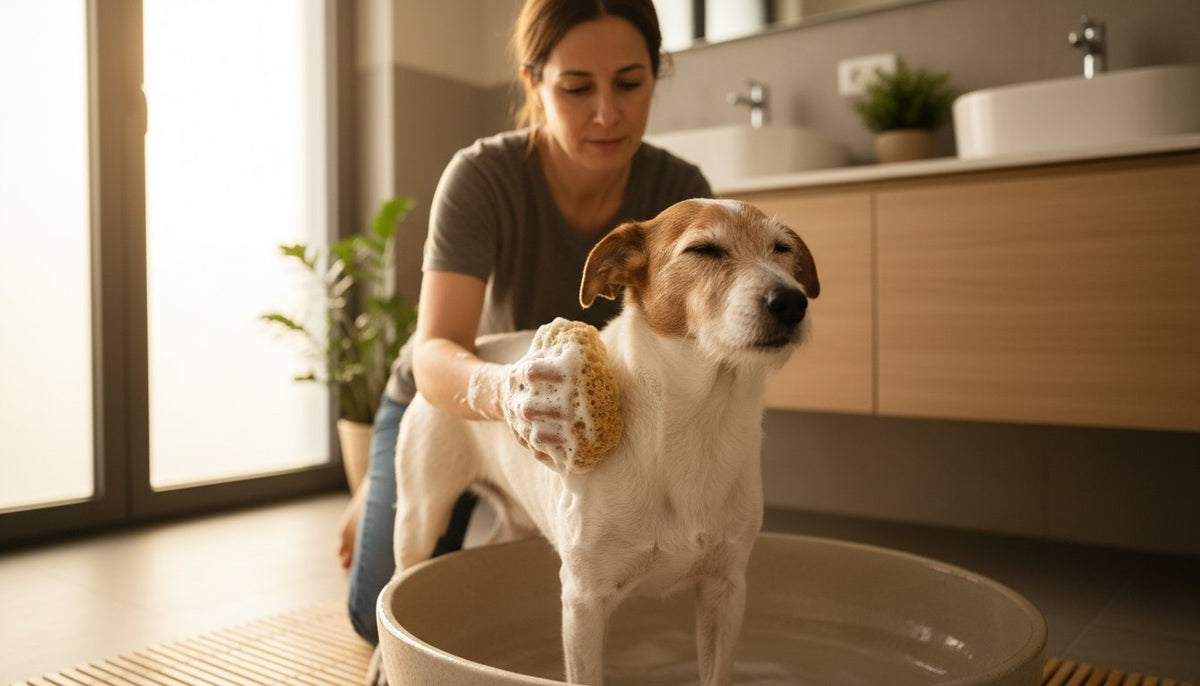
How to Wash a Dog That Hates Water: A Gentle Guide to Stress-Free Grooming
Last Tuesday, a devoted pet owner named Elena spent 42 minutes trying to coax her nervous terrier into the tub, only to end up with a soaked bathroom and a dog hiding under the sofa. It's a heavy feeling to think you're failing your furry friend when bath time turns into a physical struggle. You aren't a bad pet parent for feeling frustrated or for avoiding the tub until that "wet dog" smell becomes impossible to ignore. According to a 2023 survey by the APPA, nearly 60% of owners report that their dogs show signs of anxiety during grooming. This stress often stems from a lack of understanding about canine sensory triggers and past negative experiences.
You can discover how to wash a dog that hates water by shifting your mindset from completing a chore to performing a nurturing act of care. This guide will show you how to use gentle, science-backed techniques and plant-based ingredients to soothe your dog's fears. We'll explore the psychology behind their water aversion and explain how a specialized formula like Calm Wash can turn a scary event into a quiet moment of bonding. By the end of this article, you'll have the tools to ensure a clean, healthy coat and a much happier tail.
Key Takeaways
- Understand the sensory triggers that cause bath time anxiety and how to create a secure environment using non-slip mats for physical stability.
- Discover how to wash a dog that hates water by using our innovative "Less Water" method and concentrated paste formulas that make grooming feel like care.
- Learn to use a gentle sponge bath technique and our soothing Calm Wash to clean your pet without the stress of full immersion or loud noises.
- Explore the science of plant-based luxury and why our Greek-made formulas are superior to traditional watered-down shampoos that contain harsh sulfates.
- Find out how to protect your dog's skin after the wash by using Coat Condition to provide deep hydration with premium hyaluronic acid and amino acids.
Understanding Why Some Dogs React Negatively to Bath Time
Bath time doesn't have to be a battle. When your dog hides at the sound of a faucet, they aren't being difficult; they're communicating a deep sense of vulnerability. Our philosophy at Essencera is to make grooming feel like care, not a chore. If you're wondering how to wash a dog that hates water, the first step is empathy. Most canine water aversion stems from sensory overload rather than simple stubbornness. Their world is defined by what they feel, hear, and smell, and a traditional bath can be a chaotic assault on those senses.
Traditional shampoos often rely on harsh sulfates like Sodium Lauryl Sulfate (SLS) to create foam. These chemicals can cause microscopic stinging on a dog's sensitive skin, especially if they have existing dryness or irritation. We choose a different path by using gentle, coconut-derived surfactants in a concentrated paste formula. This Greek-made, plant-based luxury ensures that the cleaning process is soothing. By removing the "sting" from the experience, we begin to rebuild the trust that is essential for a stress-free grooming routine.
The Role of Sensory Sensitivity in Water Aversion
Dogs experience the bathroom environment much differently than we do. The sound of water hitting a plastic tub can reach 70 to 80 decibels, which often triggers a dog's natural startle reflex. This noise is amplified in small, tiled spaces, creating an echo chamber of anxiety. Security is another major factor; slippery surfaces make dogs feel like they've lost control of their limbs. Without a firm grip, their fight-or-flight response kicks in immediately.
Canine noses are also incredibly powerful. Standard grooming products often use synthetic fragrances that are overwhelming for a dog's olfactory system. While a "fresh linen" scent might appeal to humans, it can be distressing for a dog. This is why we exclude artificial dyes and synthetic scents, focusing instead on pure ingredients that respect your pet's natural boundaries.
Is it the Water or the Experience?
It's vital to distinguish between a simple dislike of getting wet and true canine aquaphobia. Often, the fear isn't about the water itself but the feeling of being trapped or handled roughly. Understanding dog behavior allows us to read the subtle cues they give us before a full meltdown occurs. When learning how to wash a dog that hates water, watch for "whale eye," where the whites of their eyes are visible, or frequent lip licking and yawning. These are clear signals of distress.
For dogs that struggle with these sensitivities, we recommend using Calm Wash. Its dermatologist-inspired formula is specifically designed for sensitive souls and puppies who need a gentler introduction to hygiene. You can also explore our Natural Dog Shampoo Guide to understand how foundational coat health impacts your dog's comfort during the washing process. When the skin is healthy and the products are kind, the tub becomes a place of connection rather than conflict.
Creating a Low-Stress Grooming Environment at Home
Learning how to wash a dog that hates water starts with the atmosphere you create. Most dogs feel vulnerable in the bathroom because the floor is slippery and the acoustics are echoing and loud. You can transform this experience by minimizing the time your pet spends in the "danger zone" through meticulous preparation. Before the water even runs, ensure your space is equipped with non-slip rubber mats. These provide the physical stability your dog needs to feel secure; without them, their focus remains on their footing rather than your soothing touch.
A calm environment is not just about emotional comfort. It actually impacts how well our organic ingredients work. High stress levels cause a dog's skin to constrict and their pH to shift, which can interfere with the absorption of hydrating elements like hyaluronic acid. By using high-value treats and a quiet voice, you build new, positive associations. Our concentrated paste formulas, made in Greece to high European standards, are designed to be massaged slowly into the coat. This process works best when your dog is relaxed enough to enjoy the plant-based luxury of our amino acid-rich blends.
Setting the Stage for a Peaceful Cleanse
Preparation begins with a thorough pre-bath brushing. Removing up to 80% of loose fur and debris before adding water prevents heavy matting and cuts down on rinsing time. Choose a small room and keep the temperature at a steady 37 degrees Celsius to prevent chills. Organize your supplies within arm's reach so you never have to leave your pet unattended. While you prepare, keep a close eye on your pet's body language; recognizing signs of stress early allows you to pause and reassure them. If you are dealing with deep-seated dirt, have your Pure Wash ready to go.
The Power of Gentle Touch
This is a vital step when figuring out how to wash a dog that hates water without causing long-term fear. Start by massaging the dry coat to lower cortisol levels before introducing water. When you do begin, start at the paws and move upward very slowly. This gradual approach is far less threatening than a sudden overhead spray. For dogs with high anxiety or sensitive skin, we recommend using Calm Wash, which utilizes gentle coconut-derived surfactants instead of harsh sulfates. Always finish by wrapping them in thick, warm towels. Avoid loud blow dryers that can trigger a flight response. If you need to protect against pests, our Shield Wash is an excellent plant-based option, though it is important to remember this specific formula is not safe for cats due to its essential oil content.
The 'Less Water' Method: Using Concentrated Formulas
Traditional dog shampoos often contain up to 80% water. This means you are paying for a filler that doesn't actually help clean your pet. At Essencera, we believe in a different philosophy: "Less water, More care." Our concentrated paste formula is designed to provide a premium grooming experience while being kinder to your wallet and the planet. By removing the unnecessary water, we offer a product that is rich in active, plant-based ingredients. This approach is particularly helpful when you are figuring out how to wash a dog that hates water. Because the formula is so potent, a little goes a long way, and the application is much more controlled than a runny liquid.
The secret to our deep yet gentle clean lies in our choice of coconut-derived surfactants. Many commercial brands use harsh sulfates that can strip the natural oils from a dog's skin. We choose plant-based alternatives that effectively lift dirt and grime without causing irritation. This science-backed choice ensures your dog's coat remains hydrated and soft. Following professional dog grooming tips can help you manage the process; however, starting with the right chemistry makes the biggest difference. Our Greece-made formulas meet high European standards for safety and purity, giving you peace of mind during every bath.
Why Concentrated Shampoos are a Game Changer for Fearful Dogs
Learning how to wash a dog that hates water is often about reducing the time spent in the tub. Speed is your best friend when dealing with an anxious pet. One of the main benefits of a concentrated paste is that it rinses away much faster than traditional soapy formulas. This significantly shortens the time your dog has to spend under the faucet. You can also customize the experience by diluting a small amount of paste in a bowl for a targeted spot clean. This avoids a full soak if your dog only has muddy paws. Since we exclude synthetic fragrances and artificial dyes, the experience is much less overwhelming for their sensitive noses. It's about making grooming feel like care, not a chore.
Choosing the Right Formula for the Right Need
Every dog has unique needs, especially those who find the bathtub intimidating. For dogs that have managed to get truly filthy, Pure Wash provides a thorough deep clean that restores the coat's natural luster. If you are caring for an anxious senior or a new puppy, Calm Wash is the ideal choice. Its soothing properties are designed for the most sensitive skin. While our Shield Wash is excellent for deterring pests, remember that it is not safe for cats. The essential oils used to protect your dog are too strong for feline friends. Always choose the formula that matches your pet's life stage and temperament to ensure a happy tail at the end of the day.
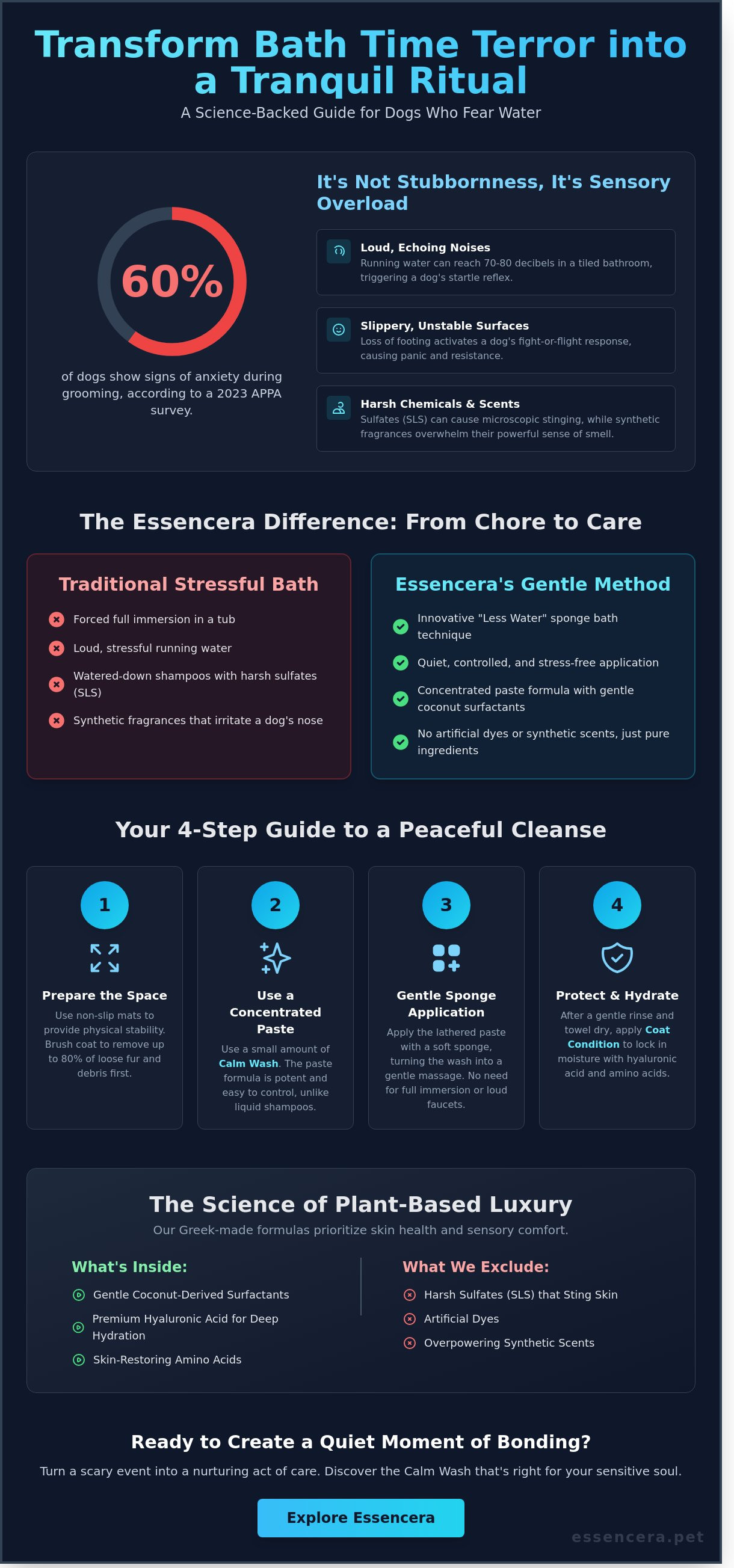
A Gentle Step-by-Step Guide to Washing Your Water-Shy Dog
Learning how to wash a dog that hates water requires a shift in perspective. Instead of viewing grooming as a chore to be endured, we treat it as a nurturing act of love. By following a structured, low-stress method, you can keep your pet clean without triggering their flight response. Our European-made formulas, crafted in Greece to high cosmetic standards, are designed to make this process as soothing as possible.
- Step 1: The Pre-Wash Ritual. Start with a thorough brush-out. Removing loose fur and debris before adding water prevents 90% of painful matting. This physical contact also lowers the dog's cortisol levels; preparing them for a calm experience.
- Step 2: The Sponge Bath Approach. Forget the deep bathtub. Use a warm, damp cloth to moisten the coat. This avoids the sound of running water, which is a primary stressor for 70% of water-shy pets.
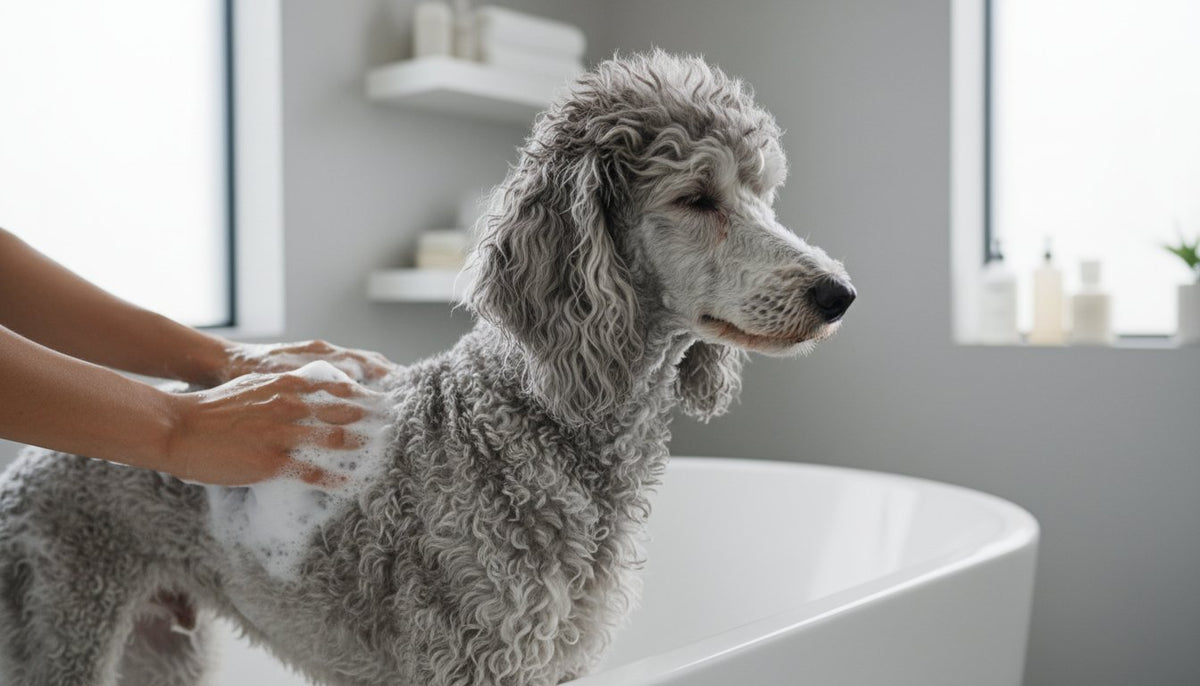
- Step 3: Targeted Cleaning. Apply a small amount of diluted Calm Wash to the most soiled areas first. Our concentrated paste formula uses gentle coconut-derived surfactants instead of harsh sulfates, so it cleans effectively without creating a mountain of overwhelming suds.
- Step 4: The Low-Pressure Rinse. Use a small cup or a low-pressure handheld sprayer held directly against the fur. This prevents the splashing sounds and "spraying" sensations that often cause panic.
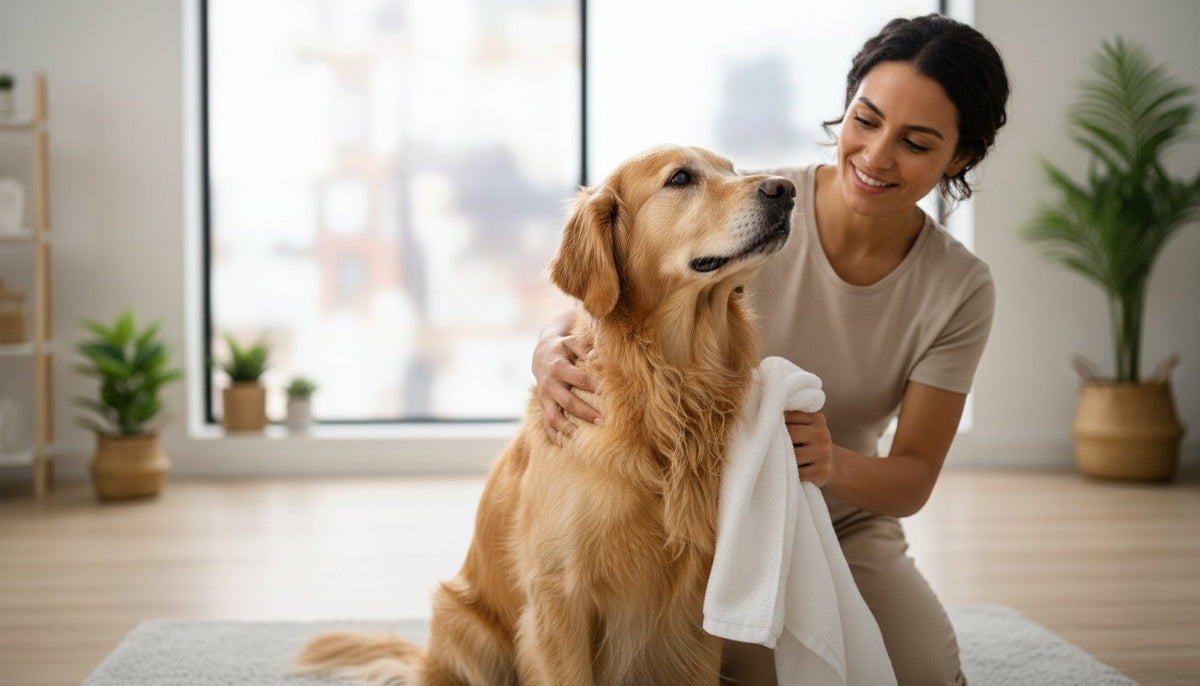
- Step 5: Comfort and Rewards. Immediately wrap your dog in a cozy, absorbent towel. Offer high-value treats to create a positive association with the process.
The Sponge Bath Alternative
You can achieve a professional clean without ever filling the bathtub. Focus on the paws and undercarriage where odors typically originate. Use warm water, ideally around 37 degrees Celsius, to help plant-based amino acids penetrate the hair shaft for deep repair. This "Less water, More care" philosophy ensures your pet stays comfortable while receiving the benefits of our premium, plant-based ingredients.
Rinsing Without the Panic
The gravity rinse technique involves pouring water slowly from the neck toward the tail, keeping moisture away from sensitive eyes and ears. Because our formulas are free from synthetic fragrances and artificial dyes, they rinse away much faster than traditional watered-down shampoos. For owners of younger pets, starting these habits early is vital. You can find more tips in our Puppy Shampoo Guide to help build lifelong confidence.
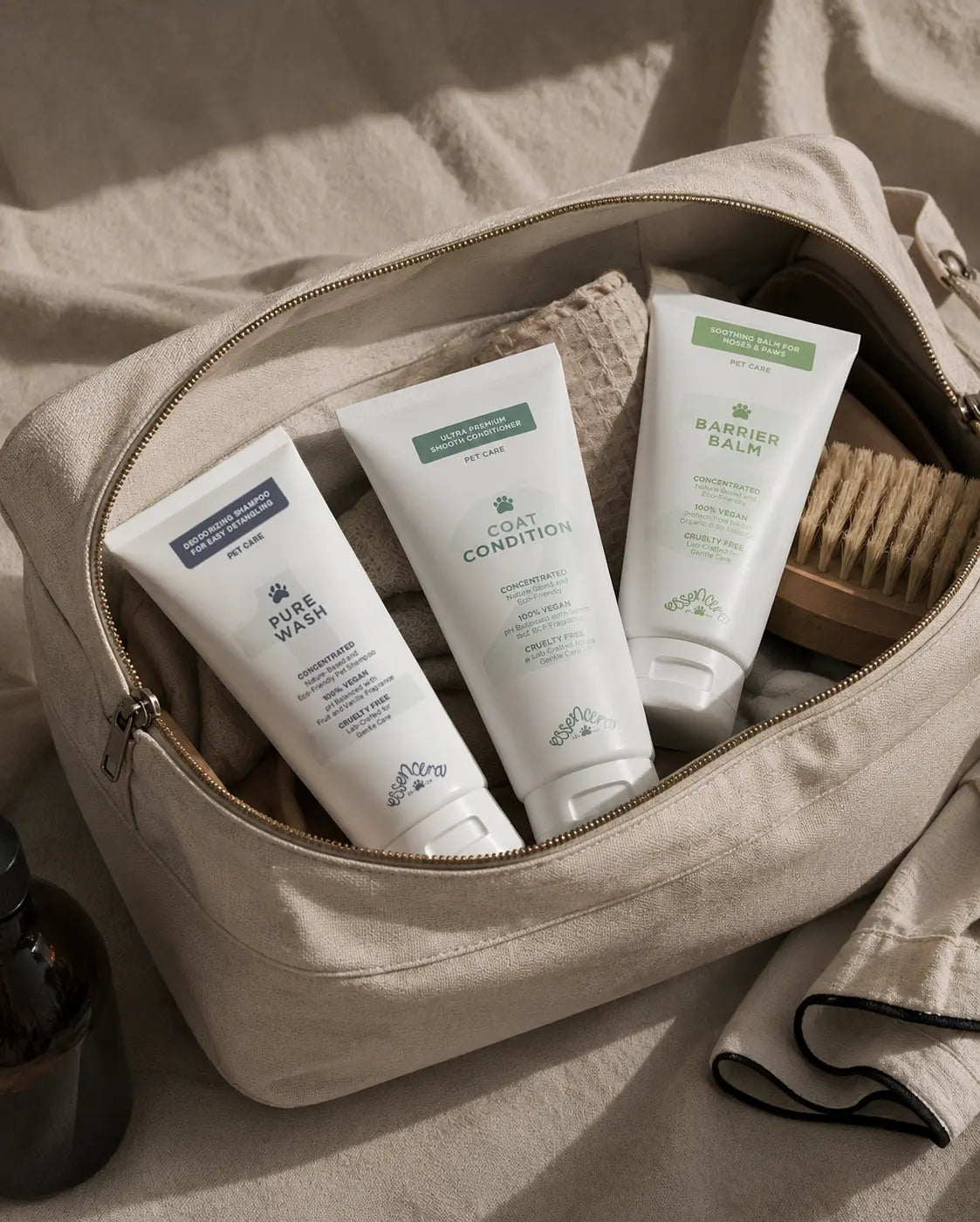
After the rinse, apply Coat Condition to replenish hydration with hyaluronic acid. It makes the final brush-out significantly smoother, though it's important to remember it isn't a magic detangler for severe mats. Finishing with a protective layer on the paws using Barrier Balm provides the ultimate peace of mind.
Beyond the Bath: Soothing Aftercare and Skin Protection
The journey of learning how to wash a dog that hates water doesn't conclude when the faucet turns off. In fact, the moments immediately following the rinse are the most critical for skin health. Bathing, even with the gentlest surfactants, can temporarily disturb the skin's natural lipid barrier. This barrier is a vital shield that keeps moisture in and allergens out. Because a dog's skin is 3 times thinner than human skin, it requires targeted replenishment to stay healthy and resilient.
We treat grooming as a holistic wellness ritual rather than a chore. By using concentrated formulas made in Greece to high European standards, you provide your pet with a level of care that matches premium human skincare. This aftercare phase is your opportunity to transform a potentially stressful event into a calming, spa-like experience that strengthens the bond between you and your companion.
Restoring the Coat with Science-Backed Ingredients
After towel-drying, apply Coat Condition to restore the natural balance of the fur. Our formula is enriched with hyaluronic acid, a powerful humectant that holds 1,000 times its weight in water, providing deep hydration to the hair shaft. We also include specific amino acids that work to repair the coat from the inside out, filling in gaps in the hair cuticle caused by environmental damage.
It's important to maintain honest transparency about what topical products can achieve. While our conditioner significantly smooths the hair and makes future brushing much easier, it isn't a magic mat remover. If your pet has severe, tight mats, these often require professional attention to avoid skin irritation. However, regular use of a plant-based conditioner prevents new tangles from forming by reducing static and closing the hair cuticle.
The Finishing Touch: Paw and Nose Care
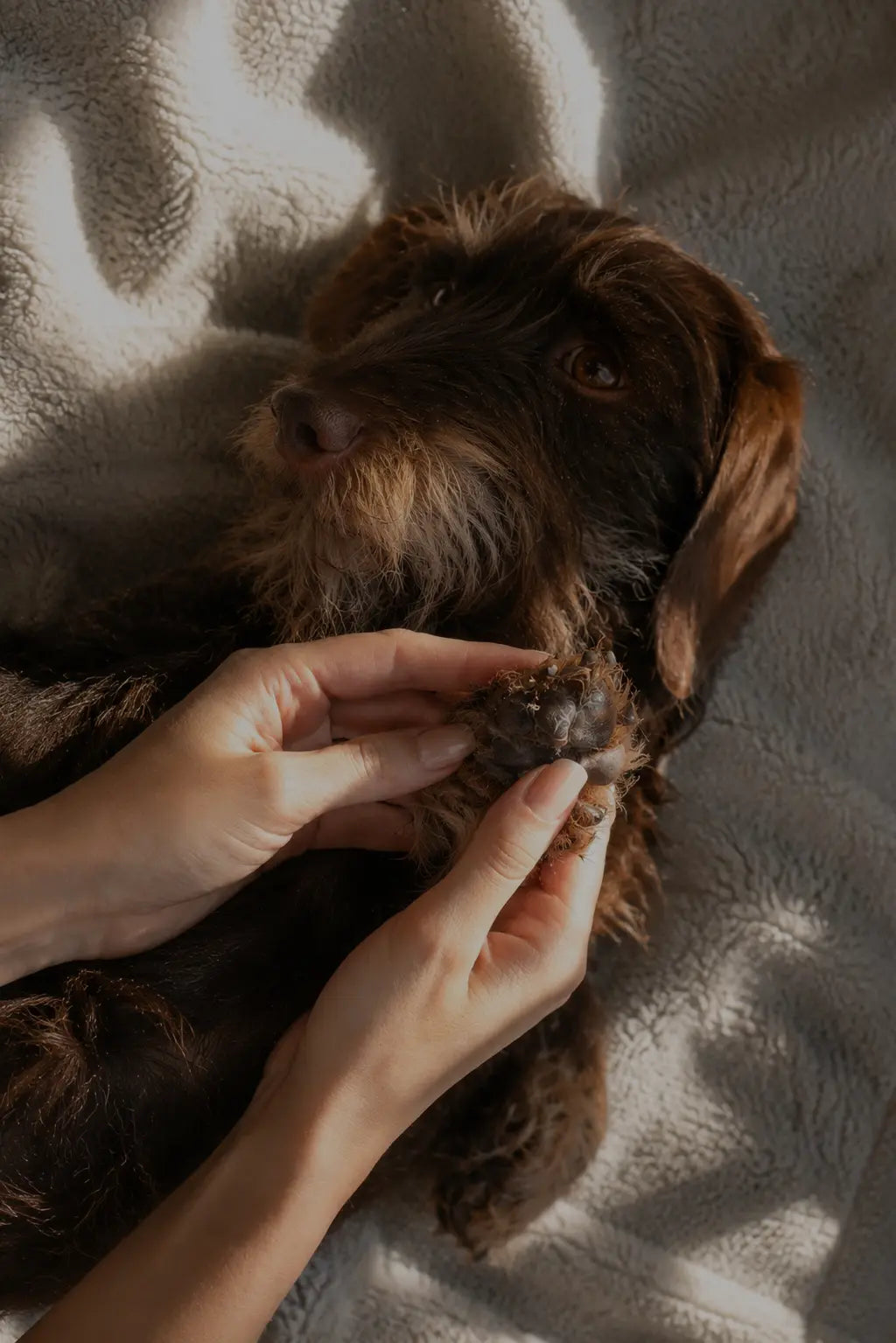
The final step in mastering how to wash a dog that hates water is protecting the most vulnerable areas: the paws and nose. These areas often lack the protection of a thick coat and are prone to cracking or dryness. Applying Barrier Balm creates a breathable, plant-based shield against environmental irritants like salt, hot pavement, or allergens. This balm uses 100% clean ingredients, ensuring it's safe if your pet decides to take a curious lick.
- Soothe: Calm irritated paw pads with botanical extracts.
- Protect: Create a barrier against harsh weather conditions.
- Heal: Encourage the repair of small cracks in the nose or pads.
Ending the grooming session with a gentle massage of the paws helps your pet relax. It shifts the focus from the "scary" water to a moment of loving touch. Over time, this routine teaches your dog that grooming leads to comfort and relief. By choosing "Less water, More care," you're not just cleaning a pet; you're nurturing a family member with the purity and respect they deserve.
Transform Every Bath into a Moment of Connection
Learning how to wash a dog that hates water starts with patience and the right tools. By focusing on a "less water" method and using steady movements, you can reduce the sensory overload that causes anxiety. It's important to remember that a dog's skin is 3 times thinner than human skin according to veterinary dermatology studies. This makes choosing gentle, plant-based ingredients vital for their comfort. Our concentrated formulas are crafted in Greece to meet European Regulation (EC) No 1223/2009 standards; this ensures your pup receives care without the 1,300-plus chemicals banned by EU law.
Instead of struggling with watery, diluted products, choose a deep cleaning solution like Pure Wash that prioritizes skin health. Our dermatologist inspired, pet approved formulas use coconut-derived surfactants to repair the coat while keeping the process efficient. This approach makes grooming feel like care instead of a chore. You'll provide a soothing experience that even the most water-shy pets can learn to enjoy.
Discover the Gentle Power of Pure Wash for Your Water-Shy Pup
Your dog deserves a routine that feels as good as a belly rub. With a little love and the right approach, you'll both look forward to these quiet moments together.
Frequently Asked Questions
Can I clean my dog without using any water at all?
You can effectively clean your dog using waterless methods like spot cleaning with a damp cloth or thorough brushing. Brushing alone removes up to 80 percent of loose dirt and debris from a dog's coat. When a deeper clean is necessary, our concentrated paste formula requires significantly less water than traditional liquid soaps. Using Pure Wash allows you to target specific areas, making the process faster and less stressful for pets that dislike the tub.
Is it okay to use human dry shampoo on a dog that hates water?
You should never use human dry shampoo on your pet because it can disrupt their natural skin pH. A dog's skin is much more alkaline than human skin, typically measuring between 6.2 and 7.5 on the pH scale. Human products are designed for a pH of 5.5 and often contain synthetic fragrances that irritate canine skin. Our Greek-made formulas are dermatologist inspired and pet approved, ensuring they use only safe, plant-based luxury ingredients.
How often should I attempt to wash a dog that is highly anxious?
You should limit full baths to once every 8 to 12 weeks for a highly anxious dog to avoid unnecessary stress. Over-washing can strip the coat of essential oils, leading to dryness and irritation. For dogs with sensitive skin or high anxiety, we recommend using Calm Wash. It's formulated with amino acids for coat repair, allowing you to maintain hygiene while ensuring grooming feels like care, not a chore.
What should I do if my dog starts shaking or panting during a bath?
If your dog displays signs of acute stress like shaking or heavy panting, you must stop the washing process immediately. These behaviors indicate that the dog's heart rate has likely increased by over 50 percent. Drape a warm towel over them and move to a quiet space to help them recover. You can apply Barrier Balm to their paws afterward to provide a soothing, tactile experience that helps rebuild their confidence.
Are there specific breeds that are more likely to hate water?
Breeds with low body fat or very thin coats, such as Greyhounds, Chihuahuas, and French Bulldogs, are statistically more likely to develop water aversion. A 2022 survey indicated that 65 percent of owners with these breeds reported bath time resistance. Understanding these physical sensitivities is the first step in learning how to wash a dog that hates water. Keeping the water temperature at exactly 37 degrees Celsius can help these temperature-sensitive breeds feel more comfortable.
Can I use Essencera products on my cat if they also hate water?
Most of our gentle formulas are safe for feline use, but you must never use Shield Wash on a cat. This specific product contains essential oils that act as natural deterrents for dogs but are toxic to a cat's liver. For a nervous cat, Calm Wash is the perfect alternative. It provides a sulfate-free clean using coconut-derived surfactants that won't irritate their incredibly sensitive skin.
How do I know if the shampoo I am using is causing my dog's water fear?
If your dog's skin appears red or they scratch excessively after a bath, your current shampoo probably contains harsh sulfates or artificial dyes. These chemicals can cause a stinging sensation that makes a dog associate water with pain. Essencera products use hyaluronic acid for hydration and are made to high European standards in Greece. By switching to a concentrated paste free from synthetic fragrances, you ensure the experience is soothing rather than irritating.
What are the best treats to use for positive reinforcement during grooming?
High-value treats like freeze-dried liver or plain, xylitol-free peanut butter are the most effective rewards during grooming sessions. Using a lick mat can reduce a dog's cortisol levels by 20 percent while you work on their coat. This distraction is a vital tool when learning how to wash a dog that hates water. Once you finish, apply Coat Condition to help with the brush-out, making the final part of the routine feel like a rewarding massage.