Is Coconut Oil Good for a Dog's Coat? Benefits, Risks, and Smarter Alternatives
Reaching into your pantry to soothe your dog's dry, flaky skin feels like the purest choice, but heavy kitchen fats often do more harm than good. Watching your pup constantly scratch at dull, brittle fur is stressful, so it is completely natural to wonder: is coconut oil good for a dog's coat, or is it simply another messy internet trend?
You want soothing, non-toxic comfort for your companion without exposing them to synthetic additives or harsh stripping agents. In this guide, you will discover what research really says about topical coconut oil, step-by-step instructions for safe application, and why thick oils can trap moisture and leave behind a greasy residue. We will also explore how balanced, breathable botanicals nurture the skin barrier, giving your dog a clean, silky coat that feels wonderfully soft to the touch.
Key Takeaways
- Understanding whether is coconut oil good for a dog's coat starts with science, which reveals that raw kitchen fats only provide temporary surface slip without repairing damaged hair proteins.
- Heavy pantry oils can easily clog canine hair follicles, attract outdoor dust, and potentially feed common skin yeasts like Malassezia.
- If you choose to use raw coconut oil, always select unrefined, cold-pressed oil and complete a mandatory twenty-four hour skin patch test before broad application.
- Formulated botanical routines deliver lightweight hydration and essential amino acids that strengthen the coat barrier and rinse completely clean without greasy residues.
Is Coconut Oil Good for a Dog's Coat? What the Science Says
When asking is coconut oil good for a dog's coat, the short answer is yes, but with clear limits. Coconut oil can soften coarse hair and add quick shine, yet it cannot solve deep skin troubles on its own. While wellness blogs often praise it as a cure-all, understanding what coconut oil is reveals that it acts primarily as an external lipid layer rather than cellular hydration.
The oil consists mostly of saturated fats called medium-chain triglycerides. The star of these fats is lauric acid. In laboratory petri dishes, lauric acid demonstrates natural antibacterial qualities against certain surface microbes. However, a dog's coat is living, complex, and exposed to outdoor elements daily. Smoothing fat over dry strands provides an instant visual gloss, but external moisture is not the same as dermal hydration. Water hydrates the living skin cells; raw oils simply coat the outer shaft.
How Coconut Oil Interacts with Canine Fur and Skin
Canine hair shafts feature an outer cuticle made of microscopic, overlapping scales. Lauric acid has a unique molecular structure that allows it to cling closely to these cuticles, creating an instant reflective sheen. It forms an occlusive seal that temporarily traps moisture already present in the hair fiber.
Lauric acid binds tightly along each hair strand to smooth jagged edges and flatten raised cuticle scales. That seal can backfire, though. Because it creates a heavy physical barrier, occlusive kitchen oil can trap yeast, environmental heat, and opportunistic bacteria directly against delicate canine skin.
Topical Benefits: Softness, Flake Reduction, and Mild Protection
Used thoughtfully and in tiny amounts, raw coconut oil delivers a few distinct, immediate perks for your pet:
- Noticeable softness: Rough outer guard hairs soften within minutes as the fatty acids smooth the hair shaft.
- Superficial flake control: Light dabs across the back or flanks soothe dry, visible flakes on the skin surface.
- Mild barrier support: Lauric acid offers gentle defense against minor surface irritants by creating a temporary cushion.
Even with these benefits, raw oil cannot restore the protective keratin structure of hair damaged by dirt, weather, or harsh grooming. When pet parents want real nourishment without a greasy film, asking whether is coconut oil good for a dog's coat leads to a clear conclusion: while helpful in a pinch, it functions best as a short-term shield rather than a complete coat care routine.
The Hidden Downsides of Putting Raw Coconut Oil on Fur
While an instant sheen looks lovely on the surface, coating your companion in raw culinary oil brings noticeable baggage. Answering whether is coconut oil good for a dog's coat requires looking at what happens hours after you rub it into their fur. Raw kitchen fat behaves very differently from breathable grooming care, often turning a well-intentioned spa moment into a frustrating, greasy chore.
Greasy Buildup, Follicle Clogging, and Matting
Pure coconut oil is a dense, non-drying vegetable lipid. When placed on fine fur, it weighs hair down into limp, separate clumps. On double-coated breeds like Golden Retrievers or Huskies, heavy fat works deep into the dense undercoat, acting like a magnet for dust, grass seed, and environmental pollen. This trapped debris often worsens underlying skin allergies and creates tight, stubborn mats near the skin.
Because canine skin is far thinner than human skin, suffocating pores with raw fats blocks natural oxygen exchange. As the American Kennel Club points out, topical coconut oil can easily clog canine hair follicles and trigger secondary irritation. Blocked sebaceous glands struggle to regulate natural sebum, leaving your pet itchy, sticky, and uncomfortable.
Licking Risks: Pancreatitis and Stomach Upset
Dogs are dedicated self-groomers. The moment you massage a fragrant kitchen oil into your pup's fur, their tongue starts working. Coconut oil is nearly one hundred percent saturated fat, and ingesting raw fat can trigger immediate digestive distress, including nausea, greasy stools, and sudden diarrhea.
Frequent ingestion poses even steeper medical concerns. Dogs predisposed to metabolic sensitivities, such as Miniature Schnauzers, run a high risk of developing acute pancreatitis when exposed to high-fat topicals. This painful inflammation of the pancreas requires urgent veterinary care. For spot dryness on tough skin like calluses, nose leather, or paw pads, a fast-absorbing formula like Barrier Balm provides concentrated, lick-safe hydration without turning your pet's entire coat into an edible, oily hazard.
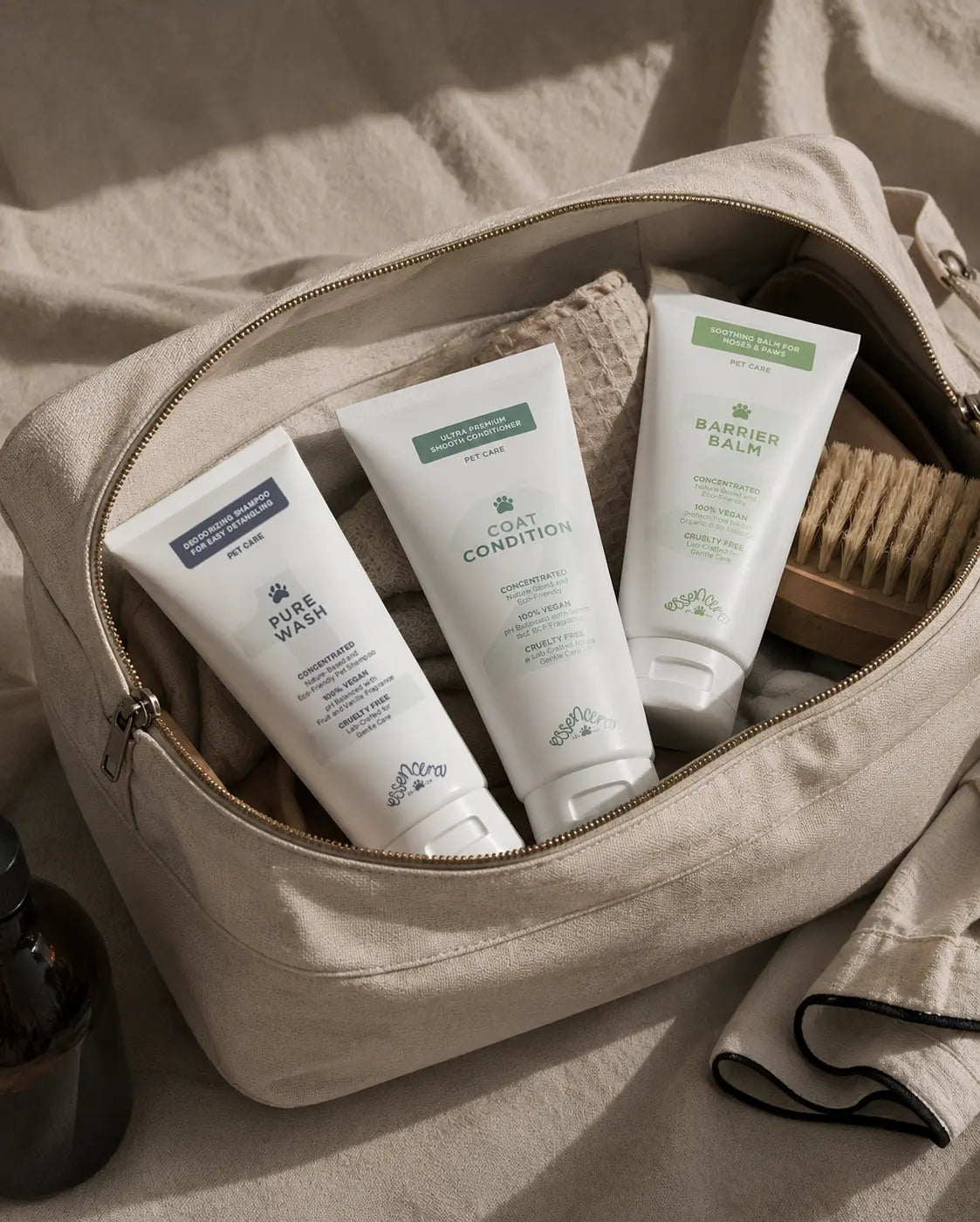
If your dog is currently covered in heavy pantry grease and collected backyard dust, bathing them with a clarifying cleanser like Pure Wash safely lifts away stubborn residue while protecting essential surface lipids.
How to Safely Apply Coconut Oil to Your Dog's Fur
If you choose to test whether is coconut oil good for a dog's coat at home, taking a gentle, measured approach protects your pup from unwanted side effects. Never grab deodorized or bleached culinary oils that contain chemical processing residues. Always choose virgin, cold-pressed, unrefined organic coconut oil, and keep your applications sparing and intentional.
Performing a Safe 24-Hour Patch Test
Before applying oil over larger areas, test a pea-sized dab on a spot with sparse fur, such as the inner thigh. Watch the area closely over the next day for redness, heat, hives, or frantic licking. As veterinarian Eliza O'Callaghan explains, pet parents need to remain cautious regarding skin reactions and digestive hazards when exploring these remedies. Waiting a full twenty-four hours ensures your dog does not suffer a delayed contact reaction.
Application Technique for Dry Spots and Flaky Areas
Start with a tiny amount. Scoop no more than a dime-sized dab and rub your palms together until the fat liquefies from your body warmth. Glaze your hands lightly over the very tips of coarse guard hairs rather than massaging it deep into the dense undercoat.
- Target localized trouble zones, such as rough elbow calluses or dry flank patches, instead of the full body.
- Distribute the liquefied oil with slow, soothing strokes to keep the coat light.
- Wipe away any excess surface grease immediately with a warm, damp cloth.
Washing Out Greasy Residue Without Stripping the Skin
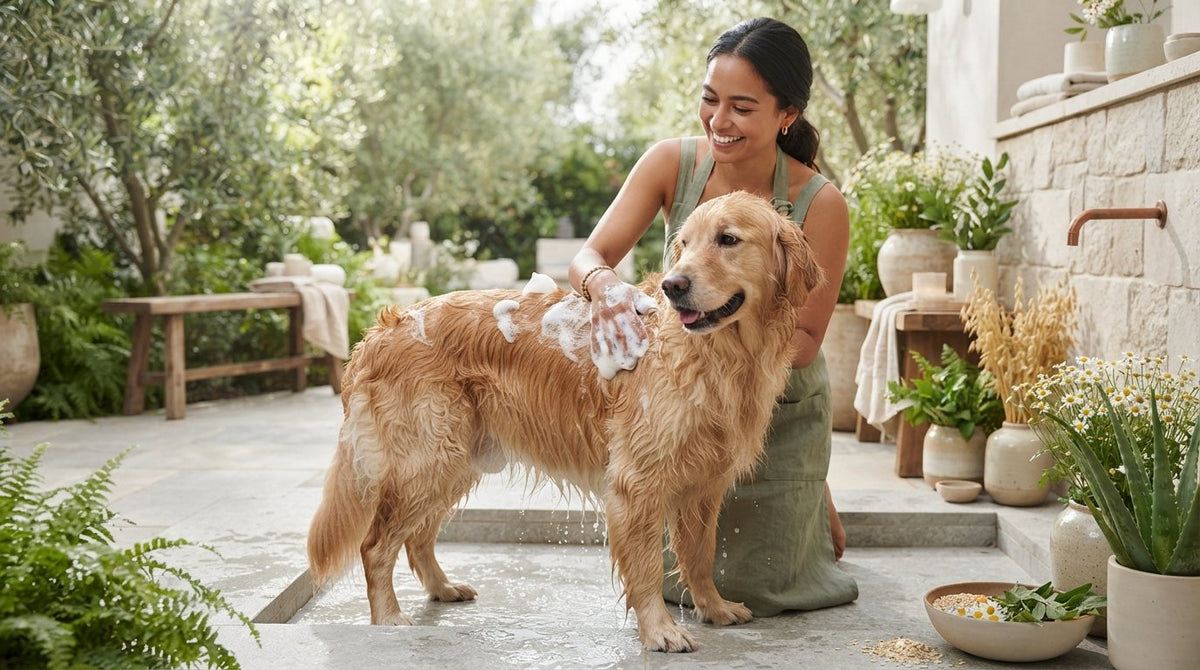
Because unabsorbed fats attract grit, you should always wash away the excess rather than leaving it to collect household dirt. Never reach for harsh dish soaps or stripping detergents, which completely destroy your dog's delicate moisture barrier. Instead, work with cleansers designed to lift heavy lipids while keeping the skin calm.
Lather the coat gently with a plant-derived deep cleaning shampoo like Pure Wash. Its concentrated coconut-derived surfactants break down heavy vegetable grease easily, rinsing away cleanly while infusing amino acids back into the hair shaft. For dogs with reactive or recovering skin, reach for a soothing option like Calm Wash to nurture the dermal layer with organic calendula and jojoba. Rinse thoroughly with lukewarm water until the fur feels soft, clean, and completely free of slippery film.
Raw Coconut Oil vs. Formulated Botanical Coat Care
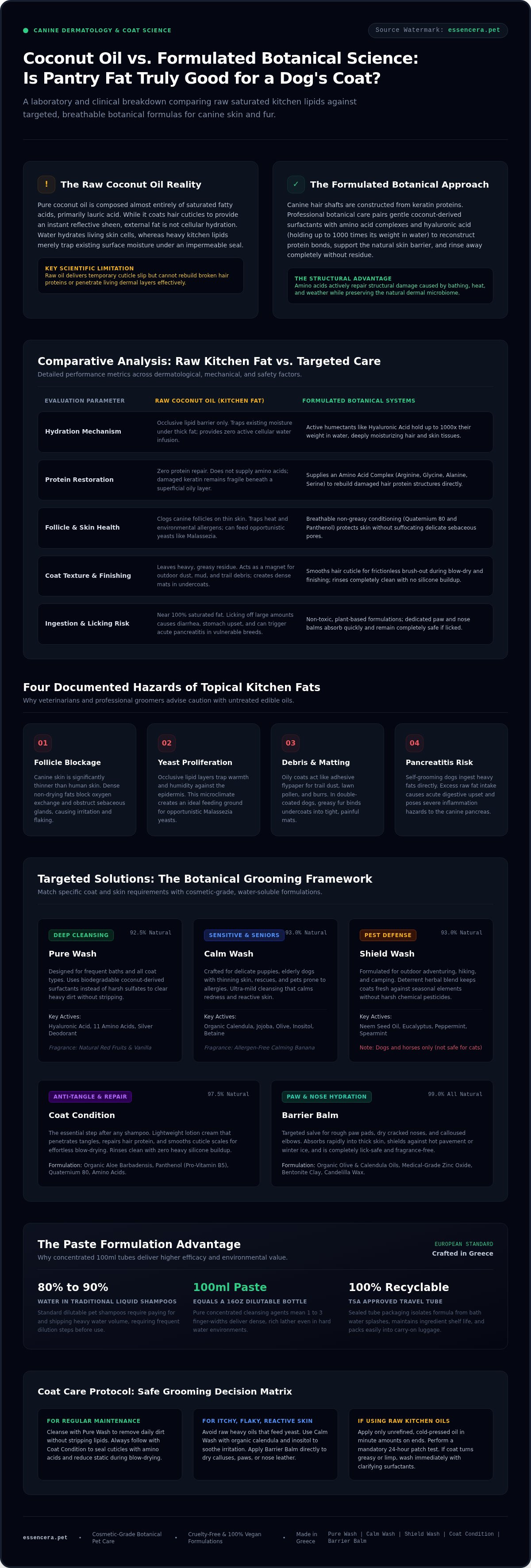
When asking whether is coconut oil good for a dog's coat, comparing pantry grease to balanced botanical care clarifies the issue immediately. Raw culinary oil offers temporary shine, but authentic coat wellness requires targeted ingredients that support both hair fibers and the delicate dermal barrier beneath.
Why Surface Oils Cannot Rebuild Damaged Hair Keratin
Canine fur consists primarily of keratin, a fibrous protein structure that wears down from outdoor play, friction, and environmental exposure. Large triglyceride molecules found in kitchen fats are simply too bulky to pass through the hair cuticle and reach the cortex. While raw cooking fats merely coat the exterior hair shaft with temporary slip, plant-derived amino acid complexes actively rebuild lost keratin proteins to restore true structural integrity.
Formulated botanical treatments deliver breathable moisture directly to thirsty fibers. Instead of creating an occlusive barrier that smothers the skin and collects floating debris, balanced plant emollients hydrate individual strands. This keeps the fur soft and static-free while allowing the skin to breathe naturally.
Rinse-Clean Formulas That Prevent Matted, Heavy Fur
The greatest struggle with DIY kitchen treatments is removal. Pure vegetable fats actively repel water, which means washing them out often takes multiple rounds of lathering that strip natural sebum away. Formulated conditioners solve this by using gentle, plant-based emulsifiers that bond botanical hydrators with water, allowing the entire mixture to rinse cleanly down the drain.
Using our anti tangle premium conditioner, Coat Condition, replenishes moisture with organic aloe vera and pro-vitamin B5 without leaving any greasy buildup behind. It works deep within the cuticle layer so grooming combs glide through damp fur during drying, cutting down on brush friction and preventing knots from turning into tight mats. You get all the touchable softness and radiant sheen you hoped for, with none of the heavy, oil-slicked residue.
Give your dog salon-quality softness without the mess by trying Coat Condition for your companion's next bath routine.
A Better Botanical Routine for a Soft, Healthy Coat
Rather than wondering whether is coconut oil good for a dog's coat after dealing with messy stains and sticky fur, you can embrace a balanced grooming ritual. Real coat health begins with breathable plant care that cleanses gently, rebuilds natural protein structures, and protects high-friction skin zones without greasy heaviness.
Gentle Cleansing Tailored to Your Dog's Lifestyle
Every dog leads a unique life, meaning their skin needs intentional support during bath time. Stripping harsh sulfates damage the lipid barrier, while heavy culinary fats overwhelm it. Concentrated, plant-based cleansers formulated with coconut-derived surfactants lift grime effortlessly while keeping natural dermal lipids completely intact.
- For adventurous pups who explore wooded trails, beach sand, or lake water, our flea and tick deterrent shampoo, Shield Wash, washes away stubborn outdoor debris while using neem, eucalyptus, and mint extracts to deter seasonal pests naturally.
- To master the fundamentals of gentle washing, explore the advantages of plant-powered care in our comprehensive guide on natural dog shampoo.
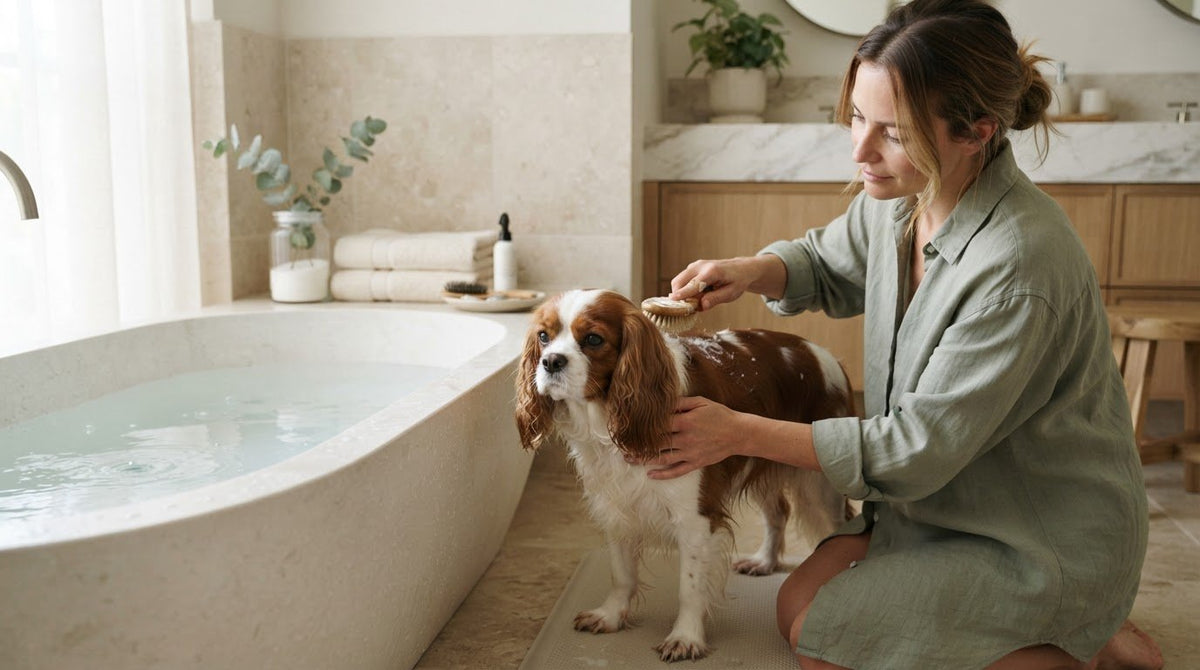
- Pairing an intentional wash with our anti tangle premium conditioner, Coat Condition, seals cuticle scales, smooths away tangles, and ensures your dog's coat stays airy and fresh.
Targeted Moisture for Rough Spots and Paws
While slathering raw oil across a dog's back often backfires, certain dry spots genuinely crave barrier defense. Paws walking over hot sidewalks, rough hiking rocks, or icy winter paths need concentrated botanical comfort that absorbs quickly rather than rubbing off on living room rugs.
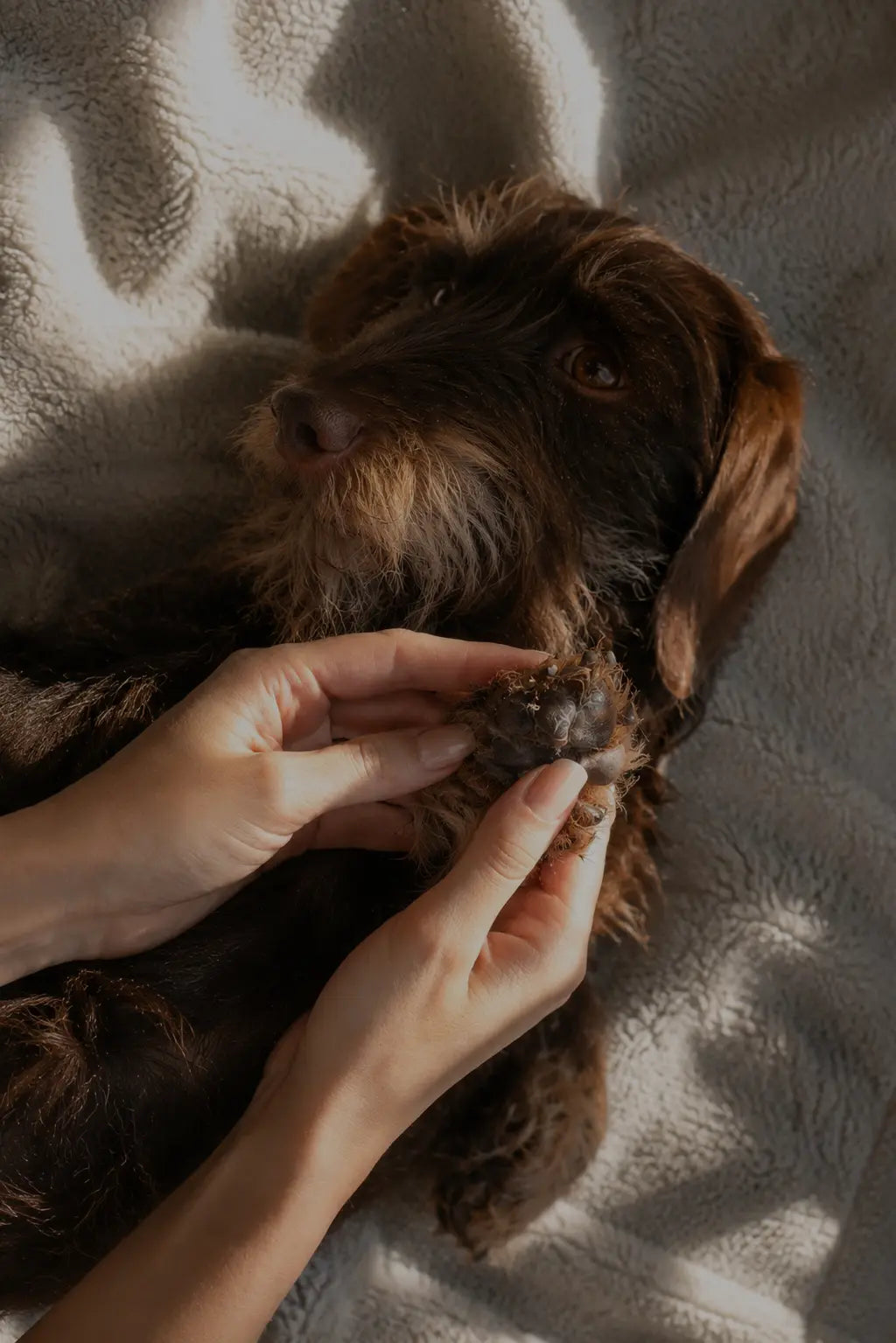
Skip the cooking oil and soothe cracked skin with Barrier Balm, our specialized salve for paws and nose areas. Formulated with organic olive fruit oil, candelilla wax, calming calendula, and medical-grade zinc oxide, it forms a breathable, lick-safe shield over calloused elbows, crusty noses, and dry paw pads. It sinks in rapidly so your pup can get straight back to playing without slipping on wood floors.
Evaluating whether is coconut oil good for a dog's coat ultimately shows that dogs do best with complete, purposeful routines. Combining gentle cleansing, lightweight amino acid conditioning, and targeted paw protection gives your companion lasting comfort and a naturally luminous coat.
Nurture Your Dog's Natural Radiance with Balanced Botanical Care
When deciding whether is coconut oil good for a dog's coat, remember that true coat wellness goes far beyond a temporary, slippery sheen. While raw kitchen fats can soften coarse fur for an afternoon, they often bring unwanted baggage like clogged pores, trapped dust, and stomach upset from constant licking. Lasting comfort comes from breathable, intentional hydration that actively respects your dog's living skin barrier.
Instead of reaching into your kitchen pantry, treat your companion to thoughtful formulations crafted in Greece. Essencera blends concentrated botanical pastes with gentle coconut-derived cleansers free from harsh sulfates and artificial dyes. Our amino acid repair technology rebuilds delicate keratin bonds from within, providing deep nourishment without leaving behind a heavy, greasy film. Your pup deserves grooming moments that feel as comforting as an affectionate cuddle. Explore Essencera's gentle plant-based grooming care today to help your companion enjoy the clean, touchably soft fur they deserve.
Frequently Asked Questions
Can I leave coconut oil on my dog's coat overnight?
No, you shouldn't leave coconut oil on your dog's coat overnight. Leaving it on causes greasy bedding, attracts household dust, and increases the risk of your dog licking large amounts of pure fat while sleeping. It can also trap heat and moisture against the skin, potentially leading to bacterial or fungal flare-ups. Instead, let a light topical application sit for fifteen to twenty minutes before washing it out thoroughly.
What happens if my dog licks coconut oil off their fur?
Licking a tiny amount of coconut oil off their fur usually causes mild stomach upset or greasy stools, but larger amounts bring serious health concerns. Consuming heavy saturated fats can trigger acute pancreatitis in predisposed dogs, which is a painful emergency requiring immediate veterinary attention. To protect rough paw pads or noses without licking worries, use a fast-absorbing topical like Barrier Balm instead of raw culinary fats.
Does coconut oil help with dog shedding and matting?
Coconut oil will not stop normal shedding, and it can actually worsen matting in double-coated dogs. When asking is coconut oil good for a dog's coat to manage tangles, raw oil merely creates slick strands that clump together and attract friction-causing debris. For smooth brush-outs that reduce loose hair naturally, use an anti tangle premium conditioner like Coat Condition to loosen tangles and repair hair protein without greasy weight.
Can coconut oil clog my dog's skin pores or worsen hot spots?
Yes, coconut oil can clog canine hair follicles and significantly worsen active hot spots. Coconut oil is an occlusive lipid, meaning it forms a heavy physical seal over the epidermal layer. This barrier locks in body heat, sweat, and surface moisture, creating the ideal breeding ground for yeast like Malassezia and opportunistic bacteria. Never apply raw vegetable oils to red, weeping, inflamed, or infected skin patches.
How often should I use coconut oil on my dog?
You should limit topical coconut oil use to no more than once every two to three weeks, and only as a spot treatment. Overusing heavy vegetable oils disrupts natural sebum production and leaves a stubborn buildup across the coat. If you find yourself constantly asking is coconut oil good for a dog's coat because your pet suffers from chronic dry skin, consult your veterinarian to identify underlying allergies or environmental triggers.
How do I get coconut oil out of my dog's fur without harsh soaps?
You can lift stubborn coconut oil safely by using a plant-based deep cleaning shampoo like Pure Wash rather than harsh dish soaps. Its gentle, coconut-derived surfactants dissolve heavy kitchen grease while keeping natural skin oils intact. Work a concentrated dab directly into the greasy patches before adding full water, massage into a rich lather, and rinse completely with lukewarm water until the coat feels clean and light.
Is refined or unrefined virgin coconut oil better for dogs?
Unrefined, cold-pressed virgin coconut oil is far better for dogs than refined versions. Refined oils typically undergo chemical bleaching, deodorizing, and high-heat processing that strips away beneficial micronutrients and introduces residual solvents. Virgin, unrefined organic coconut oil retains its natural lauric acid content and contains no artificial additives. However, even the highest-grade virgin oil remains a heavy kitchen fat that must be used sparingly on canine fur.