
Is My Dog’s Shampoo Causing Allergies? A Guide to Sensitive Skin Care
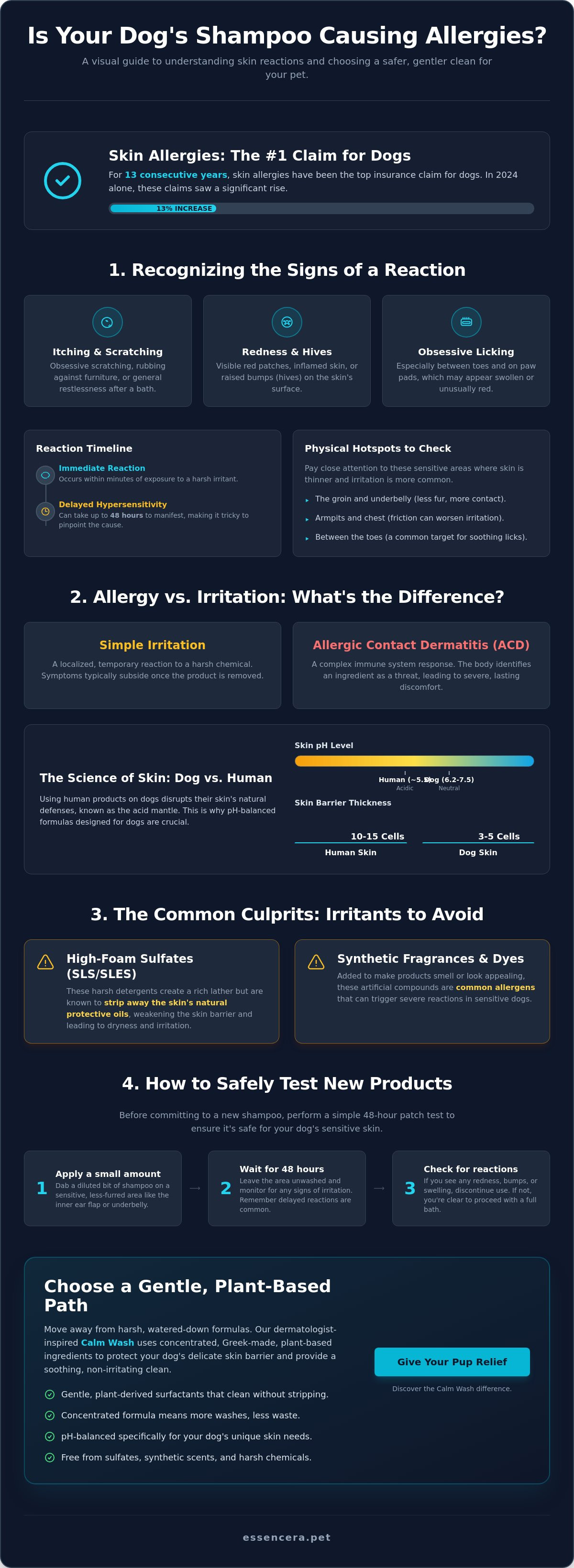
Did you know that skin allergies have been the number one insurance claim for dogs for thirteen consecutive years? In 2024, these claims rose by 13 percent, according to Nationwide Pet Insurance data. It's deeply distressing to watch your pet in physical discomfort after a bath, especially when you have invested in products that claim to be gentle. You might find yourself asking, "is my dog's shampoo causing allergies," as you struggle to decode complex ingredient labels that seem designed to confuse rather than clarify.
We believe that when your pet is your whole world, only the good stuff will do. You want to provide relief, not more irritation. This guide will help you identify the clear signs of a shampoo-related reaction and provide a list of harsh chemicals to avoid at all costs. We'll also introduce you to the benefits of our dermatologist inspired and pet approved approach. You'll learn how clean, plant-based ingredients like those in our Calm Wash can protect your dog's delicate skin barrier. By moving away from watered-down liquids and toward our concentrated, Greek-made formulas, you can finally give your sensitive pup the soothing, non-irritating wash they deserve.
Key Takeaways
- Identify the telltale signs of skin distress, from redness to obsessive licking, and learn to distinguish between immediate reactions and delayed hypersensitivity.
- Uncover why high-foam sulfates and synthetic scents are the main reasons you might wonder is my dog's shampoo causing allergies and how they impact the skin's acid mantle.
- Gain clarity on the difference between Allergic Contact Dermatitis and simple irritation to make more informed choices for your pet's delicate skin barrier.
- Follow a safe, step-by-step guide for performing a 48-hour patch test at home before introducing any new grooming formula to your routine.
- Discover how choosing a concentrated, plant-based solution like Calm Wash uses gentle surfactants to provide a soothing, non-irritating clean.
Recognizing the Signs of a Shampoo Allergy in Your Dog
Watching your dog scratch or lick themselves incessantly after a bath is heartbreaking. You naturally wonder, is my dog's shampoo causing allergies, or is it just a bit of dry skin? Identifying the difference is the first step toward restoring their comfort and peace of mind. While some dogs have naturally sensitive skin, a true allergy is an immune system overreaction that requires careful attention.
Common Signs of an allergic reaction include visible redness, raised hives, and patches of inflamed skin. You might also notice secondary issues like chronic ear infections or swollen, red paw pads. When their skin is compromised, they become more vulnerable to yeast or bacterial infections. Don't ignore the psychological cues either. If your pet starts hiding or trembling at the sight of the shampoo bottle, they're likely associating the bath with the physical pain that follows. In rare cases, severe allergies can lead to anaphylaxis. Seek emergency veterinary care immediately if you notice difficulty breathing, facial swelling, or sudden lethargy.
The Timeline of a Skin Reaction
Reactions don't always happen right away. An immediate reaction occurs within minutes and is often a response to a harsh irritant. However, delayed hypersensitivity can take up to 48 hours to manifest. This delay makes it tricky to pin down the cause. When you ask yourself is my dog's shampoo causing allergies, remember that timing is everything. Repeated exposure to a mild irritant can eventually trigger a sudden, severe allergy as the immune system becomes sensitized over time. Tracking their skin condition for two full days after a wash is the best way to confirm if the shampoo is the culprit.
Physical Hotspots to Check
Certain areas of the body are more prone to contact dermatitis because the skin there is thinner and more sensitive. Check these specific spots for signs of distress:
- The groin and underbelly: These areas often have less fur and come into direct contact with suds.
- Armpits and the chest: Friction in these areas can worsen the irritation from harsh chemicals.
- Between the toes: Dogs often lick their paws to soothe the burning sensation of an allergy.
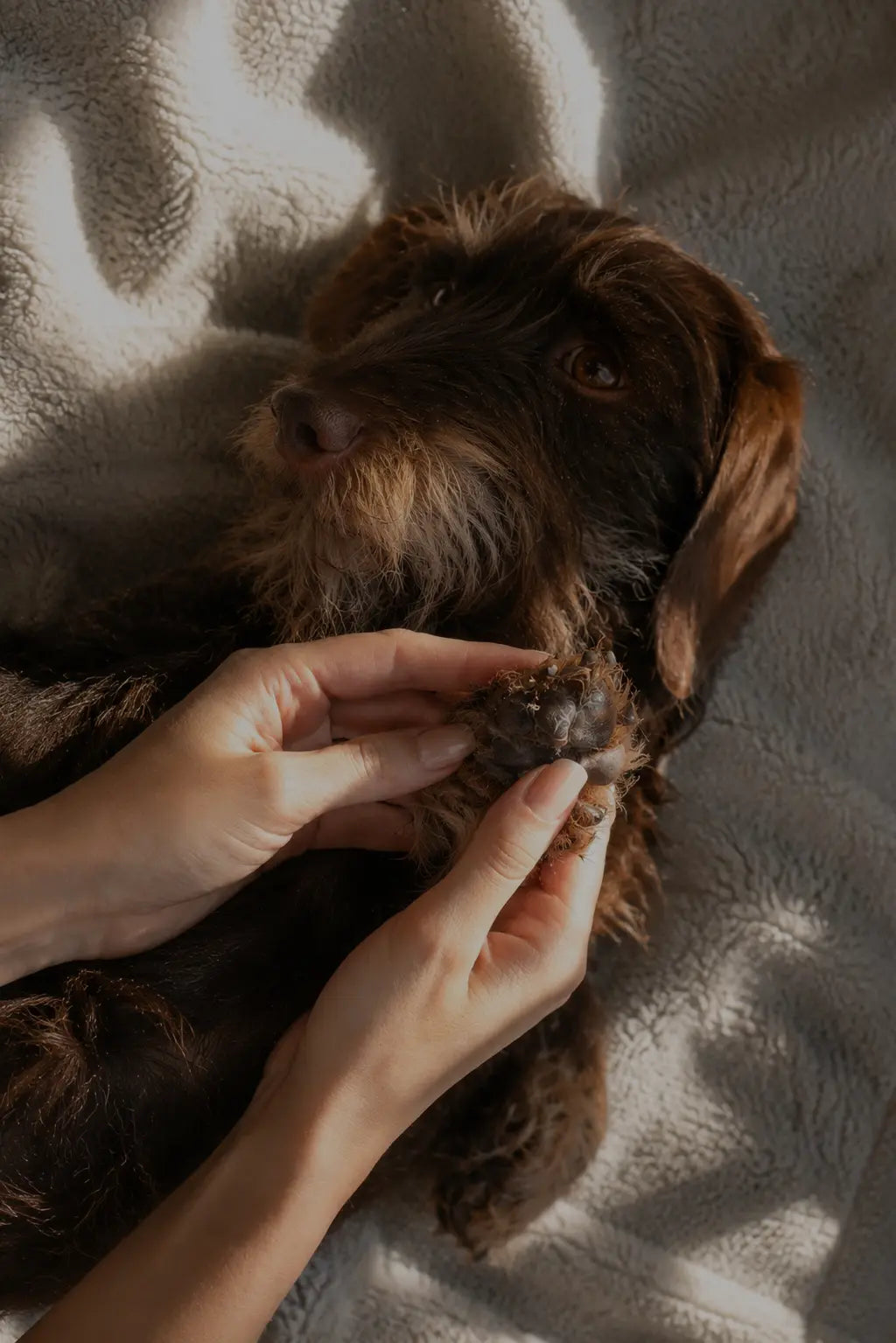
Distinguishing between flea bites and a shampoo allergy is essential for proper care. Flea reactions usually center around the base of the tail, while shampoo allergies tend to be more widespread. To help soothe and protect irritated feet, you can apply Barrier Balm. This creates a protective layer that keeps environmental allergens out while the skin barrier recovers.
Allergy vs. Irritation: Why Ingredients Matter More Than You Think
When your dog can't stop scratching after a bath, it's easy to feel frustrated and confused. You might wonder, is my dog's shampoo causing allergies, or is their skin simply a bit dry? Understanding the difference between a simple irritation and a true allergy is vital for your pet's long term health. Simple irritation is often a localized reaction to a harsh chemical that goes away once the product is removed. In contrast, Allergic Contact Dermatitis (ACD) is a complex immune system response where the body identifies a specific ingredient as a threat. This can lead to more severe and lasting discomfort, making Recognizing the Signs of a Shampoo Allergy a priority for every conscientious pet owner.
One of the biggest mistakes well meaning owners make is using human products on their dogs. You might think baby shampoo is gentle enough for a puppy, but the science tells a different story. Human skin has an acidic pH of about 5.5, while a dog’s skin is much closer to neutral, typically ranging from 6.2 to 7.5. When you use human pH-balanced products, you disrupt the delicate balance of their skin. This disruption strips away natural oils and weakens their defense system, leaving them vulnerable to every allergen in their environment. At Essencera, we formulate our plant-based luxury products to respect this biological difference, ensuring every wash feels like care.
The Science of the Skin Barrier
A dog's skin is remarkably delicate; it is only three to five cells thick, whereas human skin is ten to fifteen layers deep. This thinness means chemicals penetrate their system much faster than they do ours. The acid mantle is a thin, slightly acidic film on the skin's surface that serves as the first line of immune defense against bacteria and viruses. When harsh sulfates or artificial dyes strip this mantle away, the skin becomes porous and reactive. A compromised barrier is almost always the root cause of recurring skin problems and chronic itchiness.
Why Rinsing Isn’t Always Enough
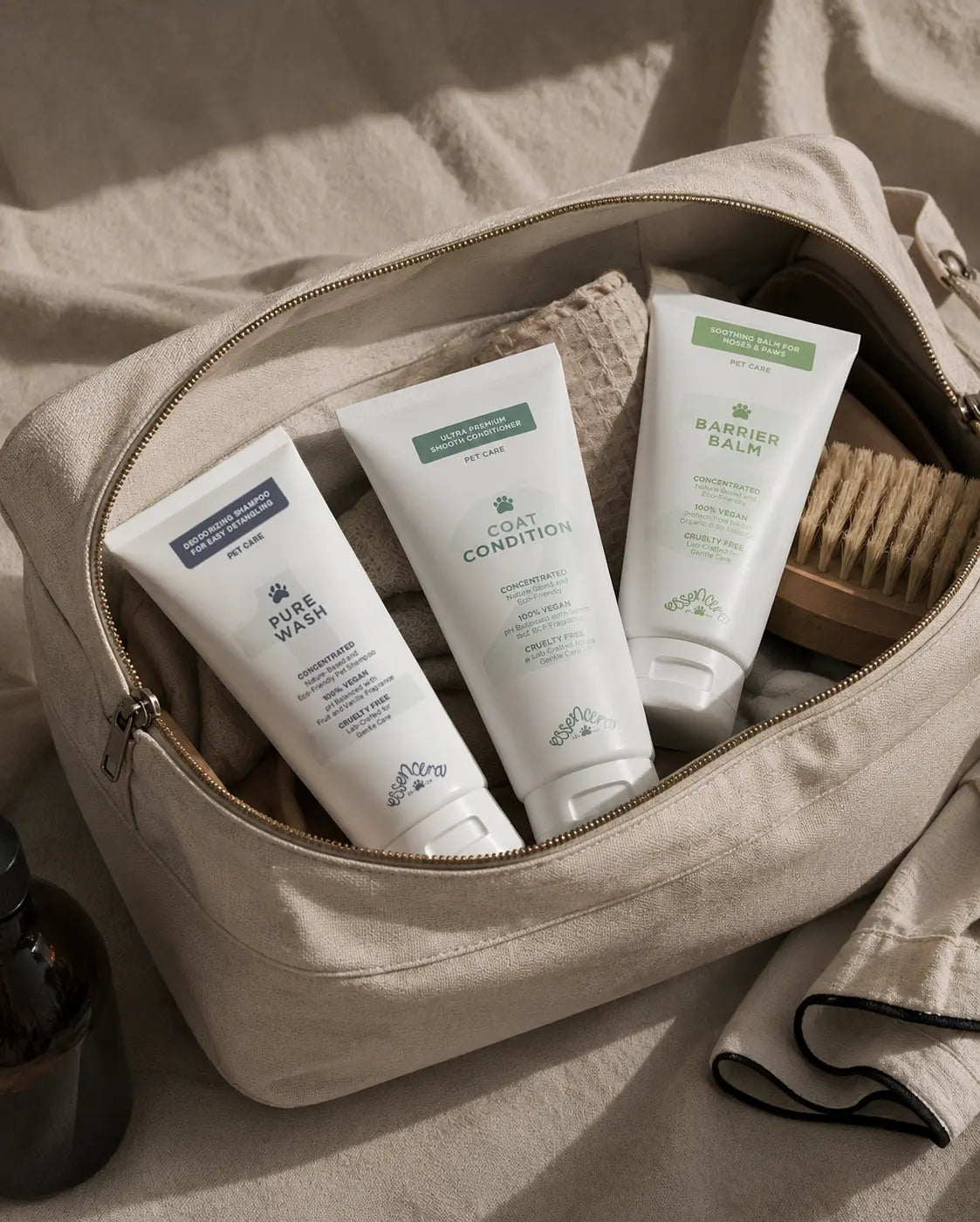
Many people believe that a thorough rinse will solve the problem, but some ingredients are designed to stay behind. Synthetic fragrances are notorious for penetrating the skin even after you think the suds are gone. Many standard pet products also contain "film-forming" ingredients like heavy synthetic waxes or silicones. These can trap residual irritants against the body, causing prolonged exposure that triggers an immune flare up. Instead of using these shortcuts, we recommend using Coat Condition after washing with a gentle formula like Calm Wash. This helps restore essential hydration and repairs the coat with amino acids without leaving a toxic film behind. If you want to see how a truly clean formula can transform your grooming routine, you can explore our dermatologist inspired collection today.
The Common Culprits: Hidden Irritants in Standard Pet Products
Many devoted pet owners reach for bottles labeled "hypoallergenic" or "natural" thinking they've found a safe solution. It's a common trap because the pet industry is largely self-regulated. The term "hypoallergenic" has no legal definition in the United States, allowing brands to use it even when their formulas contain known irritants. When you ask yourself, is my dog's shampoo causing allergies, the answer is often hiding in the fine print of the ingredient label. Most mass-market products rely on cheap industrial cleansers and synthetic shortcuts that prioritize shelf life and profit over your pet's well-being.
Sulfates like Sodium Lauryl Sulfate (SLS) are perhaps the most common offenders. These chemicals are used because they create a thick, satisfying foam that we've been conditioned to associate with cleanliness. In reality, these high-foam surfactants are incredibly abrasive. They strip away the skin's protective oils and cause significant irritation. We believe in a different approach. Our Greek-made formulas use gentle coconut-derived surfactants instead of harsh industrial cleansers. This provides a kind, effective clean that respects the delicate skin barrier while meeting high European cosmetic standards.
Another major issue is the "Preservative Problem" found in liquid shampoos. Most standard pet washes are up to 80 percent water. Because water is a breeding ground for bacteria, these watered-down products require aggressive chemical stabilizers and preservatives to stay shelf-stable. Our concentrated paste formula follows a "Less water, More care" philosophy. By creating a dense, plant-based luxury paste, we offer better value and a cleaner product that doesn't rely on the harsh stabilizers found in liquid competitors.
Decoding the Ingredient Label
Understanding what goes into a bottle is the first step toward conscientious care. Surfactants are the agents that lift dirt and oil from the coat. While industrial versions are abrasive, we use cosmetic-grade ingredients like amino acids for coat repair and hyaluronic acid for lasting hydration. We also strictly exclude artificial dyes. These colors serve no purpose other than visual marketing and are a primary trigger for canine skin reactions. True purity doesn't need artificial coloring to prove its value.
The Risk of Essential Oils in Sensitive Pets
It's important to remember that even natural ingredients can be irritants for some highly reactive dogs. While botanical extracts offer many benefits, they must be used with expert knowledge. For pets that need the most soothing experience, Calm Wash is our dermatologist-inspired solution. If you are looking for a deeper clean for a healthy coat, Pure Wash is an excellent choice. However, if you are using Shield Wash for pest deterrence, please be aware that it is not safe for cats. The essential oil content that protects your dog can be toxic to felines, so always keep your multi-pet household's specific needs in mind.
How to Safely Test and Transition to Safer Grooming
Transitioning to a cleaner grooming routine is a meaningful act of love for your pet. If you've been asking yourself, is my dog's shampoo causing allergies, you're already on the path to providing better care. However, simply switching bottles isn't always enough to heal the effects of long term chemical exposure. You need a methodical approach to ensure their delicate skin barrier has the time and support it needs to recover from harsh synthetic detergents and artificial fragrances. This transition is a journey toward health that requires patience and close observation.
The Professional Patch Test Method
Before you lather up your dog’s entire body, it is essential to perform a controlled test. Select a small, hairless area like the inner thigh for the most accurate result. Mix a tiny amount of your chosen shampoo with water to create a diluted solution, then apply it gently to the skin. You should look for swelling or heat as a sign of an allergy. While some irritations appear quickly, the 48-hour observation period is the most critical part of this process. Delayed hypersensitivity can take two full days to manifest, so don't rush into a full bath until you're certain the skin remains calm and comfortable.
The Detox Bath
Once you've confirmed a product is safe, the next step is removing the buildup left behind by standard industrial products. Using Pure Wash for a deep, clean detox helps lift environmental pollutants and residual synthetic waxes from the coat. Our Greek-made formulas include hyaluronic acid, which helps pull moisture back into parched skin cells that have been stripped by harsh sulfates. You might notice your dog’s coat feels different after the first wash with a clean formula. Because we avoid synthetic silicones that create a fake, slippery feel, the fur may feel more natural and textured at first. This is a sign that the coat is finally breathing again without a toxic film covering it.
Repairing the skin barrier doesn't happen overnight. It takes time for the acid mantle to rebuild and for the natural oils to balance themselves out. During this time, the premium amino acids in our concentrated pastes work to repair individual hair shafts from the inside out. If you're ready to provide your pet with the relief they deserve, you can shop our dermatologist inspired collection to start their journey toward healthier skin today. We're here to help you make grooming feel like care, ensuring your pet stays happy, healthy, and itch-free.
Choosing a Gentle Path with Calm Wash for Sensitive Pups
If you've spent weeks wondering is my dog's shampoo causing allergies, it's time to choose a path rooted in purity and science. We created Calm Wash specifically for the pets that need the most nurturing touch. It's a dermatologist-inspired solution that provides peace of mind for devoted owners who are tired of seeing their companions in distress. By focusing on plant-based luxury, we've proven that you don't have to choose between a clean dog and a healthy one. Our Greek heritage and commitment to high European standards ensure that every jar meets cosmetic-grade purity levels that far exceed standard pet industry requirements.
One of the most significant benefits of our approach is the concentrated paste formula. A major secret of the pet industry is that most liquid shampoos are up to 80 percent water. Because water is a breeding ground for bacteria and mold, these watered-down products must be packed with aggressive chemical stabilizers and harsh preservatives to remain shelf-stable. These stabilizers are often the hidden triggers for skin flare ups. Our "Less water, More care" philosophy allows us to significantly reduce the need for these unnecessary fillers. You get more value in every jar and a much safer experience for your pet's delicate skin.
Designed for the Most Vulnerable
Puppies, seniors, and dogs with known allergies have skin that is exceptionally thin and reactive. Calm Wash is the ideal choice for these vulnerable pets because it uses gentle, coconut-derived surfactants. These plant-based cleansers lift away dirt without stripping the skin's natural oils or disrupting the acid mantle. We believe that grooming should feel like care, not a chore. By using soothing ingredients that respect the biological needs of your dog, we turn a potentially stressful bath into a sensory experience that promotes a happy tail and a calm spirit.
Commitment to Transparency
Trust is built through honesty and transparency. Our promise to you is simple: no artificial dyes, no synthetic fragrances, and no harmful fillers. We use premium ingredients like amino acids and hyaluronic acid because your pet's well-being is our primary focus. We've worked hard to bridge the gap between scientific validation and pet-approved happiness, ensuring our formulas are both effective and kind. If you want to dive deeper into how to protect your pet's skin, we encourage you to explore our Gentle Guide to Natural Dog Shampoo. When they're your whole world, only the good stuff will do, and we're here to provide exactly that. Our tagline says it best: Dermatologist Inspired. Pet Approved.
Embracing a Softer Way to Wash
You now have the tools to recognize if your pet is suffering from a contact reaction. By understanding the signs of distress and learning to decode deceptive labels, you can finally answer the question, is my dog's shampoo causing allergies. Remember that a healthy skin barrier is the foundation of a happy, itch-free life. Protecting that barrier means avoiding harsh sulfates and opting for plant-based ingredients that nourish rather than strip away natural oils.
Choosing a cleaner path doesn't have to be complicated. Our concentrated paste formula delivers plant-based luxury while following a "Less water, More care" philosophy. This unique approach ensures your pet receives a gentle wash free from synthetic fragrances and artificial dyes. Using a formula like Calm Wash is a dermatologist inspired and pet approved way to make grooming feel like care. Give your dog the gentle care they deserve: Shop the Calm Wash Collection.
Your pup's skin will thank you for the extra love and attention. We're here to help you provide the peace of mind your best friend deserves through every stage of their life.
Frequently Asked Questions
Can a dog suddenly become allergic to a shampoo they have used for years?
Yes, dogs can develop a sudden allergy to a familiar shampoo through a process called sensitization. This happens when the immune system identifies a previously harmless ingredient as a threat after multiple exposures. If you've been asking is my dog's shampoo causing allergies after years of use, it's possible their skin barrier has finally reached its limit with certain synthetic additives or preservatives.
Is human baby shampoo safe for dogs with skin allergies?
No, human baby shampoo is not a safe long term solution for dogs with skin allergies. While it's marketed as gentle for humans, its pH is far too acidic for a dog's neutral skin chemistry. Using it can strip away the acid mantle, which is the skin's first line of defense. This leaves your pet more vulnerable to environmental irritants and infections.
How long does a dog shampoo allergy reaction usually last?
Most shampoo allergy reactions last between 24 and 72 hours, depending on the severity of the exposure. Mild redness or itching might fade quickly once the product is rinsed away. However, if the irritant has penetrated the skin, the discomfort may persist until the immune system calms down. Using a hydrating formula like Coat Condition can help soothe the area while restoring moisture.
What is the most common ingredient that causes allergies in dog shampoos?
Synthetic fragrances and harsh sulfates like Sodium Lauryl Sulfate (SLS) are the most common culprits. These industrial grade cleansers are used to create high foam but often strip the skin of its natural protective oils. Artificial dyes are another major trigger. We avoid these entirely, using gentle coconut-derived surfactants in products like Pure Wash instead.
Can I use an oatmeal shampoo if my dog is already having an allergic reaction?
You should proceed with caution when using oatmeal shampoos during an active flare up. While oatmeal can be soothing, many mass market oatmeal shampoos contain hidden synthetic fragrances or harsh preservatives that can aggravate an existing allergy. It's often safer to use a minimalist, dermatologist-inspired formula like Calm Wash to provide relief without adding new irritants.
What should I do if my dog has a severe reaction like difficulty breathing after a bath?
Seek emergency veterinary care immediately if your dog shows signs of anaphylaxis, such as difficulty breathing, facial swelling, or extreme lethargy. While most shampoo reactions are limited to the skin, severe systemic allergies can be life threatening. Don't wait to see if symptoms improve; a quick professional intervention is necessary for your pet's safety and survival.
Is it possible for a dog to be allergic to natural essential oils in organic shampoos?
Yes, it's entirely possible for a dog to be sensitive to natural essential oils. While these plant-based ingredients offer many benefits, they are biologically active and can cause reactions in highly reactive pets. For example, our Shield Wash is effective for dogs but is not safe for cats due to its specific essential oil content.
How often should I bathe a dog that has highly sensitive or reactive skin?
Most dogs with sensitive skin should only be bathed every 4 to 8 weeks to avoid over-stripping their natural oils. Over-bathing can weaken the skin barrier and make it more reactive. When a bath is necessary, use a concentrated, plant-based luxury paste that provides "Less water, More care." You can also use Barrier Balm between washes to protect sensitive spots from environmental allergens.