Natural Skunk Odor Remover for Dogs: Step-by-Step Guide
A regular bath may seem like the quickest fix, but water alone won’t neutralize skunk oils and can spread them through your dog’s coat. If you’re looking for a natural skunk odor remover for dogs, first keep your pup outside and choose a treatment carefully, especially around the eyes and skin.
That strong, lingering smell can cling to nearby belongings, too, so it’s understandable to want a fast solution without risking irritation or repeated baths. This guide explains how to handle skunk spray, compare common removal options, and avoid mistakes, including relying on tomato juice to remove the odor. Once the skunk oils have been treated and rinsed away, a gentle aftercare bath can help clean the coat. For dogs with sensitive skin, Calm Wash is a gentle cleansing option for this step, not a skunk-odor neutralizer. You’ll also learn how to help your dog’s coat feel comfortable again without over-washing.
Key Takeaways
- Start calmly: keep your dog away from indoor spaces and check for spray near the eyes or mouth before cleaning.
- Choose a natural skunk odor remover for dogs based on its intended use and safety directions, not just its scent or “natural” label.
- Understand why odor can linger and why fragrance or ordinary washing alone may not address the residue causing it.
- Follow treatment directions carefully, protect your dog’s eyes and skin, and reassess before deciding whether another treatment is needed.
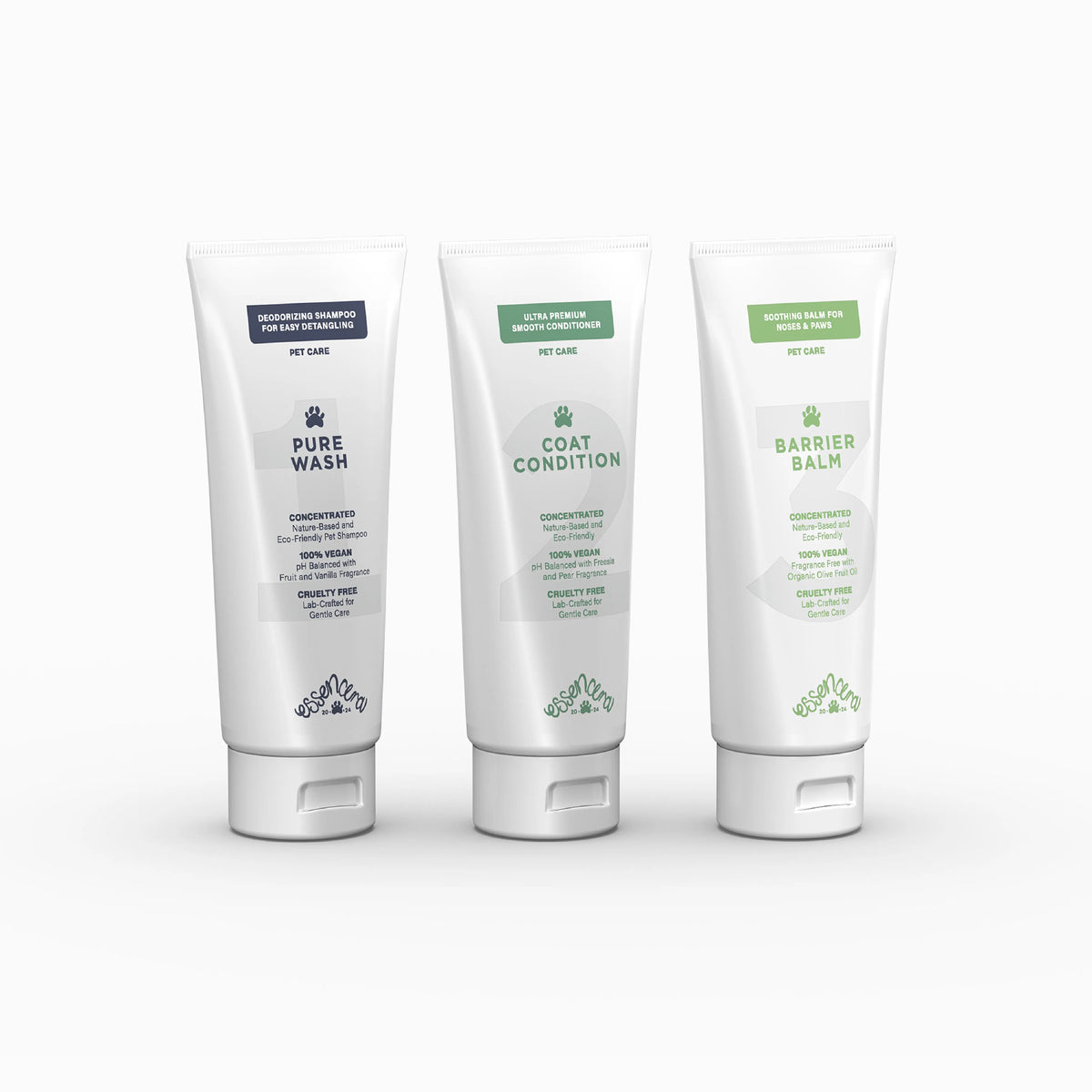
- Use Pure Wash for routine cleansing after odor treatment, not as a proven skunk-odor neutralizer.
Natural skunk odor remover for dogs: what to do first
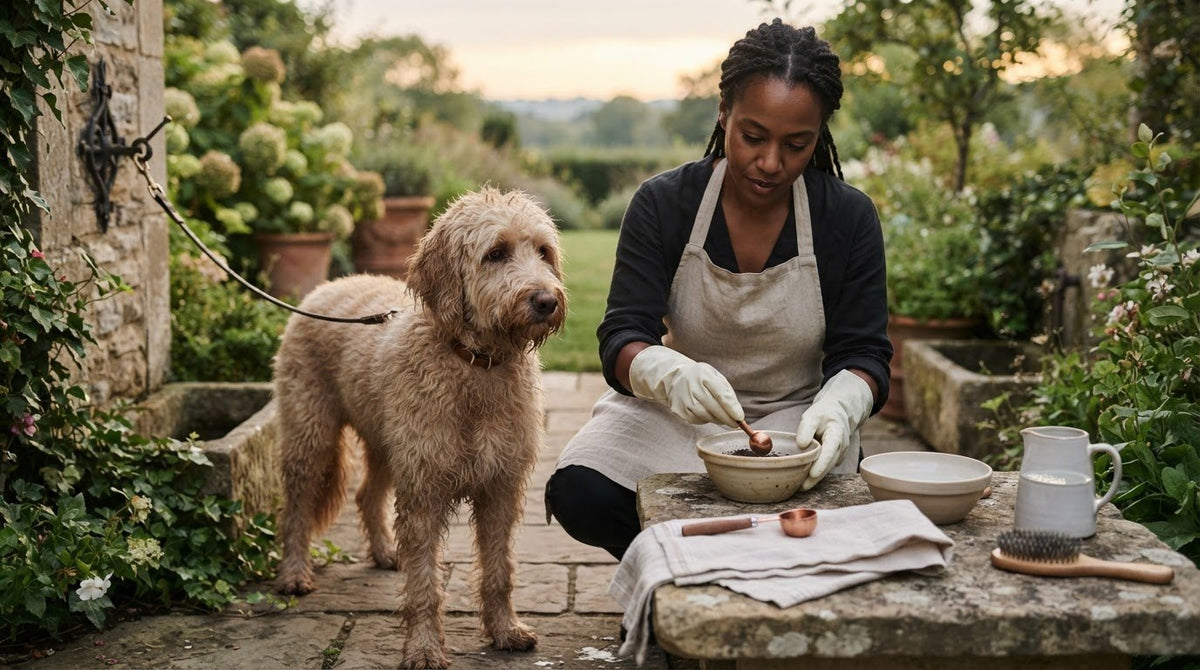
A skunk encounter is stressful, but you don’t need to rush into a bath. A calm, organized response helps protect your dog and keeps residue from spreading through your home. Before choosing a natural skunk odor remover for dogs, check your dog, set up a washable work area, and gather your supplies.
Start here: Keep your dog outside, check for spray near the eyes or mouth, seek veterinary advice for concerning symptoms, then prepare your treatment and rinse supplies before cleaning.
What to check before cleaning a skunk-sprayed dog
Look gently at your dog’s face and coat without rubbing. Check whether spray may have reached the eyes, mouth, or nose, and look for signs of skin irritation. If the eyes are affected, rinse them with plain water or saline eye wash. Contact a veterinarian promptly if your dog has eye or mouth exposure, breathing difficulty, marked irritation, or unusual distress. Don’t apply an odor treatment near the face while deciding what to do.
What to prepare before applying an odor treatment
Keep your dog outside or in a washable area with a cleanable floor. Put on gloves if available, and gather old towels, the selected treatment, and enough clean water for rinsing. Wear clothes you can wash, and move nearby fabrics or belongings out of the work area. These steps help limit transfer, but gloves and towels aren’t a substitute for following product directions.
- Keep your dog contained: Use a secure outdoor spot or washable area so the coat doesn’t brush against furniture, carpets, or bedding.
- Check for urgent concerns: Pay particular attention to the face, eyes, mouth, breathing, and signs of significant discomfort.
- Blot, don’t rub: If you see excess oily residue, gently pat it with paper towels. Rubbing can spread it through more of the coat.
- Gather everything first: Have the chosen treatment and rinse supplies close at hand before you begin.
- Keep the coat dry until treatment: Don’t rinse with plain water first. Skunk spray contains compounds that can become more noticeable after contact with water, as described in this overview of skunk spray composition and removal.
Preparation also helps you avoid layering scented sprays or household fragrances over the odor. A stronger scent may temporarily mask what you smell, but it doesn’t address the residue on the coat. Adding products without a clear plan can mean more handling and rinsing for your dog. Choose one treatment approach, read its directions before use, and work carefully rather than improvising as you go.
Why skunk odor clings to a dog’s coat
Skunk spray is a defensive secretion, not simply a strong-smelling liquid. Its sulfur-containing compounds include thiols, which are responsible for much of its pungent odor. The aim of odor treatment is to change the odor-causing compounds into less odorous ones. This overview of skunk spray composition and removal describes the spray and the chemistry behind a commonly discussed treatment approach.
Effective odor treatment targets the compounds responsible for the smell, rather than relying on a cleaner’s scent or general cleansing action. That’s why the treatment’s intended use and directions matter.
Odor treatment versus fragrance masking
Products can have different jobs. An odor-focused treatment is designed for skunk spray, while a routine grooming cleanser is made for ordinary coat cleansing. A scented product may add its own aroma, but that alone doesn’t show that the skunk compounds have been changed or removed.
Check that a treatment is intended for dogs and read its directions before applying it. Don’t assume that a familiar household ingredient will work or that a “natural” label makes a product suitable for every dog. Review ingredients and directions for safety, especially if your pet has sensitive or irritated skin.
Why repeated washing may not solve the whole problem
Washing and odor treatment are not interchangeable. A cleanser can help with ordinary dirt and product residue, but repeating a general bath isn’t a substitute for a treatment intended for skunk spray. If you’re unsure whether another application is appropriate, follow the treatment’s instructions rather than adding extra washes or extending its use.
Household cleanup is a separate task from coat care. An item’s material and care label determine how it should be cleaned, so don’t use a pet treatment on a household surface unless its directions specifically allow that use. Likewise, keep surface cleaners away from your dog unless their labels say they’re suitable for pets.
After the odor-focused step is complete, a routine cleanser can serve its usual grooming purpose. Keep that role distinct from skunk treatment, and choose products according to their directions and your dog’s coat and skin needs.
Natural and store-bought skunk odor removers for dogs compared
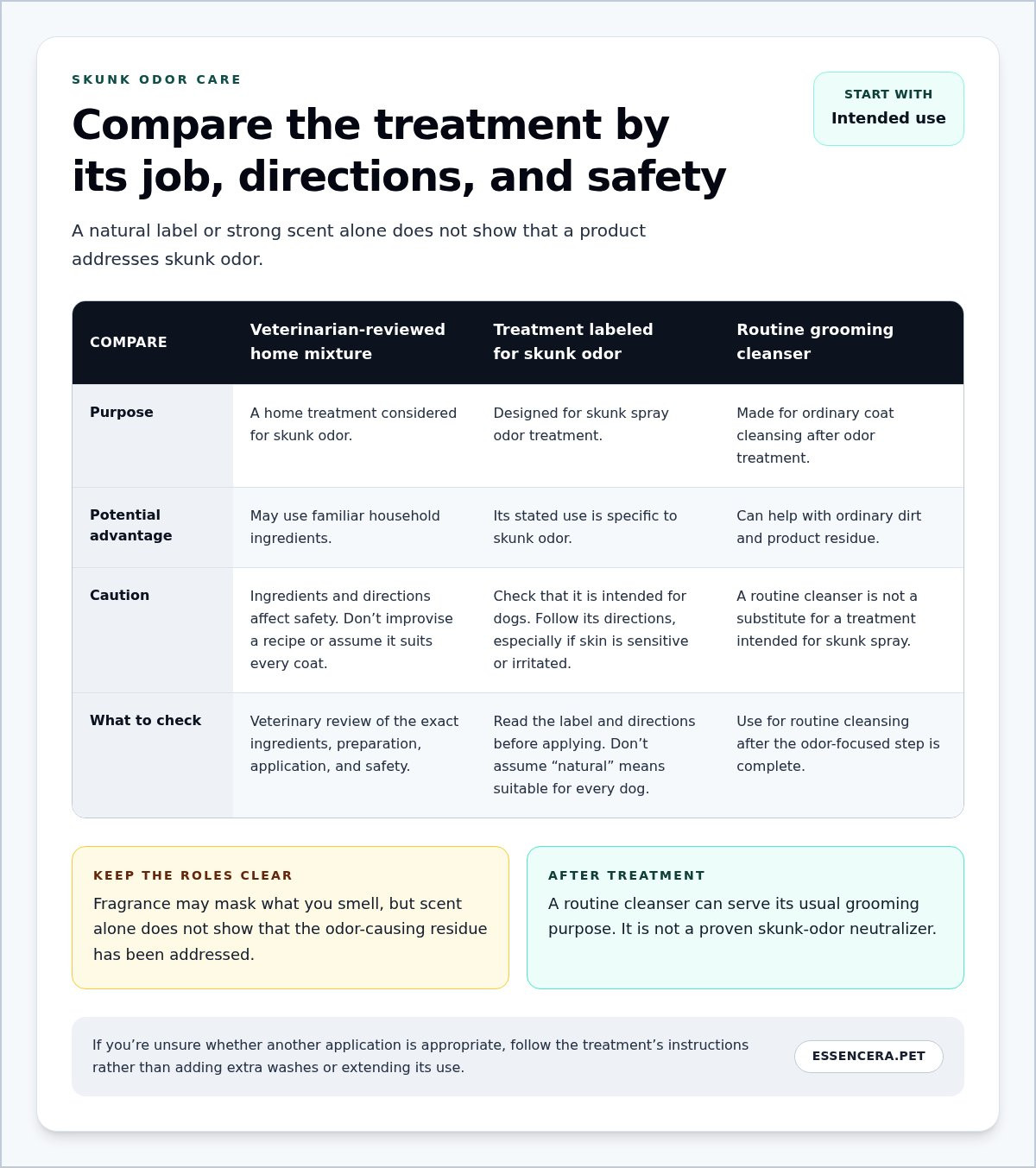
There isn’t one best choice for every dog. A home mixture, a product labeled for skunk odor, and a regular grooming cleanser have different roles. Compare them by intended use, directions, and safety information, not by how natural or strongly scented they seem. Natural ingredients aren’t automatically risk-free, especially for dogs with sensitive skin or existing irritation.
| Option | Purpose | Potential advantages | Cautions | Evidence needed |
|---|---|---|---|---|
| Veterinarian-reviewed home mixture | A home treatment considered for skunk odor | May use familiar household ingredients | Ingredients and directions can affect safety; don’t improvise a recipe or assume it suits every coat | Veterinary review of the exact ingredients, preparation, application, and safety cautions |
| Dog-specific skunk odor remover | Targeted odor treatment on a pet’s coat | Label directions may explain how to apply and rinse it | Check that it’s meant for dogs and follow its precautions, especially near the face or irritated skin | Clear dog-specific label directions, ingredient disclosure, and rinse instructions |
| Routine grooming cleanser | General coat cleansing, usually after odor treatment | Can clean the coat as part of ordinary grooming care | Shouldn’t be assumed to neutralize skunk odor | Product label and claims limited to its stated cleansing role |
When a home remedy may be considered
Some home mixtures are commonly discussed for skunk odor, but familiarity isn’t proof of safety or effectiveness. Consider one only after a veterinary professional has reviewed the exact recipe and directions for your dog. Don’t guess ingredient amounts or combine products based on an online variation. If a professionally reviewed approach includes specific preparation, use, or disposal instructions, follow them precisely.
That review matters because your dog’s coat, skin condition, and the mixture’s ingredients all affect whether it’s appropriate. Stop if irritation appears, and seek veterinary advice if you’re unsure how your dog is responding.
What to look for in a purpose-made odor remover
Choose a product with directions that clearly say it’s intended for dogs and explain how to apply and rinse it. Read the cautions before starting, including any guidance about the face, skin irritation, or repeat use. A product designed for skunk odor is different from a routine grooming cleanser, even if both are used on a dog’s coat.
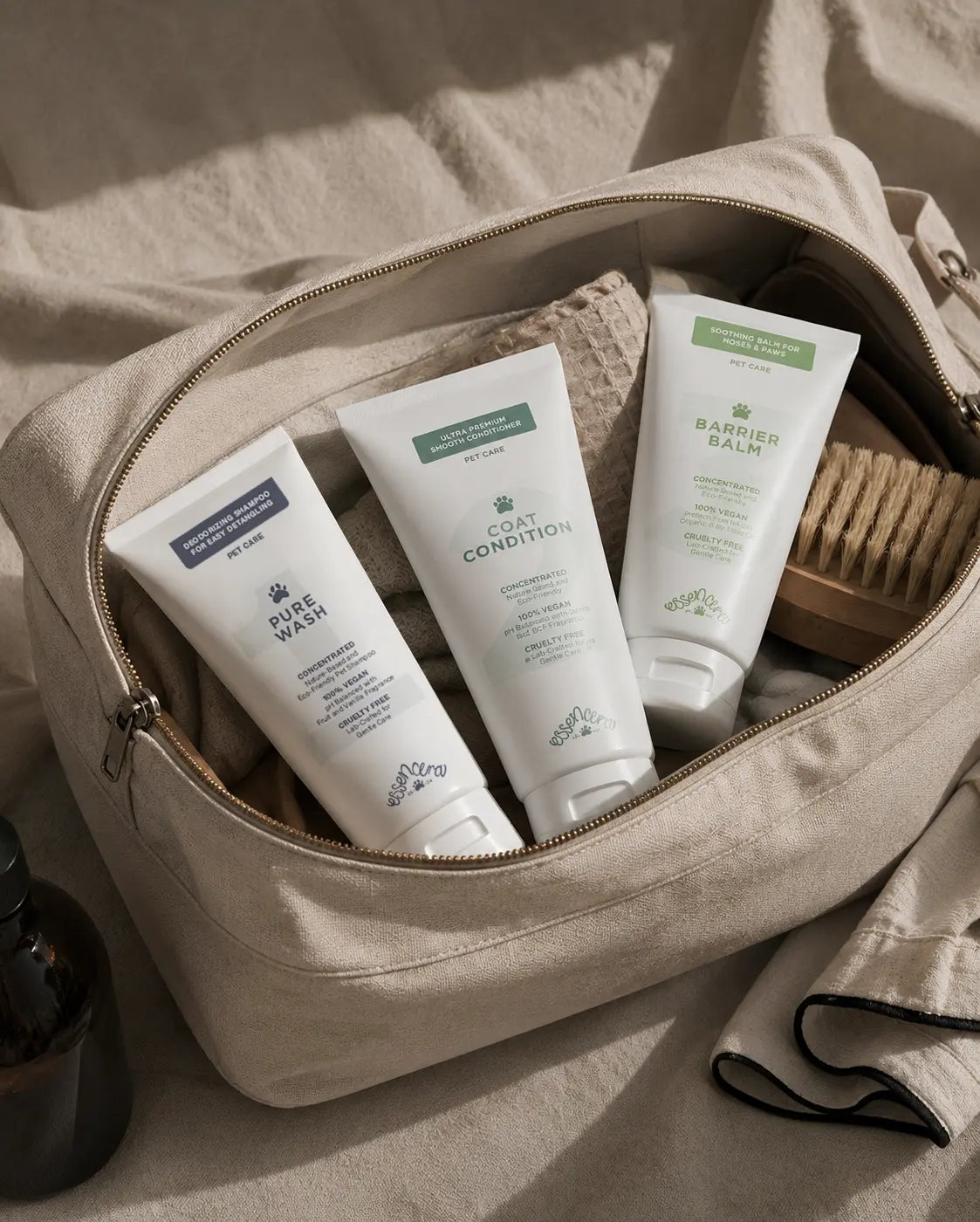
For ordinary cleansing after odor treatment, Pure Wash is a concentrated cleansing paste, not a proven skunk-odor neutralizer. Use a routine cleanser for its intended grooming role, and keep odor treatment separate. This makes it easier to choose a natural skunk odor remover for dogs based on clear instructions rather than scent alone.
How to remove skunk odor from a dog, step by step
After your initial safety check and setup, use one odor-focused treatment carefully from start to finish. The exact process depends on the treatment you selected. Use only a veterinarian-reviewed home approach or a product labeled for dogs, and let its directions guide application, contact time, and rinsing. Don’t improvise or combine methods.
- Read the full directions first. Check the treatment’s intended use, application instructions, cautions, and rinse guidance before opening or mixing it. If any direction is unclear, pause and seek veterinary advice rather than guessing.
- Plan how you’ll cover the coat. Identify the areas that need treatment and decide how to work through them methodically. Follow the product’s directions for application, and keep it away from the eyes and mouth unless a veterinary professional or the label specifically directs otherwise.
- Apply only as instructed. Use the stated amount and method, and observe the specified contact time. Don’t leave a treatment on longer in the hope of improving the result, and don’t add fragrance, cleanser, or another household ingredient to it.
- Watch your dog during treatment. Stop if your dog becomes unusually distressed or develops signs of irritation. Don’t continue just to finish the coat. Seek veterinary guidance about whether rinsing or another response is appropriate.
- Rinse as directed. Follow the treatment’s rinse instructions carefully, including any guidance about when the process is complete. Avoid adding a routine grooming product until the odor treatment has been rinsed away and its directions allow the next step.
- Reassess before doing anything more. Once the coat is rinsed, check whether the smell remains and whether the treatment instructions allow another application. Don’t repeat it automatically or extend its contact time. If the directions don’t answer what to do next, get veterinary advice.
Stop home treatment and seek veterinary advice if your dog shows irritation, unusual distress, or any concerning reaction during application or rinsing. If the odor remains, avoid switching rapidly between remedies. A veterinarian can help you decide whether another treatment is appropriate for your dog.
Clean collars, towels, and bedding separately, following care instructions suited to each item. Once the odor-focused treatment is complete, a routine cleanse can address ordinary coat cleaning, but it isn’t a proven skunk neutralizer. Pure Wash is a concentrated cleanser for routine grooming, not a replacement for the odor-treatment step.
After skunk odor treatment: gentle dog bathing and coat care
Once the odor treatment has been rinsed away as directed, give your dog’s coat a little breathing room. Check the skin for redness or tenderness before starting another grooming step. If your dog seems uncomfortable, pause and ask a veterinarian for advice instead of adding another bath. A thoughtful reset helps you care for the coat without turning cleanup into repeated washing.
Choose a gentle wash after the odor-focused step
If the coat still needs routine cleansing, use a dog-specific product according to its directions and keep it away from the eyes. For regular cleansing, Pure Wash is a gentle option. For dogs with sensitive skin, Calm Wash is another aftercare option. Follow the product directions, and stop if you notice irritation.
Keep the coat comfortable after bathing
Rinse the coat thoroughly according to the cleanser’s directions, then dry gently with a clean towel. Avoid applying extra products just to add scent. If your dog’s coat tangles, Coat Condition, the anti-tangle premium conditioner, can support easier brushing during drying and finishing when used as directed. It isn’t a substitute for addressing severe mats, so don’t force a brush through tangled fur.
Keep household cleanup separate from coat care. Collars, towels, and bedding may need washing according to their own care instructions. Don’t use a surface cleaner on your dog unless its label specifically says it’s suitable for pets. For rough or dry paws or noses after cleanup, Barrier Balm is intended to help hydrate those areas.
Let your dog’s skin and coat guide the next step. Keep the routine simple, follow each product’s directions, and return to regular grooming once your companion seems comfortable again.
Make the next cleanup feel more manageable
A skunk encounter can leave you feeling on edge, but it can also be a prompt to prepare a small, pet-safe cleanup kit for future outdoor adventures. Keep washable towels and a dog-specific odor treatment with its directions nearby, and save your veterinarian’s contact details where they’re easy to find. A little preparation can help you respond thoughtfully if another surprise happens.
Once odor treatment is complete, choose coat care for your dog’s needs rather than reaching for a stronger scent. Pure Wash is a concentrated cleanser with natural silver deodorant for routine cleansing, while Calm Wash is formulated for sensitive skin. Neither is a proven skunk neutralizer. Essencera’s formulas are cruelty-free, offering a considered option for everyday grooming after the odor-focused step.
Choose a natural skunk odor remover for dogs with care, follow its directions, and let your dog’s comfort guide what comes next. Explore Essencera’s gentle, concentrated pet grooming care for a softer return to your usual routine.
Frequently Asked Questions
How do you get skunk smell off a dog naturally?
Use a dog-safe odor treatment with directions reviewed by a veterinarian, rather than relying on a kitchen ingredient because it sounds natural. Choose a natural skunk odor remover for dogs based on its intended use and your dog’s condition. After odor treatment and rinsing, a routine cleanser may help with ordinary coat cleanup, but it isn’t a substitute for the odor-focused step.
Is hydrogen peroxide safe to use on a dog after a skunk spray?
Hydrogen peroxide isn’t automatically safe just because it appears in a commonly shared home remedy. It may irritate skin and can lighten dark fur, so don’t improvise a mixture, use a different concentration, or leave it on longer than professionally reviewed directions allow. Keep any peroxide treatment away from the eyes and mouth. Ask a veterinarian for guidance, especially if your dog has sensitive or damaged skin.
Can tomato juice remove skunk odor from a dog?
No, tomato juice isn’t a reliable way to neutralize skunk odor. Its strong scent may temporarily make the skunk smell harder to notice, but that doesn’t mean the residue has been removed. It can also leave your dog’s coat and nearby surfaces messy, creating more cleanup. Choose an odor treatment intended for dogs, and use tomato juice only as a food ingredient, not as a coat treatment.
How soon should I wash my dog after a skunk encounter?
Begin addressing the situation as soon as you can do so safely, but first check your dog for exposure around the eyes or mouth and for signs of distress. If you see concerning symptoms, contact a veterinarian before bathing. Otherwise, prepare the treatment and rinse supplies before starting, then follow that treatment’s directions. Avoid an ordinary preliminary bath if the odor-treatment instructions say to apply it to a dry coat.
What should I do if skunk spray gets in my dog’s eyes?
Rinse the eyes with plain water or a saline eye wash, and contact a veterinarian promptly for advice, particularly if redness, squinting, discharge, or discomfort continues. Don’t apply a skunk treatment, cleanser, or household mixture near the eyes unless a veterinary professional specifically directs you to. If your dog seems to have trouble seeing or is very distressed, seek veterinary care rather than continuing home cleanup.
Can regular dog shampoo remove skunk smell?
A routine cleanser can wash the coat, but it shouldn’t be relied on as a proven skunk-odor neutralizer. Complete the odor-focused treatment and rinse it as directed first. For later routine coat cleansing, Pure Wash is a concentrated cleanser with natural silver deodorant. Use it according to its directions, not instead of an odor treatment.
Why does my dog still smell after a skunk bath?
The odor may remain if a treated area was missed, or it may return after the coat gets wet because some skunk compounds can become more noticeable with water. Check whether collars, harnesses, or bedding still carry the smell, too. Don’t repeat a treatment beyond its label directions. If the odor persists, your dog’s skin looks irritated, or you’re unsure what to do next, ask a veterinarian for guidance.