

The plain coconut oil in your kitchen pantry might be the most common home remedy for cracked dog paws, but it often fails to provide the deep, structural repair your companion truly needs. It's frustrating to watch your dog limp or lick at their sore pads while realizing your gentle efforts aren't working. We understand the deep worry you feel when they're in pain, especially when you're navigating the fear of toxic ingredients in products they might ingest. You deserve peace of mind, and your dog deserves a recovery that feels like a soothing act of affection rather than a chore.
In this guide, you'll discover how to identify early signs of damage, such as the calluses found in over 11 percent of dogs according to 2025 studies. We'll show you how to treat and prevent future discomfort using a nurturing ritual of botanical care. You'll learn the science behind cosmetic-grade ingredients and how a concentrated Barrier Balm offers superior protection compared to watered-down alternatives. From the initial cleanse with a gentle Pure Wash or Calm Wash to the final protective seal, we'll help you build an effective routine for soft, resilient paws using plant-based luxury made in Greece.
Key Takeaways
- Learn how to distinguish between healthy, shock-absorbing pads and the painful fissures associated with cracked dog paws.
- Identify the specific environmental stressors and chemical irritants that cause your dog's pads to lose their natural moisture.
- Understand the science of botanical ingredients and why concentrated formulas offer superior nourishment compared to watered-down products.
- Master a restorative grooming ritual that pairs gentle cleaning with a massage-based application of Barrier Balm for deep hydration.
- Establish a simple weekly maintenance routine to ensure your dog's paws remain soft and resilient throughout every season.
Understanding Cracked Dog Paws and Identifying the Signs
Your dog's paw pads are remarkable feats of biological engineering. They serve as sophisticated shock absorbers, composed of specialized fatty tissue and collagen designed to cushion every step. This protective layer shields their delicate bones and joints from the daily impact of running on varied surfaces. While a healthy pad should feel slightly leathery to provide necessary traction, it must always remain flexible and resilient. When this tissue loses its natural moisture and elasticity, the structural integrity fails, leading to the development of cracked dog paws.
It's important to distinguish between the normal, rugged texture of an active dog's paws and the painful fissures that require intervention. A healthy pad is dark, smooth, and pliable to the touch. In contrast, damaged pads often lose their uniform color and feel brittle. You might notice several visual and behavioral cues that your companion is struggling:
- Redness and Inflammation: The skin between the toes or around the edges of the pad may appear pink or angry.
- Crusting or "Furring": A condition known as hyperkeratosis can make the pads look like they're growing extra hair or thick, crusty layers.
- Excessive Licking: If your dog is constantly grooming their feet, they're likely trying to soothe a burning or stinging sensation.
- Limping or Hesitation: A sudden change in gait or a refusal to walk on certain surfaces often indicates that the cracks have become deep enough to cause sharp pain.
The Difference Between Dryness and Deep Cracks
Surface dryness is often the first warning sign that your dog's natural defenses are weakening. It usually appears as an ashy, white film or a slight roughness that catches on carpets and blankets. While it might seem minor, addressing this early stage is a meaningful act of affection that prevents more serious complications. If left untreated, simple dryness can progress into deep fissures. These fissures are more than just uncomfortable; they penetrate the protective epidermis, causing bleeding and creating a direct pathway for bacteria to enter the body.
When Your Dog Needs a Professional Assessment
While many paw concerns can be managed with a dedicated care ritual, some situations require a professional's perspective. If you notice yellow discharge, a lingering foul odor, or if the paw pad feels noticeably hot to the touch, these are clear indicators of a potential infection. A 2025 study of dogs found that calluses affected 11.26% of subjects, showing how common structural changes can be. If the cracking is chronic despite your best efforts, it may point toward underlying issues like nutritional deficiencies or autoimmune conditions. Using a gentle, sulfate-free cleanser like Pure Wash helps you clear away debris so you can accurately assess the depth of the cracks before seeking professional advice.
The Most Common Causes of Dry and Cracked Paw Pads
While a dog's paw pads are built for endurance, they are constantly exposed to external stressors that can compromise their delicate moisture balance. Understanding these triggers allows you to act as a proactive guardian for your companion's comfort. Most cases of cracked dog paws stem from a combination of environmental extremes and modern household irritants that strip away natural oils faster than the body can replenish them.
Seasonal Impact on Paw Health
Every season brings unique challenges to your dog's foot health. In the winter, the primary threats aren't just the freezing temperatures, but the caustic road salts and chemical de-icers used on sidewalks. These substances are highly abrasive and can cause chemical burns. When you return home, the dry, artificial heat from indoor radiators further evaporates moisture from the skin. A 2025 study of canine health noted that environmental factors frequently contribute to erythema, or redness, which was observed in 6.97% of dogs studied. This redness is often a precursor to painful cracking.
Summer presents the opposite extreme. Asphalt and sand can reach temperatures that blister the skin within seconds. If the ground is too hot for your palm, it's too hot for their paws. Additionally, spring and autumn bring seasonal allergens. Pollen and mold can trigger intense itching, leading to "wet paws" from excessive licking. This constant moisture actually weakens the skin's barrier, making it more susceptible to deep fissures.
Mechanical and Chemical Irritants
Beyond the weather, your dog's daily environment is filled with hidden irritants. Rough terrain, such as jagged hiking trails or gravel paths, provides physical abrasion that wears down the pad's protective layer. However, chemical contact is often more damaging. Many common household floor cleaners contain harsh sulfates and synthetic fragrances that cause contact dermatitis. Since dogs walk barefoot on these surfaces and then lick their paws, they're exposed to these toxins both topically and internally.
Rinsing your dog's feet after every outdoor adventure is a simple yet vital habit. Using a gentle, sulfate-free cleanser like Calm Wash ensures that you're removing salt, fertilizers, and allergens without causing further irritation to sensitive skin. By clearing away these triggers, you create a clean canvas for healing. To provide a lasting shield against these daily stressors, consider applying a thin layer of Barrier Balm before your next walk to lock in hydration and block out irritants.
Comparing Home Remedies and Botanical Paw Balms
When you first notice the discomfort of cracked dog paws, your natural instinct might be to reach for a common household staple like petroleum jelly or plain coconut oil. While these items are often recommended on social forums, they rarely provide the deep, restorative care your dog needs. Petroleum-based products act solely as an occlusive barrier; they trap whatever is on the skin, including bacteria, without providing any nutritive healing. Similarly, while coconut oil is a lovely natural fat, it lacks the complex moisture-binding properties required to repair deep tissue damage. It often ends up as a greasy residue on your carpets or, more likely, a snack for your dog before it ever has a chance to work.
True healing requires a shift from simple barriers to cosmetic-grade botanical care. For active dogs, a non-greasy formula is essential. A balm that absorbs quickly ensures your companion can continue their play without slipping on hardwood floors or leaving oily prints across your home. By choosing plant-based luxury made in Greece, you're opting for a higher European standard of ingredient integrity that prioritizes long-term skin health over temporary surface fixes.
The Science of Superior Ingredients
Effective paw care mirrors high-end human skincare by using ingredients that work at a cellular level. Hyaluronic acid is a vital component in this process, acting as a powerful humectant that can hold up to 1,000 times its weight in water. This provides essential hydration to dry, brittle pads from the inside out. To support the skin's physical structure, premium formulas incorporate amino acids. These building blocks of protein are essential for repairing the damaged skin barriers that lead to cracked dog paws. When these are delivered in a base of safe, plant-based waxes, you can feel confident even if your dog is prone to licking their paws. Unlike synthetic alternatives, these botanical components are gentle on the digestive system and the environment.
Why Concentration Matters for Value
Many popular paw balms on the market are watered-down or filled with inexpensive "bulking" oils. At Essencera, we believe in the power of a concentrated paste formula. Because our Barrier Balm is water-free, you aren't paying for fillers. A small, pea-sized amount of this potent blend goes significantly further than a large scoop of a diluted product. This concentration isn't just about better value for your wallet; it's a responsible choice for the planet. By removing water from the manufacturing process, we reduce shipping weight and minimize our environmental footprint. This reflects our commitment to transparency and animal welfare, ensuring your pet receives only the highest quality care without unnecessary additives or artificial dyes.
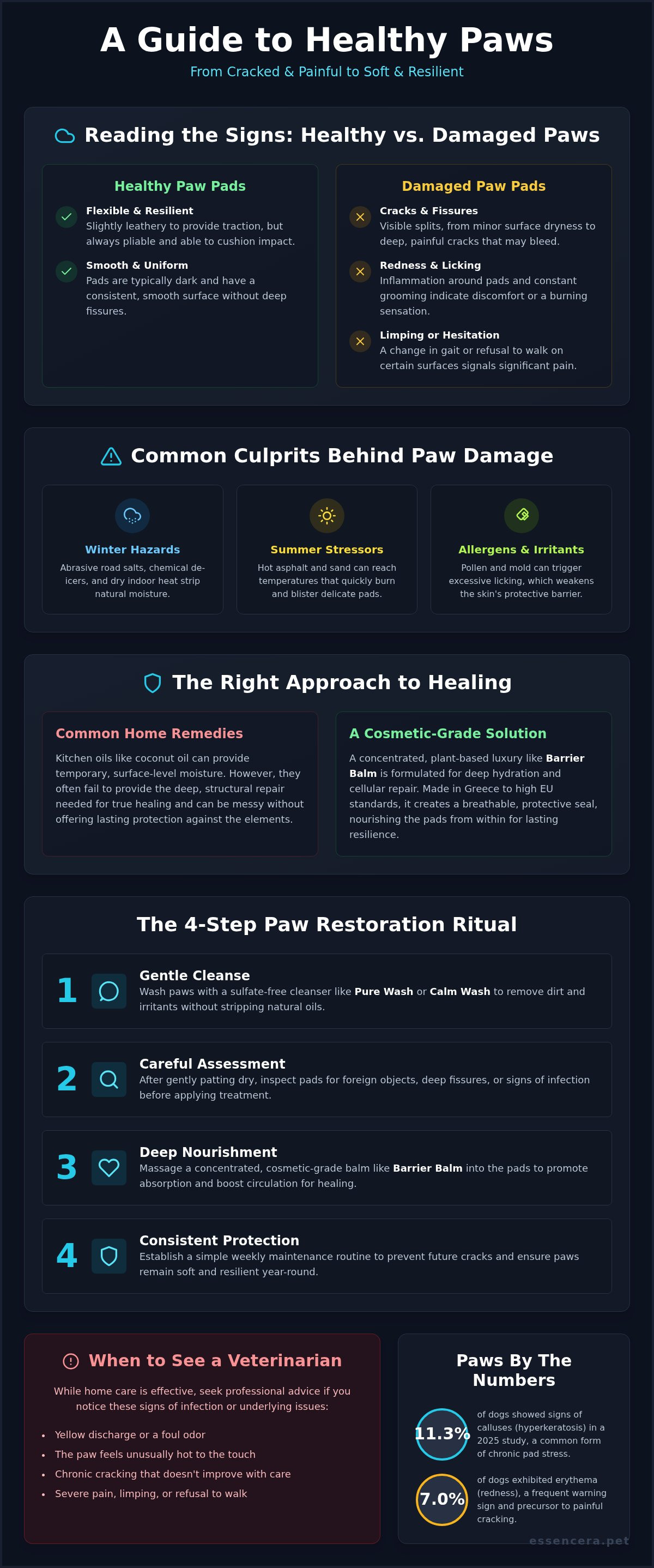
A Step-by-Step Ritual to Restore and Protect Your Dog’s Paws
Healing cracked dog paws requires more than a quick application of ointment. It's a mindful process that begins with removing the day's irritants. If you skip the cleaning step, you risk sealing environmental toxins or bacteria directly into the fissures. We view this routine as a meaningful act of affection; it's a quiet moment of connection between you and your companion that builds trust while restoring health. By following a structured ritual, you ensure that every botanical ingredient can perform its job effectively.
Step 1: Gentle Cleaning and Preparation
Before applying any restorative treatment, you must ensure the paw pad is free of debris. Many generic pet soaps use harsh sulfates that strip away the very lipids we're trying to save. Instead, reach for Pure Wash for a deep botanical clean after a long hike or a walk on city streets. If your dog's paws are already noticeably inflamed or if they have highly sensitive skin, Calm Wash is the ideal choice. Its soothing formulation respects the skin's natural pH while clearing away allergens without irritation.
Once the paws are clean, thorough drying is essential. Pay close attention to the spaces between the toes. Trapped moisture in these crevices can lead to fungal growth or "wet paws," which weakens the skin and makes it more prone to cracked dog paws. Use a soft, clean towel and a gentle dabbing motion to ensure every fold is dry before moving to the next step. This preparation ensures the balm can bond directly to the skin rather than sitting on a layer of moisture.
Step 2: Deep Hydration and Protection
With a clean canvas, you can now apply the healing layer. Take a small amount of our concentrated Barrier Balm and warm it between your fingers. Massage it gently into the pads, focusing on any visible fissures or rough patches. This massaging motion isn't just for comfort; it helps the botanical waxes and hyaluronic acid penetrate deeper into the tissue for lasting repair.
For the best results, perform this ritual at night. When your dog is resting, the balm has hours to absorb without being rubbed off on the grass or licked away during play. During the winter months, you can also use the balm as a preventative shield. Applying a thin layer before heading out into the snow creates a physical barrier against caustic road salts and ice. This simple habit keeps the pads resilient and comfortable regardless of the weather. To begin your dog's journey toward soft and healthy pads, you can explore our plant-based Barrier Balm here.
Preventing Future Cracks Through Consistent Care
Establishing a consistent care routine is the most effective way to ensure your companion never has to experience the discomfort of cracked dog paws again. A simple weekly inspection allows you to catch minor dryness before it evolves into a painful fissure. During these checks, look for small snags, embedded pebbles, or early signs of redness. This habit doesn't just protect their physical health; it fosters a deep sense of security and trust between you and your dog. It's a quiet moment where you can reassure them that they're safe in your hands.
Proper nail maintenance plays a surprising role in paw health. When nails grow too long, they shift the dog's weight backward, altering their natural gait and putting uneven pressure on the pads. This misalignment can cause the skin to stretch and split in ways it wasn't designed to handle. Regular trimming ensures that the paw pad makes flat, even contact with the ground, distributing impact as nature intended. By combining mechanical care with botanical protection, you provide a comprehensive shield against the elements that keeps them moving comfortably.
The Holistic Approach to Paw Maintenance
Skin health is a systemic experience that extends beyond the paws. A vibrant, well-nourished coat acts as the body's first line of defense, helping to regulate temperature and manage moisture levels across the entire skin barrier. Integrating a high-quality conditioner like Coat Condition into your grooming ritual provides the hydration necessary for overall resilience. We believe in being transparent and honest about our formulations. While this conditioner makes brush-out significantly easier and smoother, please keep in mind it isn't a magic detangler for severe mats. Those deeper tangles still require patient, manual work to ensure your dog's comfort.
The Essencera Commitment to Animal Welfare
Choosing the right products is a reflection of your values as a pet parent. At Essencera, our products are crafted in Greece to meet high European standards, ensuring that every bottle or jar is of the highest quality. We prioritize plant-based luxury because we believe your dog deserves the same ingredient integrity as you do. Our vegan and organic formulas are free from artificial dyes and synthetic fragrances, offering you peace of mind that what you apply to your dog's skin is both safe and effective. When you reframe routine maintenance as a moment of bonding and trust, you turn a simple task into a profound act of love that protects them from cracked dog paws for years to come.
Embrace a Future of Soft and Resilient Paws
Your journey to healing cracked dog paws starts with a simple shift from reactive fixes to a nurturing, proactive ritual. By understanding environmental stressors and choosing botanical care over simple pantry staples, you provide your dog with the structural support they need. Remember that a clean foundation is essential; always prepare the skin with a gentle wash before sealing in hydration. This consistent attention turns a routine task into a meaningful act of affection that strengthens your bond and ensures their comfort.
You can trust in the integrity of our vegan and organic formulas, which are crafted in Greece to high European standards. Our cosmetic-grade ingredients provide professional results trusted by premium pet owners worldwide. By choosing plant-based luxury, you ensure your companion receives high-quality care without harsh sulfates or synthetic fragrances. Give your dog the comfort they deserve for every adventure ahead. Soothe your pup with our botanical Barrier Balm and enjoy the peace of mind that comes with soft, healthy paws. You've got this, and your dog will thank you for the extra care.
Frequently Asked Questions
Is it safe if my dog licks the paw balm after application?
Yes, it's completely safe for your dog to lick their paws after you apply Barrier Balm. Our formula is crafted with botanical purity and organic ingredients, ensuring there are no toxic elements or synthetic fragrances that could cause harm. We prioritize ingredient integrity so you can have peace of mind during your grooming ritual. While it's safe to ingest, we recommend applying it at night to allow the balm to absorb fully for the best results.
Can I use human moisturizer on my dog’s cracked paws?
You should avoid using human moisturizers on cracked dog paws because our skin's pH levels are significantly different from a dog's. Human products often contain artificial dyes and fragrances that can irritate sensitive canine skin or be toxic if licked. Instead, choose a product like Barrier Balm that's specifically formulated with cosmetic-grade, plant-based ingredients. This ensures the treatment is both safe and effective for the unique structure of their paw pads.
How often should I apply paw balm to my dog?
For active healing, we recommend applying Barrier Balm once or twice daily until the pads feel soft and resilient. Once the skin has recovered, transitioning to a weekly application as part of your regular grooming ritual provides a protective shield against future damage. This consistent care helps maintain the moisture balance of the pads. Always remember to cleanse the area first with a gentle product like Pure Wash to ensure the balm absorbs effectively.
What is the fastest way to heal a deep crack in a dog’s paw?
The fastest way to encourage healing is to establish a clean foundation followed by deep hydration. Start by removing irritants with a sulfate-free cleanser like Calm Wash, which is perfect for sensitive or inflamed skin. Follow this by massaging a concentrated paste like Barrier Balm into the fissures. This provides essential hyaluronic acid and amino acids to the deep tissue, supporting the skin's natural repair process while creating a protective barrier against further environmental stressors.
Can I use Barrier Balm on my dog’s nose as well?
Yes, Barrier Balm is perfectly suited for use on your dog's nose as well as their paws. The same botanical ingredients that soothe cracked dog paws work beautifully on dry, crusty noses. Because our formula is vegan and free from undesirable synthetic elements, it's safe for use on these sensitive, lick-prone areas. Applying a small amount helps restore the natural moisture and suppleness of the nose, providing comfort and protection throughout the day.
Will paw balm make my dog slip on hardwood floors?
Our Barrier Balm is specifically designed as a non-greasy, concentrated paste that absorbs quickly into the skin. Unlike petroleum-based home remedies that sit on the surface and cause slipping, this botanical formula penetrates deep into the pad. To ensure maximum safety and absorption, try applying the balm right before bedtime or before a walk. This allows the high-quality ingredients to work their magic without leaving a slippery residue on your hardwood floors.
Does Shield Wash help protect paws from environmental irritants?
Shield Wash is an excellent choice for cleaning paws after outdoor adventures, as it removes surface irritants while deterring pests. We use gentle surfactants, which are specialized cleansing agents that lift away dirt and debris without stripping the skin's natural protective layer. Unlike harsh sulfates, our coconut-derived surfactants are safe and effective. It's important to remember that Shield Wash is not safe for cats due to its essential oil content.
What should I do if my dog’s paws are bleeding from a crack?
If a crack is bleeding, start by applying gentle pressure with a clean cloth to stop the flow. Once the area is stable, cleanse it softly using Calm Wash to remove debris without causing further pain. If the crack is deep or shows signs of infection like heat or discharge, you should consult your veterinarian. For minor bleeding, applying Barrier Balm after cleaning helps seal the area and provides the nutrients needed for the skin to begin repairing itself.


