


Apple Cider Vinegar for Dog Skin: A Vet-Led Guide
What if a popular “natural” remedy is more likely to sting than soothe your dog’s skin? If you’re searching for how to use apple cider vinegar for dog's skin, it’s understandable to want a quick, gentle way to ease itching or redness. But online anecdotes aren’t proof that it works, and vinegar’s acidity may irritate skin, especially where it’s already sore or damaged.
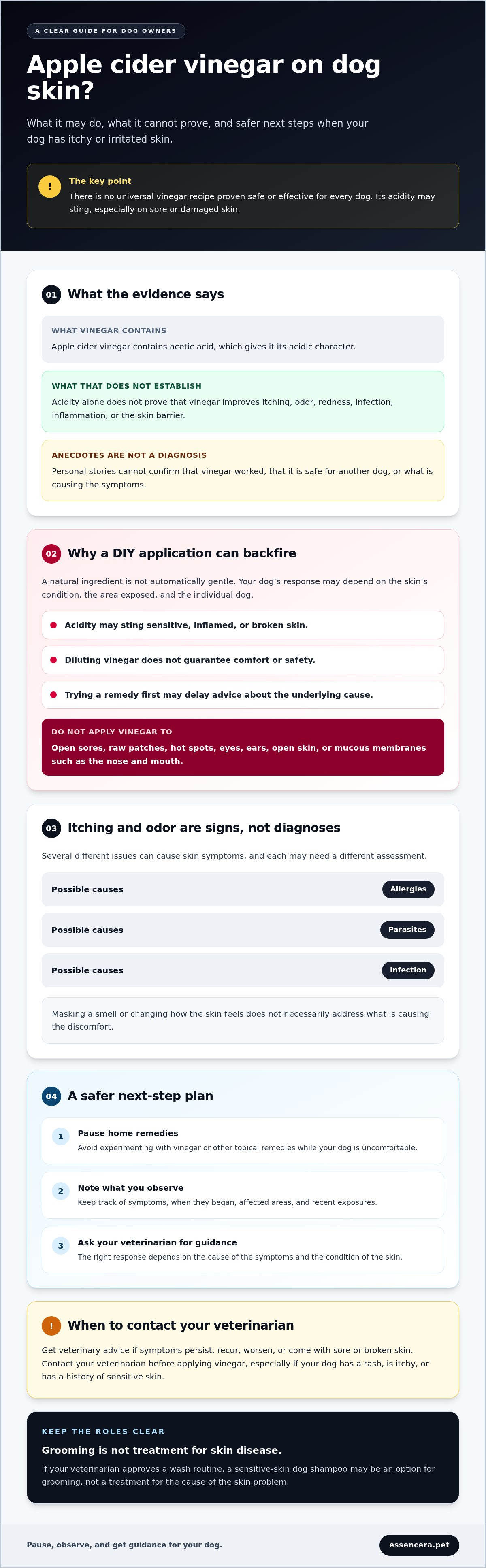
Skin symptoms can have different causes. Treating the surface without knowing what’s behind the discomfort may make things worse or delay appropriate care. Apple cider vinegar hasn’t been proven to treat common canine skin conditions, and it shouldn’t be applied to open sores, raw patches, or hot spots.
This vet-led guide explains what apple cider vinegar may and may not do, why DIY use can backfire, and what safer next steps look like. You’ll learn when to pause home remedies, how to care for your dog while seeking advice, and which signs mean it’s time to contact a veterinarian.
Key Takeaways
- There’s no universal recipe for how to use apple cider vinegar for dog's skin. Online anecdotes aren’t enough to establish that it’s safe or effective for your dog.
- Vinegar’s acetic acid may affect the skin’s surface, but that doesn’t prove it improves skin symptoms.
- Dilution alone can’t guarantee safety. Learn what to do instead of trying a home remedy.
- Pause DIY applications, note your dog’s symptoms and recent exposures, then contact your veterinarian for guidance.
- Keep grooming separate from treatment. If your veterinarian approves a wash routine, a sensitive-skin dog shampoo may be an option for grooming, not treatment for skin disease.
Can you use apple cider vinegar on a dog’s skin?
There isn’t a one-size-fits-all answer or a universal dilution recipe that makes apple cider vinegar appropriate for every dog. Before applying it, ask your veterinarian for guidance, especially if your dog is itchy, has a rash, or has a history of sensitive skin. The right response depends on the cause of the symptoms and the condition of the skin.
Searches for how to use apple cider vinegar for dog's skin often lead to personal stories and DIY tips. Those accounts may explain why an owner tried vinegar, but they can’t confirm that it worked, establish that it’s safe for another dog, or identify the cause of that dog’s symptoms. A home remedy claim is not a veterinary diagnosis.
What owners hope apple cider vinegar will do
Common online claims say vinegar can reduce odor, ease itching, or limit microbes on the skin’s surface. These claims aren’t proven results and shouldn’t replace an examination. Odor and itching can have several causes, including parasites, allergies, or infection, and each may need different care. Masking a smell or temporarily changing how skin feels wouldn’t necessarily address the cause.
Apple cider vinegar contains acetic acid. You can read more about what apple cider vinegar is and how it’s made, but its basic chemistry doesn’t establish that it treats canine skin problems. There’s no reliable basis for assuming a surface effect will lead to lasting improvement in itching, redness, or odor.
Why a natural ingredient is not automatically gentle
Natural origin doesn’t guarantee that an ingredient is suitable for sore or sensitive skin. Vinegar’s acidity may sting, and contact could add discomfort where skin is broken, inflamed, or especially sensitive. A dog’s reaction may depend on the skin’s condition, the area exposed, and the individual dog. Diluting a product doesn’t guarantee it will be comfortable or appropriate.
Until your veterinarian advises otherwise, keep vinegar away from your dog’s eyes, ears, open skin, and mucous membranes, including the nose and mouth. Don’t use it to clean a wound or dab it on a raw or irritated patch. If your dog is already uncomfortable, avoid experimenting with topical remedies and ask your veterinarian what to do next. Pausing can help prevent extra irritation while you work out the cause.
Effects of Apple Cider Vinegar on Dog Skin
Apple cider vinegar’s acidity helps explain some of the claims made about it, but it doesn’t show that vinegar improves a dog’s skin symptoms. A substance having a chemical property is not the same as that substance being a proven, safe treatment for a particular skin problem.
What the acidity claim means, and what it does not
Vinegar contains acetic acid, which gives it its sour taste and acidic character. You can learn more about what apple cider vinegar is and how it’s produced. Acidity may affect the surface it touches, but that fact alone doesn’t establish a useful effect on a dog’s skin.
There’s no established evidence that applying apple cider vinegar reliably improves canine itching, odor, redness, or other common skin symptoms. It also doesn’t show that vinegar treats infection, reduces inflammation, restores the skin barrier, or beneficially changes skin microbes. An ingredient’s acidity may explain how it interacts with a surface, but it doesn’t establish a safe or effective home treatment.
If you’re searching for how to use apple cider vinegar for dog's skin, don’t mistake a possible surface effect for proof of lasting relief. A dog might smell different after a rinse, for example, without the underlying reason for the odor being resolved. A change in how the coat or skin looks also isn’t enough to confirm that a skin condition has improved.
Why the underlying cause matters
Itching and odor are signs, not diagnoses. Allergies, parasites, and infections are among the possible causes, and more than one issue can be involved. A veterinarian may need to examine your dog and ask about the timing of symptoms, affected areas, and recent exposures to work out what’s going on.
Different causes can call for different assessment and care. A remedy that doesn’t address the cause may leave your dog uncomfortable, and trying it first could delay appropriate advice. If symptoms persist, recur, worsen, or come with sore or broken skin, contact your veterinarian rather than relying on vinegar or another pantry remedy.
Apple cider vinegar for dog skin: risks, myths, and safer comparisons
Claims about apple cider vinegar often sound simple: soothe the itch, clear the odor, or kill germs. But general cleaning properties don’t make a product a proven or appropriate treatment for a dog’s skin. Don’t use vinegar in place of veterinary care for suspected parasites, yeast, bacteria, or allergies.
Common apple cider vinegar claims, checked carefully
| Common claim | What is known | Safer owner response |
|---|---|---|
| It relieves itching. | It hasn’t been shown to reliably relieve canine skin symptoms. Acidity may sting, especially on damaged or inflamed skin. | Don’t apply it to itchy skin without veterinary guidance. Ask about the cause of the itch. |
| It removes odor. | A rinse may change surface odor, but that doesn’t identify or resolve its cause. | Note where the odor is coming from and contact your veterinarian if it persists or comes with skin changes. |
| It kills germs or treats parasites. | That claim doesn’t establish that vinegar treats infection or controls parasites on a dog. | Ask your veterinarian to assess the concern and recommend appropriate care. |
| Diluted vinegar is always safe. | Dilution alone can’t guarantee safety. Skin condition, application site, and individual sensitivity all matter. | Don’t rely on a DIY dilution recipe as proof that topical use is safe. |
When topical use could make discomfort worse
Skip home experiments on broken, raw, inflamed, or very sensitive skin. Vinegar can sting and add discomfort. Avoid applying it near the eyes, ears, or other sensitive areas, and don’t let your dog lick it. If your dog reacts after vinegar has been applied, stop using it, gently rinse the area with clean water, and contact a veterinarian for advice.
Seek veterinary advice promptly if irritation worsens or you notice sores, discharge, or marked discomfort. These signs need more than a home remedy. If you’re concerned about how to use apple cider vinegar for dog's skin, check with your veterinarian before applying anything. A veterinarian can help determine whether the issue needs examination or specific treatment.
Once your veterinarian says routine bathing is appropriate, a gentle grooming product such as Calm Wash for sensitive skin may be considered for cleansing. It’s a grooming option, not a treatment for infection, parasites, allergies, or other skin conditions.
Alternative Vet-Led Step-by-Step Plan
The first safe step for unexplained skin irritation is to pause home remedies and find out what may be causing it. A little preparation can help your veterinarian understand what you’re seeing and advise you on what to do next.
- Pause topical home remedies. Don’t apply apple cider vinegar or another new product while you’re unsure what’s behind the symptoms. If you’ve already used something, note what it was and when.
- Write down what you observe. Record when the symptoms began, how often your dog scratches or licks, and whether you notice redness, odor, flakes, hair loss, sores, or discharge. Note every affected area, such as the paws, ears, belly, or back.
- Check for recent changes. Think about new foods or treats, outdoor activities, parasite-prevention products, bathing or grooming, and household cleaners or laundry products. Record when each change happened, even if you’re not sure it’s connected.
- Contact your veterinarian. Share your notes and ask whether your dog should be examined. If symptoms are getting worse, your dog seems markedly uncomfortable, or you see sores or discharge, contact the clinic promptly and ask how soon your dog needs care.
What to observe before contacting the veterinarian
Clear details are more useful than a guess about the cause. Photos taken in good light can help show how a spot changes over time, but don’t delay contacting the veterinarian to take them. If the irritation is worsening or your dog is distressed, call first and follow the clinic’s guidance.
What to ask before applying any topical product
Before using vinegar or another topical product, ask whether it’s suitable for the suspected cause and the specific area involved. If the veterinarian recommends a product, get clear directions on how much to use, whether it needs dilution, how often to apply it, and when to stop. Also ask what changes should prompt a follow-up visit or more urgent care. Don’t assume a product is appropriate just because it’s labeled natural or intended for pets.
After your veterinarian confirms that routine bathing is appropriate, you can explore Calm Wash for sensitive skin as a grooming option. It isn’t a substitute for diagnosis or treatment, and your veterinarian’s instructions should guide care for active or recurring symptoms.
Gentle grooming after a skin concern: practical next steps
Routine grooming can help keep a coat clean, but it’s separate from diagnosing or treating a skin problem. If your dog has active or recurring symptoms, follow your veterinarian’s instructions before bathing or applying anything. Even a gentle product may not be suitable for every dog or every skin concern.
Choosing a gentle cleansing routine
Bathing frequency and product choice depend on your dog’s coat, skin, and veterinary advice. If your veterinarian approves a wash routine for a dog with sensitive skin, consider a sensitive-skin dog shampoo as a grooming option. For general cleansing, a gentle dog shampoo may suit a routine wash. Neither product diagnoses or treats a skin condition.
For broader product-selection guidance, look for a natural dog shampoo guide or advice on choosing a dog shampoo that considers your dog’s needs and the ingredient list. Whichever product you use, follow its directions, keep it away from the eyes, and stop if you notice irritation. Your veterinarian’s directions take priority, especially if your dog is receiving treatment.
When grooming is not enough
Contact your veterinarian for persistent, recurring, painful, or worsening symptoms. Redness, itching, odor, sores, or hair loss can have different causes, and washing alone may not address them. Don’t use grooming products as substitutes for an examination or prescribed care.
For rough paws or a dry nose, ask your veterinarian whether a balm is appropriate for that specific area. Barrier Balm for paws and noses is intended for those areas, not for generalized redness, infection, or unexplained itching.
Once you have veterinary guidance, you can explore grooming care that fits your dog’s routine. Choose a product for cleansing and coat care, and leave skin diagnosis and treatment to your veterinary team.
Choose a gentler next step for your dog
If you’re wondering how to use apple cider vinegar for dog's skin, remember that online recipes aren’t a reliable substitute for veterinary guidance. Vinegar hasn’t been established as a treatment for common canine skin concerns, and its acidity may add discomfort. Focus first on noting your dog’s symptoms and asking your veterinarian what may be causing them, especially if irritation persists, returns, hurts, or worsens.
Keep routine grooming separate from treatment. Follow your veterinarian’s instructions for active or recurring symptoms, and only bathe your dog if they say it’s appropriate. For an approved sensitive-skin grooming routine, Calm Wash sensitive-skin shampoo is a cleansing option, not a treatment for skin disease. Essencera offers concentrated pet-care formulas for everyday grooming needs.
Explore Essencera’s grooming care for your dog and choose a routine that suits your companion. Asking for guidance before trying a remedy is a caring first step. Once your veterinarian approves routine grooming, explore Essencera’s shampoos, conditioners, and balms to find options for your dog’s care.
Frequently Asked Questions
Can I put apple cider vinegar on my dog’s itchy skin?
It’s best not to apply apple cider vinegar to itchy skin unless your veterinarian specifically advises it. It hasn’t been proven to relieve common canine skin symptoms, and its acidity may sting or worsen discomfort, especially on broken or inflamed areas. If you’re searching for how to use apple cider vinegar for dog's skin, start by noting your dog’s symptoms and asking your veterinarian what may be causing them.
How do you dilute apple cider vinegar for dogs’ skin?
There isn’t a universal dilution recipe that makes apple cider vinegar safe for every dog. Diluting it doesn’t guarantee that it’s suitable for your dog’s skin, symptoms, or application site. Don’t apply a DIY mixture without veterinary guidance. Ask your veterinarian whether any topical product is appropriate and, if so, request clear directions for dilution, amount, frequency, and when to stop using it.
Does apple cider vinegar help with dog skin allergies?
Apple cider vinegar hasn’t been established as a treatment for canine skin allergies. Itching, redness, and odor can have different causes, and a veterinarian can help determine what care is appropriate. Don’t use vinegar instead of prescribed treatment or delay an examination to try a home remedy. If your dog has ongoing or recurring symptoms, note when they started and which areas are affected, then contact your veterinarian.
Can apple cider vinegar burn or irritate a dog’s skin?
Yes, vinegar may sting or irritate a dog’s skin, especially if the area is raw, broken, inflamed, or sensitive. Keep it away from the eyes, ears, and other sensitive areas unless your veterinarian directs otherwise. If you’ve already applied it and your dog reacts, stop using it, gently rinse the area with clean water, and contact your veterinarian for advice, especially if discomfort worsens or sores appear.
What should I do if my dog licks apple cider vinegar?
Move the vinegar out of reach and check how much your dog may have licked and whether it was diluted. Contact your veterinarian for advice, particularly if the vinegar was undiluted, the amount is uncertain, or your dog develops vomiting, drooling, or other unusual signs. Don’t try to make your dog vomit unless a veterinary professional tells you to. If your dog seems seriously unwell, seek urgent veterinary help.
When should I take my dog to the vet for a skin problem?
Contact your veterinarian if itching or irritation persists, returns, worsens, or seems painful. Sores, discharge, marked redness, hair loss, or a strong ongoing odor also warrant veterinary advice. Seek urgent help if skin symptoms occur with facial swelling, breathing trouble, collapse, or severe distress. If you’re unsure how quickly your dog needs care, call your veterinary clinic and describe the symptoms rather than waiting to see whether a home remedy helps.
Can I bathe my dog after applying apple cider vinegar?
If vinegar has already been applied and your dog’s skin seems irritated, rinse gently with clean water and contact your veterinarian before bathing. If your veterinarian confirms that routine washing is appropriate, use a pet-specific product as directed. For general cleansing, Pure Wash gentle dog shampoo is a grooming option, not a treatment for a skin condition. Follow veterinary instructions for active or recurring symptoms.