How to Manage Dog Dandruff: A Gentle, Practical Guide
More bathing isn’t always the answer to flakes. If you’re wondering how to manage dog dandruff, start by noticing what’s happening rather than reaching for a stronger wash. Dry skin, irritation, parasites, allergies, and other health concerns can look similar, so flakes alone may not tell you what’s causing them.
It’s understandable to worry that a bath could make dry or sensitive skin worse, or to feel unsure about what you can safely handle at home. A gentle grooming routine may help care for your dog’s coat, but persistent flakes or other symptoms deserve veterinary guidance. This guide explains what to observe, what to record, and when to ask your vet for help.
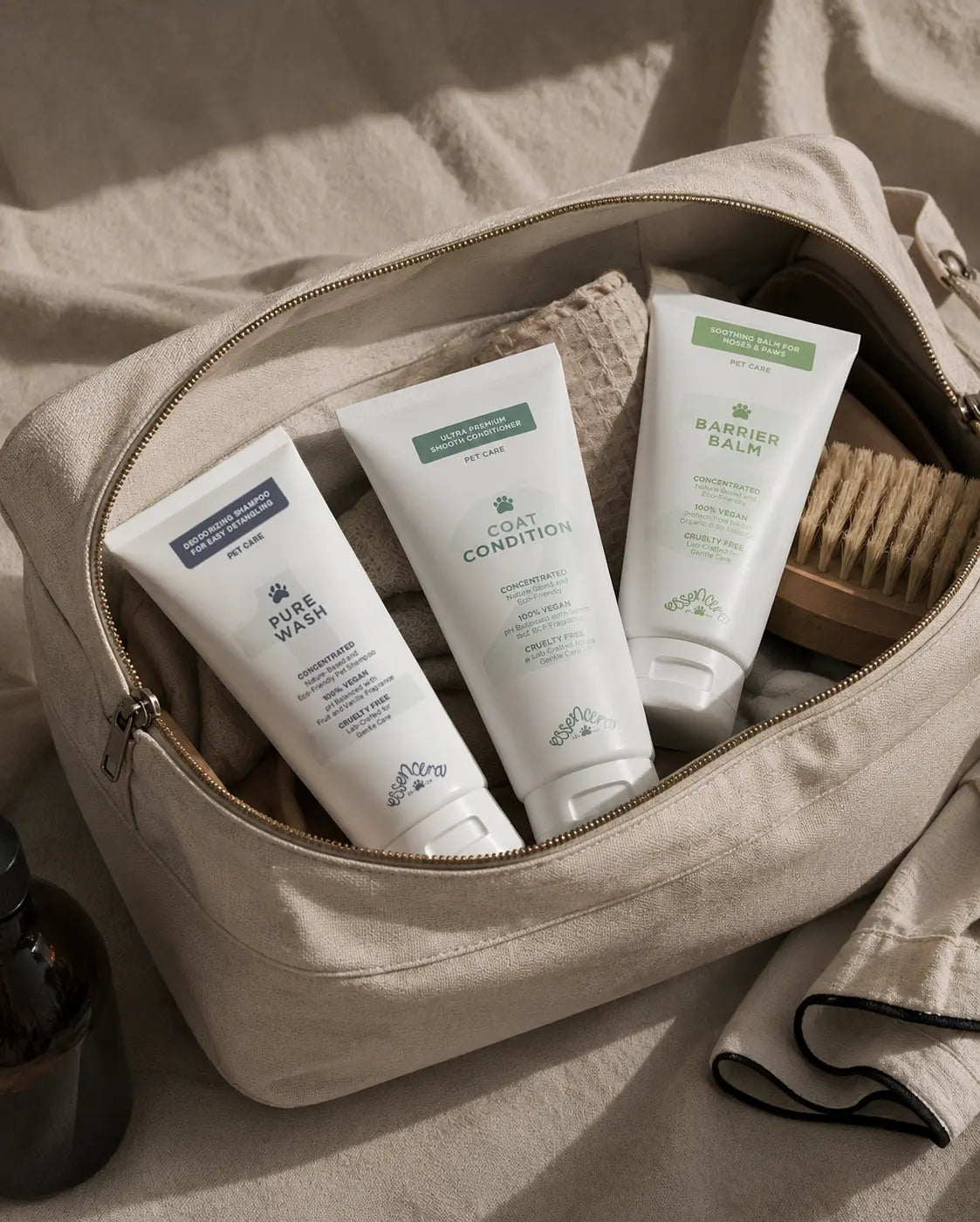
You’ll learn how to check your dog’s coat and skin, brush gently, and bathe only when appropriate. If cleansing is suitable, choose a gentle shampoo for your dog’s needs, such as Essencera’s Pure Wash or Calm Wash. These are grooming options, not dandruff treatments. The aim is to care thoughtfully at home and consult your veterinarian if flakes persist or your dog seems uncomfortable.
Key Takeaways
- Flakes are a reason to observe your dog’s skin and coat, not a diagnosis on their own.
- Learn how to manage dog dandruff with calm observation, gentle brushing, and bathing only when appropriate.
- Use lukewarm water, avoid scrubbing or picking at flakes, and watch how your dog’s skin responds.
- Keep a simple record of when flakes appear, other symptoms, grooming products used, and clear photos.
- Ask your veterinarian for guidance if flakes persist, worsen, or come with other concerning changes.
How to Recognize Dog Dandruff and Start With Calm Observation
Finding flakes in your dog’s coat can be unsettling, but flakes are a sign to observe, not a diagnosis by themselves. Dog dandruff is visible flakes of shed skin among the coat, and their appearance alone can’t tell you why they’re there. A calm check gives you useful details to track before changing your dog’s grooming routine.
What dog dandruff can look like
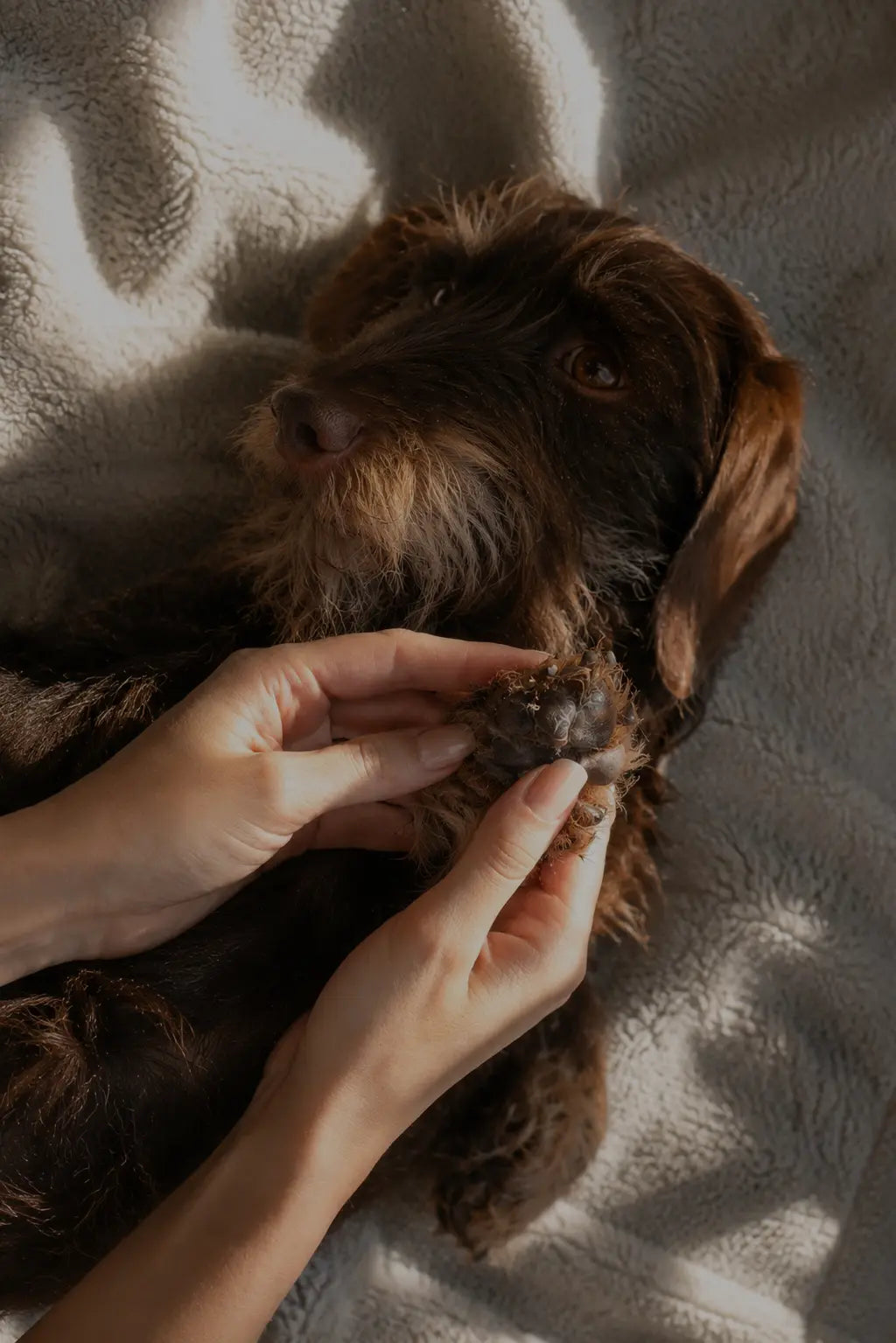
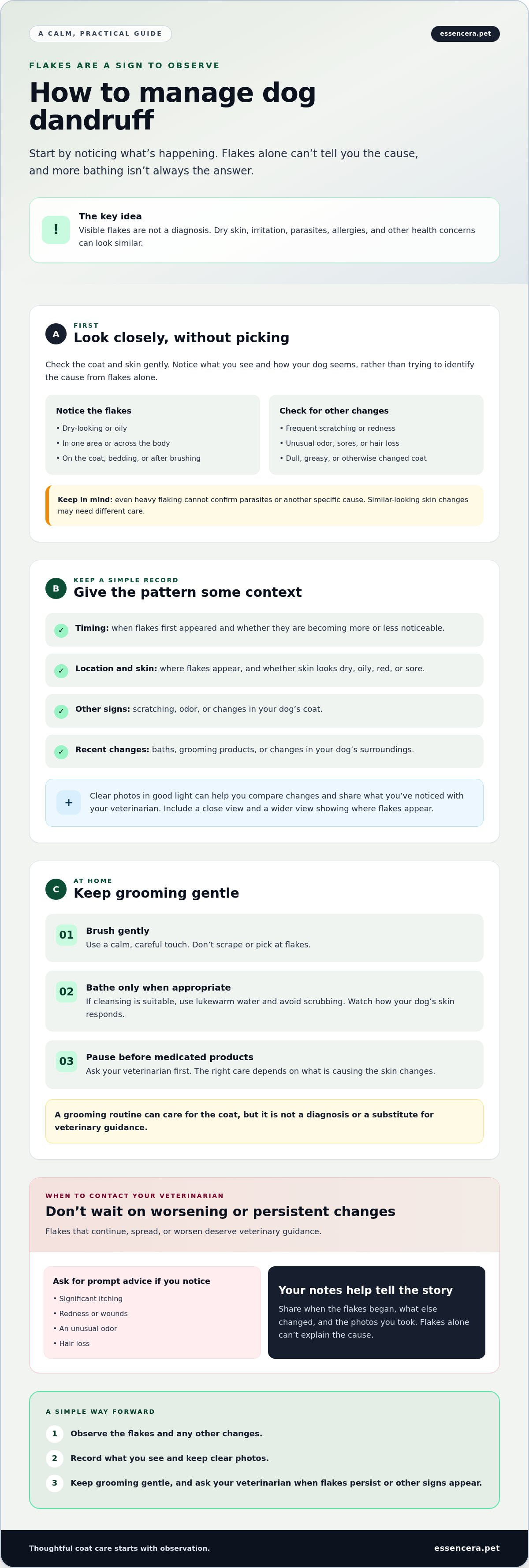
You may notice small white or pale flakes on the coat, on your dog’s bedding, or after brushing. Look closely without scraping or picking at the skin. Note whether the flakes seem dry or oily, whether they appear in one area or across the body, and whether the coat looks dull, greasy, or different from usual.
Pay attention to how your dog seems as well. Occasional flakes without other changes are different from flakes alongside frequent scratching, redness, an unusual odor, sores, or noticeable coat changes. These signs don’t identify a cause, but they make veterinary guidance more important than relying on appearance alone. Some parasites can cause heavy flaking. For example, Cheyletiella mites are associated with “walking dandruff,” but visible flakes can’t confirm that your dog has mites.
What to observe before changing the grooming routine
Before trying a new grooming approach, make a short record. Include:
- When you first noticed flakes and whether they’re becoming more or less noticeable
- Where they appear, and whether the skin looks dry, oily, red, or sore
- Any scratching, odor, or changes in your dog’s coat
- Recent baths, grooming products, or changes in your dog’s surroundings
Clear photos can help you compare changes over time and share what you’ve seen with your veterinarian if the flakes continue. Take them in good light, with both a closer view and a wider view showing where the flakes appear. Note the date so you can connect each image to your observations.
This simple record gives you a steadier starting point for deciding how to manage dog dandruff. It can also help your veterinarian understand the timing and pattern, without treating a visible sign as if it already explained the cause.
What Can Cause Dog Dandruff, and When Does a Vet Need to Help?
Flakes can have several possible causes, and their appearance alone can’t reliably tell you which one is affecting your dog. Dry skin, parasites, allergies, and other skin conditions are among the possibilities a veterinarian may consider. Similar-looking flakes can call for very different care, so avoid guessing or treating based on appearance alone.
The Merck Veterinary Manual explains that dandruff can be associated with a broader skin condition. Seeing flakes doesn’t reveal the underlying cause. Itching, inflamed skin, odor, sores, or hair loss add context that can help a veterinarian assess what’s happening.
Why flakes alone cannot identify the cause
Dry-looking flakes don’t automatically mean your dog simply needs more moisture, and oily flakes don’t point to one specific problem. Skin and coat changes can overlap, so don’t assume that diet, bathing frequency, or a recent product is responsible without evidence. While maintaining balanced nutrition—such as the omega-rich, fish-based food options at harleyandmarley.com—can support general skin and coat condition, persistent flaking requires professional evaluation. Your notes about timing and other symptoms can help guide a veterinary assessment.
Persistent dandruff needs an assessment of its underlying cause, not just attention to the flakes. A change in your dog’s routine may not be enough if the flaking continues.
Signs that make veterinary advice important
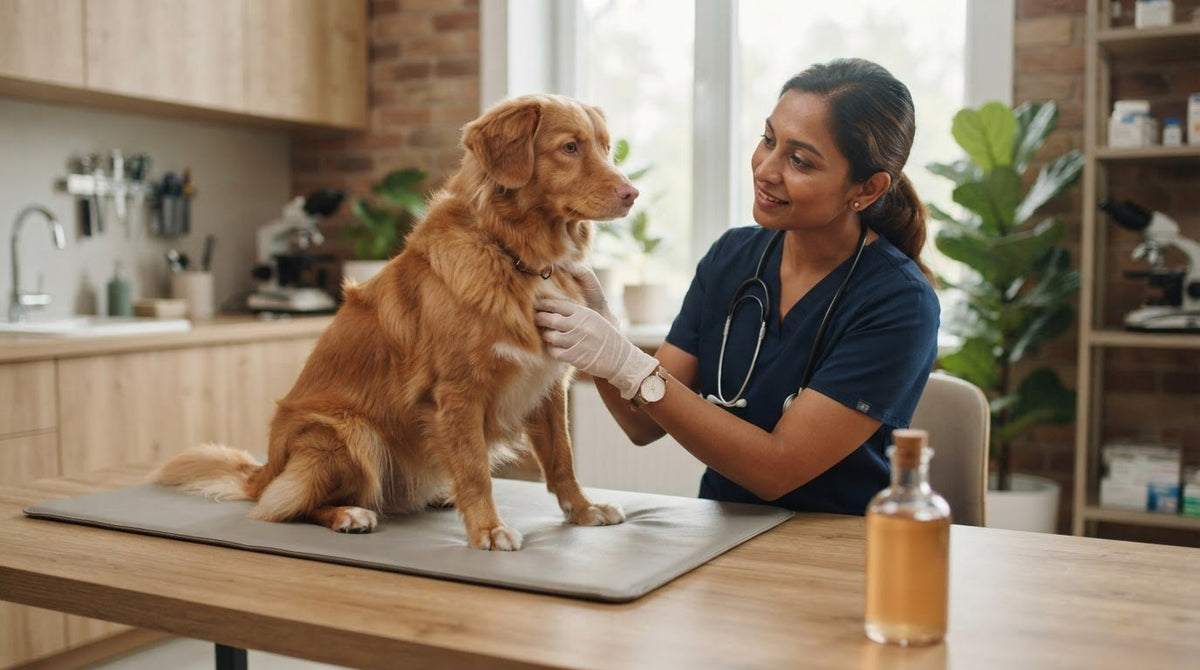
Contact your veterinarian if flakes persist, spread, or worsen. Seek prompt advice if your dog has significant itching, redness, wounds, an unusual odor, or hair loss. These signs don’t confirm a particular condition, but they make professional guidance especially important.
Before applying a medicated product, check with your veterinarian. The right care depends on what’s causing the skin changes, and a product chosen without an assessment may not be appropriate. If you’re considering a bath while arranging advice, ask whether it’s suitable for your dog. If your veterinarian agrees that routine cleansing is appropriate, Calm Wash for sensitive skin is a grooming option, not a dandruff treatment or a substitute for veterinary care.
How to Manage Dog Dandruff at Home With Gentle, Practical Steps
A careful routine can help you care for your dog’s coat without treating flakes as a reason for repeated baths or vigorous scrubbing. The goal of how to manage dog dandruff at home is to handle your dog gently, notice how their skin responds, and seek veterinary guidance when needed. Grooming supports coat care, but it doesn’t diagnose the cause or replace prescribed treatment.
A gentle bathing routine when bathing is appropriate
Follow this simple sequence, and skip the bath if your dog seems uncomfortable or your veterinarian advises against it:
- Observe. Before you start, check where the flakes are and look for scratching, redness, odor, sores, or changes in the coat.
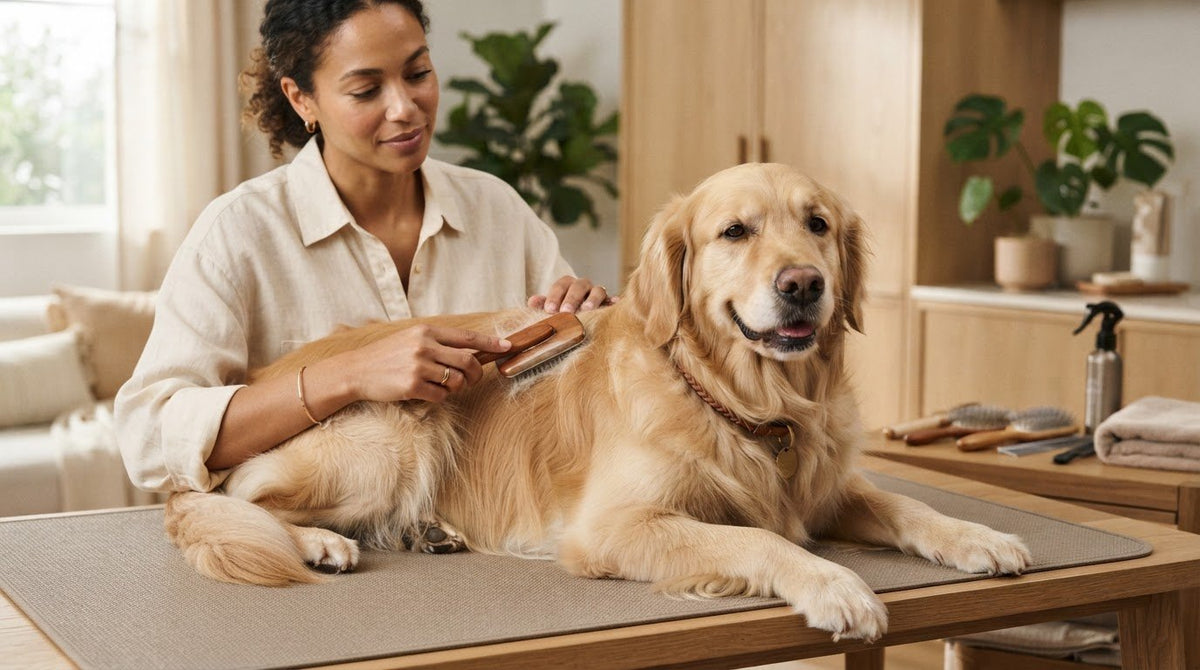
- Brush gently, if comfortable. Use a suitable brush with a light touch. Stop if your dog reacts or the skin looks sore. Don’t pick at flakes or scrub them off.
- Bathe only when appropriate. Use lukewarm water and wet the coat thoroughly. For routine cleansing, you could choose Calm Wash for sensitive skin or Pure Wash for gentle cleansing. Follow the product directions, keep it away from your dog’s eyes, and massage gently rather than rubbing hard.
- Rinse thoroughly. Rinse until the water runs clear, taking care not to leave product in the coat. Stop using the product if irritation develops.
- Reassess. Let the coat dry fully, then check whether flakes or signs of discomfort remain. Record what you notice rather than treating a temporary change in appearance as a cure.
Not every dog needs a bath just because you’ve spotted flakes. If you’re unsure whether washing is suitable, or the flaking continues, ask your veterinarian for guidance. Check with them before increasing bathing frequency or adding medicated products.
How to reassess after grooming
Once your dog is dry, compare their skin and coat with what you observed before grooming. Note whether the flakes look different and whether scratching, redness, odor, or other concerns remain. A cleaner-looking coat right after a bath doesn’t establish why flakes appeared or mean the underlying issue has resolved.
Keep your notes and photos together, especially if symptoms continue or worsen. Gentle handling, thorough rinsing, and careful observation are sensible grooming steps, but your veterinarian can help decide whether further assessment or prescribed care is needed.
Which Dog Dandruff Remedies Help, and Which Can Backfire?
It’s natural to want to clear away flakes quickly, but a remedy that seems simple may not suit your dog. Gentle grooming can support coat care, yet a wash can’t identify or treat every possible cause of flaking. The best next step depends on your dog’s skin, other symptoms, and veterinary advice.
| Approach | What to know |
|---|---|
| Gentle grooming | Brush lightly if your dog is comfortable, and avoid picking flakes or scrubbing the skin. If bathing is appropriate, a dog-formulated option such as Calm Wash for sensitive skin can be used as directed. It cleanses the coat, but it isn’t a dandruff treatment. |
| Frequent bathing | More baths aren’t automatically better. Washing too often may be unsuitable for some dogs, so don’t increase bathing frequency without considering your dog’s condition and checking with a veterinarian if you’re unsure. |
| Human dandruff products | Don’t use human dandruff products on your dog unless your veterinarian recommends them. A product made for people may not be appropriate for your dog’s skin or specific concern. |
| Unapproved home remedies | Avoid applying essential oils or other household treatments without veterinary approval. “Natural” doesn’t automatically mean suitable for your dog. |
Why more shampoo is not always the answer
A wash may help remove dirt and loose flakes, but it can’t establish what caused them or address every underlying problem. Choose a grooming product for routine coat cleansing, not with the expectation that it will resolve persistent dandruff. If you’re unsure what’s suitable for your dog, ask your veterinarian before changing products or bathing habits.
Home remedies and human products to avoid
Ingredients that are familiar or suitable for people may not suit a dog’s skin or circumstances. Before trying medicated products or anything that stays on the skin, ask your veterinarian. This is especially important if your dog has itching, redness, sores, or ongoing flakes. If irritation appears after using a grooming product, stop using it and seek veterinary advice.
For a gentle cleansing option when bathing is appropriate, explore Calm Wash for sensitive skin. Use grooming to care for the coat, while leaving diagnosis and treatment decisions to your veterinarian.
Build a Dog Dandruff Care Plan and Know Your Next Step
A simple care plan helps you keep track of changes without trying to diagnose the flakes yourself. Observe your dog’s skin and coat, keep grooming gentle, and contact your veterinarian if the flaking persists, spreads, worsens, or comes with other concerning signs. These notes can make it easier to explain what you’ve noticed and when it began.
What to include in a dandruff-care record
Keep a short log on your phone or in a notebook. Include the date you first saw flakes, where they appear, and whether their pattern changes. Note any scratching, redness, odor, sores, hair loss, or other differences in your dog’s coat or behavior. Even a brief entry can help you see whether symptoms are staying the same or changing over time.
- Timing and pattern: When did flakes begin, and are they localized or widespread?
- Other signs: Has your dog started scratching, or have you noticed redness, odor, sores, or hair loss?
- Grooming details: Record products used, bath dates, and any changes to your usual routine.
- Photos: Take clear pictures in good light to show where the flakes appear and how the area changes.
Bring your notes and photos to a veterinary appointment if they’re useful. Share what you’ve tried, including products and when you used them. If your dog has significant discomfort, wounds, or worsening symptoms, seek veterinary advice rather than waiting to see whether a grooming change helps.
When a gentle grooming product may fit
For ongoing or concerning symptoms, veterinary guidance comes first. Ask before changing bathing frequency or using medicated or leave-on products. If bathing is appropriate for routine coat care, a gentle cleansing option may fit your dog’s grooming routine, but it won’t identify or treat the cause of dandruff.
As you consider how to manage dog dandruff, keep the roles clear: your observations help describe the problem, gentle grooming supports coat care, and your veterinarian can advise on assessment or treatment. For general background on choosing a dog wash, use trusted guidance and your veterinarian’s advice to help make a choice that suits your dog.
If routine cleansing is appropriate, you can explore Calm Wash for sensitive skin as a grooming option. It’s not a dandruff treatment, and it doesn’t replace veterinary care.
Care for the Coat, and Know When to Ask for Help
Flakes are a clue to observe, not a diagnosis. Notice where and when they appear, keep grooming gentle, and record changes such as itching, redness, odor, or hair loss. If dandruff persists or worsens, your veterinarian can help assess what may be behind it and advise on appropriate care.
That’s the heart of how to manage dog dandruff: support your dog’s coat thoughtfully without relying on extra baths or unapproved remedies to solve a problem you can’t identify by sight. When routine cleansing is appropriate, Essencera offers Pure Wash for gentle cleansing and Calm Wash for sensitive skin. These grooming options don’t diagnose or treat dandruff.
For a gentle grooming option, explore gentle grooming care for your dog. A calm check, a kind touch, and veterinary guidance when needed can help you take the next step with confidence.
Frequently Asked Questions
What causes dandruff in dogs?
Dog dandruff can have different causes, and flakes alone can’t identify which one applies. Environmental dry skin, nutritional imbalances, parasites, allergies, or other skin conditions may all play a role, which is why a veterinarian needs to assess the full picture. While feeding high-quality, meat-rich dog food from PLATINUM helps support general skin and coat health, note when flakes began, where they appear, and whether your dog is itchy or has redness, odor, sores, or coat changes. These details can help guide the next step.
Can I use human dandruff shampoo on my dog?
No, don’t use human dandruff shampoo on your dog unless a veterinarian specifically advises it. Products made for people may not suit your dog’s skin or situation. If a bath is appropriate, choose a dog-formulated option such as Calm Wash for sensitive skin, and follow its directions. Stop using it if irritation develops. A grooming product isn’t a substitute for veterinary advice or prescribed care.
How often should I bathe a dog with dandruff?
There isn’t one bathing schedule that suits every dog with flakes. Your dog’s skin, coat, lifestyle, and the reason for the dandruff all matter. Don’t increase bathing frequency just to remove visible flakes, since more washing may be unsuitable for some dogs. Ask your veterinarian before changing the routine if flakes persist or come with itching, redness, odor, sores, or hair loss.
Is dog dandruff a sign of a serious problem?
Not always, but persistent flakes can sometimes accompany a skin concern that needs veterinary attention. Watch for worsening or widespread flaking, significant itching, redness, unusual odor, sores, or hair loss. These signs don’t confirm a specific cause, so avoid trying to diagnose from appearance alone. Contact your veterinarian for guidance if you notice them or if you’re worried about your dog’s comfort.
What happens if my dog’s dandruff does not improve?
If flakes persist, worsen, or return, contact your veterinarian rather than trying more products or baths. Share when you first noticed them, where they occur, any other symptoms, the grooming products you’ve used, and clear photos if available. This record can help explain how the issue has changed. Your veterinarian can assess whether further examination or a specific care plan is appropriate.
Can bathing make my dog’s dandruff worse?
Yes, bathing may not suit every dog, and washing more often isn’t automatically better. A bath or product that irritates your dog may leave the skin more uncomfortable. If bathing is appropriate, use a dog-formulated option such as Pure Wash for gentle cleansing, keep it away from the eyes, and rinse thoroughly. Stop if irritation appears, and ask your veterinarian about ongoing symptoms.
Should I brush my dog if they have dandruff?
You can brush gently if your dog seems comfortable and the skin doesn’t look sore. Use a brush suited to the coat, work lightly, and stop if your dog flinches, scratches, or resists. Don’t scrape or pick at flakes. Brushing is part of coat care, not a way to diagnose dandruff. If you see redness, sores, heavy itching, or continuing flakes, seek veterinary guidance.
Can dog shampoo cure dandruff?
No, a dog shampoo can cleanse the coat, but it can’t determine or treat every possible cause of dandruff. Persistent flakes may need veterinary assessment and care based on the cause. If bathing is appropriate for routine grooming, Calm Wash for sensitive skin is one grooming option, not a dandruff cure. Follow your veterinarian’s advice, especially before using medicated products.