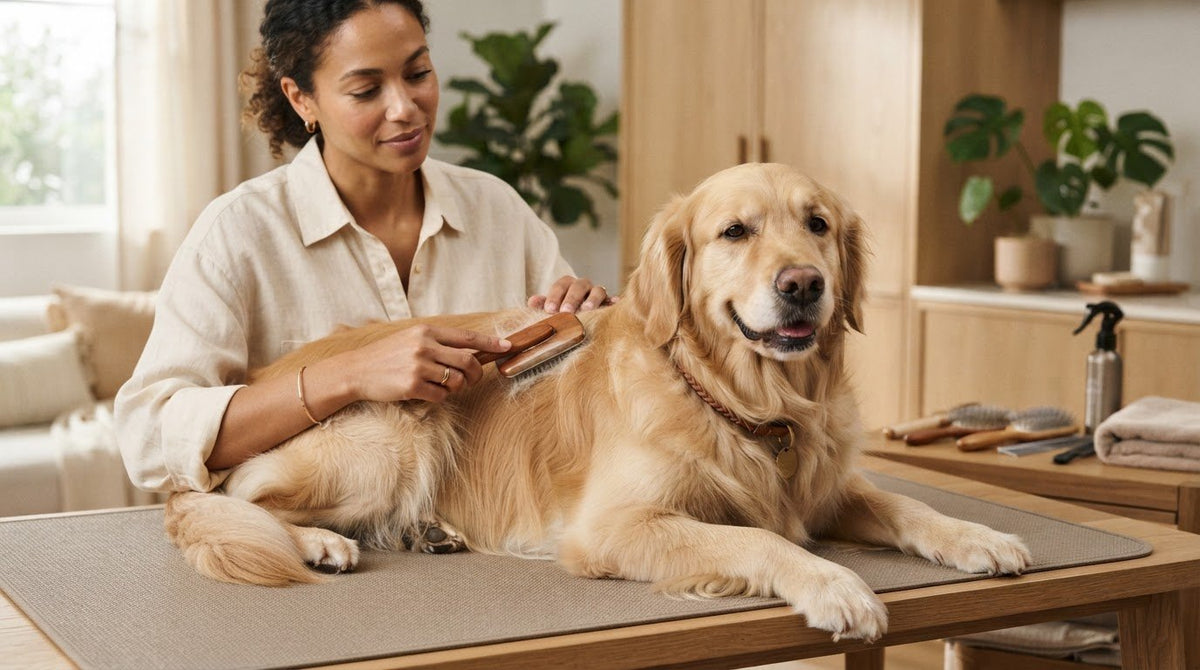
How to Brush a Dog Correctly: A Gentle, Step-by-Step Guide
What if brushing your dog gently works better than brushing harder? If you’re unsure which brush to choose, worried about tugging at your dog’s coat, or not sure how to handle a tangle, you’re not alone. Learning how to brush a dog correctly starts with choosing an approach that suits the coat and watching how your dog responds.
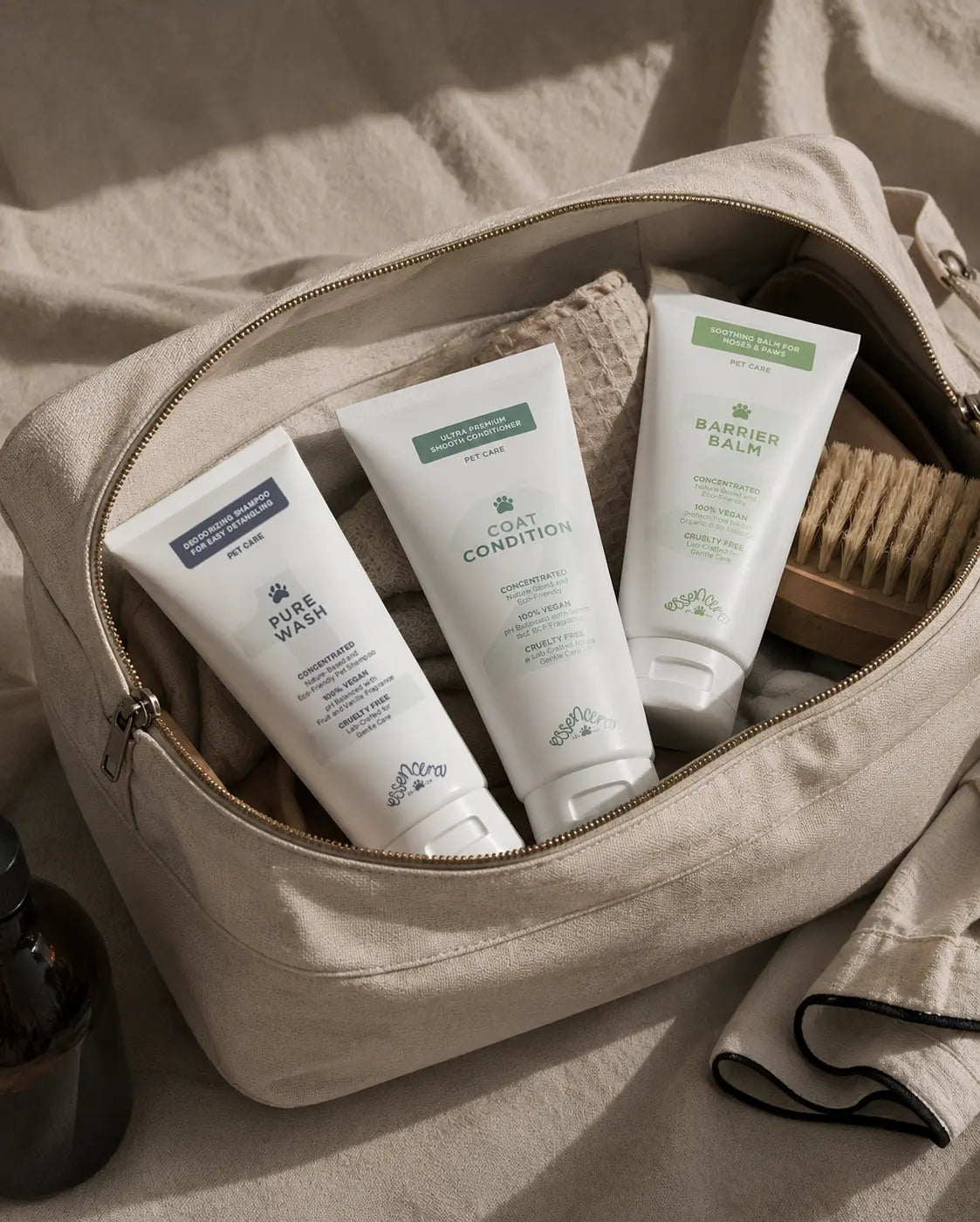
A calm, simple routine can help remove loose fur and catch small tangles before they become harder to manage. In this guide, you’ll learn how to choose a suitable brush, work through the coat in gentle sections, and make brushing more comfortable for a nervous dog. You’ll also learn when to pause, when a tangle needs extra care, and when to ask a professional groomer for help. As an optional part of grooming, Essencera’s premium anti-tangle conditioner, Coat Condition, may help reduce friction during finishing, but it isn’t a fix for severe mats. The goal is a routine built on patience, comfort, and care.
Key Takeaways
- Learn how to brush a dog correctly by matching your technique to your dog’s coat and keeping strokes gentle.
- Check for sore spots, debris, and tight tangles before you begin so you can adjust your approach.
- Compare slicker brushes, bristle brushes, and metal combs to find a suitable tool for your dog’s coat.
- Use short strokes and pause if your dog seems uncomfortable. Don’t force a brush through mats or cut them close to the skin.
- Build a realistic routine with short sessions, adjusting how often you brush to your dog’s coat and comfort.
Why brushing your dog correctly starts with comfort and coat condition
Brushing doesn’t need to be a struggle or a race to get through the coat. Gentle, regular sessions can lift loose hair and give you a chance to notice tangles, debris, or visible changes in your dog’s skin. Understanding how to brush a dog correctly starts with choosing an approach that suits the coat and never relying on force or repeated pulling.
Safe brushing is gentle, coat-appropriate grooming that stops when brushing causes discomfort. Use that as your guide: if your dog reacts or the brush catches, pause rather than pushing through.
What brushing can and cannot do for your dog
Brushing can remove loose fur and help you spot knots, debris, or changes such as redness, scabs, or tender areas. It’s one part of the hygienic care of a dog, but it can’t prevent every mat or skin concern. If you notice a sore area, unusual skin change, or sensitivity that persists, stop brushing there and ask your veterinarian for guidance.
Your dog’s coat shapes the routine. Length, texture, and density affect how easily loose hair or tangles build up, so a short, smooth coat may need a different approach from a long or curly one. Pay attention to how the coat feels as well as how it looks: a brush that glides through one coat may catch on another.
If brushing follows a bath, Essencera’s premium anti-tangle conditioner, Coat Condition, may help reduce friction during finishing. It’s an optional grooming aid, not a fix for severe mats or a replacement for careful brushing.
Prepare a calm, comfortable brushing space
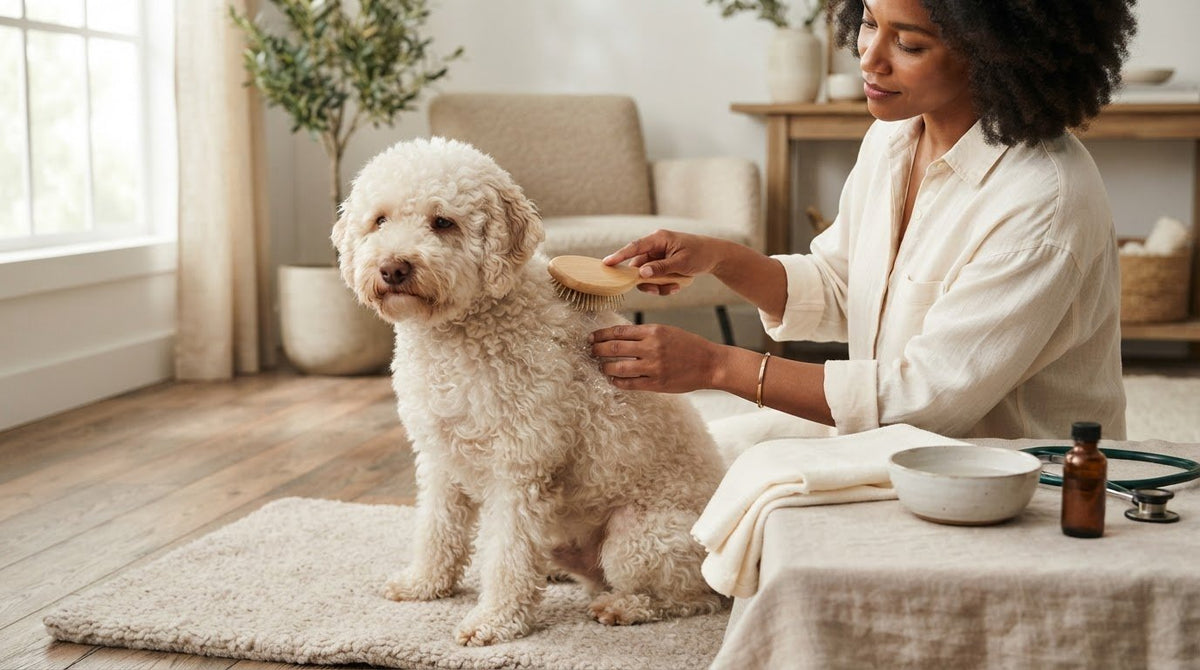
Choose a quiet spot with a stable surface where your dog can stand or rest comfortably. Let them see and sniff the brush before you begin. Reward calm interest with gentle praise or a small treat, then start with a brief session rather than expecting them to tolerate a full brush-out right away.
Notice your dog’s signals as you go. If they pull away, tense up, whine, or try to leave, pause and give them room. You can finish another time or try again with a gentler introduction. Brushing should feel like shared care, not something your dog has to endure.
How to brush a dog correctly in simple, gentle steps
Learning how to brush a dog correctly is less about covering the coat quickly and more about noticing what your dog needs as you go. Settle them in a comfortable position, keep your touch light, and let their coat guide the pace. These steps help you work methodically without turning brushing into a tug-of-war.
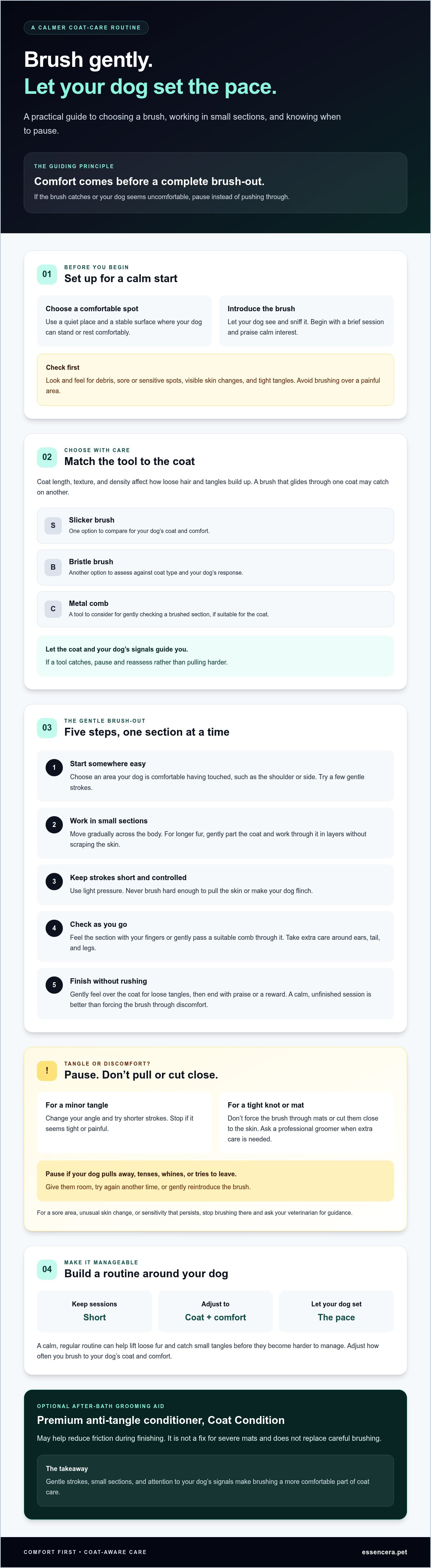
- Step 1: Check before you begin. Look and feel for debris, sore or sensitive areas, skin changes, and tight tangles. Don’t brush over a painful spot or force a tool through a knot. If you find a concern, pause and decide whether it needs professional attention.
- Step 2: Start somewhere easy. Choose an area your dog is comfortable having touched, such as the shoulder or side. Use a few gentle strokes, then watch their body language before continuing.
- Step 3: Work in small sections. Move gradually across the body instead of brushing a large area at once. For longer fur, gently part the coat so you can work through it in layers without scraping the skin. Consistent brushing also makes it easier to check spots where tangles can collect.
- Step 4: Keep strokes short and controlled. Brush a small section at a time, using your free hand to steady the coat near the area if needed. Brushing pressure should stay light and controlled, never hard enough to pull the skin or make your dog flinch.
- Step 5: Check your progress. Feel the section with your fingers or gently pass a comb through it, if suitable for your dog’s coat. Move on only when the area feels comfortable, and take extra care around the ears, tail, legs, and other sensitive spots.
Work in small sections and check the skin
Small sections help you notice whether you’re brushing through the coat or catching at a knot. Pause often, especially near delicate areas, and don’t pull the ears, tail, or legs to hold your dog in place. If a minor tangle resists, change your angle and use shorter strokes rather than yanking. Stop if it seems tight or painful.
After bathing, the optional premium anti-tangle conditioner, Coat Condition, may help reduce friction during finishing. It won’t replace careful brushing or resolve severe mats.
Finish the session without rushing
Gently feel over the coat for loose tangles you may have missed, then end with praise or a reward. If your dog becomes tense, moves away, or reacts as though something hurts, stop and reassess instead of trying to finish at all costs. A calm, unfinished session is better than forcing the brush through discomfort.
Choose brushing tools and techniques for your dog’s coat
The right brush is one that can move through your dog’s coat comfortably. Coat texture, length, density, shedding, and your dog’s tolerance all matter, so no single tool is right for every dog. Use this guide as a starting point, then adjust based on how the coat responds.
Short or smooth coat: A soft bristle brush may help lift loose hair without a firm, dragging feel.
Long or dense coat: A slicker brush may suit some coats when used gently in small sections. Part longer fur so you can work through it without scraping the skin.
Areas prone to small tangles: A metal comb can help check whether brushing has loosened manageable knots. It’s a checking tool, not a way to pull through resistance.
Unusual or complex coat: Ask a qualified groomer which tool and technique are suitable for your dog’s coat type.
Match the brush to coat length and texture
A slicker brush, bristle brush, or metal comb may be helpful, but none is a must-have for every dog. Start with the gentlest suitable tool and test it on a small area. If it catches, presses hard against the skin, or makes your dog uncomfortable, stop and reconsider the tool or technique. For a longer or denser coat, work through manageable sections instead of trying to brush the full coat in one pass.
For some short, smooth coats, a soft bristle brush may be enough to collect loose hair. A dog with a different texture or coat density may need another approach. If you’re unsure, a groomer familiar with your dog’s coat can help you choose.
Use a comb as a gentle check, not a pulling tool
After brushing a section, pass a comb gently through an easy area to check for missed tangles. Keep the motion light and stop if the comb catches tightly. Don’t tug, repeat the stroke with more force, or use the comb to work through a severe knot. A tight mat can pull on the skin, and brushing harder may cause pain. Leave severe tangles for a qualified groomer to assess.
Knowing how to brush a dog correctly also means knowing when a tool isn’t helping. If your dog flinches, pulls away, or reacts as though brushing hurts, stop and reassess. For optional support during grooming and finishing, explore Essencera’s premium anti-tangle conditioner. It may help reduce friction during finishing, but it isn’t a solution for severe mats.
Handle tangles, shedding, and brushing discomfort safely
Loose hair and small tangles can make brushing take longer, but more pressure isn’t the answer. If your brush catches, pause, let the coat settle, and try a different angle with short, gentle strokes. For shedding, work through one area at a time and clear loose fur from the brush as needed, rather than pressing harder to get through the coat quickly.
Tight mats need professional assessment, not stronger pulling. Forcing a brush through a mat can hurt your dog, and cutting close to the skin risks injury. If you’re unsure whether a tangle is safe to work on, stop and ask a qualified groomer for guidance.
What to do when you find a mat
A loose tangle may shift with gentle handling. A tight mat feels dense, resists light strokes, or sits close to the skin. Don’t tug at it, pull it apart, or try to cut it out with scissors. Extensive mats, mats near sensitive areas, or knots that seem painful are best assessed by a qualified groomer. If the skin beneath looks sore or irritated, contact your veterinarian for advice.
Conditioner can’t safely undo every knot. Essencera’s premium anti-tangle conditioner, Coat Condition, may help reduce friction during grooming and finishing, but it isn’t a solution for severe mats or a substitute for careful brushing.
Make brushing easier for a nervous or sensitive dog
Let your dog get used to the brush gradually. Begin by showing it, then offer a brief touch with the brush before trying a few gentle strokes. Keep sessions short and pair calm handling with praise, breaks, or a reward your dog enjoys. You don’t need to brush the whole coat in one go.
Stop if your dog trembles, tenses, moves away, or reacts as though brushing hurts. Check whether the tool is catching or an area may be sensitive. Don’t restrain your dog to finish the session. If fear continues or you suspect pain, seek appropriate guidance from a qualified groomer or veterinarian.
Learning how to brush a dog correctly also means knowing when to put the brush down. Choose gentle coat care that respects your dog’s limits, and consider Coat Condition as an optional aid for coat finishing.
Build a brushing routine that works for your dog
A useful brushing routine is one your dog can tolerate and you can keep up with. There’s no single schedule that suits every coat. Notice how quickly loose hair builds up, where tangles tend to form, and how your dog feels during each session. A coat that tangles easily may need more frequent attention than one that stays smooth with occasional brushing.
Adjust brushing frequency to your dog
Start with short sessions and check the coat regularly. If you find knots in the same spots, such as behind the ears or under the legs, include those areas in gentle check-ins. During heavier shedding, you may notice more loose fur and choose to brush more often. Let your dog’s coat and comfort guide the routine rather than following a schedule that doesn’t fit.
Keep a simple note of which areas need extra attention and how your dog responds. If brushing leads to repeated resistance, shorten the session, take a break, or change your approach. When you’re unsure how often a difficult coat needs care, ask a groomer familiar with that coat type for guidance; professional grooming salons like salonik-dla-pupila.pl can provide hands-on help with bathing, trimming, and routine coat maintenance.
Connect brushing with the rest of coat care
Brushing is only one part of a grooming routine. On bath days, choose a suitable dog shampoo for gentle cleansing and follow its directions. Conditioner is optional, but it may support easier brushing during grooming and finishing by reducing friction. It won’t replace careful technique or remove severe mats.
If you’re choosing a bathing product for a puppy, look for guidance suited to their needs and sensitivities. Keep new grooming steps gradual, and pause if your dog seems uncomfortable. A calm, positive experience matters more than completing every part of the routine in one sitting.
Over time, steady sessions can make it easier to notice what works for your dog. Learning how to brush a dog correctly means adapting the routine as their coat, shedding, and comfort change. For an optional finishing aid, explore Coat Condition as part of Essencera’s coat care range.
Make brushing a calm part of your routine
Learning how to brush a dog correctly comes down to a few gentle habits: choose a tool that suits the coat, work in small sections, and let your dog’s comfort set the pace. Short, calm sessions can help you notice loose fur and small tangles without turning brushing into a struggle.
Pause if your dog seems uncomfortable, and don’t force a brush through a tight mat. Severe mats need a groomer’s assessment, not stronger pulling. As an optional aid after bathing, Essencera’s premium anti-tangle conditioner, Coat Condition, may help reduce friction during grooming and finishing. It isn’t a fix for severely matted fur, and careful brushing still matters.
Every coat and every dog is different, so give yourself room to adjust the routine as you learn what feels comfortable. For a gentle approach to your dog’s grooming routine, explore Essencera’s grooming care.
Frequently Asked Questions
How often should I brush my dog?
Brush as often as your dog’s coat needs and their comfort allows. Long, curly, or dense coats may need more frequent attention to catch tangles, while some short, smooth coats need less. Check for loose fur and knots between sessions, then adjust your routine if tangles build up or your dog seems uncomfortable. If you’re unsure what their coat needs, ask a groomer for guidance.
Should I brush my dog before or after a bath?
Brush gently before a bath to remove loose hair and check for tangles. Don’t soak or brush through a tight mat, since wetting it can make it harder to assess. After bathing, follow the product directions and let the coat dry as appropriate before brushing. If you’re choosing a gentle dog shampoo, use it as directed and stop if irritation develops.
Which brush should I use for my dog?
Choose a brush based on coat length, texture, density, and your dog’s tolerance. A soft bristle brush may suit some short, smooth coats. A slicker brush may be useful for some longer or denser coats when used gently in sections. A metal comb can help check for missed tangles. These tools aren’t universal requirements, so ask a groomer if you’re unsure what suits your dog.
How do I brush my dog without hurting them?
Use light pressure and short, gentle strokes on one manageable section at a time. For longer fur, part the coat gently so you can work through it without scraping the skin. Pause if the brush catches, and don’t yank or brush repeatedly over a sore area. Learning how to brush a dog correctly also means noticing when your dog flinches, tenses, or moves away, then stopping to reassess.
What should I do if my dog has a tight mat?
Don’t force a brush or comb through a tight mat, and don’t try to cut it out close to the skin. A mat can sit close to the skin, making home trimming risky. Ask a qualified groomer to assess tight, extensive, or sensitive-area mats. If you see redness, a wound, or signs of pain, stop and contact your veterinarian for advice.
How can I get my dog used to being brushed?
Introduce the brush gradually. Let your dog sniff it, reward calm interest, then try a few gentle strokes in an area they’re comfortable having touched. Keep sessions brief and offer praise, breaks, or a reward they enjoy. Build up slowly rather than expecting a full brush-out at once. If your dog shows fear or pain, stop and consider guidance from a qualified groomer or veterinarian.
Can conditioner make brushing easier for my dog?
Conditioner may help reduce friction during grooming and finishing, which can make brushing easier. After using a dog shampoo, you can consider Essencera’s premium anti-tangle conditioner, Coat Condition, as an optional part of coat care. It isn’t necessary for every brushing session, and it won’t remove severe mats. Use it as directed, and seek professional help for tight tangles.