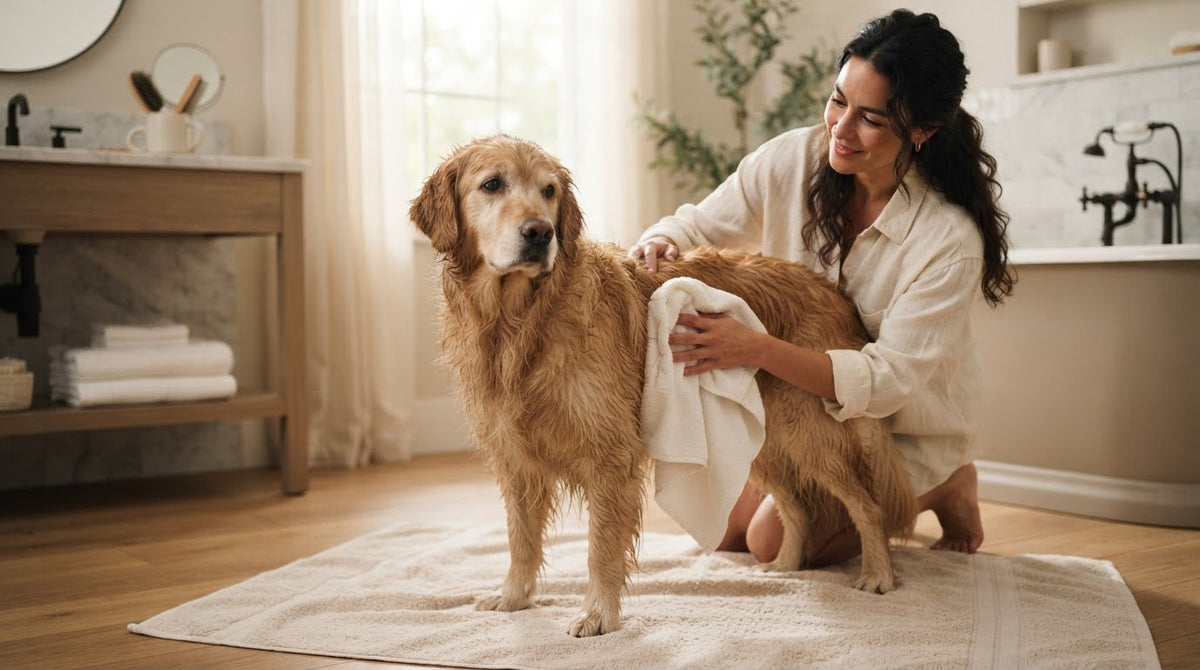
Is It Bad to Let a Dog Air Dry? What Pet Parents Should Know
Air-drying isn’t automatically bad, but a damp coat can be uncomfortable. So, is it bad to let a dog air dry? Not always. A short-haired dog in a warm, dry room may dry comfortably, while a long, curly, or dense coat can hold moisture close to the skin and tangle as it dries. It’s understandable to wonder whether your dog needs a dryer, especially if the sound or warm air might make them nervous.
This article will help you choose a comfortable, sensible drying routine for your dog’s coat. You’ll learn when air-drying may be okay, why lingering dampness and mats deserve attention, and how to towel-dry or introduce a dryer gently. We’ll also cover signs of ongoing skin irritation that call for a veterinarian’s advice. With a calm routine and a little attention to coat type, you can help your dog get dry comfortably after a bath.
Key Takeaways
- To answer “is it bad to let a dog air dry,” consider coat type, room conditions, and how long your dog stays damp rather than relying on a blanket rule.
- Compare towel-drying, air-drying, and a dryer based on your dog’s comfort, coat coverage, and the supervision each method needs.
- After a bath, gently blot the coat and check dense areas to decide which drying approach suits your dog.
- A groomer can offer coat-specific brushing or drying guidance; seek veterinary advice about persistent skin changes.
Is it bad to let a dog air dry after a bath? The short answer
Air-drying isn’t automatically bad, but your dog shouldn’t be left damp indefinitely. Whether it’s comfortable depends on your dog’s coat, the room, how quickly the fur dries, and how your dog responds to being wet. A short, sparse coat in a warm, well-ventilated room may dry without much fuss. A long or dense coat can hold moisture close to the skin for longer.
If you’re asking, “is it bad to let a dog air dry,” focus on checking your dog as they dry rather than following a strict yes-or-no rule. Gently blotting the coat with a towel removes excess water and helps you spot damp areas. Stay nearby, keep your dog comfortable, and check again instead of assuming the outer fur tells the whole story.
Drying is one part of thoughtful coat care. A general Dog grooming overview describes grooming as a way to remove mats and check for skin irritation, making a post-bath coat check a useful habit too.
When can air-drying be a reasonable option?
Air-drying may be reasonable when your dog has a short, relatively sparse coat and can become comfortably dry in a warm, well-ventilated space. Stay nearby and keep them away from cold drafts. A small dog who is shivering, unsettled, or still noticeably damp needs a different approach, such as more gentle towel-drying.
Coat length and density matter. Short fur often releases moisture more easily, while long fur or a thick undercoat may take longer to dry through. Room conditions matter too: a cool or poorly ventilated space can slow drying, even for a dog whose coat seems simple to manage.
Why does a dog’s coat sometimes stay damp?
Water can settle close to the skin beneath the top layer of fur, so a coat may look dry while still feeling damp underneath. This can be easy to miss in long, dense, or double coats. Rather than rubbing briskly, part the fur gently and feel for moisture with your fingertips.
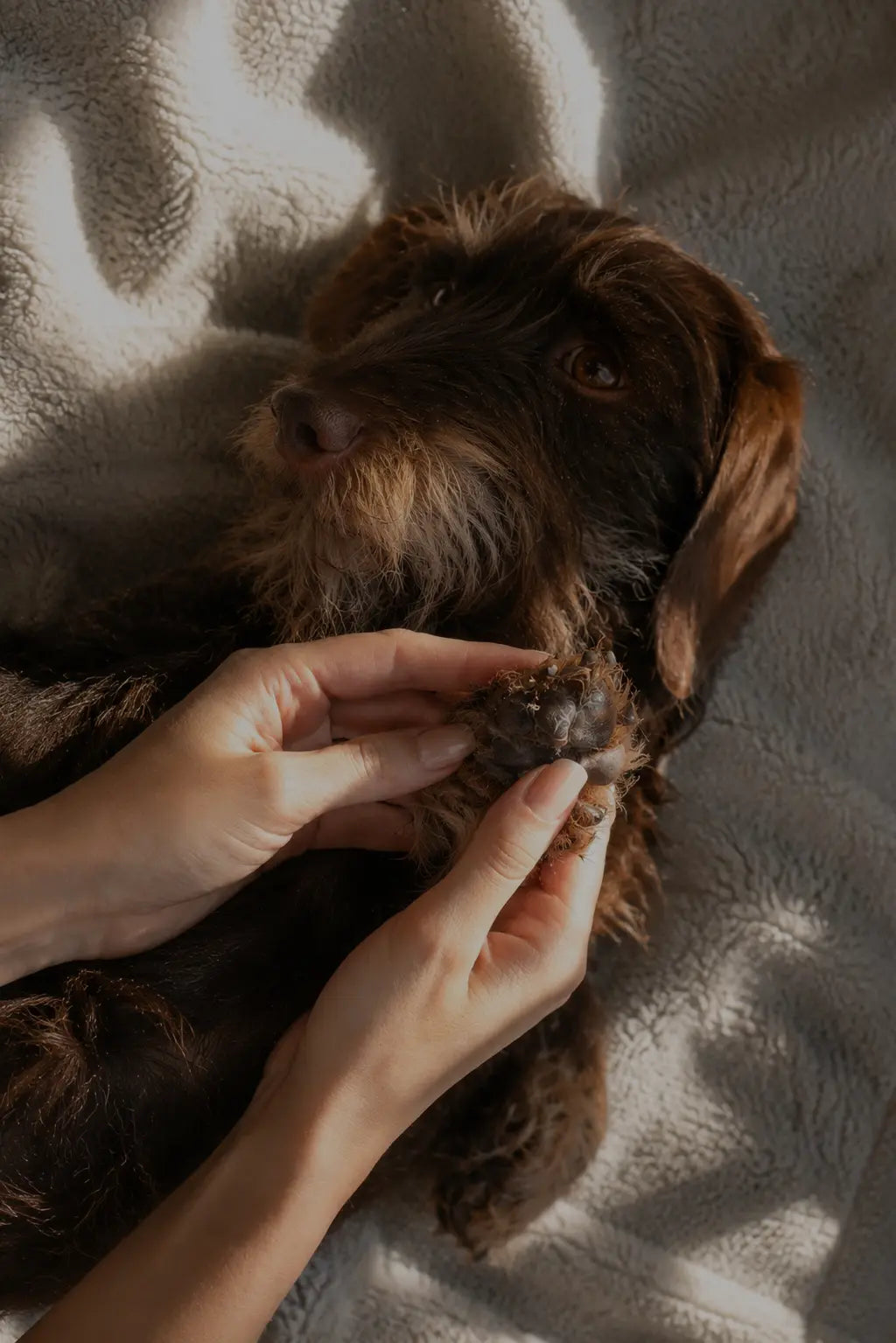
Check covered areas in particular, including the belly, armpits, between the legs, and around the paws. If those spots remain wet, continue blotting with a clean towel and give your dog time in a comfortable space. This check helps you tell whether air-drying is working for your dog.
How coat type and drying conditions affect a dog’s skin and comfort
A damp coat is first a comfort and grooming consideration, not proof that something is wrong with your dog’s skin. The key is how long moisture stays close to the skin and whether the coat is becoming tangled. A short, smooth coat may dry quickly, while dense fur can hold water beneath the visible surface. Cool rooms, poor airflow, and a dog who stays curled up on a damp coat can also slow drying.
Long or curly fur can tangle if it’s left unmanaged as it dries. Tangles may tighten and become harder to brush out, so gentle checking and brushing matter. Prolonged moisture trapped against the skin can also be a concern. The PDSA explains the relationship between trapped moisture and hot spots (acute moist dermatitis), but a damp coat alone doesn’t mean your dog has a skin condition.
Do long-haired and double-coated dogs need extra drying attention?
Yes, they may need closer checks. In a double coat, the undercoat can stay wet after the longer outer fur feels dry. Part the coat in small sections and feel near the skin instead of judging by the surface. Pay extra attention to areas where fur is thick or lies close together. If you’re unsure what’s appropriate for your dog’s coat, ask a groomer for coat-care advice or your veterinarian about health concerns.
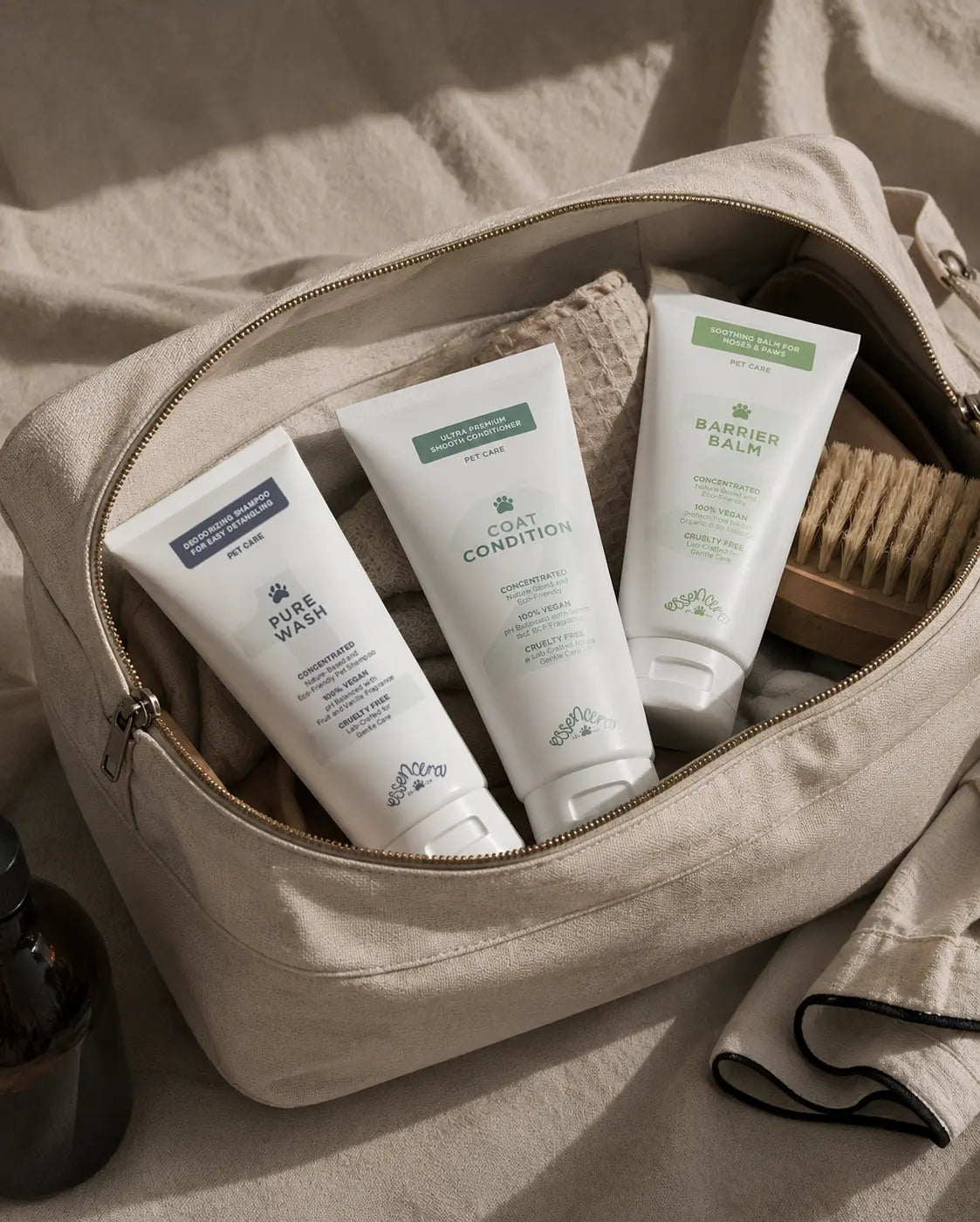
If you use conditioner as part of your bath routine, Essencera’s Coat Condition conditioner is one grooming product to consider. It does not dry the coat or address a skin problem.
What signs suggest your dog is uncomfortable or still damp?
Feel for lingering wetness beneath the fur, especially if your dog keeps licking one area, seems bothered when touched, or tries to rub against furniture. These signs are reasons to inspect the coat gently, not a diagnosis. Temporary dampness after a bath is different from a skin change that persists or gets worse.
Contact your veterinarian for guidance if you notice ongoing redness, sores, unusual odor, or marked irritation. If your dog seems uncomfortable, don’t assume the drying method is the only cause. A careful coat check, an adjustment to the drying routine, and timely professional advice can help you choose the next step.
Air-drying vs. towel-drying vs. a dryer: which suits your dog?
No single drying method is right for every dog. A towel is quiet and useful for removing surface water. Air-drying needs little equipment but takes time and checking. A dryer can help with a dense coat if your dog tolerates the sound and airflow. The Animal Behavior College also discusses different ways to dry a dog after a bath. Use your dog’s coat and comfort to guide your choice.
| Method | May be useful when | Keep in mind |
|---|---|---|
| Towel-drying | You want to remove excess water quietly before the next step. | Blot gently. Vigorous rubbing can encourage tangles. |
| Air-drying | Your dog is comfortable in a warm, well-ventilated space and you can check their coat as it dries. | Supervise and feel beneath the top layer, especially on long or dense coats. |
| Dryer | Your dog accepts the noise and airflow, or you need help drying a thicker coat. | Use a cool or low-heat setting, keep airflow moving, and stop if your dog seems distressed. |
What does towel-drying do before a coat air-dries?
Start with a clean, absorbent towel. Press it gently against the coat to soak up water, blotting different areas rather than rubbing back and forth. This removes some surface moisture and makes the remaining drying time easier to manage. Keep your dog warm while you work, and use another dry towel if the first becomes saturated.
Is a hair dryer safe for dogs?
A dryer can be an option, but the noise and moving air may unsettle some dogs. Let your dog hear it from a distance while it’s off, then introduce the sound and airflow gradually, with calm reassurance. Use only a cool or low-heat setting, keep the dryer moving, and don’t hold it close to the skin or direct airflow at your dog’s face. Stop if your dog pulls away, pants heavily, or seems uncomfortable. A towel and supervised air-drying may be a gentler choice.
Coat care can also involve conditioner as part of the bath routine. Essencera’s Coat Condition conditioner is an optional grooming product. Choose your drying method separately.
How to dry your dog safely at home after a bath
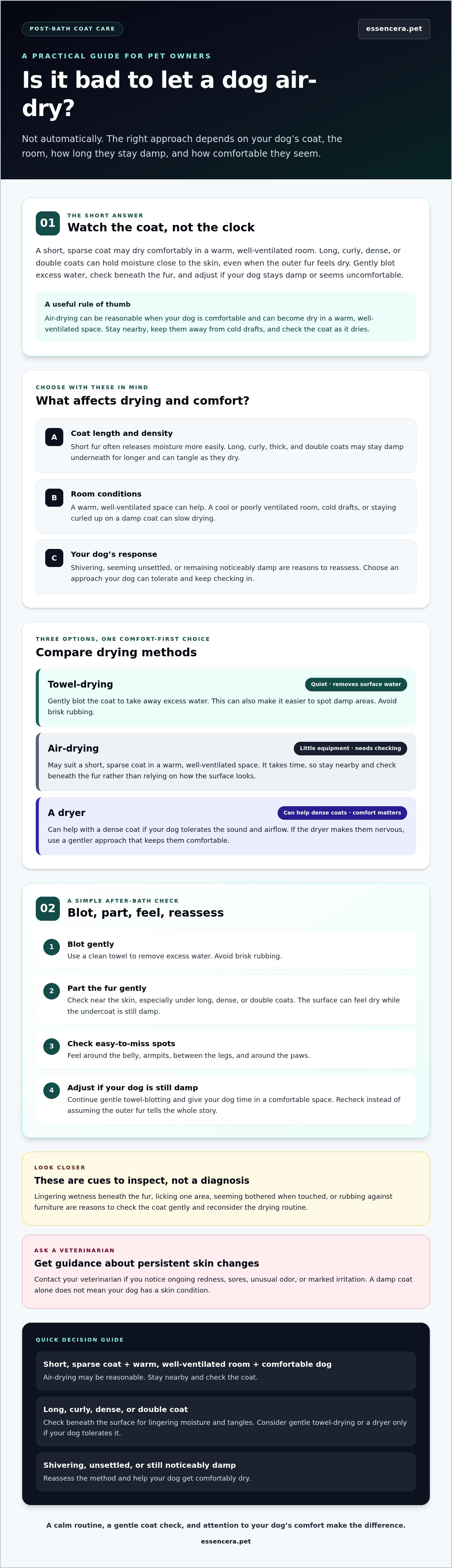
A calm drying routine starts before the bath is over. Set out clean towels and choose a warm, draft-free spot where you can stay with your dog. Once rinsing is complete, gently squeeze excess water from longer fur, then blot the coat with a towel. Avoid brisk rubbing, which can encourage tangles.
Next, part the fur in small sections to check for dampness near the skin, especially where the coat is dense or takes longer to dry. Choose air-drying or a dryer based on your dog’s coat and comfort. Stay with your dog, and adjust if they seem cold, restless, or uneasy. If you’re reviewing bath products too, you can explore Pure Wash dog shampoo.
A towel-first drying routine for most dogs
Keep the first steps simple: prepare the space, blot away water, inspect the coat, then decide whether to let it finish drying naturally or use a dryer your dog tolerates. A short coat may need less follow-up than long or thick fur. If you allow the coat to air-dry, stay nearby and check it again rather than assuming it’s dry because the surface feels warm.
Use this quick check before calling the coat dry:
- Part the fur: Check beneath the top layer in several spots, not just along the back.
- Feel covered areas: Check the belly, armpits, between the legs, and around the paws.
- Look for damp clumps: Separate fur gently where it sticks together or feels cool and wet.
- Recheck thick sections: If the undercoat still feels damp, continue drying and check again.
How to make drying calmer for a nervous dog
Some dogs are comfortable with towels but wary of a dryer’s sound or airflow. Move at your dog’s pace, speak gently, and pause if they need a break. If you try a dryer, introduce it gradually and use a cool or low-heat setting. Keep it moving, avoid close contact, and never direct airflow at the face.
Don’t force a noisy dryer or hold your dog still just to finish faster. If they show clear stress or discomfort, stop and choose a gentler method. If drying at home repeatedly feels difficult, ask a groomer for guidance tailored to your dog’s coat and tolerance.
When to adjust your dog’s drying routine or ask for help
The best drying choice depends on your dog, their coat, and the space they’re drying in. There’s no blanket rule that every dog must be blow-dried or that air-drying is always fine. If you’re wondering, “is it bad to let a dog air dry,” use your dog’s comfort and how completely their coat dries to guide you. A routine that works for a short-coated dog may not suit a dog with a thick undercoat.
Before drying, choose a bath product that suits your dog and rinse it out thoroughly. Pure Wash shampoo is one option for the bath before drying. The drying method still needs to fit your dog’s coat and tolerance.
When is a groomer’s advice useful?
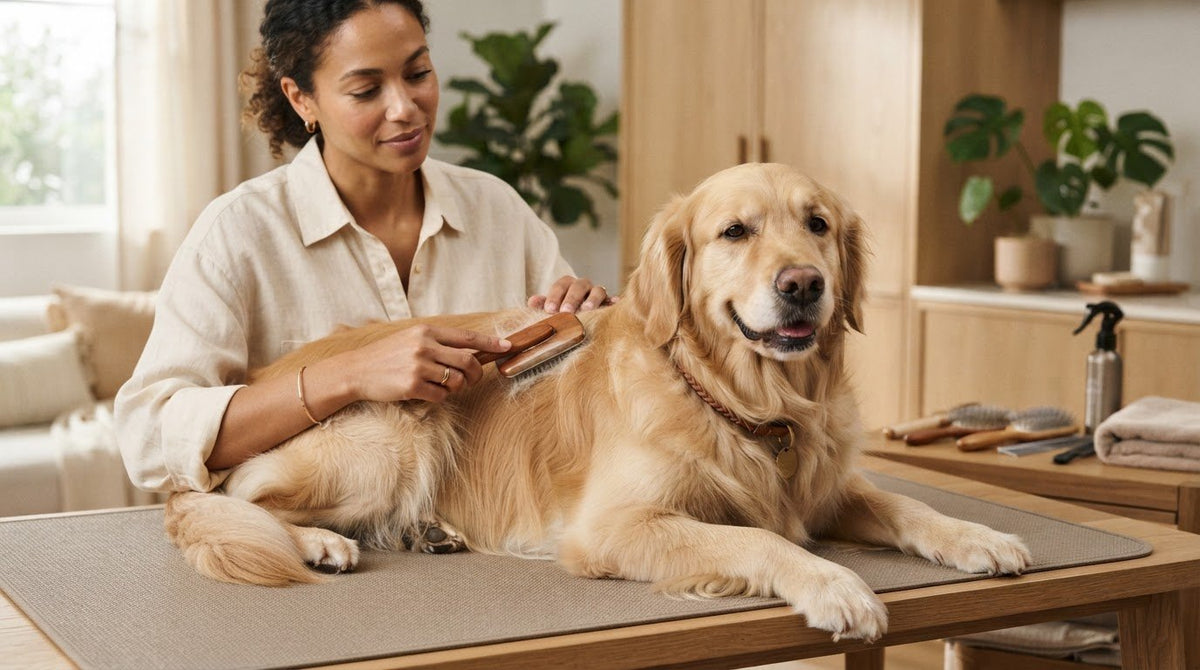
Ask a groomer for coat-specific guidance if your dog has very dense fur, tangles that are difficult to manage, or a coat that repeatedly stays damp despite your usual routine. They can suggest brushing and drying approaches suited to your dog’s coat and comfort. You don’t need professional help just because your dog air-dries, but advice can be useful if you’re unsure how to dry beneath a thick topcoat or manage knots without pulling.
Tell the groomer what you’ve noticed, such as which areas stay wet or how your dog responds to towels or a dryer. Those details can help you work out a more comfortable routine together.
When should a veterinarian assess skin changes?
Contact your veterinarian if redness, sores, worsening irritation, or an unusual odor persists. These signs can have different causes, and a drying routine alone can’t tell you what’s happening. An article can offer general care guidance, but it can’t diagnose a skin condition or replace an examination.
Seek veterinary advice promptly if changes are severe, spreading, or accompanied by other concerning signs, such as clear discomfort or a change in your dog’s usual behavior. In the meantime, don’t treat persistent skin changes as simply damp fur. A calm coat check and a thoughtful drying routine can help you notice what’s changed, while your veterinarian can advise on the next step.
For bath-time essentials, explore Essencera’s grooming products and choose a routine that keeps your dog’s comfort at the center.
Make post-bath comfort part of your routine
So, is it bad to let a dog air dry? Not automatically. The right choice depends on your dog’s coat, the drying conditions, and how comfortable your dog seems. Towel-blotting first and checking beneath the fur can help you spot damp areas. A dryer is only useful if your dog tolerates it and you use it gently.
Keep the routine flexible. Short fur in a warm room may dry comfortably with supervision, while a dense coat may need closer checking. If your dog’s coat is hard to manage, a groomer can offer coat-specific guidance. Persistent redness, sores, unusual odor, or worsening irritation deserve a veterinarian’s attention.
If you’re choosing products for bath time, Essencera offers concentrated pet grooming formulas, including shampoos, conditioners, and balms. Explore Essencera’s grooming products and build a routine that feels calm and comfortable for both of you. A little patience can make each bath a kinder part of caring for your companion.
Frequently Asked Questions
Is it bad to let a dog air dry after a bath?
Not necessarily. Whether is it bad to let a dog air dry depends on their coat, the room, and how long they stay damp. A short, sparse coat may dry comfortably in a warm, well-ventilated space. Long or dense fur can hold moisture beneath the surface, so check close to the skin and supervise your dog. Blotting with a towel first helps remove excess water.
Can a dog get sick from being wet after a bath?
Being wet after a bath doesn’t automatically make a dog sick. Still, a damp dog may feel cold, especially in a chilly or drafty room, so keep them warm and comfortable while they dry. In dense coats, moisture that remains close to the skin can contribute to skin concerns, but dampness alone doesn’t confirm a problem. Dry your dog gently and contact a veterinarian about persistent skin changes.
How long does it take for a dog to air dry?
There isn’t one drying time that fits every dog. A short, thin coat may dry sooner than long, curly, or double-coated fur, which can stay damp beneath the top layer. Room warmth and ventilation also affect how quickly moisture evaporates. Rather than relying on a set number of minutes, part the coat in sections and feel near the skin, especially around the belly, armpits, and paws.
Is it safe to use a hair dryer on a dog?
A hair dryer may be used cautiously if your dog tolerates it. Choose a cool or low-heat setting, keep the dryer moving, and don’t hold it close to the skin or aim airflow at the face. Introduce the sound and airflow gradually, since they can unsettle some dogs. Stop if your dog seems distressed or uncomfortable, and switch to gentle towel-drying or supervised air-drying.
Can air-drying cause mats in a dog’s coat?
Air-drying can make tangles more likely in long, curly, or dense coats if the fur is left unmanaged as it dries. Wet strands can cling together, and tangles may tighten as the coat dries, making them harder to brush out. Gently blot away excess water, then check and brush the coat as appropriate for your dog. Don’t tug at tight mats, which can pull uncomfortably on the skin.
Should I towel-dry my dog before letting them air dry?
Yes, gently blotting first is a practical way to remove excess surface water before supervised air-drying. Use a clean, absorbent towel and press it against the coat rather than rubbing briskly, which may encourage tangles. Part longer fur to check for damp areas, then let your dog finish drying in a warm, well-ventilated space if their coat and comfort allow. Keep them away from cold drafts.
When should I call a vet after my dog’s bath?
Contact your veterinarian if you notice persistent redness, sores, worsening irritation, unusual odor, or marked discomfort after a bath. Seek prompt advice if signs are severe, spreading, or accompanied by other concerning changes. These symptoms can have different causes, and the timing of a bath or drying method can’t confirm a diagnosis. If irritation develops after using a grooming product, stop using it and ask your veterinarian for guidance.