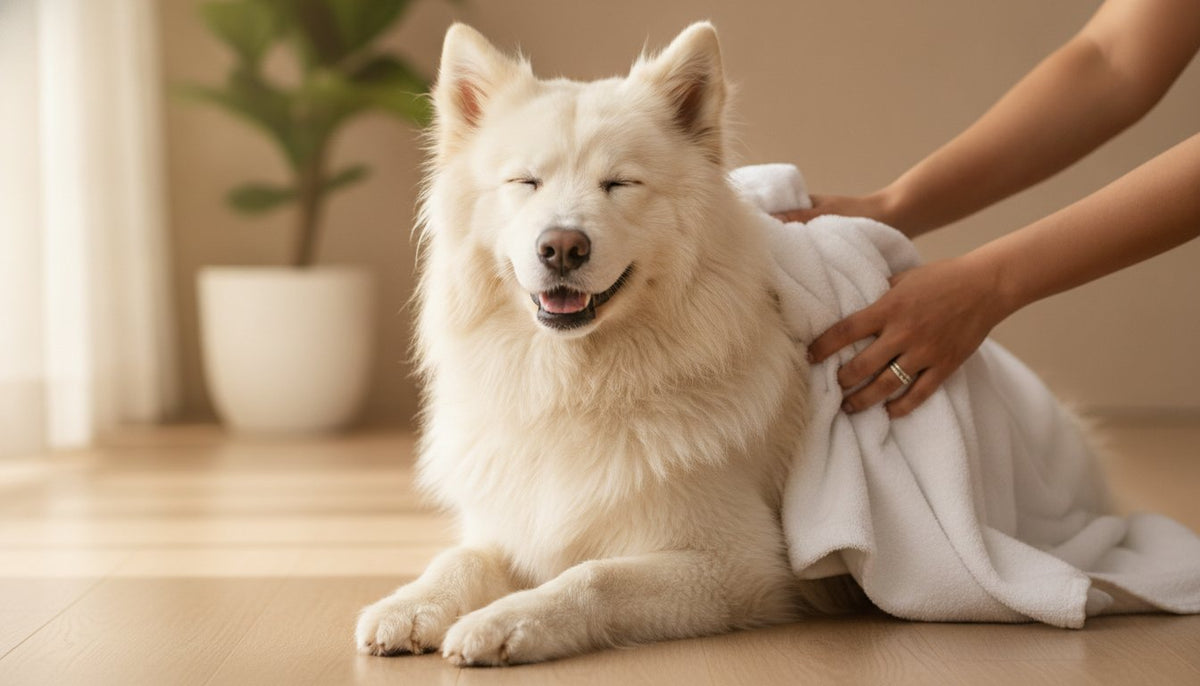
Best Way to Dry a Dog After a Bath: Healthy Skin Guide
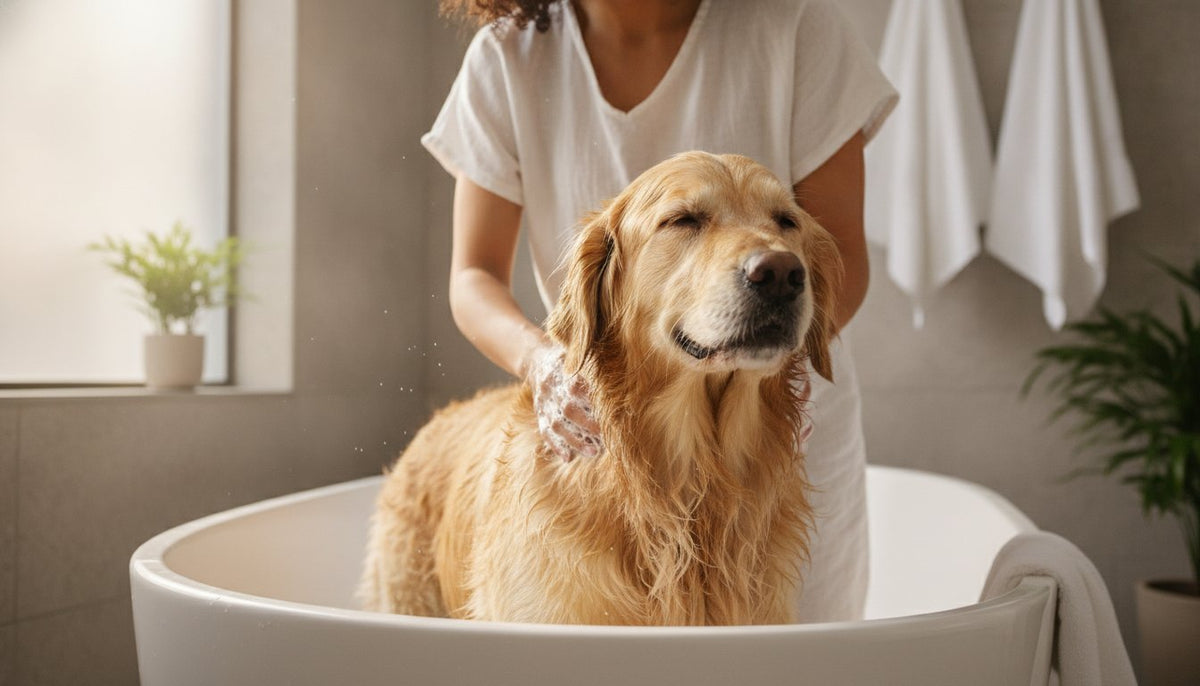
Drying your dog isn't just about getting rid of the water; it's the final, most important act of affection in their grooming routine. Most pet parents dread the post-bath chaos, from the soggy shakes that soak the furniture to the lingering wet dog scent that sticks to every rug. Finding the best way to dry a dog after a bath is essential not just for your home's comfort, but for your companion's long term skin health. Whether you've just finished a deep cleaning session with Pure Wash or used Calm Wash for a puppy with sensitive skin, the way you handle the drying process determines how healthy and hydrated their skin remains.
We know that a loud hairdryer can be frightening and that rough towel drying often leads to itchy, flaky skin. You deserve a stress-free ritual that leaves your companion feeling calm rather than anxious. This guide reveals how to protect the skin barrier while ensuring your dog stays fluffy and clean-smelling. You'll discover the gentlest techniques to use after applying Coat Condition to keep the coat smooth, along with tips for hydrating delicate areas with Barrier Balm. By following these steps, you can turn a routine task into a meaningful moment of connection and care.
Key Takeaways
- Learn why proper drying is the vital final step in protecting your dog's skin barrier and preventing unwanted bacterial growth.
- Discover why the best way to dry a dog after a bath involves a gentle squeeze method rather than vigorous rubbing to avoid damaging the hair cuticle.
- Understand the importance of using Coat Condition before drying to reduce friction and ensure a smooth, tangle-free finish.
- Find out how to create a stress-free post-bath ritual for sensitive dogs by introducing tools slowly and maintaining a calm environment.
- See how to seal in hydration after the coat is dry by applying Barrier Balm to your companion's nose and paws.
Why the way you dry your dog matters for their skin
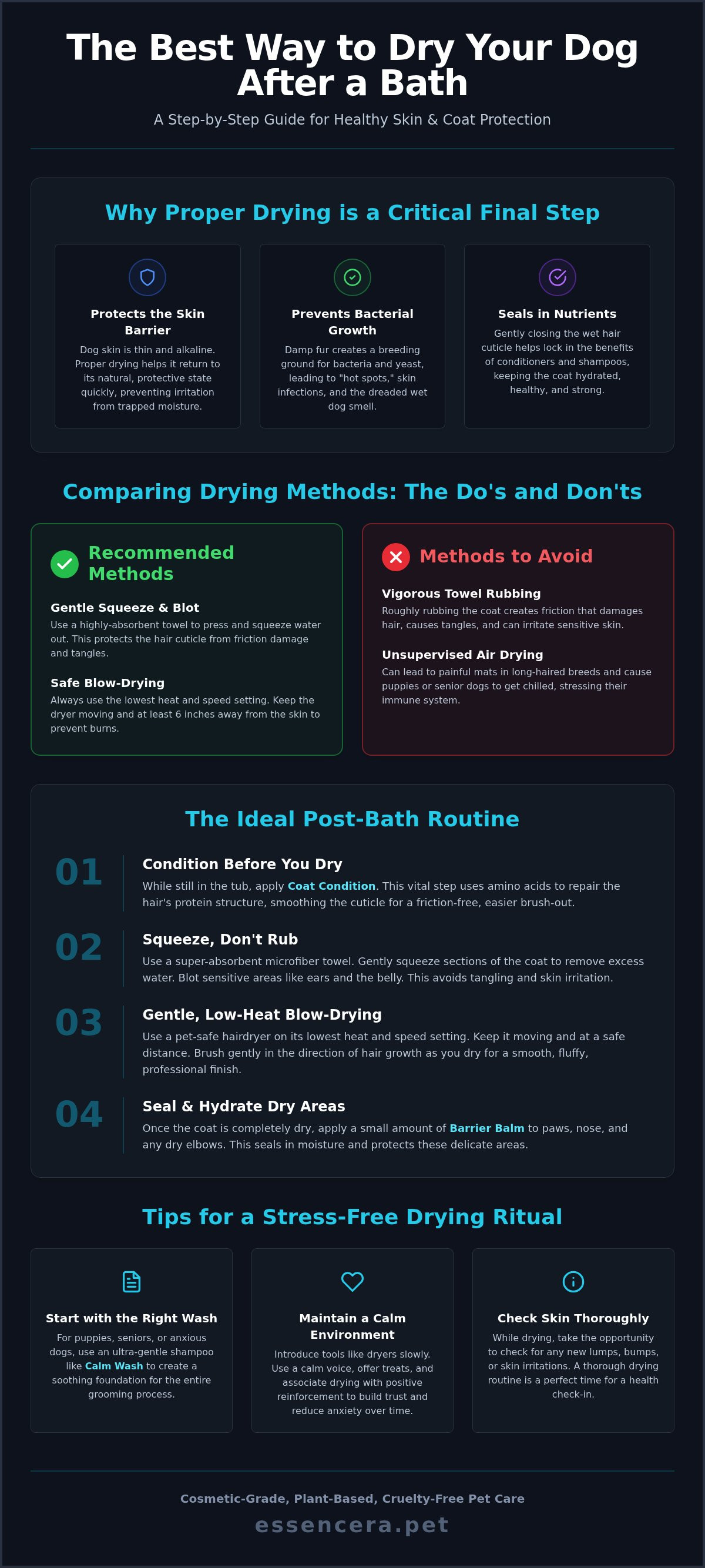
Many pet parents think the job is done once the suds are rinsed away. In reality, the drying process is the vital final step in maintaining a healthy skin barrier for your companion. If you leave the fur damp for too long, you're essentially creating a tropical climate right against their skin. This trapped moisture can encourage fungal or bacterial growth that leads to itching and irritation. Finding the best way to dry a dog after a bath isn't just about keeping your sofa dry; it's about finishing the care routine you started in the tub.
Proper drying also serves a functional purpose by sealing in the nutrients from your organic dog shampoo. When the hair cuticle is wet, it's open and vulnerable. Closing that cuticle through gentle drying helps keep the coat healthy and hydrated. A thoughtful drying routine provides several key benefits for your dog's well-being:
- It prevents "hot spots" and skin folds from becoming irritated by trapped water.
- It stops the cycle of microorganisms producing odor-causing organic acids.
- It allows the skin to return to its natural, protective state more quickly.
The science of the canine skin barrier
Dog skin is much thinner and more alkaline than human skin. This makes it incredibly delicate and prone to disruption. Excessive moisture can break down the natural oils that protect your dog against allergens and environmental pollutants. During the washing process, even the gentlest cleansers can temporarily alter the hair's protein structure. This is why we prioritize amino acids in our formulations. These building blocks are essential for rebuilding the protein structure after a bath, but they need a properly dried coat to stay effective and protective.
Understanding the wet dog smell
We've all noticed that heavy, musk-like scent that appears the moment a dog gets wet. This wet dog smell is caused by tiny microorganisms on the skin that produce organic acids when they come into contact with water. Discovering the best way to dry a dog after a bath helps you eliminate the moist environment these microbes need to thrive. Using a clean, deep cleaning formula like Pure Wash helps manage these odors naturally. By removing the dampness efficiently, you ensure your dog smells fresh and their skin remains a healthy, clean environment.
Comparing the best drying methods for every coat type
Every dog has a unique coat that requires a personalized touch. While one dog might love the warm breeze of a dryer, another might prefer the quiet comfort of a soft towel. Finding the best way to dry a dog after a bath often involves a gentle combination of techniques tailored to your companion's specific needs and coat length. By choosing the right approach, you ensure their skin stays healthy and their coat remains lustrous and soft.
The air drying debate
It is often tempting to let nature take its course, but air drying isn't always the kindest choice for every dog. For long-haired breeds or curly coats like Doodles, letting the fur air dry can quickly lead to painful matting. As the hair dries on its own, the strands can twist together, creating knots that are difficult to remove later. This can lead to skin tension and discomfort that lingers long after the bath is over.
Beyond the risk of tangles, air drying can be physically taxing for certain dogs. Small puppies and senior dogs have a harder time regulating their body temperature. Leaving them damp for hours can lead to a chill that causes unnecessary stress and lowers their immune response. If you choose to air dry, ensure it is only for short-haired dogs in a warm, draft-free environment where they won't feel the cold.
When to use a hairdryer
If you want a professional, fluffy finish, a hairdryer is an excellent tool for your home grooming kit. The key is to prioritize safety and comfort at every step. Always use the lowest heat setting available; dog skin is incredibly sensitive, and what feels warm to us can quickly become too hot for them. Keep the dryer moving constantly to prevent heat spots from forming in one area, ensuring a steady and calming experience.
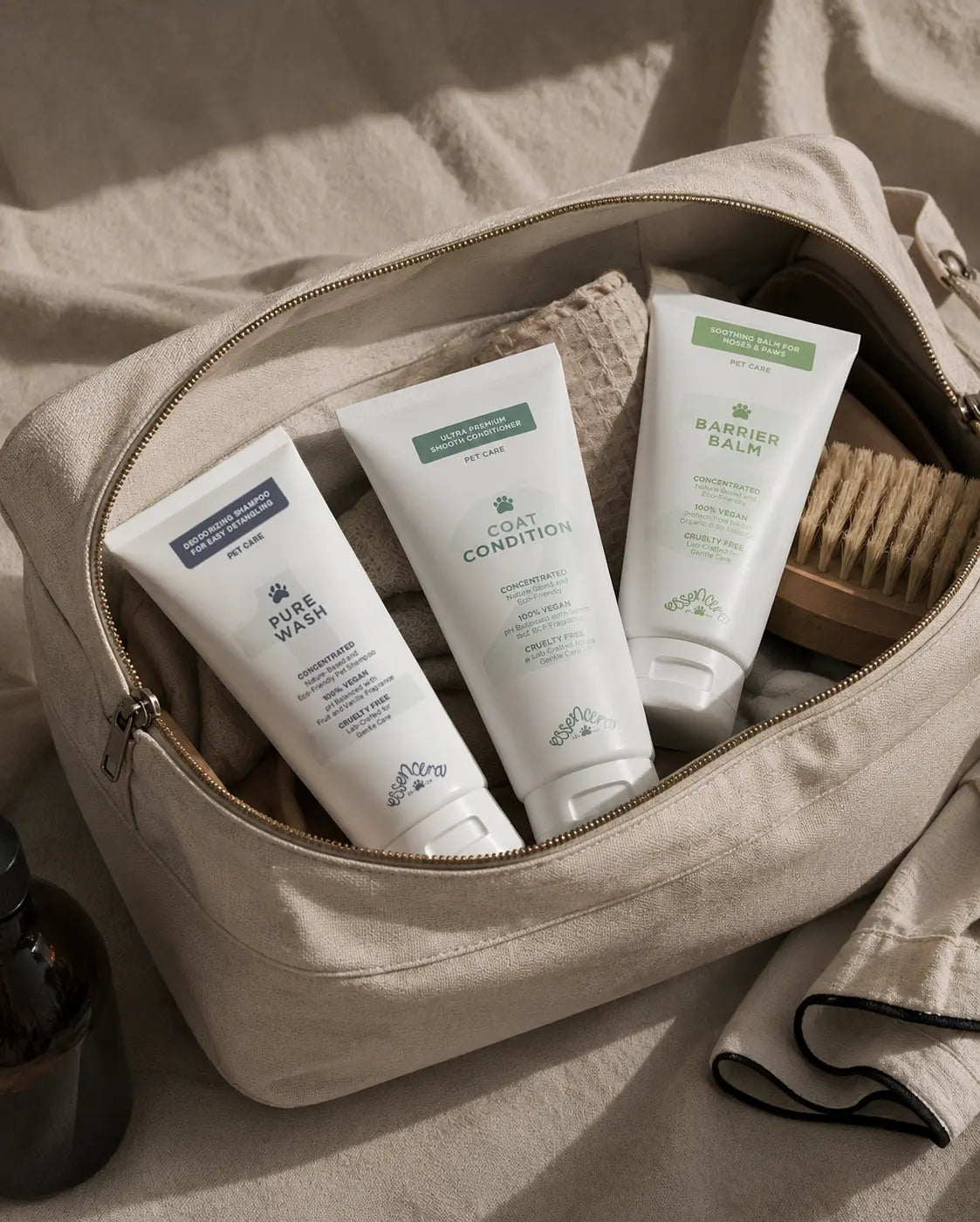
Using a hairdryer is particularly effective after you have applied Coat Condition. This premium conditioner helps the hair cuticle lay flat, which makes the drying process much smoother and reduces friction. The gentle airflow helps to fluff the coat and highlight the natural silkiness our plant-based ingredients provide. To finish the ritual and ensure your companion feels fully pampered, you can apply a small amount of Barrier Balm to their nose and paws to lock in hydration.
If you are looking for a gentle way to start your grooming journey, our Travel Fresh Bundle includes everything you need for a clean, hydrated coat on the go.
The squeeze method: How to towel dry without damage
Drying your dog should feel like a gentle extension of the bath itself, a meaningful act of affection that respects their delicate coat. Many pet parents instinctively reach for a towel and begin rubbing vigorously, but this friction is actually quite harsh. It can break the hair cuticle, cause painful tangles, and even irritate the skin. The best way to dry a dog after a bath is to adopt the squeeze method, which protects the hair's protein structure while removing excess moisture without unnecessary stress.
Microfiber towels are the ideal tool for this technique. They are designed to absorb significantly more water than traditional cotton towels, allowing you to dry the coat without the need for rough handling. This efficiency is especially important if you have used a deep cleaning formula like Pure Wash, as you want to preserve the hydration and amino acids delivered during the cleanse. By using a softer material, you ensure the skin barrier remains undisturbed and the coat stays lustrous.
Step by step squeeze drying
Begin by placing a large towel over your dog immediately after the final rinse to catch the initial drips. Press firmly into the coat to soak up the surface water. Once the heaviest moisture is gone, work in small sections. Gently squeeze the fur between the folds of the towel, holding for a few seconds to let the fibers do the work. Start at the head and move toward the tail, always following the natural direction of hair growth to keep the coat laying flat and smooth. This rhythmic process is much more calming for your companion than the chaotic movement of traditional rubbing.
Managing long or curly hair
Dogs with longer coats or curly hair require extra patience. Their fur is more prone to breakage when it is saturated with water, making the "rubbing" method particularly dangerous for their coat health. To make this process easier, always ensure you have used Coat Condition before you begin drying. This premium conditioner provides the necessary slip to prevent the hair from snagging or matting as you work. Understanding the relationship between ingredients and hair health is vital, and you can learn more by reading our guide on natural dog shampoo. By combining the right products with the squeeze method, you protect the coat's integrity and ensure a soft, fluffy finish every time.
A stress-free drying routine for sensitive dogs
For many companions, the sound of a hairdryer or the sight of a large towel feels overwhelming. If your dog runs away or trembles during this final step, finding the best way to dry a dog after a bath requires a shift in focus toward emotional safety. You can turn a frightening experience into a peaceful ritual by creating a sanctuary in your grooming space. Dim the lights, close the door to dampen outside noise, and ensure the room is comfortably warm before you even begin the final rinse.
The foundation of a calm drying session starts in the tub. If you have a reactive dog or a young puppy, using Calm Wash provides an immediate sense of relief. Its allergen-free banana scent was specifically chosen to be low-sensory and non-stimulating, unlike strong floral or citrus fragrances that can overstimulate a sensitive nose. When their skin feels soothed and their senses are quiet, they're much more likely to accept the drying process with confidence.
Desensitizing your dog to the dryer
Building trust with grooming tools takes time and patience. Start by running the dryer in the same room while your dog is relaxing, without pointing the air flow at them. Offer soft praise and a favorite treat when they remain calm around the noise. Over several sessions, you can gradually move the air flow closer, starting with their back and moving toward more sensitive areas. This slow introduction ensures they associate the warmth of the dryer with safety and affection rather than fear.
Special care for puppies and seniors
Establishing a positive routine early is the greatest gift you can give a new puppy. Our Gentle Start Bundle is designed for these first experiences, combining gentle cleansing with the protection of Coat Condition. Senior dogs also require specialized care as their skin often thins with age. They may find heavy towel pressure uncomfortable, so prioritize the light squeeze technique we discussed previously. To learn more about nurturing your youngest companion, you can check out our guide on choosing the best puppy shampoo. Once they're dry, finishing with a dab of Barrier Balm on their nose and paws seals in hydration and provides a final touch of comfort.
If you're ready to create a nurturing first bath for your new companion, explore our Gentle Start Bundle for everything you need to build a lifetime of trust.
Post-drying care: Sealing in the goodness
Once your companion's coat is fluffy and dry, you might feel like the journey is over. However, even the most careful drying process can occasionally leave the skin feeling a little parched. This is especially true for the delicate, hairless areas that face the elements every day. Completing your routine with targeted hydration is truly the best way to dry a dog after a bath because it restores the moisture balance that air or heat might have whisked away. By taking these final steps, you ensure the skin barrier remains resilient and the coat stays as healthy as possible.
Hydrating the rough areas
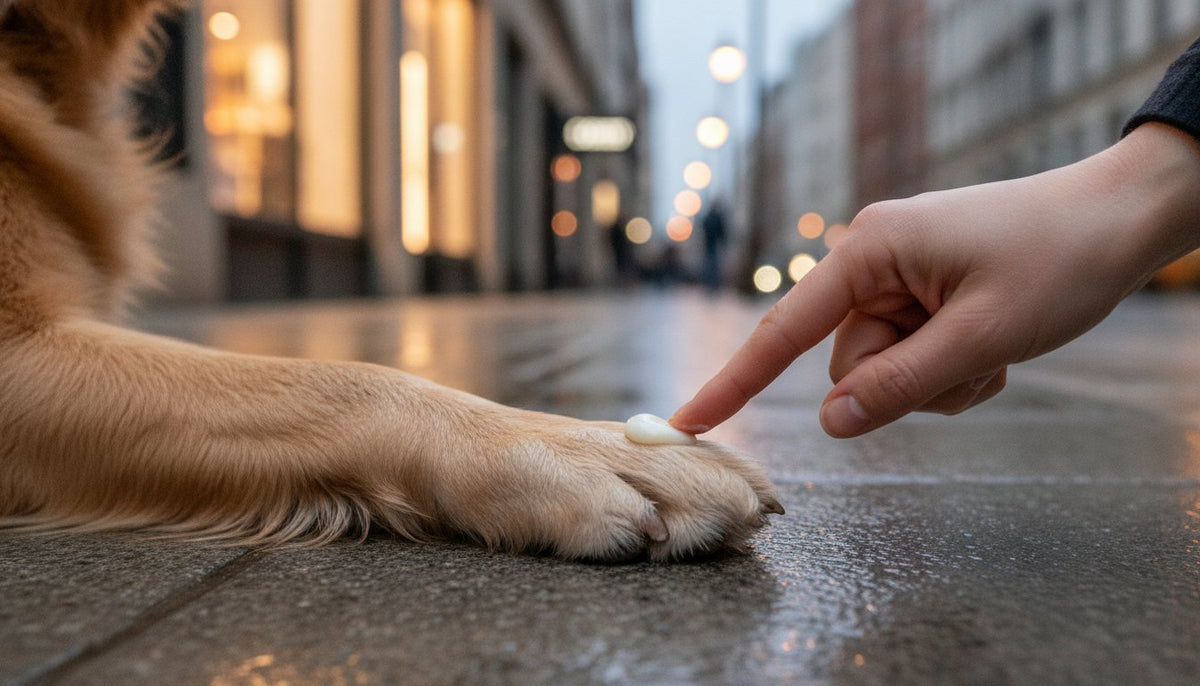
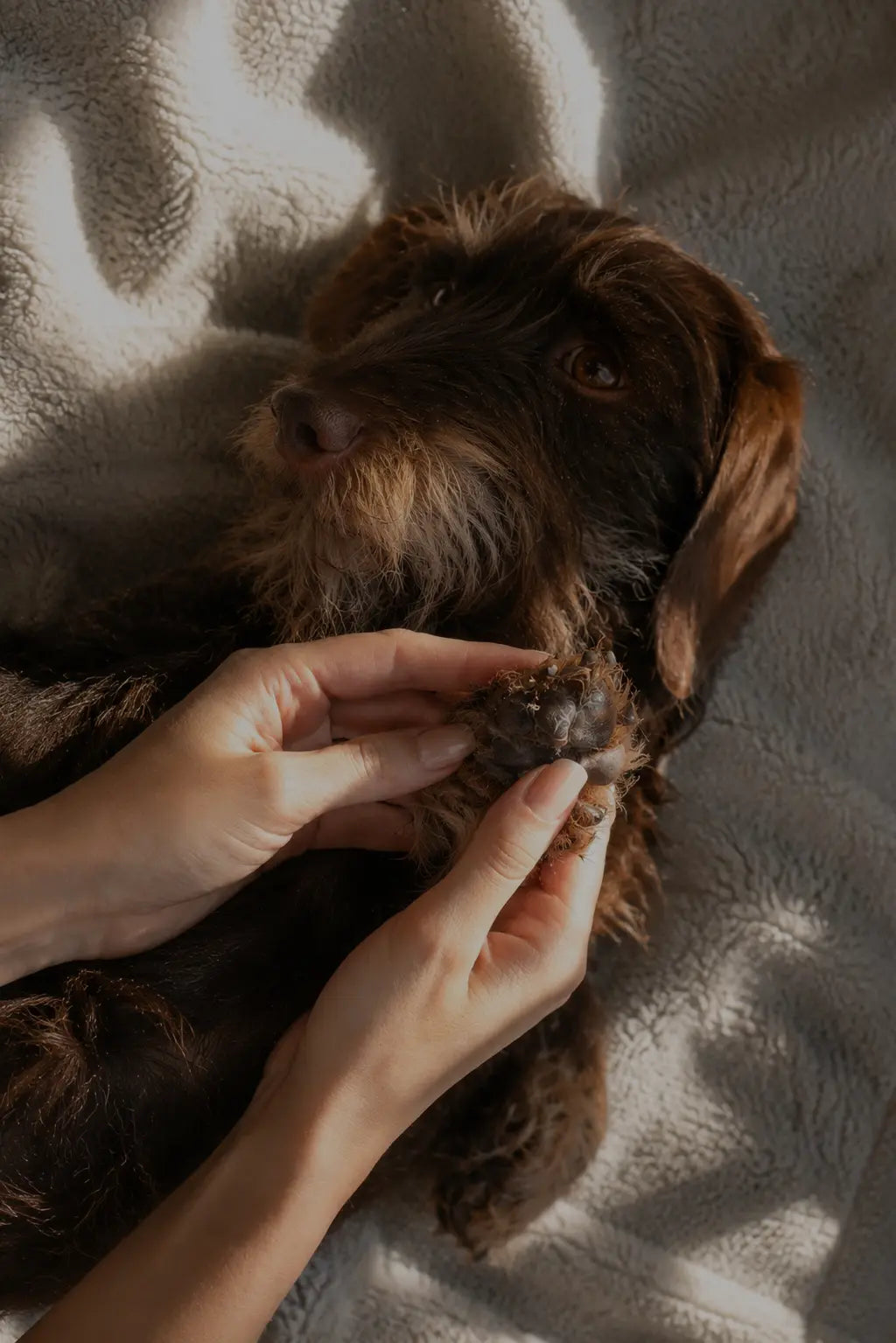
We recommend applying Barrier Balm to the nose, paw pads, and elbows once the fur is completely dry. This plant-based salve acts as a protective shield against environmental stressors like hot pavement, salt, or dry indoor air. It's formulated with organic oils and zinc oxide to provide a medical-grade barrier that is still gentle enough for daily use. It's safe if licked and absorbs quickly, so you don't have to worry about greasy paw prints on your floors. Take a moment to massage the balm in gently until it is fully absorbed; this small act helps soothe dry elbows and keeps cracked pads feeling soft and hydrated.
The final brush out
A quick brush through is the perfect way to celebrate your hard work. Now that the coat is dry, brushing helps distribute natural oils across the hair shaft, enhancing the shine you've achieved with Coat Condition. This step also removes any remaining loose fur that the bath might have shaken free. You'll find that the coat remains silky and free of post-bath tangles, making your next grooming session even easier. It's a quiet, rewarding moment that turns routine maintenance into a meaningful act of affection. If you started with a deep cleaning using Pure Wash, you'll really notice the difference in how the brush glides through the hair.
End the session with a soft, full-body massage. This helps your dog relax after the stimulation of the bath and drying process. It builds a deeper bond of trust and ensures they associate grooming with comfort and safety. You'll both enjoy the soft, clean-smelling results of your nurturing grooming session, knowing you've protected their skin barrier every step of the way. Enjoy those post-bath snuggles; they're the best part of the ritual.
Embrace a more nurturing grooming ritual
Drying your dog should always be a moment of connection rather than a source of stress. By choosing the gentle squeeze method over vigorous rubbing, you protect the hair's protein structure and keep the skin barrier resilient. Keep in mind that the best way to dry a dog after a bath is to view it as a complete care routine. This starts with a deep cleaning using Pure Wash and ends with the hydrating protection of Barrier Balm for paws and nose.
Essencera is here to support that bond with botanical purity and quiet confidence. Our concentrated formulas mean a little goes a long way, and because our plant-based ingredients are safe if licked, you can focus entirely on the affection you're sharing. These are the same professional results trusted by boutique groomers, now available for your home sanctuary. When you prioritize skin health, you're not just grooming; you're protecting your companion's comfort.
Explore the Essencera collection for a professional finish at home
You've now got the tools and knowledge to ensure every bath ends with a happy, healthy, and perfectly dry companion. We can't wait for you to experience the soft, clean results of a truly nurturing session.
Frequently Asked Questions
Is it better to let a dog air dry or towel dry?
Towel drying is almost always the safer choice for your companion's comfort and health. Letting a dog air dry can lead to painful matting in long hair and may cause a chill in puppies or senior dogs. The best way to dry a dog after a bath is to use a microfiber towel and a gentle squeeze method. This protects the skin barrier and works beautifully when you have used Coat Condition to keep the fur smooth.
Can I use a human hairdryer on my dog?
You can use a human hairdryer, but you must be extremely careful with the temperature settings. Dog skin is much thinner and more sensitive than ours, so always use the lowest heat setting to prevent accidental burns. Keep the dryer moving constantly and maintain a safe distance from the coat. Using a dryer on a low setting helps fluff the coat after a wash with Pure Wash, leaving your companion feeling soft.
How do I get my dog to stop shaking after a bath?
Shaking is a natural reflex to remove water, and dogs can shake off a large portion of moisture in just seconds. To minimize the spray in your home, place a large towel over them as soon as you turn off the water. This provides a sense of security and catches the initial spray. After the shaking stops, continue with a gentle drying routine to protect the skin and maintain the coat's natural beauty.
Why does my dog smell worse after a bath?
The "wet dog smell" is caused by microorganisms like bacteria and yeast that live naturally on the skin. When these microbes get wet, they release organic acids that create a heavy odor. Efficiently removing moisture is the best way to dry a dog after a bath and stop these microbes from thriving. Using a clean, professional formula like Pure Wash helps manage these odors while keeping the skin environment healthy.
How long does it typically take for a dog to dry completely?
Drying time depends on your dog's coat type and the humidity in your home. A short-haired dog might be dry within thirty minutes, while a thick double coat can hold moisture for several hours if left to air dry. Using a microfiber towel to squeeze out the water significantly speeds up the process. Once they are dry, remember to apply Barrier Balm to their nose and paws to keep them hydrated.
What should I do if my dog is terrified of the hairdryer?
If the noise of a dryer causes anxiety, it is best to stick to thorough towel drying using the squeeze method. You can slowly desensitize them by running the dryer in another room while offering praise. For these sensitive souls, we recommend starting the bath with Calm Wash. Its soothing banana scent and gentle ingredients help create a quiet environment that makes the entire grooming ritual much less overwhelming.
Is it okay to leave a dog slightly damp?
It is generally not a good idea to leave your dog damp, especially in areas with skin folds or thick fur. Trapped moisture is a breeding ground for bacteria and can lead to itchy hotspots or fungal issues. Ensure the skin is dry to the touch before finishing your session. After drying, take a moment to massage Barrier Balm into their paw pads to protect them from any post-bath dryness.
How can I dry a dog with a very thick double coat?
Double coats require extra patience because the dense undercoat traps a massive amount of water. Start with multiple microfiber towels and use the squeeze method to remove as much moisture as possible from the skin outward. A low-heat hairdryer is often necessary to reach the deep layers. Always use Coat Condition during the bath to provide the slip needed to prevent the undercoat from tangling while you dry.