Can I Use Baby Wipes on My Dog’s Paws, Face, or Ears?
Baby wipes are an emergency backup, not a dog-cleaning routine. If you’re wondering, “Can I use baby wipes on my dog?” you may use one once on a small, non-sensitive area your dog is unlikely to lick, provided it’s unscented, alcohol-free, and made with minimal ingredients. A damp cloth is a gentler choice for everyday cleanup.
It’s understandable to reach for a wipe when muddy paws or a dirty coat need a quick clean. But a wipe made for babies isn’t automatically suitable for a dog’s skin, and the face, ears, and paws need extra care.
Here, you’ll learn when a baby wipe may be reasonable in a pinch, what to use on sensitive areas, and how dog-specific wipes differ. You’ll also learn what to do if your dog shows signs of irritation, so a small cleanup can stay simple and gentle.
Key Takeaways
- Learn which common wipe ingredients and label terms may make a quick cleanup less suitable for your dog’s skin.
- Find out why paws, faces, and ears need different care, and which areas call for a product made specifically for that purpose.
- See how the pH ranges of dog and human skin differ, and why that matters when choosing a wipe.
- Know what to do if your dog’s skin reacts, and when an occasional emergency wipe should give way to a gentler cleaning option.
Can You Use Baby Wipes On Dogs?
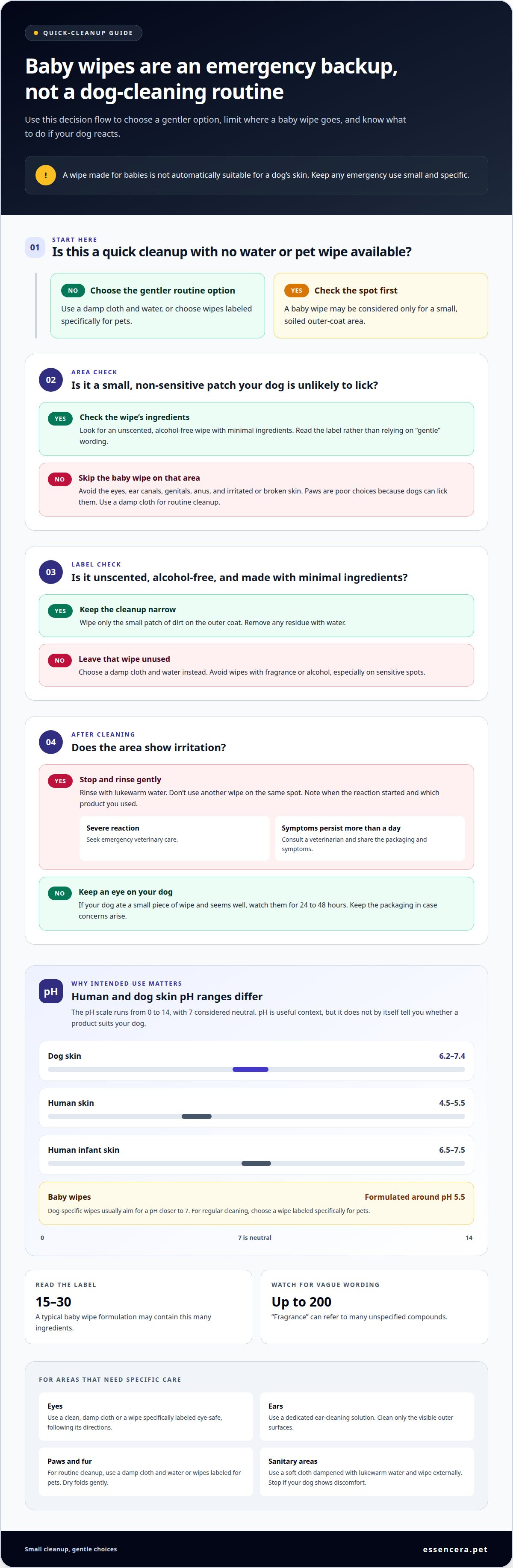
Baby wipes are an emergency backup, not a routine cleaning choice. Use one only on a small, non-sensitive spot your dog is unlikely to lick. Choose an unscented, alcohol-free wipe with minimal ingredients, then remove any residue with water.
Ingredients That May Irritate Dogs
Baby wipes can contain ingredients that may bother a dog’s skin, particularly fragrance or alcohol. A typical formulation contains 15 to 30 ingredients, so the label matters. “Fragrance” can refer to as many as 200 unspecified compounds, making it difficult to identify what the term covers in a particular wipe.
For an urgent cleanup, choose a wipe with a short ingredient list and no added fragrance or alcohol. Avoid using it on irritated or broken skin. A label saying a wipe is gentle for babies doesn’t mean it was made specifically for dogs.
Risks of Licking Wipe Residue
Dogs may swallow residue when they lick a recently wiped patch of fur or skin. That makes areas they can readily groom, such as their paws, poor choices for baby-wipe use. Limit the wipe to an outer coat area your dog is unlikely to reach with their tongue.
If your dog eats a small piece of wipe and seems well, watch them for 24 to 48 hours. Keep the packaging available so the ingredient list can be identified if concerns arise. If you notice a reaction or other concerning change, contact a veterinarian for guidance.
Recognizing and Responding to Reactions
If irritation appears where the wipe touched, stop using it and gently rinse the area with lukewarm water. Don’t use another wipe on the same spot. Observe your dog after rinsing, and note when the reaction started and which product you used.
Seek emergency veterinary care for a severe reaction. If skin symptoms persist for more than a day, consult a veterinarian. Share the wipe packaging and describe the affected area and symptoms. This information can help the veterinarian assess the exposure and advise you on next steps.
Cleaning paws, faces, ears, and sensitive areas
Baby wipes aren’t suitable for every body area. Avoid the eyes, ear canals, genitals, anus, and irritated or broken skin. For routine cleaning, use a damp cloth or wipes labeled specifically for pets.
Cleaning Paws, Fur, and Skin Folds
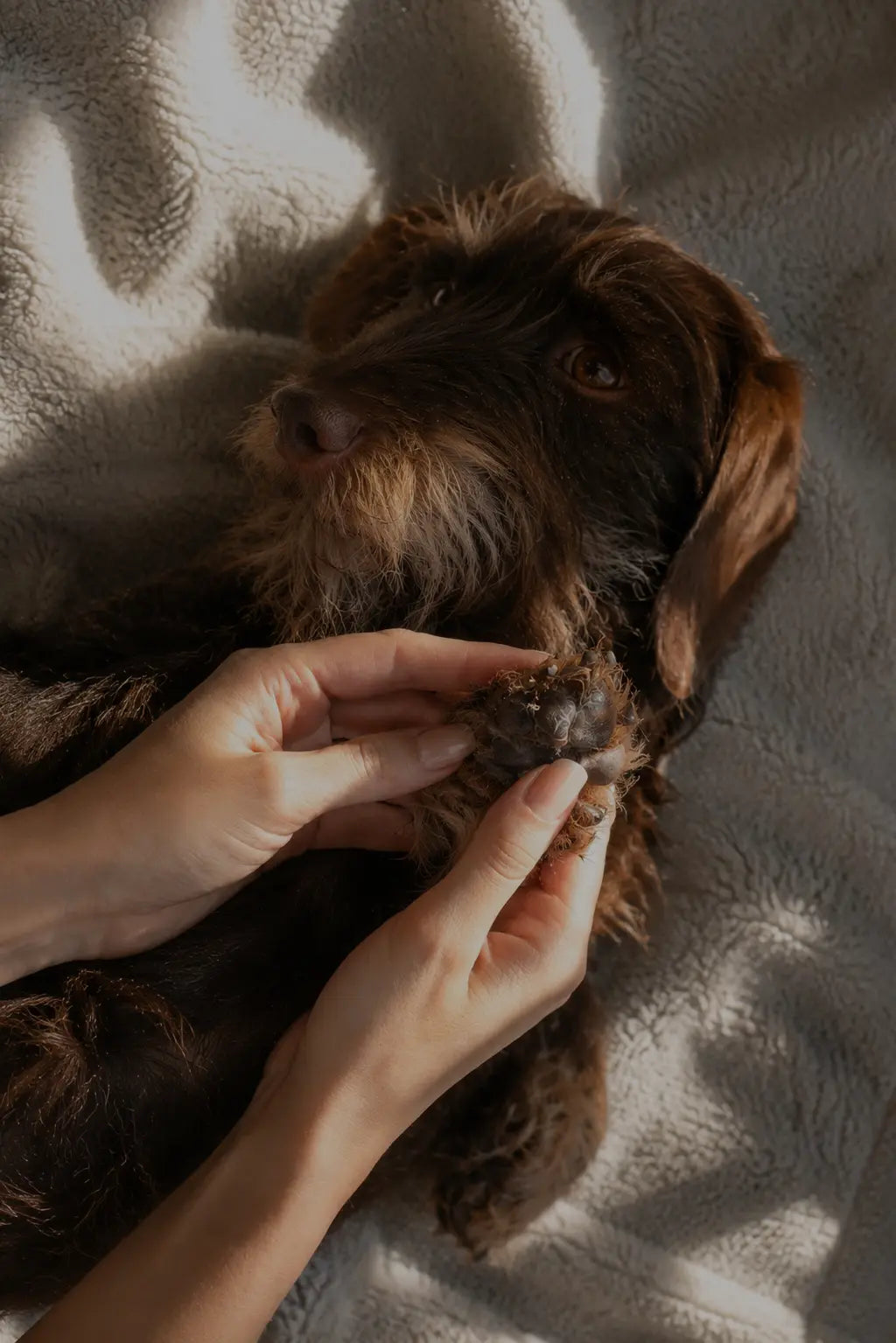
For muddy paws or dirty fur, wipe only the soiled outer surface. Don’t rub between the toes if the skin looks red or cracked. Paw pads and folds can hold moisture and residue, so baby wipes aren’t a good routine choice there. Check folds gently, then dry them. Avoid wipes with alcohol, fragrance, or preservatives on sensitive spots.
Cleaning Faces, Ears, and Eyes
Keep baby wipes away from the eyes and ear canals. A moving dog can turn a quick face wipe into accidental contact. For tear marks, use a clean, damp cloth or a wipe specifically labeled eye-safe, following its directions. For ears, choose a dedicated ear-cleaning solution rather than a general-purpose wipe. Clean only the visible outer surfaces.
Sanitary Areas and Sensitive Skin
Sanitary areas need gentle, limited cleaning because the skin can be delicate. Avoid baby wipes on the genitals, around the anus, or on rashy, broken, or inflamed skin. If fur is soiled after toileting, dampen a soft cloth with lukewarm water and wipe externally. Don’t scrub skin folds or push material into openings. Stop if your dog shows discomfort.
Dog-Safe Cleaning Alternatives
A damp cloth and water offer a simple, chemical-free way to remove mud from paws or faces. For routine coat or paw cleaning, choose wipes labeled specifically for pets. Use eye-safe wipes around the eyes and dedicated ear cleaner for ears. A balanced cleaning routine means matching the product to the area, rather than assuming one wipe suits every spot.
Differences between dog and human skin pH
Skin pH is one reason a wipe designed for people may not suit a dog. The figures offer useful context, but pH alone doesn’t tell you whether a product is appropriate for your pet.
Human and Canine Skin pH
The pH scale runs from 0 to 14, with 7 considered neutral. Dog skin pH is reported at 6.2-7.4, while human skin is commonly placed around 4.5-5.5. These ranges show that human skin is generally more acidic, although individual skin can vary.
Human infant skin is reported at 6.5-7.5, and baby wipes are described as formulated around pH 5.5. Dog-specific wipes usually aim for a pH closer to 7. That difference helps explain why an infant product isn’t automatically a good match for canine skin. It doesn’t, by itself, establish how a particular dog will respond.
Baby Wipes and Dog Wipes
Baby wipes are formulated for human infant care. Dog wipes are intended for pets and usually target a pH closer to neutral. Intended use is a practical starting point when choosing between the two, especially if you expect to wipe your dog regularly.
Labels still matter. Check the product label rather than assuming that an “unscented” claim makes a wipe suitable for dogs. Likewise, a sensitive-skin claim doesn’t necessarily mean a product was designed for canine skin. Look for wipes specifically labeled for pets, then follow the directions for the area being cleaned.
Choosing a Wipe for Regular Cleaning
Think of pH as one factor among several, not a complete safety test. The formula, intended user, and your dog’s skin history all help guide your choice. A pet-labeled wipe provides clearer guidance for routine use than an infant-care wipe.
If your dog has reacted to grooming products before, an unscented label alone may not address that concern. Keep the product’s intended use in mind, and choose a wipe formulated for dogs when regular cleaning is needed.
When baby wipes may be used in an emergency
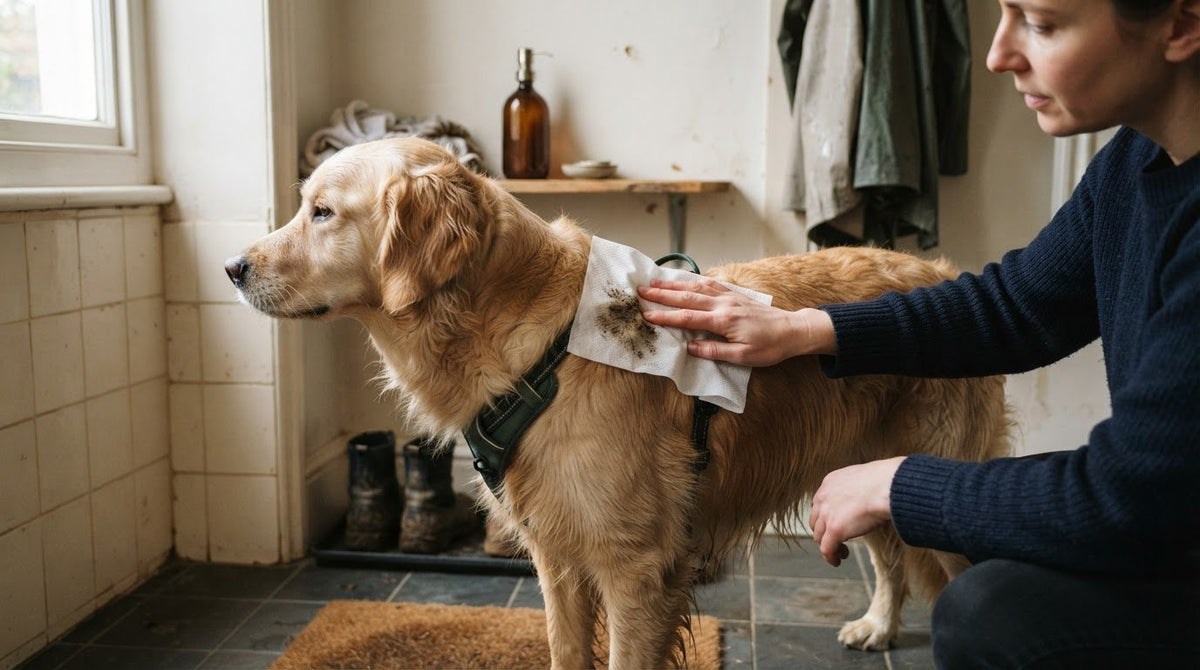
Use a baby wipe only when a quick cleanup is needed and water or a pet wipe isn’t available. For example, you might remove a small patch of dirt from the outer coat after a walk. Keep the purpose narrow: remove that spot, not clean the whole dog. Baby wipes are an occasional backup, not a replacement for routine grooming.
Before using one, read the package rather than relying on “gentle” wording. Choose an unscented, alcohol-free wipe with minimal ingredients. Skip it if your dog has a pre-existing skin condition, or if the mess is on a sensitive area or somewhere your dog is likely to lick. In those situations, wait until water or a pet-specific cleaning option is available.
For a one-time emergency clean, wipe only the soiled outer coat. Then go over the area again with clean water to remove residue, and dry it. This extra rinse matters because a dog may groom the spot later. Using an unscented, alcohol-free wipe once or twice is unlikely to cause major harm for a dog without existing skin problems, but it remains a limited-use fallback.
Afterward, watch the cleaned area and your dog’s behavior for signs of irritation. Stop using the wipe if a reaction appears, and gently rinse the area with lukewarm water. Seek emergency veterinary care for a severe reaction; contact a veterinarian if skin symptoms persist for more than a day. For ordinary muddy paws or faces, a damp cloth is a simpler choice.
Essencera
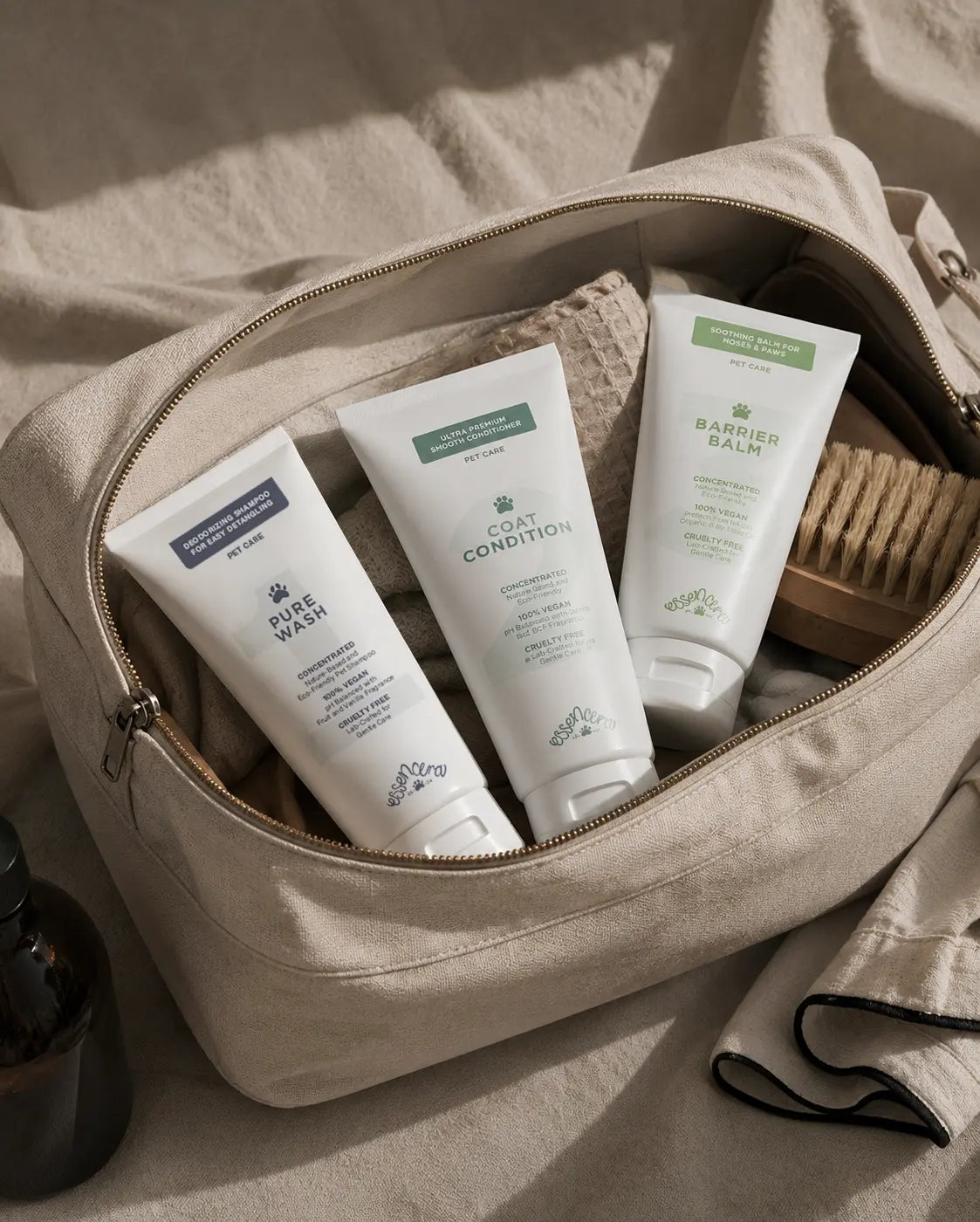
Essencera offers grooming options for everyday care beyond emergency wipes. For rough or dry paw and nose areas, Barrier Balm helps hydrate and protect skin. Coat Condition supports a smoother coat and easier brushing during finishing, while the Gentle Start Bundle brings together a gentle grooming routine for puppies, seniors, and dogs with sensitive skin.
These products aren’t a substitute for veterinary care when skin is irritated or symptoms persist. They can, however, help you choose dog-focused care for regular grooming and dry areas instead of relying on baby wipes.
Explore Essencera’s dog grooming products to find an option for your dog’s routine.
Make your dog’s care routine feel simple
A quick cleanup can be part of a caring routine, but wipes don’t need to become a habit. Consider what your dog needs next: a proper coat cleanse, extra care for dry skin, or help with brushing. Matching the product to the task makes everyday grooming feel more considered.
For bath-day cleansing, Pure Wash offers a dog-focused option. Barrier Balm is made for paws and noses, while Coat Condition supports coat care after washing. Together, these options can help you move from an emergency wipe to a routine that suits your companion.
Still wondering, “Can I use baby wipes on my dog?” Keep them as a rare backup, and choose dog-specific care for regular grooming. If you have questions about which option fits your dog’s routine, contact Essencera with your questions. Small, thoughtful choices can make grooming a gentler part of the time you share.
Frequently Asked Questions
What ingredients should I avoid in dog wipes?
Be cautious with added fragrance and alcohol, especially if your dog has sensitive skin. “Fragrance” may refer to a blend of compounds rather than one clearly identified ingredient. Read the full label, and avoid products listing ingredients your dog has reacted to before. For quick cleanup, plain water on a soft cloth avoids leaving wipe ingredients on the coat.
What makes a dog wipe different?
A dog wipe is made and labeled for pet use rather than human infant care. The intended area matters too: a general body wipe isn’t automatically suitable around the eyes or ears. Follow the product’s directions, and choose eye-safe wipes for the eye area or a dedicated ear cleaner for ears. A pet label helps guide use, but watch your dog’s response.
Are baby wipes safe to use on dogs?
Keep baby wipes for occasional emergency cleanup on a small patch of outer coat. If you’re asking, “Can I use baby wipes on my dog?” choose an unscented, alcohol-free wipe with minimal ingredients, and avoid spots your dog can lick. Wipe the area again with clean water afterward. For routine cleanup, use a damp cloth or wipes made for pets.
What ingredients in baby wipes are harmful or irritating to dogs?
Treat fragrance and alcohol cautiously, especially on sensitive or already irritated skin. A wipe’s complete formula matters, so don’t judge it by “gentle” or “sensitive skin” wording alone. If residue remains on fur, your dog may lick it while grooming. Rinse the area with water after accidental use, and stop if irritation appears.
Can fragrance-free or sensitive-skin baby wipes be used on dogs?
Fragrance-free wipes avoid added fragrance, but that label alone doesn’t make them dog-specific. “Sensitive skin” usually describes the intended human user, not a guarantee for every dog. In a pinch, use one only on a small, non-sensitive area, then wipe with clean water. Don’t make it part of routine grooming, particularly for a dog with known skin sensitivities.
What should I use instead of baby wipes to clean my dog?
For muddy paws or a small dirty patch, use a clean, damp cloth and water. For repeat cleanup, choose wipes specifically labeled for pets and follow their directions. Match products to the area: use eye-safe wipes around the eyes and a dedicated ear-cleaning solution for ears. If the mess covers more of the coat, clean with a dog-formulated grooming product.