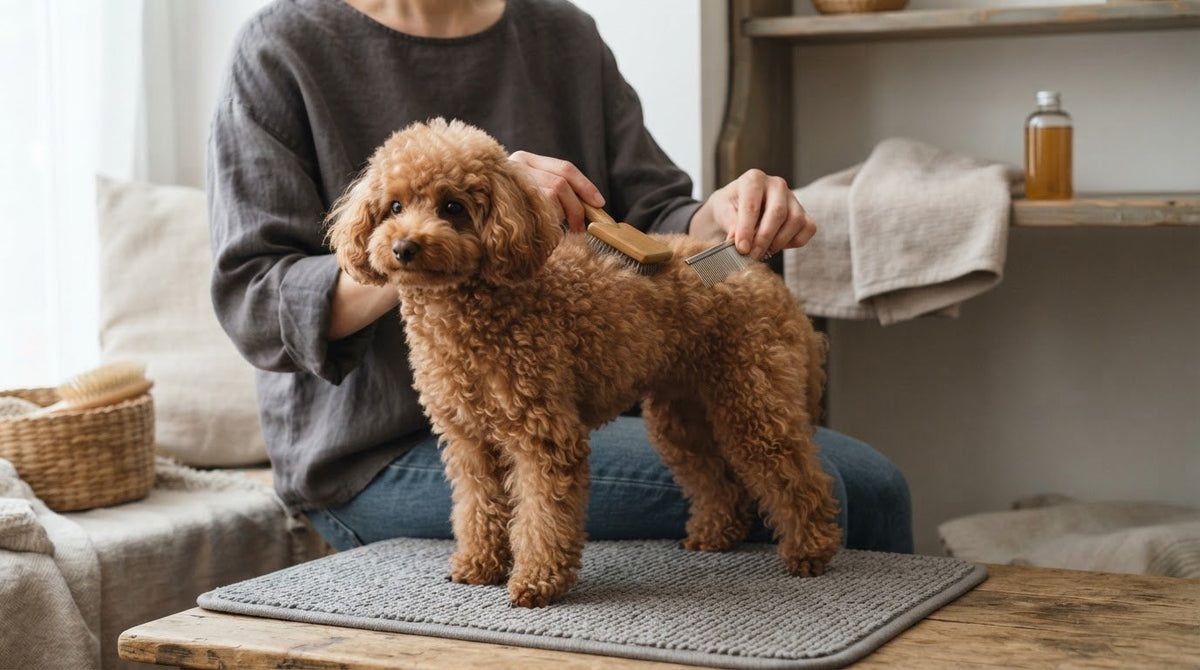
How to Choose Grooming Tools for Your Dog’s Coat and Size
To choose the right grooming tools, start with your dog’s coat, size, and the grooming tasks you plan to do. A useful setup can be simple: choose tools that feel comfortable to hold and are easy to guide gently. Your dog’s comfort matters as much as the tool’s features.
It can be hard to tell which options are useful and which may be unnecessary. This guide explains how to assess brushes and combs for different coats, choose tools that fit your hand, and decide whether clipping tools belong in your routine. You’ll also learn what to look for in professional-grade equipment, from practical design details to durability. Build a setup around your dog’s needs and your comfort, then adjust it as your routine changes. Thoughtful choices can make grooming more manageable and help you avoid wrestling with unsuitable equipment.
Key Takeaways
- Match the brush to your dog’s coat: short coats need a different approach from long, curly, or double coats.
- Choose a tool that feels comfortable in your hand and moves gently through your dog’s fur.
- Use clippers for larger areas and trimmers for detail work, then consider which nail-care tool feels easiest to control.
- Look for smooth, durable tools with secure, ergonomic handles to support comfortable grooming and better control.
1. Choosing brushes based on dog size, breed, and coat type
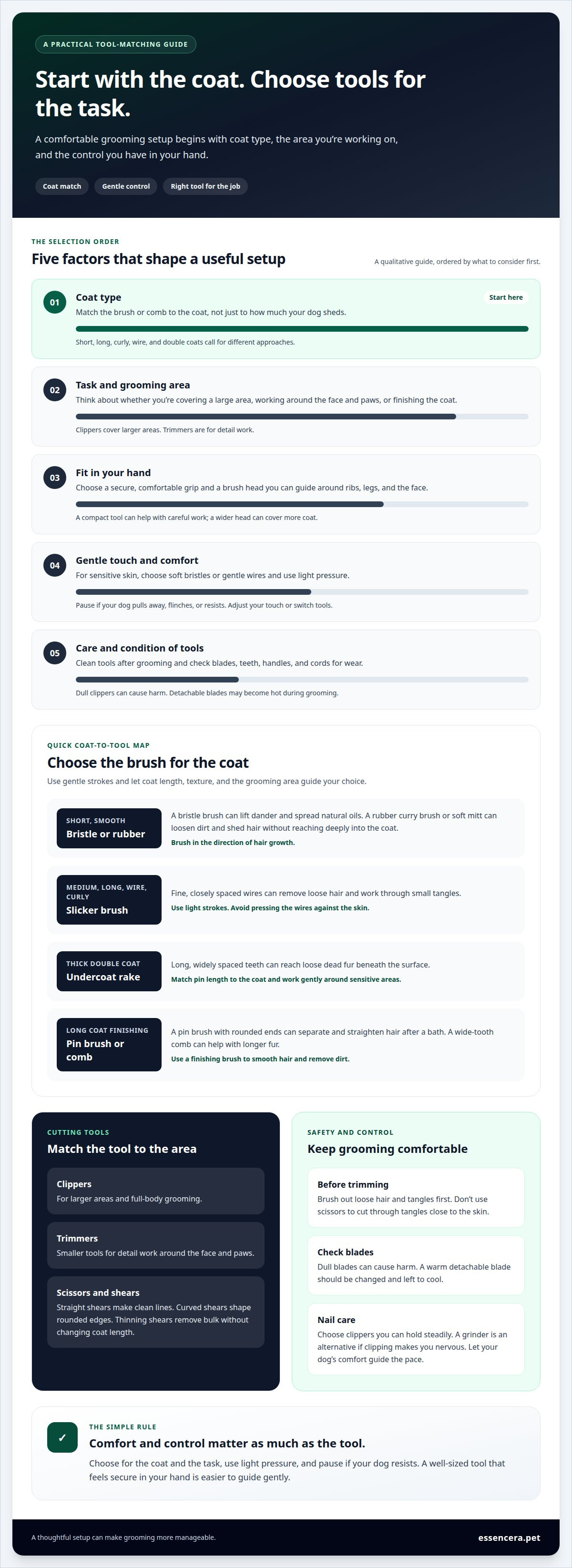
Learning how to choose the right grooming tools starts with matching the brush to your dog’s coat and body. A compact brush gives you control around a small dog’s face and legs, while a wider head covers more coat on a larger dog. Consider the area, too: a tool that works across the back may feel awkward around delicate spots. A well-sized brush is easier to guide throughout a grooming session.
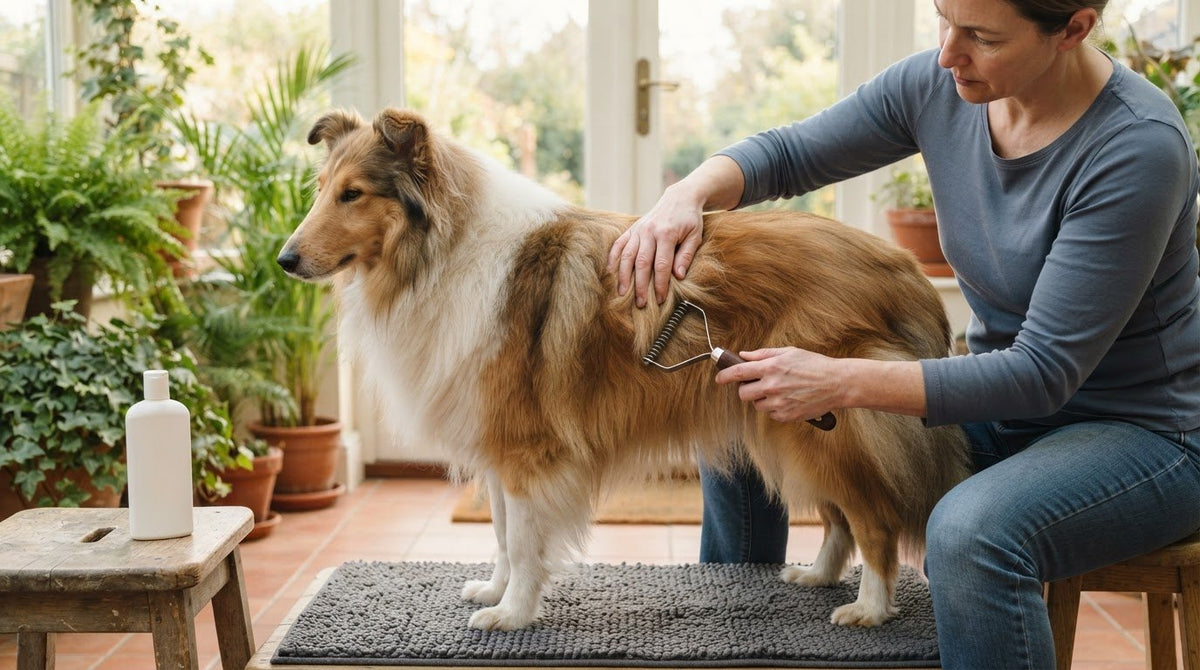
For medium, long, wire, or curly coats, a slicker brush can remove loose hair and work through small tangles. Its fine wires sit close together, so use light strokes rather than pressing against the skin. Double-coated breeds need attention to both the topcoat and undercoat. An undercoat rake has long, widely spaced teeth that reach loose dead fur beneath the surface. Match the pin length to the coat, and work gently around sensitive areas.
Short, smooth-coated dogs often benefit from a bristle brush. Brush in the direction of hair growth to remove loose hair and spread natural oils. A rubber curry brush or soft rubber mitt can loosen dirt and shed hair without reaching deeply into the coat. Rubber brushes can also help during bathing. For a long-coated dog, a pin brush with rounded ends can separate and straighten hair after a bath for a smooth finish.
When deciding how to choose the right grooming tools, avoid brushes that are too large, teeth that don’t suit the coat length, and forceful pulling at knots. These mistakes can cause discomfort, skin irritation, or broken hairs. Stop if your dog flinches or resists, then lighten your touch or switch brushes. A soft brush can introduce a puppy to grooming, and brushing also gives you a chance to notice visible irritation or sore spots.
On short coats, bristle brushes can lift dander and stimulate the skin, while rubber brushes can stimulate the skin as they remove loose hair. Their bristles do not reach through long or thick coats, so they’re best for short coats rather than deeper grooming.
For long-coated breeds, pinhead brushes serve as finishing brushes: they smooth the hair and remove dirt. Curry brushes made of rubber or plastic loosen hair and dirt gently on the skin, including in the bathtub.
2. Matching tools to hand size and coat type
A comfortable grip gives you better control during each grooming session. Choose a handle that sits securely in your palm and a brush head you can guide around your dog’s ribs, legs, and face. A compact tool can make careful work easier on a small dog; a wider head can cover more coat on a larger dog. If the handle slips or your hand cramps, the tool may become tiring to use during longer sessions.
Match each tool to the coat rather than choosing by shedding alone. A wide-tooth comb can help with longer fur, while an undercoat rake can reach loose hair in a thick double coat. Short-haired dogs may benefit from rubber or bristle brushes. Brush in the direction of hair growth to help spread natural oils. Choose nail clippers that feel steady in your hand and suit your dog’s nail size.
For sensitive skin, choose soft bristles or gentle wires and use light pressure. Avoid brushing the same spot repeatedly. If your dog pulls away, pause and adjust your touch or tool.
Cordless tools let you move freely around your dog. Corded models avoid battery charging and can suit a fixed grooming space. For trips, compact tools are easier to pack; the On-the-Go Travel Bundle pairs compact grooming-care products for travel. Follow the airline and airport requirements for your route and the items you plan to carry.
For short coats, consider a rubber or bristle brush; longer coats often need a comb, and double coats may need an undercoat rake. After grooming, remove loose hair from tools and clean them before storage. Keep blades and teeth in good condition, and check handles and cords for wear. Clean, well-maintained tools are easier to control and ready for the next grooming session.
3. Clipper vs Trimmer: What’s Best?
Clippers suit larger areas because they cover ground quickly during full-body grooming. Trimmers are smaller tools for detail work around the face and paws. For home grooming, choose based on the area you’ll trim and how well you can control the tool. Use scissors for careful finishing, not to cut through tangles close to the skin.
Blade choice affects the finish. A size 10 blade leaves a longer coat, while a size 30 blade gives a shorter finish. Beginner clippers with adjustable guards let you control cut length without switching blades for every adjustment. Check the blade before use: dull clippers can cause harm, and detachable blades may become hot during grooming. Keep extra blades available so a warm blade can cool before use.
Straight shears create clean lines for general cutting, while curved shears shape rounded edges around legs and tails. Thinning shears remove bulk without changing coat length. For a double-coated dog, don’t treat clippers as a substitute for brushing: an undercoat rake or deshedding tool addresses loose undercoat hair, while clippers handle coat length. Brush out loose hair and tangles before trimming.
For nails, choose clippers you can hold steadily and position with care. A nail grinder is an alternative if clipping makes you nervous. Nail care includes all four feet, but let your dog’s comfort guide the pace of each step.
Look for a dryer that can speed drying and fluff-dry the coat, and clippers with a strong motor and sharp blades for a smoother cut. A trimmer should feel easy to control for precise work. These features help match the tool to the task, whether you’re shaping a coat or tidying paws.
Keeping multiple detachable blade sets available lets you switch out a blade that has become hot and leave it to cool. Planning for a blade change means you can avoid continuing with a warm blade while keeping another set ready for the task.
For nail care, nail clippers or professional nail clipping are necessary grooming options for pets. If you are nervous about clipping your dog’s nails, a grinder offers an alternative. Higher-quality clippers with stronger motors and sharper blades can provide a smoother cut and reduce grooming time, so those features may also guide your choice.
4. Choosing professional-grade grooming tools
Professional-grade doesn’t simply mean the highest price or the most features. Start with the task: a bristle brush for a short coat, a comb for hidden tangles, or an undercoat rake for shedding. For long-haired dogs, check whether the teeth glide through fur without catching. Smooth, well-spaced teeth and gentle contact matter more than a long feature list.
Test the handle in your hand before choosing a tool. It should feel comfortable and secure, with enough control to guide the brush around legs and sensitive areas. An ergonomic grip can reduce strain on hands and wrists during repeated grooming. A self-cleaning brush with retracting pins can make removing collected hair easier. For professional grooming or multiple dogs, this feature may save effort between coats.
Compare materials and construction by checking the details: pins should be smooth, teeth should move through the coat without snagging, and clipper blades should be sharp and maintained. Choose features for your routine, not just because they sound advanced. For example, a retractable-pin brush can simplify cleanup, while an adjustable clipper guard helps control cutting length. A dependable tool should suit the coat and feel manageable throughout grooming.
For occasional home care, invest first in the brush or comb your dog’s coat needs, then add clippers only if you plan to trim. If you groom several dogs or handle thick coats often, prioritize a comfortable grip, smooth contact, and features that ease repeated use. Check blades and cords regularly, remove trapped hair after each session, and replace tools when damage or dullness affects control. This practical approach supports a comfortable routine without buying equipment you won’t use.
Essencera
Essencera is the first luxury grooming system for dogs, guided by the idea “Essential by design. Rich by nature.” Its products complement a home grooming routine with coat and skin care chosen for your dog’s needs. For long or tangle-prone coats, Coat Condition provides slip for easier brushing during drying and finishing, though it isn’t designed to undo severe mats.
For dry paws or noses, BarrierBalm Paws and Nose Cream helps hydrate rough areas. The Gentle Sensitive Pup Bundle brings together products for puppies and dogs with sensitive skin. Choose the additions that suit your routine, and contact Essencera if you’d like to talk through your grooming care options.
Make grooming a routine your dog can trust
Choosing tools is one part of creating a grooming routine that feels manageable for both of you. Let your dog’s comfort guide the pace, and adjust your approach if brushing, clipping, or another grooming step seems uncomfortable. Over time, thoughtful choices can help make coat care a calmer part of your time together.
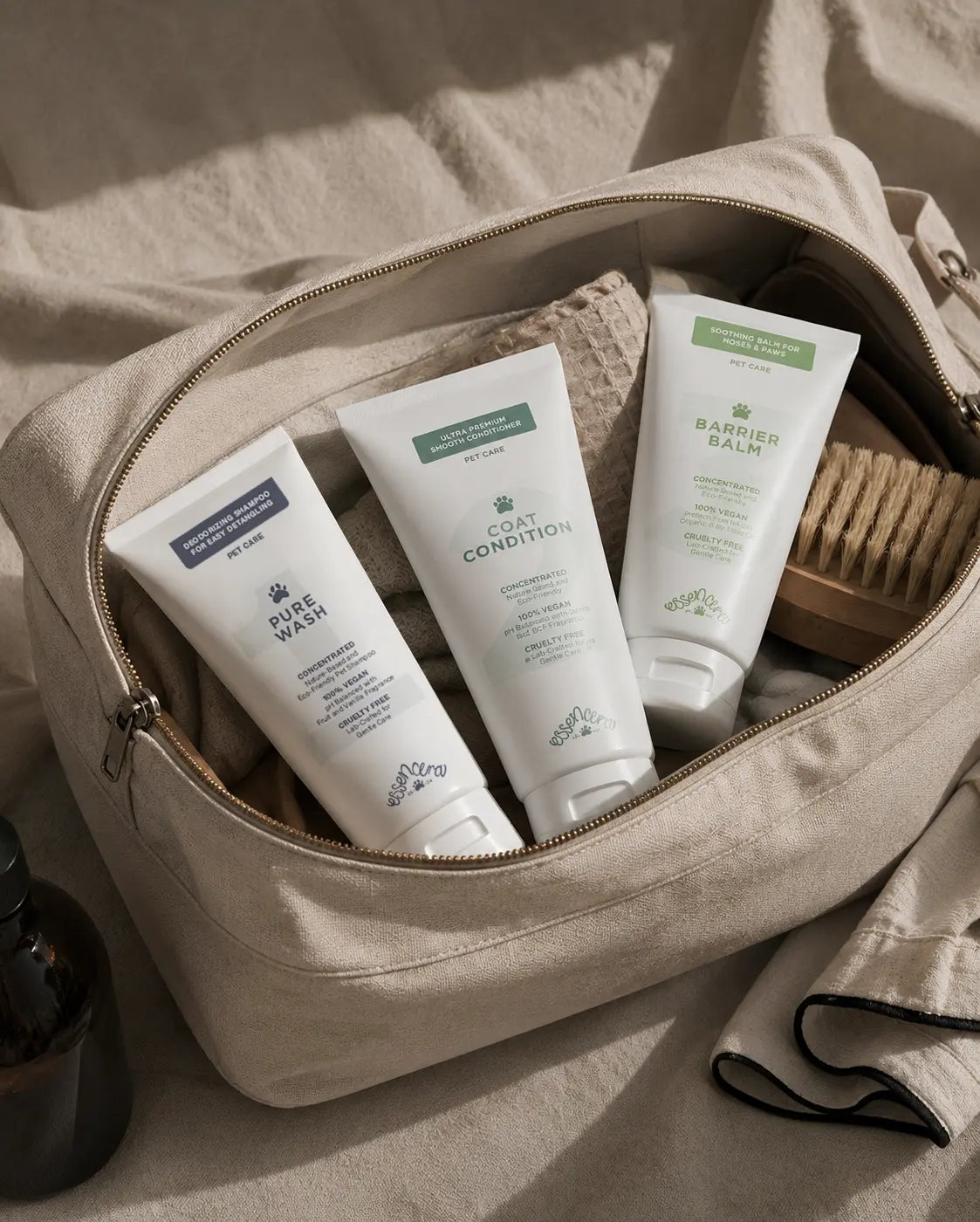
If you’re deciding how to choose the right grooming tools alongside products for coat care, Essencera offers options for different steps. Pure Wash shampoo cleanses, while Coat Condition supports easier brushing during drying and finishing. Barrier Balm helps hydrate rough paws and noses. Choose the care that fits your dog’s needs and the routine you’re building.
For help finding a comfortable next step for your grooming routine, contact Essencera about grooming tools. A little care and the right approach can make each grooming session feel more rewarding.
Frequently Asked Questions
Clipper vs Trimmer: What’s Best?
Choose a clipper for a planned body-coat trim and a trimmer for small, precise areas. Before grooming, let your dog see and hear the switched-off tool, then introduce its sound gradually; some dogs are uneasy around unfamiliar grooming noises. Keep the coat clean of tangles, work slowly, and pause if your dog becomes uncomfortable. A calm introduction can make the tool easier to use safely.
How do grooming tools differ for men, women, and different grooming routines?
Choose tools based on your dog’s coat, size, grooming task, and what feels comfortable and secure in your hand, rather than on the user’s gender. Brushes suit different coats, while clippers cover larger areas and trimmers handle detail work.