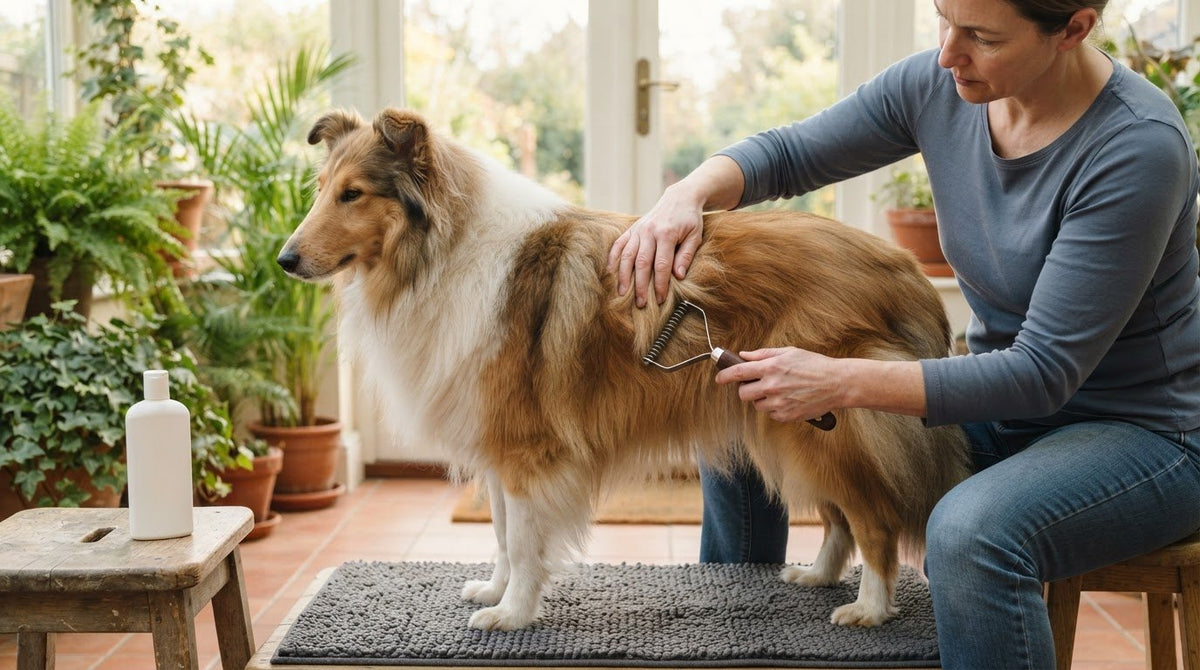
How to Use a Dog Dematting Tool Safely in Sections
Learning how to use a dematting tool for dogs safely starts with restraint, not force. Work on one small patch at a time, use controlled strokes, and let the coat guide the pace. A tool can loosen manageable tangles, but it isn’t suitable for every knot. If your dog seems uncomfortable or a mat sits tightly against the skin, stop rather than pulling harder.
It can be difficult to tell whether a knot is minor or likely to cause pain, especially beneath a longer coat. A deliberate approach helps you judge what to do while keeping grooming focused on comfort, not speed. This guide covers ways to prevent mats, what affects removal time, and how brushes, splitters, and dematting tools differ. You’ll also learn how to prepare your dog, work in sections, care for the tool, and recognize when a mat is better handled by a professional.
Key Takeaways
- Build a brushing routine around your dog’s coat and focus on spots where tangles tend to form.
- Estimate detangling time by the severity of the mats, and keep sessions gentle and manageable.
- Choose tools for the task: identify tangles, loosen them carefully, then smooth and check the coat.
- Work through small sections with light strokes, and stop when a mat is tight or your dog is uncomfortable.
1. Preventing mats with regular brushing and grooming
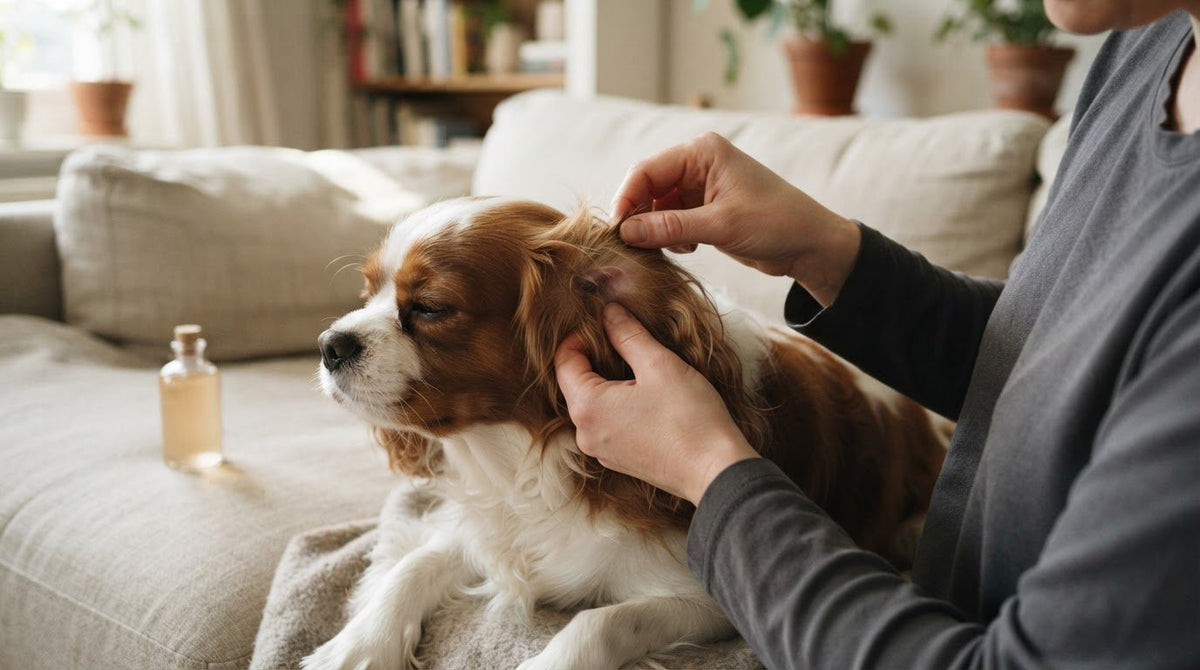
Preventing mats starts with a routine suited to your dog’s coat. Dogs prone to tangling may need brushing 2 to 3 times weekly, while weekly brushing helps catch loose fur and small knots before they tighten. Work in short, consistent sessions of 10 to 15 minutes, checking friction points such as behind the ears, under the collar, armpits, and between the legs.
Before brushing, separate the coat into small sections and gently feel from the skin to the tips. Use your fingers to find knots a surface brush may miss, then loosen easy tangles without pulling. Dirt, dander, and natural oils can bind hair together, so a clean, fully dry coat is easier to detangle. After bathing, dry the coat thoroughly before brushing. Damp fur can hide tangles, which may tighten as it dries.
For a stubborn but loose tangle, apply a pet detangling spray and let it sit for 5 to 10 minutes before brushing. Work a little spray into the affected area, then hold the hair near the skin to reduce tugging. Start at the ends and move toward the roots with gentle strokes. Follow the product directions, and stop if the knot resists or your dog shows discomfort.
Regular grooming helps maintain the routine. Breeds prone to matting are often groomed professionally every 4 to 6 weeks, while curly or non-shedding coats may benefit from trims every 6 to 8 weeks. Bathing every 4 to 6 weeks is another suggested maintenance interval, adjusted to coat and lifestyle. These intervals support upkeep, but brushing between appointments remains important.
Take your dog to a professional groomer if mats are tight, widespread, or painful to work through. If the skin looks injured or your dog remains uncomfortable, contact a veterinarian instead of trying to cut or pull the mat out at home.
2. Time needed to remove different levels of matting
Detangling time depends on how tight the knots are, how much coat is affected, and your dog’s tolerance. Light tangles often take 10 to 30 minutes to remove. Moderate mats can take up to around two hours, while severe mats may take 6 to 10 hours or more. These estimates show why a single long session isn’t always a kind approach.
For light or moderate mats, work for 15 to 30 minutes every other day until the tangles are gone. Keep each pass gentle and pause if your dog shifts away or seems uncomfortable. A short session can still make progress without turning grooming into a struggle. For severe matting, work in 30-minute sessions with breaks in between.
Coat type affects how quickly knots form and how much grooming is needed. Curly or non-shedding coats can hold loose hair close to the skin, where tangles may tighten. Long, dense coats can also conceal knots beneath the surface. Check areas prone to friction, such as behind the ears, beneath harness straps, and around the legs, before estimating the work.
How often should you use a dematting tool on a dog? Use it only when you find a tangle that needs careful loosening, rather than as part of every brushing session. For light or moderate mats, the suggested schedule is 15 to 30 minutes every other day until they’re gone.
Time alone doesn’t determine whether home detangling is suitable. A small, loose knot may gradually come apart, while widespread or tight mats can take longer and cause more discomfort. If a mat resists gentle work, stop rather than extending the session or applying more pressure. This is especially important with curly coats, where surface tangles can conceal knots near the skin.
Dogs with matted coats can be groomed in short sessions of 5 to 15 minutes. Treat that window as a manageable stopping point, not a reason to keep working when your dog is uneasy. Let comfort guide each pause, and return to the coat only if gentle handling remains tolerated. If the knots do not loosen without force, stop rather than trying to finish in one sitting.

3. Tools for locating, loosening, and smoothing mats
Start by feeling through the coat with your fingers, especially behind the ears, beneath collars, in the armpits, and between the legs. Friction, trapped loose fur, and moisture can twist hairs into knots in these areas. A brush can reveal loose tangles, but check down to the skin: a smooth surface may conceal a tighter mat underneath.
A slicker brush can help with loose, small tangles. Use light strokes, then pass a comb through the coat to check for remaining snarls, not to pull mats apart. Using a comb directly to demat can cause pain or injury. A pet grooming brush with stainless steel teeth is designed to reach the undercoat, where loose fur can contribute to hidden tangles.
The right dematting tool depends on coat length and density, as well as the tangle’s size. For a dense undercoat, choose a brush designed to reach loose undercoat; for a surface knot, begin with a gentle slicker brush. Match the tool to the coat, and never force its teeth through a tight mat.
A dematting tool, slicker brush, and mat splitter each have a different job. A slicker brush works through loose tangles, while a mat splitter divides a stubborn knot into smaller sections when brushing makes little progress. Use a dematting tool to loosen a tangle in a targeted way, then use a comb only to check the finished coat.
Cutting mats out carries its own risks: scissors can significantly thin the coat and damage fur. A mat may pull nearby hair into a compact knot, making it hard to distinguish tangled fur from the surrounding coat. Avoid cutting close to the skin or using scissors to force a split. If a knot is tight, broad, or resistant, stop and seek help from a professional groomer.
Keep each tool’s role clear: use fingers to locate knots, a suitable brush to loosen manageable tangles, and a comb to check the result. The mat’s position and tightness matter more than speed. For example, a knot under a collar may need careful sectioning, while loose undercoat calls for a brush suited to undercoat grooming.
4. Using a dematting tool carefully in sections
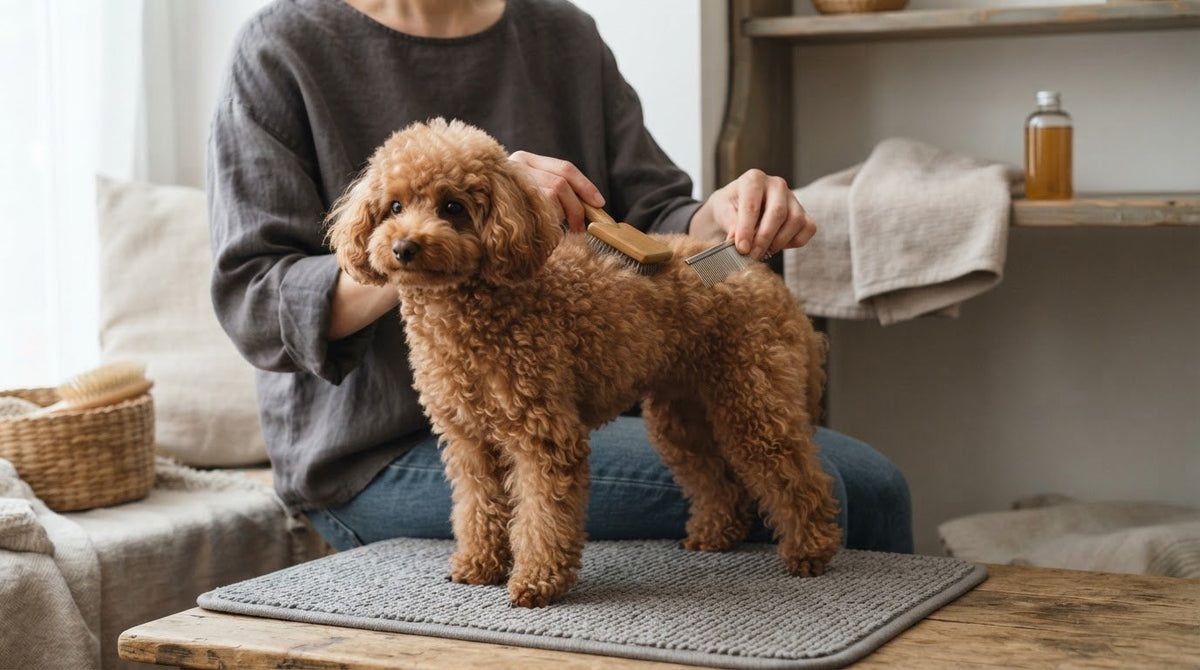
Choose a calm, non-slip spot and let your dog settle before grooming. Position them comfortably, supporting the area you’re working on without forcing a pose. Keep treats nearby if they help your dog relax. Before starting, inspect the tool’s teeth and handle, then part the coat around one small tangle to see where the knot sits.
With your free hand, hold the hair close to the skin between the mat and your dog’s body. This steadies the coat and helps you notice pulling early. Angle the tool’s teeth away from the skin and use gentle, short strokes through the tangled hair. Don’t press the tool down or let its teeth scrape the skin.
Begin at the knot’s outer ends and gradually work toward its base. After each stroke, pause and feel whether the hair has loosened before continuing. Don’t drag the tool through the entire mat or repeat a stroke that catches. If the tangle remains tight, stop rather than using more force.
Watch your dog’s body language as you work. Tensing, turning away, repeatedly lifting a paw, or moving suddenly can signal discomfort. Pause and give your dog space; don’t hold them in position to finish a difficult patch. A dematting tool can damage the coat even when it removes tangles quickly, so use it only on manageable knots.
After grooming, remove trapped fur from the teeth and handle. Wipe the tool clean and dry it before storing, following the manufacturer’s care instructions for material-specific cleaning. Before using it again, check the teeth for residue, bending, or damage. Clean, intact teeth help the tool move as intended; damaged teeth can snag hair or scratch skin.
If scissors are used to split a tangle, work from the skin toward the tips of the fur. Begin at the skin and move outward, rather than reversing direction. Splitting tangles with scissors can significantly thin the coat and damage the fur, so keep this risk in mind when considering the method.
Essencera
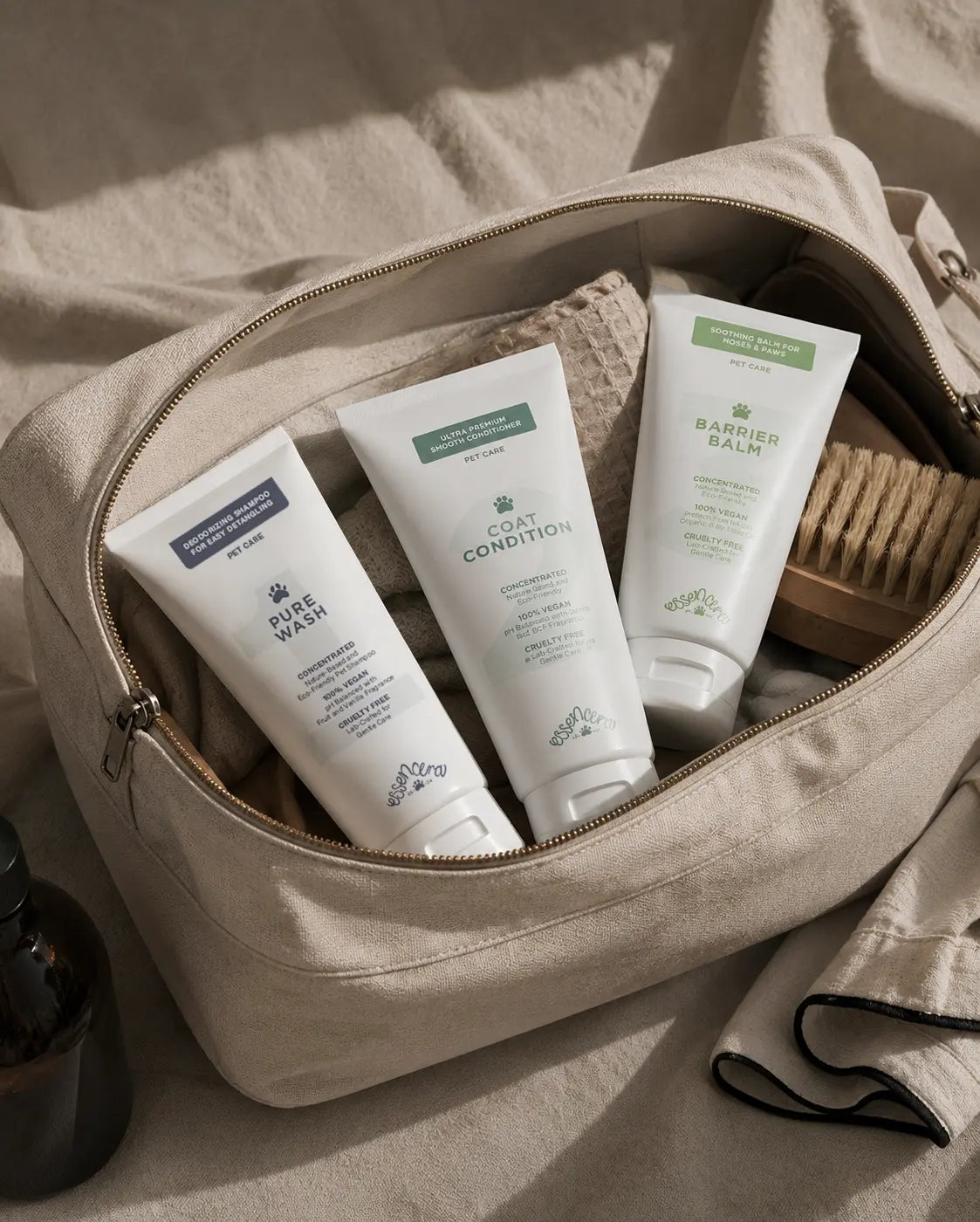
Essencera supports the care around detangling with products for coat conditioning and dry, rough areas. After loose tangles are removed, Coat Condition, the anti-tangle premium conditioner, helps smooth the coat and make brushing easier during drying and finishing. It won’t undo tight mats, so use it as part of routine coat care, not as a substitute for careful dematting.
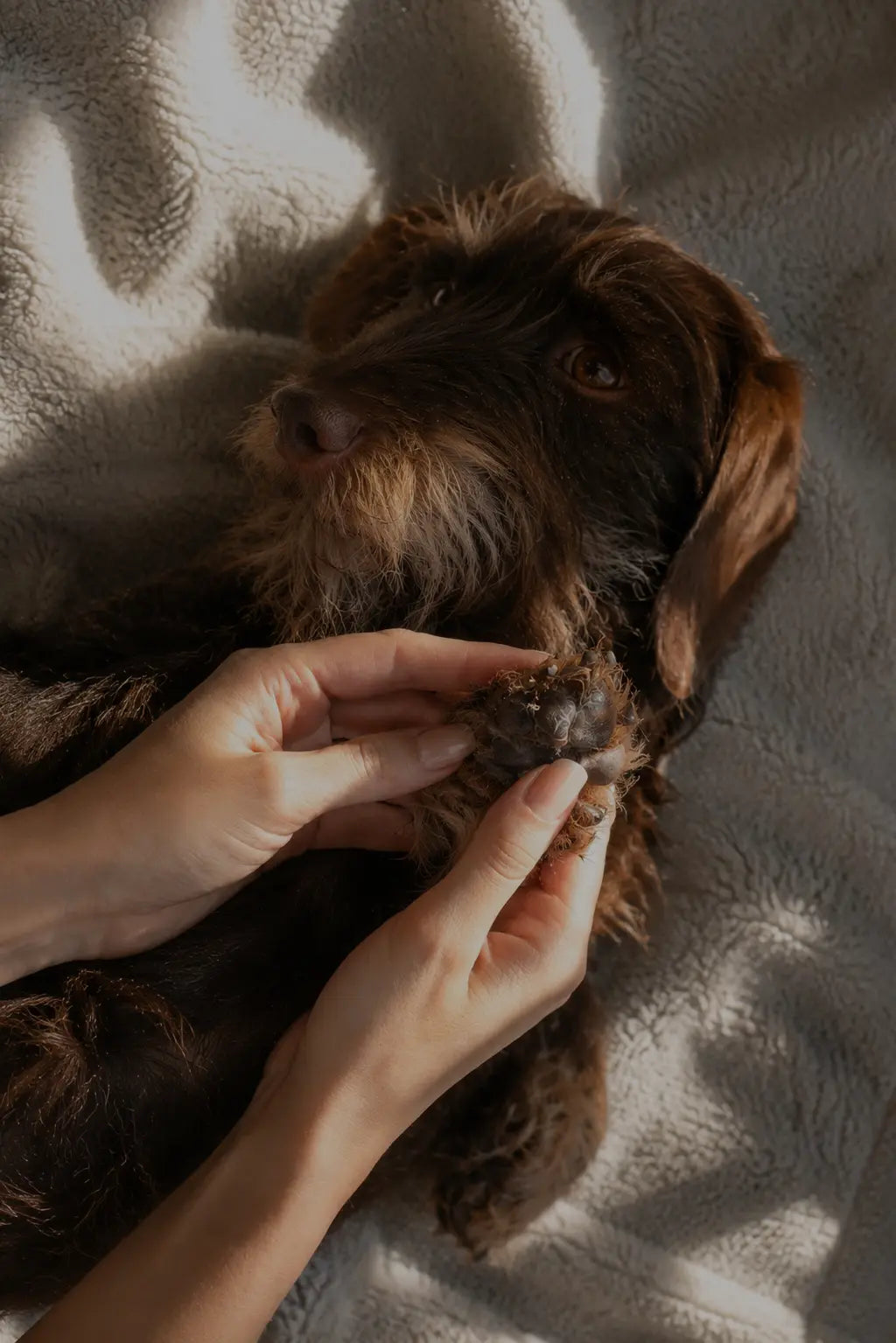
For rough paws or a dry nose, Barrier Balm helps hydrate and protect those areas. The Gentle Start Bundle brings together care for sensitive companions, including puppies and senior dogs. Choose products to suit your dog’s needs and keep grooming gentle, practical, and comfortable.
Contact Essencera for help choosing grooming care for your dog.
Make coat care a gentler routine
Learning how to use a dematting tool for dogs safely is one part of a comfortable grooming routine. Next, care for your dog’s coat and skin between tangles, without treating conditioner as a solution for tight mats.
For bath days, Pure Wash shampoo offers a gentle cleanse, while Coat Condition helps make brushing easier during drying and finishing. Barrier Balm is made for hydrating rough paws and noses. Choose the care that suits your dog’s needs, and keep each grooming session calm and unhurried.
If you’d like help choosing a suitable grooming product, contact Essencera. Small, thoughtful steps can make coat care feel more comfortable for both you and your dog.
Frequently Asked Questions
How do you use a dematting tool on a dog step by step?
To use a dematting tool for dogs, start with a calm dog and a small, loose mat. Check the tool, separate the mat from the surrounding coat, and hold the hair near its base to limit pulling. Work inward from the mat’s outer ends with short, gentle strokes, following the direction of hair growth. Pause if your dog tenses, turns away, or seems uncomfortable.
How do you remove mats without hurting a dog?
Keep tension off your dog’s skin by holding the coat below the mat and loosening only a little at a time. Use your fingers to separate a small mat before trying the tool, and never yank or cut close to the skin with scissors. Stop if the mat is tight, large, or near a sensitive area, and ask a professional groomer for help instead.