Preventing Mats in a Dog's Fur: Why They Form and How to Care for the Coat
Could a coat that looks smooth still be hiding the start of a mat? Loose fur can tangle and tighten where hair rubs together or against a collar, harness, or the ground. Preventing mats in a dog's fur takes more than brushing the parts you can see. A gentle, regular routine helps catch small tangles before they become harder to manage.
It’s understandable to worry that detangling might pull or hurt your dog. Brushing in small sections, using conditioner to add slip, and carefully separating a minor tangle with your fingers can make coat care calmer and more comfortable. Long, curly, and double coats often need more frequent attention, especially around the ears, armpits, and collar.
Here, you’ll learn why mats form, when they’re most likely to appear, and how brushing, conditioning, and finger detangling can help prevent them. You’ll also learn when a tangle needs professional care.
Key Takeaways
- Match your brush or comb to your dog’s coat, and work in small sections so you can spot tangles early.
- Loose shedding fur, friction, and damp hair can all contribute to mats, especially in curly or long coats.
- Check friction-prone areas such as behind the ears, under the collar, and in the armpits as part of regular coat care.
- Conditioner can make routine brushing easier, but tight or painful mats need professional attention rather than forceful detangling.
1. Brushing or Cutting Out Mats - Do or Don't?
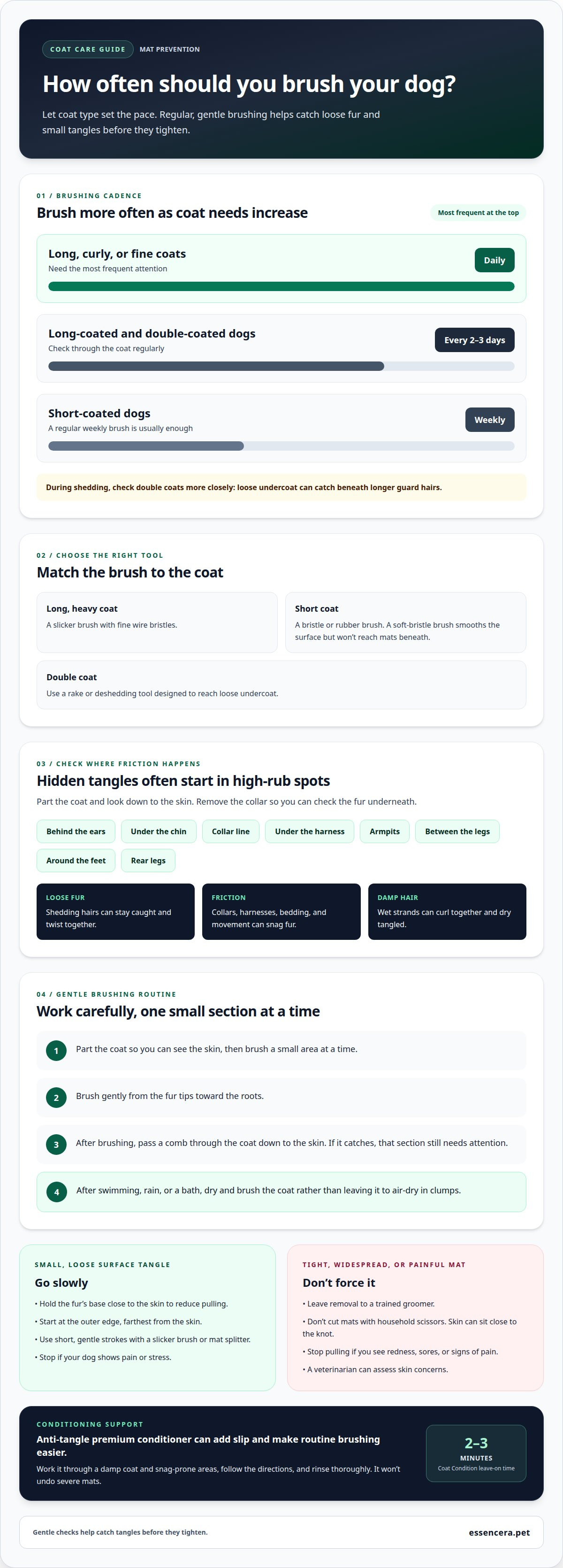
Choose a brush that suits your dog’s coat. A slicker brush with fine wire bristles works for long, heavy coats, while a bristle or rubber brush suits short coats. For a double coat, use a rake or deshedding tool designed to reach loose undercoat. A soft-bristle brush can smooth a short coat’s surface, but it won’t reach mats beneath.
Set brushing frequency by coat type. Short-coated dogs can usually be brushed weekly, while long-coated and double-coated dogs benefit from brushing every two to three days. Long, curly, or fine coats may need daily attention. During shedding season, check double coats for loose undercoat that can catch and tangle.
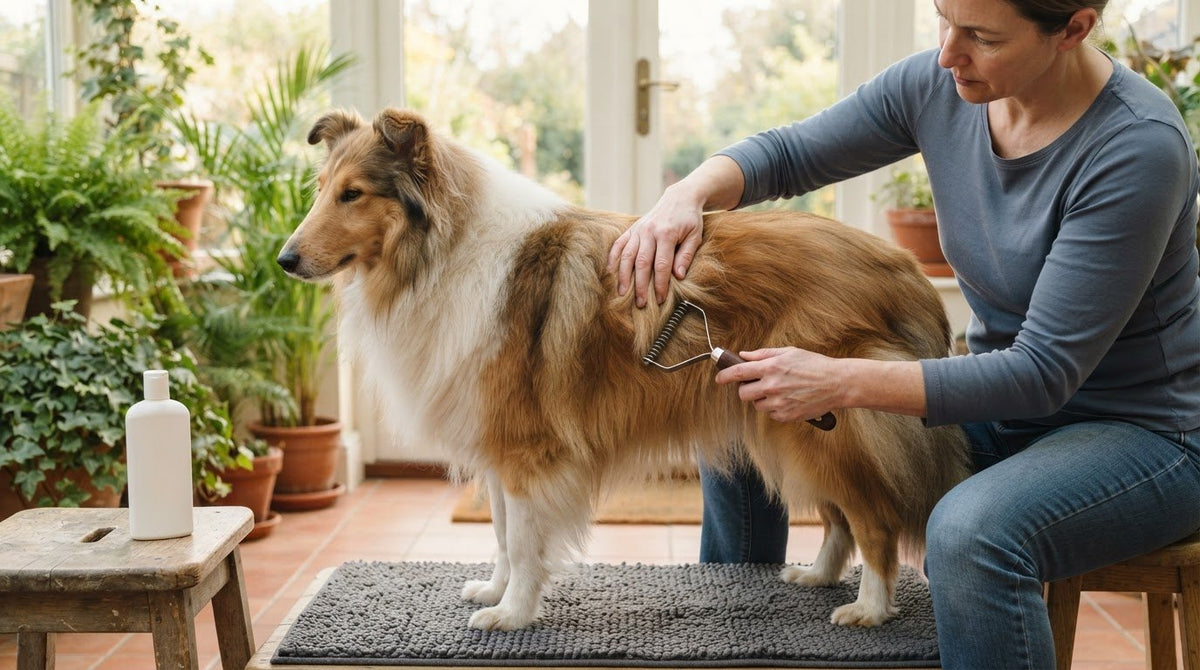
Brush your dog in small sections, working gently from the fur tips toward the roots. Part the coat so you can see the skin, then brush one small area at a time. Pay special attention behind the ears, under the armpits, and around the collar line, even if the rest looks smooth. Remove the collar first so you can reach the fur beneath it.
For a small, loose mat near the coat’s surface, hold its base close to the skin to reduce pulling and discomfort. Start at the mat’s outer edge, farthest from the skin, and gently work inward with a slicker brush or mat splitter. Use short strokes rather than tugging. Stop if your dog shows pain or stress; repeated pulling can make grooming upsetting.
Don’t cut a mat out with household scissors. A dog’s skin can sit close to the knot and may be caught or wounded. If a mat is tight, widespread, or against the skin, leave removal to a trained groomer. After brushing, pass a comb through the coat down to the skin. If it catches, that section still needs careful attention.
2. What Causes Matted Dog Hair?
Coat texture affects how loose hairs move through a dog’s fur. Curly or drop-coated breeds, including Bichons, Poodles, Doodles, and Shih Tzus, are especially prone to matting. Shed hairs can stay caught among surrounding strands instead of falling away, then twist together as the dog moves. Long or fine coats can tangle, too, especially when brushing doesn’t reach through the coat.
Friction is another source of knots. A collar rubs the neck, while a harness presses against the chest and shoulders. Bedding, carpet, and repeated movement can snag fur along the body. Check behind the ears, under the chin, in the armpits, between the legs, around the feet, and along the rear legs. Scratching from dry skin or allergies can also twist strands together.
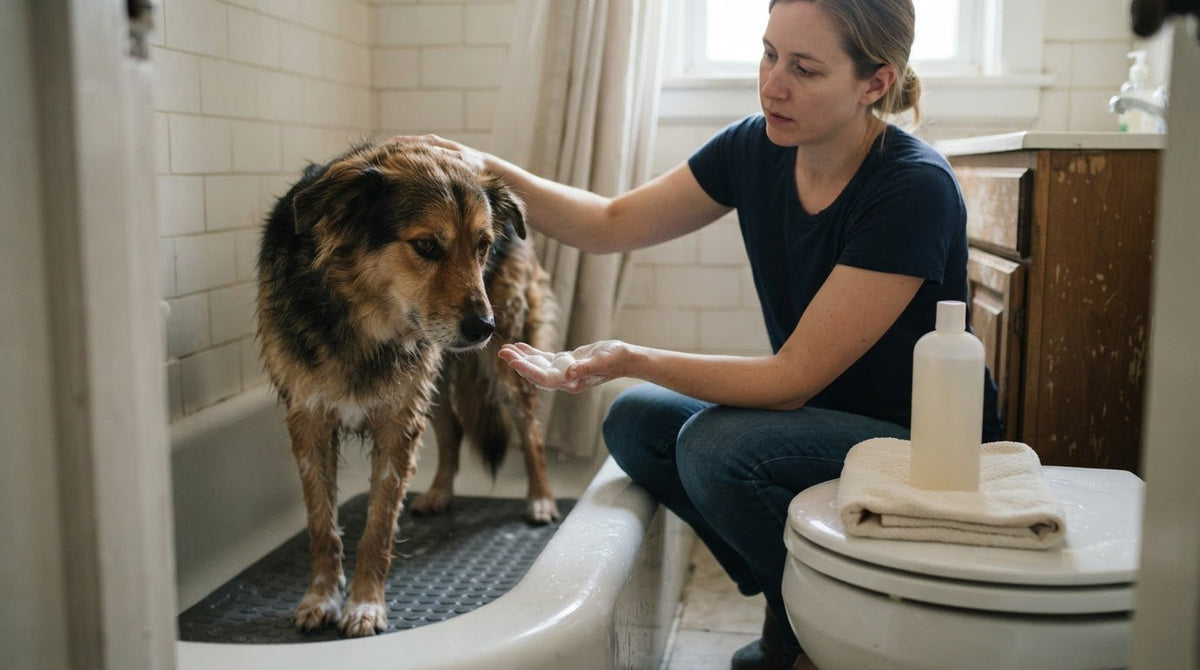
Water can tighten the start of a tangle. After swimming or bathing, wet strands may curl and dry wrapped around one another. Thorough drying and brushing help limit this, while a pet-safe detangling spray may ease minor knots during grooming. Understanding how coat texture, friction, and moisture interact helps with preventing mats in a dog's fur.
Keeping fur at a manageable length can make routine care easier, especially for coats that knot readily. Choose a length that suits your dog’s comfort and the time you can give regular grooming. A style that needs more upkeep than your routine allows can leave loose hairs and tangles unattended, making preventing mats in a dog's fur harder.
Comfort matters more than coat style. Don’t use household scissors on a matted knot, since skin can sit close beneath the fur and be nicked. Don’t shave a double-coated dog for convenience; shaving is generally avoided unless a veterinarian recommends it for medical reasons. If mats are tight, widespread, or painful, stop trying to detangle them at home and seek professional help.
3. When do mats tend to form?
Mats often begin during shedding, when loose hairs catch in the coat instead of falling away. In a double coat, shedding undercoat can gather beneath longer guard hairs and form hidden tangles. Regular brushing helps remove loose fur before it compacts. Check the coat more closely when shedding increases, especially if a comb starts catching in one spot.
Friction creates predictable areas where knots develop. Look behind the ears, under the chin, around the collar, beneath a harness, and in the armpits. Fur can also tangle between the toes, where the legs rub together, around the belly and bottom, and along the backs of the rear legs. A collar or harness worn for long stretches can cause extra rubbing in the same locations.
Wet coats need attention, too. After swimming, rain, or a bath, damp hairs can curl together and dry in a tangled shape. Brush and dry the coat rather than leaving it to air-dry in clumps. Scratching can also twist fur, so notice whether your dog repeatedly scratches the same area. Dry skin, allergies, or parasites may contribute to that behavior.
Check friction zones after walks and grooming, then run your fingers gently through the coat. Mats can pull on skin, causing discomfort and itching; tight knots may twist the skin beneath them. Dense mats can also trap moisture and limit airflow, raising the risk of irritation, sores, or skin infection. If you see redness, sores, or a painful mat, stop pulling at it. A veterinarian can assess skin concerns, while severe matting needs careful professional removal.
A quick check during regular brushing can catch a developing knot before it tightens. Pay particular attention to the collar line after removing a collar and beneath the harness after walks. This simple habit helps identify trouble early, before a hidden tangle becomes a painful mat.
4. Conditioning and finger detangling
A dog-safe conditioner after grooming can help reduce tangles by adding slip to the coat. On a damp coat, squeeze out excess water, work conditioner through the lengths and snag-prone areas, then follow its directions. With Coat Condition, leave it on for 2-3 minutes and rinse thoroughly. Conditioner can make routine brushing easier, but it won’t undo severe mats.
For a small, loose tangle, try gentle finger detangling before reaching for a brush. Hold the fur close to the skin to limit pulling, then use your fingers to tease apart the outer strands. A pet-safe detangling spray can help loosen fibers. Apply it to the knot, let it sit as directed, and work slowly from the ends inward.
Behind the ears, under the collar, and in the armpits are useful places to check during coat care. Lightly mist a tangle with detangling spray, separate the hair into smaller sections, and pause if your dog flinches or pulls away. Avoid repeated tugging; detangling shouldn’t become painful. A calm grooming routine can help catch knots before they tighten.
Take your dog to a professional groomer if mats are tight, widespread, or close against the skin. Stop home detangling if your dog shows pain or distress. If the skin beneath a mat looks sore, swollen, or irritated, contact a veterinarian for assessment. Severe matting may need clipping rather than brushing, and a trained professional can choose a safer approach than scissors or forceful pulling.
For regular coat care, Coat Condition can help make brushing easier during drying and finishing, rather than removing established mats. If you’d like guidance choosing products for your dog’s routine, contact Essencera for coat care advice.
Essencera
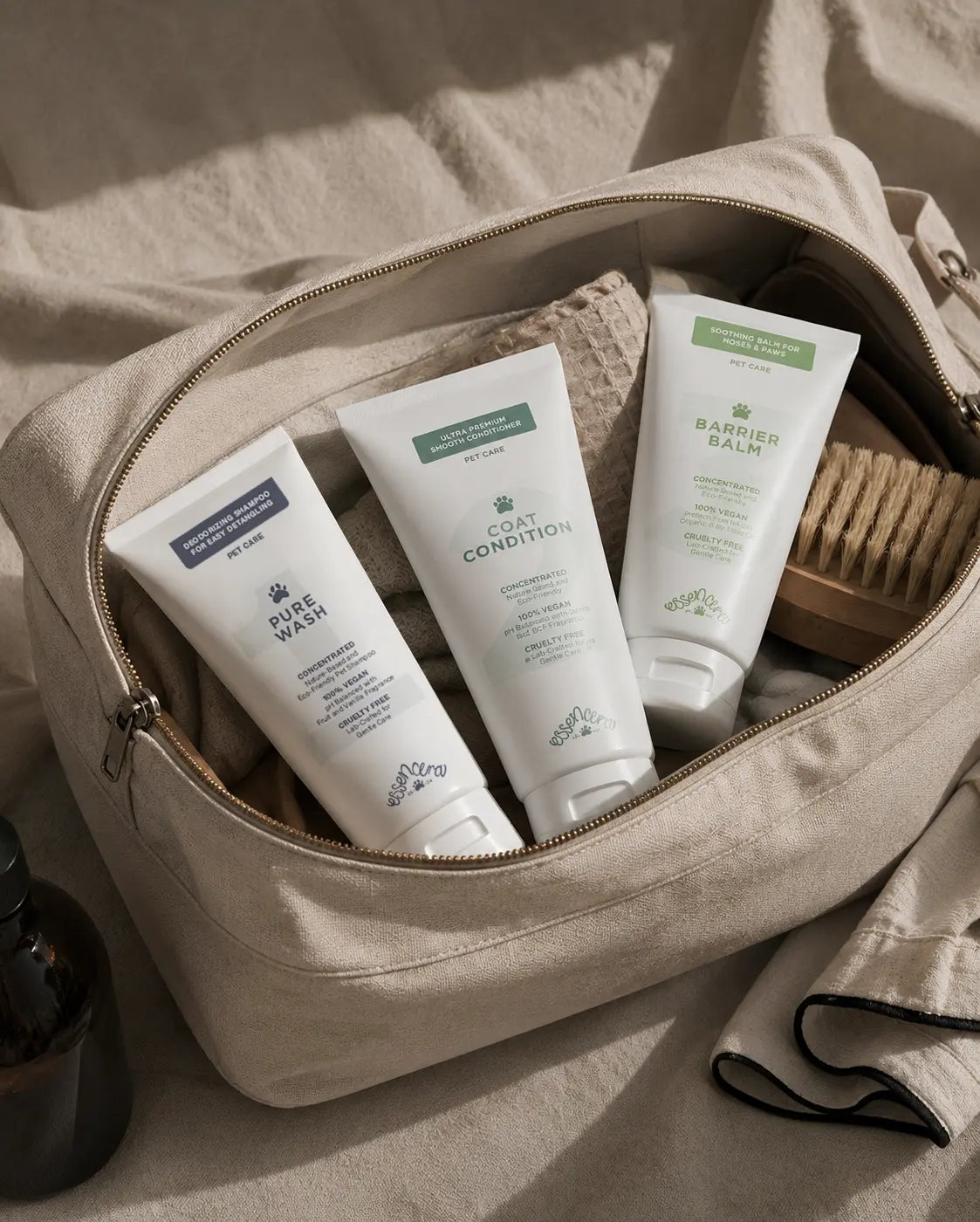
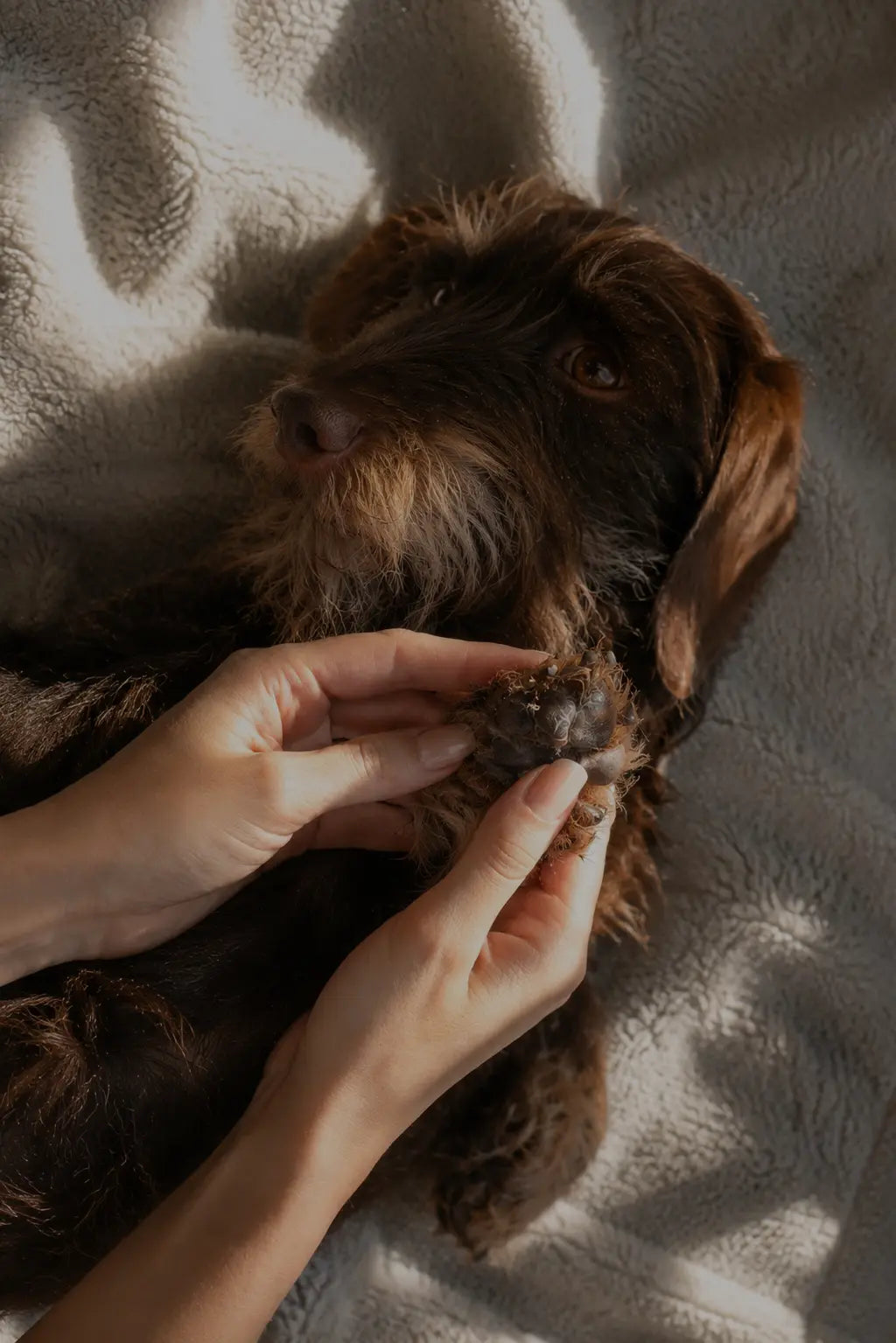
Essencera supports everyday coat care with grooming products that complement regular brushing and gentle detangling. Coat Condition helps smooth the coat and make brushing easier during drying and finishing, but it won’t undo severe mats. For puppies, seniors, or dogs with sensitive skin, the Gentle Start Bundle brings together care products for a gentle routine. Barrier Balm is made for hydrating rough areas such as paws and noses, not for detangling fur.
Use grooming products to support routine maintenance, and leave tight, painful, or widespread mats to a professional groomer. A conditioner can help with manageable tangles, while patient brushing and early checks remain central to preventing mats.
Explore Essencera’s coat-care products to find a fit for your dog’s grooming routine.
Make Coat Care a Gentle Habit
Coat care can become a quiet part of the time you share with your dog. Build a routine that fits their coat and daily life, and adjust it when shedding, wet weather, or outdoor adventures change what their fur needs. Preventing mats in a dog's fur isn’t about keeping a perfect-looking coat every moment. It’s about making grooming comfortable and noticing changes early.
Essencera offers Pure Wash for cleansing, Coat Condition to support easier brushing, and Barrier Balm to hydrate rough areas such as paws and noses. Choose the products that suit your dog’s routine, while leaving painful or severe mats to a professional.
Contact Essencera for coat care advice and take the next step toward a routine that feels kind and manageable for you both.
Frequently Asked Questions
What Causes Matted Dog Hair?
Matted hair develops when strands become intertwined and compacted instead of separating during normal movement and coat care. An early clue is a patch that feels denser or rougher than the surrounding fur. Check how the coat feels after naps, play, or time in a harness. Catching a small change early makes it easier to decide whether gentle home care is appropriate.
Brushing or Cutting Out Mats - Do or Don't?
Brush only knots that remain loose and comfortable to touch; don’t cut them with household scissors. Before working on a tangle, make sure your dog is settled on a stable, comfortable surface. Keep grooming sessions brief if your dog gets restless, and stop if they move away or tense up. A tight mat is a reason to seek professional help, not to use more force.
Can You Brush Out a Mat at Home?
You can try working on a small, surface-level knot if your dog stays relaxed and the coat separates easily. Test the knot with your fingertips before using a tool. If it shifts gently, tease apart a few strands at a time; don’t pull a brush through a solid clump. When the knot won’t loosen with light handling, leave it for a groomer.
How do you prevent mats from forming?
Make coat care predictable by grooming in a quiet place and rewarding your dog for standing or lying calmly. Keep a comb where you usually dry or brush your dog, so the tools are ready after wet outings. If one spot repeatedly knots, note what happened beforehand, such as wearing a harness or sleeping on a particular blanket. That pattern can help you adjust the routine.
What causes mats?
Mats form when loose or damp strands bind together and become harder to separate. The same patch may knot repeatedly if it rubs during walks or if your dog often scratches there. Notice whether a knot appears after a particular activity, then check that area afterward. Frequent scratching or visible skin irritation is a reason to discuss the skin with a veterinarian.
What dog breeds are more at risk of getting mats?
Curly-coated and long, flowing-coated dogs tend to need closer coat monitoring than short-coated dogs. Poodles, Bichons, Doodles, and Shih Tzus are familiar examples, but coat texture and grooming habits matter more than a breed label alone. Dogs with mixed ancestry can have dense or curly coats, too, so use the coat’s actual texture to guide care.