Grooming a Dog With Anxiety: Decide on Sedation and Prepare Calmly
Is sedation the only way to make grooming safer for an anxious dog? Not always. When grooming a dog with anxiety, a veterinarian may consider sedation if fear is severe, gradual behavior work hasn’t helped, or the dog’s reactions create a safety risk. Never give your dog sedatives on your own. Speak with a veterinarian first.
It’s understandable to want grooming over with when your dog is trembling, pulling away, or snapping. But rushing through a frightening session can make future grooming harder. Small, calm steps can help your dog feel safer.
Learn when sedation may be appropriate and when a veterinarian or behavior professional can help. You’ll also find practical ways to build positive grooming associations, create a quieter setup, and recognize when it’s time to pause. The goal isn’t a perfect coat in one sitting. It’s a safer, gentler experience for both of you.
Key Takeaways
- Reserve sedation for severe fear or safety concerns, and speak with a veterinarian before giving any medication.
- Pause when your dog shows distress instead of forcing the session to continue.
- Build comfort gradually by introducing handling and grooming tools in short, reward-based steps.
- Make grooming gentler with a quiet space, steady routines, and fewer distractions.
1. Is it okay to sedate my dog for grooming?
Sedation may be appropriate when grooming a dog with anxiety involves severe fear, especially if defensive biting creates a safety risk. It’s generally a last resort after gradual handling and behavior work haven’t helped. Never give medication on your own. A veterinarian should assess your dog and advise whether sedation is suitable.
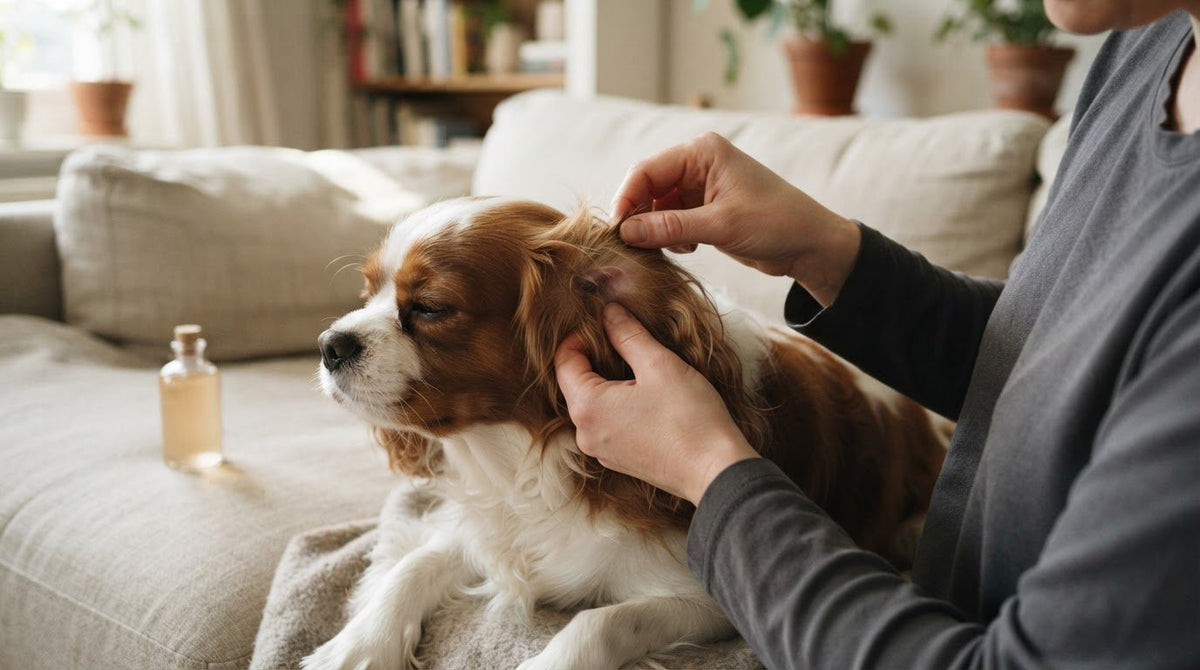
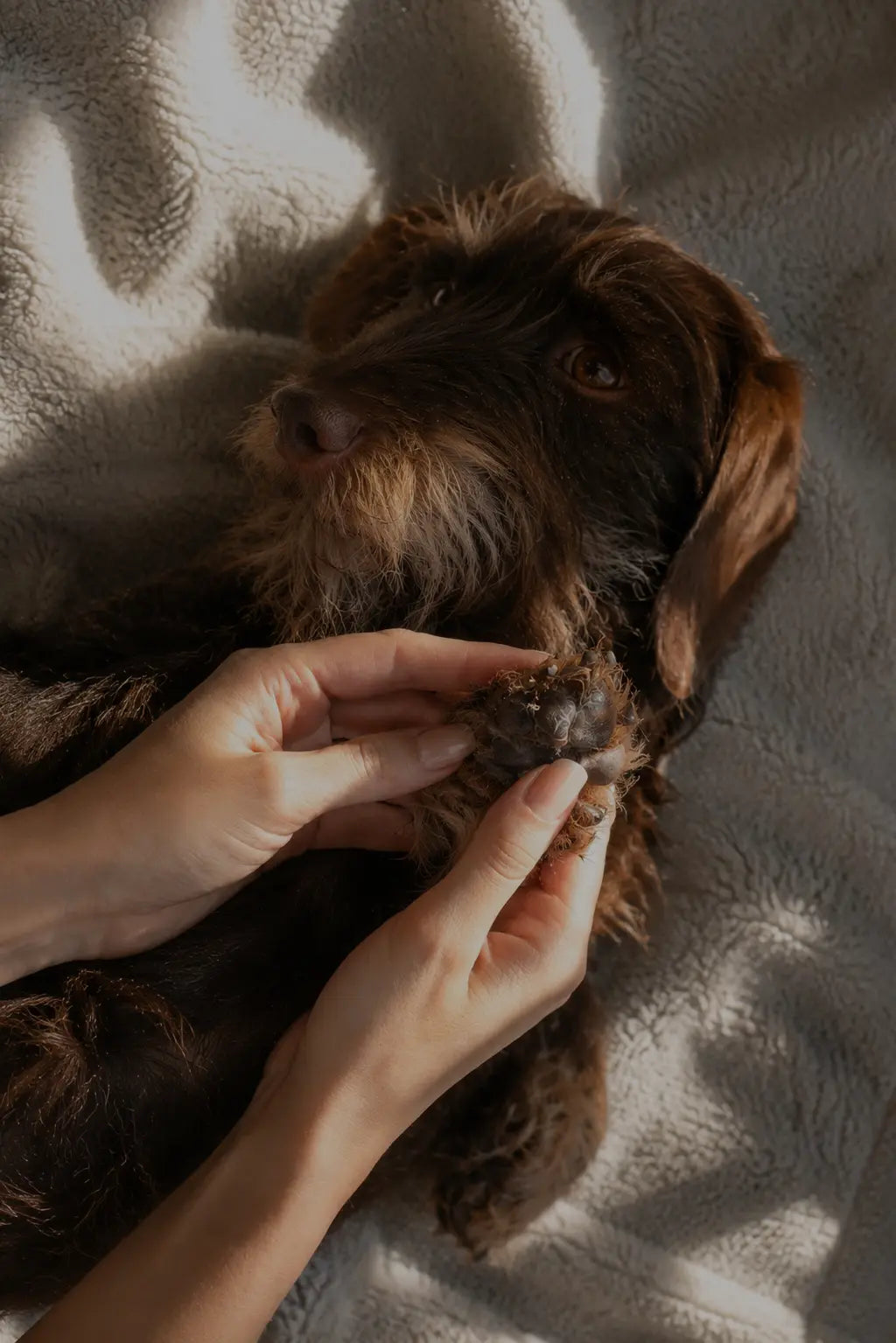
Gradual handling is central to grooming a dog with anxiety. Touch one sensitive area, such as a paw or ear, then stop while your dog is relaxed and offer a treat. Keep practice short and repeat it often instead of pushing through a stressful session. For example, spend two minutes handling paws after an evening walk, and pause if your dog pulls away, freezes, or growls.
For puppies, gentle early exposure can make later grooming feel less unfamiliar. Introduce brushing, nail care, and ear cleaning as separate steps. Let your puppy sniff a brush before it touches the coat, then reward calm behavior. When introducing clippers, start with the sound at a distance. Move closer only while your puppy stays comfortable.
Choose tools your dog can tolerate: a soft brush or comb for coat care, and clippers introduced gradually for trimming. Don’t rush a noisy tool toward a sensitive area. Some groomers offer one-on-one or low-stress appointments; mobile grooming may focus on one pet at a time. Share your dog’s triggers and behavior before the appointment.
A veterinarian can prescribe or recommend medication or sedation after considering your dog’s needs. Medication isn’t right for every dog, so don’t use a sedative intended for another pet or guess at a dose.
At-home grooming can lead to bites, scratches, or an escape if an anxious dog panics. For example, a sudden pull during nail trimming may put both dog and handler at risk. Stop if distress escalates. Seek veterinary advice if fear is intense or pain may be involved.
2. When to consult a veterinarian or behaviorist
Seek veterinary advice if grooming fear appears alongside a sudden change in your dog’s everyday behavior. Whining, shaking, rapid breathing, hiding, diarrhea, or vomiting can signal significant distress. Note whether these signs happen only during grooming or also during travel, visits, or routine handling. This pattern can help the veterinarian understand whether the concern extends beyond grooming.
A physical examination is especially useful when your dog’s reaction is new or seems linked to discomfort. Pain or sensitivity can make ordinary care feel threatening, even if your dog previously accepted it. Describe what changed, when you first noticed it, and which situations bring it on. A veterinarian can assess whether a medical issue needs attention alongside the grooming concern.
Consider a qualified behavior professional if anxiety begins affecting more parts of daily life, or if grooming fear worsens despite patient practice. A veterinary behaviorist can assess how your dog responds across settings and help shape a plan around their needs. This support can be valuable when fear is persistent, unpredictable, or difficult to manage safely.
Keep brief notes before an appointment. Record the setting, what happened just beforehand, your dog’s behavior, and how long it took them to settle. For example, note whether a reaction follows a car ride or starts only when grooming tools appear. Patterns give a veterinarian or behaviorist clearer context than a general description of an anxious dog.
Ask your veterinarian before trying calming treats or supplements, including chamomile or CBD products. Share the product’s ingredient list and mention any other care your dog receives. A professional can consider your dog’s health and the ingredients when discussing whether an aid makes sense. For grooming a dog with anxiety, this guidance can help keep the care plan focused on your dog’s overall wellbeing.
For severe grooming anxiety, consult a veterinarian about sedation options. A veterinarian or veterinary behaviorist should determine the most appropriate medication. If aggression persists, ask about professional training.
3. Building positive associations before grooming
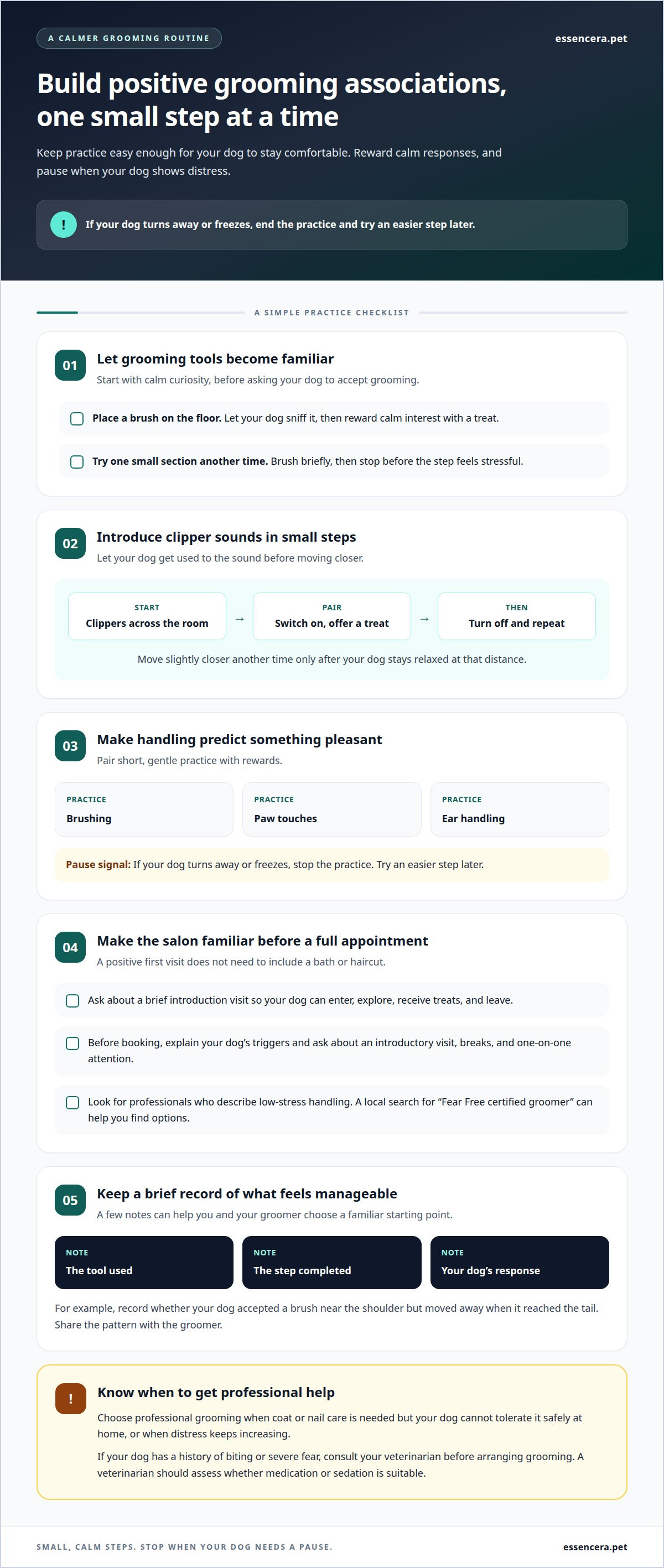
Help each grooming tool predict something pleasant before it touches your dog. Place a brush on the floor, let your dog sniff it, then reward calm interest with a treat. During another practice, brush one small section and stop. Keep the routine easy enough for your nervous dog to stay comfortable, rather than continuing until the brush feels stressful.
Introduce sounds in small steps. Let your dog hear clippers switched on across the room, offer a treat, then turn them off. Repeat at that distance until your dog stays relaxed, then move slightly closer another time. Pair brushing, paw touches, or ear handling with praise and treats. If your dog turns away or freezes, end the practice and try an easier step later.
Positive salon visits can begin without a bath or haircut. Ask about a brief introduction visit where your dog can enter, explore, receive treats, and leave. This can make the salon’s smells, people, and sounds more familiar before a full appointment. When should an anxious dog be groomed professionally? Choose professional grooming when coat or nail care is needed but your dog can’t tolerate it safely at home, or when distress keeps increasing. Tell the groomer which sounds or handling steps worry your dog.
To find a fear-free dog groomer near you, search local listings for “Fear Free certified groomer” and look for professionals who describe low-stress handling. Before booking, explain your dog’s triggers and ask about an introductory visit, breaks, and one-on-one attention. A professional experienced with anxious dogs can adjust the pace and stop if your dog shows distress. If your dog has a history of biting or severe fear, consult your veterinarian before arranging grooming.
After each practice, note the tool used, step completed, and your dog’s response. For example, record whether your dog accepted a brush near the shoulder but moved away when it reached the tail. Share this pattern with the groomer so the next session can start with a familiar, manageable step.
4. Creating a calm grooming environment
Set up the grooming area before bringing your anxious dog in. Choose a quiet, enclosed room away from household traffic, alarms, and other pets. Gather the brush, towels, and treats first so you don’t have to leave midway through a session. A predictable setup helps your dog focus on familiar cues instead of sudden movement or noise.
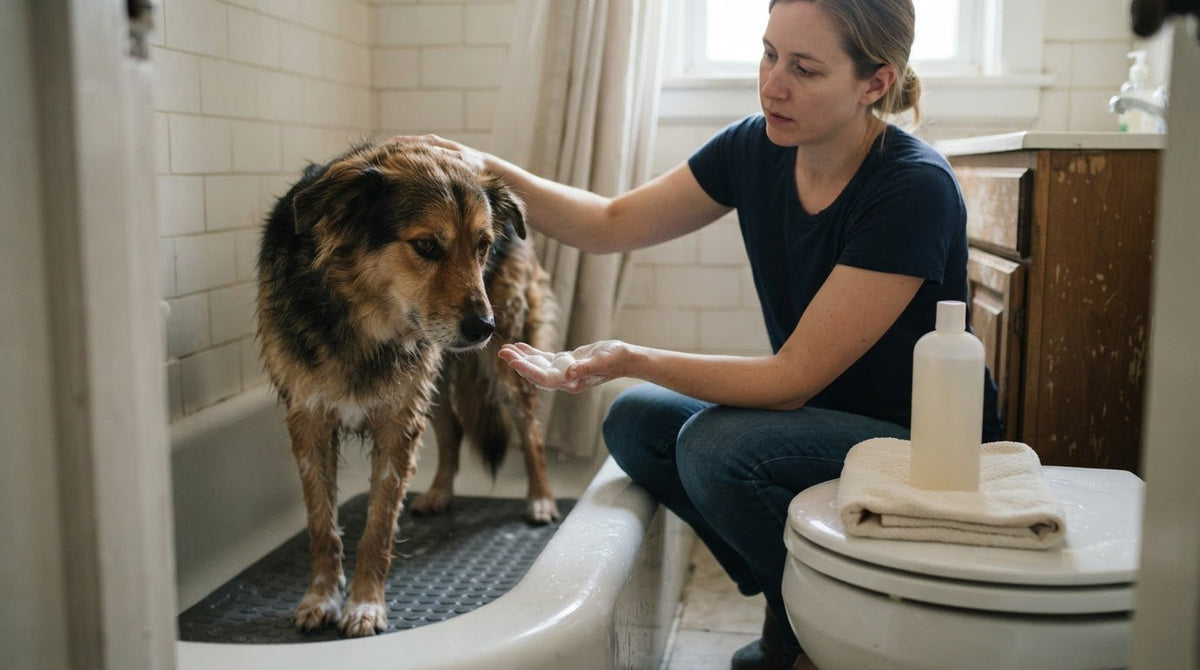
Use a non-slip mat on a stable surface to help your dog feel secure underfoot. Keep tools within reach, but introduce each one gradually through desensitization practice. For example, show the brush, reward a calm glance, then put it away. Later, briefly touch the coat and stop. Build the routine in small steps rather than aiming to finish everything at once.
Sound can also affect how an appointment feels. Start clippers at a distance, pair the sound with a treat, then turn them off. Move closer only when your dog remains relaxed. A synthetic dog-appeasing pheromone diffuser may help some dogs; it is odorless and non-sedative. It doesn’t replace training or gradual exposure to grooming tools.
Move slowly and keep your voice steady. Avoid hovering over your dog or holding them tightly, which can make handling feel more stressful. If you use a grooming arm or tether for stability, don’t use it to make your dog stay through escalating distress. Pause if your dog freezes, pants heavily, or tries to escape.
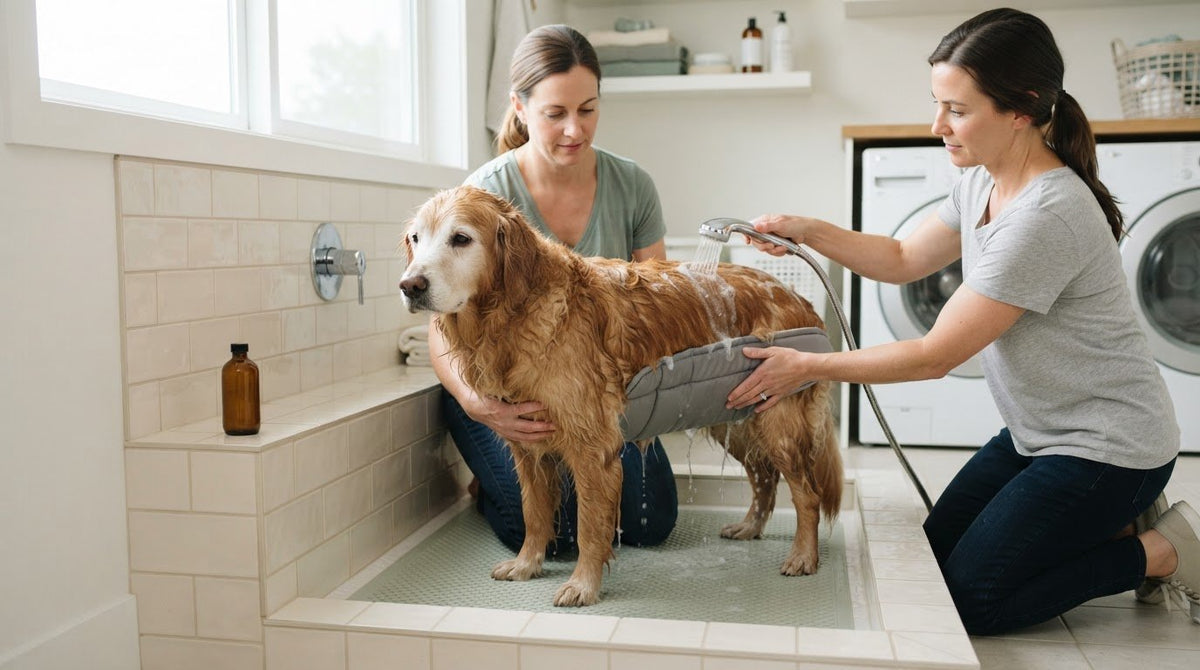
For a salon appointment, share which sounds or handling steps trigger fear and ask about a quieter setup or breaks. At home, use the same mat and starting routine for each practice session. If bathing is part of the routine, explore a gentle wash for sensitive skin as one part of calm coat care.
A calm grooming environment is quiet, enclosed, and free from distractions or loud noises. Noise at a grooming salon may contribute to a dog’s anxiety, so discuss whether a quieter space is available. A non-slip mat, tether, or grooming arm can help stabilize a dog without restraint. Aromatherapy dog shampoos can help dogs associate calming scents with peaceful settings.
Essencera
Essencera supports calmer home grooming with gentle care products, not grooming or veterinary services. If bathing is part of your dog’s routine, Calm Wash is formulated for puppies, seniors, and sensitive skin. The Gentle Start Bundle combines it with Coat Condition and Barrier Balm for a coordinated coat and skin-care routine.
Coat Condition is an anti-tangle premium conditioner that helps make brushing easier during drying and finishing, while Barrier Balm moisturizes rough paws and noses. These products can complement gradual handling practice, but they don’t replace veterinary advice, behavior support, or a low-stress approach. Take grooming at your dog’s pace, and stop if distress rises.
If you’d like help choosing a grooming-care option for your dog, contact Essencera.
Make the next grooming step a gentle one
A lasting routine doesn’t have to look the same at every appointment. Your dog’s comfort, energy, and tolerance can shift, so adapt the plan instead of treating grooming as a fixed checklist. Success means making care more predictable and preserving trust, not achieving a flawless finish every time. This gives you room to adjust the pace without feeling that you’ve failed.
Before the next grooming session, decide what matters most and keep the plan realistic for your dog. You might focus on maintaining a familiar rhythm or sharing your dog’s current needs with the person helping with care. Small, thoughtful choices can make grooming a dog with anxiety feel less like a battle and more like a routine you shape together.
For help choosing grooming-care products that fit your routine, contact Essencera. Keep noticing what helps your dog feel secure, and let that guide the next step.
Frequently Asked Questions
Is it okay to sedate my dog for grooming?
Sedation may be appropriate if fear is severe, behavior work hasn’t helped, or defensive reactions make grooming unsafe. A veterinarian should assess your dog and decide whether medication is suitable, including whether pain or another health issue contributes to the fear. Don’t give your dog human medication, another pet’s prescription, or calming supplements without veterinary approval.
How do I trim my dog's nails if they panic every time?
Don’t hold your dog down and push through a nail trim. Pause, then practice a smaller step, such as briefly touching a paw and offering a treat. If your dog still panics, snaps, or struggles, arrange help from a groomer experienced with anxious dogs or ask your veterinarian for guidance. A scratch board may be another option if your dog is willing to use it.