How to Bathe a Dog With Arthritis While Supporting Their Joints
A safer bath for a dog with arthritis starts with support, not speed. The goal isn’t a perfect grooming session, but to get your dog clean while keeping the experience manageable and respecting sore joints.
It’s understandable to worry that bathing could cause discomfort when standing, stepping, or being handled is already difficult. Learning how to bathe a dog with arthritis means adapting the process to your dog’s comfort and stopping when they need a break. A calm approach helps you make thoughtful choices instead of rushing through the wash.
This guide covers how to plan a lower-stress grooming routine, from choosing an accessible bathing setup to washing and drying with care. It also explains signs that your dog needs a pause, ways to adapt the routine, and when professional help may be useful. Use these ideas to find a gentler approach that suits your dog, one bath at a time.
Key Takeaways
- Set up secure footing and gather supplies before bringing your dog to the bathing area.
- Choose an accessible bathing spot and use steady, gentle support to reduce awkward steps and strain.
- Keep your dog’s body movements comfortable, and pause if they show signs of discomfort.
- Plan a calm, efficient wash and drying routine that suits your dog’s mobility and comfort.
Non-slip mats and supportive slings
Yes. Non-slip mats can give a dog with arthritis steadier footing, while a ramp or sling can help with tub entry. These aids can reduce slipping and help avoid painful steps or awkward movement.
-
Prepare a Non-Slip Bathing Area
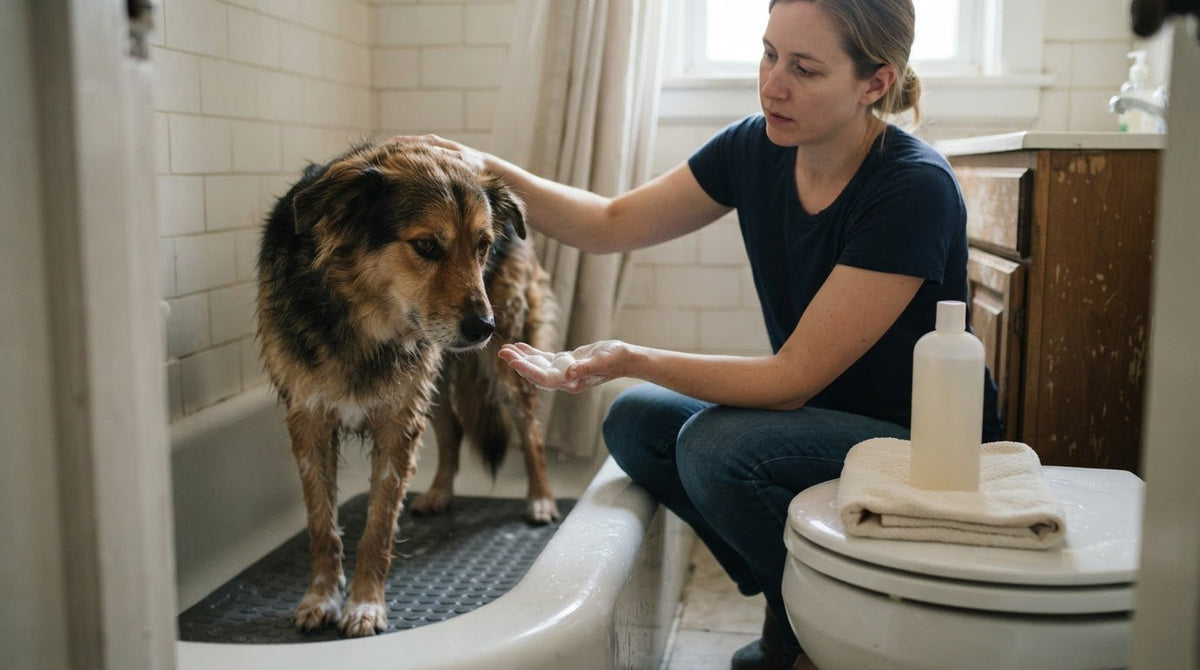
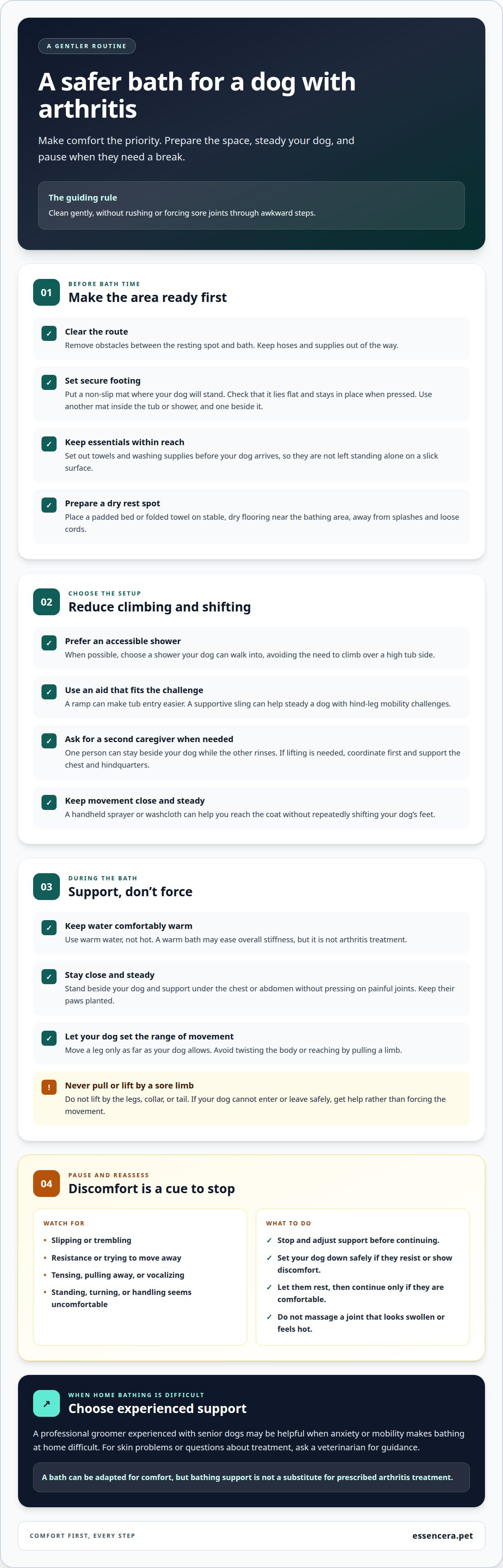
Clear the route to the bath and place a non-slip mat where your senior dog will stand. Check that the mat lies flat and stays in place when pressed. A wet, shifting mat can create another hazard. Keep towels and bathing supplies within reach, so you won’t leave your dog standing alone on a slick surface.
- Choose a bathing spot that suits your dog’s mobility. A walk-in shower can avoid lifting them over high tub sides. If you use a tub, guide your dog slowly rather than placing them inside suddenly. A second caregiver can steady them and reduce strain, particularly if standing or stepping is painful.
-
Add Mats and Mobility Aids
Place a non-slip mat inside the tub or shower and another on the floor beside it. Test both surfaces by pressing them before your dog steps on them. A ramp can make entry easier when tub sides are high; a supportive sling can help steady a dog with hind-leg mobility challenges. Don’t pull or lift by a painful limb.
- Use a handheld sprayer or washcloth to reach the coat without repeatedly shifting your dog’s feet. If support is needed, have one person stay beside the dog while another rinses. Set up the area before bath time, at a calm point in your routine. If your dog slips, trembles, or resists, stop and adjust the support before continuing.
Professional groomers can use non-slip mats and supportive slings to accommodate a dog’s physical limitations. For a senior dog with mobility issues, a sling can support the hind area while they are guided into the tub. Non-slip mats help maintain secure footing throughout the bath.
Arthritis and mobility challenges during bathing
Plan the bath around your dog’s comfort, mobility, and ability to stand. Keep the water comfortably warm, not hot. A warm bath may ease overall stiffness, but it is not arthritis treatment.
- Use warm water and keep the pace calm. A warm bath may help relieve overall stiffness, but don’t treat bathing as arthritis care. Let your dog settle before wetting the coat, and pause if standing, turning, or handling seems uncomfortable. Short, steady movements can make the routine less stressful than rushing.
-
Choose an Accessible Bathing Area
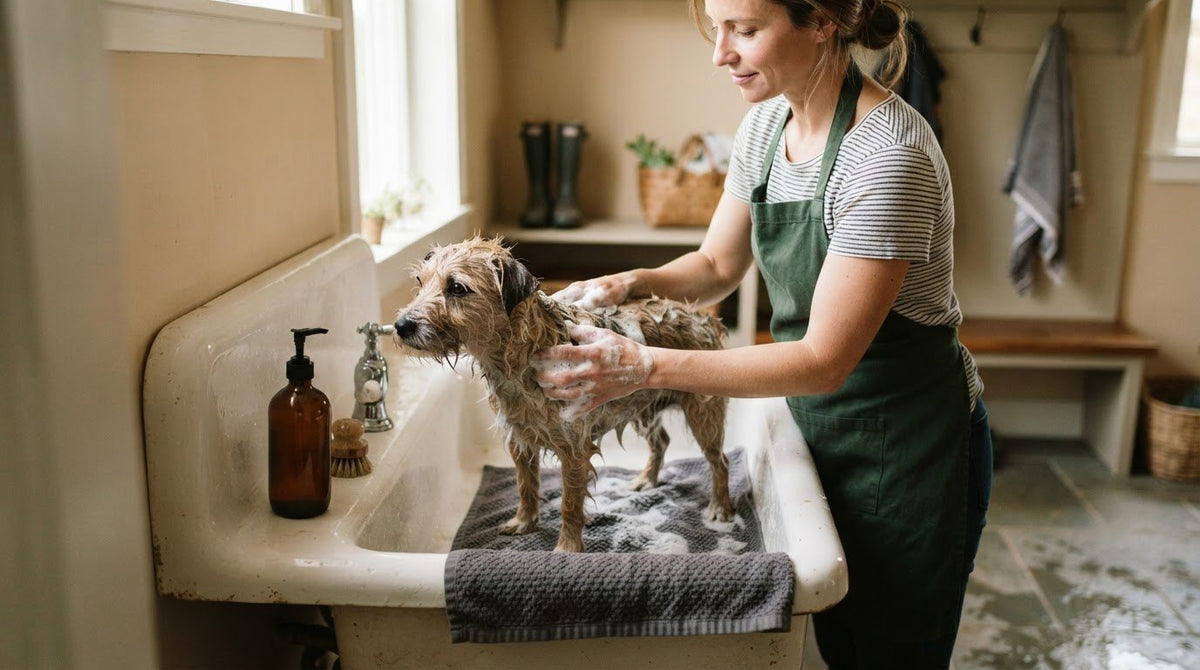
If possible, choose a shower your dog can walk into, so they don’t need to climb over a tub edge. Keep the route clear and avoid making them step over hoses or supplies. If a tub is the only option, guide your dog gently and ask another person to steady them. A handheld showerhead with an extra-long hose lets you stay close without reaching awkwardly.
-
Gather Gentle Supplies Within Reach
Set out a washcloth, towels, pet shampoo, and conditioner before bathing begins. Choose a gentle formula suited to older or sensitive skin, such as Calm Wash for senior dogs. Keep everything within arm’s reach, so your dog doesn’t have to wait alone while you search. A handheld sprayer with a handle switch can reduce repeated reaching and hand strain.
- Choose a professional groomer or veterinary staff member if your dog is particularly anxious or mobility issues make home bathing difficult. A groomer experienced with senior dogs can handle them gently during grooming. If your dog has skin problems, a veterinarian can advise which shampoo or treatment suits the condition, including whether medicated baths are needed.
Because standing or climbing into a tub may be painful for a dog with arthritis, plan bathing around joint stiffness and mobility. A non-slip bath mat and supplies within reach can make home bathing less taxing. When possible, use a shower your dog can walk into to avoid lifting.
A self-washing facility may have tubs that raise and lower with a button, handheld sprayers, and ergonomic features to reduce physical strain on a dog with arthritis. A handheld showerhead with an on/off switch in its handle can also prevent reaching for the faucet knob while bathing.
Supporting joints and preventing slips
In a tub or shower, support your dog’s body and keep their footing steady. If lifting is difficult, ask another person to help. Never pull a sore limb or force a painful movement.
-
Set Up a Supportive Rest Spot
Place a padded bed or folded towel near the bathing area for breaks before or after washing. Keep it on a dry, stable floor, away from splashes and loose cords. A familiar resting place gives a dog with mobility issues somewhere to settle without crossing wet flooring. Clear the route between the bath and resting spot before bringing your dog in.
-
Support the Dog During the Bath
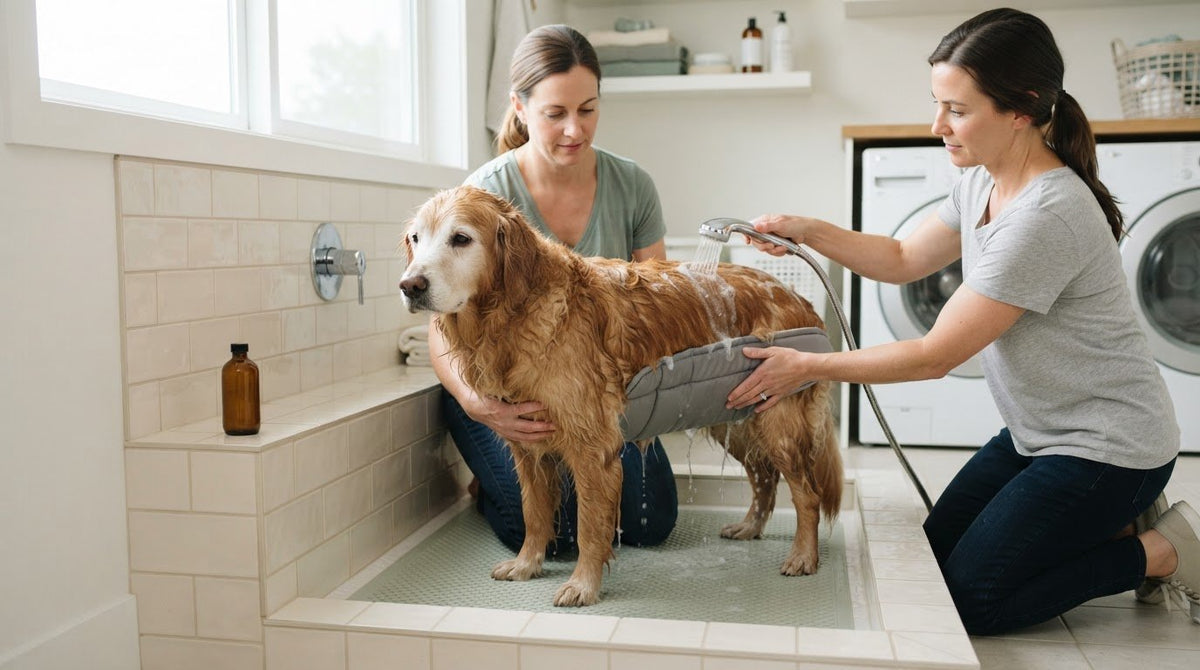
Stand close beside your dog and place a steady hand under the chest or abdomen, without pressing on painful joints. A bath bench or supportive sling can help reduce strain while you wash. Keep your dog’s paws planted, and use a handheld sprayer or washcloth to reach the coat without repeatedly repositioning them. Stop if they show discomfort or try to move away.
-
Lift and Handle the Dog Carefully
Ask a second caregiver to help if your dog can’t enter or leave the bathing area safely. Coordinate before lifting, support the chest and hindquarters, and move slowly together. Don’t lift by the legs, collar, or tail, or twist the body to reach a difficult area. If your dog resists or shows discomfort, set them down safely and pause.
- Keep joint movements gentle throughout the bath. Move a leg only as far as your dog allows, and stop if they tense, pull away, or vocalize. A gentle massage beforehand may help some dogs feel more settled, but avoid any joint that looks swollen or feels hot. Bathing support is not a substitute for prescribed arthritis treatment.
How to safely bathe a dog with arthritis step by step
- Plan the sequence before your dog enters the bathing area. Place a towel, washcloth, and drying supplies where you can reach them. Pick a quiet time, such as midday, and allow your dog to approach at their own pace. A prepared routine can reduce waiting and unnecessary repositioning.
- Brush the coat gently before wetting it. This helps you notice tangles and areas that need extra care. Don’t tug at knots or pull on the skin. If brushing makes your dog tense or move away, pause and try again another time.
- Introduce water gradually, especially if your dog is uneasy about the sound or feel. A cup or washcloth gives you more control than a strong spray. Wet the body below the neck first, keeping water away from the face and ears.
- As you wash, keep your dog’s stance as natural as possible. Clean one area at a time with gentle strokes rather than lifting or twisting a limb. If reaching beneath the body would mean shifting your dog, pause and adjust your position instead.
- Rinse slowly, parting the fur with your fingers to check the coat. Move water over each cleaned area until it feels free of residue. Don’t direct a spray toward the eyes, nose, or ear openings.
- After rinsing, press a towel against the coat to absorb water. Avoid brisk rubbing, which can make your dog shift their footing. Dry skin folds and thick-coated areas carefully, then let your dog rest in a warm, comfortable spot.
- Let your dog’s response guide how you bathe them in future. If they become restless or show discomfort, stop and finish later rather than prolonging the session. For a dog worried about water, start with a damp cloth on one small area. A slower, shorter routine may make the next attempt easier.
Essencera
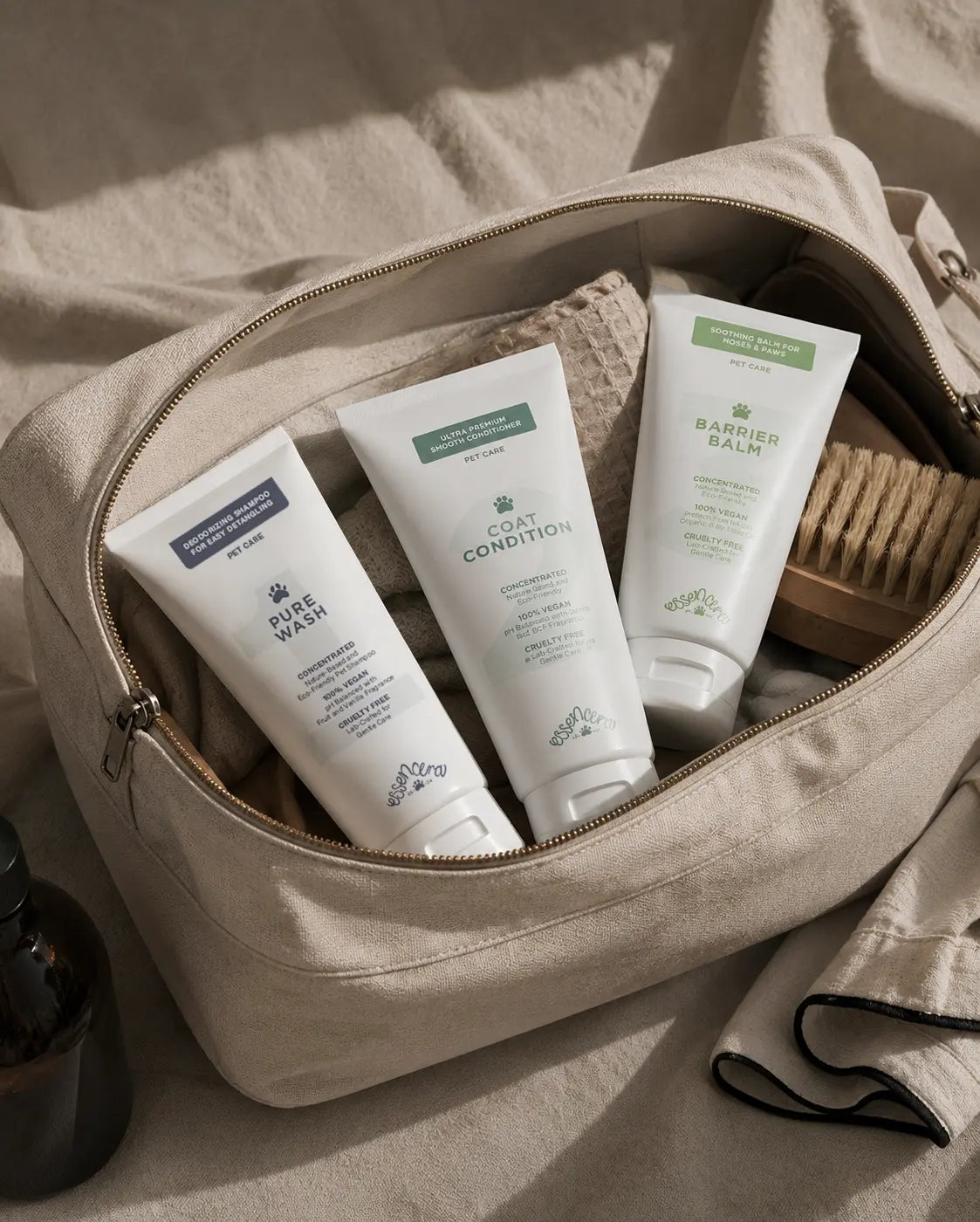
Essencera offers gentle grooming products to support a calmer bathing routine for dogs with arthritis. For senior dogs or sensitive skin, the Gentle Start Bundle brings together Calm Wash, Coat Condition, and Barrier Balm for cleansing, coat care, and dry areas.
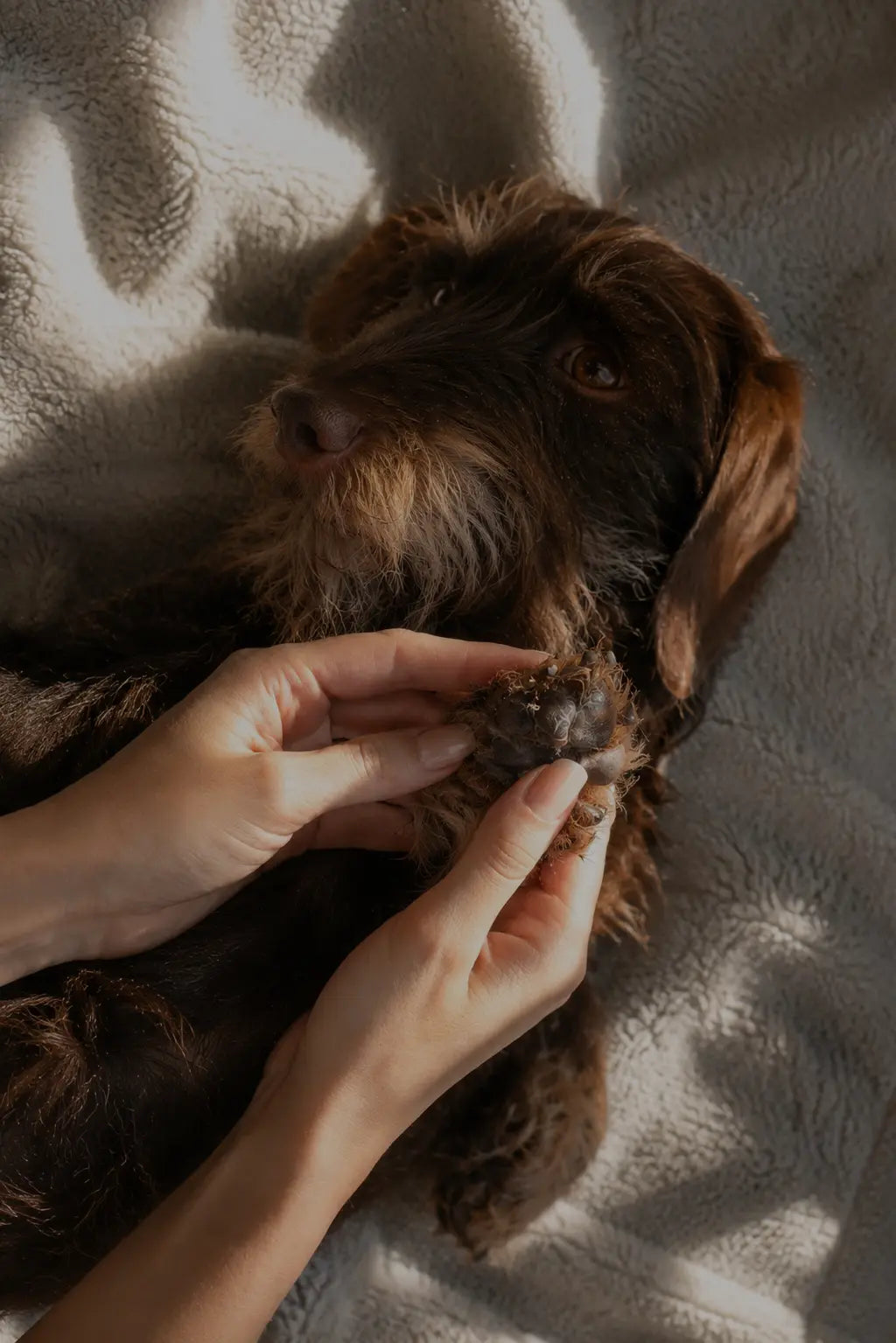
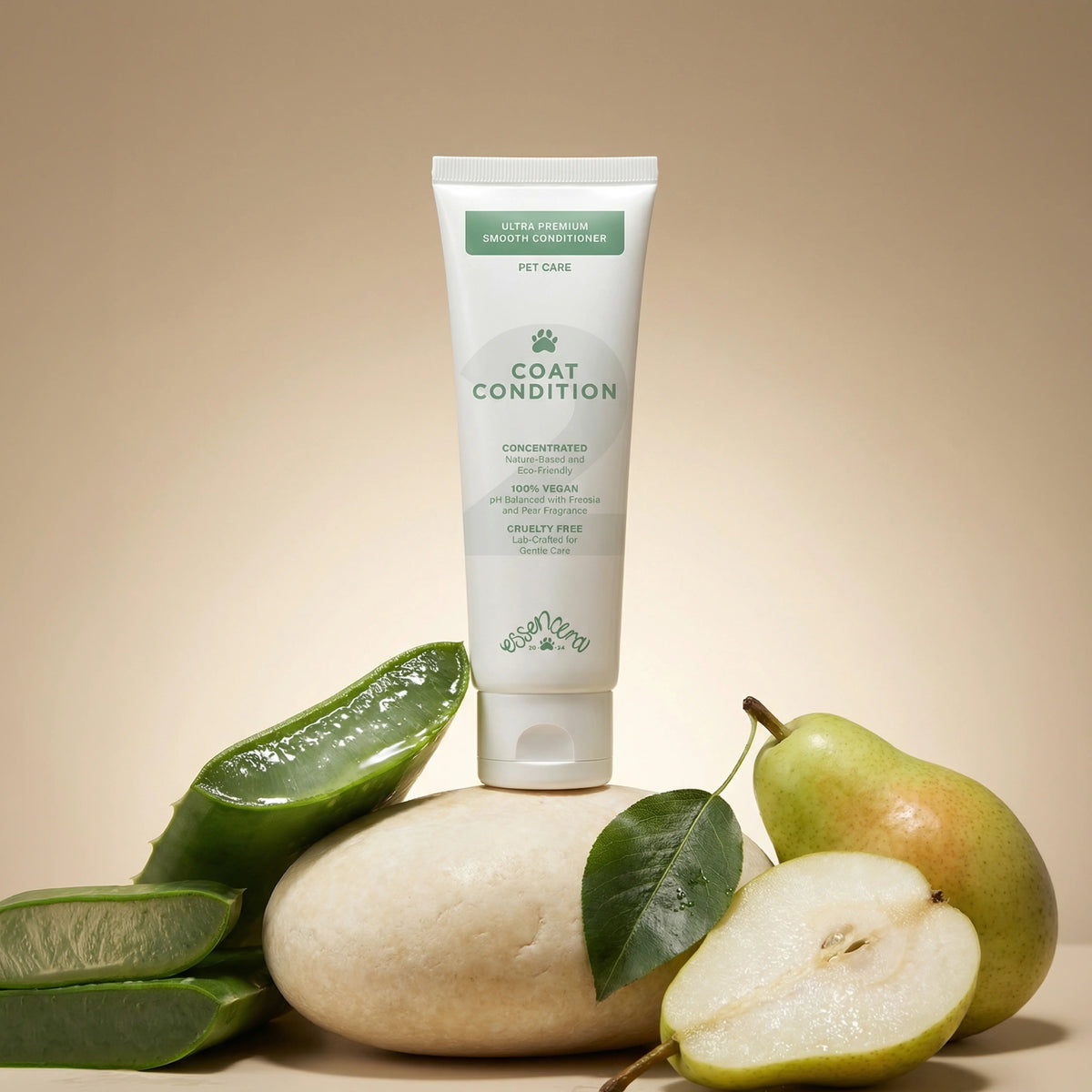
After bathing, Coat Condition can help smooth the coat and make brushing easier during drying. For rough paws or noses, Barrier Balm helps hydrate dry skin. These products support grooming care, but they don’t replace veterinary treatment or make painful movement safe. Keep using the slow handling, secure footing, and rest breaks that suit your dog.
If you’d like help choosing Essencera products for your dog’s grooming routine, please contact Essencera.
Make the next bath gentler
Let your dog’s comfort guide the routine. If standing becomes tiring, pause and let them rest instead of pushing through to finish quickly. Notice which part feels hardest, such as entering the bathing area, staying upright, or drying. These observations can help you adapt the setup to your dog’s changing needs.
For a gentle cleanse, Pure Wash dog shampoo can be part of your grooming routine. Essencera also offers Coat Condition to help smooth the coat during finishing, and Barrier Balm to hydrate rough paws and noses. These grooming products support coat and skin care, while careful handling remains central to bathing a dog with arthritis.
If you’d like help choosing products for your dog’s routine, contact Essencera. Small, thoughtful adjustments can make bath time feel more manageable, one gentle step at a time.
Frequently Asked Questions
What shampoo is safe for dogs with arthritis and sensitive skin?
For a senior dog with sensitive skin, Calm Wash for gentle grooming cleanses is formulated for delicate skin. Arthritis doesn’t determine which cleansing product suits your dog; skin sensitivity and any existing condition matter too. If you notice a rash, hot spot, or persistent itching, ask your veterinarian what cleansing approach is appropriate, since some skin conditions need specific treatment.
What are the risks of bathing a dog with severe arthritis?
With severe arthritis, even routine movements such as turning or holding a leg aside can be difficult. Watch for panting, trembling, repeated attempts to sit, or reluctance to move, and stop if these signs appear. If your dog can’t comfortably manage a full wash, clean only the soiled area with a damp cloth and keep the rest of the routine gentle.
How long should a bath take for a dog with arthritis?
The estimated time is 30 to 60 minutes, but keep the routine calm and efficient. If your dog becomes uncomfortable, pause or split the cleaning into several short baths a few days apart.