
How to Protect My Back While Bathing My Dog With Less Strain
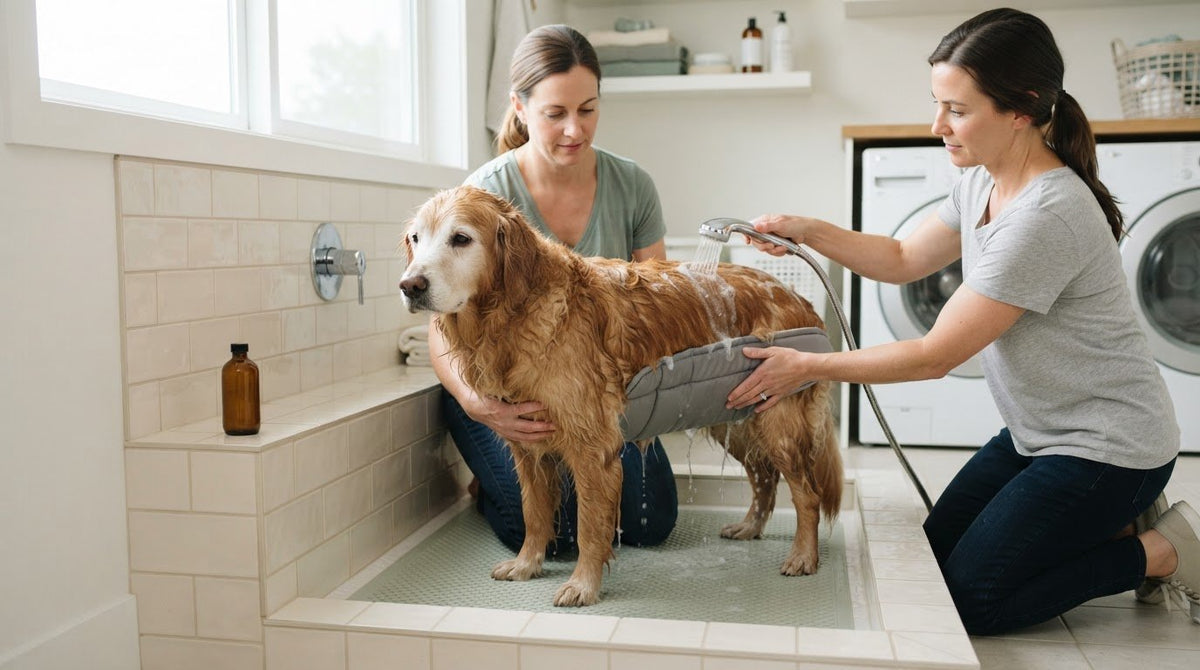
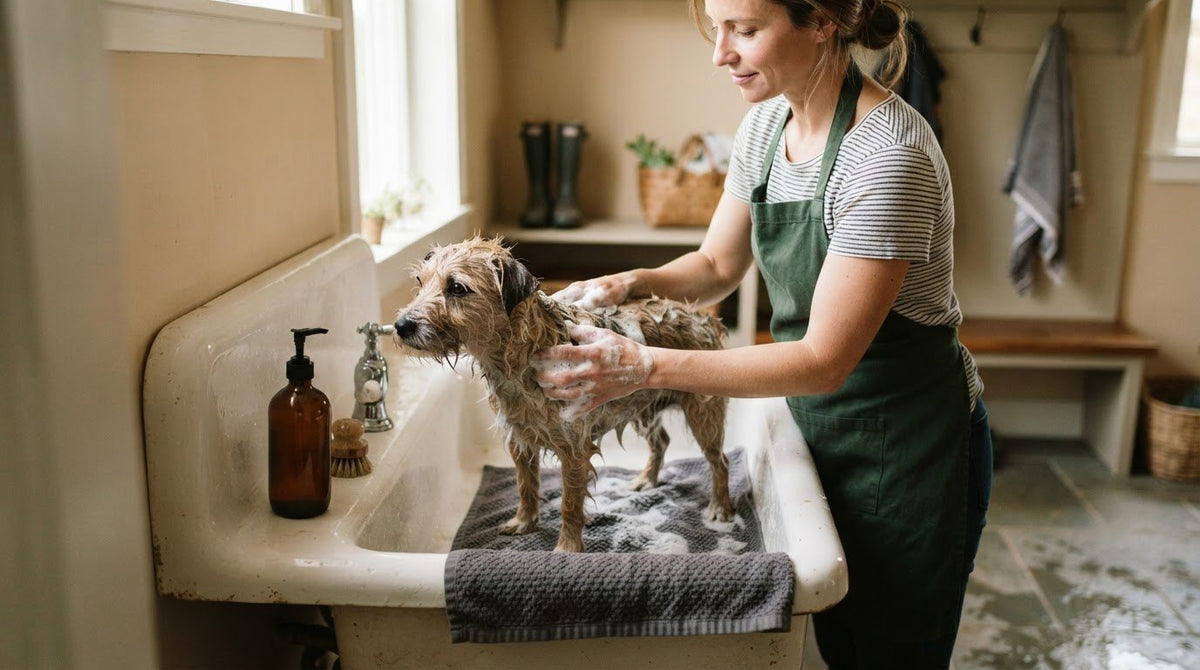
The most back-friendly bath may not be the bathtub. If you’re wondering how to protect your back while bathing your dog, start by choosing a spot that lets you move freely and keep your dog close, rather than leaning over or twisting. A raised bathing area can reduce bending, while a sink may suit a small dog.
Bath time can feel like a workout when towels and supplies are out of reach or your dog slips underfoot. A little preparation can make the task calmer for both of you. Choose a suitable spot, such as a sink, tub, shower, or outdoor area, and set out supplies before the water runs. A towel can improve your dog’s grip. Clearing space and choosing a raised tub can also make the bathing area easier to use. Small adjustments can help you stay steady and make bath time feel more manageable.
Key Takeaways
- Choose a bathing spot that lets you stay upright, keep your dog close, and move without twisting.
- Brush your dog and place towels and rinsing supplies within easy reach before the bath begins.
- Put a towel on a slippery tub floor to help your dog feel steadier, then use gentle drying methods to keep them comfortable.
- Make an at-home bathing area easier on your back by clearing space and choosing a setup that reduces bending.
Choosing a sink, bathtub, shower, or outdoor bathing spot
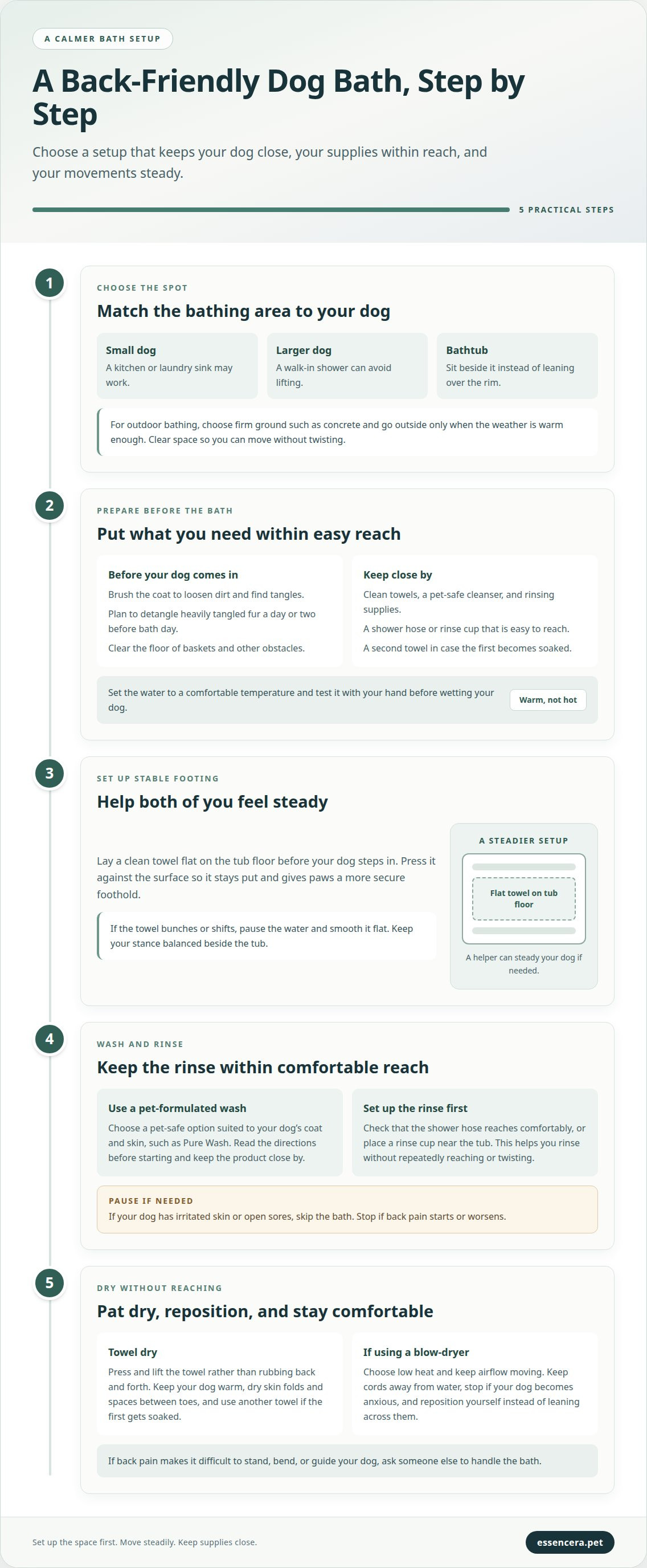
Choosing a bathing spot is a practical first step in how to protect my back while bathing my dog. A small dog may fit in a kitchen or laundry sink; a walk-in shower can suit a larger dog because it avoids lifting. A regular bathtub works if you can sit beside it instead of bending across the rim. Clear space nearby so you can move without twisting.
If a large dog can’t step into a tub, choose a walk-in shower or bathe outdoors with a garden hose when the weather is warm enough. Let your dog walk into the bathing area, and ask someone to steady them if needed. Choose firm ground, such as concrete, since grass can become muddy during the bath.
Use warm, comfortable water, not hot water. Test it with your hand before wetting your dog, and adjust the flow if it feels too warm. A shower handle can direct the rinse while you stand upright, helping you avoid leaning across a tub.
Choose a pet-safe option such as Pure Wash pet shampoo, rather than a human product. Consider your dog’s coat and skin when selecting a wash. If your dog has irritated skin or open sores, skip the bath instead of trying to remove dirt with shampoo.
Repeated bending and twisting can leave your back sore or strained. Stop if pain starts or worsens. If back pain makes it difficult to stand, bend, or guide your dog, ask someone else to handle the bath. A walk-in shower and a helper can make bathing a large dog easier without lifting, supporting a gentler approach to protecting your back while bathing your dog.
Preparing towels, shampoo, and rinsing supplies
Set up the bathing area before bringing your dog in. Keep clean towels, a pet-safe cleanser, and rinsing supplies within easy reach, so you don’t need to bend or step away mid-bath. A shower hose or rinse cup can help direct water through the coat. Clear the floor of laundry baskets and other obstacles.
- Brush through the coat before bathing to loosen dirt and find tangles.
- Plan to detangle heavily tangled fur a day or two before bath day.
- Keep a clean towel beside the bathing area for drying and another nearby if the first becomes soaked.
Choose a pet-formulated product, such as Pure Wash pet shampoo, suited to your dog’s coat and skin. Read its directions before starting, and keep it where you can reach it without leaning. Replace old or damp-stored products rather than using them for bath day.
Prepare the rinse before wetting your dog. Check that the shower hose reaches comfortably, or place a cup near the tub. Set the water to a comfortable temperature and test its flow. This helps you rinse thoroughly without repeatedly reaching, twisting, or searching for supplies.
There’s no fixed bath duration for every dog. Coat length, tangles, and how much cleaning the coat needs all affect the time. To spend less time bent over, brush your dog first, gather supplies nearby, and make sure the rinse source reaches them. If brushing reveals mats or skin problems, pause to address them before bathing rather than rushing through the coat.
Using a towel to help a dog grip a slippery tub
Before your dog steps into a slippery tub, lay a clean towel flat across the bottom. Press it against the surface so it stays put and gives your dog’s paws a more secure foothold. A steadier dog may shift less suddenly, helping you avoid reaching or twisting to catch them. Keep your stance balanced beside the tub.
While rinsing, check that the towel hasn’t bunched beneath your dog’s feet. If it moves, pause the water and smooth it flat before continuing. If your dog is nervous, a helper can offer calm praise or a small treat while you adjust the towel. This makes secure footing part of a positive, predictable bath routine.
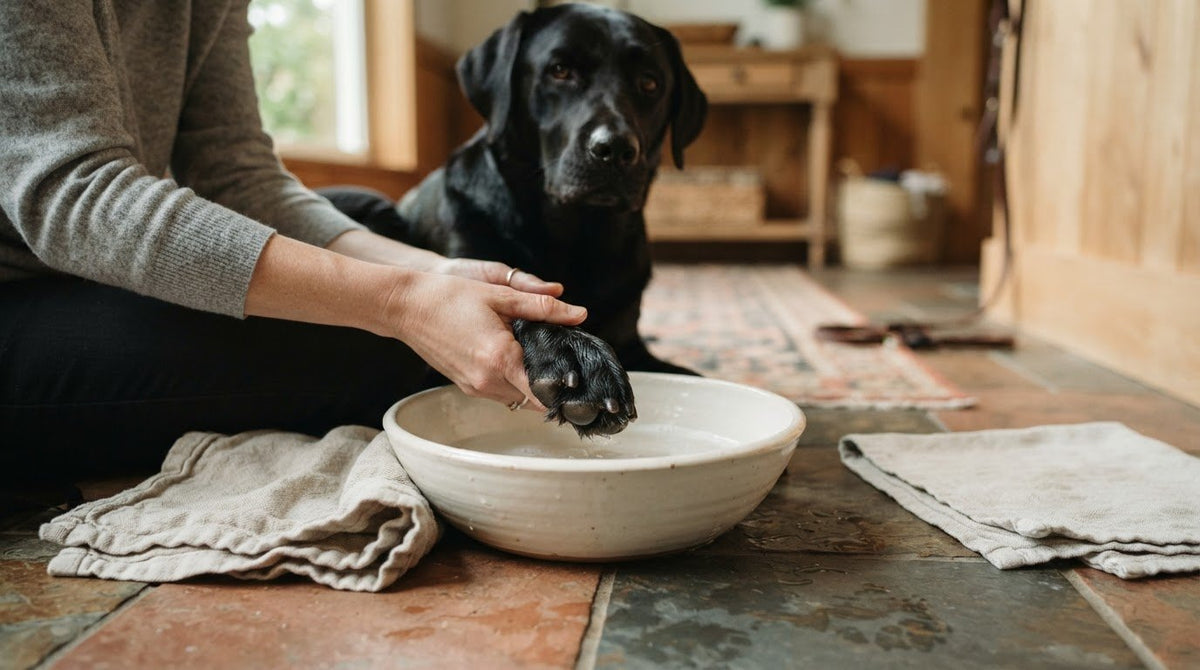
After rinsing, use a large towel to pat the coat dry. Press and lift the fabric rather than rubbing back and forth, which can tug at the fur. Keep your dog warm with a dry towel, especially in colder months, and dry skin folds and the spaces between the toes. Use a second towel if the first becomes soaked.
If you use a blow-dryer, choose low heat and keep the airflow moving across the coat. Stop if your dog becomes nervous or anxious. Keep cords away from the tub and water, and don’t lean across your dog to reach a hard-to-dry area. Reposition yourself instead.
If your dog has allergies, use a freshly laundered towel and avoid scented fabric softener. Offer rewards consistently, such as a treat after calm steps like standing on the towel or accepting gentle drying. Familiar toys can also help, provided they stay out of the rinse area and don’t make the tub more slippery.
At-home bathing setups
Give the bathing area a defined footprint instead of letting the task spread across a busy room. A garage with a closing door can provide an indoor option during cold or rainy weather. Keep the route from the entrance to the bathing spot clear, so your dog doesn’t have to weave around stored items or household clutter.
Consider your footing as well as your dog’s. A rubber-backed floor mat can improve your grip, while a non-slip surface under your dog can help them stand more securely. Keep mats flat, check that they don’t slide, and remove them for cleaning after the bath.
Low-cost setup helpers include a washable floor mat, a small storage caddy for bath-day items, and a sturdy hook for hanging wet gear afterward. Keep storage outside the splash zone. This prevents packages and tools from becoming wet, slippery obstacles during the next bath.
After bathing, remove loose fur and rinse residue from the bathing surface. Let the area dry before storing mats or returning household items. Cleaning keeps the space ready for its next use, but it doesn’t prevent or treat an infection. If your dog’s skin looks sore, pause bathing and seek veterinary guidance.
A setup that supports back comfort combines a clear route, stable footing, and a bathing space suited to how your dog enters. For a low-cost start, use a rubber-backed mat under your feet and a washable surface for your dog. Review the layout after each bath and adjust anything that caused awkward reaching or blocked movement.
Essencera
Essencera offers grooming products for at-home cleansing and coat care. They won’t change the height of your tub, so keep using a back-friendly setup that suits you and your dog. Choose products with your dog’s coat and skin in mind, and pause bathing if their skin looks sore or they seem uncomfortable.
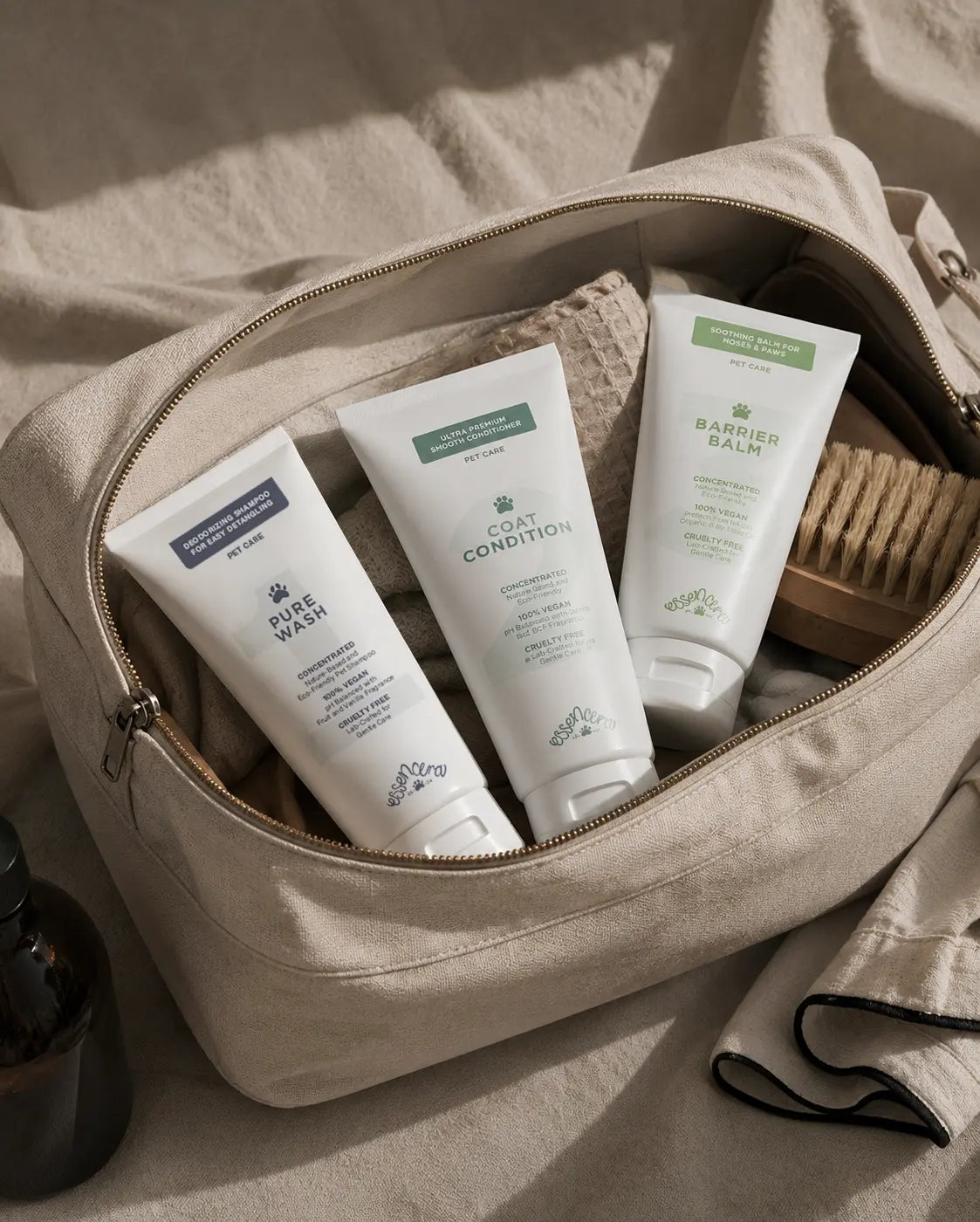
For a gentle cleanse across coat types, Pure Wash is designed for regular use. It comes as a concentrated paste, so it’s ready to use without mixing. Follow the product directions, keep it away from your dog’s eyes, and rinse thoroughly. A straightforward wash routine can help you focus on steady movements instead of reaching for extra supplies.
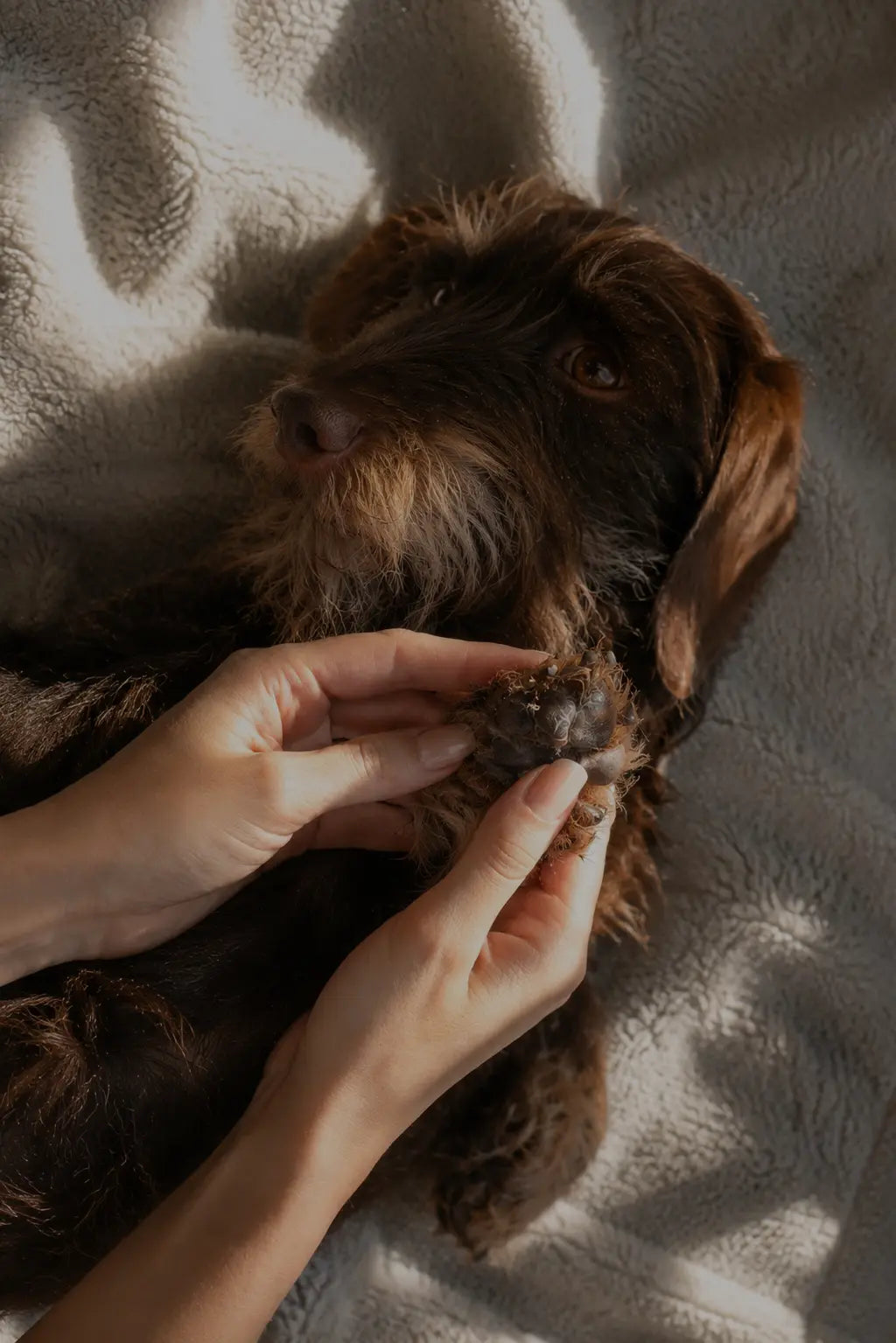
After washing, Coat Condition is the anti-tangle premium conditioner. Its cream formula helps smooth the coat, making brushing easier during drying and finishing. It isn’t a solution for severely matted fur in the bath. Barrier Balm is for dry or rough paws and noses, not a substitute for a bathing aid or treatment for a skin problem.
The Gentle Start Bundle brings together Calm Wash, Coat Condition, and Barrier Balm. It may suit a puppy, senior, rescue dog, or companion with sensitive skin. Choose it when a coordinated gentle-care routine fits your dog’s needs, rather than expecting any product to make lifting or bending safer. An accessible bathing setup and a helper remain practical choices when handling your dog feels difficult.
Essencera’s products support coat and skin care around bath time, while your setup supports your comfort. If you’d like help choosing among these options for your dog’s routine, contact Essencera. We’re happy to help you find a thoughtful fit.
Make the next bath easier on your body
A practical way to protect your back while bathing your dog is to notice which parts of bath time feel hardest on your body. After the next wash, consider whether reaching, standing, or guiding your dog caused the most strain. Use that insight to adjust your setup before the following bath, rather than pushing through discomfort.
Keep the routine flexible as your dog’s needs change. A growing puppy, an older dog, or a companion who becomes nervous may need a different bathing arrangement or a helping hand. If a bath feels difficult to manage safely, pause and choose another plan. Your dog’s comfort and your well-being both matter.
Essencera’s grooming products can be part of a thoughtful care routine, alongside a bathing setup that suits you and your dog. For a little guidance on choosing products for your companion, reach out to Essencera. Take bath time one calm step at a time, and let each routine become a little easier.
Frequently Asked Questions
How should I lift and position a dog to protect my back during a bath?
If you can lift your dog comfortably, keep them close, bend your knees, and rise using your legs rather than pulling with your back. Avoid lifting while reaching across a tub. Face your feet, hips, and shoulders toward the dog, then move your whole body when changing sides. For a large dog, use a walk-in bathing spot or ask someone to help.
Are elevated dog bath tubs or grooming tables worth the cost?
An elevated tub may be worthwhile if it reduces bending during regular baths and gives your dog a stable, comfortable place to stand. Consider how often you bathe your dog, whether they can enter safely, and whether the setup fits your space. A grooming table isn’t automatically a bathing station, so use one only if it’s designed for wet grooming.
What steps reduce bending and twisting while bathing a dog?
Keep your dog close to your working side, and place each tool where you can reach it without leaning. Use a shower hose or rinse cup that reaches your dog, and move your feet to change position instead of twisting your torso. If your dog shifts suddenly, pause and reset your stance before continuing. Ask a helper to steady a nervous dog.