
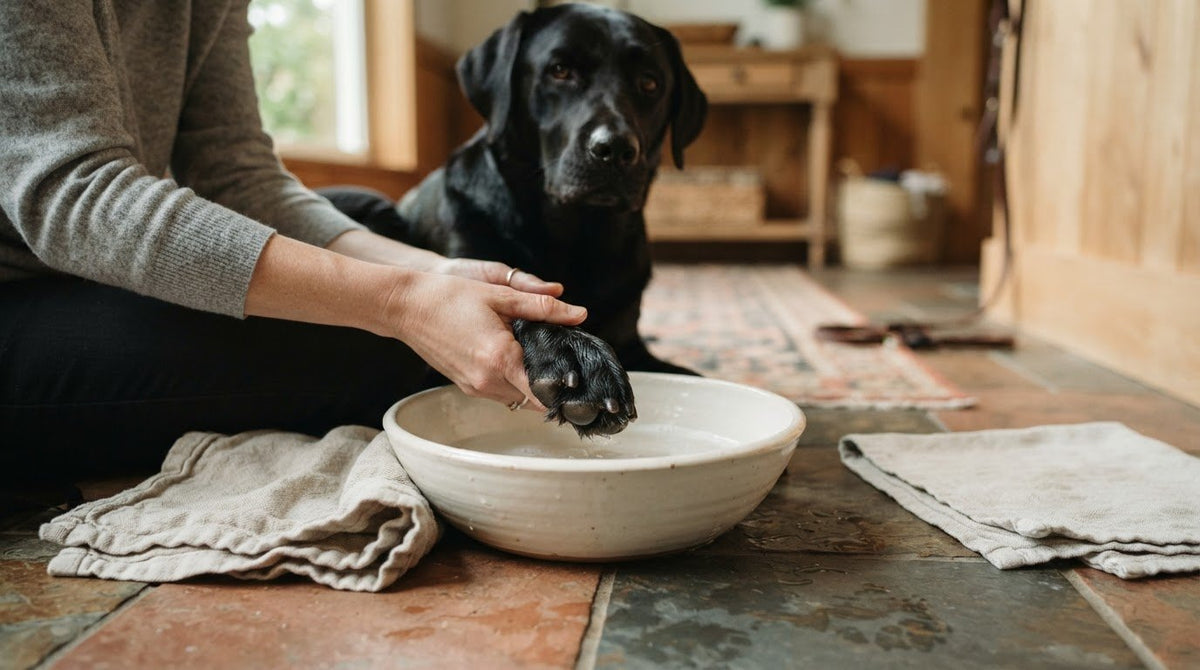
Dog Paw Corn Chip Smell: What Causes It and When to Worry
That popcorn-like paw smell isn’t automatically a sign that something’s wrong. If you’re wondering why your dog smells like corn chips, the scent may reflect the ordinary mix of microorganisms on paw skin rather than an illness. Its strength can vary with your dog’s surroundings and activity, so one sniff doesn’t tell the whole story. Treat the odor as one clue, not a diagnosis. Your dog’s comfort and any changes in their usual behavior help put it in context.
This guide explains what can cause the scent and how to distinguish an everyday odor from a change worth taking seriously. You’ll learn what to look for during a calm paw check, how cleaning and drying fit into routine care, and when a veterinarian should assess your dog. The goal isn’t to make every paw smell-free. It’s to help you choose a sensible next step, avoid overreacting to a familiar scent, and respond with care if your dog’s paws seem different. With a little attention, you can feel more confident about what you notice and what to do next.
Key Takeaways
- A mild corn-chip scent can come from the normal mix of bacteria and yeast on your dog’s paws.
- Notice changes in odor alongside redness, swelling, discomfort, or persistent licking, which can signal a problem.
- After cleaning wet or dirty paws, dry carefully between the toes to avoid leaving moisture trapped there.
- Know when gentle paw care may help and when signs call for veterinary attention.
Bacteria and yeast on my dog’s paws - is that a problem?
A mild Fritos-like odor can come from normal skin microorganisms, including bacteria and yeast. The key is whether the smell comes with changes such as irritation, persistent licking, or soreness.
Natural Paw Bacteria and Yeast
Yes, a corn-chip smell can come from bacteria and yeast that normally live on a dog’s skin. Their presence alone doesn’t mean your dog has an infection. Paw pads also release moisture, and warmth between the toes can make a familiar scent more noticeable after a humid walk or time on damp ground.
Regularly checking between the toes helps you notice whether the odor is familiar or comes with redness and discomfort. Licking isn’t a reliable way for dogs to clean their paws: repeated licking can irritate the skin and contribute to infection.
Bacterial and Fungal Causes of Paw Odor
Bacteria such as Pseudomonas and Proteus, along with yeast, can contribute to a yeasty, corn-chip-like odor. Fur, limited airflow between the toes, warmth, and moisture create conditions where these microorganisms can thrive. The scent may become stronger when paws stay damp or aren’t cleaned after picking up dirt or other debris.
Allergies can also start a cycle: itchy paws prompt licking or chewing, which further irritates the skin. Excess moisture and poor hygiene may encourage yeast overgrowth, but frequent washing or scented products can irritate sensitive skin and disrupt its natural balance. Smell alone can’t identify which microorganism is involved.
Infections and Veterinary Diagnosis
Pyoderma is a skin infection that can develop when bacteria multiply beyond normal levels. A bacterial overgrowth, or a mix of bacteria and yeast, may cause inflammation, irritation, and persistent licking. This differs from a mild odor without visible discomfort or skin changes.
A veterinarian examines the paws and symptoms to assess whether there’s an infection or another skin problem. Treatment depends on the diagnosis and may include antibiotics or antifungal cream. For routine grooming after dirt builds up, a gentle dog shampoo can cleanse the coat, but it isn’t a treatment for infection. If allergies trigger repeated licking, addressing that cause matters too.
Normal corn-chip odor versus signs of infection
A light corn-chip scent without skin changes can be normal Frito feet. Odor becomes more concerning when it grows stronger or comes with discomfort.
Normal Odor and Microbial Overgrowth
Normal paw odor is a mild, familiar chip smell without visible irritation or behavior changes. Your dog stays comfortable, walks normally, and doesn’t repeatedly lick between their toes. By contrast, an unusually strong odor that becomes unpleasant or smells like moldy cheese deserves attention. Compare both paws and note whether the smell follows damp conditions or persists when they’re dry. That pattern can help distinguish an ordinary microbial scent from a change that needs closer assessment.
Signs of Paw Irritation or Infection
Redness, swelling, bumps, cracked pads, and soreness suggest paw irritation, not just Frito feet. Repeated licking or chewing, especially between the toes, can signal itch or discomfort. Notice whether your dog changes how they bear weight, pulls away when touched, or seems unsettled after walks. A strong, unpleasant chip smell alongside these signs raises concern for microbial overgrowth or another skin problem. One sign alone doesn’t identify the cause, so consider the whole picture.
Signs Warranting Veterinary Attention
Arrange veterinary care for a strong or worsening odor, visible redness, swelling, bumps, cracked pads, or pain. Contact a veterinarian if your dog persistently licks or chews, limps, or develops a moldy-cheese smell. These changes can accompany infection, allergic reactions, or inflammation that needs cause-specific treatment. If the odor doesn’t improve after two weeks of consistent home care, seek veterinary advice. In the meantime, avoid masking changes with perfume or repeated washing, which can irritate the skin.
Why are my dog's paws red and smell like corn chips?
Redness alongside a corn-chip smell suggests more than odor alone. Moisture trapped between the toes can encourage irritation, while bacteria such as Pseudomonas can produce a yeasty scent. A mild smell without redness may be completely normal, but sore-looking skin needs attention.
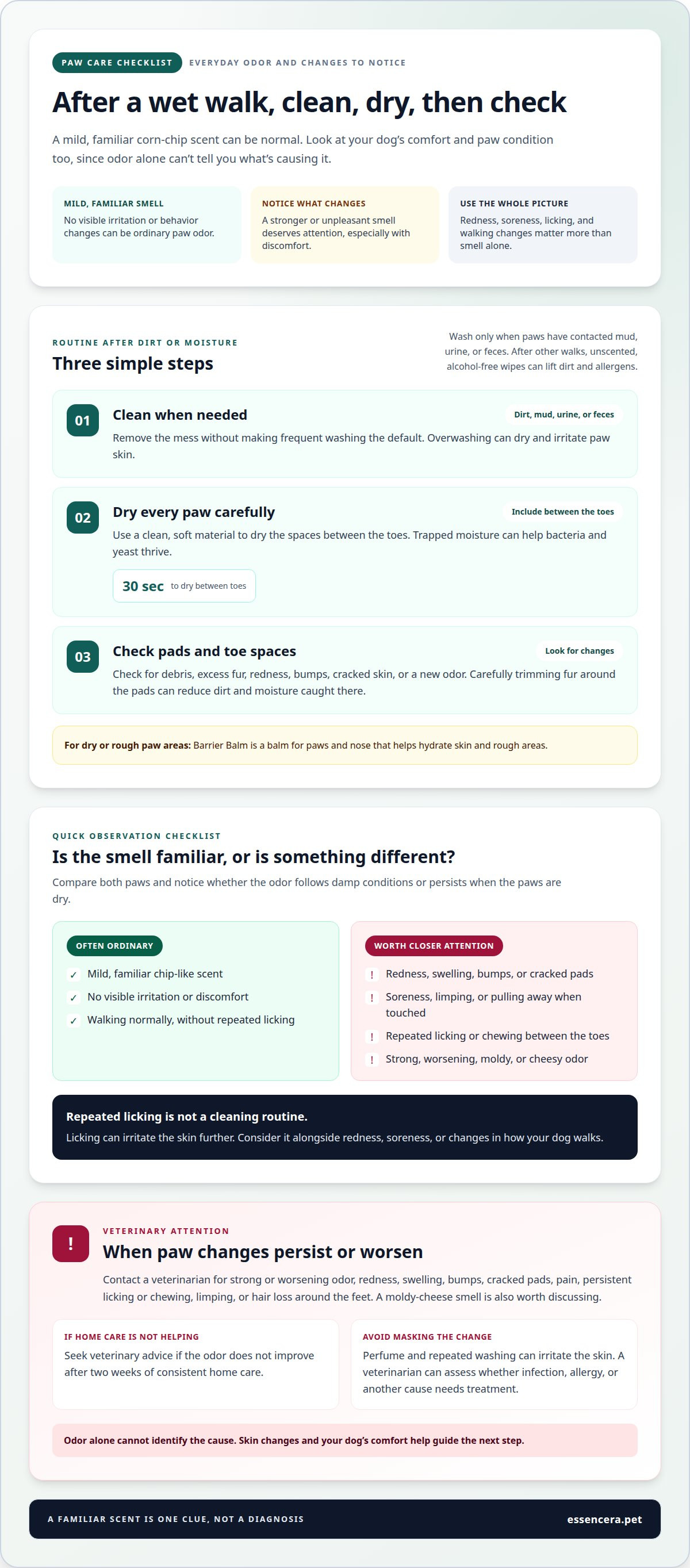
To reduce recurring paw odor, focus on removing dirt and drying paws thoroughly. Wash only after contact with mud, urine, or feces, since overwashing can dry and irritate the skin. After other walks, alcohol-free, unscented wipes can lift dirt and allergens.
- After washing or wet weather, gently dry each paw, including between the toes. Trapped moisture can support bacterial and yeast growth.
- Check for debris and excess fur around the pads. Carefully trimming fur can reduce dirt and moisture caught there.
- Use clean, soft material to dry the spaces between toes. This takes thirty seconds and helps prevent dampness from lingering.
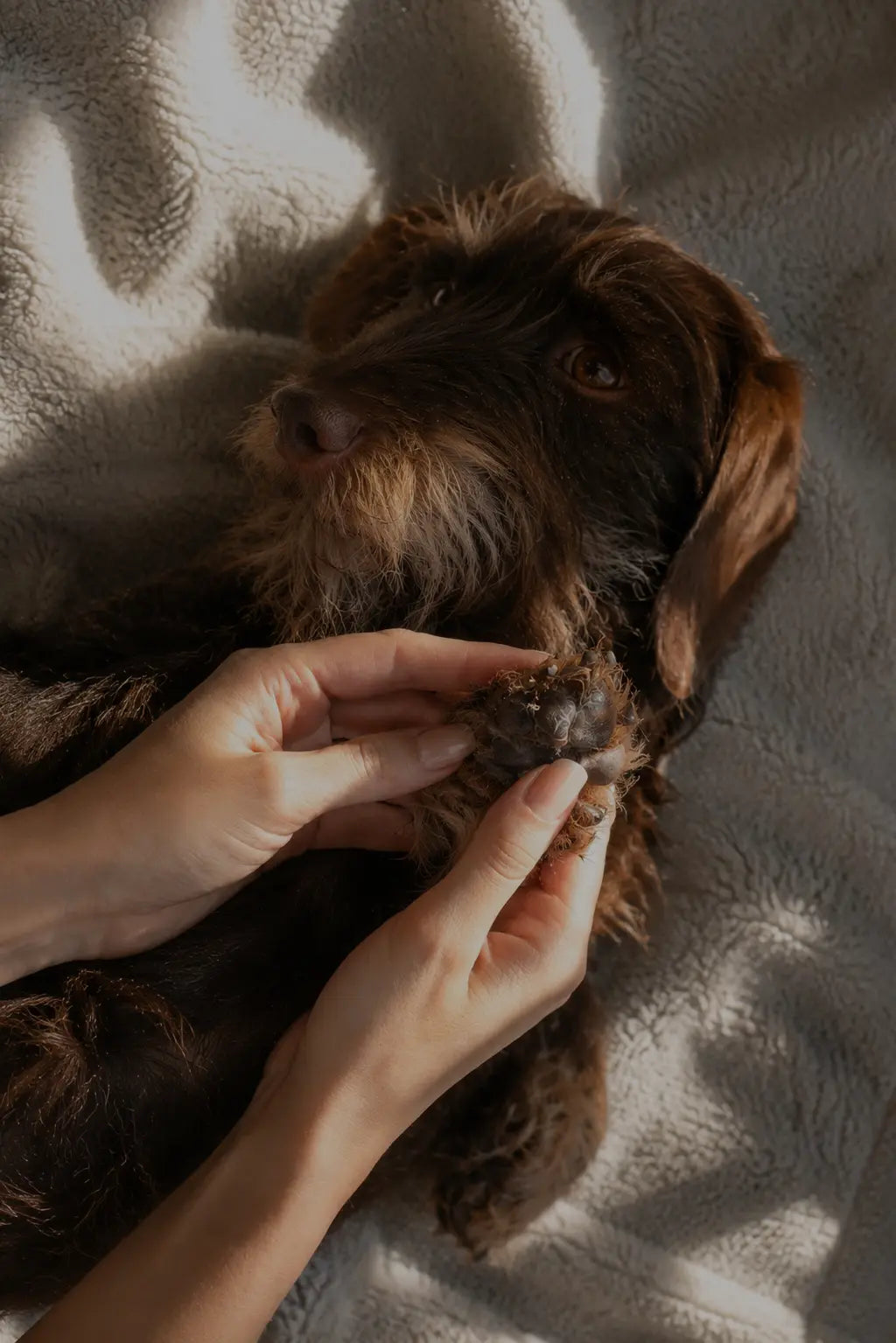
Regular paw checks make changes easier to spot. Look at the pads and between the toes for redness, bumps, cracked skin, debris, or a new odor. If your dog repeatedly licks or chews a paw, don’t treat the behavior as a cleaning routine. Licking can worsen irritation, and redness with discomfort warrants veterinary advice.
Dogs that smell like Fritos after a wet walk may simply need their paws cleaned and dried. If redness, swelling, pain, or persistent licking continues, home cleaning alone isn’t enough. A veterinarian can assess whether infection, allergy, or another cause needs treatment.
When to consult a veterinarian
Contact your veterinarian when paw odor comes with redness, swelling, bumps, cracked pads, or pain. Persistent licking, chewing, limping, or hair loss around the feet also deserves attention. A strong odor that changes to a moldy or cheesy smell differs from a mild, familiar scent on otherwise healthy paws.
These changes don’t identify one cause on their own. A veterinarian can examine the skin and consider infection, allergies, or another source of irritation before recommending treatment. Mention whether one paw or several are affected, when the smell began, and whether your dog has been licking between the toes.
- Seek veterinary advice for swelling, open cracks, bumps, or tenderness.
- Contact your veterinarian if odor becomes strong, unpleasant, or persistent.
- Share details about repeated licking, chewing, limping, or hair loss.
Recurring odor matters, especially when symptoms return after cleaning and drying. Allergies can trigger itchiness and licking, while bacteria such as Proteus can contribute to paw odor. A veterinarian can assess the pattern and recommend care based on the cause, rather than treating the smell alone.
If home care hasn’t improved the odor after two weeks of consistent effort, arrange a veterinary visit. Don’t wait if your dog is in pain, struggling to walk, or has visibly damaged skin. At routine check-ups, mention recurring paw odor and any changes you’ve noticed, such as redness after walks or repeated licking at bedtime. These details help your veterinarian assess the full picture.
Essencera
Essencera offers gentle grooming products for everyday coat and paw care, a practical option for building a simple routine around your dog’s needs. These products support cleanliness and skin comfort, but they aren’t treatments for a suspected infection. Redness, swelling, pain, or persistent licking still calls for veterinary advice.
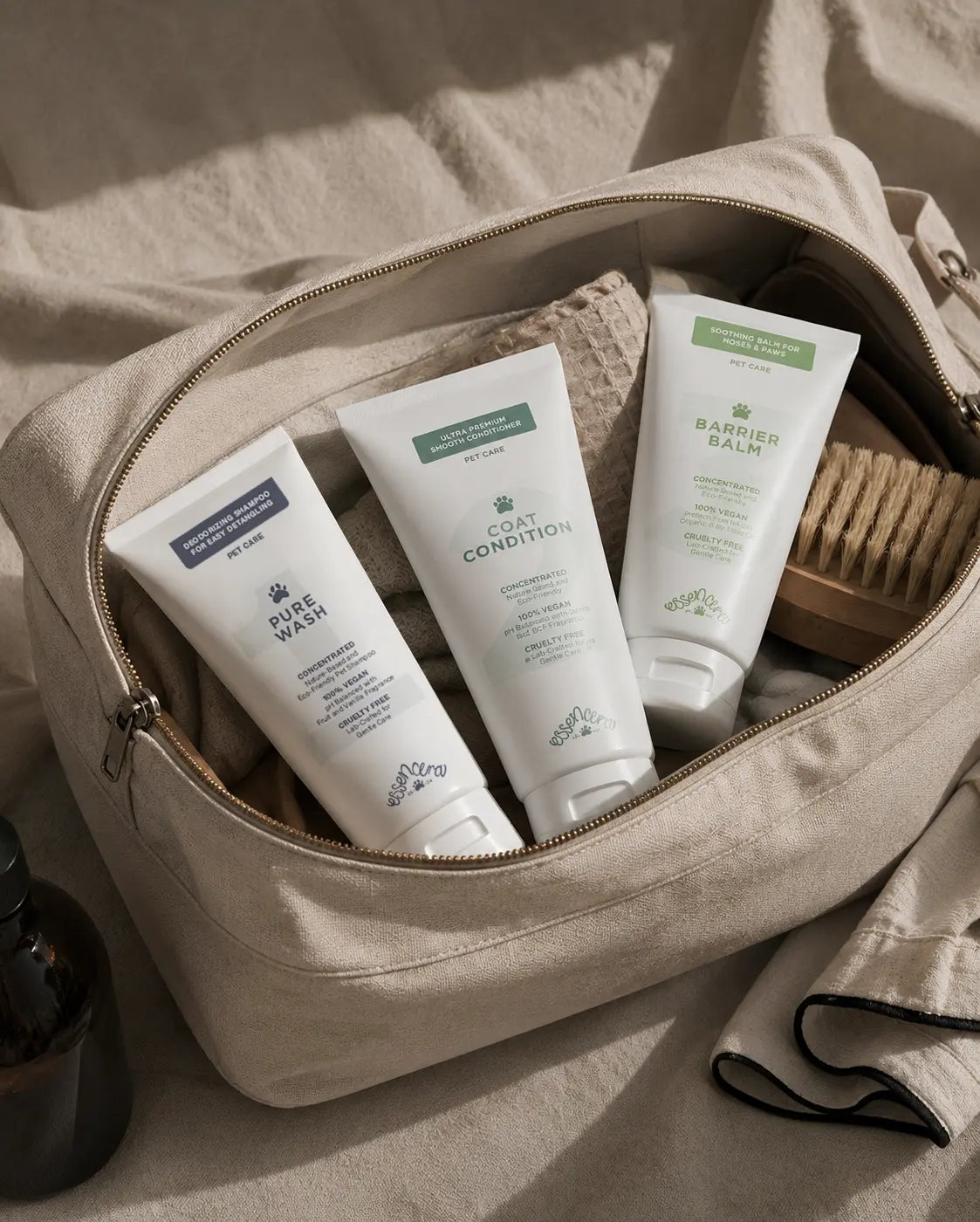
For routine cleansing after dirt or debris, Pure Wash gentle shampoo is a concentrated paste designed for regular use. Choose a wash based on your dog’s skin and coat needs, and avoid bathing paws repeatedly just to mask odor. After washing, rinse thoroughly and dry between the toes so moisture doesn’t linger.
If paw pads or a nose feel rough or dry, Barrier Balm is made to moisturize and protect those areas. Apply it to clean, dry skin and massage gently. For coat care after a bath, Coat Condition is a premium conditioner that helps detangle and smooth the coat during brushing and finishing. It doesn’t replace paw drying or veterinary care for irritated skin.
The Gentle Start Bundle brings together Calm Wash, Coat Condition, and Barrier Balm. It may suit households looking for a gentle grooming routine for puppies, seniors, or dogs with sensitive skin. Keep the routine simple: cleanse when needed, dry paws fully, and use conditioning or balm for the areas they’re designed to care for.
For persistent odor or visible irritation, contact your veterinarian first. For help choosing Essencera products for everyday grooming, contact Essencera when it’s convenient for you.
Choose a thoughtful next step for paw care
If you’re still wondering why your dog smells like corn chips, let the condition of their paws guide what happens next. A familiar scent on comfortable paws calls for simple, gentle care. Persistent odor or visible irritation belongs with your veterinarian, not a stronger grooming routine.
For everyday grooming, Essencera offers Pure Wash shampoo, Barrier Balm for moisturizing rough paws and noses, and Coat Condition, Essencera’s anti-tangle premium conditioner, for coat care after bathing. Each has a different role, so choose based on the care your dog actually needs. None should be used to treat a suspected infection or replace veterinary advice.
Small, steady routines can make paw care feel like a calm part of looking after your companion. Keep an eye on changes, clean paws when needed, and dry them carefully after they get wet. If you’d like help exploring Essencera’s grooming products, contact Essencera for help. You’re taking a caring step by paying attention, and your dog’s next comfortable walk can start with that gentle care.
Frequently Asked Questions
What Causes the “Frito” Smell?
The “Frito” smell usually comes from microorganisms on paw skin, including bacteria and yeast. Warmth and moisture from paw pads can make the odor more noticeable, especially after activity or in humid conditions. The scent alone doesn’t prove disease. Consider your dog’s comfort and skin condition, not just the smell, when deciding whether the odor seems unusual.
First, what is causing this smell on my dog’s feet?
Normal skin microbes are a common source, but damp fur, outdoor debris, and limited airflow between the toes can affect how strongly paws smell. Notice whether the odor appears after a muddy walk, a rainy outing, or time in a warm room. That context can help you spot a pattern. If the smell persists alongside skin changes, seek veterinary guidance.
Should You Try to Eliminate the Smell?
Usually, there’s no need to erase a mild paw scent when your dog’s skin looks healthy and they seem comfortable. The goal is clean, dry paws, not removing every microorganism from the skin. Avoid perfume or repeated cleaning just to cover the odor. Those approaches may irritate paws. If the smell becomes strong or unpleasant, pay attention to any accompanying changes.
Why does my dog smell like corn chips or Fritos?
A corn-chip odor often reflects the normal mix of microbes living on paw skin, with moisture and warmth influencing its intensity. Dogs can also bring soil or other outdoor smells home on their feet. Compare the odor after a dry day with its scent after a wet outing. A sudden, persistent change deserves more attention than a familiar, occasional smell.
When is a corn chip smell on a dog's paws a sign of infection?
The smell is more concerning when it appears with inflamed skin, tenderness, or repeated licking. A veterinarian can examine the paws and determine whether infection, allergy, or another issue explains the changes. Odor alone can’t identify the cause or tell you which treatment is appropriate. Avoid using leftover medication or trying to diagnose an infection based only on smell.
What symptoms of yeast or bacterial infection should dog owners look for?
Watch for persistent redness, swelling, bumps, cracked skin, discomfort, or repeated licking and chewing. Your dog may also limp or react when you touch a sore paw. These signs can have different causes, so they don’t confirm a yeast or bacterial infection on their own. Note which paws are affected and when symptoms started, then share those observations with your veterinarian.