
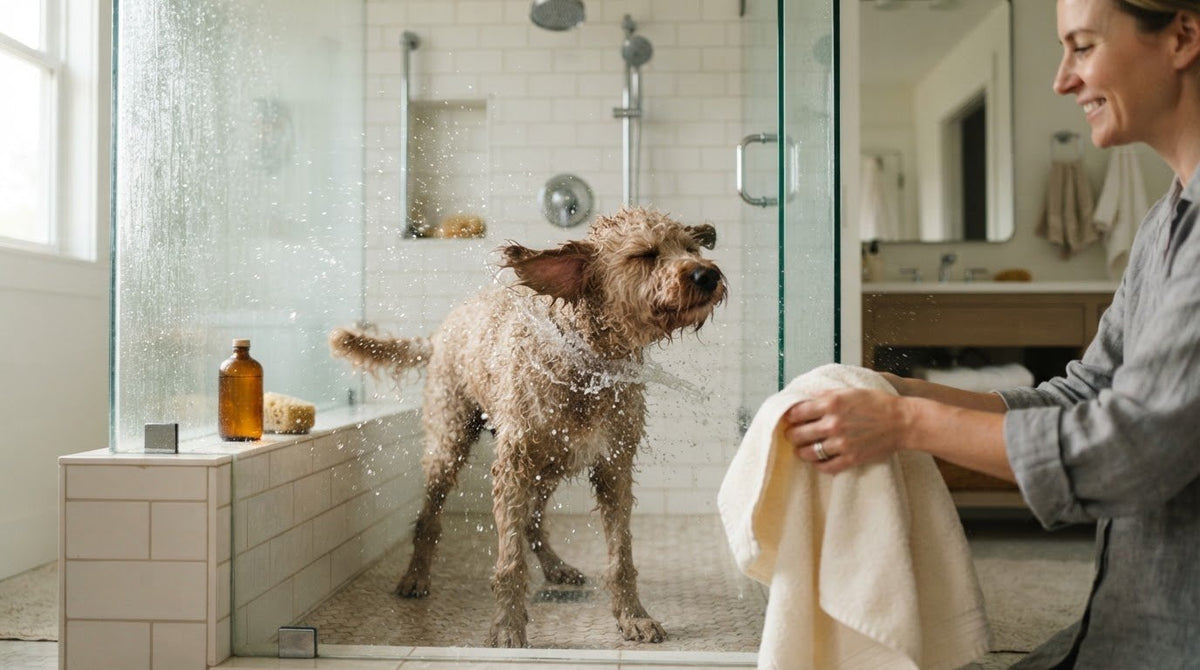
How to Keep Your Dog From Shaking Water Everywhere After a Bath
A good shake can fling off plenty of water, but it won’t dry your dog completely. Learning how to keep your dog from shaking water everywhere starts with giving them a safe place to shake, then gently blotting their coat with an absorbent towel.
That post-bath shake is hard to avoid, and it can leave you, the walls, and the floor soggy. A calm drying routine can catch much of the water without making bath time more stressful. Learn why dogs shake, why it doesn’t replace towel-drying, and how to adjust your approach for different coats. Thick and double coats need extra attention near the skin, while a patient routine helps keep the experience comfortable for your dog.
Key Takeaways
- A shake removes surface water, but it won’t dry your dog’s coat completely.
- Give your dog a safe space to shake, then blot the coat gently with absorbent towels.
- Thick and double coats need extra attention near the skin, where moisture can linger.
- Adjust drying to your dog’s coat and comfort, and keep them indoors until dry in cool weather.
The physics of shaking and water removal
A dog’s shake is a rapid, whole-body movement that flings water from its coat. Understanding how it works explains why it helps, but doesn’t replace towel-drying.
The Mechanics of a Dog’s Shake
A dog twists its body from side to side, creating a wave that travels from head to tail. Loose skin and fur lag behind each turn, then snap in the opposite direction. That quick change in motion loosens water clinging to the coat. A shake often starts at the head, for example, sending water outward before the shoulders and back follow.
Removing Water Through Shaking
Shaking sends droplets away from the coat through rapid acceleration. It doesn’t absorb water or dry each hair. The motion removes some surface water, but moisture remains between hairs and near the skin. A thick coat, for example, can still feel damp after a vigorous shake. That’s why shaking is a first step, not a complete drying method.
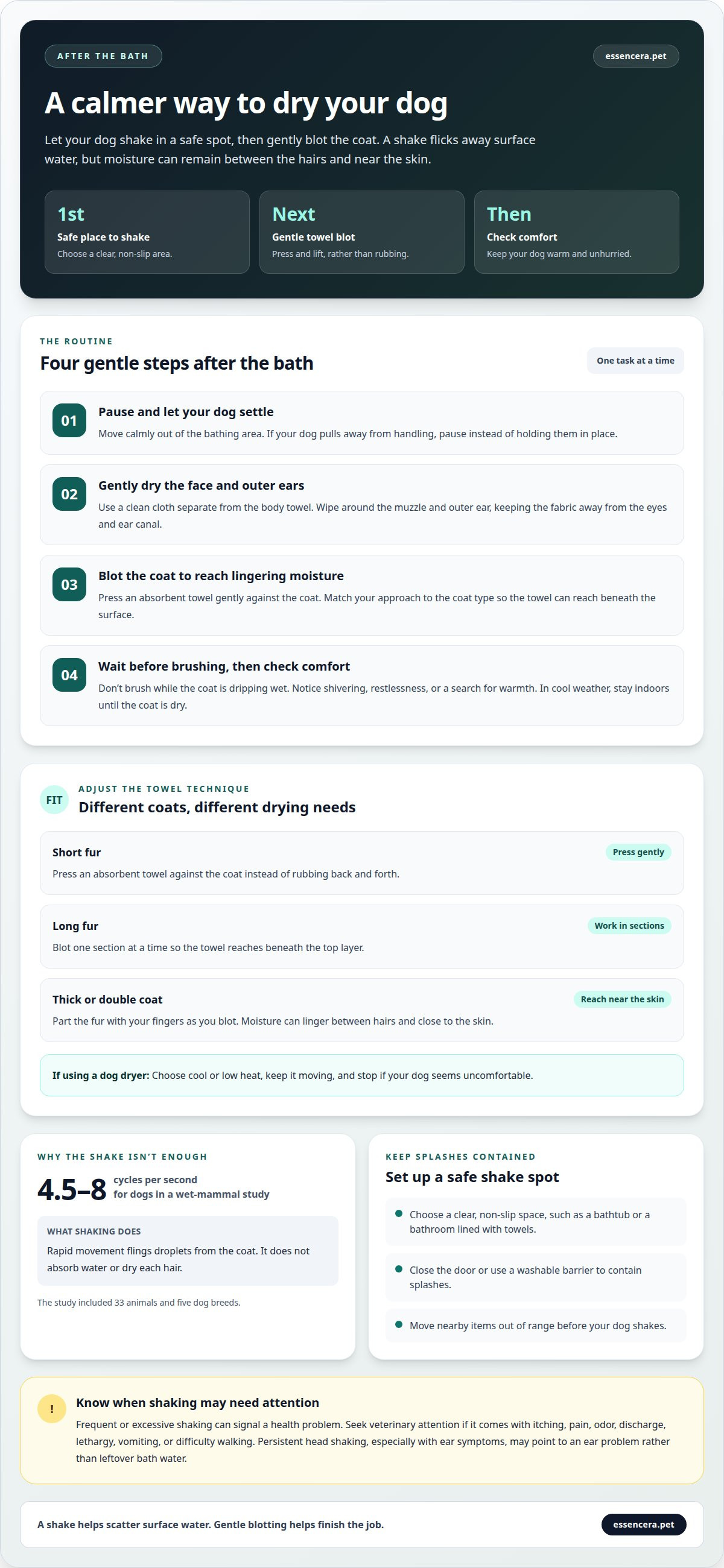
Dogs in a study of wet mammals shook at roughly 4.5 to 8 cycles per second. The broader study included 33 animals and five dog breeds; mice shook at near 30 cycles per second, while bears shook at near 4 cycles per second. These comparisons show that body size relates to shake speed, but a dog’s motion is still fast enough to scatter droplets across a bathroom.
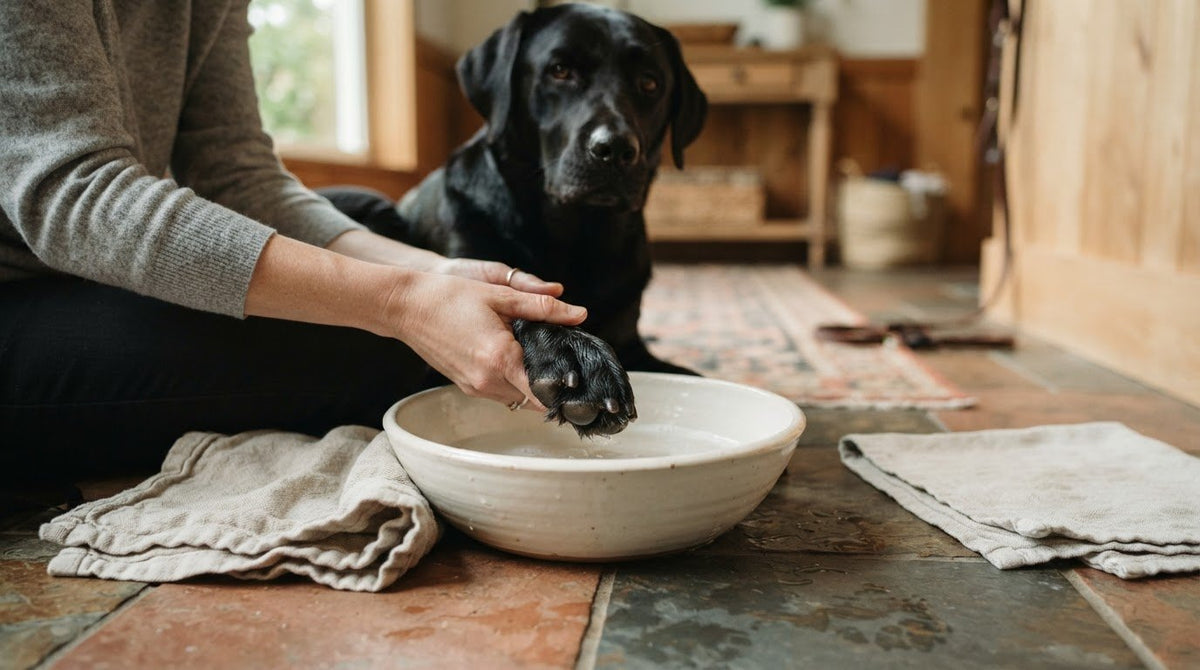
To protect walls and floors, use a clear, non-slip space, such as a bathtub or a bathroom lined with towels. Close the door or use a washable barrier to contain splashes, and move nearby items out of range before your dog shakes.
Frequent or excessive shaking can signal a health problem, especially if head shaking continues or comes with itching, pain, odor, or discharge. Lethargy, vomiting, or difficulty walking alongside excessive shaking also warrants veterinary attention.
Why dogs shake water from their coats
Water isn’t the only reason dogs shake. They may shake after rain, swimming, bathing, grooming, rolling on damp grass, or stepping out of snow. The motion can also follow excitement, stress, or play. A dog may shake after a lively game, for example, even when its coat is dry. Consider the context to tell an ordinary shake from one prompted by a wet coat.
Notice what happens just before the movement. A shake after a bath is a familiar way to flick water from the coat; one after a noisy event may follow tension instead. Dogs may also shake their heads after getting their ears wet. If head shaking persists or comes with itching, pain, odor, or discharge, it may point to an ear problem rather than leftover bath water.
Match the drying method to your dog’s coat. For short fur, gently press an absorbent towel against the coat instead of rubbing back and forth. With long fur, blot in sections so the towel reaches beneath the top layer. For a thick or double coat, part the fur with your fingers as you blot to reach moisture near the skin. If you use a dog dryer, choose cool or low heat, keep it moving, and stop if your dog seems uncomfortable.
Yes, you can teach your dog to shake in a designated area, though the cue guides the location rather than stopping the natural movement. Practise sending your dog to a safe, non-slip spot, such as a towel-covered bathroom area, and reward them for staying there before and after a bath. Keep the space calm and clear, then let your dog move freely once drying is done.
Post-bath drying routine
A smooth routine starts before the bath ends. Put away loose grooming tools and prepare a clean cloth for your dog’s face, separate from the one used on the body. To keep your dog from shaking water everywhere, plan each transition calmly, from leaving the bathing area to settling for drying.
Keep the process comfortable by watching your dog’s responses and handling one task at a time:
- Pause between steps: Give your dog a moment to adjust after leaving the tub. If they pull away from handling, pause rather than holding them in place.
- Use a face cloth: Wipe around the muzzle and outer ear gently, keeping fabric away from the eyes and ear canal.
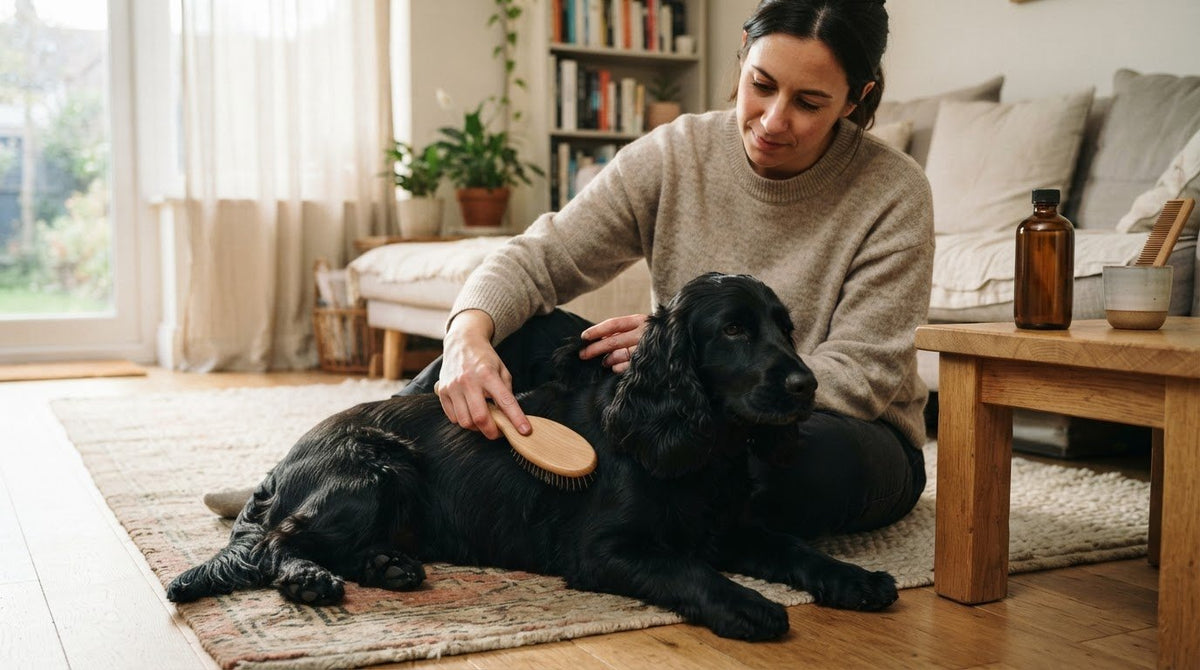
- Keep grooming tools aside: Don’t brush through the coat while it’s dripping wet. Wait until drying has progressed, then use a suitable brush gently.
- End with a comfort check: Notice whether your dog is shivering, restless, or seeking warmth. In cool weather, stay indoors until the coat is dry.
After swimming or bathing, water may remain around the ear opening. Keep the outer ear clean and dry, and don’t insert cotton swabs or other objects into the canal. Cornell’s ear-cleaning guide advises routine ear cleaning after ears get wet and cautions that overcleaning can irritate healthy ears.
If your dog dislikes being handled, divide the routine into brief, familiar moments. Let them settle before tending to their face, for example, then offer a quiet pause before brushing. A calm finish can make the next bath easier, while a careful ear and comfort check helps you notice when your dog needs extra attention.
The role of loose skin and coat type
Loose skin can make splashes more visible because folds move with the body and fling droplets outward. A dog with folds around the neck, for example, may scatter more water when turning its head and shoulders. This changes where droplets land, not whether the coat is dry. Keep that movement in mind when choosing a safe place for your dog to shake.
Coat texture also affects the spray pattern. Smooth, short fur tends to show individual droplets clearly, while longer fringes can swing and send water farther from the body. Curly coats may hold droplets among the curls, so the outside can look unevenly wet after shaking. These differences explain why two dogs leaving the same bath can make very different messes.
Coat density matters, too. In a double coat, the outer hairs and undercoat can respond differently to movement, changing how water travels across the body. A long, feathered tail may whip droplets toward nearby walls, while wet leg furnishings can leave small splashes lower down. Notice which areas send water outward, then position your dog with that pattern in mind.
Check skin folds for comfort after bathing. Dampness can collect where skin rests against skin, such as beneath the neck or around the legs. Look for redness, irritation, or an unusual smell as you inspect those areas. Coat type can help you anticipate where water may linger, while your dog’s skin offers clues about comfort. If your dog has a dense coat and loose folds, allow extra time for a gentle, careful check before they settle.
Essencera
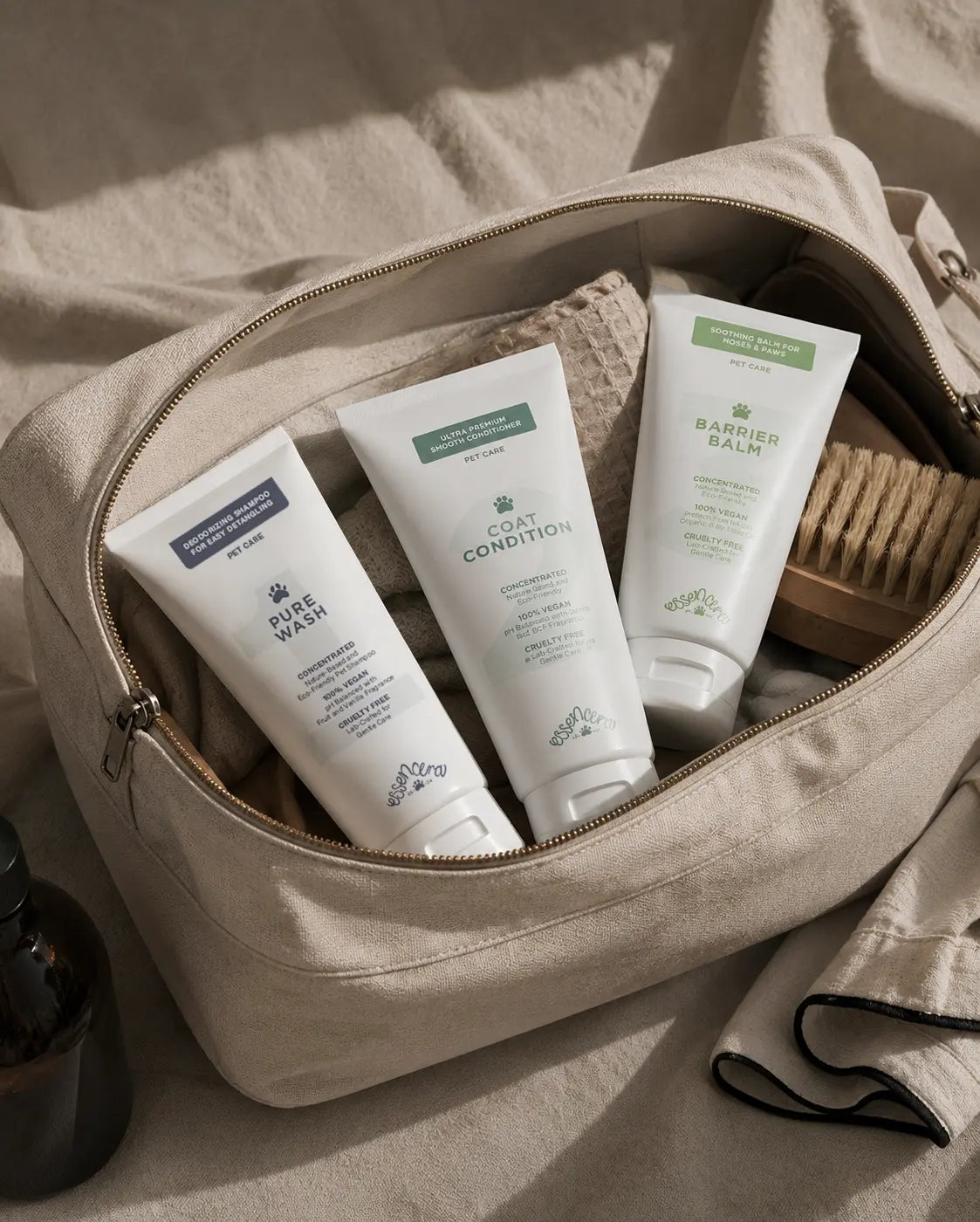
Essencera offers gentle coat-care products that can complement a thoughtful bath and drying routine. For dogs whose fur tangles during drying, Essencera’s anti-tangle premium conditioner helps make brushing easier during finishing. It won’t stop a dog from shaking or dry the coat on its own, so towel blotting and coat checks still matter.
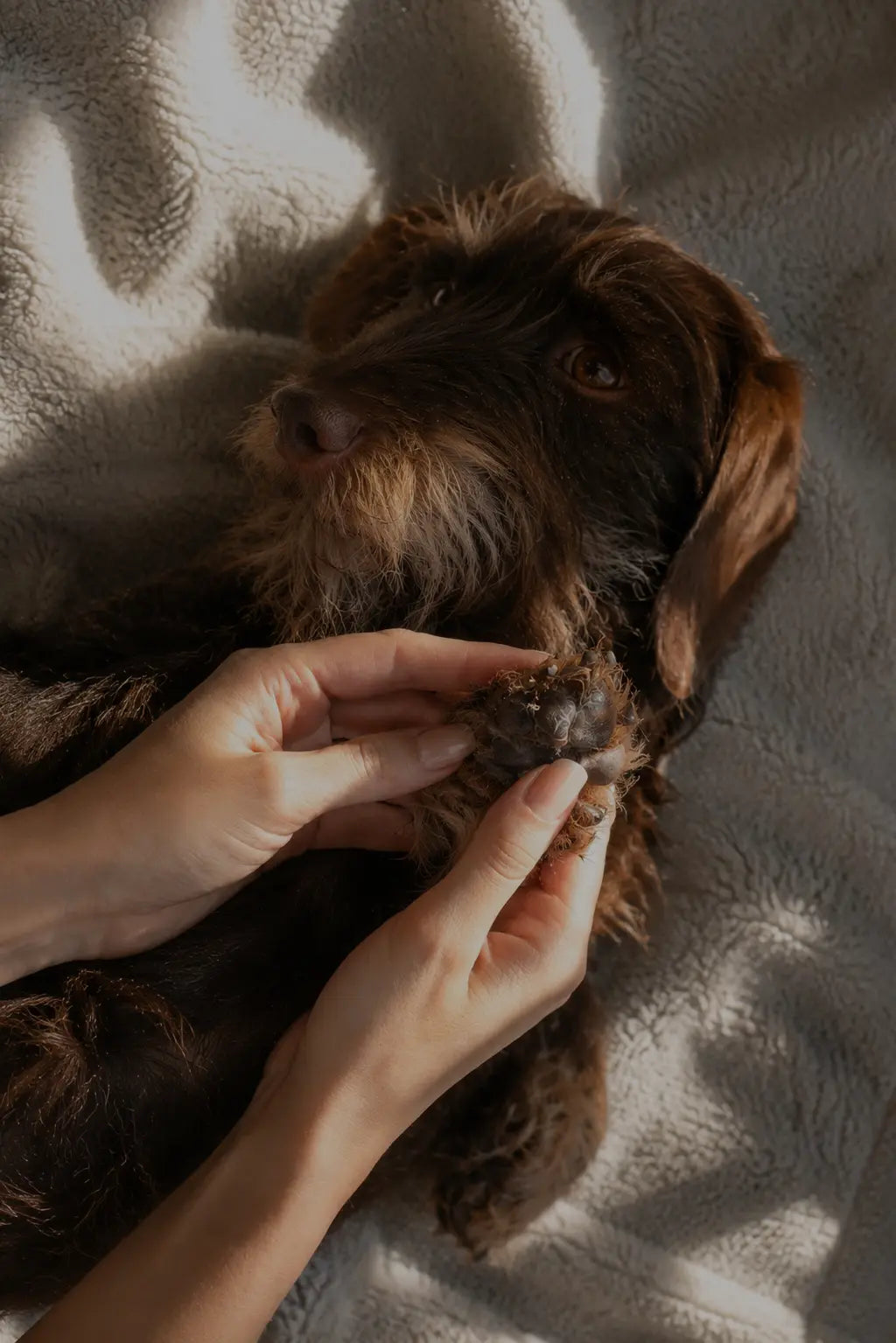
For dry or rough paws and noses, Barrier Balm helps hydrate those areas. The Gentle Start Bundle brings together care options for a more considered grooming routine. These products support coat and skin care around bath time, while a safe drying space and patient handling help manage the splashes.
If you’d like help choosing a gentle grooming routine for your dog, contact Essencera.
Make the next bath feel easier
Make the next bath a chance to build a calmer routine, not a battle against every splash. A designated drying spot and absorbent towels help manage where your dog shakes. To keep your dog from shaking water everywhere, focus on a routine they can learn and repeat comfortably.
Choose care products for the parts of the routine they support. Pure Wash shampoo cleans the coat, while Essencera’s anti-tangle premium conditioner helps make brushing easier during finishing. For rough or dry paws and noses, Barrier Balm helps hydrate those areas. None of these products replaces safe drying or prevents a dog’s natural shake, but each can fit into thoughtful coat and skin care.
Every dog’s coat and comfort are different, so keep the routine gentle and adjust as needed. Contact Essencera for help choosing care that suits your companion, and make the next bath a little more manageable.
Frequently Asked Questions
Can shaking dry a dog completely?
No. Shaking flings loose droplets away, but it doesn’t evaporate moisture or remove every drop held between hairs. Think of it as the coat’s first water-removal step, not a complete drying method. Even a dog that shakes vigorously may leave wet marks on furniture, because moisture remains in the coat and transfers when fur touches fabric.
Is Shaking Only for Wetness?
No. Dogs can shake when their coat is dry, too. Notice when it happens: a dog may shake after you remove a harness or finish handling its paws, for example. The timing can help you understand the situation better than the movement alone. A whole-body shake differs from repeated head shaking, which deserves closer attention.
Should I stop my dog from shaking indoors?
Don’t scold or startle your dog for a normal shake. A sudden reaction can make an already busy bath routine more unsettling. If your dog is about to shake beside a hot appliance or fragile object, calmly guide them away first. Once the area is safe, let them settle and continue drying at their pace.
Why do dogs shake water off after swimming or bathing?
Water changes how a coat feels, and shaking is a quick way for dogs to respond to that sensation. After swimming, a dog may shake as soon as it reaches the shore; after a bath, it may wait until released from the tub. The timing varies, but shaking is a normal response to a wet coat.
How can I reduce the amount of water a dog shakes off indoors?
Before your dog leaves the bathing area, gently press excess water from the coat with your hands, working down the back and sides. Don’t twist or pull the fur. For a long-coated dog, work in sections. This removes some surface water before the shake, so fewer droplets reach the next room.
What are the best ways to dry a dog after a bath or swim?
Pair gentle blotting with a quick coat check before your dog settles. After a swim, look through the coat for leaves, sand, or small twigs, then remove debris gently rather than brushing through it. After a bath, check around the collar and skin folds. Choose a method your dog tolerates, and pause if handling becomes stressful.