Dog Coat Conditioner: How to Choose and Use the Right Formula
What if a dog coat conditioner could make brushing easier without magically undoing a severe mat? If you’re unsure whether conditioner will suit your dog’s coat, or worry it might leave residue or weigh the hair down, you’re not alone. A good formula can add slip and softness, but it isn’t a shortcut through tightly tangled or matted fur.
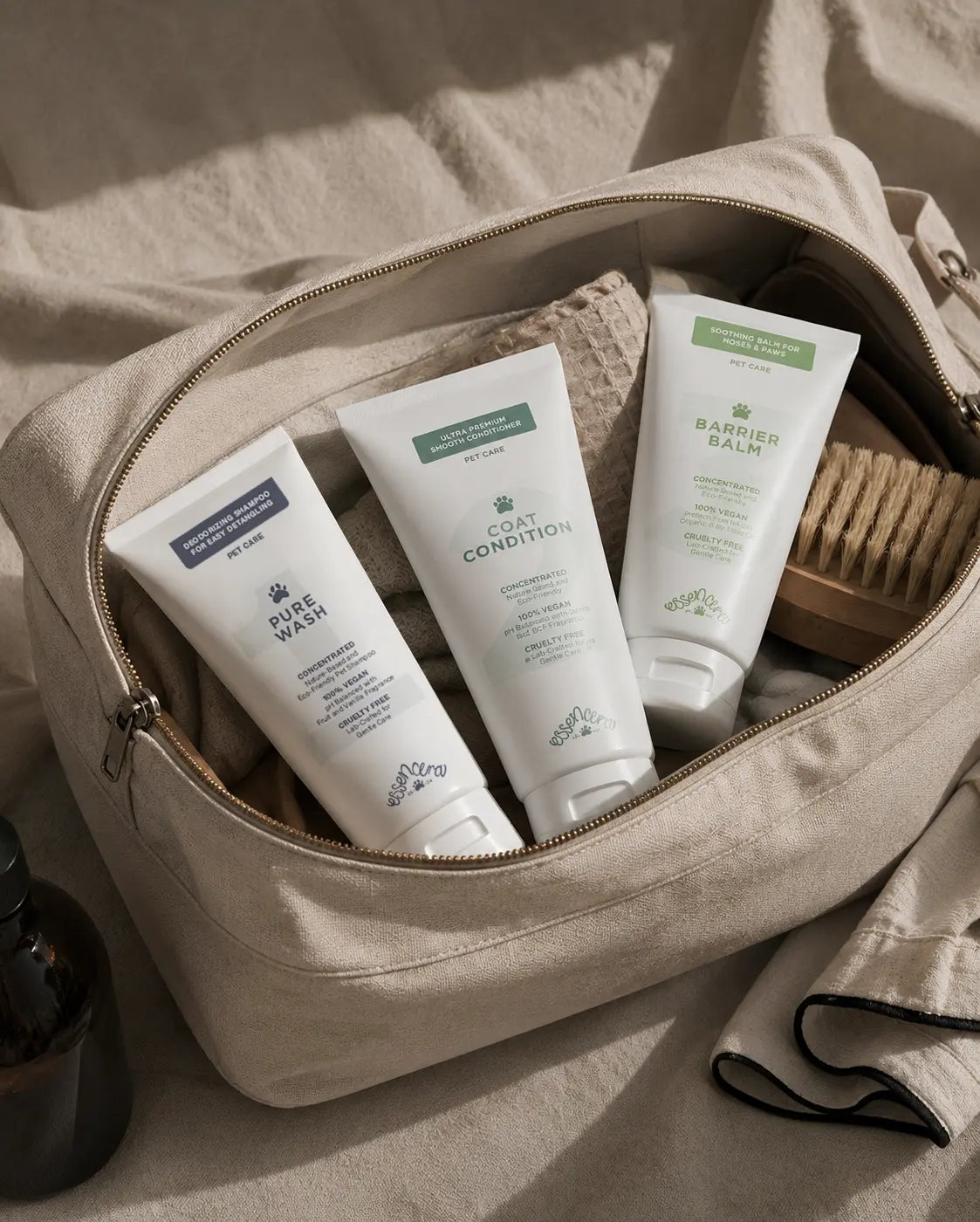
Choosing the right dog coat conditioner starts with your dog’s coat and grooming routine. The cream should be easy to work through, offer enough conditioning for the coat’s needs, and rinse clean when used as directed. Essencera’s Coat Condition, the anti-tangle premium conditioner, is designed to support easier brush-out during drying and finishing, with ingredients including aloe, panthenol, and amino acids.
In this guide, you’ll learn what conditioner can and can’t do, how to choose a formula for your dog’s coat, and how to apply and rinse it for a soft, manageable finish. You’ll also learn when a tangle needs more than conditioner, so you can keep grooming gentle and set realistic expectations.
Key Takeaways
- A dog coat conditioner supports softness, hydration, and manageability after cleansing. It complements shampoo rather than replacing it.
- Choose a formula based on your dog’s coat needs, texture, ingredients, and how easily it rinses clean. Labels like “natural” or “premium” are only a starting point.
- Smoothing the hair can reduce friction during brushing, while ingredients such as amino acids and humectants help support coat care.
- For a simple routine, cleanse with Pure Wash, squeeze excess water from the coat, apply conditioner, leave it on for 1-3 minutes, rinse thoroughly, then brush.
- Coat Condition, Essencera’s anti-tangle premium conditioner, is made for post-shampoo care and easier brushing during drying and finishing, not for fixing severe mats.
What Does a Dog Coat Conditioner Do for Your Dog’s Coat?
A dog coat conditioner is a post-wash care step that supports coat smoothness, hydration, and manageability. It can help hair feel softer and make brushing easier, especially when a coat tends to tangle or feels dry. The right choice depends on your dog’s coat, not just the label on the bottle.
Conditioner isn’t a cure for every coat concern, and it won’t make all dogs’ grooming routines identical. Think of it as support for the hair after cleansing, with the amount and type of conditioning guided by coat length, texture, and condition.
How is dog conditioner different from dog shampoo?
Dog shampoo cleans by loosening dirt and buildup so they can be rinsed away. Conditioner has a different role: used after washing, it helps smooth and soften the coat, so strands can move more easily against one another during brushing. It’s a separate coat-care step, not a substitute for cleansing.
For a simple comparison, cleansing is like rinsing dirt from a sweater; conditioning helps the fibers feel smoother afterward. Essencera’s Coat Condition, the anti-tangle premium conditioner, is a cream made to work through tangles and support easier brush-out during drying and finishing. It includes aloe, panthenol, and amino acids. Like any conditioner, it has limits: it isn’t a magic fix for severe mats.
Which dogs may benefit from coat conditioning?
A conditioner may be useful when brushing regularly catches on tangles, the coat feels dry or brittle, or you want a smoother finish after washing. Long or flowing coats can be more prone to knots, while a short coat may need less help with detangling. Double coats have their own grooming needs, so consider how the topcoat and undercoat behave rather than choosing by length alone.
Texture matters, too. Fine, fluffy hair may tangle differently from a coarse or dense coat. Pay attention to what you notice during ordinary brushing: does the comb glide, or does it snag in the same areas? That can help you decide whether conditioning belongs in your routine. For broader background on grooming needs and coat types, see this comprehensive guide to dog grooming.
Conditioner is a grooming choice, not a treatment for a diagnosed skin condition. If your dog has a skin diagnosis or ongoing irritation, follow the care guidance you’ve received rather than relying on a coat product to address it. For everyday coat care, match conditioning to the coat’s needs and check how it feels after rinsing and brushing.
How Dog Coat Conditioner Supports Detangling, Hydration, and Coat Care
A dog coat conditioner can help make brushing more comfortable by smoothing the hair’s surface. When strands slide past each other more easily, a brush or comb may meet less friction, which can support an easier brush-out during drying and finishing. It won’t make every knot disappear, but it can help with routine coat care.
Coat conditioning is post-wash care that supports softness and manageability, not a treatment for removing severe mats. That distinction matters: conditioner is intended to improve the feel and handling of the coat, while tight mats may need careful, separate attention.
What do amino acids and panthenol contribute to coat care?
Hair is made largely of keratin, a protein. Amino acids are the building blocks of proteins, and they’re included in conditioning formulas to support the feel and condition of the coat. Humectants, such as glycerin and propylene glycol, attract and hold moisture. In practical terms, these ingredients help a formula condition the hair without relying only on a surface coating.
Panthenol is another conditioning ingredient in Essencera’s anti-tangle premium conditioner. Along with aloe and amino acids, it’s part of an ingredient-led approach to coat care. The cream is designed to support smoother brushing and a soft finish when used as directed. These are cosmetic grooming benefits, not medical effects or a promise to treat skin concerns.
A dog’s coat can also offer clues about their general wellbeing. VCA Animal Hospitals explains that coat and skin appearance can reflect different factors, including health and nutrition, making them good indicators of their health. Conditioner can support the grooming routine, but it can’t address an underlying health cause.
Can conditioner remove knots or severe mats?
It may help with loose tangles and routine brushing, but conditioner isn’t a reliable way to loosen or remove severe matting. A tight mat can sit close to the skin, and pulling at it can cause discomfort. Don’t tug through resistance or expect a bath-time product to undo compacted fur.
Instead, handle tangles gently and stop if brushing seems painful or the mat won’t release easily. Difficult mats may need appropriate grooming help. Used on a coat that can be brushed safely, conditioning can make the finishing process more manageable. It’s useful support, not magic.
How to Compare Dog Coat Conditioners Without Falling for Vague Claims
A useful comparison starts with your dog’s coat, then checks how a formula is meant to be applied and rinsed. Words like “natural” or “premium” don’t tell you whether the texture suits your routine or what the finished coat should feel like. Read the ingredient list and directions, and look for practical details you can assess after grooming.
| What to compare | What to look for | Realistic expectation |
|---|---|---|
| Coat need | Consider length, texture, dryness, and where tangles tend to form. | Conditioning may support a smoother brush-out, but won’t resolve severe mats. |
| Formula texture | Creams, sprays, and other formats can differ in how they’re applied and distributed. | Choose a format that fits your coat and grooming routine. No one format suits every dog. |
| Ingredients | Check the full list for conditioning ingredients, such as amino acids, panthenol, or humectants. | Ingredient names describe the formula, not a guaranteed result for every coat. |
| Rinsing | Follow the product’s rinse directions and note how the coat feels afterward. | A well-rinsed coat should feel soft, not oily or coated. |
| Expected results | Look for clear, practical claims about brushing, softness, or manageability. | Expect grooming support, not instant mat removal or treatment for a skin condition. |
Which formula details matter for your dog’s coat?
Coat length and texture can help narrow your options. A long coat that catches combs may benefit from a formula designed to add slip during brushing. A short coat may need less detangling support, while a dense double coat can require careful distribution and thorough rinsing. Think about how a product fits your routine rather than assuming a particular breed always needs the same formula.
Texture is practical, too. A cream can be worked through sections of the coat, while a spray may be convenient for targeted application. Essencera’s anti-tangle premium conditioner is a cream with aloe, panthenol, and amino acids, designed to support brush-out during drying and finishing.
How can you assess residue and ingredient claims?
“Natural” and “premium” are broad descriptors. They don’t replace reading the ingredients, understanding the directions, or checking whether the product is made for your intended use. Avoid assuming an ingredient is automatically suitable or unsuitable based on a label alone.
Rinsing matters. If the coat feels slippery or greasy after conditioning, rinse it more thoroughly and reassess the feel once it dries. A clean finish should feel soft, not weighed down by residue. If the coat remains uncomfortable or you notice irritation, stop using the product and seek appropriate advice for your dog’s needs.
How to Apply Dog Coat Conditioner for Easier Brushing
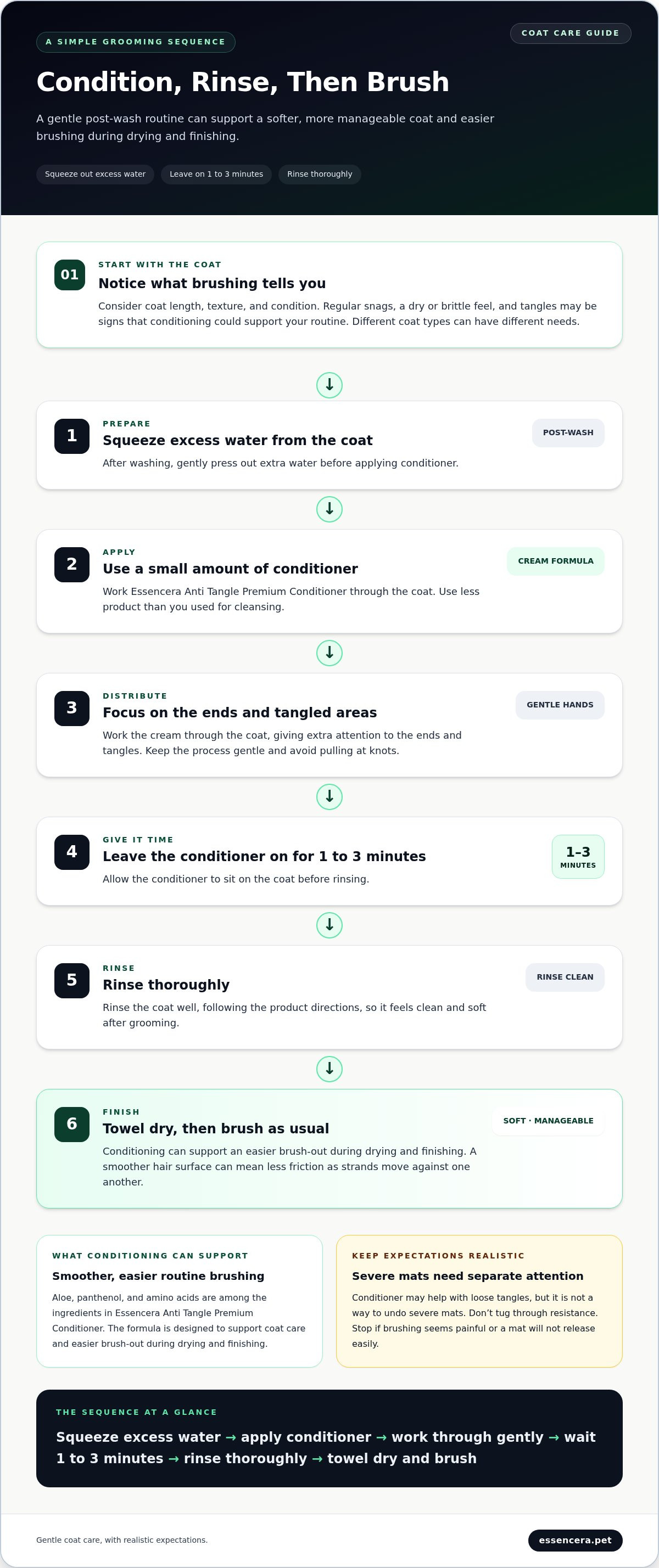
Order matters: cleanse first, condition second, then rinse before brushing. Using a gentle cleansing wash is one example of the first step. For broader bathing guidance, follow your chosen wash’s directions as well as the conditioner’s instructions.
What is the right order for shampoo and conditioner?
Start by washing the coat, then rinse it thoroughly. Gently squeeze out excess water so the coat is damp rather than dripping. This helps keep conditioner from being diluted straight away and makes it easier to work through the hair.
- Cleanse: Wash the coat with a dog-formulated cleanser, following its directions.
- Remove excess water: Squeeze gently with your hands or a towel. Avoid rough rubbing, which can encourage tangles.
- Apply conditioner: Use less than the amount of cleanser, and distribute it through the coat. Pay attention to the ends and areas where loose tangles tend to form.
- Wait: For Essencera’s Coat Condition, the anti-tangle premium conditioner, leave it on for 1-3 minutes.
- Rinse: Rinse thoroughly, moving through the coat with your fingers so no product is left behind.
- Dry and brush: Towel dry, then brush gently during drying and finishing.
How do you rinse and brush without weighing down the coat?
Take time with the rinse. The intended finish is soft and smooth, not oily, slippery, or coated. If the hair feels greasy after rinsing, rinse again and check the feel once more. Conditioner should support manageable brushing, not leave residue behind.
Brush in small sections while the coat dries, using gentle strokes and pausing if your dog seems uncomfortable. Conditioning support is most useful during this finishing stage, when a smoother-feeling coat can be easier to work through. Don’t force a comb through resistance. If you find a tight mat or brushing causes discomfort, stop and reassess rather than pulling at the coat. Conditioner isn’t a fix for severe mats.
For a post-wash cream designed to support brush-out during drying and finishing, explore Essencera’s anti-tangle premium conditioner.
Make Coat Condition Part of a Gentle, Effective Grooming Routine
The right dog coat conditioner should fit your dog’s coat and your grooming routine. Look for a formula that’s easy to apply, follow its directions, and pay attention to how the coat feels after rinsing. A soft, smooth finish without a greasy feel is a useful sign that you’ve rinsed thoroughly.
Coat Condition, Essencera’s anti-tangle premium conditioner, is a cream designed as a post-shampoo grooming step. Its formula includes amino acids, panthenol, and aloe. These ingredients support coat conditioning, while the cream format can be worked through the coat before rinsing. The goal is practical: help make brush-out easier during drying and finishing, not promise an instant fix for tight mats.
Where does Coat Condition fit in a grooming routine?
Use conditioner after washing and rinsing the coat. Gently squeeze out excess water, then work the conditioner through the damp hair, focusing on the ends and areas that tend to tangle. Follow the product directions for how long to leave it on and how thoroughly to rinse. For example, Pure Wash can be part of the cleansing step before conditioning.
At home or during a finishing routine, this order keeps each step clear: wash, condition, rinse, then dry and brush. Conditioner supports brush-out as you finish the coat. It isn’t designed to remove severe mats in the bath, so don’t pull through knots that resist gentle brushing.
What should owners expect after rinsing?
After a thorough rinse, the coat should feel soft and smooth rather than oily or coated. If it still feels greasy or unusually slippery, rinse again. Once the coat is towel-dried, brush gently in manageable sections and notice how easily your tools move through it. Pause if your dog seems uncomfortable or you find a tight mat.
Keep expectations kind and realistic. Coat Condition can support manageable grooming, but a difficult mat needs more than conditioner alone. For a cream made for post-shampoo coat care, explore Coat Condition, Essencera’s anti-tangle premium conditioner, and see whether it suits your dog’s routine.
Give Your Dog’s Coat a Gentler Finish
The right dog coat conditioner should suit your dog’s coat and make routine brushing more manageable. Apply it after washing, follow the directions, and rinse thoroughly for a soft, smooth finish. Conditioning can support brush-out during drying and finishing, but severe mats need more than a bath-time formula.
Essencera’s Coat Condition, the anti-tangle premium conditioner, is a cream formulated with amino acids, panthenol, and aloe. It’s described as vegan and cruelty-free, and it’s designed to support detangling during finishing, not remove severe mats.
Explore Coat Condition for an easier brush-out and make your next grooming routine a little smoother. Small, thoughtful steps can make coat care feel more comfortable for both of you.
Frequently Asked Questions
Is dog coat conditioner necessary after every bath?
Not every dog needs the same conditioning routine after a bath. A dog coat conditioner can be a useful post-shampoo step if your dog’s coat tangles, feels dry, or is harder to brush when clean. Coat length and texture matter, as do your usual grooming needs. Notice how the coat feels and handles after washing, then follow the conditioner’s directions rather than assuming every dog needs identical care.
Can dog conditioner detangle matted fur?
Conditioner can support easier brushing during drying and finishing, but it won’t remove severe mats in the bath. A loose tangle may be easier to work through when the coat is conditioned, but tight mats can pull uncomfortably on the skin. Use a gentle touch, and stop if your dog seems uncomfortable or the knot resists. For difficult mats, seek appropriate grooming support rather than pulling or relying on conditioner alone.
How do you use conditioner on a dog’s coat?
First wash and rinse the coat, using a dog shampoo such as Pure Wash according to its directions. Gently squeeze out excess water, then work conditioner through the damp coat, focusing on the ends and tangly areas. For Coat Condition, Essencera’s anti-tangle premium conditioner, leave it on for 1-3 minutes. Rinse thoroughly, towel dry, then brush as usual with gentle strokes.
Can dog coat conditioner make a dog’s coat greasy?
It can feel greasy or coated if conditioner hasn’t been rinsed away thoroughly. Coat Condition, Essencera’s anti-tangle premium conditioner, is designed to rinse clean when used as directed. After rinsing, the coat should feel soft, not oily or overly slippery. If it still feels greasy, rinse again rather than adding more product. Use the amount and application directions on the product, and check the coat’s feel once it’s dry.
What ingredients should I look for in a dog coat conditioner?
Look for ingredients that explain how the formula conditions the coat. Conditioning agents add slip, humectants such as glycerin help attract and hold moisture, and amino acids are protein building blocks used in coat care. Essencera’s anti-tangle premium conditioner, Coat Condition, includes amino acids, panthenol, and aloe. These examples can help you read a label, but no ingredient guarantees the same result for every dog or replaces checking the product’s directions.
Can I use human conditioner on my dog?
It’s best not to assume a conditioner made for people is suitable for your dog. Human products are formulated for people, and their ingredients and directions may not be intended for pet grooming. Choose a product made for use on pets, read its ingredient list, and follow the label directions. If your dog has a diagnosed skin condition or reacts to a grooming product, follow the care guidance you’ve received for your pet.
How often should I condition my dog’s coat?
Conditioning frequency depends on how often your dog is bathed, the coat type, and its grooming needs. Coat Condition, Essencera’s anti-tangle premium conditioner, is intended for use after shampooing. For example, if you use Pure Wash, follow the directions for both products. Rather than applying a universal schedule, observe how your dog’s coat feels and brushes out, and use conditioner as directed in your routine.