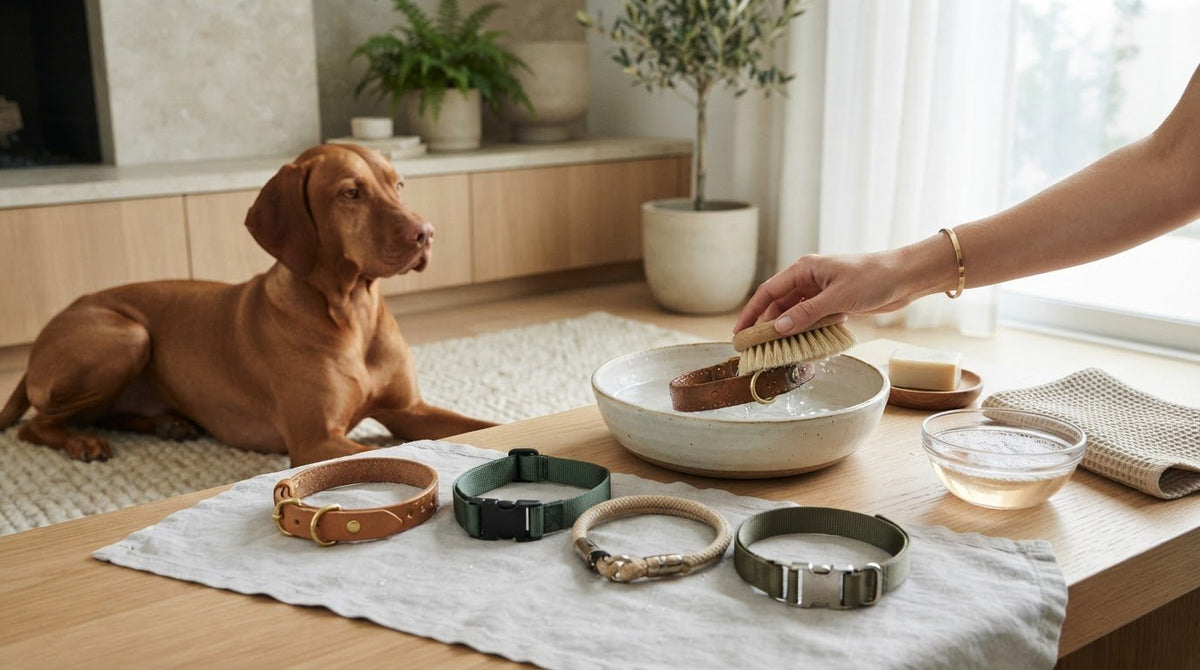
How to Clean a Dog’s Collar: A Gentle, Material-by-Material Guide
What if a gentler clean, not a stronger cleaner, is the key to a fresher dog collar? Figuring out how to clean a dog's collar can feel tricky when you’re worried about fading fabric, drying out leather, damaging hardware, or leaving behind odor and soap residue. The safest starting point is to identify the collar material, check its care instructions, and choose a cleaning method that suits it.
This guide covers nylon and fabric, leather, rope, and waterproof or coated webbing, with practical steps for cleaning buckles and other hardware. You’ll also learn how to rinse where appropriate, dry the collar fully before putting it back on, and spot wear that cleaning can’t fix. With material-aware care, keeping a collar clean can be a simple part of looking after your dog.
Key Takeaways
- To learn how to clean a dog's collar safely, first identify its material and follow the maker’s care instructions.
- Use lukewarm water and a little mild soap on washable materials, then rinse thoroughly to help prevent residue.
- Adjust your approach for nylon, leather, rope, and waterproof-coated collars to avoid unnecessary wear or damage.
- If dirt or odor lingers, check seams and woven areas, then try another gentle clean before reaching for stronger products.
- Air-dry the collar fully away from direct heat, then check its condition before putting it back on your dog.
How to clean a dog’s collar starts with checking its material
A little preparation can help you clean a collar without fading fabric, drying out leather, or putting extra stress on a worn clasp. Remove the collar from your dog and check for a care label or the maker’s instructions. If you’re unsure what kind of collar you have, look closely before adding water. A dog collar can serve practical purposes such as identification and restraint, so its fit and condition matter as much as its appearance.
The collar’s material determines the gentlest cleaning method, so identify it before choosing how to wash it. Nylon and polyester are common fabric choices, but that doesn’t mean every fabric collar can go in a washing machine. Leather, woven rope, and waterproof-coated webbing have different surfaces and may respond differently to soaking, scrubbing, or cleaning products. Treat the guidance below as general advice, and follow the maker’s care directions if they differ.
Identify the collar material before adding water
Check the label first, then feel the collar and look at its finish. Woven nylon or polyester usually has a flexible, textile surface. Leather has a distinct finish, while rope collars have a braided or twisted construction. Waterproof styles often have a smooth, coated outer layer. Don’t assume a collar is machine-washable just because it’s fabric. Its stitching, lining, and attached parts may need gentler care.
If the material isn’t clear, avoid soaking the collar until you can identify its construction. Starting cautiously can prevent damage that may not be obvious until the collar dries.
Remove tags and inspect the hardware
Detach ID tags and other removable accessories if the collar’s design allows—this is also a good opportunity to check that contact details are still legible, and if not, sites like petidtags.com.au offer personalised replacements. Then check the buckle, D-ring, clasp, stitching, and adjustment points. Look for rust, cracks, bent parts, loose seams, or frayed edges. These can weaken the collar or affect how securely it fastens, and cleaning won’t repair structural wear.
- Rust or cracked hardware: Consider replacing the collar if a fastening or ring looks compromised.
- Fraying or loose stitching: Check whether the collar still feels secure when gently handled.
- Worn or damaged parts: Set the collar aside if you’re unsure it can safely stay on your dog.
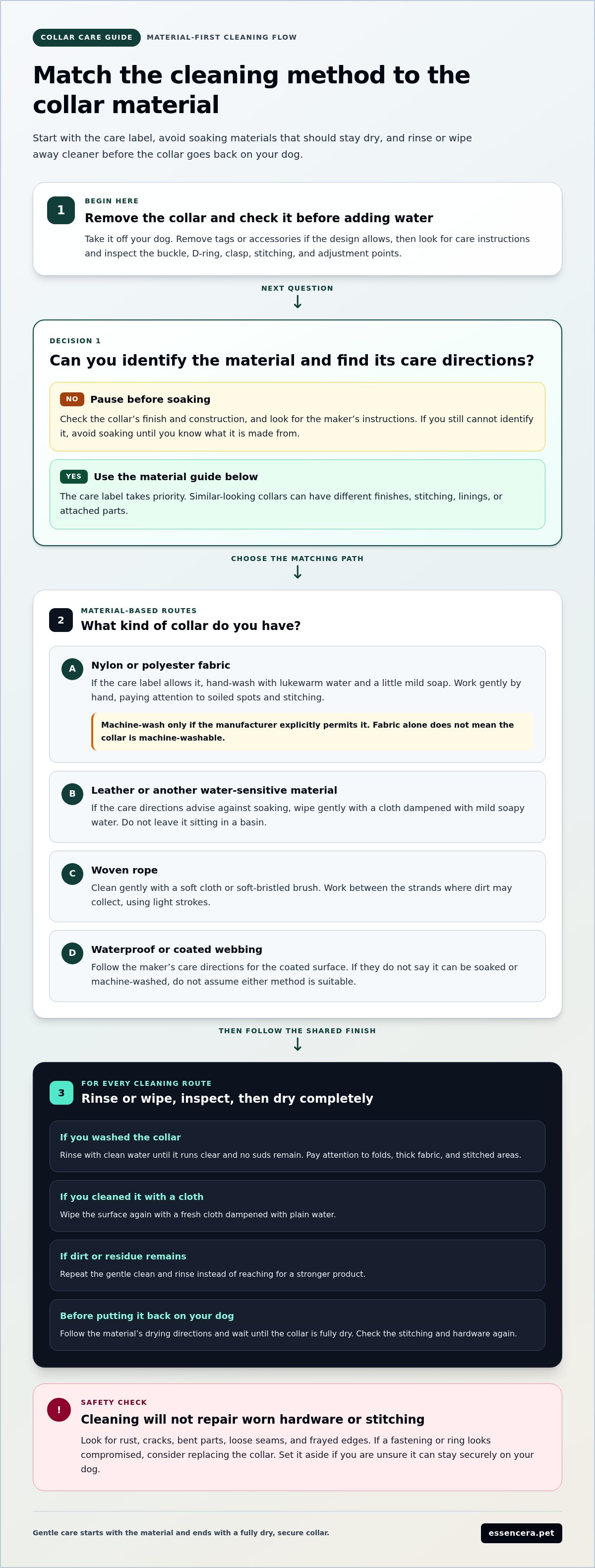
Once you’ve identified the material and checked the hardware, choose a cleaning approach that suits the collar instead of risking a one-method-fits-all wash.
How to clean a dog’s collar step by step
A careful wash can lift everyday dirt without roughing up the material. For washable collars, use lukewarm water and a small amount of mild soap. Keep the collar off your dog throughout cleaning, and follow its care instructions if they call for a different approach. This sequence helps make how to clean a dog's collar easier while reducing the risk of damage or leftover cleaner.
- 1. Prepare the collar. Remove tags or accessories if the design allows. Brush or shake off loose dirt, then set out a basin of lukewarm water, mild soap, and a soft cloth or soft-bristled brush. Don’t use bleach, harsh chemicals, or unverified household mixtures.
- 2. Clean gently. For washable fabric, dip the collar in soapy water and work it through with your hands. Pay extra attention to visibly soiled spots, stitching, and areas around the buckle. Use a soft cloth or brush to loosen dirt with light strokes. Aggressive scrubbing can wear fibers or stitching.
- 3. Adjust for materials that shouldn’t be submerged. If the care directions advise against soaking, use a cloth dampened with mild soapy water instead. Wipe gently, taking care around seams and hardware. Don’t leave leather or other water-sensitive materials sitting in a basin.
- 4. Rinse away the cleaner. Rinse washable collars with clean water, working it through the material until the water runs clear and no suds remain. For collars cleaned with a cloth, wipe the surface again with a fresh cloth dampened with plain water.
- 5. Inspect and set aside to dry. Check for remaining dirt, soapiness, or changes to the stitching and hardware. If residue or grime remains, repeat the gentle cleaning and rinsing rather than reaching for a stronger product. Follow the collar’s care directions for drying, and don’t put it back on while damp.
Rinse until no suds or cleaner remain
Thorough rinsing helps keep cleaner residue from lingering on the collar and contacting your dog’s skin. Take extra care with thick fabric, folds, and stitched areas where suds can collect. Keep cleaning products away from your dog’s eyes and mouth, and rinse your hands after handling soapy water.
Once the collar feels clean and free of suds, let it dry according to its material-specific care directions before refitting it. A little patience helps make the clean feel complete, not just look that way.
How to clean nylon, leather, rope, and waterproof dog collars
There isn’t one cleaning method that suits every collar. A woven fabric collar may tolerate gentle hand-washing, while leather and some coated styles are better cleaned with a damp cloth. Use this material-by-material guide as general advice. The maker’s care label takes priority because construction, finishes, and hardware can vary.
If you’re deciding how to clean a dog's collar, match the method to its surface rather than assuming it can be soaked or machine-washed. Even collars made from similar materials may have different care instructions.
| Material | General cleaning approach | Key caution |
|---|---|---|
| Nylon or polyester fabric | Hand-wash with lukewarm water and a little mild soap if the care label allows it. | Machine-wash only if the manufacturer explicitly permits it. |
| Woven rope | Gently clean the surface and work between strands with a soft cloth or brush. | Dirt and soap can stay between the fibers, so rinse carefully if washing is allowed. |
| Leather | Wipe with a lightly damp cloth. | Don’t soak it or leave it wet for a prolonged period. |
| Waterproof-coated webbing | Wipe the coated surface with a damp cloth; use mild soap only if care directions allow. | A coating doesn’t mean the entire collar should be immersed. |
Clean fabric and rope collars with care
For washable nylon or polyester, check the label, then hand-wash gently in lukewarm water with a small amount of mild soap. Focus on dirty spots instead of scrubbing the whole collar hard. Use a washing machine only when the maker specifically says it’s suitable.
Rope’s woven strands can hold grit and suds. If the care instructions allow washing, work gently along the braid and rinse thoroughly so cleaner doesn’t remain trapped in the weave. Avoid pulling or twisting the rope roughly.
Wipe leather and waterproof-coated collars
For leather, use a lightly damp cloth and avoid soaking or prolonged exposure to water. If the maker recommends a leather-care product, use one intended for leather and follow its directions. An unapproved cleaner may affect the finish.
Waterproof-coated collars often need surface cleaning rather than immersion. Wipe away dirt with a damp cloth, then use mild soap only if the collar’s care directions permit it. With every material, gentle, appropriate cleaning is safer than assuming a collar can handle a deeper wash.
How to remove collar odor and dirt without leaving residue
A little outdoor dirt after a walk is different from an odor that remains after cleaning. Mud, dust, and visible marks often respond to a gentle clean. A lingering smell may mean debris is caught in the weave, the collar hasn’t dried fully, or the material is worn. For general pet odor and stain guidance, look for advice specific to the source and surface rather than assuming a collar needs a stronger treatment.
Treat dirt and odor with a gentle second pass
Check the collar again once it’s clean and dry. If you can still see dirt, pay attention to seams, folds, and the areas that rest against your dog’s neck. Use a soft cloth or brush and the gentle cleaning method allowed for that material. On a woven collar, look between the strands, where grit can hide.
Know when not to use a stronger cleaner
Resist the urge to reach for bleach, harsh chemicals, or a household mixture that hasn’t been verified as suitable for the collar material. Don’t mix cleaning products. A stronger solution can affect the material or hardware, while extra cleaner can leave residue instead of solving the problem. Collar cleaning is separate from bathing your dog, so don’t use dog shampoo as a collar cleaner.
Stop cleaning if the collar changes color, texture, or shape. That can be a sign the method isn’t suitable for its material. Follow the manufacturer’s care directions, and rinse away any approved cleaner before letting the collar dry fully.
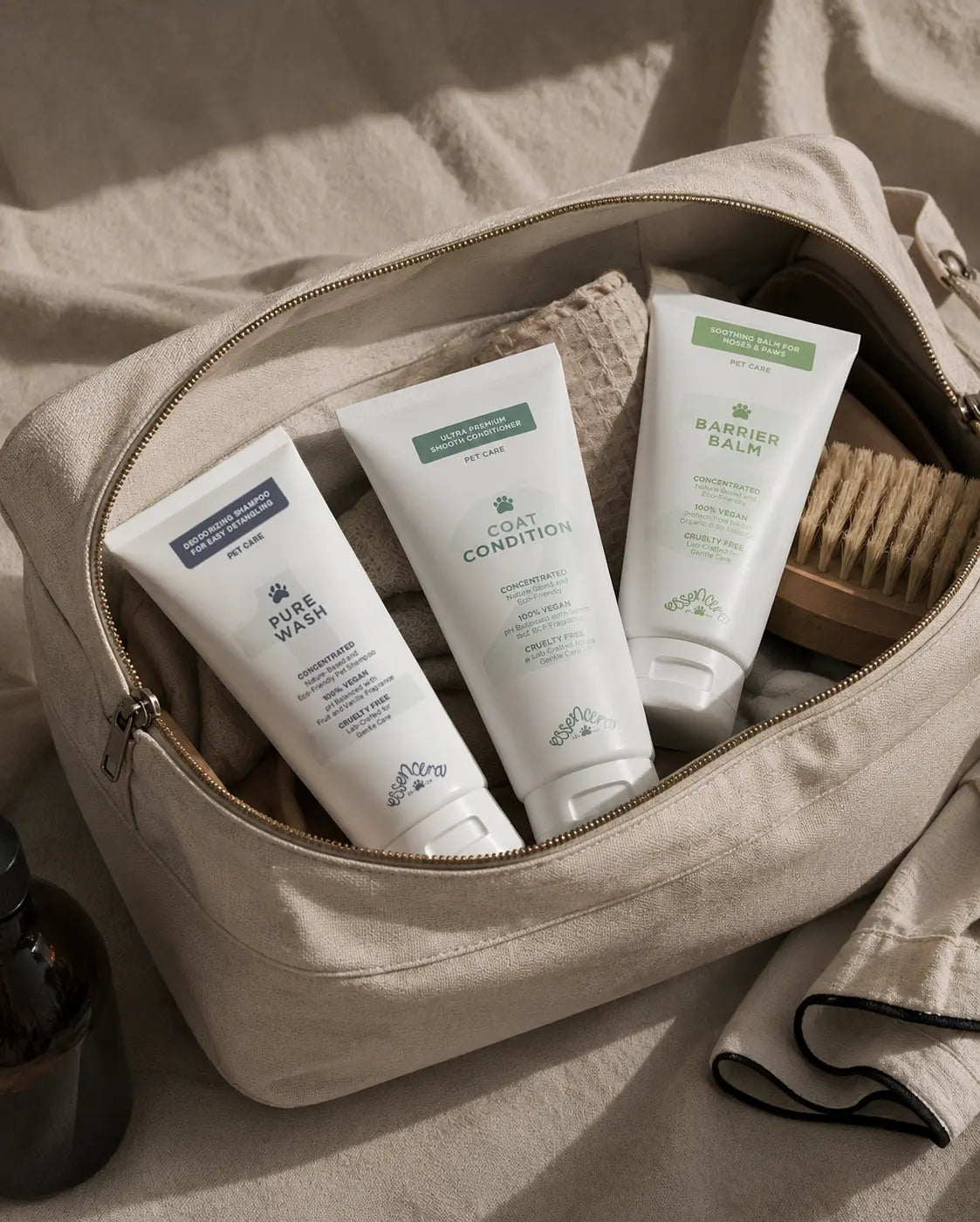
For separate coat care, explore Pure Wash for your dog’s bath routine. It’s for cleansing your dog’s coat, not for cleaning a collar.
Dry, refit, and keep your dog’s collar clean
Cleaning isn’t finished until the collar is completely dry. Putting it back on while damp can leave moisture against your dog’s neck and may encourage odor to return. Air-dry it away from direct heat, and follow the maker’s instructions for the specific material. Drying fully is an important part of how to clean a dog's collar gently and thoroughly.
Dry the collar completely before putting it back on
For washable materials, blot excess water with a clean towel, then let the collar air-dry. Don’t use a heater or other direct heat source, which may damage some materials. Leather needs particular care, so use the manufacturer’s drying instructions rather than treating it like fabric.
Before refitting, check areas where dampness can hide: seams, folds, braided strands, and around buckles or rings. Feel the collar all over, not just the outer surface. If it still feels damp, give it more time to dry.
Then check for suds, slickness, or visible dirt. Look over the stitching and hardware again for signs of wear. Fasten the collar and check that it sits comfortably, with no twisting or rough, damaged areas pressing against your dog. If the collar’s condition or fit seems unsafe, don’t put it back on.
Make collar cleaning part of gentle grooming
Build a quick collar check into your regular grooming routine. Look for visible dirt, lingering odor, dampness, fraying, and loose hardware. Clean it when it needs attention, and follow its material-specific care instructions. Checking before grime builds up can make each clean simpler.
Your dog’s collar and coat need separate care. If you’re planning a bath, Pure Wash dog shampoo is for your dog’s coat, not for cleaning the collar. Keep collar cleaning focused on the collar’s own material and care directions.
A simple routine is easy to remember: inspect, clean gently when dirt or odor appears, rinse away any cleaner, and let the collar dry fully before refitting. A few thoughtful checks help keep it fresh, comfortable, and ready for your next walk.
Keep collar care simple and gentle
Knowing how to clean a dog's collar starts with one small habit: check what it’s made of before choosing a cleaning method. Fabric, rope, leather, and coated collars can each need different care, so follow the maker’s instructions and avoid assuming a collar can be soaked or machine-washed.
For everyday dirt or lingering odor, a gentle clean and thorough rinse are better first steps than reaching for stronger products. Then let the collar dry completely away from direct heat. Before putting it back on, check for dampness, residue, loose stitching, damaged hardware, and a comfortable fit. A quick inspection during routine grooming can also help you spot buildup or wear before it becomes a bigger concern.
These little checks make collar care manageable and help keep your dog comfortable on every walk. For gentle care for your companion’s coat and skin, explore Essencera’s pet grooming products. One thoughtful routine at a time, you’re helping your dog feel fresh, comfortable, and loved.
Frequently Asked Questions
Can I put my dog’s collar in the washing machine?
Only machine-wash your dog’s collar if its care instructions say it’s safe. Some fabric collars may tolerate a gentle cycle, but leather, certain rope styles, and collars with delicate hardware may not. Remove tags if possible, and use a laundry bag only if the maker’s directions allow it. Check the collar after washing for damage or loosened stitching. If you’re unsure, gently hand-clean washable areas instead.
What is the safest way to clean a leather dog collar?
Follow the maker’s instructions and avoid soaking a leather collar. Wipe away dirt with a lightly damp cloth, then let the collar dry as directed, away from direct heat. Use a leather-care product only if the manufacturer recommends one, and follow its directions. Before putting the collar back on your dog, check the leather for changes and inspect the hardware and stitching for damage.
How do I get the smell out of my dog’s collar?
Start by checking the care label and choosing a gentle cleaning method suited to the collar’s material. Rinse washable collars thoroughly so no soap remains, then let them dry completely. If the smell persists, check for dirt trapped in seams or woven areas, lingering dampness, or worn material. Avoid masking the odor with strong fragrances or using unverified cleaners, which may affect the collar.
Can I use my dog’s bath cleanser to wash the collar?
No. Products made for bathing your pet are intended for the coat, not collar materials. For a washable fabric collar, mild soapy water may be suitable if the care instructions allow it. Leather and some coated styles may need surface cleaning instead. Pure Wash dog shampoo is for your dog’s coat, not the collar. Follow the collar maker’s directions, rinse away cleaner, and let it dry fully before reuse.
How often should I clean my dog’s collar?
There isn’t one cleaning schedule that suits every dog and collar. Inspect it regularly, then clean it when you notice dirt, odor, or residue, following the maker’s care directions. A dog who swims, plays outdoors, or gets muddy may need more frequent checks. After cleaning, let the collar dry fully and look for fraying, loose stitching, or hardware damage before putting it back on.
Can I use dish soap to clean a dog’s collar?
A small amount of mild soap may work for some washable collars, but check the material and care instructions first. Don’t use soap on materials that shouldn’t be submerged, and don’t assume every soap or collar is suitable. If washing fabric, rinse thoroughly until no suds remain. Let the collar dry completely before your dog wears it again, and stop if the material changes color, texture, or shape.