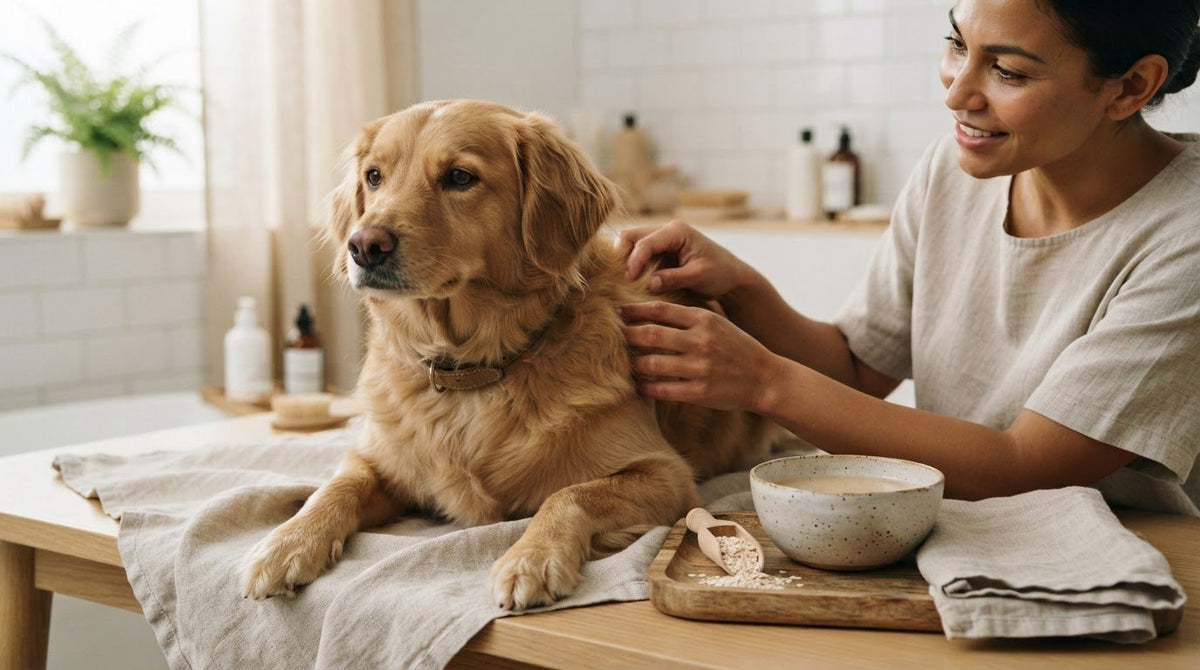
Dog Skin Soother Recipe: A Gentle DIY Guide for Itchy Skin
Could a simple rinse ease your dog’s itch without making irritated skin feel worse? A dog skin soother recipe may offer temporary comfort for mild irritation, but safe ingredients and gentle application matter.
It’s understandable to feel unsure when redness or scratching appears. Household ingredients aren’t automatically pet-safe, and a DIY remedy can’t identify or treat the cause of your dog’s discomfort. Treat a soothing rinse as a careful comfort step, not a cure.
In this guide, you’ll learn how to prepare and apply a gentle rinse cautiously, what to leave out, and which mistakes to avoid. You’ll also learn when to stop home care and contact your veterinarian.
With a little care, you can make a calmer choice for your companion and know when extra support is needed.
Key Takeaways
- A dog skin soother recipe may offer temporary comfort for mild surface irritation, but it won’t reveal or treat the underlying cause.
- Approach an oatmeal-based rinse cautiously, and don’t rely on unverified amounts or contact times.
- Keep essential oils, concentrated products, and improvised household mixtures off irritated skin.
- Check the affected area before and after use. Take a photo if it could help you describe changes to your veterinarian.
- Stop home care and contact your veterinarian if itching persists, becomes severe, or keeps returning.
What a Dog Skin Soother Recipe Can and Cannot Do
A dog skin soother recipe is an optional, temporary comfort measure for mild irritation on intact skin. It may help your dog feel more comfortable briefly, but it won’t explain why the itching started or resolve the cause. Scratching can be linked to fleas or other parasites, sensitivities, infection, or other skin problems. The range of skin disorders that can affect dogs is one reason a rinse shouldn’t replace an assessment when symptoms are concerning.
A soothing rinse may comfort the skin briefly, but only a veterinarian can assess the cause and recommend appropriate treatment. A home remedy isn’t suitable for every dog, and even a gentle ingredient can irritate some pets.
When a gentle home rinse may be reasonable
You might consider a cautious rinse if the irritation is mild, has just appeared, and the skin is intact, with no sores or other worrying signs. Consider what changed recently: a new walking route, grooming product, bedding, or time spent in a different environment may offer useful context. It can help you notice a possible trigger, but it can’t confirm the cause. If you’re unsure whether the skin is damaged or a rinse is appropriate, skip it and ask your veterinarian.
When itching needs a veterinarian instead
Contact a veterinarian if itching persists or worsens, your dog seems visibly uncomfortable, or you notice open skin, swelling, discharge, or spreading redness. Recurring episodes also deserve advice, even if the skin seems to settle between them. Don’t keep trying home remedies while waiting for the problem to pass. If the area changes, a clear photo can help you explain what you’ve noticed during a veterinary discussion.
Everyday cleansing is separate from investigating a skin problem. If you’re caring for a puppy and want to review a gentle bathing option, see Essencera’s gentle puppy shampoo. It’s a grooming product, not a diagnosis or treatment for persistent itching, redness, or infection. When symptoms raise concern, contact your veterinarian before applying anything new.
How to Make a Gentle Oatmeal-Based Dog Skin Soother
Oatmeal is often suggested for itchy skin, but a home rinse still needs to suit your dog and the condition of their skin. The materials available for this guide don’t establish a veterinarian-verified recipe, exact amounts, or a safe contact time. Rather than guess at measurements, use the steps below as a preparation framework, and check with your veterinarian before applying a homemade mixture.
Ingredients and preparation for a simple soothing rinse
Ask your veterinarian whether a plain, oatmeal-based rinse is appropriate for your dog and which form of oatmeal to use. Don’t add oils, fragrance, essential oils, or other household ingredients to “boost” the mixture. More ingredients don’t necessarily mean gentler care.
If your veterinarian approves this approach, the basic idea is to disperse the approved oatmeal in clean water until the mixture is smooth and easy to spread. Avoid a gritty or lumpy texture. Strain it through a fine mesh if needed so particles are less likely to cling to the coat. Don’t use it if you can’t make a smooth mixture, or if the skin is broken, swollen, or oozing.
A veterinarian-approved oatmeal rinse may offer temporary comfort, but it isn’t a treatment for the cause of persistent itching. The MSD Veterinary Manual’s guidance on lifelong management of atopic dermatitis is a reminder that ongoing allergic skin problems need veterinary care, not a DIY rinse alone.
Applying and rinsing the mixture carefully
Use a homemade rinse only if your veterinarian says it’s suitable. Keep it away from your dog’s eyes and mouth, and apply it gently without scrubbing. There isn’t a verified contact time to recommend here, so don’t leave the mixture on the skin based on a guess. Stay with your dog, and rinse it off if they seem uncomfortable or the skin looks more irritated.
Rinse thoroughly with clean water so no oatmeal residue remains in the coat, then pat the area dry with a soft towel. Avoid vigorous rubbing, which can add friction to sensitive skin. Stop if irritation appears or worsens, and contact your veterinarian for guidance.
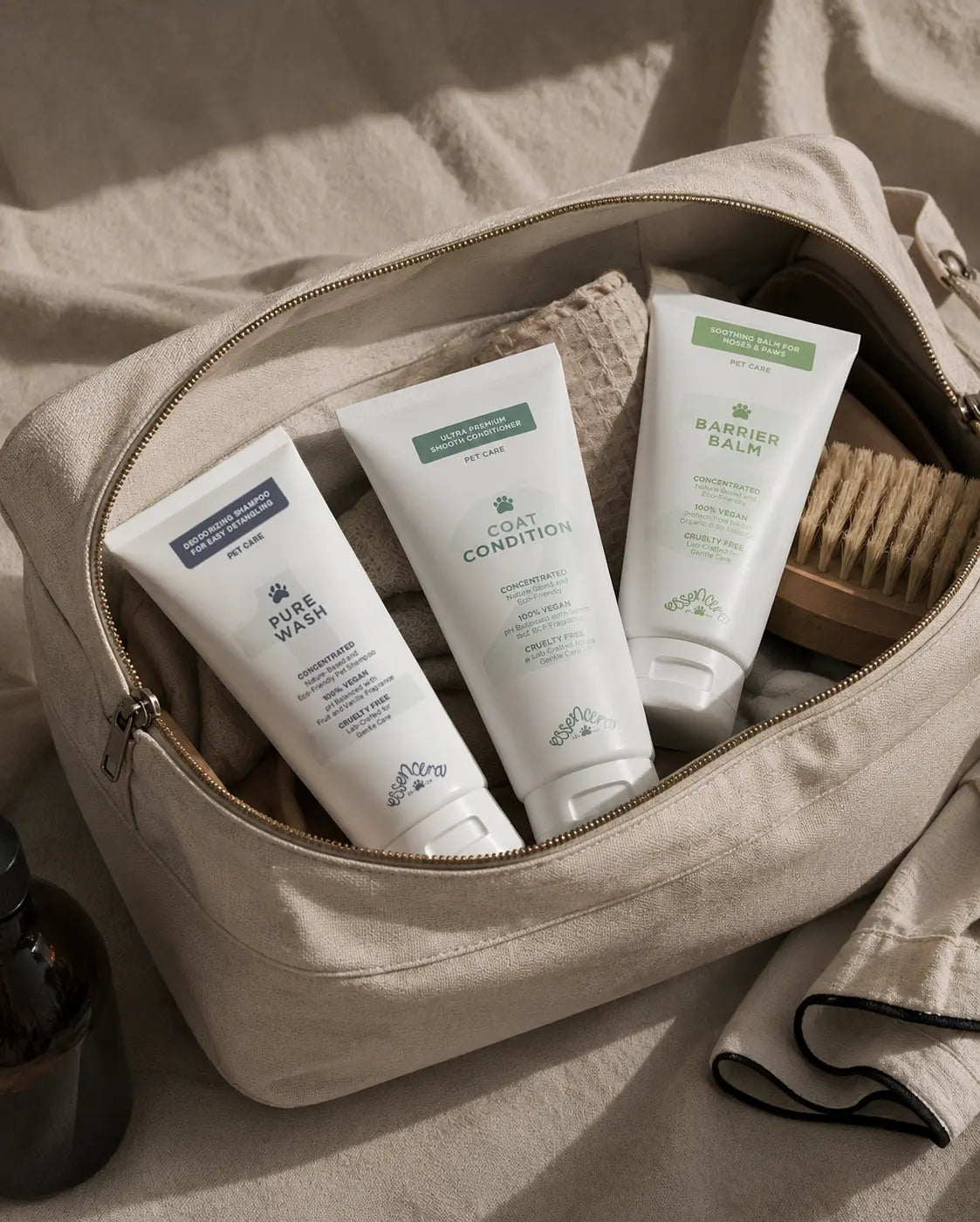
For routine cleansing rather than a DIY skin treatment, Calm Wash for sensitive skin is a grooming option. It isn’t a substitute for veterinary advice when itching persists or the skin looks unwell.
DIY Dog Skin Soother Ingredients: What to Avoid and Why
A short ingredient list doesn’t automatically make a home remedy suitable for your dog. For a dog skin soother recipe, use only ingredients and directions approved for your pet. Don’t add household products by guesswork. A substance that’s fine on healthy skin may feel different on skin that’s already irritated, scratched, or broken.
Vinegar, essential oils, and human skincare products deserve particular caution. The effect can depend on the product, its concentration, where it’s applied, and whether your dog can lick it. Don’t put vinegar on raw or open skin, where it can sting. Avoid adding essential oils or concentrated products to a DIY rinse unless your veterinarian specifically directs you to use them. “Natural” doesn’t guarantee that an ingredient is appropriate for every dog.
A simple guide to ingredient decisions
- Avoid: Essential oils, concentrated products, and improvised mixtures. Don’t apply vinegar to broken or raw skin.
- Use cautiously: Household ingredients or human skincare products. Ask your veterinarian before using them, especially if your dog could lick the area.
- Seek veterinary guidance: Any ingredient or rinse for broken, swollen, or persistently irritated skin. Use only a recipe and directions your veterinarian considers suitable.
Why popular household remedies are not automatically pet-safe
Dogs may lick treated areas, so a topical product can also be swallowed. The amount applied and the location matter too: a remedy on a paw may be easier to lick than one on the back. Human products can contain ingredients or concentrations that haven’t been chosen for your dog’s skin. Don’t assume a familiar kitchen or skincare item is harmless just because it’s common at home.
Ongoing itchiness also shouldn’t be managed by swapping between DIY ingredients. For example, atopic dermatitis is a veterinary skin condition that needs professional assessment. A homemade rinse can’t determine whether that or another issue is behind the scratching.
Patch testing and signs of a reaction
Don’t assume a small-area test makes an unverified ingredient safe. Ask your veterinarian whether testing is appropriate and follow their instructions. If you notice increased redness, swelling, or discomfort after applying anything, stop using it. Contact your veterinarian if a reaction develops, persists, or seems to worsen. Keep the product or ingredient information handy so you can describe exactly what touched your dog’s skin.
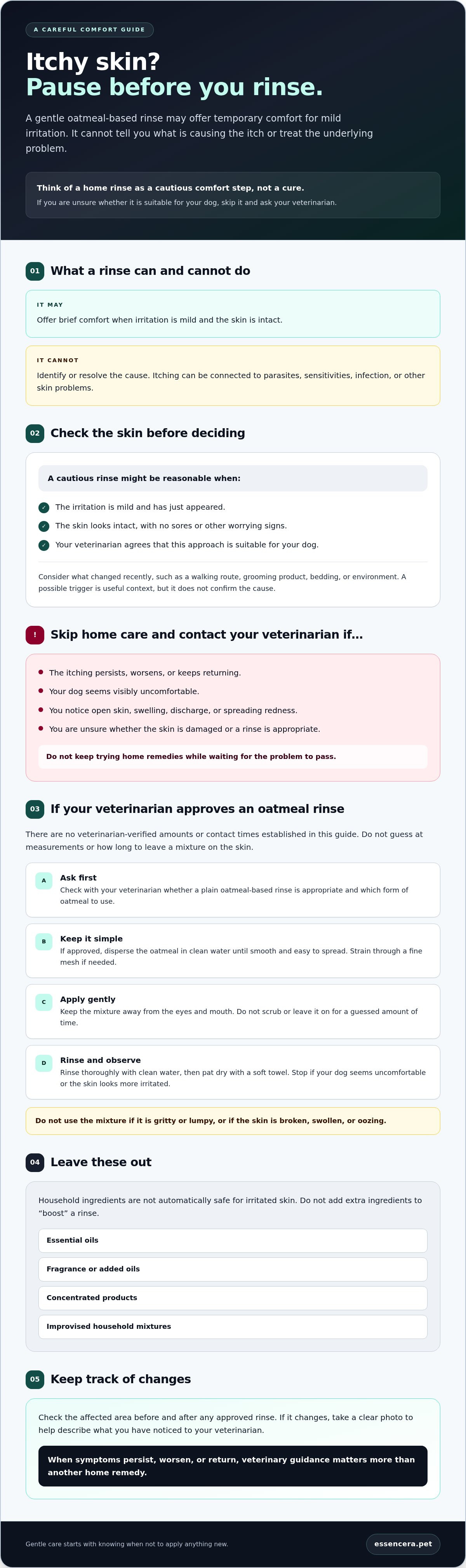
A Safe Step-by-Step Routine for Using a DIY Skin Soother
Even a simple rinse deserves a careful plan. Use a homemade mixture only if your veterinarian has confirmed that its ingredients and directions are suitable for your dog. If you don’t have verified guidance, don’t guess at amounts or how long to leave it on.
Prepare your dog and the affected area
- Check the skin first. Look for broken skin, swelling, discharge, or spreading redness. If you see these signs, or your dog seems very uncomfortable, skip the rinse and contact your veterinarian.
- Gather what you need. Set out clean water, a soft towel, and the veterinarian-approved mixture before you begin. Keep everything within reach so you don’t need to leave your dog unattended.
- Make the moment calm. Choose a quiet space and let your dog settle. Keep the mixture away from the eyes and mouth. If your dog becomes distressed, stop rather than forcing them to continue.
Apply, rinse, and monitor without overdoing it
- Apply gently. Use the mixture only on the area and in the way your veterinarian advised. Don’t scrub, massage forcefully, or leave it on longer than verified directions recommend. If there’s no confirmed contact time, ask your veterinarian instead of making one up.
- Rinse and dry. Rinse the coat thoroughly with clean water to remove residue, then pat dry with a towel. Vigorous rubbing can add friction to sensitive skin.
- Check how your dog responds. Observe the area after rinsing and keep an eye on it afterward. Stop if redness, swelling, or discomfort increases. Take a photo if it would help you track changes or explain them to your veterinarian.
Check the skin, use only verified directions, avoid the eyes and mouth, rinse thoroughly, and stop if irritation worsens.
Don’t repeat the dog skin soother recipe frequently or use it as a substitute for veterinary advice. If itching persists or returns, ask your veterinarian what’s behind it before trying another rinse.
For routine sensitive-skin cleansing, explore Calm Wash for sensitive skin. It’s a grooming option, not a treatment for an undiagnosed skin problem.
When to Stop DIY Care and Choose Gentle Grooming Support
A rinse is only a short-term comfort step, not a way to identify what’s making your dog itch. Stop home care and contact your veterinarian if symptoms persist, become severe, or keep returning. Open or irritated skin, swelling, discharge, spreading redness, a bad odor, or clear signs of discomfort also call for professional advice. Don’t delay that conversation by cycling through more homemade remedies.
Once a veterinarian has assessed the problem, routine grooming can still be part of caring for your dog’s coat and skin. It has a different purpose from diagnosis or treatment. A gentle wash may clean the coat, but it can’t resolve an allergy, infection, parasite problem, or other underlying cause. For more background on choosing a cleanser, read this sensitive-skin dog shampoo information as grooming guidance, not medical advice.
Choosing gentle cleansing for sensitive skin
A rinse and a sensitive-skin dog shampoo aren’t interchangeable. A rinse is applied to a specific area for temporary comfort, while shampoo is used to cleanse the coat and should be chosen and used according to your dog’s needs. Frequent bathing isn’t right for every dog, so ask your veterinarian how often to wash if your pet has ongoing skin concerns. Puppies may also need an age-appropriate grooming routine, especially if they’re having their first bath.
For broader help comparing cleansers and building a routine, explore our natural dog shampoo guide. It can help you think through grooming choices, but it can’t replace advice about a skin problem.
Supporting dry paws, noses, and elbows
Dry or rough paws, noses, and elbows are different from widespread itching or inflamed skin. A balm made for those areas may help hydrate them as part of routine care. Essencera’s Barrier Balm for paws and nose is intended for paws, nose, and elbows. Don’t use a balm as a remedy for widespread irritation, open areas, or a suspected medical condition. Ask your veterinarian if you’re unsure what you’re seeing.
Thoughtful care means knowing when to pause, when to cleanse gently, and when to get expert guidance. For those transitioning from DIY recipes to professionally blended options, Amberley Aromatics provides natural animal skin care products designed for gentle routine maintenance. Keep DIY comfort measures temporary, and let persistent or recurring symptoms guide your next step.
Choose a Gentle Next Step for Your Dog
A dog skin soother recipe may offer temporary comfort for mild irritation, but it can’t explain why your dog is itchy or treat an underlying condition. Use a homemade rinse only when its ingredients and directions have been confirmed as suitable for your dog. If symptoms persist, worsen, or return, pause DIY care and contact your veterinarian.
For routine cleansing, Calm Wash for sensitive skin is a grooming option, not a treatment for a skin problem. For dry or rough paws, nose, or elbows, Barrier Balm is intended to help hydrate those areas, not widespread irritation.
Small, thoughtful choices can make care feel calmer. Explore gentle grooming care for your dog, and remember that asking your veterinarian for guidance is a caring next step whenever you’re unsure.
Frequently Asked Questions
What is the safest homemade skin soother for dogs?
There isn’t one homemade soother that’s safest for every dog. A dog skin soother recipe should use only ingredients and directions your veterinarian confirms are suitable, especially if your dog has sensitive or damaged skin. Don’t assume a common household ingredient is pet-safe because it’s natural or familiar. If you can’t verify a recipe, skip the DIY mixture and ask your veterinarian about a gentle way to keep your dog comfortable.
Can I use an oatmeal bath to soothe my dog's itchy skin?
An oatmeal rinse or bath may be an option for some dogs, but check with your veterinarian before trying one. The right preparation and use can depend on your dog’s skin and the condition causing the itch. Don’t guess at amounts, contact time, or added ingredients. Avoid applying a homemade mixture to open, swollen, or oozing skin, and stop if your dog seems more uncomfortable during or after the rinse.
Is apple cider vinegar safe to put on an itchy dog?
Don’t put apple cider vinegar on raw or open skin. It can sting and cause pain. Even if the skin looks intact, ask your veterinarian before using vinegar as a home remedy, since itching can have causes that need specific care. Avoid applying it near your dog’s eyes or mouth, and don’t mix it with other household ingredients. If the skin is broken or symptoms are worsening, contact your veterinarian instead.
Can I put essential oils on my dog's irritated skin?
Don’t add essential oils to a DIY skin rinse or apply them directly to irritated skin unless your veterinarian specifically instructs you to do so. Safety can depend on the oil, its concentration, where it’s applied, and whether your dog licks it. “Natural” doesn’t mean suitable for every pet. If an oil has already been applied and your dog develops discomfort or irritation, stop using it and contact your veterinarian for advice.
How often can I use a homemade dog skin soother?
There isn’t a general schedule for homemade skin soothers. Use a rinse only if your veterinarian approves the ingredients and gives you directions for your dog. Don’t repeat applications just because the itching continues, since frequent home care may delay finding the cause. If your dog needs ongoing relief or the irritation returns, contact your veterinarian rather than increasing how often you apply the mixture.
What should I do if my dog keeps scratching after a soothing rinse?
Stop using the rinse and contact your veterinarian if your dog keeps scratching, gets more uncomfortable, or develops redness, swelling, sores, or discharge. A soothing rinse can’t diagnose the reason for itching or treat problems such as parasites, sensitivities, or infection. Note when the scratching began and what you applied. A clear photo of the affected area may help you describe changes when you speak with the veterinarian.
Can I use human lotion or shampoo on my dog's itchy skin?
Don’t use human lotion or shampoo on your dog’s itchy skin unless your veterinarian says it’s appropriate. Products made for people may not suit your dog’s skin or be safe if licked. For routine cleansing, Essencera’s Calm Wash for sensitive skin is a grooming option, not a treatment for itching or a skin condition. Ask your veterinarian about persistent symptoms before changing your dog’s care routine.