Positive Reinforcement for Dog Bathing: A Gentle Guide
What if the way to make bath time easier is to ask less of your dog at first? If the tub brings trembling, barking, or a quick escape, it’s understandable to want to get the bath over with. But rushing or holding your dog in place can make the next bath feel harder. Positive reinforcement for dog bathing starts with rewarding small moments of comfort before asking your dog to take another step.
You’ll learn how to make bath-related sights and sounds more familiar, when to offer rewards, and how to build a clear sequence at your dog’s pace. The goal isn’t to force a full bath in one session. It’s to help your dog feel safer and give you a calm way to respond when they’re unsure.
We’ll cover gentle steps, from approaching the bathroom to getting comfortable with water, and explain when to pause or seek extra support. Small, patient rewards can make care more predictable, one step at a time.
Key Takeaways
- Positive reinforcement for dog bathing means rewarding a behavior your dog is willing to offer, with comfort and choice as the goal.
- Set up a calm, slip-resistant space and have rewards and supplies ready before practice begins.
- Break bathing into manageable steps. Reward progress without expecting every practice session to end in a bath.
- Watch your dog’s body language. If stress rises, pause or return to an easier step.
- Keep brief notes on what your dog handles comfortably and which rewards help.
Why positive reinforcement can make dog bathing feel safer
A bath can combine several challenging experiences: a slippery surface, unfamiliar sounds, water, handling, and limited room to move. Your dog doesn’t have to complete the whole routine for practice to be worthwhile. The aim is to make each part more comfortable and predictable, while letting your dog show what they’re ready for.
Positive reinforcement means adding something a dog values after a behavior, so that behavior is more likely to happen again. The reward depends on what your dog actually enjoys, not what you assume they should like. Food might work for one dog, while another prefers praise, a favorite toy, or a break from the tub.
This doesn’t mean showing a treat to make a dog comply and then taking it away. A simple distinction: a reward follows a behavior to encourage it; a bribe is offered beforehand to prompt it. For bath practice, focus on rewarding willing actions rather than scolding, chasing, or forcing your dog into position.
What does positive reinforcement look like during bath time?
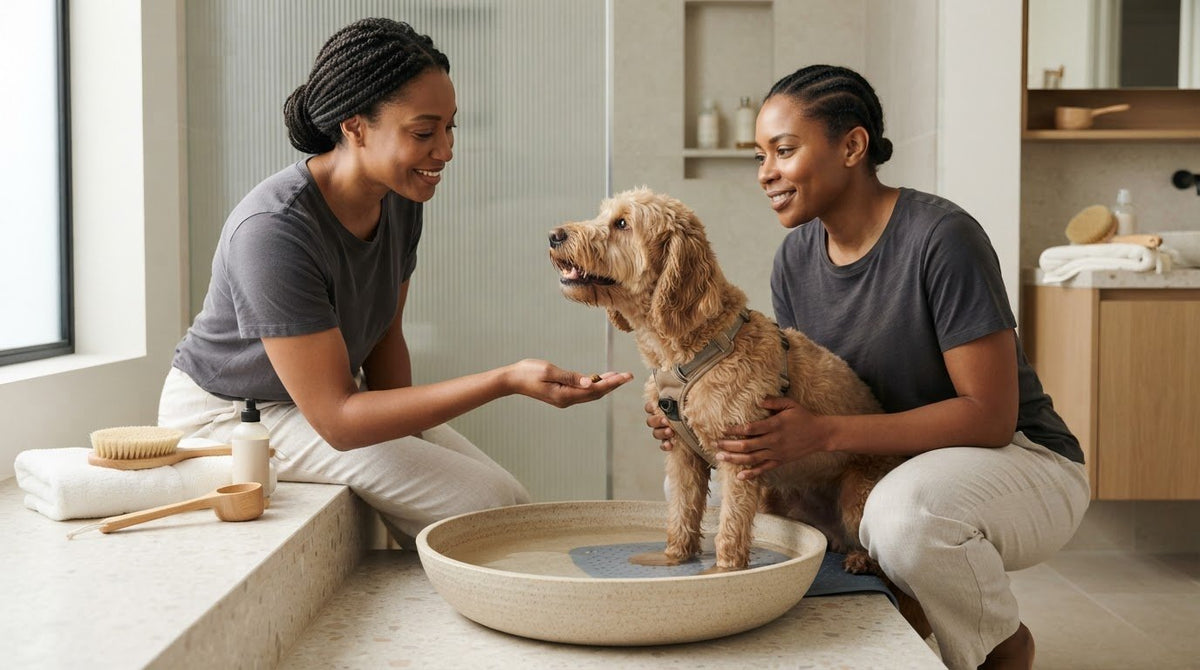
Suppose your dog glances toward the bathroom, then takes a step closer. Mark that moment with a calm “yes” and offer a small treat right away. Then pause. If your dog chooses to approach again, reward that step too. A quick reward helps your dog connect it with the action you want to encourage.
Rewards might include food, gentle praise, a toy, or a break from the tub. Let your dog’s response guide you. If they turn away or seem unsure, give them room to move. If they’re eating but still showing signs of stress, make the next step easier rather than assuming the treat means they’re comfortable.
Why smaller steps can help a worried dog
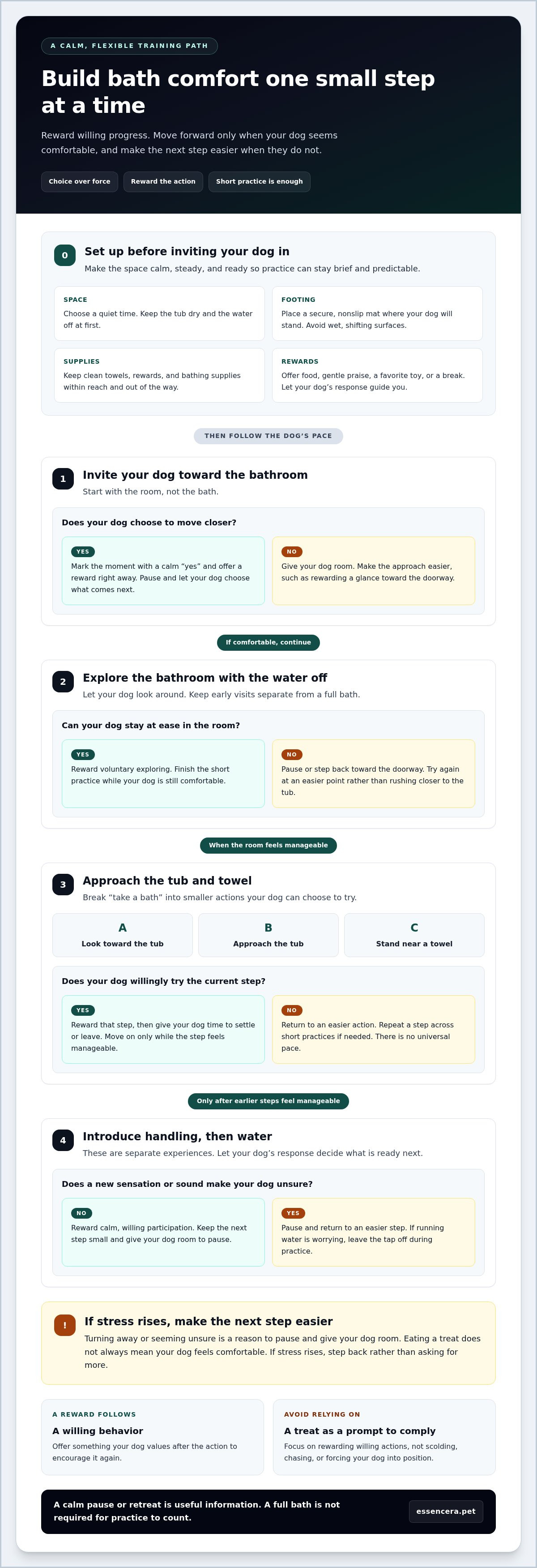
“Take a bath” is a big ask if your dog is uneasy around the bathroom. Break it into actions that are easier to try: looking toward the doorway, entering the room, approaching the tub, or standing near a towel. Reward one step, then give your dog time to settle or leave. Move on to handling and water only when earlier steps feel manageable.
There’s no universal pace. One dog may be comfortable near the tub but wary of running water; another may accept water but dislike having their paws handled. Preferred rewards can differ too, and interest may change with the setting. Keep the plan flexible. A calm pause or retreat isn’t failure. It gives you useful information and keeps the next practice within reach. That’s the heart of positive reinforcement for dog bathing: include comfort and choice in the learning, rather than measuring success only by whether you finished the bath.
Prepare the bathing space, rewards, and routine before training
Set up the room before inviting your dog in. That way, you won’t need to reach over them, search for a towel, or turn on a noisy tap mid-session. Choose a quiet time, keep other pets and household activity away if possible, and decide what a successful short practice will look like. It might simply be walking into the bathroom and leaving again.
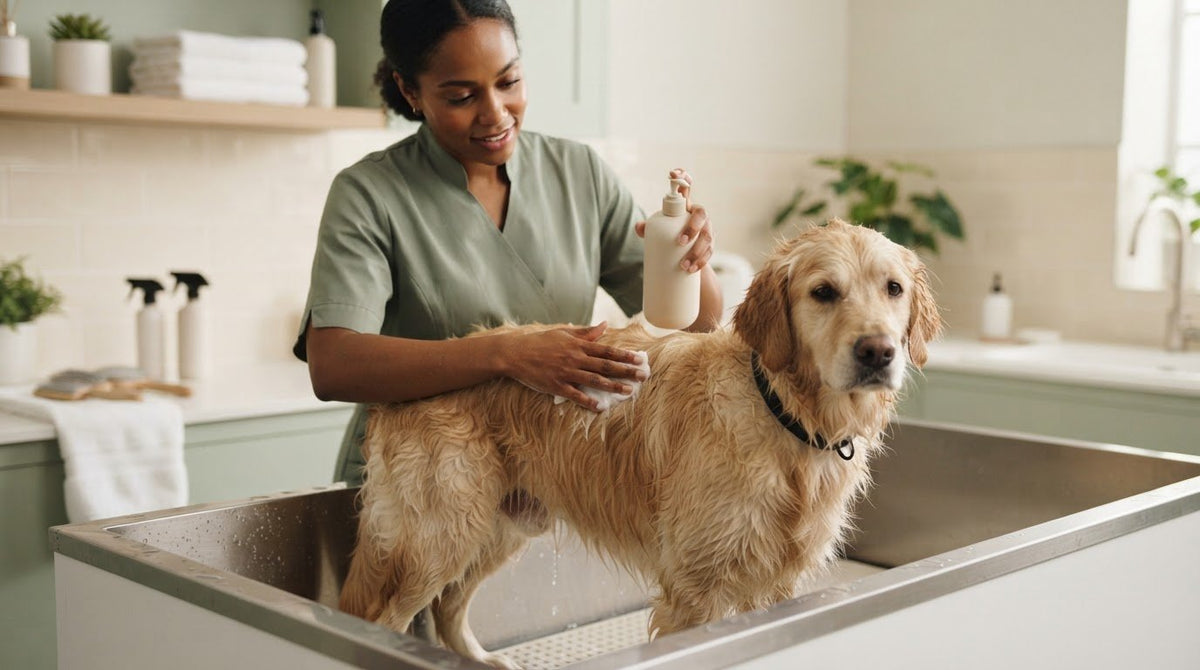
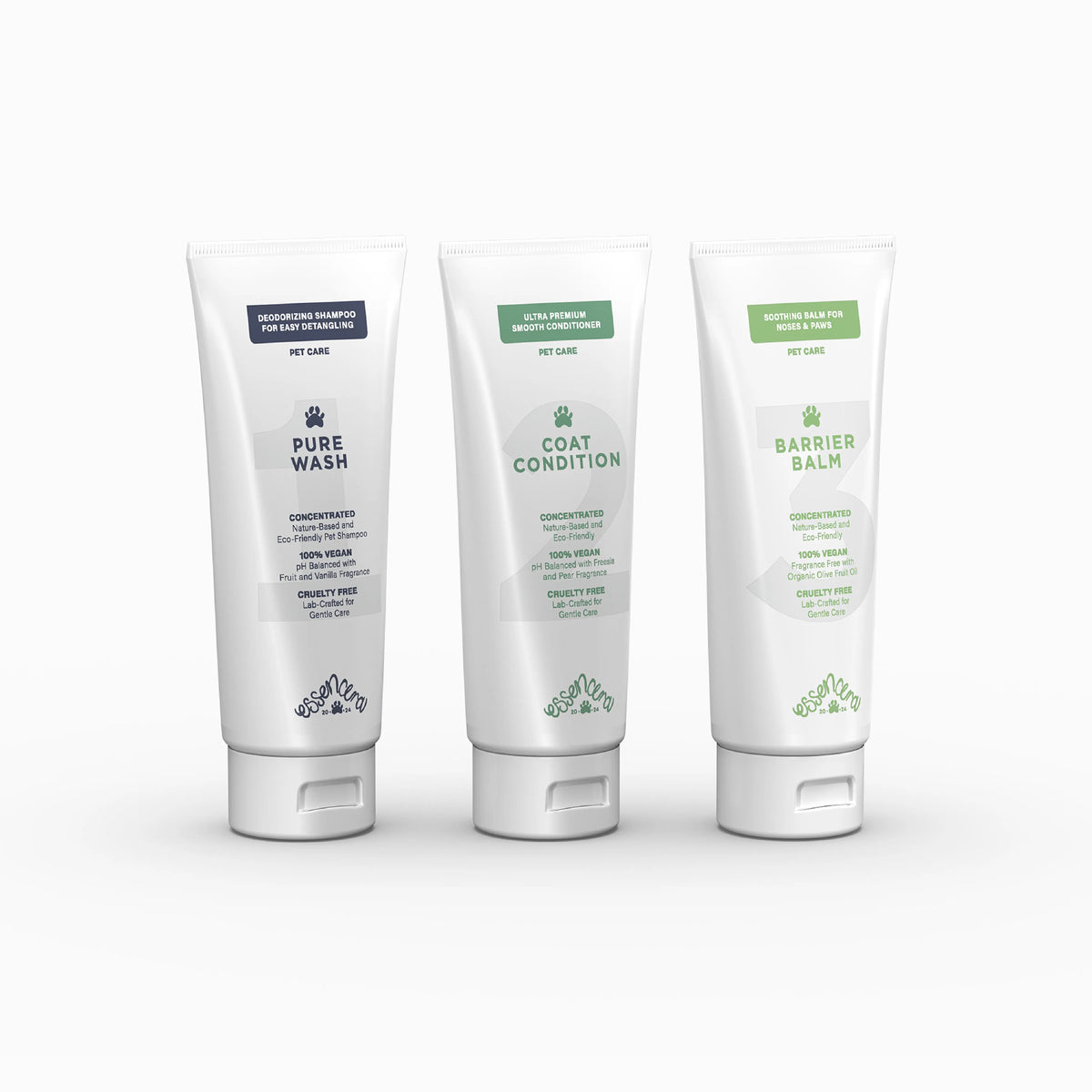
Have clean towels, rewards, and bathing supplies ready and within reach. Choose a cleansing product before practice, rather than stopping to look for one during a bath. For puppies or dogs with sensitive skin, Pure Wash shampoo is a gentle cleansing option to use as directed. A product can suit your bathing routine, but it won’t resolve fear. Focus first on helping your dog feel comfortable with the space and steps.
A stable, nonslip surface matters too. Place a secure mat where your dog will stand, whether beside the tub or inside it later in training. Slipping can make a dog feel unsure, so don’t ask them to step onto a wet, shifting surface. Keep the area clear of clutter and avoid unnecessary handling. These simple choices support a kind, low-pressure approach, such as the Pet Professional Guild's principles.
Choose rewards your dog will actually value
Try possible rewards somewhere your dog already feels comfortable, before bringing them into the bathroom. Offer a small treat, a favorite toy, gentle praise, or a quick play break, then notice what your dog chooses to return to. Small, easy-to-eat treats can keep practice moving without long pauses. If your dog usually enjoys food but won’t take it in the bathroom, make the setup easier or try a different reward. Don’t assume the dog is being stubborn. The room, sounds, or closeness to the tub may simply feel like too much right now.
Make the bathroom and tub easier to approach
Start with the room itself. Let your dog explore while the water is off and no bath is beginning. Keep the tub dry during early visits, and put the nonslip surface in place before inviting your dog closer. Keep towels and supplies nearby but out of the way, so you’re not moving around them unexpectedly. If the tap or shower head makes a sudden sound, leave it off during the first practices.
Short sessions are enough. Invite your dog into the room, let them look around, then finish while they’re still comfortable. Separating this practice from a full bath can help if bathing supplies or running water already trigger worry. You’ll have a calmer starting point: rewards are ready, the space is steady, and your dog isn’t rushed into the next step.
Teach bath-time comfort in small, rewardable steps
Once the space is ready, treat bathing as a sequence of separate experiences, not one big test. Your dog might be comfortable entering the bathroom but not stepping into the tub. That’s useful information, not a reason to hurry. Practise the current step, reward voluntary participation, and let your dog leave or take a break whenever they need to.
Use this progression as a flexible guide. Repeat a step across several short practices if needed, and move ahead only while your dog seems at ease. If a new sound or sensation changes their response, return to an easier step.
- Enter the bathroom. Invite your dog into the room, reward a voluntary entry, then give them space to leave.
- Approach the tub. Reward looking at it, sniffing it, or moving closer. Don’t lure your dog right up to the edge if they hesitate.
- Explore the empty tub. With a nonslip surface in place, reward a voluntary step toward or into the dry tub. Let your dog step out again.
- Practise brief handling. Touch a shoulder or paw gently, reward, and stop. Build toward the handling needed for bathing only as your dog stays comfortable.
- Introduce water sounds. Turn on the tap briefly at a distance your dog can manage, then turn it off. Gradually adjust the distance or duration, changing one thing at a time.
- Try a little water. When the earlier steps are easy, use a small, controlled amount on one area, reward calm participation, and finish before your dog feels overwhelmed.
Build comfort with the tub, handling, and water sounds
Let your dog set the pace around the tub. A look or step closer can be a complete practice session. Keep early touches brief and predictable, and avoid reaching suddenly over your dog or lifting them into the tub. For water sounds, start with the tap at a comfortable distance and at low intensity if possible. If your dog moves away, turn it off and make the next practice easier.
Add wetting, shampooing, and rinsing gradually
Don’t add wetting, shampoo, and rinsing all at once. Begin with a small amount of water only after your dog is comfortable with the earlier steps. Wet a limited area, pause, and reward participation before deciding whether to continue. Choose a suitable Calm Wash shampoo ahead of time if you’re bathing a puppy or a dog with sensitive skin, and use it as directed. A cleansing product isn’t a substitute for gradual practice.
Keep the sequence adjustable. Your dog may be ready for water but need more practice with handling, or may manage a brief wetting session and stop there. Ending on a comfortable step helps keep each practice manageable. With positive reinforcement for dog bathing, progress means your dog can take part with growing ease, not simply that you finished every bathing task.
Read your dog’s signals and adjust the plan without pressure
Your dog’s body language can help you decide whether to continue, pause, or make the next practice easier. Possible signs of stress include turning away, repeatedly licking their lips, yawning, panting when it isn’t warm, trembling, holding their body low, freezing, or trying to leave. These signals can have other causes, so look at the whole dog and the situation. A yawn on its own doesn’t tell you everything, but several changes together, especially as you approach the tub or turn on water, are a reason to slow down.
Taking a treat isn’t proof that your dog feels comfortable. Some dogs eat while uneasy, while others lose interest in food when the setting feels challenging. Notice whether your dog can move naturally, explore, and re-engage after a pause. If stress signals increase, make the next practice easier. That might mean turning off the water, stepping farther from the tub, or ending the session.
What if your dog freezes, escapes, or refuses treats?
Stop the current step and give your dog room. Don’t restrain, follow, or coax them back into the tub. If your dog freezes, avoid pulling or pushing them through the moment. Quietly reduce the pressure, then let them choose whether to move away. A short break is more useful than completing the task while they’re distressed.
For the next practice, change one part of the setup: choose a quieter time, keep the session shorter, increase the distance from the tub, or offer a reward your dog prefers. If they decline food, don’t keep putting treats in front of them. Return to an easy, familiar activity and resume bath practice only when they seem ready to engage. You might end with a relaxed visit to the bathroom, or skip practice for now.
When to seek qualified help
Ask your veterinarian for advice if your dog’s discomfort appears suddenly, if handling seems painful, or if you suspect a health issue. A change in bathing tolerance can have more than one explanation, and this guide can’t diagnose the cause. If fear continues, bathing feels unsafe, or you’re worried someone may get hurt, seek support from a qualified trainer who uses reward-based methods. Training can help build skills, but it can’t promise to resolve every difficulty on its own.
Keep care and training separate in your thinking. A gentle bathing product may suit your dog’s skin, but it won’t replace a low-pressure plan. For puppies or dogs with sensitive skin, Calm Wash shampoo is an optional cleansing product to use as directed. It isn’t a treatment for fear or a replacement for patient practice. The aim of positive reinforcement for dog bathing is not to push past distress. It’s to notice what your dog is telling you and make room for safer, more comfortable practice.
Keep bath time kind, consistent, and suited to your dog
A good bathing routine doesn’t require a full bath every time you practise. Short, repeatable sessions can help your dog learn what to expect without stacking several challenging steps together. One day, success might be walking calmly into the bathroom. Another day, it might be standing near the tub while you pick up a towel. Let your dog’s comfort guide how much you do.
Consistency means keeping the experience familiar, not asking for the same amount of effort every session. Use a similar sequence and calm cues, but adjust the pace to your dog’s response. If they seem less settled than usual, make the practice easier or finish early. Positive reinforcement for dog bathing works best as a flexible routine built around your dog, not a fixed checklist to complete.
Measure progress by comfort, not by a perfect bath
Keep a simple note after practice. Record which step you tried, what your dog chose to do, which rewards they enjoyed, and where they seemed unsure. Look for small changes, such as approaching the bathroom voluntarily, moving more freely near the tub, or returning to explore after a pause. These observations help you decide what to repeat and what to adjust next time.
Progress can be uneven. A noisy day, a new bathing location, or an uncomfortable experience may make a familiar step feel difficult again. That doesn’t erase what your dog has learned. Return to an easier activity, offer space, and rebuild at a manageable pace. Pausing is thoughtful care, not failure.
Choose bathing supplies that fit a gentle routine
Having familiar supplies ready can make your routine more predictable. Keep the towel and other bathing items in their usual places, and choose products before your dog enters the room so you’re not searching while they wait. For help choosing a cleansing product, see this guide to choosing a dog shampoo. If you’re bathing a puppy or a dog with sensitive skin, Calm Wash shampoo is a gentle option to use as directed. Keep the training plan separate: shampoo doesn’t treat fear or replace patient practice.
After a bath or practice, note whether any part of the routine seemed especially easy or difficult. Maybe the towel was familiar, but the sound of the tap was still too much. That detail gives you a clear place to begin next time. Keep the steps brief, repeat what feels comfortable, and change one part of the routine at a time.
Every calm choice counts, even if the coat isn’t wet yet. With patience, predictable supplies, and a routine shaped around your dog’s signals, bath time can become a gentler part of caring for them.
Let your dog set the pace for the next bath
Your next step doesn’t have to be a bath. Choose one part of the routine your dog can approach comfortably, and give them time to get familiar with it. Let their response guide what comes next. A gradual approach leaves room to build a routine that feels right for your dog, even if progress looks different from one practice to another.
With positive reinforcement for dog bathing, success isn’t measured by how quickly you finish. It’s in the small choices that help your dog feel more at ease. Keep your expectations gentle, and be willing to adjust the plan as you learn what works for your companion.
When you’re ready to prepare your bathing supplies, explore Essencera’s gentle pet-care products for options to suit your grooming routine. You and your dog can take it one paw at a time.
Frequently Asked Questions
How do I start using positive reinforcement for dog bathing?
Start with a practice goal your dog can manage, such as staying relaxed while you pick up a towel. Say a short marker word like “yes” as the behavior happens, then offer a reward. Keep a few notes about the setting and your dog’s response so you can spot patterns. Positive reinforcement for dog bathing is most useful when you reward the action you want, rather than waiting for a whole bath to be finished.
Can I train my dog to enjoy baths with treats?
Treats can help make bath-related experiences more appealing, but they can’t guarantee that a dog will enjoy baths. Offer a dog-safe treat after a voluntary action, such as sniffing a dry towel or standing near the bathroom doorway. You can also place a treat on a familiar mat, away from water. Let your dog choose whether to approach, and don’t use food to coax them into a situation they’re trying to avoid.
What if my dog is too scared to get in the tub?
Your dog doesn’t need to enter the tub to begin learning. Make the first goal simply being near the bathroom, then let your dog leave freely. If even that feels like too much, practise in a nearby room with the door open. For a bath that can’t wait, avoid forcing your dog into the tub. A veterinarian or qualified reward-based trainer can help you plan a safer approach.
How long does it take to make a dog comfortable with bathing?
There’s no set timeline. A dog’s past experiences, current health, surroundings, and response to each step can all affect how quickly they settle into practice. Look for a pattern of relaxed participation across sessions, rather than expecting comfort to arrive by a particular day. If your dog is less comfortable after a break, return to an easier activity and build from there. Steady progress can be gradual.
Should I reward my dog during or after a bath?
Reward during the bath for specific moments you want to encourage, such as standing calmly while you wet one leg. Keep rewards within easy reach so you don’t need to leave your dog unattended or reach awkwardly. You can also offer a calm reward after the bath, once your dog is safely out and settled. A reward at the end is a nice finish, but it doesn’t replace support during challenging parts.
What should I do if my dog shakes or tries to leave during a bath?
If your dog tries to leave, stop the bathing action and make space rather than holding them in place. Shaking can happen after getting wet, but paired with attempts to escape or other signs of distress, it’s a cue to pause and assess the situation. Turn off the water, check that the surface feels secure, and let your dog settle. If the reaction is sudden or handling seems painful, ask your veterinarian for advice.
Can puppies learn positive bath-time associations?
Yes, puppies can become familiar with bathing routines through gentle, positive experiences introduced at a pace they can handle. Keep early exposure brief, and let your puppy explore towels, the bathroom, and other supplies without rushing into a bath. If you need a cleansing product, Calm Wash shampoo is positioned for puppies and sensitive skin. Shampoo is a bathing supply, not a substitute for patient, reward-based practice.