How to Clean Muddy Dog Paws: A Gentle Step-by-Step Guide
You’ve barely made it back from a walk when muddy paw prints start appearing across the floor. A quick scrub might seem like the fastest fix, but if your dog pulls away, cleanup can become stressful for both of you. Learning how to clean muddy dog paws gently helps keep the mess contained while making paw handling calmer and more familiar.
In this guide, you’ll find a simple routine for softening mud, cleaning between the toes without rough rubbing, and drying each paw thoroughly. You’ll also learn what to do when mud is caked on or your dog is unsure about having their feet touched. A little patience and a steady approach can make cleanup a reassuring part of coming home. We’ll cover how to check paws as you clean and when to stop and look more closely for irritation or injury.
Key Takeaways
- When learning how to clean muddy dog paws, start calmly and loosen dirt with lukewarm water or a gentle wipe instead of scrubbing.
- Work patiently around each paw, including between the toes, and check for visible signs of irritation or injury as you clean.
- If mud is caked on or your dog resists, pause and soften it with water rather than pulling at the fur.
- Keep a towel near the entrance and wipe paws soon after muddy walks to help prevent tracks indoors.
- Dry paws thoroughly, especially between the toes. If the skin feels rough, Barrier Balm can help hydrate clean, dry paws.
Why muddy dog paws need a gentle, thorough cleanup
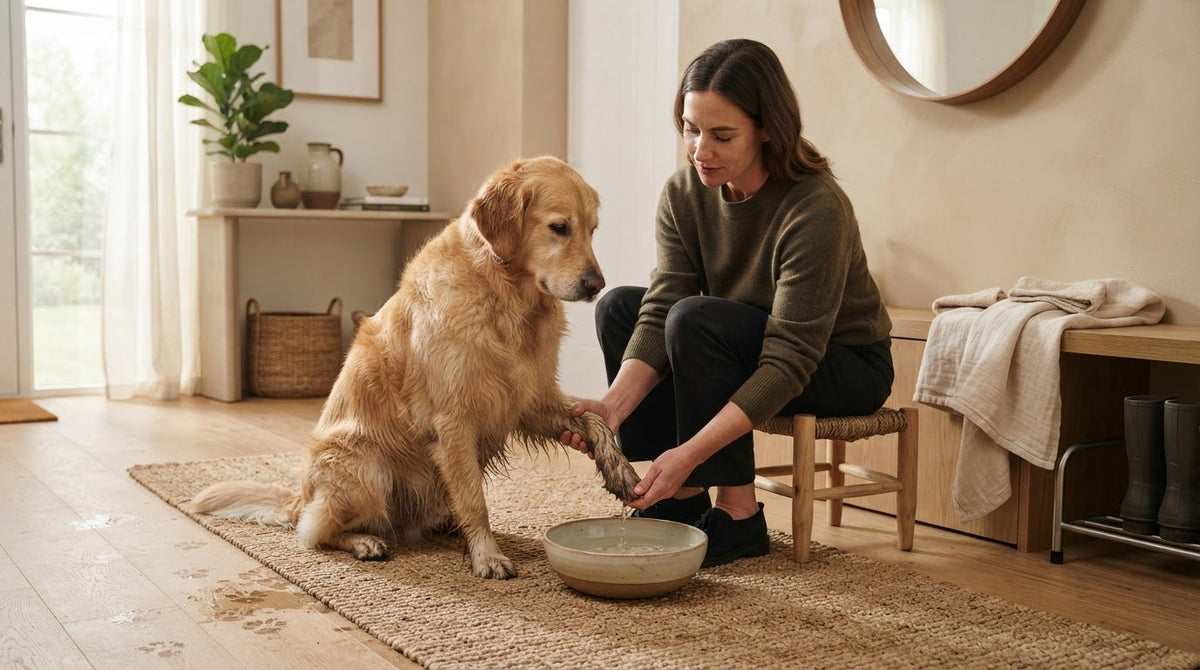
A muddy walk can leave prints from the doorway to your dog’s favorite nap spot. It’s tempting to wipe each paw quickly and move on, especially when your dog is eager to get inside. But knowing how to clean muddy dog paws gently helps you catch dirt you might otherwise miss. The goal isn’t to scrub until every paw looks spotless. Remove visible mud, check where dirt can collect, and leave the paws clean and dry.
Ordinary mud on your dog’s paws doesn’t automatically mean they need a full bath. If the rest of the coat is clean, focus on the feet. A thorough cleanup means looking over the paw pads and toes, checking gently between them, and drying the whole area. This approach keeps cleanup manageable without turning every wet walk into bath time.
A dog’s paw includes pads, toes, and nails, with small spaces where damp dirt can cling. This general overview of dog paw anatomy helps explain why the visible surface is only part of the picture. You don’t need to inspect every detail like a groomer. Simply check whether mud remains between the toes or caught in the fur around them.
What mud can leave on a dog’s paws
Mud may coat the paw pads, cling along the sides of the toes, or dry into the fur around the feet. A quick wipe across the bottom can remove obvious dirt while missing what’s lodged between the toes. Gently part longer paw fur with a soft cloth to check those small spaces. If your dog shifts away, pause and give them a moment before continuing.
Set up a calm cleanup spot
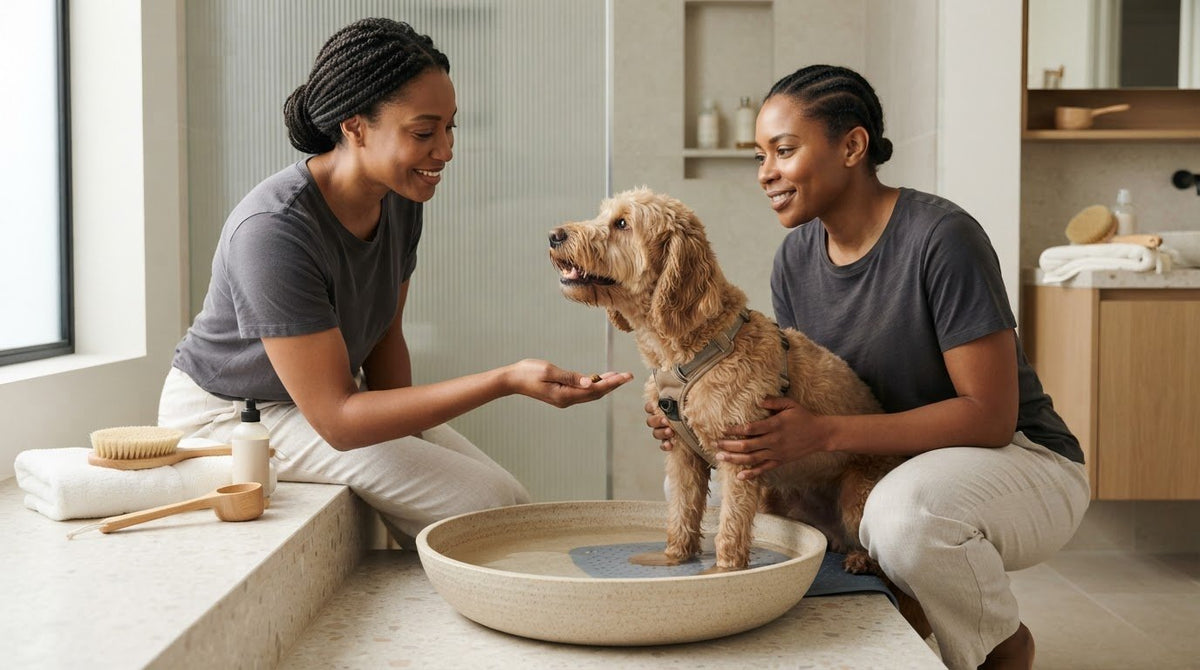
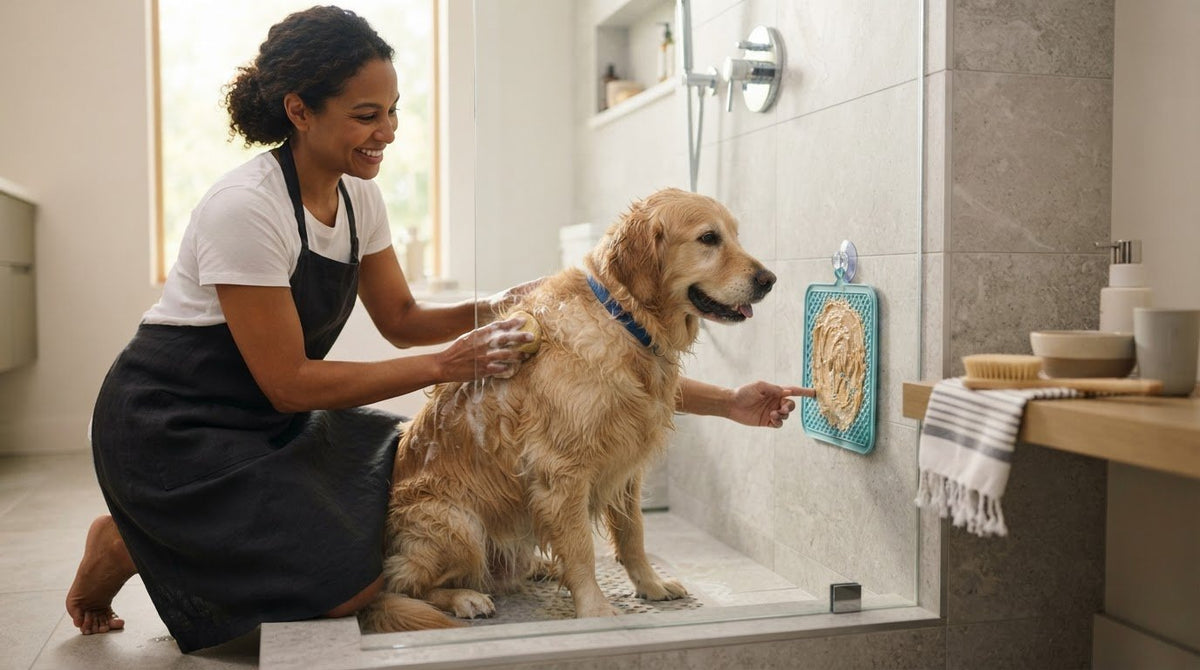
Before you begin, place a towel, soft cloth, and lukewarm water within easy reach. Choose a nonslip spot where your dog can stand comfortably, such as a mat on a stable floor. Move slowly and keep your touch light. If your dog seems uncomfortable, pause rather than holding a paw by force.
A little preparation makes the routine easier for both of you. With a towel close by, you won’t need to leave your dog standing with wet paws while you search for supplies. A stable surface can also help them feel secure as you check one paw at a time. If standing feels uncomfortable, let your dog sit or lie in a natural position and work at their pace.
Think of cleanup as a gentle check, not a battle against every speck of soil. Remove visible dirt, look between the toes, and pay attention to your dog’s comfort. This small act of care helps keep the entryway cleaner while making paw handling a familiar part of coming home.
How to clean muddy dog paws step by step
For a gentle cleanup, work on one paw at a time with lukewarm water and a soft cloth. There’s no need to scrub hard or rush through the spaces between the toes.
- Help your dog settle. Let them stand or sit comfortably on a stable surface. Give them a moment to get used to the cloth and water before you begin.
- Soften the mud. Wet the paw with lukewarm water, or hold a damp cloth against dried dirt for a moment. Let the mud loosen instead of picking or pulling at it.
- Wipe or rinse gently. Move the cloth across the pads and around each toe. For a light coating, wiping may be enough. If dirt remains, rinse the paw with a gentle flow of water.
- Inspect the paw. Look over the pads and between the toes for leftover mud or visible debris. Don’t dig or tug at anything that doesn’t come away easily.
- Pat the paw dry. Use a clean towel to absorb water from the pads, around the toes, and between them. Avoid vigorous rubbing, which may make your dog uncomfortable.
Loosen and remove the mud
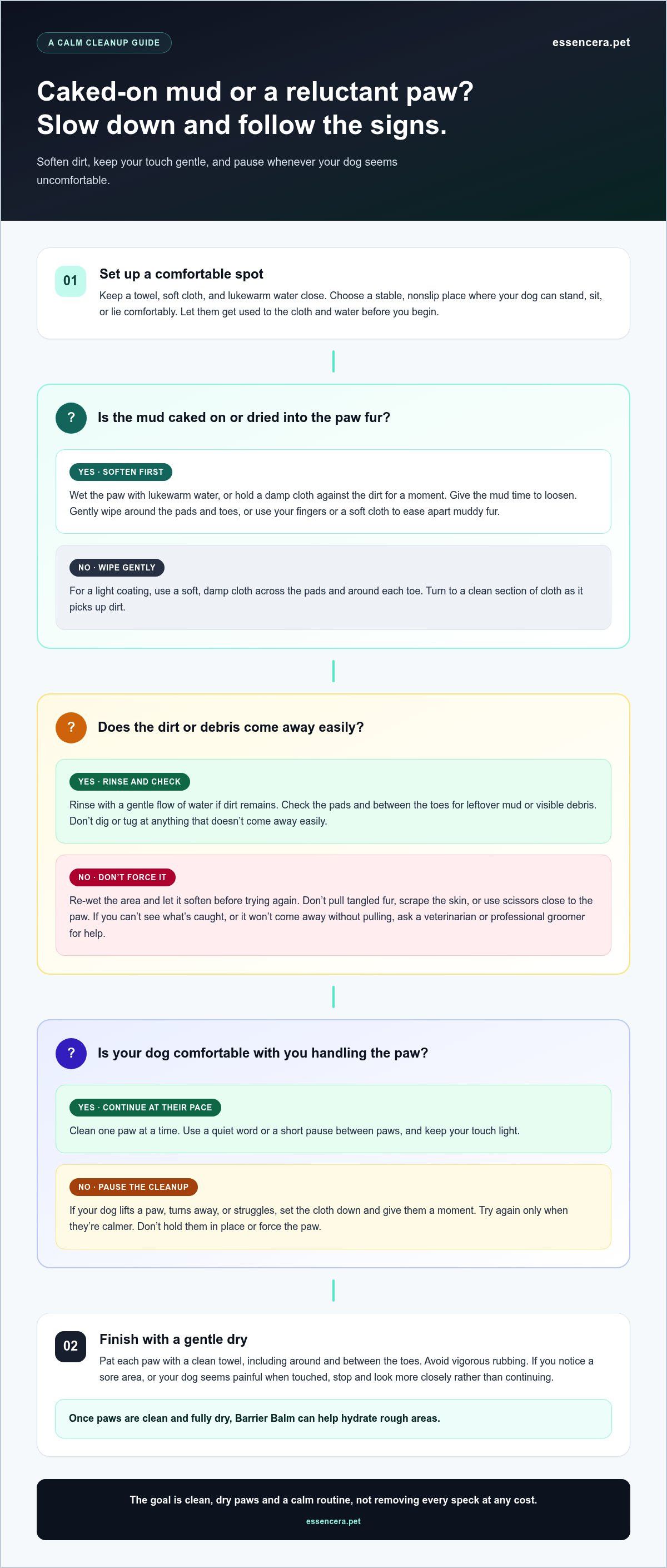
Thick or dried mud may need time to soften. Wet the paw with lukewarm water, then gently wipe across the pads and around each toe. Turn the cloth to a clean section as it picks up dirt, or rinse it before continuing. This helps prevent spreading mud back over an area you’ve already wiped.
If mud is caught in the fur, press a damp cloth against it and let the water loosen it. Don’t pull at the fur or scrape the skin. Keep your touch light, and pause if your dog pulls their paw away.
Rinse, inspect, and dry between the toes
Rinse loosened dirt away with a gentle stream, directing water at the paw and away from your dog’s face. Check between the toes, where a quick wipe across the pads might miss mud. Pat the paw dry, then gently separate the toes to reach damp spots with a corner of the towel.
Repeat the same calm process for each paw. If your dog becomes uneasy, take a short break and continue only when they’ve settled. Once the paws are clean and fully dry, you can apply optional Barrier Balm for paws to help hydrate rough areas.
What to do when mud is caked on or your dog resists
Stubborn mud and a reluctant paw can make cleanup feel like a bigger job than it is. Slow down. A little water and patience are usually kinder than trying to remove every clump at once. If the rest of your dog’s coat is clean, focus on the paws rather than turning a muddy-foot cleanup into a full bath.
When mud is caught in paw fur
Start by wetting the muddy fur with lukewarm water and giving the dirt time to soften. Then use your fingers or a soft, damp cloth to gently separate the fur and ease away what loosens. If mud remains, wet the area again and repeat. Don’t pull at tangled fur, scrape at the skin, or use scissors close to the paw, where a sudden movement could cause a cut.
Pause if you can’t see clearly what’s caught in the fur, or if the debris won’t come away without pulling. A veterinarian or professional groomer can help remove something that isn’t safe to handle at home. Stop as well if you notice a sore area or your dog seems painful when you touch the paw.
When your dog pulls away
If your dog keeps lifting a paw, turning away, or struggling, don’t hold them in place to finish. Set the cloth down, give them a moment, and try again only when they’re calmer. Clean one paw at a time, with a quiet word or a short pause between paws. Some dogs tolerate a damp cloth better than a rinse, while others may find gentle water easier. Follow your dog’s comfort rather than forcing one approach.
Keep the session simple. Start with the paw your dog is most comfortable offering, and use light touches instead of gripping tightly. If they become distressed again, stop and come back to the cleanup later if it’s safe to do so. A calm, gradual routine may help paw handling feel more familiar over time, but no single technique works for every dog.
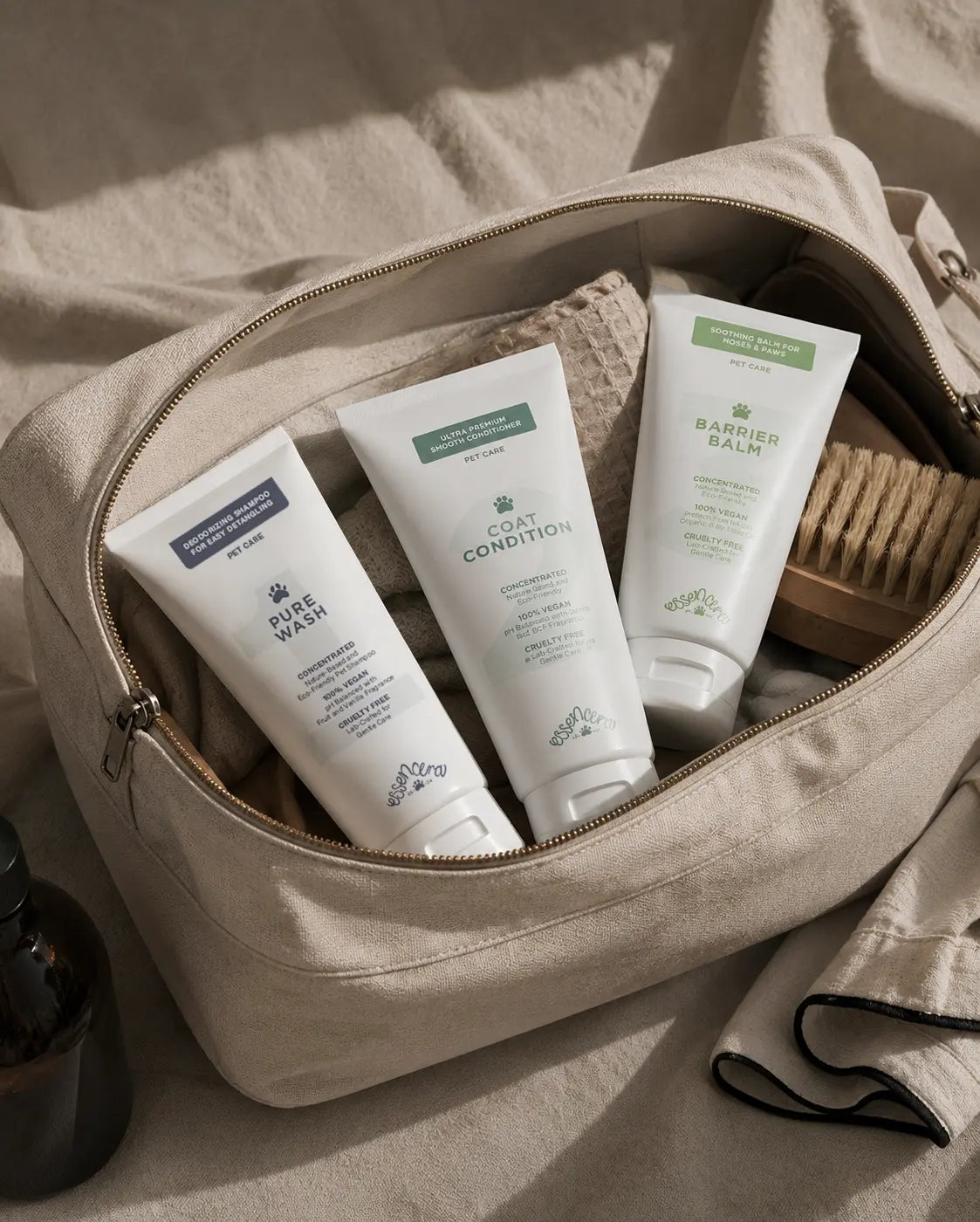
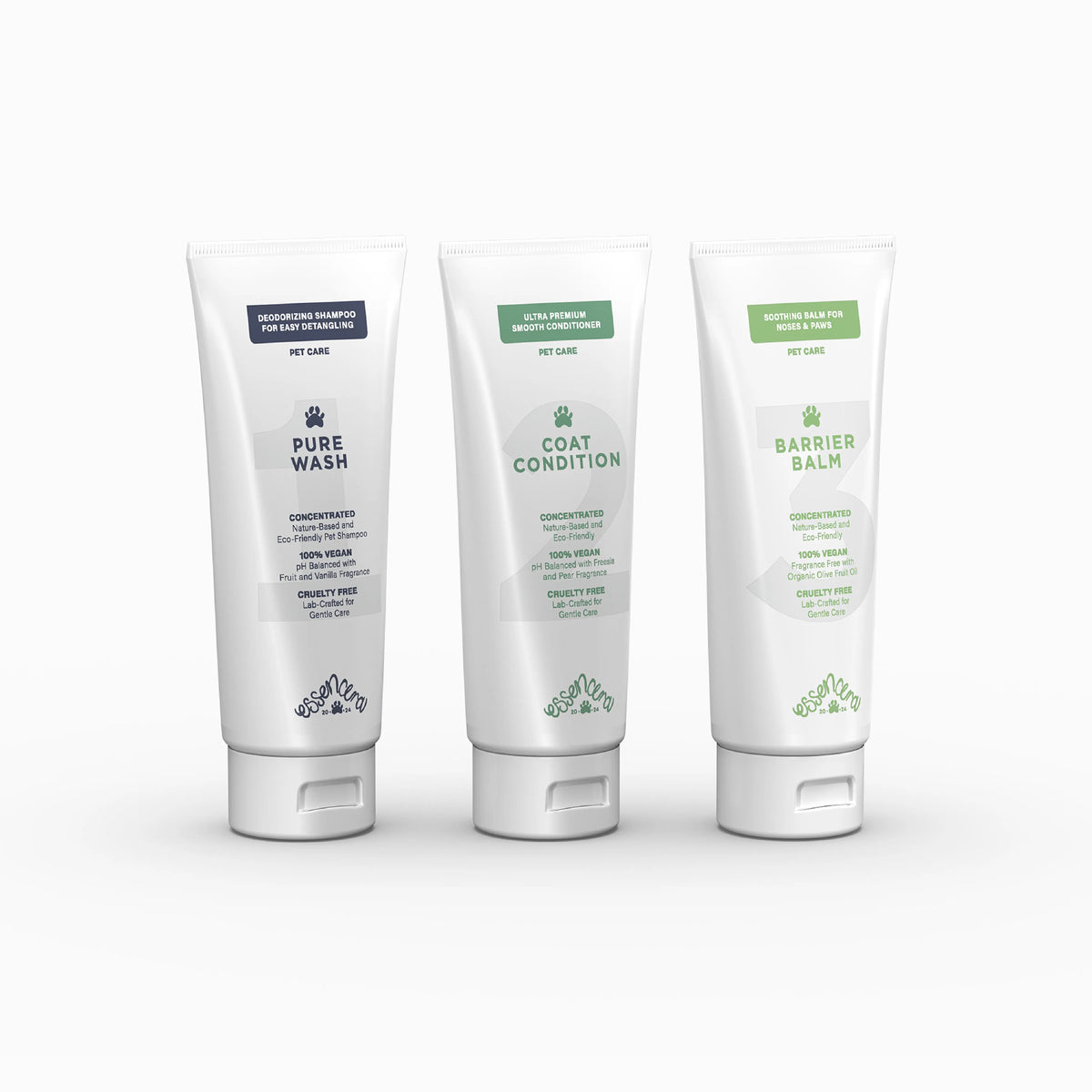
A rinse of the paws is generally enough when the mud is limited to the feet. If mud has spread through the coat and a full wash is needed, Pure Wash pet shampoo is a concentrated option for cleansing the coat. For ordinary muddy paws, stick with water and a soft cloth instead.
Avoid household cleaners, harsh scrubbing, and improvised remedies. The aim is to remove what you can safely see and reach. If you can’t loosen a clump without tugging, or your dog’s reaction suggests discomfort, stop and seek appropriate help rather than pushing through.
How to prevent muddy paw prints after a walk
You can’t always avoid muddy paths, but you can keep the mess from traveling far indoors. Make the doorway your cleanup point: pause before your dog heads toward the living room, check each paw, and wipe away visible mud. A towel near the entrance makes the routine easier to start, even when you’re both ready to get on with the day.
A consistent setup helps more than trying to predict every muddy walk. Keep a towel and soft cloth in the same easy-to-reach spot, and return them there after use. If your dog comes in with only a little dirt, a quick check and wipe may be all that’s needed. For wetter or muddier paws, take the time to clean between the toes too.
Make a repeatable post-walk routine
Use the same simple sequence each time: stop at the door, ask your dog to pause, look over the paws, then wipe or rinse away visible mud. Let your dog move inside once their paws are clean and dry. Keep the cloth and towel together by the entrance so you don’t have to search for supplies while muddy paws wait on the floor.
The routine can be brief without being rushed. If your dog is excited after a walk, give them a moment to settle before checking their feet. Small, predictable steps can make cleanup feel familiar, although your dog may need a different pace or approach on some days.
- Keep supplies ready: Store a towel and soft cloth near the entrance.
- Check promptly: Look at the pads, around the toes, and through the paw fur after muddy walks.
- Clean only what’s needed: Wipe light dirt, and use water if mud is stuck on.
- Keep the path clear: Let your dog move farther into the home once their paws are clean and dry.
These habits won’t prevent every muddy print, but they give you a reliable first step and make it easier to notice when a paw needs more attention. For broader background on paw structure and care, see this complete guide to dog paws.
Know when a paw needs more than cleaning
As you check each foot, notice visible cuts, swelling, or discomfort that continues after the mud is gone. Don’t try to diagnose the cause or scrub a sore area. If something concerns you, or your dog keeps favoring a paw, seek veterinary advice.
If the skin on clean, dry paws feels rough, optional Barrier Balm for paws can help hydrate rough areas. Apply it only after cleaning and drying the paws. A steady doorway routine, a gentle check, and attentive care help keep muddy tracks manageable while supporting your dog’s comfort.
After cleaning: dry paws and support rough areas
Drying is the last part of how to clean muddy dog paws, not an optional extra. Dampness left between the toes can make paws uncomfortable and leave wet marks around the house. Before your dog wanders off, use a clean towel to gently press against each paw pad, around the toes, and into the spaces between them.
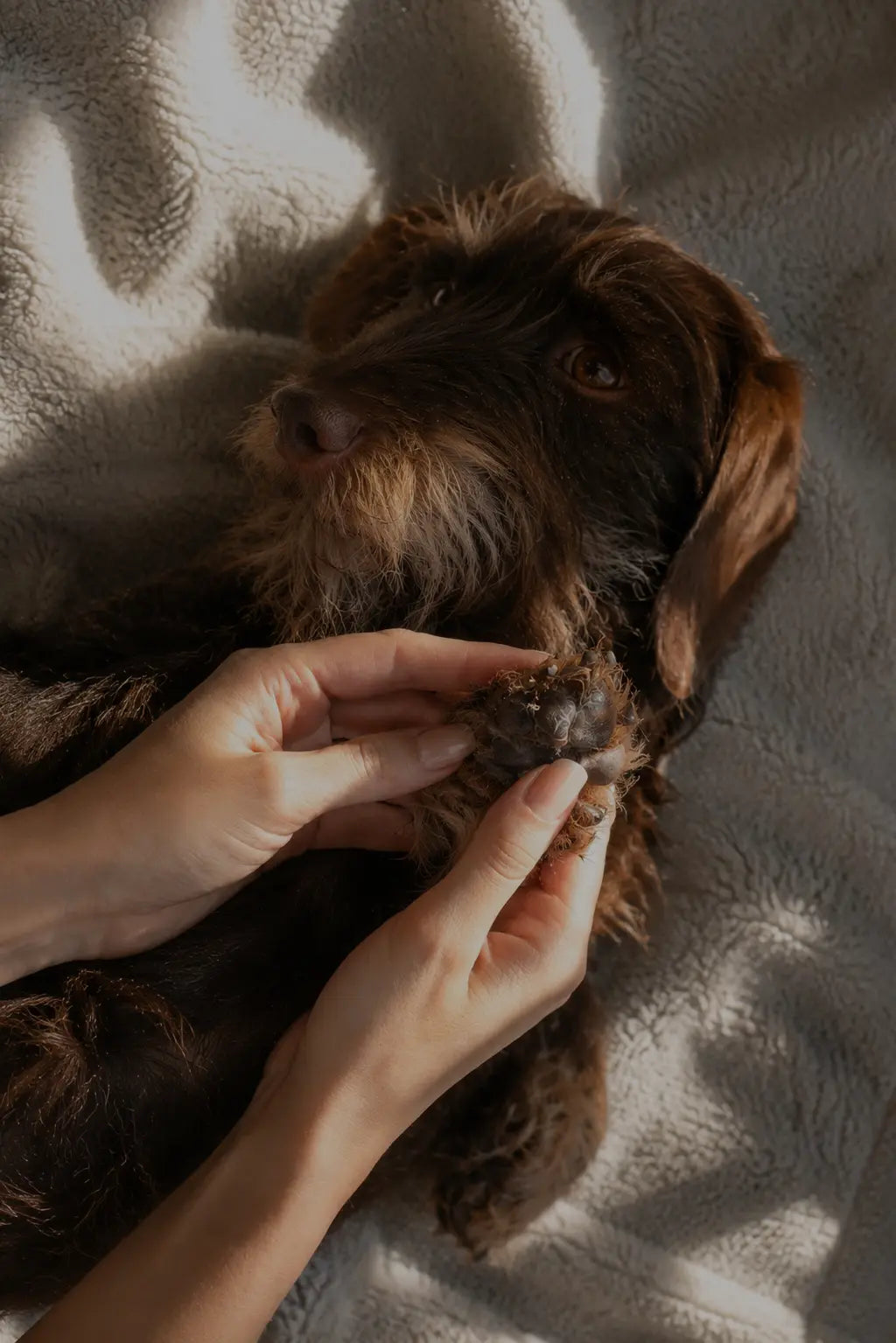
Choose a soft, absorbent towel and pat rather than rubbing hard. If your dog has longer fur around the feet, use your fingers to gently part it so you can reach any damp spots. Keep your touch light, especially if your dog is sensitive about paw handling. A brief pause between paws can help them stay relaxed while you finish.
When paw balm may fit into the routine
Balm is optional after a muddy walk. Consider it if your dog has rough areas that could use extra moisture, and apply it only to clean, completely dry skin. Putting balm on damp or dirty paws can trap leftover moisture or grime against the skin, so make sure cleanup is finished first.
Barrier Balm for paw care is an optional way to help hydrate rough areas on paws or the nose. Warm a small amount between your fingers, massage it into clean, dry skin, and allow it to absorb. Follow the product directions and avoid applying it over an area that appears injured or irritated.
Finish with a quick paw check
Before heading indoors, look over each paw once more. Check that visible mud is gone and the pads and spaces between the toes feel dry to the touch. Notice anything unusual, such as a visible cut, swelling, or discomfort that continues after cleaning. These signs don’t tell you what’s causing the problem, so seek veterinary advice if you’re concerned or your dog seems persistently uncomfortable.
A final check doesn’t need to become a long inspection. Take a calm moment to confirm the paws are clean, dry, and comfortable before moving on with your day. If the skin looks normal and your dog is relaxed, the cleanup is done. There’s no need to keep wiping once the dirt is gone and the paws are dry.
With a gentle, consistent routine, post-walk care can become a familiar moment rather than a tug-of-war. Clean the mud, dry carefully, and offer extra moisture only when rough areas need it. Your dog can then settle in, and you can enjoy a cleaner home after muddy walks.
Make the next muddy walk easier
A simple cleanup routine can become a reassuring part of coming home. As it grows familiar, you and your dog can move from muddy doorstep to cozy rest with less fuss. Keep it flexible, too. Some walks leave only a little dirt, while others call for a more thorough clean.
Once you know how to clean muddy dog paws, you can choose care that fits your dog’s needs. Barrier Balm is intended for paws and other rough areas, while a full-coat wash is only needed when mud has spread beyond the feet. Essencera’s concentrated Pure Wash pet shampoo is an option for washing the coat.
Choose gentle, thoughtful care that fits your routine and helps your dog feel comfortable after outdoor adventures. Explore gentle paw care with Essencera and make the next muddy walk easier for both of you.
Frequently Asked Questions
Can I use baby wipes to clean my dog’s muddy paws?
Use baby wipes only if the label says they’re suitable for dogs. Products made for people may contain ingredients or fragrances that aren’t intended for your pet’s skin, so don’t assume a household wipe is a safe substitute. For a small muddy spot, a soft cloth dampened with lukewarm water is a simple option. If you use pet wipes, follow the package directions and stop if irritation appears.
Should I wash my dog’s paws after every muddy walk?
Clean paws after a muddy walk if dirt is still clinging to them or your dog is likely to track it through the house. A quick look may show that there’s only a little loose soil to wipe away. If the paws look and feel clean, there’s no need to turn every walk into a full wash. Use your judgment based on how muddy the path was and what’s left on the feet.
Can I use dog shampoo on muddy paws?
For ordinary mud limited to the paws, lukewarm water and a soft cloth are usually enough, so you can skip dog shampoo for this small cleanup. If mud has spread through the coat and you’re giving your dog a full wash, choose a product made for pets and follow its directions. Avoid household soaps and cleaners, which aren’t intended for washing a dog’s skin or coat.
How do I clean dried mud from between my dog’s toes?
Soften dried mud with a damp, lukewarm cloth before trying to remove it. Let the moisture loosen the dirt, then gently wipe between the toes without scraping or pulling. If the mud is tangled into fur or you can’t see what’s caught, don’t reach for scissors or tweezers close to the skin. Stop and get help if it won’t come away safely.
What should I do if my dog will not let me touch its paws?
Don’t force the paw or hold your dog still if they’re struggling. Put the cleaning supplies aside and give them room to settle. At another calm moment, you might let your dog sniff the cloth or reward them for standing near it before attempting a brief touch. Keep each attempt easy to end. If handling remains very difficult, ask your veterinarian about support with paw-care handling.
Should I put paw balm on my dog’s paws after cleaning?
Paw balm is optional, not a required step after every muddy walk. It may suit paws or other rough areas when you want to add moisture, but apply it only to clean, dry skin. Barrier Balm is intended for paws and other rough areas. Massage it into dry skin and allow it to absorb, following the product directions.
When should I contact a vet about my dog’s paws after a muddy walk?
Contact a veterinarian if you notice a visible cut, swelling, or discomfort that persists after the mud is gone. Also seek advice if your dog won’t put weight on a paw or reacts strongly when you approach it. These signs can have different causes, and a veterinarian can assess what’s going on. Don’t try to remove embedded debris or treat a concerning paw problem with balm alone.