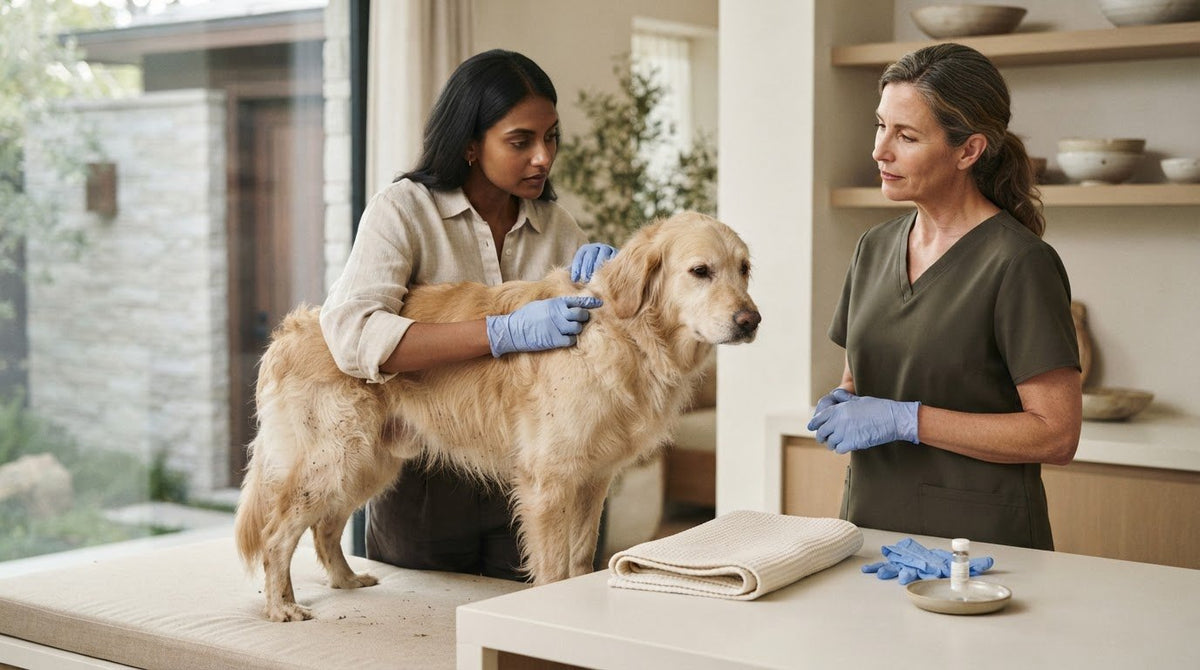
Removing Pollution from My Dog’s Coat: A Safe, Step-by-Step Guide
What if the safest first step isn’t reaching for the brush or shampoo? When you’re removing pollution from my dog's coat, the key is to identify what’s on the fur before you try to clean it. Everyday dust and mud are different from an unknown powder, oily residue, or chemical spill, and brushing or washing the wrong substance could spread it or increase contact. If you’re unsure what your dog has touched, pause, prevent licking if you can do so safely, and seek veterinary guidance.
This guide will help you tell ordinary grime from possible contamination, choose a cautious first response, and recognize when to stop handling your dog’s coat and call a vet. You’ll also learn what to avoid and when a gentle dog shampoo, such as Pure Wash, may be appropriate for everyday dirt after hazardous exposure has been ruled out. A calm, careful approach can help you care for your companion without making a worrying situation worse.
Key Takeaways
- When removing pollution from my dog's coat, identify the substance first. Unknown chemicals or oily residues need a different response from everyday dust and mud.
- Avoid vigorous brushing or rubbing when the contaminant is uncertain, since this can spread residue through the coat or closer to the skin.
- Pause home cleaning and seek veterinary guidance if contamination is widespread, affects a sensitive area, or comes with concerning symptoms.
- Once hazardous substances are ruled out, use a gentle, careful routine to remove ordinary dirt without repeated harsh cleansing.
- For routine grooming after cleanup, explore Pure Wash for ordinary cleansing or Calm Wash for sensitive-skin grooming needs.
Pollution on a Dog’s Coat: Identify What You’re Dealing With First
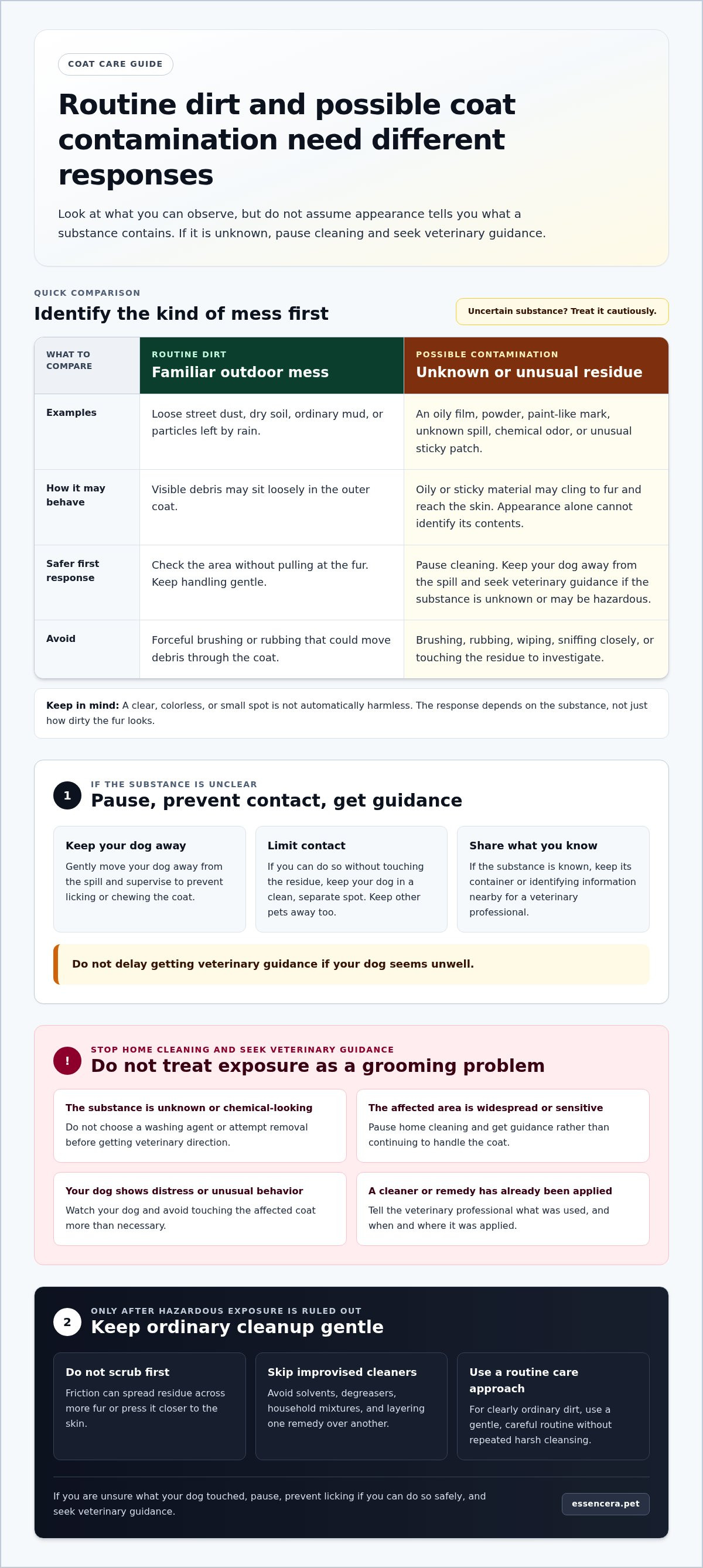
Before reaching for a brush, cloth, or bath, take a moment to look closely. Street dust and dried mud are usually everyday grime. An oily film, powder, paint-like mark, or spill you can’t identify deserves more caution. The same patch of fur may look merely dirty while carrying something you don’t want on your hands or your dog’s skin.
Routine dirt is familiar outdoor mess; potentially hazardous contamination is any unknown or chemical-looking residue that could harm your dog if touched, spread, or licked. That distinction is the first step in removing pollution from my dog's coat safely. Appearance alone can’t tell you what a substance contains, so don’t assume that a clear, colorless, or small spot is harmless.
Everyday dirt versus an unknown or potentially hazardous substance
Loose street dust, dry soil, and ordinary mud are common after a walk. Rain can also leave particles or soot on a coat, especially in polluted urban areas. Oily residue is different: it may cling to the fur rather than brush away. An unknown spill, chemical odor, or unusual sticky or powdery patch calls for a pause, not a grooming routine.
Notice where the substance is, how much coat it covers, and whether your dog may have walked through or rolled in it. Don’t sniff closely or touch it to investigate. Even if a mark resembles familiar dirt, its source may be unclear. Standard dog grooming practices such as brushing are meant for routine coat care, not for identifying or removing an unknown contaminant.
The first moments: keep your dog from licking the coat
Stay calm and gently keep your dog away from the spill or affected area. Supervise closely so they don’t lick or chew the coat, and prevent other pets from approaching it. If you can do so without touching the residue, keep your dog in a clean, separate spot while you decide what to do next.
Resist the urge to brush, rub, or wipe an unidentified substance. Friction can move residue across more fur or press it closer to the skin. Avoid handling it with bare hands, too. If you know what the substance is, keep its container or identifying information nearby for a veterinary professional, but don’t delay getting guidance if your dog seems unwell.
- Pause cleaning if the substance is unknown, chemical-looking, oily, or widespread.
- Watch your dog for distress or unusual behavior, without touching the affected coat more than necessary.
- Seek veterinary guidance if exposure seems hazardous, the substance is unidentified, or your dog appears unwell.
Identifying the mess helps you choose a safer next step. Until you’re confident it’s ordinary dirt, treat it as a possible exposure rather than a grooming problem.
How Coat Contamination Behaves and Why Removal Methods Differ
A mark on the coat can behave very differently depending on what it is. Loose particles may sit on the surface, while oily or sticky material can cling to strands and reach the skin. A spill with an unknown source is harder to assess because its appearance doesn’t reveal what it contains. The right response depends on the substance, not just how dirty the fur looks.
No single cleaning method can safely suit every contaminant. A method that makes sense for ordinary dust may spread an oily patch, and an improvised cleaner may add another risk. If you’re removing pollution from my dog's coat, resist the urge to scrub first. Gentle handling and a clear idea of what you’re dealing with matter more than trying to make the fur look clean right away.
Loose particles, sticky residue, and substances you cannot identify
Visible surface debris, such as dry dust or small bits of soil, may be sitting loosely in the outer coat. That doesn’t mean you should brush forcefully. Check the affected area without pulling at the fur, and stop if the material appears oily, sticky, unusually colored, or widespread.
Sticky or oily residue can cling to fur and skin, so rubbing may move it onto nearby strands or closer to the body. Unknown residue needs extra caution. Don’t assume it’s safe because it resembles grease, mud, or something familiar. Its source and contents may not be obvious from appearance alone.
Why improvised cleaners can create a second problem
Solvents, degreasers, and household cleaning mixtures aren’t interchangeable with pet grooming products. Avoid reaching for paint thinner, acetone, kerosene, turpentine, or another strong cleaner to remove a mark. These products may cause further discomfort, and a household remedy that suits one known substance shouldn’t be treated as a universal solution for an unknown spill.
Dish detergent, baking soda, and powders also aren’t all-purpose answers. The safer choice depends on the specific exposure, the area affected, and your dog’s condition. If a chemical may be involved, get veterinary direction before choosing a washing agent or attempting removal. Don’t mix cleaners or layer one remedy over another. If you’ve already applied something, tell the veterinary professional what it was, along with when and where it was used.
For clearly ordinary dirt, a gentle dog shampoo can be part of routine coat care, not chemical decontamination. Once you’ve ruled out a hazardous substance, Pure Wash for ordinary cleansing is an option. Wet the coat, massage in a small amount, leave it for 2-3 minutes, then rinse thoroughly. Repeat if needed. If the substance is uncertain, pause and seek veterinary guidance instead of trying a stronger cleaner.
When to Stop Home Cleaning and Seek Veterinary Guidance
Home grooming is for routine coat care, not a substitute for advice after possible hazardous exposure. If the substance is unknown, looks chemical, or has spread over a large area, stop trying to clean it and seek veterinary guidance. Repeated rinsing or testing different home remedies can add handling and make it harder to explain what your dog has already been exposed to.
For questions about removing pollution from my dog's coat, the safest decision depends on what touched the fur, where it landed, and how the dog is acting. Use the guide below to decide whether ordinary grooming is appropriate or professional guidance is the better next step.
Everyday grime
What you notice: A small amount of familiar dust or mud, with no unusual residue or signs of discomfort.
Next step: Routine, gentle coat cleaning may be suitable if you’re confident the dirt is ordinary.
Seek veterinary guidance
What you notice: An unidentified spill, suspected chemical, oily or unusual residue, widespread coat coverage, or contamination near the eyes or mouth.
Next step: Stop home cleaning attempts and ask a veterinary professional how to proceed.
Seek guidance about your dog’s condition
What you notice: Irritation, visible skin changes, distress, or other concerning symptoms after contact with a substance.
Next step: Contact a veterinarian and describe what you’re seeing. Don’t try multiple remedies while waiting for advice.
Situations that call for prompt professional advice
Get veterinary guidance if you can’t identify a spill, suspect a chemical is involved, or find residue near your dog’s eyes or mouth. Extensive contamination also deserves advice before you attempt a bath. The same applies if the skin looks irritated or your dog seems distressed or unwell. You don’t need to diagnose the exposure yourself. Explain what happened and follow professional direction.
What information to have ready when you call
A clear description can help the veterinary professional guide your next step. Share what you think the substance may be, where it touched the coat, how much fur appears affected, and when the contact happened. Describe your dog’s behavior and any visible changes to the skin. If you don’t know what the material is, say so. Don’t touch, collect, or bring a potentially dangerous substance unless a professional advises you to do that.
It’s understandable to want to act quickly, but you don’t have to solve an uncertain exposure with whatever is nearby. Pause home cleaning, keep your dog from further contact with the material, and seek veterinary guidance when the situation falls outside ordinary dirt.
A Safer Step-by-Step Approach for Ordinary Dirt on Your Dog’s Coat
Use this routine only when you’re confident the mess is ordinary dirt, such as familiar dust or mud, and hazardous substances have been ruled out. It isn’t a chemical decontamination method. If you become unsure at any point, pause and seek veterinary guidance rather than trying a different cleaner or continuing the bath.
For broader routine coat-care context, explore this natural dog shampoo guide. The steps below keep an everyday cleanup simple and gentle.
Prepare for a gentle, limited cleanup
Set up before you begin so you can keep the experience calm. Have a towel and dog shampoo within reach, choose a comfortable washing spot, and gently supervise your dog to prevent licking. Don’t combine several products or home remedies. If the coat has an unusual smell, sticky or oily residue, or anything you can’t identify, this routine isn’t appropriate.
- Check the coat and your dog. Look over the affected area for cuts, redness, soreness, or anything that makes you doubt the dirt is ordinary. If your dog seems uncomfortable or the substance is uncertain, stop and seek professional guidance.
- Wet the coat thoroughly. Use warm water and let it reach the dirty fur. Keep water and product away from the eyes, and avoid forceful spraying or rough handling.
- Apply a small amount of dog shampoo. For ordinary dirt, Pure Wash deep-cleaning shampoo is a routine cleansing option. Massage a small amount gently through the coat, working it over the soiled area without vigorous rubbing.
- Leave it for 2-3 minutes, then rinse thoroughly. Follow the product directions and rinse until the coat feels clean and no shampoo remains. Take your time around dense fur, where residue may be harder to rinse out.
- Check before deciding whether to repeat. A second wash is only needed if ordinary dirt remains. Don’t keep cleansing repeatedly to chase a stain. Stop if irritation develops, and contact a veterinarian for guidance.
- Towel-dry and observe. Pat the coat with a towel, then check the skin and your dog’s behavior. If you notice new irritation or your dog seems unwell, seek veterinary advice instead of adding another product.
Keep the routine modest: one careful wash, a thorough rinse, and a calm check afterward. Gentle cleansing can help with everyday coat dirt, but it isn’t a remedy for unknown or hazardous contamination. If ordinary dirt is the only concern, choose Pure Wash for routine coat cleansing and follow its directions.
After Safe Cleanup: Choose a Gentle Dog-Coat Care Routine
Once hazardous contamination has been ruled out and ordinary dirt has been safely washed away, you can return to routine coat care. Products used for regular grooming are not treatments for chemical exposure, poisoning, or other medical concerns. If you’re still unsure what touched your dog, pause and get veterinary guidance before bathing or conditioning.
For wider help choosing routine care, see the dog shampoo selection guide. A good choice depends on your dog’s coat and skin needs, not on trying to treat an unknown contaminant.
Match routine shampoo to the dog, not the contaminant
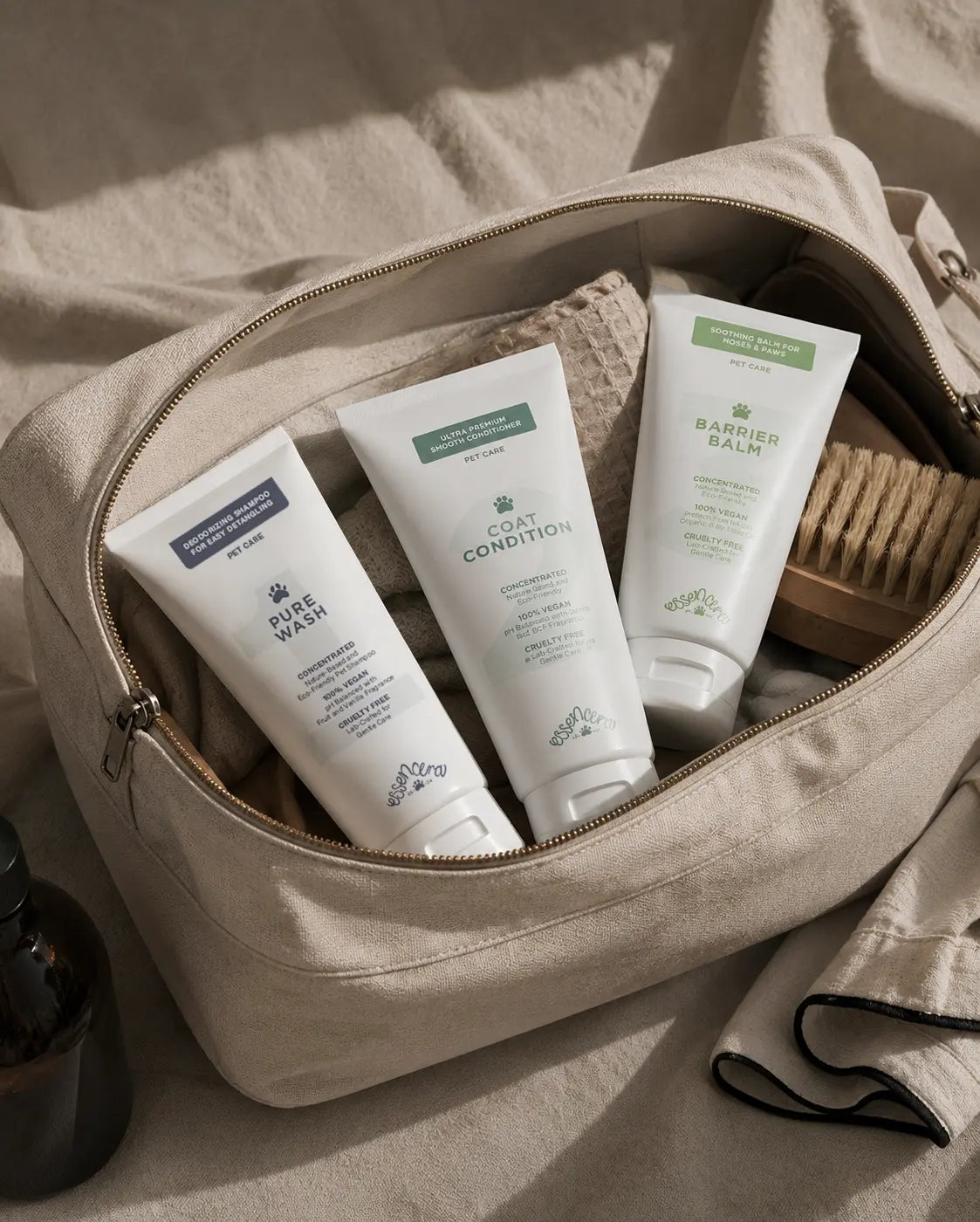
For ordinary cleansing, Pure Wash is a gentle option for regular washing and all coat types. If your dog has sensitive skin or needs especially gentle grooming, Calm Wash is formulated for sensitive skin, puppies, and senior dogs. Neither product is intended to remove hazardous substances or treat a medical condition.
Follow the product directions: wet the coat, massage in a small amount, leave it for 2-3 minutes, then rinse thoroughly. Repeat only if needed. Stop if irritation develops. Choosing a routine wash should feel simple, not like an experiment with several products at once.
Condition and protect after ordinary grooming
After routine washing, Coat Condition is the anti-tangle premium conditioner. Work it through the coat, leave it on for 2-3 minutes, then rinse thoroughly. It supports ordinary grooming and coat care, not contaminant removal. If the coat still seems affected by an unknown substance, don’t condition it as a next step. Seek veterinary advice instead.
For dry paws, nose, or rough skin areas after safe cleanup, Barrier Balm can help hydrate and provide a lightweight protective layer without a heavy or greasy finish. Apply it only to clean, dry areas as part of routine care, not to cover or treat a suspected exposure.
Keep the purpose clear: ordinary grooming helps care for a clean coat, while a possible hazardous exposure calls for professional direction. For gentle routine coat care after the risk is ruled out, explore Essencera grooming products. Shampoo is for everyday cleansing, not chemical decontamination.
Make Gentle Coat Care Part of Your Routine
The next time you’re unsure about removing pollution from my dog's coat, let the substance guide your response, not the urge to make the fur look clean right away. If there’s any doubt about exposure, get veterinary guidance before reaching for grooming products. Shampoo is for routine cleansing after hazardous contamination has been ruled out, not for chemical decontamination.
For everyday coat care, Essencera’s concentrated, vegan grooming formulas are designed for a simple Clean, Condition, Protect routine. Their low-lather cleansing is made to lift ordinary dirt while helping preserve moisture. Thoughtful, consistent grooming can make cleanup feel less stressful and give you a familiar way to care for your dog’s coat between outdoor adventures.
Choose the routine care that fits your companion, and keep professional guidance in mind whenever a substance or reaction feels uncertain. Explore Essencera’s gentle dog grooming care and find a calm next step for your dog’s regular grooming routine. A little care, offered gently, goes a long way toward helping your companion feel comfortable.
Frequently Asked Questions
Why doesn't it foam as much as other shampoos?
Essencera uses gentle coconut-derived surfactants rather than harsh sulfates, so a light lather is normal. Foam alone isn’t a reliable way to judge routine cleansing. For an everyday bath, follow the directions for Pure Wash Shampoo and rinse the coat thoroughly. Don’t use lather level to decide whether a product can remove an unknown substance. If you’re unsure about what’s on the coat, ask a veterinarian before washing.
Can I dilute it to make it last longer?
No. Essencera says its formulas are designed to be used undiluted and that dilution reduces effectiveness. Follow the product directions rather than changing the formula or measuring extra water into it. This guidance is for normal grooming use. If the coat has unusual residue, don’t try to alter a grooming product to make it act like a stronger cleaner. Ask a veterinary professional what to do instead.
Will it help with my dog's skin allergies?
Essencera describes its formulas as allergen-conscious and free of common irritants, and some customers report improvements with CalmWash Shampoo for sensitive-skin grooming. That isn’t a treatment claim or a guarantee. If your dog has a medical skin condition or develops a reaction during grooming, stop using the product and consult your veterinarian before trying another grooming product.
Can I use it in salt water or before swimming?
Essencera says its products are designed to be rinsed out. Its guidance is to apply Barrier Balm to your dog’s paws before swimming, then wash afterward with Pure Wash or CalmWash. This routine is for ordinary grooming, not unknown or potentially hazardous water contamination. If you suspect a harmful substance was in the water, contact a veterinarian for advice.
What's the difference between the three washes?
The washes are designed for different routine grooming needs: Shield Wash Shampoo is for outdoor use and pest deterrence, Pure Wash Shampoo is for everyday cleansing, and CalmWash Shampoo is for sensitive-skin grooming, puppies, and seniors. Shield Wash isn’t for cats. These are grooming choices, not pollutant-removal methods.
Is it safe for puppies?
Essencera describes CalmWash Shampoo as formulated for puppies. For a first bath, keep the experience calm and brief, avoid contact with the eyes, and watch how your puppy responds. For a sensitive pet, Essencera recommends testing the product on a small area and waiting 24 hours. If your puppy has contacted an unknown substance, ask a veterinarian for advice before bathing.