Cost of Professional Grooming vs Home Bathing: Compare Prices
The cost of professional grooming vs home bathing is usually higher per salon visit, but the service may include more than cleaning. Home bathing generally costs less in direct spending, though supplies and your time also factor into the total.
It’s understandable to wonder whether doing everything at home is the best way to save. Often, combining home care with professional visits offers a practical balance: you can handle routine washing and brushing while leaving coat work and finishing tasks that are harder to manage to a groomer. This guide compares the costs and trade-offs, explains what professional grooming may include, and shows how a mixed routine can suit different coats and budgets.
Key Takeaways
- Compare the full cost of home bathing, including supplies and your time, with what a salon visit covers.
- Choose a grooming schedule around your dog’s coat and care needs, rather than relying on baths alone.
- Use home baths and brushing between appointments, while leaving specialist tasks to a professional when needed.
- Weigh professional expertise and equipment against the convenience and familiarity of bathing at home.
- Build a routine that balances your budget, your dog’s comfort, and the coat care you can manage consistently.
Final Thoughts: Grooming or Bathing?
Home bathing can reduce salon spending, while professional grooming can cover tasks beyond cleaning. A mixed routine lets you balance both around your dog’s coat and care needs.
At-Home Grooming Costs and Savings
At-home care shifts spending from salon visits to supplies, equipment, and your time. You’ll need dog-appropriate products, towels, and brushes suited to your dog’s coat. Savings depend on how often you would otherwise book appointments and which tasks you can comfortably manage. Bathing and brushing at home, for example, can extend the time between full salon visits.
Alternating Home and Salon Care
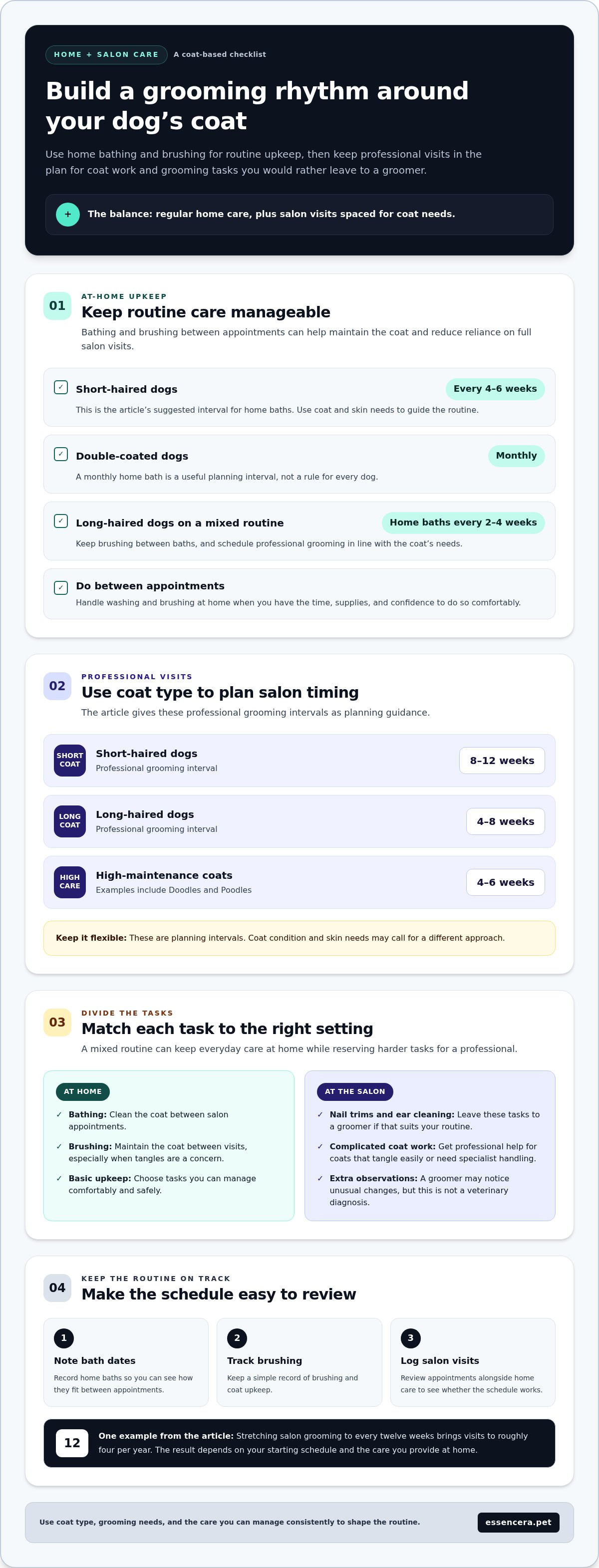
A mixed routine combines home baths and brushing between professional appointments. Stretching salon grooming to every twelve weeks brings visits to roughly four per year. The result depends on your starting schedule and the care you provide at home.
Professional visits can also provide an extra set of eyes. As they work through the coat, groomers may notice unusual changes in a dog’s skin, teeth, or other areas. They can handle tasks such as nail trimming, ear cleaning, and teeth brushing. These observations aren’t a veterinary diagnosis, but they may alert you to something worth discussing with your veterinarian.
| Care option | Direct spending | What it covers | Main trade-off |
|---|---|---|---|
| Home bathing | Supplies and equipment | Cleaning and brushing you can do at home | Requires your time and hands-on skill |
| Salon grooming | Per-visit fee | Bathing, brushing, and selected grooming tasks | Appointments add up with frequent visits |
| Alternating care | Home supplies plus fewer salon visits | Routine upkeep at home and professional care at appointments | Requires a consistent schedule |
To decide, start with your dog’s coat and the tasks you’re comfortable doing. A short-coated dog needing basic cleaning may suit more home care. A coat that tangles easily may need regular professional attention, with brushing between visits. If you choose a mixed routine, keep a simple record of bath dates, brushing, and salon appointments. This makes it easier to see whether the schedule works without letting coat care slide.
Professional groomer expertise and specialized equipment
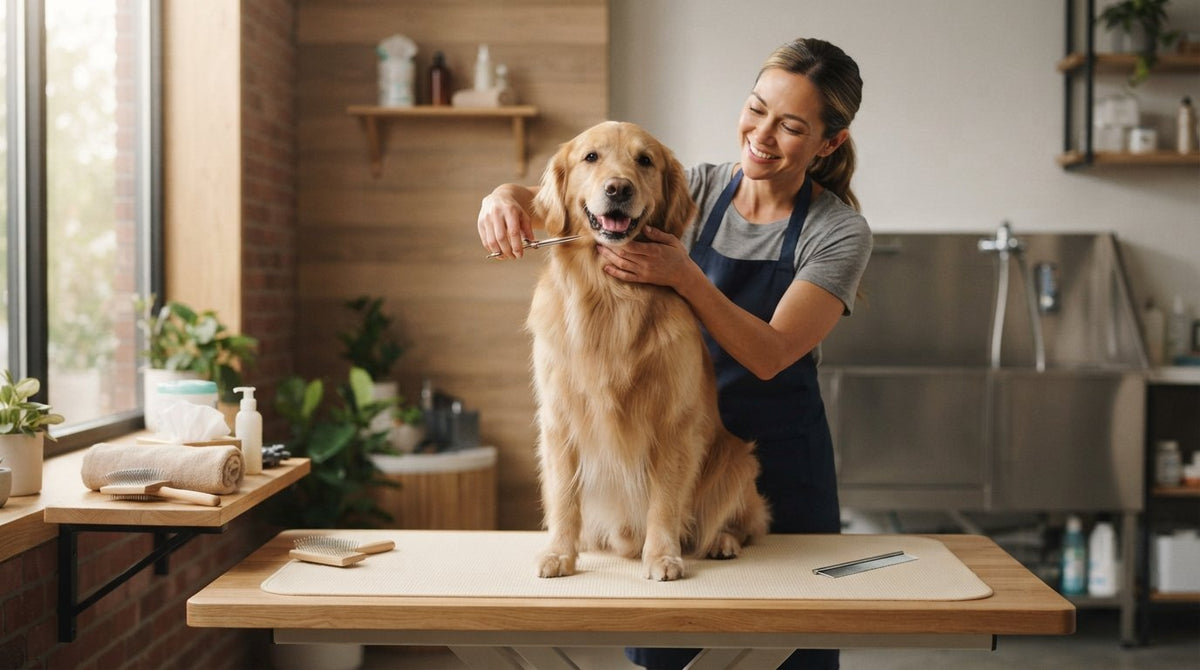
Salon grooming combines practiced handling with equipment designed for coat care. A groomer may use a raised table, a high-velocity dryer, clippers, combs, and shears. At home, a bathtub, towels, and a household dryer may cover basic washing, but they don’t provide the same setup for every coat or task.
How much time does professional grooming take compared with bathing a pet at home? It depends on coat condition and the services requested. A home bath also involves setup, rinsing, drying, brushing, and cleanup, while a salon appointment may cover additional tasks such as nail trimming and ear cleaning.
Experience matters when a dog has a dense coat, tangles, or difficulty staying still. A groomer can choose suitable tools, work in sections, and adjust handling to help the dog stay comfortable. For example, a thick-coated dog may need careful drying and brushing after washing, not just a quick towel rub. At home, rushing these steps can leave damp areas or missed tangles.
Salon equipment can make specific tasks easier. A secure grooming table gives the groomer a stable working height, while a professional dryer can remove water from the coat before finishing. Clippers and shears also require control, especially around delicate areas. Suitable tools and technique support safety, but equipment alone doesn’t replace training or careful handling.
Home grooming supplies can start with a brush and towels, then expand to a nonslip bathing surface, a suitable dryer, nail tools, and coat-specific combs. For property owners and pet businesses planning dedicated wash areas, infrastructure specialists like House of Maverick provide the residential and commercial maintenance support needed to keep high-use plumbing and facilities running smoothly. Your investment depends on the tasks you plan to do, the tools your dog’s coat needs, and whether equipment needs replacement or maintenance. Buying a full set for occasional baths may cost more than using a few basic supplies.
- Home setup: Lower equipment needs for bathing and brushing, with time spent on drying and cleanup.
- Salon setup: Specialized equipment and groomer skill, with a fee for the appointment.
- Shared routine: Basic home supplies for upkeep, with salon tools and expertise for harder tasks.
To compare the overall cost, list each tool you’d buy and the grooming tasks you’d handle at home. Consider whether the tools suit your dog’s coat and whether you can use them comfortably and safely. Professional care can help with complicated coat work or tasks that feel difficult to manage; home bathing can make sense for routine cleaning when you have the right supplies and time.
Combining home baths with professional grooming
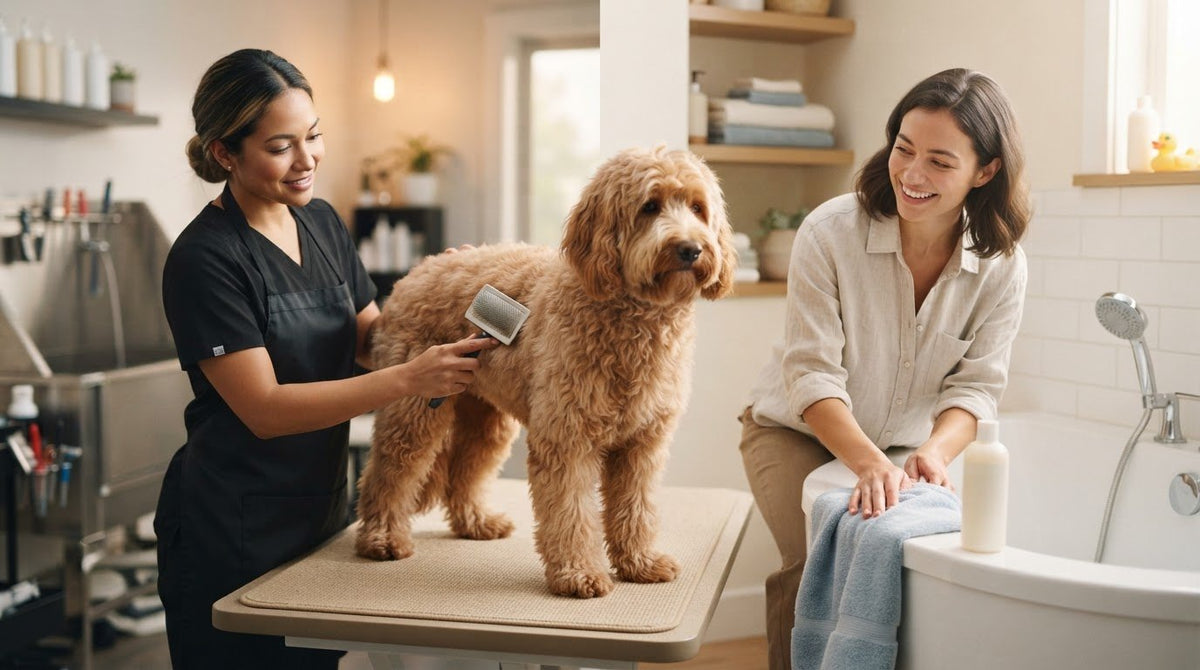
A mixed routine uses home care for regular upkeep and salon visits for tasks that need specialist handling. Dogs and cats don’t all need the same schedule, so let coat type and grooming needs guide your plan.
Home Baths Between Professional Grooming
Bathing and brushing your dog at home can keep the coat clean between salon appointments. For example, you can wash and brush your dog, then leave nail trims and ear cleaning to a professional groomer. This split reduces reliance on full salon visits while keeping essential grooming tasks in the routine.
Professional Grooming and Home Bath Frequency
Industry guidance suggests professional grooming every 8 to 12 weeks for short-haired dogs, every 4 to 8 weeks for long-haired dogs, and every 4 to 6 weeks for high-maintenance coats such as Doodles and Poodles. For a hybrid routine, long-haired dogs may have home baths every 2-4 weeks and professional visits every 4-8 weeks.
Home bathing frequency also varies by coat. Short-haired dogs may be bathed at home every 4-6 weeks, while double-coated dogs may be bathed monthly. These are useful planning intervals, not a reason to bathe a dog whose coat or skin needs a different approach.
Brushing helps maintain the coat between washes. According to the American Kennel Club, most dogs need brushing a few times a week, while long-coated dogs often do best with daily brushing. Regular brushing, for example, can help you spot tangles early, before they become harder to manage at a salon visit.
For cats, grooming frequency depends on coat length, condition, and how well the cat tolerates handling. A long-haired cat may need more frequent brushing at home than a short-haired cat. Keep sessions gentle and brief, and use professional grooming when coat care becomes difficult to manage safely at home.
Build a schedule around the care you can repeat consistently:
- Brush at home between baths, using a tool suited to the coat.
- Choose home baths based on coat length, dirt, and skin needs.
- Book salon visits for coat work or tasks you aren’t comfortable doing.
- Adjust the routine when you notice tangles, buildup, or changes in coat condition.
For example, an owner of a long-coated dog might brush daily, bathe at home between appointments, and keep professional grooming within the 4-8-week hybrid interval. A short-haired dog may need fewer salon visits, with home bathing planned around coat condition. For dogs with allergies or skin issues, use a vet-guided bathing schedule rather than following a general interval.
Professional grooming prices by dog size
When researching the cost of professional grooming vs home bathing, these ranges offer a starting point for comparing salon visits, but size isn’t the only factor that shapes a quote.
| Dog size | Basic bath-and-brush price range | Example |
|---|---|---|
| Small | $30 - $50 | A small dog needing a routine bath and brushing |
| Medium | $50 - $75 | A medium dog with a coat that needs thorough drying |
| Large | $75 - $100 | A large dog requiring more handling and brushing time |
| Extra-large | $100 - $150+ | An extra-large dog needing space and extended coat care |
Coat length and condition affect the work involved. A short-coated dog may need less brushing than a long-coated dog of similar size. Dense fur, tangles, or heavy shedding can require more time and careful handling. Requested services matter, too: nail trims, ear cleaning, and teeth brushing may be part of a broader appointment rather than a basic bath-and-brush.
Location affects the comparison, too. City salons in the United States tend to charge 15 to 30 percent more than suburban or rural salons. For example, two salons offering the same basic service may differ because one operates in a city. Treat the size ranges as a planning guide, then compare the service itself, coat needs, and location.
How much does professional cat grooming cost in the US? Prices depend on coat length, coat condition, handling needs, and the tasks included. A long-haired cat needing extensive brushing presents a different grooming job from a short-haired cat needing a simple wash.
For a fair comparison, separate a basic bath-and-brush from a full appointment. A small dog’s basic service has a lower starting range than an extra-large dog’s, but additional coat work or handling can affect the final charge. Compare like with like: list the requested tasks, note your pet’s size and coat condition, and consider whether home care could cover brushing between salon visits, perhaps using tools recommended by brands like Essencera.
- Start with size: Use the relevant range in the table as your baseline.
- Describe the coat: Mention length, density, tangles, or shedding when comparing service estimates.
- Count the tasks: Distinguish a bath-and-brush from appointments that include nail, ear, or teeth care.
- Include location: Consider the city premium when comparing salon costs.
Dog size gives you a helpful first estimate, while coat condition, requested care, and location refine it. For cats, coat and handling needs help define the work involved. These distinctions make it easier to decide whether salon grooming, home bathing, or a combination fits your pet’s care routine.
Pros and cons of professional grooming versus home bathing
Choose a professional groomer when coat care is difficult to manage, your dog needs specialist handling, or nail trimming feels unsafe at home. Home bathing suits routine cleaning when your dog stays comfortable and you can complete the drying and brushing steps.
A groomer brings skill and equipment to coat work that can be challenging in a bathtub. Brushing out a dense or tangle-prone coat, for example, takes patience and technique. Professional grooming can also include nail trimming, ear cleaning, and teeth brushing. Groomers may notice changes in the skin, teeth, or body during a session, another reason to keep regular appointments.
There are trade-offs. Salon visits cost more than a bath at home, and unfamiliar places, people, or animals can make some dogs anxious. A dog that becomes distressed in a busy facility may need a quieter approach or shorter sessions. The setting matters, too: a calm, familiar home may feel easier for a pet that struggles with new environments.
Home bathing gives you control over the setting and timing. You can pause, use a familiar tub, and make the routine predictable with the same towel and brush. Learning suitable bathing and brushing techniques can help owners save hundreds or even thousands per year in grooming costs. Those savings depend on how much care you take on and the tools you need.
But home care takes time, knowledge, and skill. A rushed wash may leave the coat damp or tangles unnoticed, while nail trimming can be difficult if your dog pulls away. Mats and overgrown nails can become painful problems, so don’t let cost savings replace care your dog needs. If handling a task feels unsafe, leave it to a trained groomer.
- Choose salon care for difficult coat work, nail care, or tasks you can’t safely manage.
- Choose home bathing for routine cleaning when your dog tolerates the bath and you can dry and brush thoroughly.
- Combine both by handling baths and brushing at home, then booking professional help for nail trims and other challenging tasks.
For example, you can wash and brush your dog at home, then use a groomer for nail trimming and coat finishing. That approach keeps routine care in a familiar setting while reserving professional sessions for tasks that need practiced handling—similar to how personal wellness routines often pair everyday maintenance at home with targeted aesthetic care from clinics like NAWRA. Professional grooming removes dead and damaged hair, supporting a healthier, shinier coat. Home bathing alone may not provide the same broader care.
Decide by matching each task to your dog’s coat, comfort, and your own confidence. If your dog is relaxed in the tub and the coat is easy to maintain, home bathing can cover basic cleaning. If coat condition, nail care, or stress makes the process difficult, professional grooming may be more practical.
Essencera: Pure Wash
Essencera describes its range as the first luxury grooming system for dogs, guided by its tagline, “Essential by design. Rich by nature.” The PureWash Shampoo is a concentrated, low-lather formula that cleanses without stripping. It contains coconut-derived surfactants, hyaluronic acid, an amino-acid complex, and organic botanicals.
For coat upkeep, the anti-tangle premium conditioner, Coat Condition, supports slip and easier brushing. Barrier Balm is made for paws and noses, helping hydrate dry or rough areas as part of your pet’s care routine.
Choose grooming products suited to the care you plan to do at home, and keep professional appointments for tasks that need skilled handling. Explore PureWash Shampoo and other grooming essentials at essencera.pet.
Make a Care Routine That Fits Your Pet
As you weigh the cost of professional grooming vs home bathing, consider which parts of your pet’s care you can comfortably maintain at home and where professional handling may help. A manageable routine is easier to keep consistent, and you can adjust it as your pet’s coat and needs change.
For home bathing, Pure Wash offers a cleansing option, while Coat Condition supports detangling during drying and finishing. For dry or rough paws and noses, Barrier Balm helps hydrate those areas. Choose the products that suit the care you plan to do, and leave grooming tasks you find difficult to a professional.
Ready to explore gentle home-care options? Visit Essencera and find a thoughtful next step for your pet’s routine.
Frequently Asked Questions
Can You Combine Both?
Yes. Give each part of the routine a clear role: handle simple upkeep at home and reserve salon sessions for work you find difficult. A grooming calendar can track baths, brushing, and appointments without complicated planning. For example, note when your pet’s coat starts feeling harder to brush, then use that to adjust the timing of the next appointment.
Final Verdict: Which Is Better?
The better choice is the one you can carry out consistently while keeping your pet comfortable. Before deciding, consider whether your pet tolerates handling, whether you can complete the drying and coat-care steps, and whether you have time for ongoing maintenance. If those needs vary, you don’t have to choose one method. Divide the routine into manageable tasks and review it as your pet’s needs change.
What Does Bathing at Home Include?
A home wash usually involves preparing the space, wetting and cleansing the coat, rinsing, drying, and tidying up afterward. Before you begin, place towels and grooming tools within reach, and make sure your pet can stand securely. Allow time for a calm introduction to the water and a thorough rinse. Choose products appropriate for your pet and use them as directed.
What Does Grooming Really Include?
Professional grooming is an appointment whose scope depends on the service selected. Tell the groomer what result you want, such as an even outline or a neater face, and point out areas your pet dislikes being touched. Describe the coat’s recent condition and any past grooming challenges. Clear instructions help align the session with your priorities.
What Is the Average Cost of Professional Dog Grooming in the US?
There isn’t one useful price for every dog grooming appointment, since the service and work involved vary. To make a personal budget, multiply the quoted cost of one visit by the visits you expect to schedule, then include any extra services you want. This gives you a clearer estimate for your dog than relying on a single nationwide average.
How Much Does a Home Dog Bath Cost, Including Shampoo and Supplies?
Start by listing the supplies you’ll use and which ones you already own. Include towels, brushes, and pet shampoo, such as PureWash Shampoo, in your coat-care budget. Then account for the time spent preparing, drying, and cleaning up. Your estimate depends on your existing equipment and what needs replacing.
How Much Does a Home Cat Bath Cost, Including Supplies?
There’s no single home-wash total for cats because supplies depend on the cat and the setup you already have. Consider towels, a secure washing space, and a brush suited to your cat’s coat. If you’re deciding whether to buy dedicated equipment, first consider how often your cat needs this care and whether brushing alone meets its routine needs.
How Do Grooming Prices Vary by Pet Size, Breed, Coat Type, and Location?
These details help explain why appointments for two pets may involve different amounts of work. Breed can affect the expected coat shape, while texture and condition influence the grooming steps. Location also affects salon pricing. To compare estimates usefully, describe your pet and request the same service scope from each salon, including any optional finishing or add-on tasks you want.