
Dog Snout Hyperkeratosis Causes and Balm Care
A crusty nose needs gentle care, not a quick peel. For dog snout hyperkeratosis, treatment with Barrier Balm may help soften rough, dry skin, but it won’t cure the condition. Never pick, peel, or trim crusts, as this can cause pain, bleeding, and a fresh wound.
It’s natural to want to smooth away thick, flaky patches as soon as you notice them. A safer approach is to soften the area gently with a warm compress, then apply Barrier Balm without forcing crusts to lift. Hyperkeratosis can have different underlying causes, so a veterinarian can assess your dog’s nose and decide whether further checks are needed.
This guide explains what nasal hyperkeratosis looks and feels like, what may contribute to it, and how to use a warm compress and Barrier Balm carefully. You’ll also learn what changes to watch for and when home care should give way to veterinary advice, so each grooming moment can be calm and kind.
Key Takeaways
- Leave nose crusts in place rather than picking, peeling, or trimming them, which can hurt the skin.
- Age, inherited tendencies, and possible zinc deficiency can contribute to hyperkeratosis, so a veterinarian can help assess potential causes.
- Use a warm compress gently before applying balm, and let softened crusts loosen on their own.
- Choose a balm made for dogs’ noses and paws, and watch for changes that may call for veterinary attention.
Avoiding picking, peeling, or trimming crusts
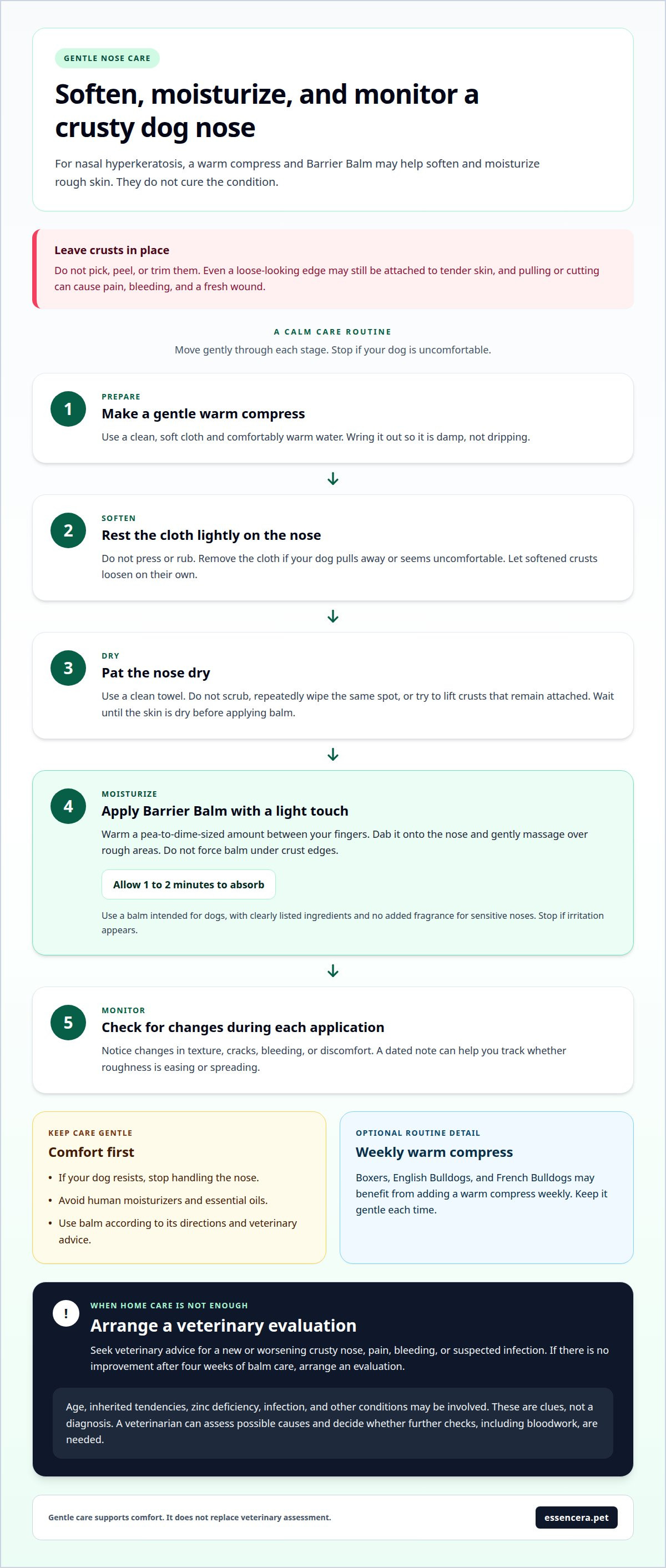
Keep your fingers, scissors, and nail clippers away from nose crusts. Pulling or cutting thickened skin can cause bleeding, pain, and a fresh wound. Even a loose-looking edge may still be attached to tender skin underneath. Soften the area gently instead, and let crusts loosen on their own. If your dog resists, stop handling the nose and seek veterinary advice.
A veterinarian can assess the nose and consider possible causes, including infection, zinc deficiency, or other conditions. These problems can look similar, so appearance alone may not reveal the cause. Bloodwork can help investigate suspected hyperkeratosis and check for infection or zinc deficiency.
Veterinary treatment and over-the-counter nose balm serve different purposes. A veterinarian can assess underlying causes and manage pain; balm mainly moisturizes rough skin. Costs depend on the care required and the balm chosen, so no single cost comparison applies to every dog.
Choose a balm intended for dogs, with clearly listed ingredients and no added fragrance for sensitive noses. Calendula and olive oil are examples of botanical ingredients used in nose-care products. A product marked USDA Organic is stated by the U.S. Department of Agriculture to contain at least 95% organic material. That label describes organic content, not whether a product treats hyperkeratosis.
Ongoing care may help keep the nose comfortable. Arrange a veterinary evaluation for a new or worsening crusty nose, pain, bleeding, or suspected infection. Seek reassessment if the condition hasn’t improved after four weeks of balm care.
Human moisturizers and essential oils aren’t made specifically for a dog’s nose, and licking can expose your dog to their ingredients. Avoid applying essential oils or products with unclear ingredients. For gentle nose-and-paw balm care, follow the product directions and stop if irritation appears.
Common causes, including age, genetics, and zinc deficiency
Age can influence the likelihood of nasal hyperkeratosis. Middle-aged and older dogs are more likely to develop it, as changes in skin renewal may allow keratin to build up. Keratin is a normal skin protein, but excess can leave the nose dry, thick, and crusted. Age alone doesn’t establish the cause; the nose’s appearance and your dog’s overall health also matter.
Inherited tendencies may play a role, and some breeds are more susceptible. These include Cocker Spaniels, Dogues de Bordeaux, Irish Terriers, Labradors, brachycephalic breeds, Boxers, English Bulldogs, French Terriers, Bedlington Terriers, and Golden Retrievers. A breed tendency doesn’t mean every dog will develop crusting. It does make regular observation useful, especially if the nose’s texture changes over time.
Zinc deficiency is another possible contributor. Zinc supports normal skin health, and low levels may be associated with skin changes, including excess keratin. The reasons for low zinc can vary, so a crusty nose isn’t proof of a deficiency. A veterinarian can assess your dog’s diet, health history, and symptoms, then decide whether bloodwork or other testing is appropriate.
Other health problems can also resemble or contribute to nasal crusting. Infection is one possibility, while irritation or another skin condition may cause similar changes. Note when the texture changed, whether crusting affects one or both sides, and whether your dog shows discomfort. These observations can help a veterinarian assess the pattern alongside a physical examination.
Age, breed, and possible zinc deficiency are clues, not a diagnosis. A new change in a senior dog, a susceptible breed, or a dog with additional skin symptoms warrants veterinary attention. Identifying an underlying cause matters because moisturizing can soften rough skin, but it doesn’t address every condition that may be driving the buildup.
Warm compress and balm application routine
Start with a clean, soft cloth and comfortably warm water. Wring out excess water so the cloth is damp, not dripping. Rest it lightly against your dog’s nose without pressing or rubbing. Keep the session calm, and remove the cloth if your dog pulls away or seems uncomfortable. Warmth can soften dry buildup, making gentle care easier.
After the compress, pat the nose dry with a clean towel. Don’t scrub or try to lift crusts that remain attached. Balm belongs on clean, dry skin, so wait until the nose is dry before applying it. A patient pause protects delicate skin better than adding pressure or repeatedly wiping the same spot.
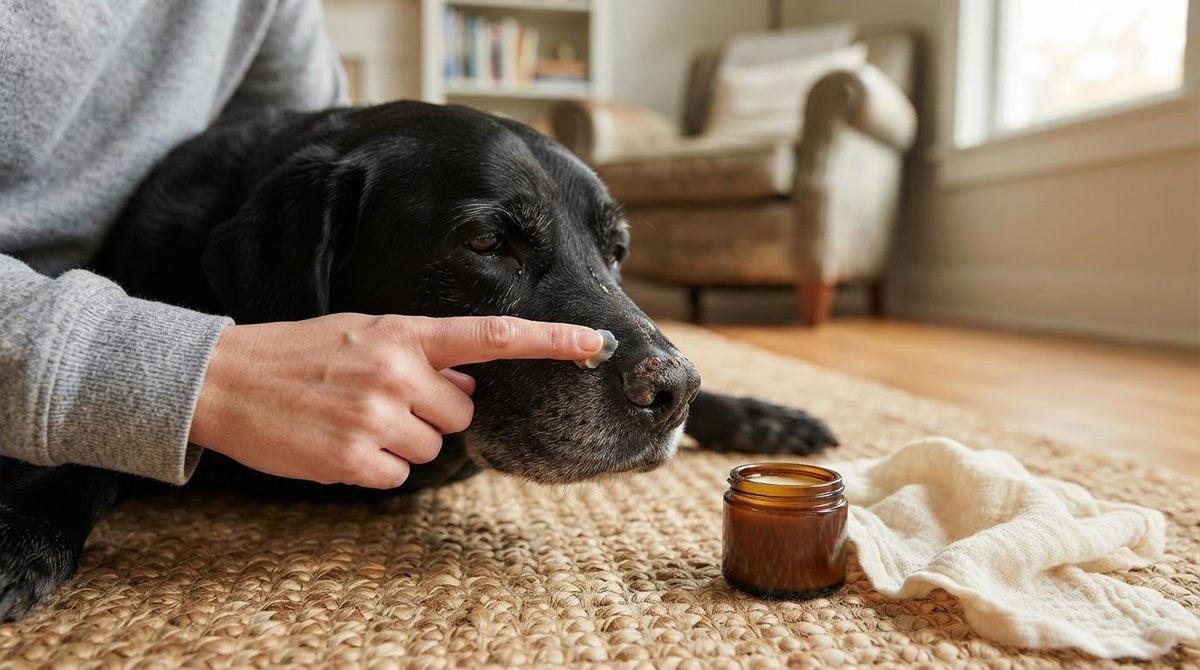
Warm a pea-to-dime-sized amount of Barrier Balm between your fingers. Dab it onto the nose, then massage gently over rough areas. Keep your touch light, and don’t force product beneath crust edges. Allow one to two minutes for absorption before play or a walk. For dog snout hyperkeratosis, treatment with Barrier Balm starts with gentle application, not firm rubbing. If redness or irritation appears, stop using the balm.
Use Barrier Balm for daily maintenance or as needed, following the product directions and veterinary advice. Boxers, English Bulldogs, and French Bulldogs may benefit from adding a warm compress weekly. Keep each compress gentle, even when it becomes part of a familiar routine.
Check the nose during each application for changes in texture, cracks, bleeding, or discomfort. A dated note can help you track whether roughness is easing or spreading. If there’s no improvement after four weeks of consistent balm care, arrange a veterinary evaluation. A changing nose may need more than surface hydration, and repeated pressure won’t resolve an underlying cause. A consistent routine can make Barrier Balm part of caring for dog snout hyperkeratosis.
What causes nasal hyperkeratosis in dogs, and what are the symptoms?
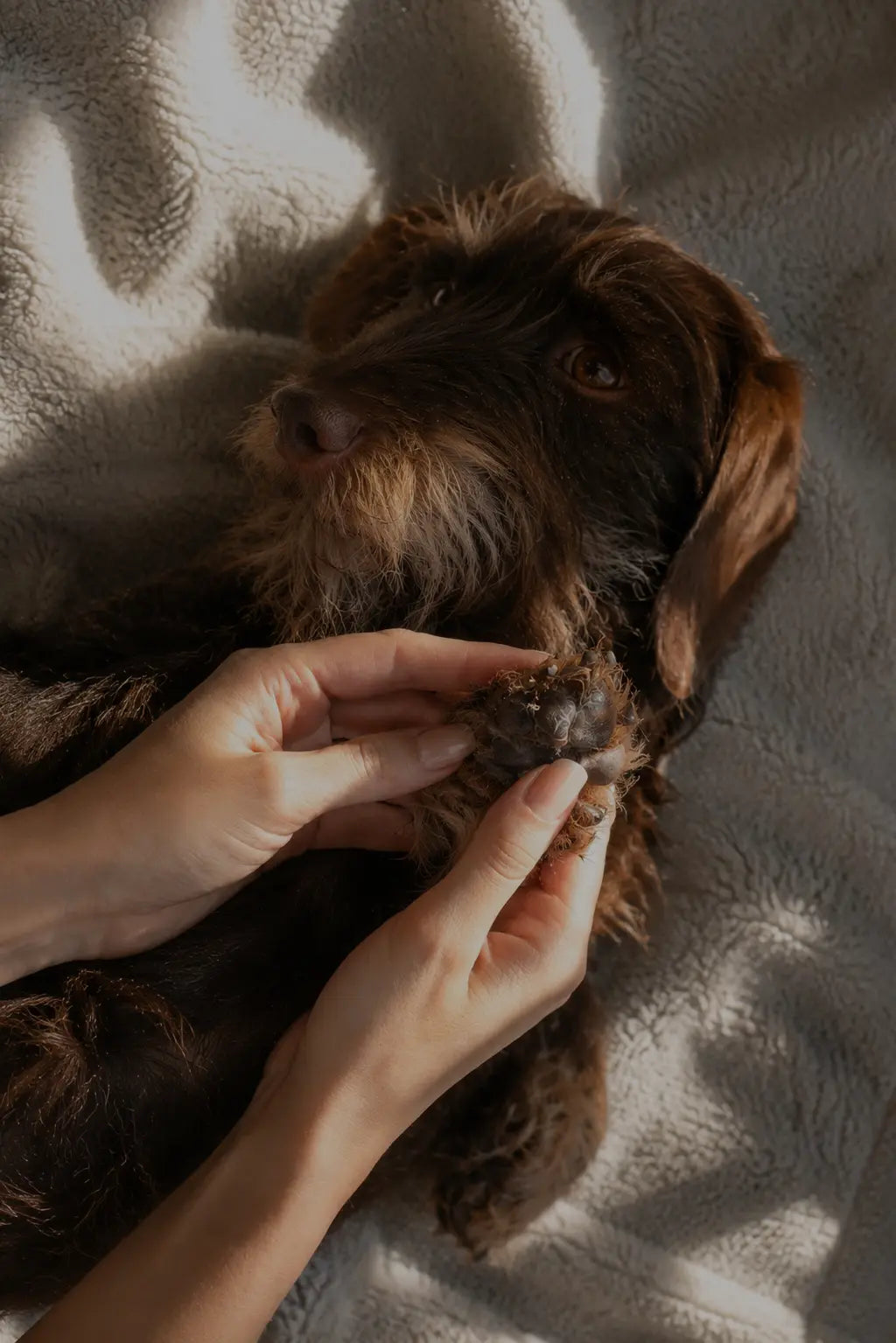
Nasal hyperkeratosis develops when keratin, a normal skin protein, accumulates on a dog’s nose. The surface may become unusually dry, thick, rough, or crusted. Instead of feeling smooth, the nose can have hardened patches that remain visible between gentle cleanings. These changes may indicate a skin condition, but they don’t identify its cause by themselves.
Age and inherited susceptibility can influence which dogs develop nasal changes. Middle-aged and older dogs are more likely to develop hyperkeratosis. Breeds reported as susceptible include Cocker Spaniels, Labradors, Boxers, and English Bulldogs. Breed and age provide useful context, not a diagnosis: a susceptible dog may never develop symptoms, while another dog may have crusting for a different reason.
Zinc deficiency is one potential contributor, alongside infection or other underlying causes. Visible buildup doesn’t show whether a dog has low zinc, so don’t diagnose a deficiency from nose appearance alone. A veterinarian can consider your dog’s history and examine the nose, then use bloodwork to investigate infection, zinc deficiency, or other potential causes.
Look for persistent roughness, thickened skin, and dry crusts on the nasal surface. Note whether the texture changes over time, whether crusts spread, and whether your dog reacts when the nose is touched. Fragile, crusted skin can bleed if damaged. Pain, worsening crusts, or accompanying skin changes are useful details to report during a veterinary assessment.
Several conditions can produce a crusty nose, so symptoms need context. A new change in a senior dog, or crusting in a Boxer or Labrador, warrants attention rather than assumptions about the cause. Record when you first noticed the change and any other symptoms. A clear timeline helps a veterinarian distinguish hyperkeratosis from other possible problems and choose appropriate next steps.
Essencera: Barrier Balm
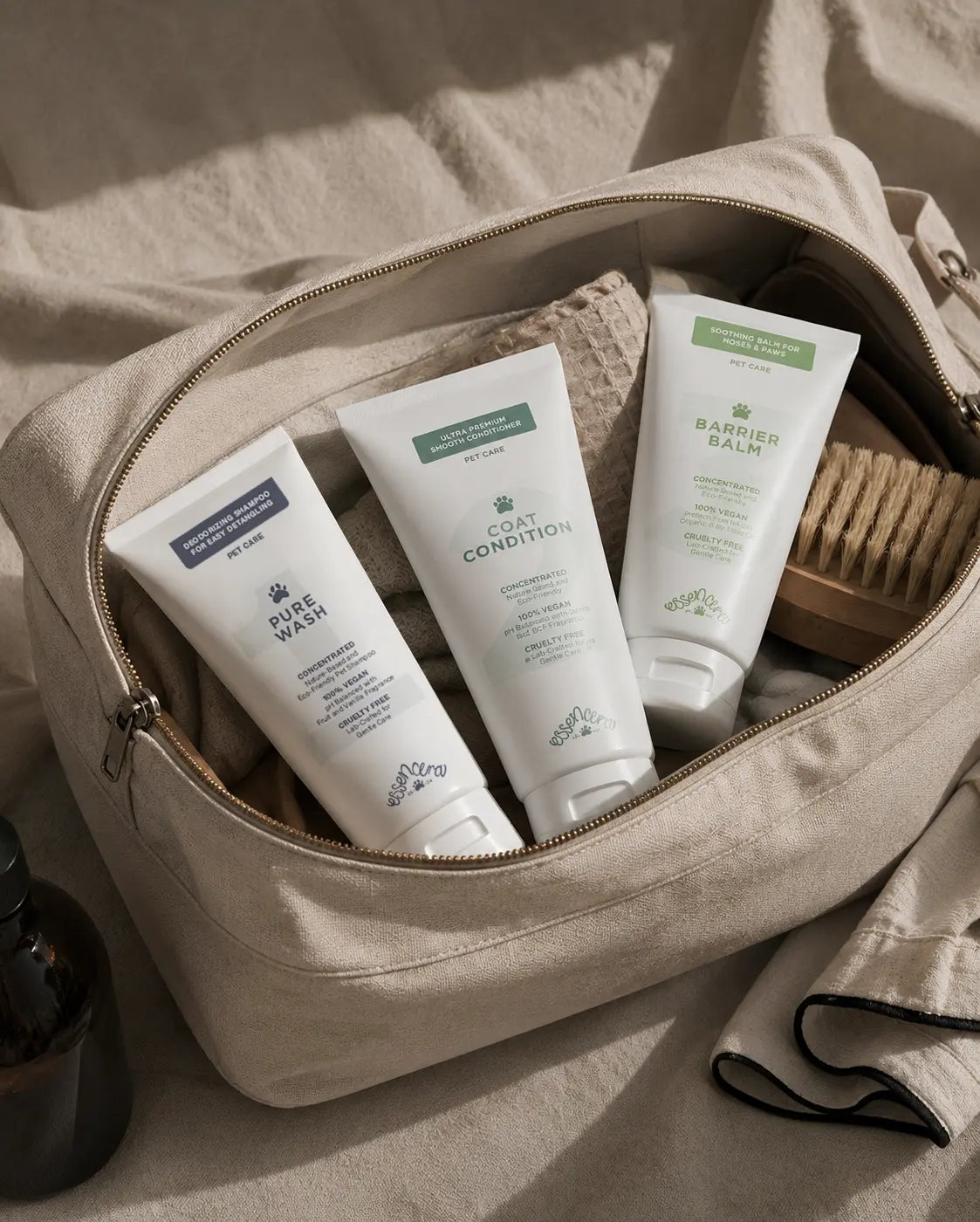
Barrier Balm offers a gentle way to moisturize your dog’s nose during routine care. Its fragrance-free formula includes organic olive oil, calendula, aloe, and panthenol. Apply a small amount to clean, dry skin, then massage gently and allow it to absorb. Leave attached crusts undisturbed.
This balm moisturizes rough areas; it doesn’t diagnose or cure nasal hyperkeratosis. If your dog’s nose is painful, bleeding, worsening, or unchanged after consistent care, arrange a veterinary assessment. A veterinarian can investigate possible underlying causes while you keep surface care gentle.
For everyday nose and paw hydration, explore Barrier Balm for dogs’ noses and paws. If you have questions about Essencera products, please contact Essencera.
Keep care gentle and consistent
Build a steady, observant care routine. Note how your dog’s nose looks and feels, and leave crusts untouched. If symptoms change or discomfort appears, make veterinary care part of the plan. Barrier Balm can be one part of dog hyperkeratosis snout treatment, but it can’t identify or resolve every underlying cause.
Essencera offers Pure Wash shampoo and anti-tangle premium conditioner for bathing and coat care, plus Barrier Balm to hydrate rough areas on the nose and paws. Choose each product for its intended role, and follow its directions as part of a gentle routine.
For help choosing balm care, contact Essencera for balm advice. Small, careful steps can make nose care feel calmer for you and your dog.
Frequently Asked Questions
What Is Hyperkeratosis?
Hyperkeratosis is excess keratin buildup that makes skin unusually thick or rough. For nose care, a clear baseline photo can help you notice gradual changes without touching the surface. Take one in consistent lighting and from the same angle, then compare it with another photo every three months. A photo records appearance, but it can’t identify the cause.
Can I use coconut oil instead of a dedicated nose balm?
Coconut oil may moisturize, but it isn’t a substitute for checking the needs and sensitivities of your dog’s nose. A balm formulated for noses and paws offers a clear ingredient list and directions for those areas. If you try a new topical product, test a small area first and watch for irritation. For sensitive pets, wait 24 hours before wider use.
How quickly will I see improvement?
Some changes appear before others: owners may notice a softer-feeling nose within 5-7 days, while visible crust reduction typically takes 2-3 weeks. Full transformation can take 4-6 weeks of consistent twice-daily balm use. Keep application consistent during that period, and compare clear photos rather than relying on memory. If the nose worsens, don’t wait for a target date to seek veterinary advice.
Is the balm safe if my dog licks it?
Barrier Balm is described as safe if licked, but that doesn’t mean every nose balm has the same safety profile. Check the specific product’s directions and ingredient list, especially if your dog tends to lick topical products. If licking is frequent, pause application and ask your veterinarian how to protect the area without encouraging more licking.
Why does it happen?
The cause varies between dogs. Age, inherited susceptibility, zinc deficiency, infection, and other underlying conditions may be involved, so appearance alone can’t tell you which applies. Before an appointment, note when the nose changed and list your dog’s food, supplements, and other skin symptoms. This context gives the veterinarian a fuller picture than a close-up of the nose alone.
Will the hyperkeratosis ever go away completely?
There’s no known cure for canine hyperkeratosis, so care often focuses on keeping the nose comfortable. If an underlying contributor is found, addressing it may also be part of the care plan. Moisturizing can support rough skin, but it doesn’t establish or resolve the cause. Ask your veterinarian how to adapt care if the nose becomes painful or changes noticeably.