
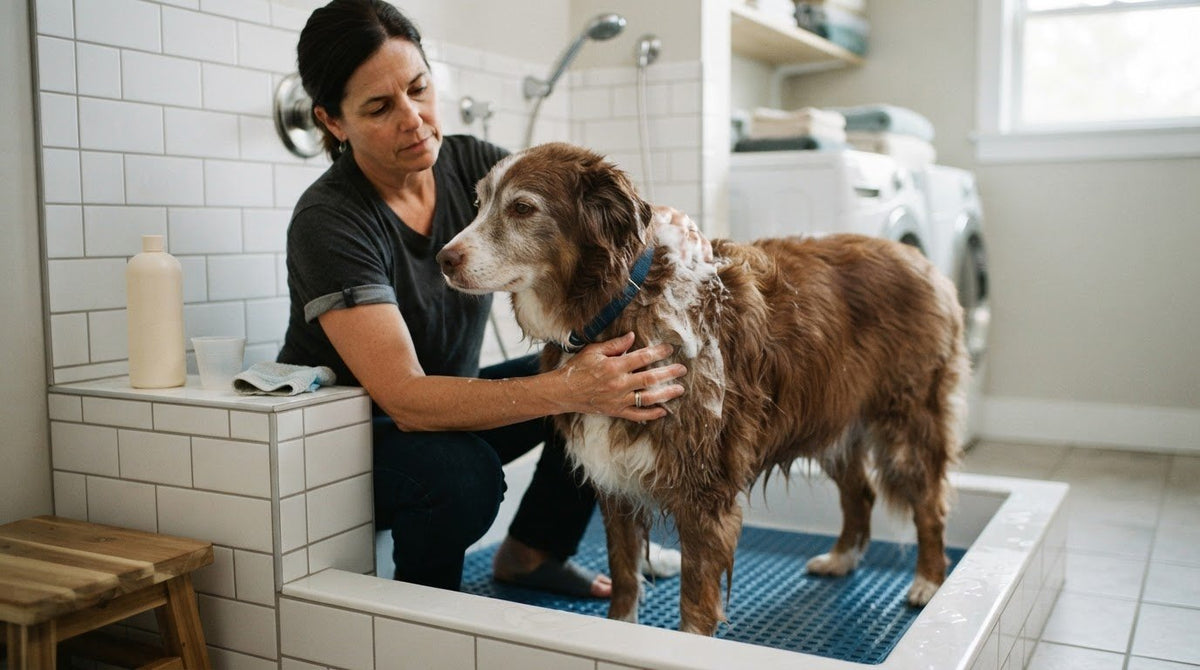
How to Adjust Grooming for a Senior Dog’s Comfort
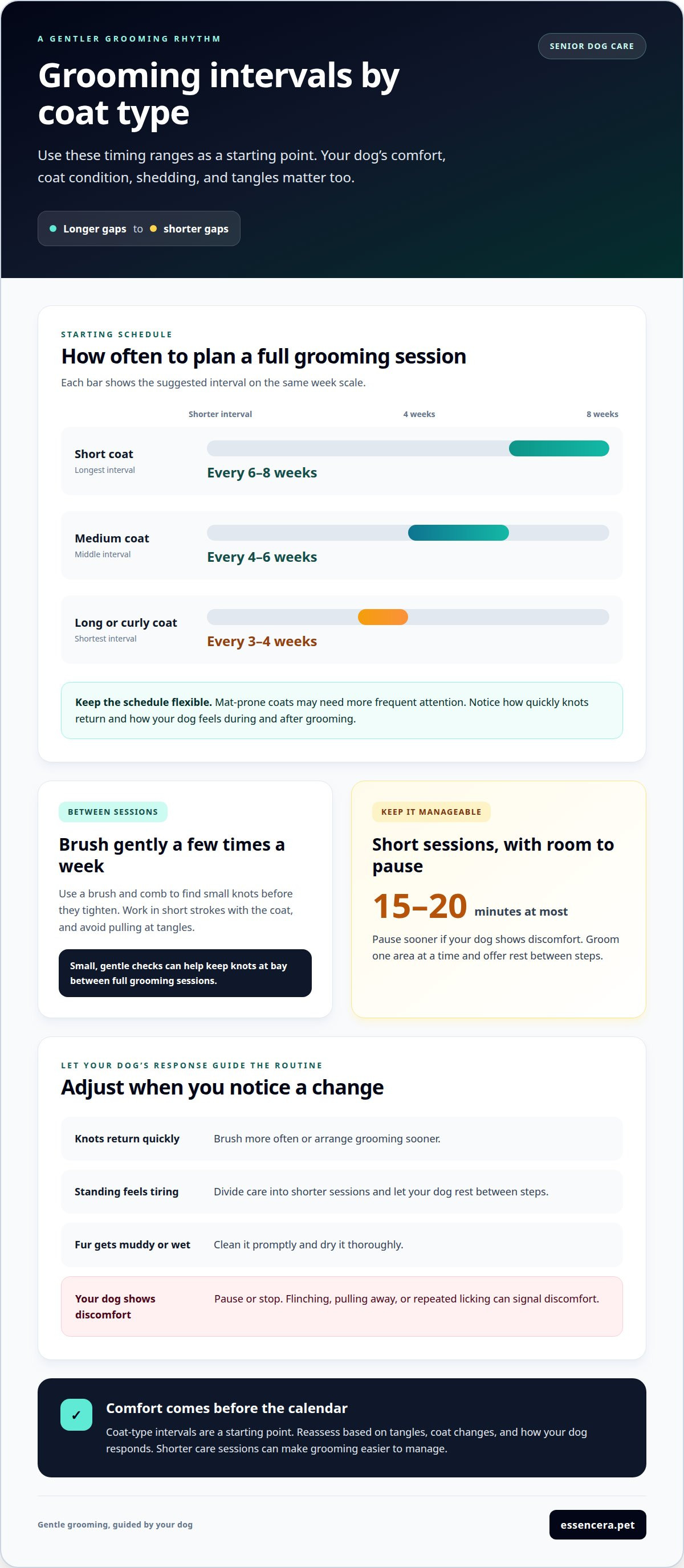
Is your dog too old for grooming? Age alone isn’t a reason to stop, but grooming needs for a senior dog often call for gentler handling and shorter sessions. As a starting point, short coats may need grooming every six to eight weeks, medium coats every four to six weeks, and long or curly coats every three to four weeks. Your dog’s comfort and coat condition matter, too.
It makes sense to rethink a routine that once felt easy. Older dogs may have more delicate skin, tangles, or stiff joints, so standing through a long wash and brush-out can become tiring. A few gentle brushing sessions each week can help keep knots at bay between washes.
Learn how to adjust grooming frequency, washing, breaks, and support to help your dog stay comfortable. Small changes can make care calmer, from choosing a gentle wash to providing a secure place to rest. Grooming can remain a tender part of your bond when your dog’s needs lead the way.
Key Takeaways
- Adjust grooming intervals to your dog’s coat type, and keep up with gentle brushing between full sessions.
- Make baths kinder to delicate skin with warm water, gentle tools, and careful attention to your dog’s comfort.
- Reduce strain by supporting your dog’s position, taking breaks, and adapting the session to their mobility and health.
- Choose gentle care for your dog’s coat and dry areas, and make calm, reassuring grooming part of your routine.
Adjusting Grooming Frequency and Methods
As dogs age, coat condition and comfort can change, so owners may need to adjust the routine. The grooming needs for a senior dog depend partly on coat length: short-coated dogs may need grooming every six to eight weeks, medium-coated dogs every four to six weeks, and long or curly-coated dogs every three to four weeks. Treat these intervals as a starting point, then consider shedding, tangles, and your dog’s tolerance.
Long, curly, or mat-prone coats often need more frequent attention than smooth coats. Brush gently a few times a week, using a brush and comb to find small knots before they tighten. Senior dogs may shed less, allowing undercoat to build up and making combing harder. Their coat can also become drier and more fragile, so use short strokes and avoid pulling at tangles.
Keep each grooming session shorter if standing or handling seems tiring. Limit sessions to 15 to 20 minutes at a time, and pause sooner if your dog shows discomfort. Arthritis or stiff joints may make lifting a paw or standing still painful, so groom one area at a time and offer rest between steps. A shorter trim can reduce brushing time and help prevent future mats.
Reassess grooming needs for a senior dog by noting how quickly knots return and how your dog responds afterward. If tangles recur quickly, brush more often or arrange grooming sooner. If your dog tires easily, divide care into shorter sessions. Clean muddy or wet fur promptly and dry it thoroughly. Regular checks can reveal coat changes or sensitive areas before grooming becomes uncomfortable.
Bathing Dogs with Sensitive or Dry Skin
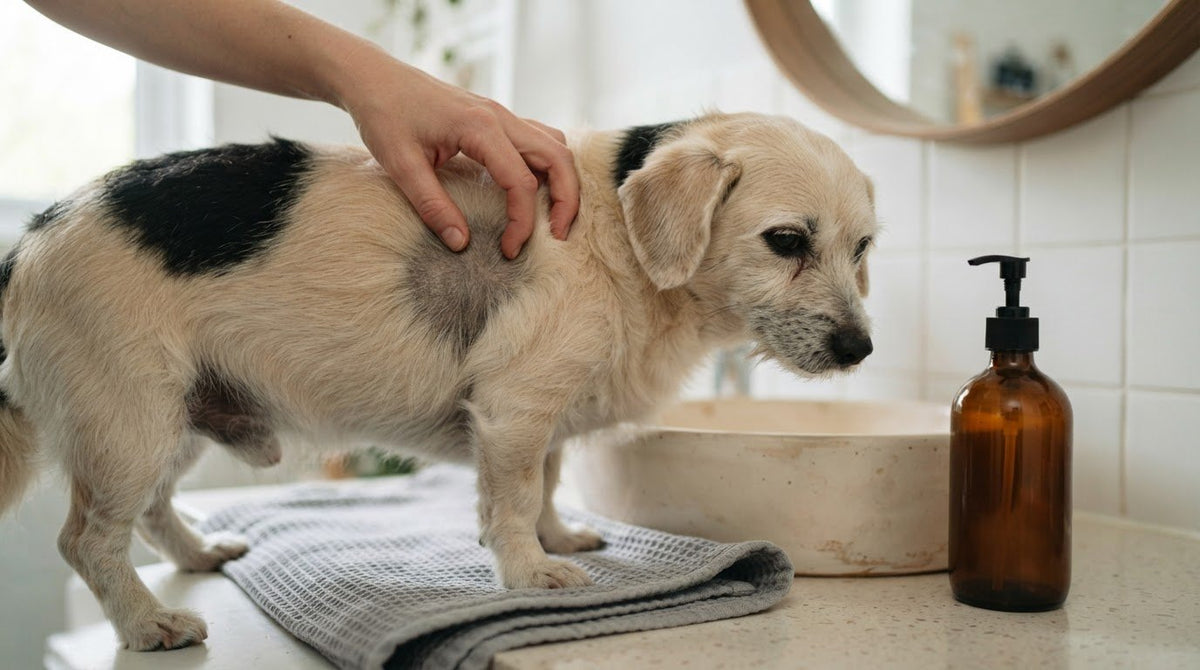
Senior dogs can develop thinner, more sensitive skin with age. To adjust grooming for a senior dog with dry or sensitive skin, start by noticing what handling feels comfortable. Use warm, not hot, water, and test it with your hand first. Keep the session brief if standing becomes tiring or your dog shifts away.
Choose a soft brush and a smooth-toothed comb for delicate areas. Use short strokes, moving with the coat instead of scraping the skin. Watch for flinching, pulling away, or repeated licking, which can signal discomfort. Frequent grooming doesn’t have to mean a long session; a few gentle minutes can maintain the routine without adding stress.
Wet the coat gradually with a cup or low-pressure sprayer. Avoid sudden streams near the face, paws, and belly, where touch may feel intense. For a senior dog with sensitive skin, Calm Wash’s gentle shampoo formula is designed for sensitive, reactive skin. Keep shampoo away from the eyes.
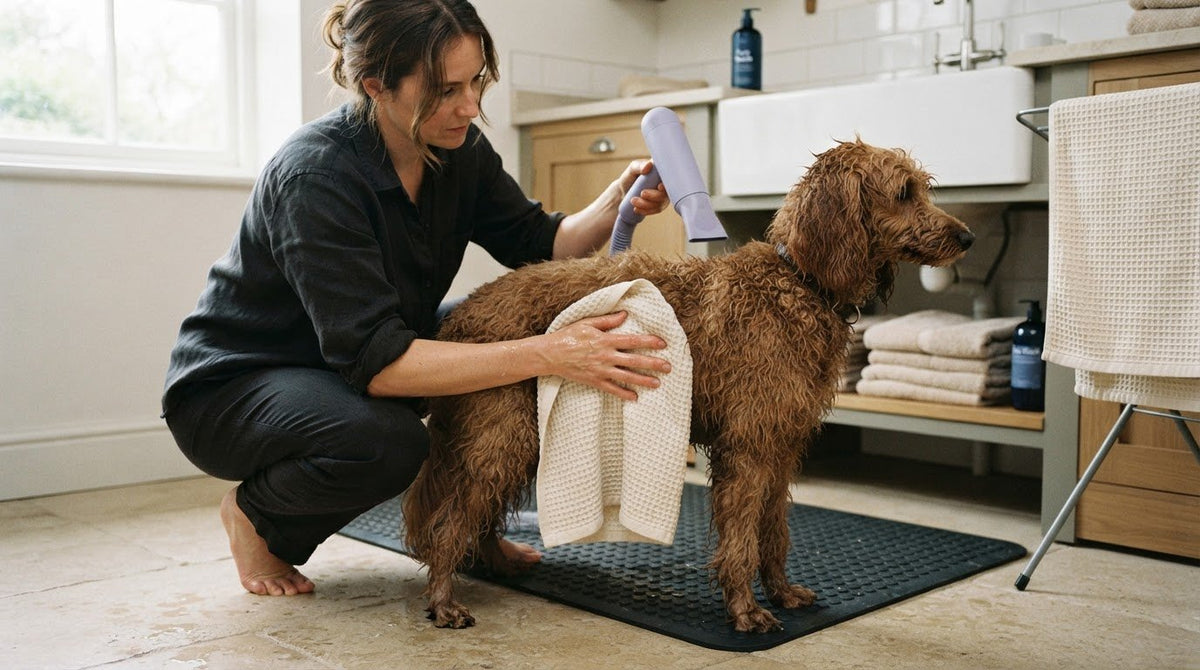
Dry your dog with light towel presses instead of vigorous rubbing. If using a dryer, choose a quiet setting and lower temperature, keeping the airflow moving. Pause if your dog trembles, turns away, or stiffens. A familiar towel and grooming area can make each step more predictable.
When grooming needs for a senior dog change, adjust your handling and observe the skin closely. Let your dog rest between washing, rinsing, and drying, and stop if irritation or clear discomfort appears. If skin changes persist, discuss them with your veterinarian before changing the routine.
Mobility, Joint Comfort, and Breaks During Grooming
Before grooming, note how your dog walks, stands, and responds to touch. Consider whether getting up, lifting a paw, or turning their head seems difficult. Tell your veterinarian about new discomfort and discuss whether any positions or movements should be avoided. Check the mouth, too: tooth or gum pain can make face handling uncomfortable, so don’t force cleaning around a sore area.
For limited mobility or anxiety, work where your dog already feels settled, such as on a familiar bed. Keep supplies within reach so your dog doesn’t need to change position repeatedly. Groom one area at a time and offer pauses; keep any stretch to 15-20 minutes at most. Speak softly and stop if your dog tries to escape, pants heavily, or seems unusually tense.
A professional groomer may be a better fit if you can’t safely manage lifting, nail trimming, or a heavily tangled coat at home. Share your dog’s health concerns and handling limits before the appointment. Grooming with arthritis, heart or breathing concerns, or painful areas can increase strain and distress, so adjust the plan and stop if your dog’s condition worsens.
During routine care, look for new lumps, sores, redness, scabs, or patches of hair loss. Note their location and whether your dog reacts when you gently touch nearby skin. Arrange a veterinary visit for a new or changing lump, persistent irritation, or sudden coat loss. At home, keep bedding dry and clean, and remove debris from the coat after walks.
Supporting a Senior Dog During Grooming
Make each grooming step predictable. Before brushing, let your dog see and sniff the tool, then begin in a familiar area they enjoy having touched. Use your free hand to steady the skin and prevent the brush from tugging. Calm praise or a treat suited to your dog’s diet can make gentle handling rewarding.
Watch for small changes in body language as you work. A tucked tail, pinned ears, turning away, or sudden stillness can signal that your dog needs a pause. Let them choose whether to continue, and return to an easier area only if they settle. If they keep resisting, end the session rather than turning grooming into a struggle.
For brushing, separate the coat with your fingers and work through small sections instead of pulling across a knot. Check beneath collars and around the ears, where friction can leave tender spots. Stop if you find redness, broken skin, or irritation, and ask your veterinarian about persistent skin changes. Gentle attention helps you spot trouble without pressing sensitive areas.
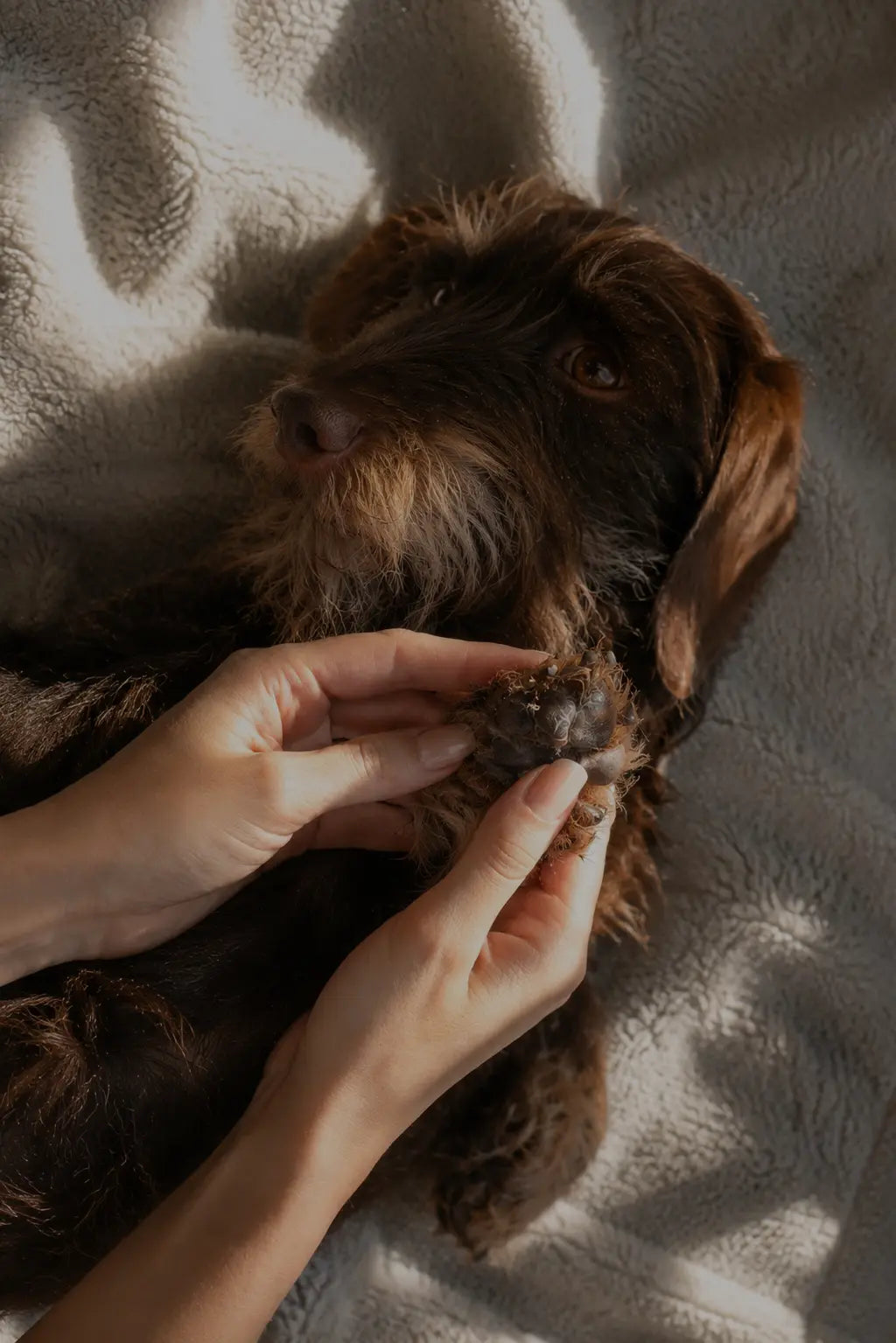
Trim nails only when your dog is relaxed and their paw is comfortably supported. Take off a small amount at a time, avoiding the sensitive quick, which can cause pain and bleeding. If the nail is dark, your dog pulls away, or you can’t see where to trim safely, leave it to a veterinarian or groomer. Finish with affection or a quiet rest so grooming ends calmly.
Reduced vision and hearing may make senior dogs more anxious or stressed during grooming, so keep each step predictable. Non-slip mats in the shower and bathroom can help prevent dogs with limited mobility from slipping during bath time. A bathing station that allows dogs with arthritis or mobility problems to sit or lie down may help. Light massage during bathing or brushing may help circulation and stiffness. If a dog tires or shows discomfort, split grooming into two shorter appointments and use treats appropriate for the dog’s age and dietary needs.
Essencera
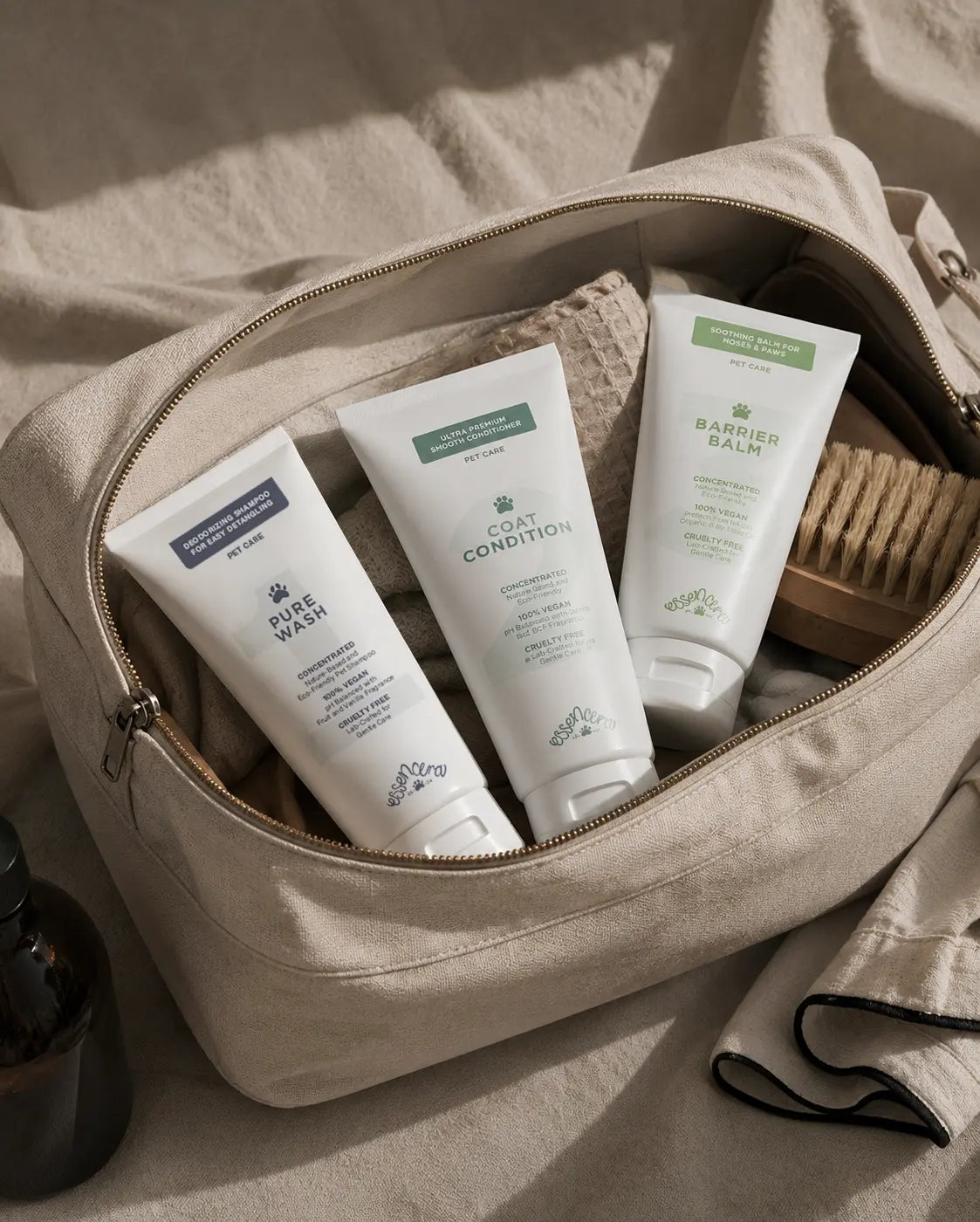
Essencera offers grooming products to help care for your senior dog’s coat and dry areas at home. Match each product to a practical need: gentle cleansing, easier brushing, or moisture for rough paws, noses, and elbows. These products support routine care, but persistent irritation or other health concerns need veterinary advice.
For dry or tangled fur, Coat Condition is used after shampooing to smooth the coat and make brushing easier during drying and finishing. It helps reduce friction while combing, but it won’t remove severe mats by itself. Work it through the coat, especially the ends and tangles, then rinse thoroughly.
If your dog has rough or dry paws, nose, or elbows, BarrierBalm Paws and Nose Cream is made for those areas. Apply it to clean, dry skin and massage gently to help it absorb. The fragrance-free formula is a practical option for sensitive noses, and you can use it after grooming on rough spots. Stop if irritation develops.
The Gentle Start Bundle brings together Calm Wash, Coat Condition, and Barrier Balm for dogs with sensitive skin, including seniors. It offers a coordinated routine for bathing, coat conditioning, and dry-area care. Choose individual products if your dog needs care for only one concern. If frequent bathing is part of your routine, follow your veterinarian’s guidance on what suits your dog’s skin.
Choose the steps that fit your dog’s comfort, and keep each grooming session calm and manageable. To discuss Essencera products for your dog, contact Essencera.
Frequently Asked Questions
Is My Dog Too Old for Grooming?
No. Age alone doesn’t mean a dog should stop being groomed. The right approach depends on comfort, coat condition, and health, not a birthday. Focus on what your dog needs, such as removing dirt or keeping nails manageable. If a familiar task suddenly causes pain or distress, pause and discuss the change with your veterinarian.
How often should senior dogs be groomed?
Use coat type as a starting point: short coats often need grooming every six to eight weeks, medium coats every four to six weeks, and long or curly coats every three to four weeks. Adjust for how quickly tangles return, how much your dog sheds, and how tiring grooming feels. A veterinarian can help tailor a schedule to your dog’s health needs.
How do grooming needs change as dogs age?
As dogs age, skin may become thinner and more sensitive, while coats can grow drier or tangle more easily. Joint stiffness may also make standing or lifting paws uncomfortable. Watch for changes during routine care, such as new sensitivity to touch or difficulty reaching areas your dog once groomed themselves. These clues can help you adapt care early.
How often should a senior dog's coat be brushed and bathed?
Brush gently a few times a week to spot tangles and keep the coat manageable. Wash as needed, guided by lifestyle, coat condition, and skin comfort. A muddy walk may call for prompt cleaning, while a dog who stays clean may need fewer washes. Dry the coat thoroughly afterward, especially beneath thick fur or around skin folds.
How often should senior dogs have their ears, eyes, and teeth cleaned?
For dogs prone to ear problems, wipe the ears with a cotton ball and ear cleaner every couple of weeks. For eyes, gently remove visible debris when needed, using a clean, damp cloth for each eye. Teeth need consistent care, but the best schedule depends on your dog’s mouth and tolerance. Ask your veterinarian for guidance on dental care and to flag soreness or odor.
What grooming tools are best for senior dogs with sensitive skin or arthritis?
Choose a soft brush and a smooth-toothed comb to reduce tugging on delicate skin. A non-slip mat can help steady a dog with arthritis, while a supportive cushion may make resting more comfortable. For clipping, low-vibration clippers can feel less startling. If drying is needed, use a quieter dryer on a lower temperature and stop if your dog shows discomfort.