Dog Fur Texture Changes: Causes and When to See a Vet
What if a change in your dog’s coat is more than a grooming quirk? To understand what causes a dog's fur to change texture, consider the whole picture: age, skin changes, grooming habits, and health conditions can all play a part. A gradual shift may be harmless, while a sudden change or one accompanied by other symptoms deserves closer attention.
It’s understandable to feel concerned when your dog’s familiar coat becomes coarse, dull, thin, or patchy. Texture alone can’t diagnose a problem, but noting when it changed and what else is happening can help you decide what to do next.
This article covers common age-related and skin-related changes, along with health issues that may affect the coat. You’ll also learn which warning signs, including rapid hair loss, irritated skin, or changes in energy, warrant a call to your veterinarian, and how gentle grooming can support coat care in the meantime.
Key Takeaways
- Notice whether coat changes happen gradually with age or appear suddenly, and pay attention to where they occur.
- Call your veterinarian about rapid hair loss, painful or irritated skin, strong odor, or coat changes alongside shifts in your dog’s energy or behavior.
- Understand how reduced skin oils with age can leave a coat dull or dry, and choose gentle grooming suited to your dog.
- Consider allergies, parasites, infections, and hormonal conditions as possible causes when texture changes come with itching, flakes, or thinning.
Age-related changes in coat color and texture
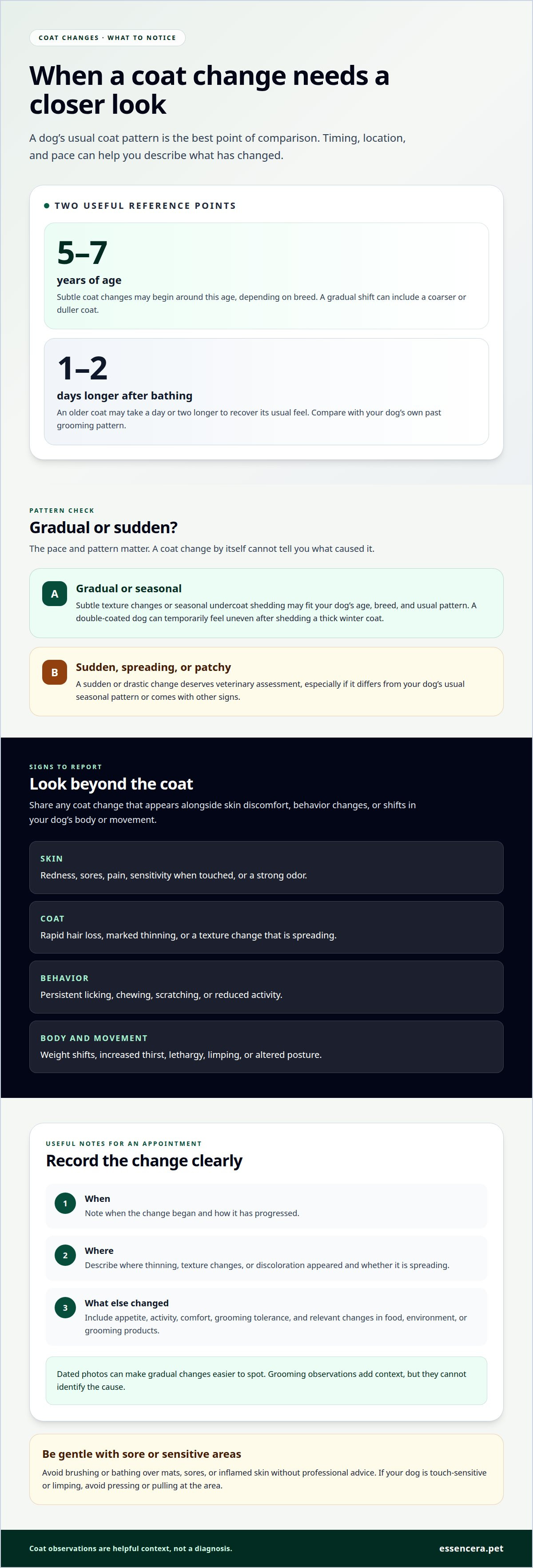
Several factors can explain what causes a dog's fur to change texture, including age, nutrition, and hormonal shifts. Subtle changes may begin around 5 to 7 years, depending on breed. A coat may feel coarser or wirier, look dull, or take a day or two longer to recover after bathing. These changes can be gradual, rather than a sudden difference in grooming results.
Seasonal shedding can also change how a coat feels. Some dogs shed a thick winter double coat in warmer months, temporarily leaving the outer coat and undercoat uneven. Breed and coat type shape what’s normal: a double-coated dog’s seasonal undercoat loss differs from the usual texture of a curly, long, or wiry coat. Compare visible changes with your dog’s usual seasonal pattern.
In older dogs, reduced follicular activity can contribute to a thinner coat. Gray or white fur often appears around the muzzle and eyes, while pigment may fade on the head or face. These age-related color changes are often harmless, but a coat change alone can’t diagnose pain, injury, or disease. A sudden color shift still deserves attention.
Nutrition and hormonal activity can influence coat growth and condition. Deficiencies in zinc, copper, or essential fatty acids may leave fur dull, dry, or faded. Feed a complete, balanced diet rather than adding supplements without guidance. Hormonal changes, particularly in older desexed dogs, can alter coat texture, density, and condition. A veterinarian can assess whether medical treatment is appropriate.
Track the timing, location, and pace of visible changes, and note any shifts in appetite or activity. For example, gradual muzzle graying differs from rapid patchy thinning or new discoloration across the body. Grooming observations help describe what changed, but they can’t identify the cause. A veterinarian can assess the coat alongside skin signs and your dog’s overall health.
Warning signs that warrant veterinary assessment
A sudden or drastic change in coat color or texture deserves veterinary assessment, especially when it differs from your dog’s usual pattern. Seasonal undercoat shedding is different from new patchy thinning, sore skin, or a change spreading across the body. The timing and location help describe the concern, but fur alone can’t identify its cause.
Contact a veterinarian when a coat change appears alongside rapid hair loss, painful skin, sores, a strong odor, or marked thinning. Changes in weight, thirst, energy, or willingness to move add important context. Persistent licking or chewing also warrants attention: repeated friction can break hair shafts, thin the coat, and leave localized bare patches.
- Skin signs: Note redness, sores, odor, pain, or sensitivity when touched.
- Behavior changes: Report persistent licking, chewing, scratching, or reduced activity.
- Body changes: Mention weight shifts, increased thirst, lethargy, limping, or altered posture.
- Coat pattern: Describe where thinning or texture changes began and whether they’re spreading.
Before the appointment, record when the change began, where it is, and how it has progressed. Add dated photos and note relevant exposures, such as a new environment, food, or grooming product. These details can help a veterinarian understand the sequence without treating a visible coat change as a diagnosis.
Don’t brush or bathe over mats, sores, or inflamed skin without professional advice; handling can worsen discomfort or cause damage. If your dog is touch-sensitive or limping, avoid pressing or pulling at the affected area. Tell the veterinarian about those reactions, along with any changes in appetite, activity, or grooming tolerance. A clear account of sudden coat changes and accompanying signs supports a more focused assessment.
Age-related changes in sebum production and skin-cell turnover
As dogs age, changes in skin oils and renewal can affect how the coat feels and looks. Owners may notice these shifts during routine grooming, even when their dog’s daily behavior remains familiar.
Changes in Hair Growth and Oil Production
Sebum is the natural oil that moisturizes the skin and conditions the hair. Its production decreases with age, so older dogs can develop a duller, drier-feeling coat. With less oil, the coat may also take longer to regain its usual softness after grooming.
Compare your dog’s coat with its own earlier condition, not another dog’s. A coat that feels rougher after grooming, for example, may reflect reduced oil rather than a need for more frequent washing. Gentle habits help avoid stripping oils that the skin already produces in smaller amounts.
Changes in Skin and Hair
Age-related changes in the skin and skin-cell turnover affect how its surface renews and supports the hair. Thinner, more sensitive skin can make an older dog less comfortable with vigorous brushing or frequent grooming. Adjust your pressure if your dog flinches, pulls away, or seems uncomfortable during familiar care.
Notice whether flakes, dryness, or a change in coat texture appear in one area or across the body. A localized change differs from a general shift, and recording its location gives useful context. Skin changes alone don’t identify a medical cause, so observe them alongside your dog’s comfort and behavior.
For owners, the practical response is to adapt care rather than scrub harder. Use gentle grooming suited to your dog’s coat, and avoid changing several care habits at once. If you introduce a new wellness product, follow its label; ask a veterinarian to review supplements when your dog takes medication or has ongoing health concerns.
Keep a simple record of coat condition, grooming, and how the coat looks after grooming. For example, note when dryness appears and whether it follows a wash or a change in routine. Dated photos can make gradual changes easier to spot, while sudden thinning, irritation, or discomfort calls for veterinary assessment.
Allergies, infections, hormonal disease, and medication effects
Coat changes can reflect skin irritation, infection, or an underlying hormonal disease. The pattern and timing help frame what to discuss with your veterinarian, but they don’t confirm a cause.
Allergies and Coat Changes
An allergic reaction can irritate the skin and trigger repeated licking or chewing. That behavior creates friction, which can roughen hair, break shafts, or leave uneven patches. The location may offer useful context: note whether your dog focuses on one spot or different areas at different times. Record possible exposure changes alongside your skin and coat observations.
Infections and Coat Changes
Mites and fungi can affect the skin and hair in different ways. Mange is caused by mites, while ringworm is a fungal infection; either may be associated with hair loss. A patch’s appearance alone can’t distinguish them. Avoid applying grooming products to suspicious areas before veterinary advice, and note whether the skin looks irritated or the patch is changing.
Hormonal Disease and Coat Changes
Hormonal disorders can disrupt normal hair growth and alter skin condition. Canine hyperadrenocorticism, also known as Cushing’s disease, may cause symmetrical hair loss along the flanks and thin the skin. Thyroid disorders and Cushing’s disease can also be associated with coat discoloration. Share the pattern and any broader health changes with your veterinarian, who can assess possible underlying disease.
Medication Effects on the Coat
Mention medication timing if a coat change begins during treatment, but timing alone doesn’t establish a connection. Write down the medicine name, start date, and when you first noticed the change. Include missed doses or recent adjustments if relevant. Don’t stop or change a prescribed treatment on your own; ask the prescribing veterinarian whether the coat change or other symptoms need review.
Essencera
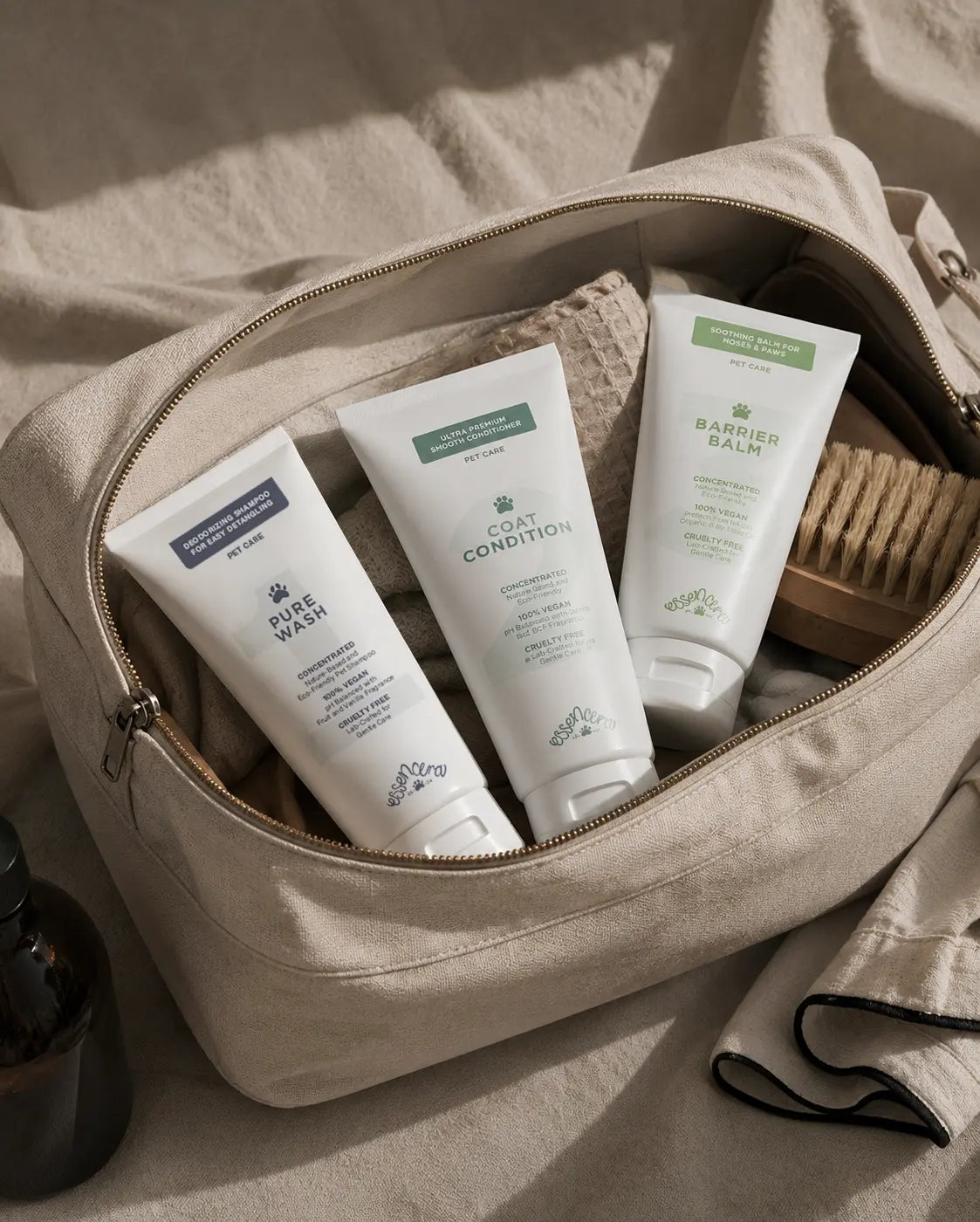
Essencera offers gentle coat-care options for the everyday grooming needs that can accompany texture changes. Coat Condition helps smooth tangles and makes brushing easier during finishing, while Barrier Balm helps moisturize rough areas such as paws and noses. These products support routine care, but they don’t diagnose or treat allergies, infections, or hormonal disease. For those concerns, follow your veterinarian’s advice before changing your dog’s care routine.
For an older dog or one with a dry-feeling coat, Essencera’s Gentle Start Bundle brings together options for a gentle grooming routine. Choose care that fits your dog’s skin and coat, and pause use if irritation develops.
For help choosing a coat-care option, contact Essencera.
Make coat care part of your next step
Knowing what causes a dog's fur to change texture can help you treat coat care as an ongoing part of life with your dog, not a problem to solve with one quick change. Notice what feels comfortable for your companion and keep grooming calm and predictable. Adjust a routine that suits your dog now as their needs evolve.
When you choose a grooming product, consider your dog’s individual sensitivities and the care you want to provide between veterinary visits. Pure Wash is one option for gentle cleansing. If a health concern is behind the coat change, keep veterinary guidance at the center of your decisions, rather than expecting grooming products to diagnose or treat it.
Small, thoughtful choices can make caring for your dog feel more manageable. Choose the next step that fits your companion, and reach out if you’d like help finding a suitable grooming option. Contact Essencera for support. A little care, offered with patience, can make each grooming moment gentler.
Frequently Asked Questions
When should a veterinarian be contacted?
Contact a veterinarian when a coat change is sudden, progresses quickly, or appears alongside signs that affect your dog’s comfort or daily routine. Before calling, note when you first noticed the change and whether it has affected eating, resting, or normal activity. If you’re unsure whether it can wait, describe what you’re seeing to the clinic and ask for guidance on timing.
What normal age-related changes can alter a dog's coat texture?
Age can gradually change coat softness, density, and color, though the pattern varies between dogs. To judge a change more clearly, compare your dog’s coat with its earlier condition, not another dog of the same age. Photos taken in similar lighting can help you spot gradual shifts. Also consider whether grooming conditions or the season differed between observations.
Which nutritional deficiencies can make a dog's coat coarse, dry, or brittle?
Deficiencies in zinc, copper, or essential fatty acids can contribute to coat dryness, dullness, or fading. If you’re concerned about nutrition, write down your dog’s usual food, treats, and any recent diet changes. Share that history with a veterinarian rather than starting supplements on your own. A complete, balanced diet is a sensible foundation while the cause is assessed.
What skin conditions cause changes in a dog's fur texture?
Skin irritation and disorders affecting the skin can alter the feel or appearance of hair growing over an affected area. Note whether the skin itself feels different, looks irritated, or has a new smell, and avoid scraping or picking at it. Your observations can help a veterinarian distinguish a surface skin concern from hair-shaft damage during grooming.
Can allergies, parasites, or infections change a dog's coat?
Yes, these problems can affect the skin and coat, sometimes leading to breakage or patchy hair loss. Keep track of relevant changes in your dog’s surroundings, such as new bedding, a different grooming product, or more time outdoors. That context may help the veterinarian consider possible exposures alongside the coat pattern. Avoid sharing grooming tools between pets until irritated or unusual areas have been assessed.
How can hormonal disorders such as hypothyroidism or Cushing's affect dog fur?
Hormonal disorders can affect coat growth, skin condition, or pigmentation, but fur changes alone can’t identify the disorder involved. For example, Cushing’s disease may be associated with symmetrical hair loss along the flanks, while thyroid disorders can also relate to coat changes. Give your veterinarian a clear timeline and mention other health changes so the coat can be assessed in context.