
How to Prevent Tear Stains on Dogs With Gentle Face Care
What if tear stains are less about color and more about your dog’s facial shape? A gentle routine can help: clean around the eyes, dry the fur, and recognize when tearing or irritation needs veterinary attention.
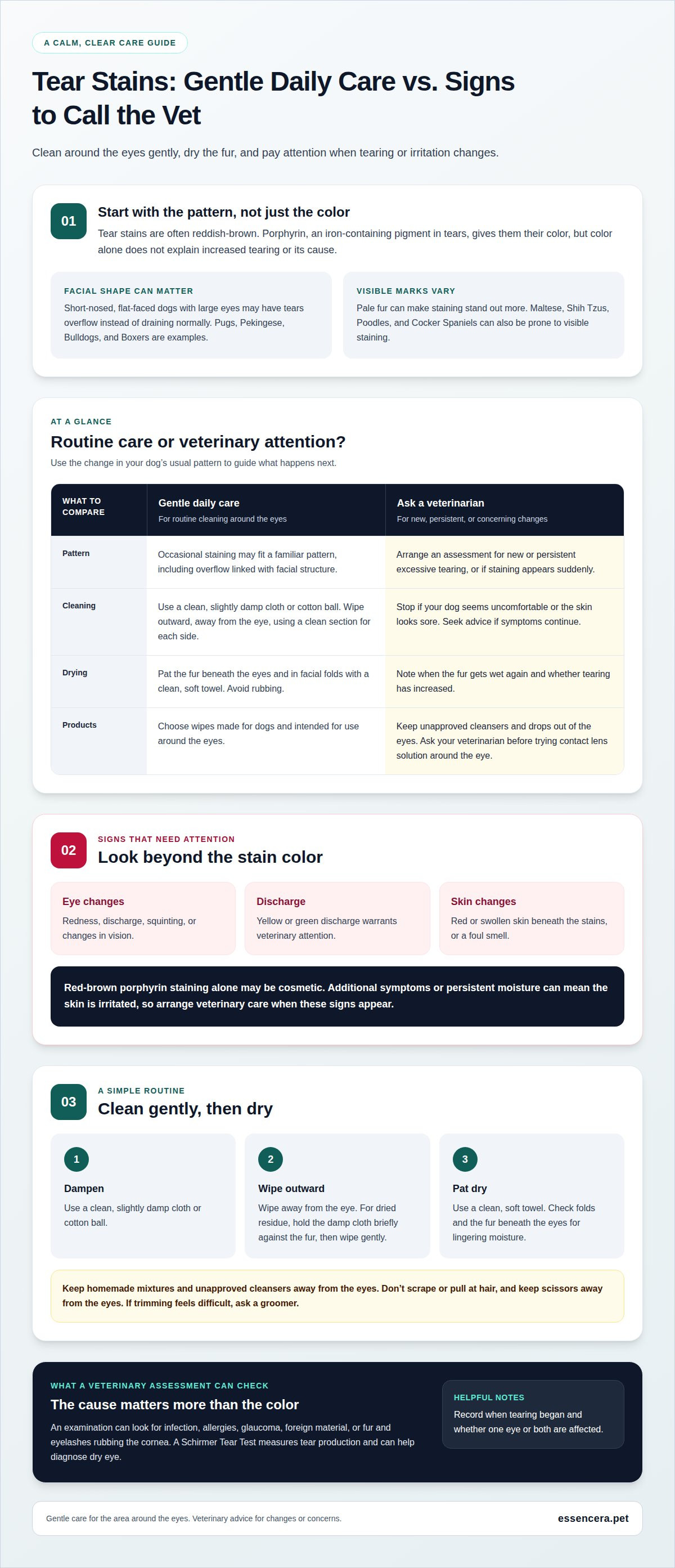
Reddish-brown marks can be frustrating, especially on pale fur, but they’re more noticeable in some dogs than others. Short-nosed, flat-faced dogs with large eyes, including Pugs and Shih Tzus, may be more prone to tear overflow rather than normal drainage. That doesn’t mean every stain signals a health problem, but a new or persistent change deserves attention.
This guide explains how to gently wipe around your dog’s eyes without getting anything in them, keep damp fur from lingering, and recognize signs that call for a vet. You’ll also learn how facial shape and the coat around the eyes can affect staining, so you can build a calm routine that suits your dog.
Key Takeaways
- Face shape and tear-drainage anatomy can make some dogs more prone to overflow and visible staining.
- Use a gentle, eye-safe approach to clean around the eyes, then dry the fur to help limit lingering moisture.
- Watch for changes such as redness, discharge, squinting, or sore skin, which can call for veterinary attention.
- Choose facial care with your dog’s sensitivities in mind, and keep grooming products away from the eyes.
Dog Tear Stains: Do They Matter?
- Consider your dog’s facial shape before treating stains as a grooming issue. Short-nosed, flat-faced dogs with large eyes may have tears spill over their eyelids instead of draining through the nasolacrimal duct. Pugs, Pekingese, Bulldogs, and Boxers are examples of breeds whose facial structure can contribute to tear overflow. More overflow can leave fur beneath the eyes damp.
- Look at the color and location of the marks. Tear stains are usually reddish-brown streaks running from the inner corners of the eyes down the muzzle. Porphyrin, an iron-containing pigment in tears, gives stains their color. Pale fur makes the marks stand out more, but color alone doesn’t explain increased tear production or reveal whether an underlying issue is present.
- Check for strands around your dog’s eyes that touch the eye or hold moisture against the skin. Carefully trimming long facial hair can reduce tear buildup and limit rubbing. Keep scissors away from the eyes. If your dog moves, has a close-set face, or resists handling, ask a groomer to trim the area. This can help keep the coat drier, but it won’t correct tear-drainage anatomy.
- Use the pattern to decide what needs attention. Occasional staining in a Pug with a short muzzle may relate to facial structure, while new or persistent excessive tearing can have other causes. A tear-stain remover won’t address the reason for overflow. If staining appears suddenly or comes with eye irritation, redness, or discharge, arrange a veterinary assessment rather than treating the color alone.
Facial cleaning and keeping the area dry
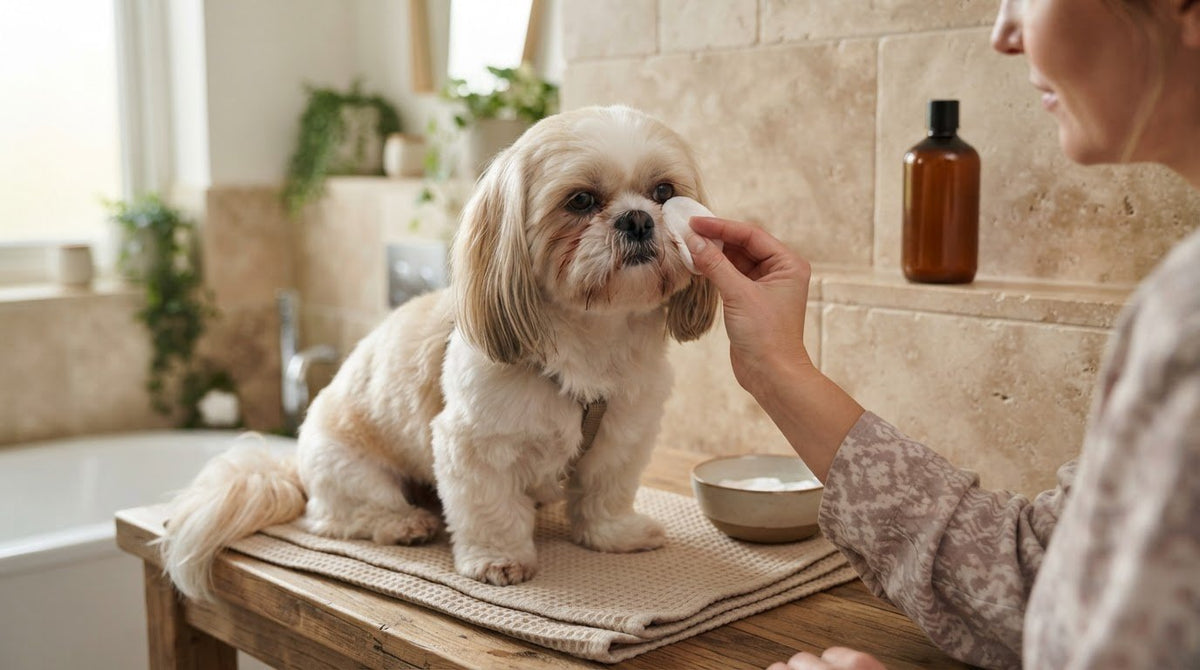
To learn how to prevent tear stains on dogs, make gentle cleaning and drying part of the daily routine. Use a clean, damp cloth, wipe away from each eye, and pat the fur dry. Keep homemade mixtures and unapproved cleansers away from your dog’s eyes.
-
Clean the Face and Eye Area Daily
Use a slightly damp washcloth or cotton ball to gently clean the area around the eyes. Wipe outward, away from the eye, and use a clean section for each side. For dried residue, briefly hold the damp cloth against the fur to soften it, then wipe gently. Don’t scrape or pull at hair, and stop if your dog seems uncomfortable or the skin looks sore.
-
Keep the Facial Area Dry
After cleaning, pat the hair around the eyes with a clean, soft towel. Check the folds and fur beneath the eyes, where water can linger after wiping or drinking. Drying helps limit prolonged dampness against the skin. Avoid rubbing, which can irritate delicate areas. If the fur gets wet again soon after cleaning, note when it happens and whether tearing has increased.
-
Choose Cleaning Products Carefully
Choose wipes formulated for dogs and intended for use around the eyes. Contact lens cleaning solution containing boric acid may be used around the eye, but never in it; ask your veterinarian before trying it. Avoid homemade mixtures containing peroxide, vinegar, turmeric, or boric acid, as well as products with ingredients that irritate your dog. Don’t use cleansers or drops in the eyes without veterinary advice. Stop using any new product if irritation develops, and seek advice if symptoms continue.
When to consult a veterinary ophthalmologist
Arrange veterinary care for new or persistent tearing, especially when the eyes look different. Red-brown porphyrin staining alone may be cosmetic, but additional symptoms need attention.
-
Identify Signs Needing Veterinary Attention
Look for redness, discharge, squinting, or changes in vision. Yellow or green eye discharge, red or swollen skin beneath the stains, and a foul smell also warrant veterinary attention. Persistent moisture can irritate the skin and contribute to infection, itchiness, or pain.
Note when the tearing began and whether one or both eyes are affected. A new case in a young dog can involve a blocked tear duct, eyelash abnormality, or infection. Don’t assume the pattern is normal because your dog has reddish stains; porphyrin explains the color, not the cause of excessive tearing.
-
Seek Veterinary Assessment and Treatment
Ask a veterinarian to assess persistent or severe tearing, particularly if cleaning around the eyes hasn’t helped. An examination can look for infection, allergies, glaucoma, foreign material, or fur and eyelashes rubbing the cornea. A Schirmer Tear Test measures tear production and can help diagnose dry eye.
Treatment depends on the cause. A veterinarian may flush an obstructed tear duct with saline or prescribe a short course of mild antibiotics in some cases. Structural problems may need other treatment, including surgery. Don’t put cleansers or drops in your dog’s eyes without veterinary advice.
- Review food changes and supplements with your veterinarian. Additives, preservatives, artificial coloring, or excess salt in food may contribute to tearing, but don’t make major diet changes on your own. Ask before adding supplements marketed to reduce porphyrin in tears; product claims don’t replace identifying an underlying cause.
Dogs more likely to develop tear stains
Maltese, Shih Tzus, Poodles, and Cocker Spaniels can be prone to visible staining. Short-nosed dogs with large eyes may have more tear overflow because facial shape can affect drainage.
- Compare your dog’s usual pattern with changes over time. A breed tendency can explain recurring damp fur, but it doesn’t explain every new episode. Note whether tearing follows a grooming session, a walk, or time in a dusty room. These details can help distinguish a familiar pattern from a possible trigger.
- Look for allergy patterns rather than assuming every dog of one breed reacts alike. Environmental triggers or food ingredients can contribute to watery eyes, sometimes alongside itchy skin. Keep a simple record of meals, outdoor exposure, and when symptoms appear. Don’t remove foods or add supplements without veterinary guidance.
- Check whether hair, dust, or grooming products seem to irritate your dog. Long facial hair can hold moisture, while a product used near the face may bother sensitive skin. Keep grooming gentle and products away from the eyes. A clean, dry face supports comfort, but won’t address an internal cause of excessive tearing.
- Use your notes to choose the next step. If a familiar pattern remains mild, maintain gentle face care and keep facial hair tidy. If tearing is new, persistent, or accompanied by discomfort, consult a veterinarian instead of relying on stain removers. Knowing how to prevent tear stains on dogs also means recognizing when grooming alone isn’t enough.
Tear stains are more noticeable on dogs with light-colored fur than on dogs with dark fur. Keep that difference in mind when describing what you see: coat color affects how clearly staining stands out. Consider visibility in context, particularly when comparing dogs with different fur colors; a mark that is easier to notice on light fur may be less conspicuous on dark fur.
Essencera
Essencera offers gentle grooming products to support a clean, comfortable coat. They can complement regular facial care, but they don’t treat excessive tearing or replace veterinary advice when symptoms suggest an eye problem.
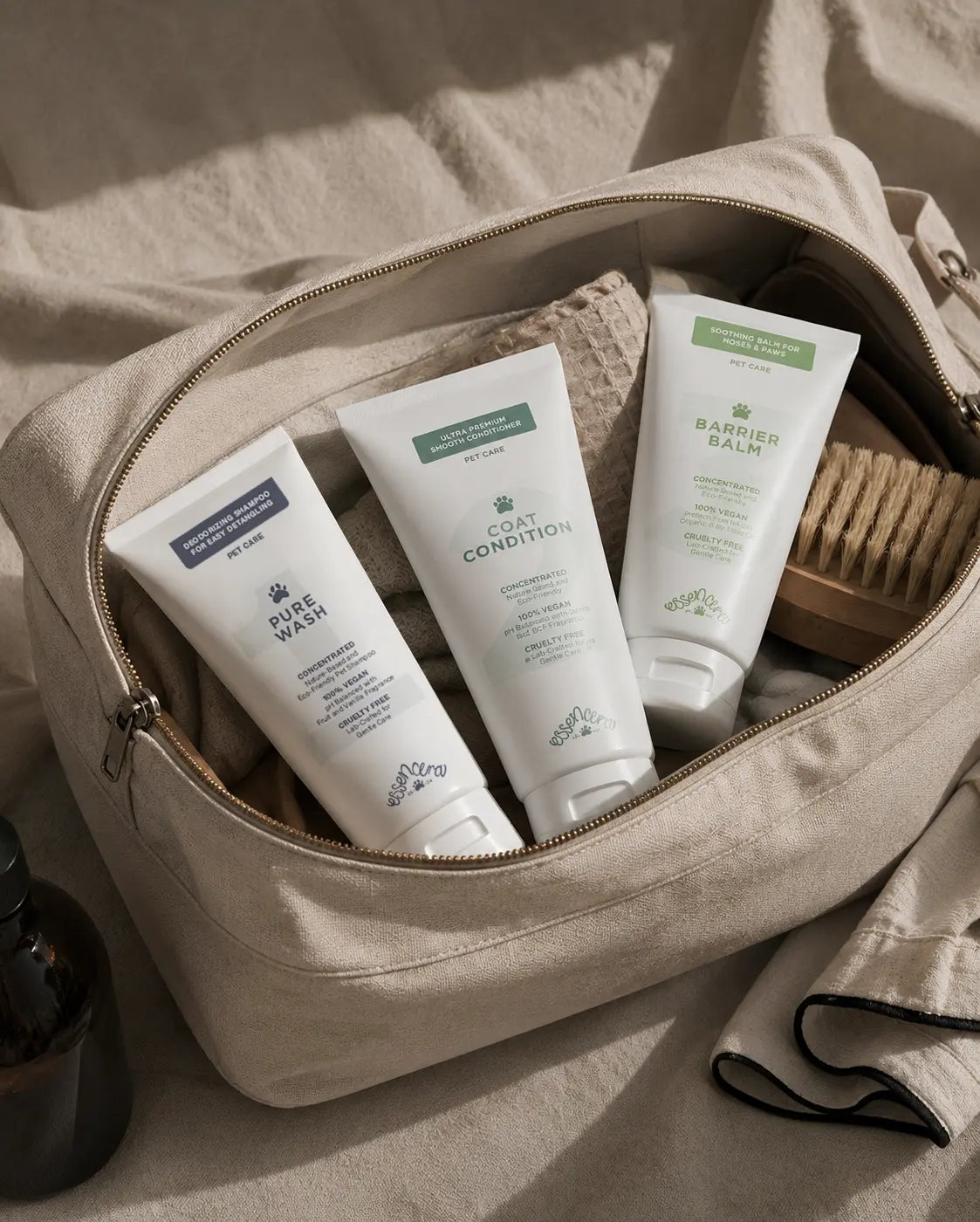
For routine bathing, Pure Wash is a gentle cleanser for frequent use and all coat types. Keep any shampoo away from your dog’s eyes, and rinse it thoroughly from the coat. It’s for general cleansing, not a tear-stain remover, so continue carefully wiping and drying the eye area separately.
After bathing, Coat Condition can help smooth the coat and make brushing easier during finishing. It’s useful for dogs whose longer facial hair tangles, but don’t apply conditioner near the eyes or use it to manage staining itself. Gentle grooming and an appropriate trim can help keep facial hair tidy.
For rough or dry paws, nose, or elbows, Barrier Balm is made for those areas. It isn’t intended for the eye area. If you’re building a gentle routine for a puppy, senior, rescue, or dog with sensitive skin, the Gentle Start Bundle brings together Calm Wash, Coat Condition, and Barrier Balm.
Choose grooming care to support comfort, not to mask a medical concern. New or ongoing tearing, redness, squinting, or unusual discharge calls for veterinary assessment. For help choosing a gentle grooming routine, contact Essencera with a no-pressure question.
Frequently Asked Questions
Why does my dog have red or brown discoloration around the eyes?
Red-brown discoloration usually comes from porphyrin, an iron-containing pigment in tears. Repeated wetting from tear fluid can leave visible marks on the fur, especially on pale coats. The mark is on the hair, not necessarily the eye itself. Note whether it is new, spreading, or paired with eye discomfort, since staining alone can’t identify the reason for tearing.
What causes tear stains in dogs?
Tear stains form when tears overflow or remain on facial hair, but the cause varies. A short muzzle or prominent eyes can affect drainage, while long hairs may rub the eye. Allergies, infection, blocked tear ducts, glaucoma, and other irritation can also increase tearing. The stain is a visible result, so note when tearing begins instead of treating color as a diagnosis.
How often should you clean a dog's eyes to prevent tear stains?
For a dog prone to staining, gently clean around the eyes at least twice daily. Use a fresh, soft cloth each time, wipe outward, and dry the fur afterward. Clean the area again if fur gets wet after drinking or eating. If tearing increases or the area becomes uncomfortable, seek veterinary advice rather than scrubbing harder.
What products are safe for cleaning dog tear stains?
Choose wipes made for use around dogs’ eyes, or use a clean cloth or cotton ball moistened with water. Keep wipes, solutions, and grooming products out of the eyes. If considering contact lens cleaning solution containing boric acid, use it around the eye only, never in it, and ask a veterinarian before use.
Are tear stain removers safe and effective for dogs?
Tear-stain removers may clean visible residue when made for dogs and used as directed, but they don’t correct blocked drainage, allergies, or infection. Read the full ingredient label, and avoid homemade mixtures or products meant for people. Ask a veterinarian before applying a cleanser or drops near the eye, especially if staining is new, the skin looks irritated, or your dog resists handling.
Can diet or filtered water reduce tear stains in dogs?
If tap water has high mineral content or additives seem linked to tearing, try filtered, purified, distilled, or reverse-osmosis water. Changing water won’t address facial anatomy, allergies, or infection. Keep meals nutritionally balanced rather than adding vinegar, supplements, or food powders on your own. Discuss significant diet changes or tear-stain supplements with your veterinarian, especially if your dog eats a medical diet.