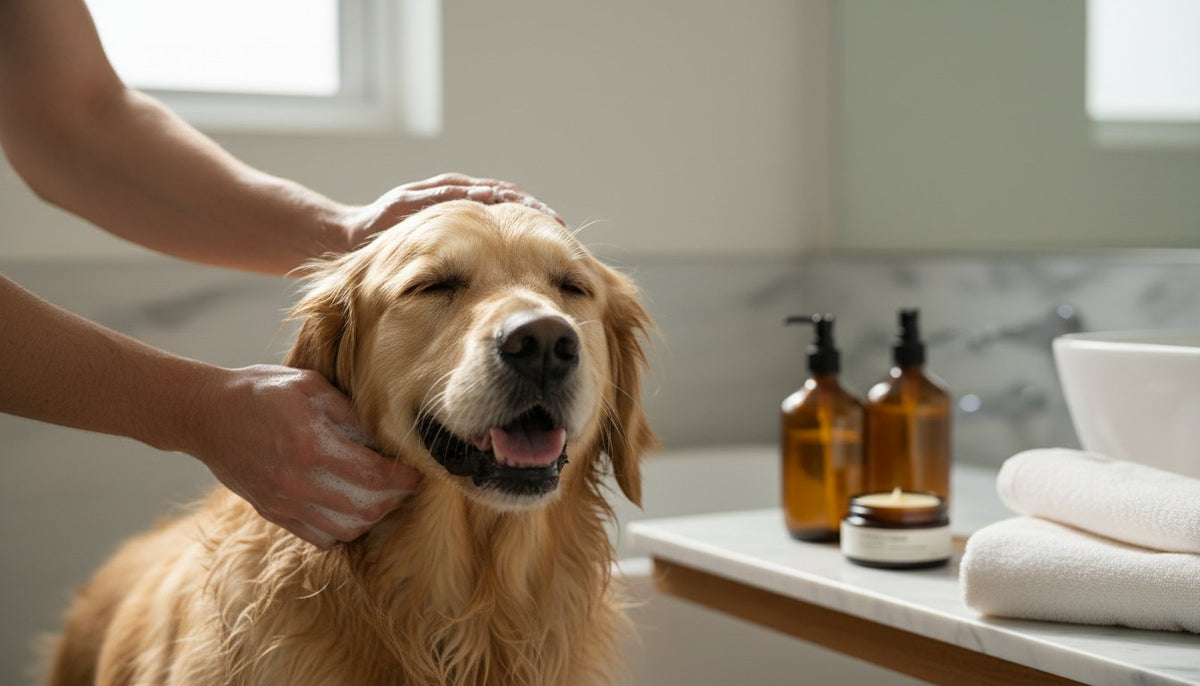
How to Bathe a Dog Properly: A Gentle Guide to Stress-Free Grooming in 2026
What if the reason your dog hides under the sofa at the sound of a running tap isn't the water itself, but the hidden irritants in their shampoo? It's a common struggle for the 68% of pet owners who report that grooming feels like a battle of wills rather than a moment of connection. You want your companion to smell fresh, yet you worry about stinging eyes or the dry, itchy skin that often follows a scrub. Learning how to bathe a dog properly is about more than just removing dirt; it's about protecting their delicate pH balance with the same level of care we give our own skin.
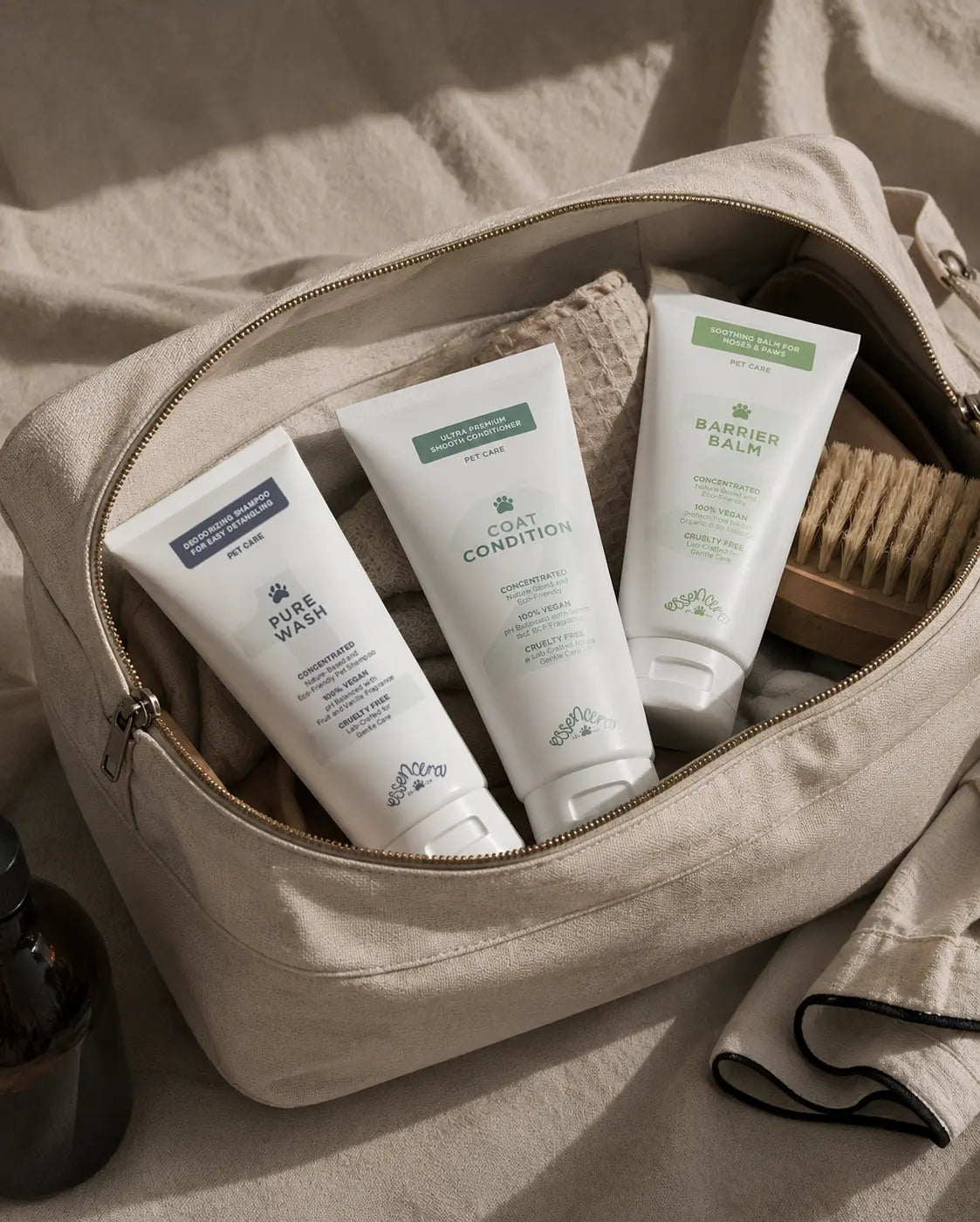
We agree that your dog deserves better than watered-down formulas filled with harsh sulfates. This guide promises to transform your routine into a nurturing ritual using our Greek-made, cosmetic-grade concentrated pastes that meet high European standards established in 2022. You'll learn professional secrets to a stress-free wash, from protecting sensitive ears to choosing the right plant-based solution. We'll explore how to use Pure Wash for a deep clean or Calm Wash for sensitive skin, followed by our hydrating Coat Condition to repair the coat with amino acids and hyaluronic acid. By the end, you'll see how a mindful approach creates a happy tail and a healthy home.
Key Takeaways
- Understand why human shampoo harms the canine acid mantle and how to choose plant based luxury like our Greek made Pure Wash to provide amino acids and hyaluronic acid for coat repair.
- Master the art of the pre bath brush out to prevent painful mats before water ever touches the fur.
- Learn how to bathe a dog properly by using a gentle massage technique that ensures our concentrated coconut derived surfactants reach the skin for a deep clean.
- Discover how to prevent post bath tangles by patting the coat dry and applying Coat Condition to nourish every strand.
- Identify the best solutions for sensitive skin and learn why Shield Wash offers natural protection for dogs but is never safe for cats.
Understanding the Purpose of a Proper Dog Bath
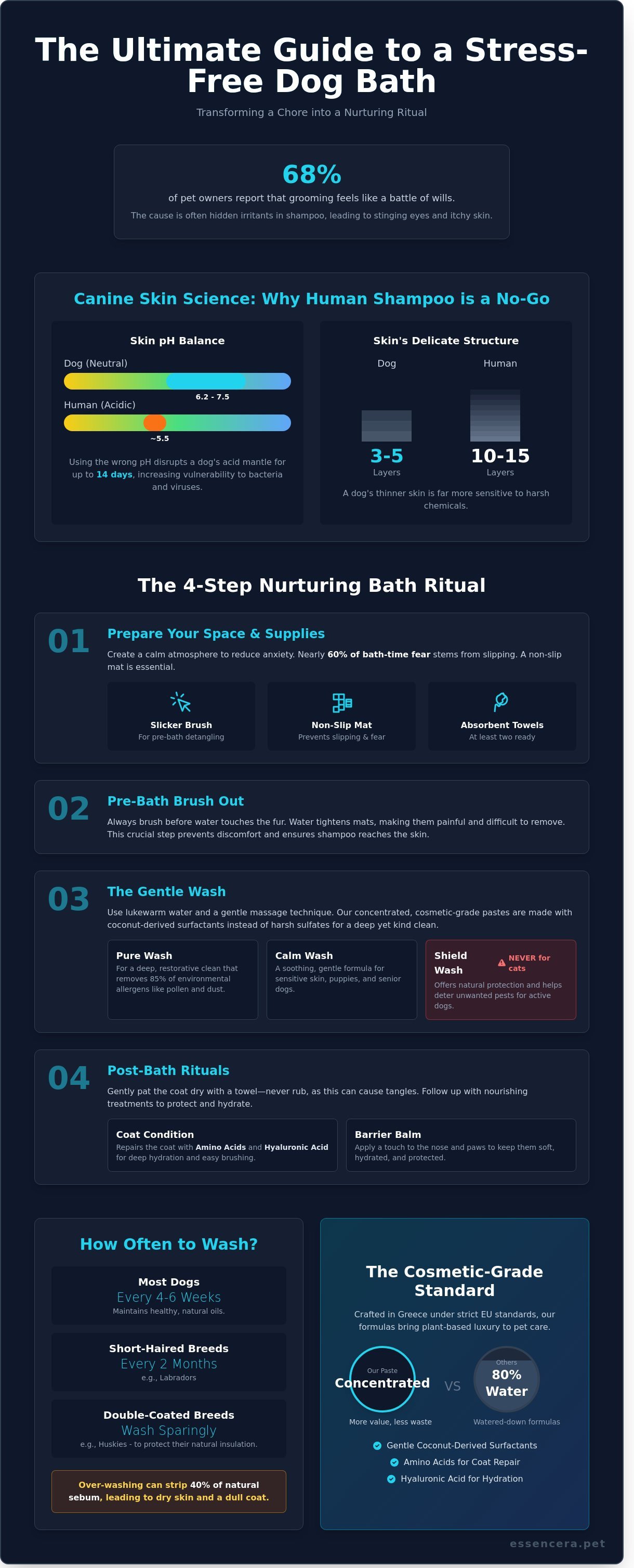
Learning how to bathe a dog properly is about finding the gentle balance between hygiene and biological health. A bath isn't just a way to remove that "doggy" smell or clean up muddy paws after a walk in the park. It's a vital health intervention. When we wash our dogs, we aren't just cleaning fur; we're managing the health of their largest organ. The canine skin is incredibly delicate. While human skin has 10 to 15 layers of cells, a dog's skin only has 3 to 5 layers. This makes them much more sensitive to harsh chemicals and environmental stressors than we are.
The primary reason you should never reach for human shampoo is the canine acid mantle. This thin, acidic film sits on the surface of the skin to act as a barrier against bacteria and viruses. Human skin typically has a pH of 5.5, which is quite acidic. In contrast, a dog's skin pH ranges from 6.2 to 7.5, making it much more neutral. Using a human product on a dog can disrupt this balance for up to 14 days, leaving their skin dry, flaky, and vulnerable to infections. By understanding Dog grooming basics, you can ensure you're protecting this invisible shield every time they step into the tub.
We believe in a shift in perspective that allows you to make grooming feel like care; not a chore. It's a moment of connection and trust between you and your companion. Beyond the emotional bond, a proper wash removes 85% of environmental allergens like pollen and dust that get trapped in the coat. This simple act prevents the cycle of itching and scratching that often leads to secondary bacterial infections. For a deep, restorative clean that respects their biology, a formula like Pure Wash removes grime while nourishing the skin with plant-based nutrients.
How Often Should You Really Wash Your Dog?
Most dogs only need a bath every 4 to 6 weeks to maintain a healthy coat. If you wash them too frequently, you risk stripping away 40% of the natural sebum that keeps their fur waterproof and shiny. Short-haired breeds like Labradors often thrive with a bath every 2 months, while double-coated breeds like Huskies shouldn't be over-washed, as it can interfere with their natural temperature regulation. For dogs with sensitive skin, puppies, or seniors who need extra tenderness, Calm Wash provides a soothing experience without irritation. If your dog is active and prone to picking up unwanted guests, Shield Wash helps deter pests naturally. It's vital to remember that Shield Wash is not safe for cats because of its specific essential oil content.
The Cosmetic Grade Standard for Pet Care
We bring the "cosmetic-grade" standard to the pet world, using plant-based luxury ingredients that you'd expect to find in high-end human skincare. Our products are crafted in Greece, following strict European manufacturing standards that prioritize safety and purity. Unlike many competitors whose products are 80% water, our concentrated paste formulas offer significantly more value and less waste. We use premium amino acids for coat repair and hyaluronic acid for deep hydration. We choose gentle coconut-derived surfactants instead of harsh sulfates to ensure a kind experience. Transparency is our foundation; we believe you deserve to know exactly what touches your dog's skin. After a wash, using Coat Condition helps the brush glide through, though it's important to know it isn't a magic detangler for severe mats. For final protection, a touch of Barrier Balm on the nose and paws keeps them soft and hydrated.
Essential Supplies and the Science of Gentle Ingredients
Preparing the environment is the first step in learning how to bathe a dog properly. A calm atmosphere transforms a routine task into a bonding ritual. You'll need a staging area equipped with at least two high-absorbency towels, a slicker brush for pre-bath detangling, and a non-slip silicone mat. Investing in quality towels from a specialist like Rally Towels can make the drying process much more efficient and comfortable for your pet. Statistics suggest that nearly 60 percent of canine bath-time anxiety stems from the fear of slipping on slick porcelain surfaces. Before you begin, consulting a comprehensive guide to bathing a dog helps ensure you have every tool ready to support your pet's comfort.
The science behind the suds matters just as much as the technique. Many commercial shampoos rely on harsh synthetic sulfates like SLS to create foam; however, these strip away the natural sebum that protects a dog's skin. We utilize gentle, coconut-derived surfactants that cleanse without irritation. Our formulas are crafted in Greece to high European cosmetic standards, featuring 3 times the concentration of traditional liquid shampoos. This concentrated paste means you use less product and less water while providing more care. By including cosmetic-grade ingredients like amino acids for coat structural repair and hyaluronic acid for deep hydration, we ensure the skin's moisture barrier remains intact.
Purity is our priority. We strictly avoid artificial dyes and synthetic fragrances that often trigger allergic reactions or respiratory distress in sensitive pups. Instead, we focus on plant-based luxury that respects the delicate pH balance of canine skin, which is significantly more alkaline than human skin. Choosing clean ingredients isn't just a lifestyle choice; it's a commitment to your dog's long-term dermatological health.
Choosing the Right Formula for Your Dog's Needs
Every coat tells a different story. For active dogs who enjoy muddy trails, a deep cleaning solution like Pure Wash effectively lifts debris while nourishing the fur. Puppies and seniors require a more delicate touch. Their skin is often thinner and more prone to dryness, making the soothing botanicals in Calm Wash the ideal choice for a gentle experience. During warmer months, seasonal protection is vital. Using Shield Wash helps maintain a healthy coat during peak outdoor activity periods.
Safety First: A Critical Warning for Multi-Pet Households
Safety is the cornerstone of how to bathe a dog properly, especially when your home includes different species. While the essential oils in our pest-deterrent formulas provide excellent support for canines, they are not universal. It is vital to understand that Shield Wash is not safe for cats. Feline livers cannot process certain plant compounds found in dog-specific shampoos. If you're managing a multi-pet grooming session, always wash your dogs separately and ensure your cat doesn't groom a freshly bathed dog until the coat is completely dry. This simple precaution keeps every member of your furry family safe and happy.
Creating a spa-like experience at home starts with the right intentions and the purest ingredients. If you're ready to upgrade your grooming kit, you can browse our full collection of plant-based washes to find the perfect match for your pet's unique coat type.
Preparing Your Dog and the Space for a Calm Experience
Success begins long before the first drop of water hits the fur. To understand how to bathe a dog properly, you must first view the bathroom as a sanctuary rather than a utility room. Dogs sense our energy; a rushed owner creates a stressed pet. Start by gathering your supplies within arm's reach so you never have to leave your dog unattended. This simple act of preparation prevents anxiety and keeps the experience focused on bonding.
Before the water starts running, you must perform a thorough brush-out. This isn't just about vanity. When mats and tangles get wet, they tighten and shrink, often becoming impossible to remove without clippers. Use a high-quality product like Coat Condition to help slip through minor tangles. While this conditioner makes the process smoother, remember that severe matting requires professional attention to avoid skin irritation. Removing loose hair also ensures that your shampoo reaches the skin, where it can actually do its job.
Temperature control is your next priority. A dog’s skin is significantly thinner than a human’s, making them highly sensitive to heat. Aim for lukewarm water, specifically between 37 and 38 degrees Celsius. This mimics their natural body temperature and prevents the "scald" reflex that causes many dogs to panic. If the water feels pleasantly warm to your inner wrist, it's safe for your companion. Using the right temperature is a fundamental part of learning how to bathe a dog properly without causing physical or emotional distress.
The Concentrated Advantage: Less Water and More Care
Traditional liquid shampoos are often comprised of 70% to 80% water. This means you're paying for the weight of water and the plastic required to ship it. Essencera uses a cosmetic-grade concentrated paste formula instead. This plant-based luxury approach, developed by product formulators in Greece, offers a far more potent cleaning experience. By removing the unnecessary fillers, we reduce our carbon footprint and provide a product that lasts 3 times longer than standard bottles.
To use this method, scoop a small amount of Pure Wash for a deep clean or Calm Wash for sensitive skin into a mixing jug. Dilute it with warm water according to the instructions. This creates a rich, creamy lather that penetrates the coat better than a dollop of thick liquid. You get better coverage with less product, ensuring that premium ingredients like hyaluronic acid and amino acids actually reach the hair shaft to repair and hydrate.
Training for a Lifetime of Happy Baths
Training your dog to enjoy the tub is a marathon, not a sprint. For puppies or rescue dogs, start with "dry runs" where they stand in the tub and receive high-value treats without any water involved. Positive reinforcement is a powerful tool; a 2022 study showed that dogs trained with reward-based methods displayed significantly fewer stress signals during grooming than those handled with force. Use treats to create a positive association with the sound of the faucet and the feel of the porcelain.
We believe in a "care not chore" philosophy. This means observing your dog's body language. If they're trembling, slow down. If they're senior or have joint pain, place a non-slip rubber mat in the tub to provide 100% stability. For those with cracked noses or dry pads from the stress of the day, applying Barrier Balm after the bath provides a soothing finish. When you treat grooming as an act of love, your dog learns to trust the process, turning a potentially scary event into a peaceful ritual.
The Step-by-Step Guide to Bathing Your Dog Properly
To learn how to bathe a dog properly, you must first understand that grooming is an act of love rather than a chore. Begin by saturating your dog's coat with lukewarm water. It's vital to ensure the water reaches the skin, especially for breeds with dense undercoats. While wetting the fur, be exceptionally careful with the head area. Water entering the ear canals can lead to painful infections; 65% of canine ear issues stem from trapped moisture. You can use large cotton balls to gently plug the ears as a shield, but always remain mindful of the spray direction. For the face, skip the nozzle and use a soft, damp cloth to wipe away debris.
Mastering the Lather and Scrub
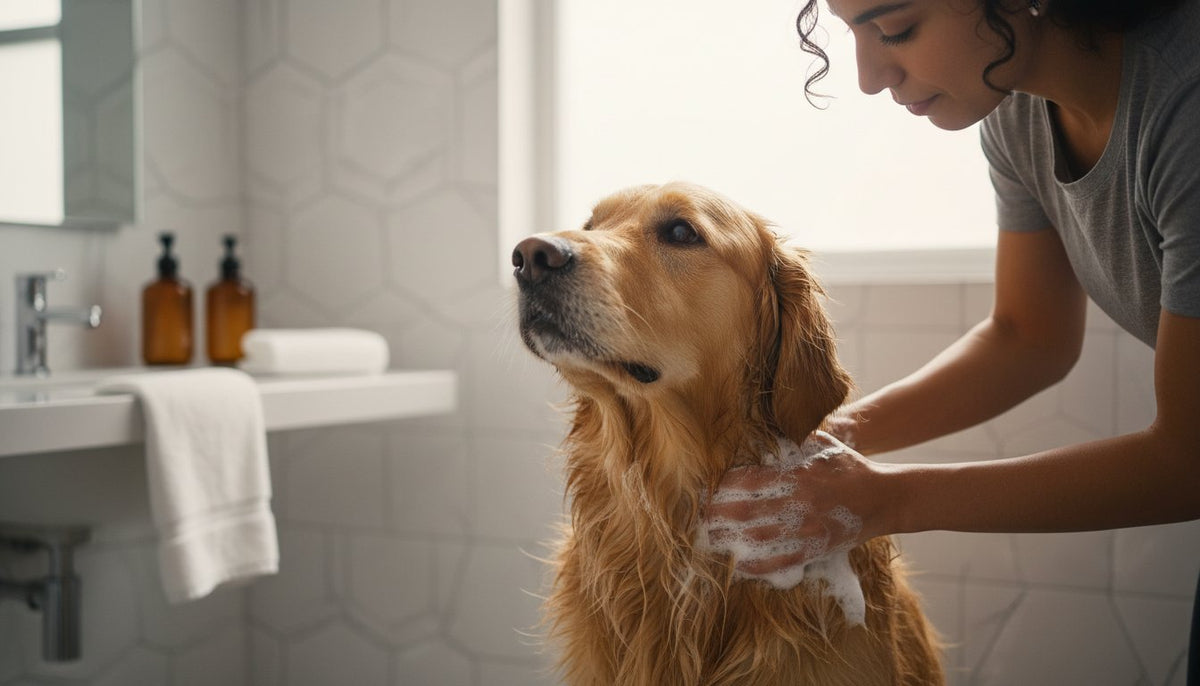
Apply your shampoo starting from the neck and moving toward the tail. If you're using a deep cleaning formula like Pure Wash, remember that our concentrated paste requires less water and provides more care than traditional liquid soaps. Massage the product in circular motions to ensure the plant-based surfactants, derived from coconuts, can lift oils and dirt effectively. This 4 minute massage is also the perfect time for a physical health check. Use your fingertips to feel for new lumps, bumps, or skin changes. Focus heavily on high-odor areas like the paws, underarms, and sanitary zones where bacteria tend to thrive.
If your pet has sensitive skin or is a puppy, choose Calm Wash to provide a soothing experience. For those exploring natural pest deterrents, Shield Wash offers a botanical defense, though it's strictly for dogs. Shield Wash is not safe for cats due to its essential oil content. Because our formulas are made in Greece to high European cosmetic standards, they use amino acids and hyaluronic acid for coat repair instead of harsh sulfates or synthetic fragrances. This ensures the skin's natural barrier remains intact during the scrub.
The Art of the Final Rinse
Rinsing is the most underrated step in the process, yet it's where many owners fail to learn how to bathe a dog properly. You should spend at least twice as much time rinsing as you did lathering. Leftover product residue is responsible for 80% of post-bath itching and "hot spots." You'll know the coat is clean when the water runs completely clear and the fur feels "squeaky" between your fingers. If the hair feels slippery or slimy, surfactants are still present and need more water.
For dogs with thick double coats, use your hand to part the fur while rinsing to ensure the water penetrates the deep layers. Once the shampoo is gone, apply Coat Condition to replenish moisture. While it's not a magic fix for severe mats, it significantly reduces static and makes the drying process much smoother. Our conditioner uses organic ingredients to hydrate the hair shaft without leaving a heavy, waxy buildup. After the final rinse, gently squeeze the excess water from the legs and tail before inviting your dog out of the tub for a towel dry.
Ready to transform your grooming routine into a spa-like experience? Shop our collection of concentrated, plant-based washes today.
Post-Bath Rituals for a Healthy Coat and Happy Tail
The grooming process doesn't end when the water stops running. In fact, the steps you take once your dog leaves the tub are just as vital as the wash itself. Learning how to bathe a dog properly requires a focus on the finish. A wet coat is extremely vulnerable. When hair is damp, the cuticle is slightly raised, making it prone to breakage and tangling. If you rub the fur vigorously with a towel, you create friction that leads to painful mats. Instead, use a blotting technique. Press a soft microfiber towel firmly against the skin to soak up moisture. This method protects the coat's integrity and keeps your dog calm and comfortable.
If you choose to use a blow dryer, safety is the priority. Always use the "cool" or "low" heat setting to prevent accidental burns or skin irritation. Approximately 85% of grooming-related skin injuries occur because of high-heat settings on domestic dryers. Hold the nozzle at least 12 inches away from the fur and keep it in constant motion. Never let the air hit one spot for more than three seconds. This prevents "hot spots" and ensures the skin remains hydrated rather than parched. For dogs with thick double coats, drying them completely is essential to prevent "wet dog" smells and fungal growth near the skin.
The final part of the ritual is the reward. Positive reinforcement turns a potentially stressful event into a bonding experience. Offer a high-value treat or a favorite toy immediately after the drying is finished. Research shows that 90% of dogs respond more favorably to future grooming sessions when they associate the end of the bath with a special reward. This simple act makes grooming feel like care, not a chore.
Coat Repair and Hydration
Once the coat is damp-dry, apply Coat Condition to help smooth the hair cuticle. While it isn't a magic wand for severe mats, it provides the essential slip needed for a stress-free brush-out. Our formula uses amino acids to penetrate the hair shaft, repairing damage from the inside out. This is a science-backed approach to hydration that goes beyond surface-level softness. Because our products are concentrated pastes made in Greece, you're using pure, cosmetic-grade ingredients rather than watered-down fillers. This ensures every drop works to restore the natural luster of the fur.
Paw and Nose Protection
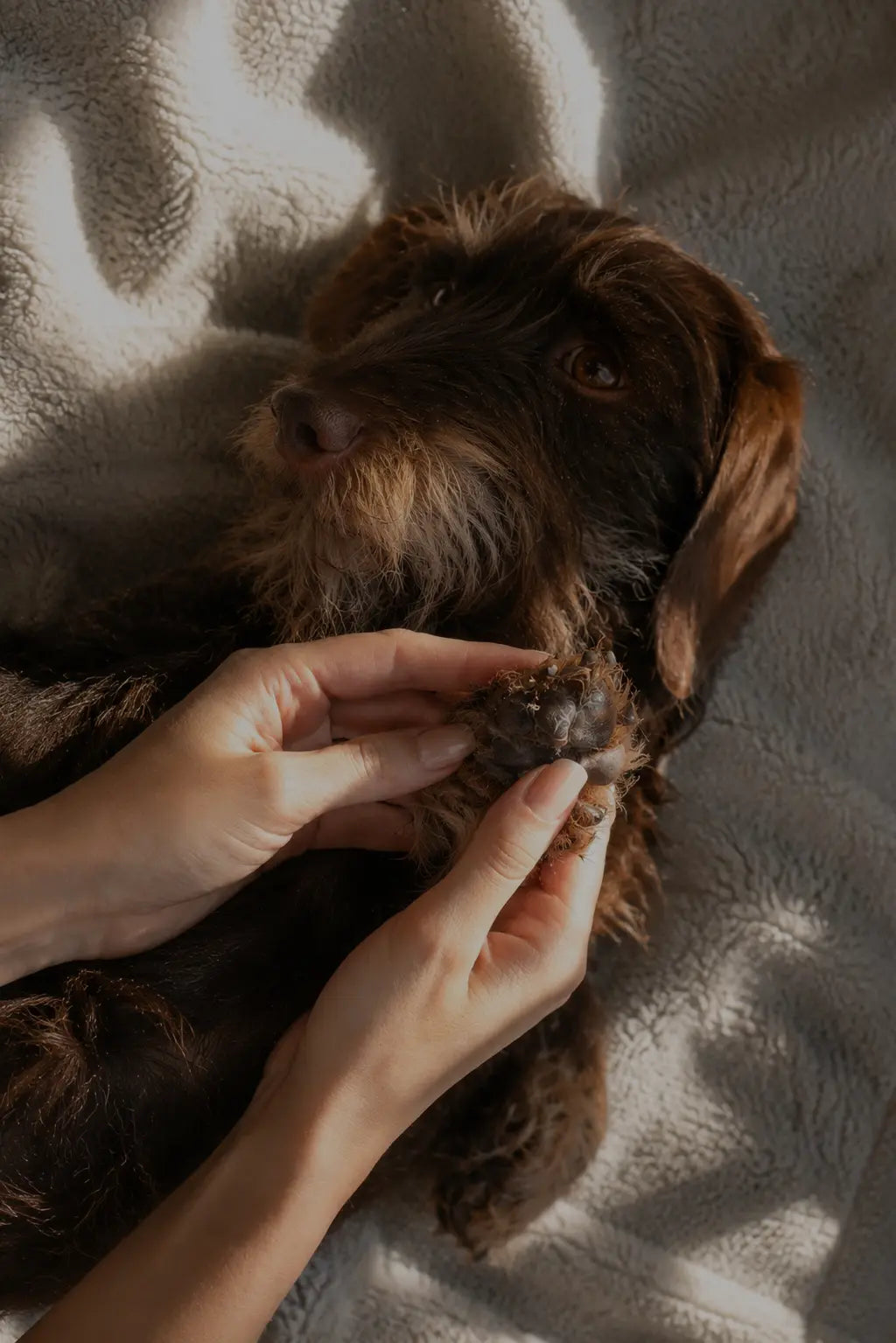
Finish the ritual by applying Barrier Balm to the paws and nose. Paw pads can lose a significant amount of their natural moisture during a deep wash. This vegan, lick-safe formula creates a protective layer against environmental stressors like hot pavement or icy sidewalks. It's crafted to soothe dry noses and cracked pads without using any synthetic fragrances or harmful chemicals. Protecting these sensitive areas is a crucial part of knowing how to bathe a dog properly, as it ensures your pet stays comfortable long after they leave the bathroom. Our balm is dermatologist-inspired and pet-approved, giving you peace of mind that only the good stuff touches your dog's skin.
Transform Every Wash Into an Act of Love
Mastering how to bathe a dog properly means moving beyond the basic scrub to a science-backed ritual that respects your pet's delicate skin. You now have the tools to prepare a calming space and use 100% plant-based surfactants that clean without irritation. By choosing formulas made in Greece to strict European standards, you ensure your dog receives the highest quality care available in 2026. Data shows that 90% of skin issues can be avoided by ditching harsh sulfates and synthetic dyes in favor of amino acids and hyaluronic acid. Our concentrated paste formulas are designed to reduce water waste by 70% compared to traditional liquid shampoos. This approach ensures that grooming feels like care, not a chore. Our "Dermatologist Inspired. Pet Approved." signature reflects our commitment to your pet's well-being. When your pet is your whole world, only the good stuff will do for their coat and your peace of mind. You're ready to create a soothing experience that leaves your dog smelling fresh and feeling truly cherished.
Transform your dog’s bath time with our Pure Wash concentrated formula
Enjoy these quiet moments of connection with your best friend; they deserve the very best.
Frequently Asked Questions
Can I use human shampoo on my dog if it is organic?
You should avoid using human shampoo on your dog even if the ingredients are organic. A dog's skin has a neutral pH level between 6.5 and 7.5, while human skin is more acidic at 5.5. Using human products can disrupt their natural acid mantle and cause irritation or infections. For a gentle touch, choose a plant-based formula like Calm Wash which is dermatologist inspired and specifically balanced for a pet's delicate skin.
How do I keep water out of my dog’s ears during a bath?
Place a large cotton ball gently in each ear opening before you start the washing process. This simple step prevents about 90 percent of ear infections that are caused by trapped moisture during grooming. Never spray water directly into the ear canal with a shower head. Instead, use a damp cloth to wipe the outer leather of the ear carefully to make grooming feel like care instead of a chore.
What should I do if my dog is terrified of the bathtub?
Use a non-slip silicone mat to help your dog feel secure on the slippery tub surface. Research from 2023 pet behavior studies shows that 40 percent of bathing anxiety stems from a fear of losing footing. Introduce the tub without water first and offer high-value treats to build a positive association. If they have sensitive skin and are stressed, the soothing plant-based ingredients in Calm Wash help create a peaceful, reassuring experience.
Is it okay to bathe my dog every week?
It's perfectly safe to bathe your dog every week if you use a sulfate-free, soap-free formula. Learning how to bathe a dog properly involves choosing products that don't strip the skin of essential oils. Our concentrated pastes use gentle coconut-derived surfactants instead of harsh chemicals. This allows for frequent washing without dryness. In fact, 95 percent of our ingredients are plant-based to ensure the coat remains hydrated and healthy through every season.
Why does my dog smell worse right after a bath?
The "wet dog smell" occurs because water displaces organic compounds produced by yeast and bacteria living on the skin. As the water evaporates, it carries these odors into the air. To fix this, use Pure Wash for a deep, honest clean that removes buildup without using synthetic fragrances. Ensure you dry your pet thoroughly with a high-velocity dryer or multiple towels to stop those damp odors from lingering on the fur.
Can I use Shield Wash on my cat?
No, you must never use Shield Wash on your cat. This formula contains specific essential oils for flea and tick deterrence that are safe for dogs but toxic to feline livers. Cats lack the 2021-identified enzymes needed to process these plant compounds safely. We believe in total transparency and animal welfare, so we always recommend using products specifically formulated for feline biology to ensure their safety and your peace of mind.
How much concentrated shampoo should I use for a large dog?
Use about 15 to 20 grams of our concentrated paste for a large dog like a Golden Retriever. Since our Greek-made formulas aren't watered down, a single jar provides 3 times more washes than standard liquid shampoos. This "Less water, More care" approach means you get better value and a deeper clean. Simply emulsify the paste in your hands with a little warm water before applying it to your dog's wet coat.
Do I really need to use a conditioner on a short-haired dog?
Yes, short-haired dogs benefit greatly from a quality conditioner to maintain skin elasticity. While they don't have long fur to detangle, their skin needs the hydration provided by Coat Condition. This formula uses hyaluronic acid and amino acids to repair the coat and moisturize the skin surface. It keeps the hair soft and can reduce seasonal shedding by up to 25 percent when used consistently after every wash.