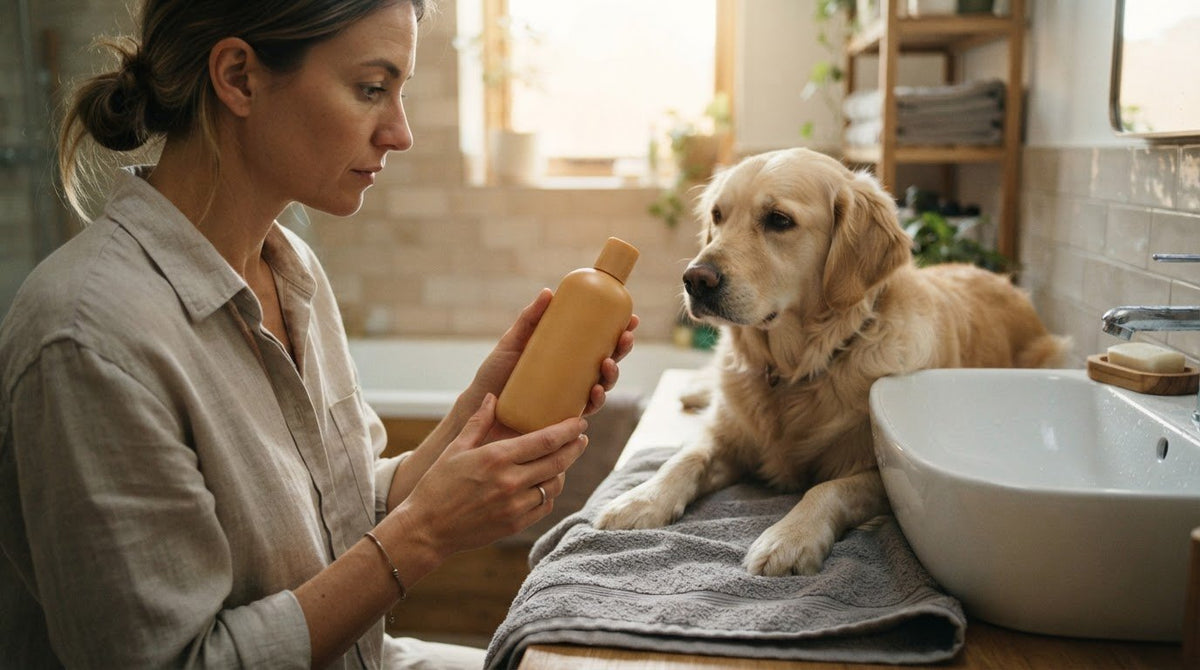
How to Verify Cruelty-Free Pet Products and Check Claims
A cruelty-free claim means more than a promise printed on a label. To learn how to verify cruelty-free pet products, look for a recognized certification and clear commitments covering finished products, ingredients, suppliers, and animal testing. In the United States, the FDA had no legal definition of “cruelty-free” or “not tested on animals” as of December 2020, so the wording alone may not tell you what a company’s claim covers.
It makes sense to look for gentle grooming products that reflect the care you give your pet. A certification can be a useful starting point, but checking the certifier’s public directory and reading the company’s animal-testing policy gives you a fuller picture of the claim.
This guide explains what cruelty-free can mean, how to check certification marks and company policies, and what to look for on a pet shampoo label. Use these steps to assess claims before choosing grooming products for your companion.
Key Takeaways
- Look beyond “not tested on animals” wording and focus on what a company says about ingredients, suppliers, and third-party testing.
- Revisit a brand’s claims after ownership changes, reformulations, or market expansions, since its practices may have changed too.
- Check a certification mark against the certifier’s public directory rather than relying on a logo alone.
- For pet grooming products, look for certification that specifically covers animal-care products and read the product’s own testing disclosures.
What does cruelty-free really mean?
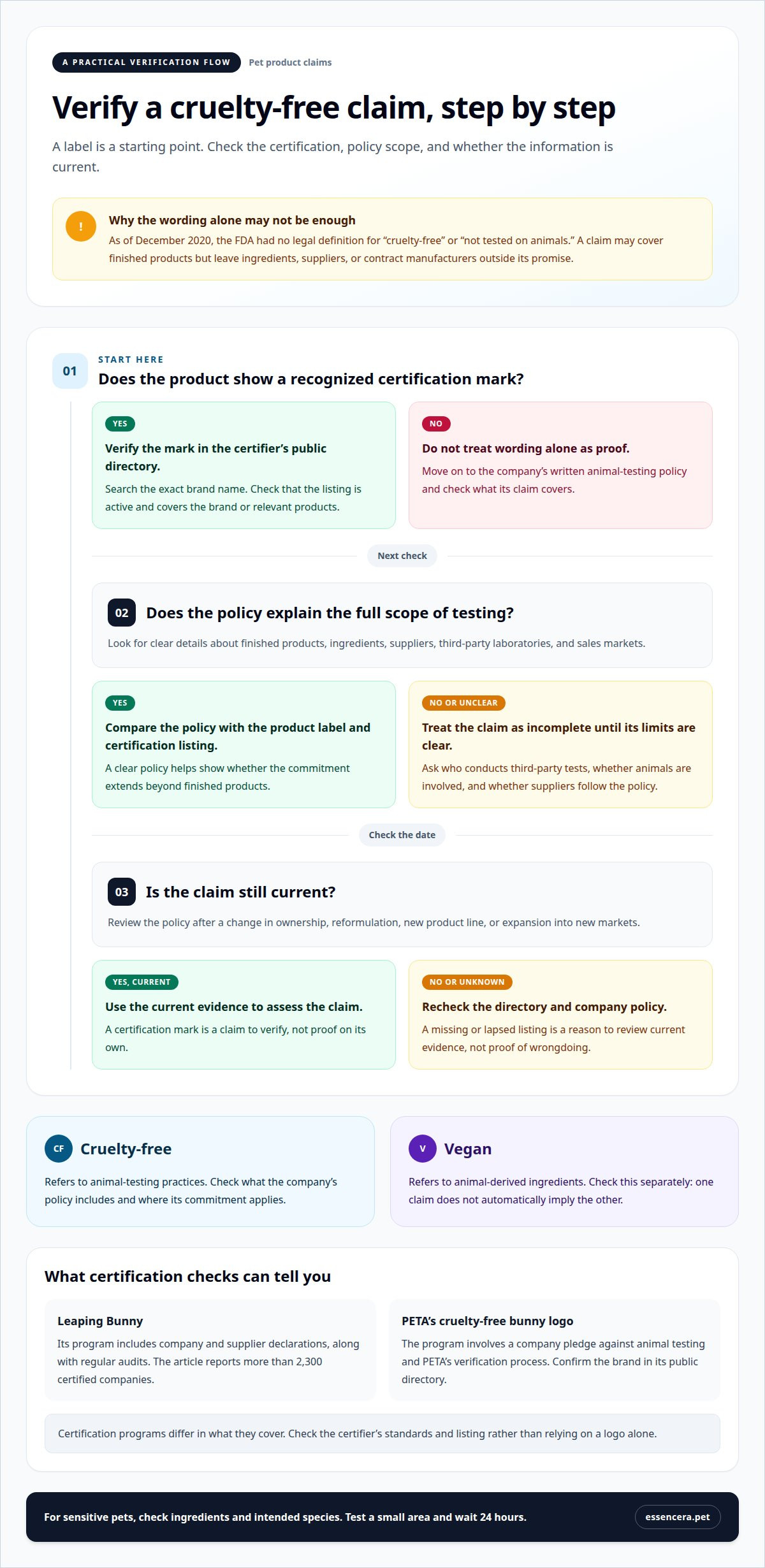
“Cruelty-free” describes animal-testing practices, but the phrase alone may not explain their scope. As of December 2020, the U.S. Food and Drug Administration had no legal definition for “cruelty-free” or “not tested on animals.” A label statement may cover finished products only, leaving ingredients, suppliers, or contract manufacturers outside its promise.
In the United States, animal testing is not legally required for cosmetics. That fact does not define every rule for pet-care products or explain a product’s testing history. To verify a claim, look for a written policy that covers finished products, ingredients, suppliers, third-party laboratories, and sales markets. This is a practical starting point for how to verify cruelty-free pet products.
A manufacturer can make a cruelty-free claim without testing products or ingredients on animals. However, its promise may not explain the practices of ingredient suppliers or contract manufacturers. Check whether the policy applies across the supply chain, whether suppliers must follow it, and whether third-party testing involves animals. A clear policy addresses ingredients as well as finished products.
To understand how to verify cruelty-free pet products, look for a current animal-testing policy with specific details about ingredients, formulas, suppliers, partners, and markets. If it does not address third-party testing, ask the company who conducts those tests and whether animals are involved. The answer helps clarify what the stated commitment covers.
Alternatives to animal testing include in vitro methods using cells or tissues, human volunteers, and computer modeling or simulation. A cruelty-free claim alone doesn’t identify which method a manufacturer uses. Such products may cost more or less depending on ingredients, formulation, and packaging, while availability depends on what brands distribute in different countries. Cruelty-free status also doesn’t prove a product is suitable for every pet. Check its ingredients, intended species, and directions; for a sensitive pet, test a small area and wait 24 hours.
As of December 2020, the FDA had no legal definition for “cruelty-free” or “not tested on animals.” Animal testing isn’t required by law for cosmetics, but that fact does not establish the rules for pet-care products.
Outdated claims, reformulations, and ownership changes
Cruelty-free claims can change when products, suppliers, or company ownership change. A past statement may not reflect current practices.
Unverifiable Claims and Red Flags
A claim is difficult to verify when it lacks clear, current details about testing and responsibility. Be cautious of broad phrases such as “never tested” without a policy explaining whether they cover ingredients, finished products, suppliers, and third-party laboratories. A logo that does not match an entry in the certifier’s directory also merits closer scrutiny. Without these details, shoppers cannot tell which products or ingredients the promise covers.
If a claim is unclear, look for a written animal-testing policy dated within the last two years. Compare it with the product label and the certifier’s current listing. For example, a missing or lapsed Leaping Bunny certification may mean the mark no longer reflects the brand’s status. Treat this as a reason to review current evidence, not as proof of wrongdoing.
Claim Limits and Related Labels
Cruelty-free refers to animal testing, while vegan refers to animal-derived ingredients. Neither claim automatically implies the other: a product could avoid animal testing yet contain an animal-derived ingredient. Check the two claims separately if both matter to your choices.
Company changes can affect the scope of a claim. Revisit the policy after an ownership change, reformulation, new product line, or expansion into new markets. Some shoppers also consider a parent company’s connection to animal testing; others focus on the brand’s own practices. China’s animal-testing criteria changed in 2023, a development that may affect how some brands assess their claims. Check whether a brand explains its relevant markets and current policy.
In the UK, misleading cruelty-free claims can be reported to Trading Standards through Citizens Advice. Keep the product name, exact claim, and any supporting label or policy details together when making a report. Clear records help explain what appeared misleading.
Certification marks and verifying them in public directories
Recognized certification marks can make a brand’s animal-testing commitments easier to assess. Before relying on a mark, verify it in the certifier’s public database.
Recognized Certification Marks
Leaping Bunny and PETA’s cruelty-free bunny logo are recognized certification marks. Their programs offer consumers a clearer reference than a brand’s own label claim. Leaping Bunny lists more than 2,300 companies certified as free of animal testing at all stages of product development. Cruelty Free International manages the program outside the United States and Canada. Its standards differ somewhat from U.S. standards, while following many of the same guidelines. Certification can support an ethical shopping decision, but check what each program covers.
Checking Logos and Certification Databases
A logo is a claim to verify, not proof on its own. Search the certifier’s public directory using the exact brand name, then compare the listing with the package. Check that the certification is active and covers the brand or relevant products. PETA’s program involves a company pledge against animal testing and PETA’s verification process. Leaping Bunny’s program includes company and supplier declarations, along with regular audits. These details help you assess whether standards extend beyond finished products.
Questions About Unclear Certifications
If a mark or listing is unclear, ask which organization issued the certification and which products it covers. Check whether suppliers must follow the same animal-testing policy and whether third-party testing can involve animals. Find out where the certifier lists the brand in its public database. Clear information names the certifier and explains the commitment, rather than relying on a broad claim that products are not tested on animals.
Certification programs do not all use identical standards, so compare their stated requirements instead of treating every logo as interchangeable. A directory entry is a useful starting point, while the program’s scope explains what the certification means for that brand.
Verifying pet shampoos and grooming products
Check pet shampoo claims against the specific product. A brand’s general cruelty-free statement may not explain whether its policy covers grooming formulas, ingredients, suppliers, or contract manufacturers. Start with the exact product name, then look for the brand’s animal-testing commitment and any certification that includes pet care. A “natural” or vegan label alone does not establish whether a product was tested on animals.
Leaping Bunny certifies pet grooming products in the United States and Canada. Its program lists pet care under the Animal Care section, giving shoppers a focused place to look. Search that directory for the brand, then check whether the listing matches the product you’re considering. For example, when reviewing Pure Wash pet shampoo, compare the product’s claim with the brand’s written policy and any relevant certification listing. A company’s certification for cosmetics or personal care doesn’t automatically show that its pet grooming products fall within the same certification scope.
Read the product label alongside the company’s animal-testing policy. Check whether the policy covers finished products and ingredients, and whether suppliers must follow the same standards. If the brand sells internationally, look for an explanation of how its sales markets affect the commitment. The country where a product is sold can matter to a company’s stated testing practices, so broad wording may leave important questions unanswered.
Compare three sources: the package claim, the brand’s written policy, and the certifier’s listing. Check that the brand names match and that the product category is clearly covered. If a directory lists the company but does not clarify pet grooming, ask whether the certification includes the formula and its ingredients. Check whether suppliers or third parties may test on animals, too. These steps help distinguish a product-specific commitment from a general brand statement. A cruelty-free claim alone does not establish that a product suits every pet.
Essencera: Pure Wash
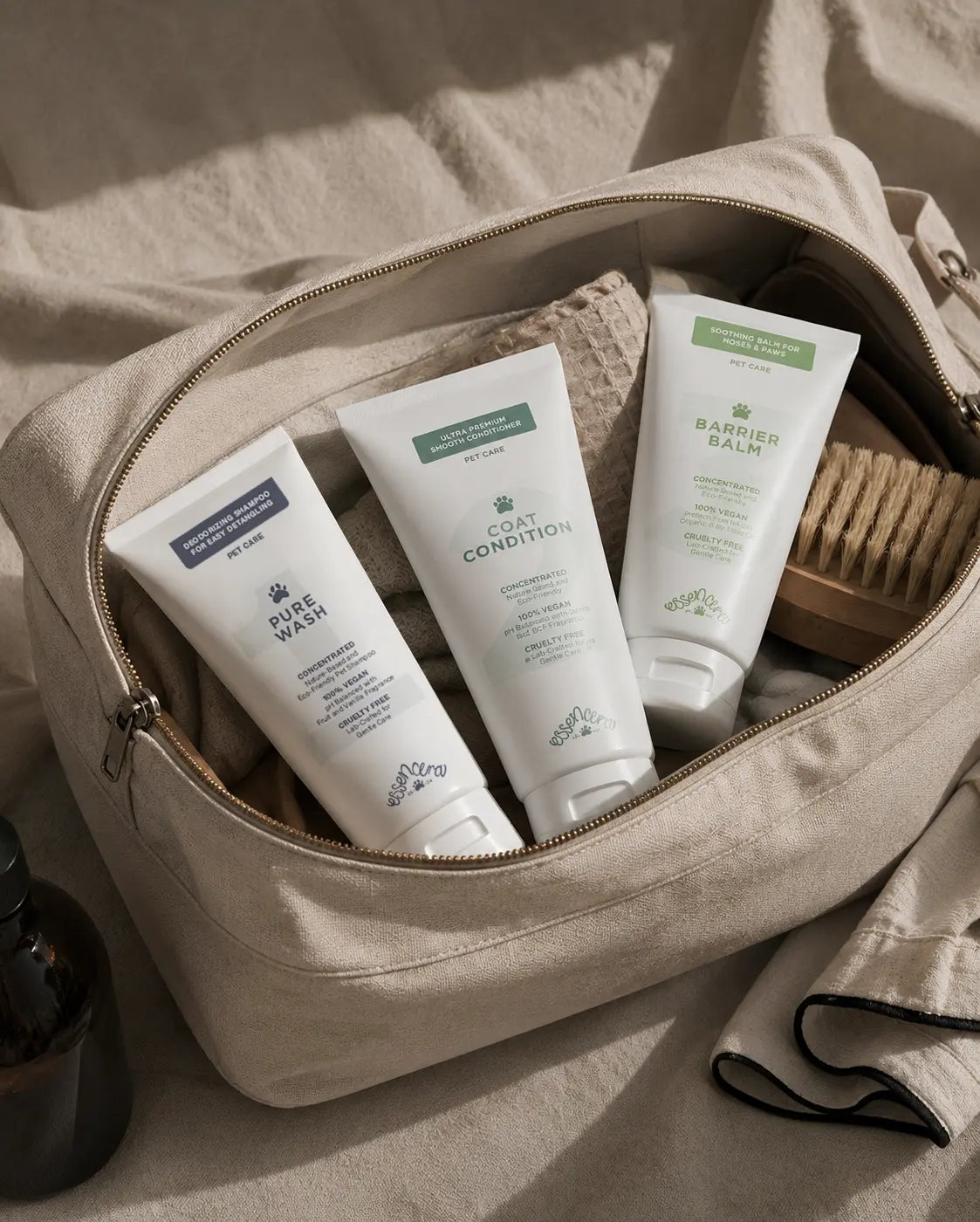
Pure Wash is Essencera’s concentrated pet shampoo for gentle cleansing and frequent use. Its product information describes it as vegan, cruelty-free, and not tested on animals. If you’re assessing those claims, compare the product details with the brand’s written policy and any relevant certification. For regular grooming, Pure Wash pet shampoo combines coconut-derived surfactants with amino acids and hyaluronic acid.
The formula is suitable for dogs, cats, and horses, and is designed for all coat types. Read the ingredient list and directions to see whether it fits your companion’s needs. For rough or dry paws and noses, Barrier Balm is a balm for helping hydrate those areas. Coat Condition is Essencera’s anti-tangle premium conditioner, designed to make brushing easier during finishing.
Review PureWash Shampoo’s product details, including its ingredients and directions, to see how it fits your dog’s grooming routine.
Make your next grooming choice with care
Knowing how to verify cruelty-free pet products gives you a practical way to assess claims while choosing care for your companion. Consider your pet’s coat and routine alongside the company’s animal-testing commitments. Ethical values matter, as does choosing a product suited to your pet. Whether browsing specialized brands or general pet supply shops like crazypethub.com, these verification steps ensure you select items that genuinely align with your standards.
Essencera’s luxury grooming system includes PureWash Shampoo, BarrierBalm Paws and Nose Cream, and Coat Condition for different parts of a dog’s care routine. Its formulas are vegan and cruelty-free. Explore the product details to find what fits your companion’s needs. Essential by design. Rich by nature.
Have a question about Essencera’s products or claims? Contact Essencera with your questions, and take your next grooming step with care.
Frequently Asked Questions
What Can You Do?
Before choosing a product, record the brand, product name, and exact claim on its label. Compare that wording with the company’s current policy and the certifier’s listing. For example, a brand-wide certification may not clearly cover every grooming product. Keeping the details together makes it easier to revisit your decision if the formula or company changes.
What are the common red flags to look out for?
Look more closely when a “cruelty-free” claim has no explanation of its scope, or a certification logo does not match a public listing. A policy that discusses finished products but not ingredients or suppliers also leaves gaps. Other reasons to review the evidence include a lapsed certification, a recent ownership change, or a product formula that differs from older descriptions.
What do I do if labeling or information is unclear?
Contact the company with the product name and label wording, and ask for a clear explanation of its animal-testing policy. Check whether it covers ingredients, suppliers, contract manufacturers, and third-party testing. If the response is general, compare it with the certifier’s public information. Keep the reply and product details so you can assess later updates consistently.
What seals/logos to look for and avoid?
Look for recognized marks such as Leaping Bunny or PETA’s cruelty-free logo, then verify the brand in the organization’s directory. Do not rely on a bunny image, an “ethical” badge, or a “not tested” phrase alone. A self-created mark is not the same as independent certification. Check whether the logo refers to the brand generally or applies to the pet-care product you are considering.
What does cruelty-free mean for pet products?
For pet grooming products, a cruelty-free claim concerns whether animals were used to test the finished product or its ingredients. The scope matters: a company might describe its own testing without explaining supplier or outside laboratory practices. The claim also does not mean a product is vegan, suitable for every species, or guaranteed to be gentle. Read the ingredients and directions separately.
Which cruelty-free certifications apply to pet products in the United States?
Leaping Bunny certifies pet grooming products in the United States and Canada, with pet products included in its Animal Care section. PETA’s cruelty-free logo is another recognized mark, but check its directory and stated program requirements. A certification for cosmetics or personal care does not automatically establish coverage for pet grooming. Confirm the brand’s listing and the product category before relying on a seal.