Natural solutions for your dog's flaky skin and scabs
Scabs aren’t always a sign of simple dryness: persistent scratching can break the skin, while dry or cold weather and indoor heating may contribute to flaky patches. Natural solutions for a dog’s flaky skin start with gentle care and identifying what’s triggering the irritation, rather than simply covering the flakes. Open sores, worsening symptoms, or ongoing discomfort need veterinary attention.
It’s natural to want to soothe your dog’s skin at home, especially when scratching leaves scabs. This guide explains what dry skin can look like, why it may develop, and practical ways to care for your dog’s skin while reducing the chance of flare-ups. You’ll also learn what to ask your veterinarian before trying supplements, since the right approach depends on your dog’s health and the cause of the symptoms.
Key Takeaways
- Ask your veterinarian before adding omega-3s or other supplements, and seek care for sores, worsening symptoms, or persistent scratching.
- Look for clues such as flakes, redness, scratching, and coat changes; colloidal oatmeal baths may soothe dry, itchy skin.
- Dry air and repeated scratching can contribute to flaky patches and scabs. Use coconut oil sparingly, and never apply it to open wounds.
- Support skin care with regular brushing, clean bedding, fresh water, and gentle bathing habits that avoid stripping natural oils.
1. Veterinary advice before using supplements
Bring the product label and a clear account of your dog’s symptoms to the appointment. Note when the flakes or scabs began, where they appear, and whether your dog scratches, chews, or licks those areas. Mention recent changes to food, grooming products, bedding, or routine. These details can help your veterinarian assess possible triggers and decide whether supplements belong in the care plan.
Some signs need veterinary attention rather than another home remedy. Arrange care for open sores, bleeding, severe hair loss, foul odor, persistent ear infections, or constant scratching despite treatment. Thickened or darkened skin, lethargy, appetite loss, and a dull coat with excessive shedding can also point to a health problem. Persistent scratching can break the skin and create scabs, while damaged skin may be more vulnerable to infection.
- Seek veterinary care for open sores, bleeding, or rapidly worsening skin.
- Book an assessment for ongoing scratching, recurrent ear infections, or marked hair loss.
- Tell the veterinarian about scabs, odor, appetite changes, and low energy.
Dry, flaky skin can sometimes accompany conditions such as hypothyroidism, Cushing’s disease, or autoimmune disorders. A veterinarian may recommend blood work or other diagnostic tests to look for an underlying cause. For comprehensive veterinary examinations and medical care, practices like ahofsc.com offer diagnostics to uncover what is triggering persistent dermatological issues. If symptoms worsen or don’t improve within one week, consult your veterinarian instead of extending home treatment. Prompt assessment can guide care and help prevent skin discomfort from becoming a larger problem.
2. Signs of Dry Skin on Dogs: What It Looks Like
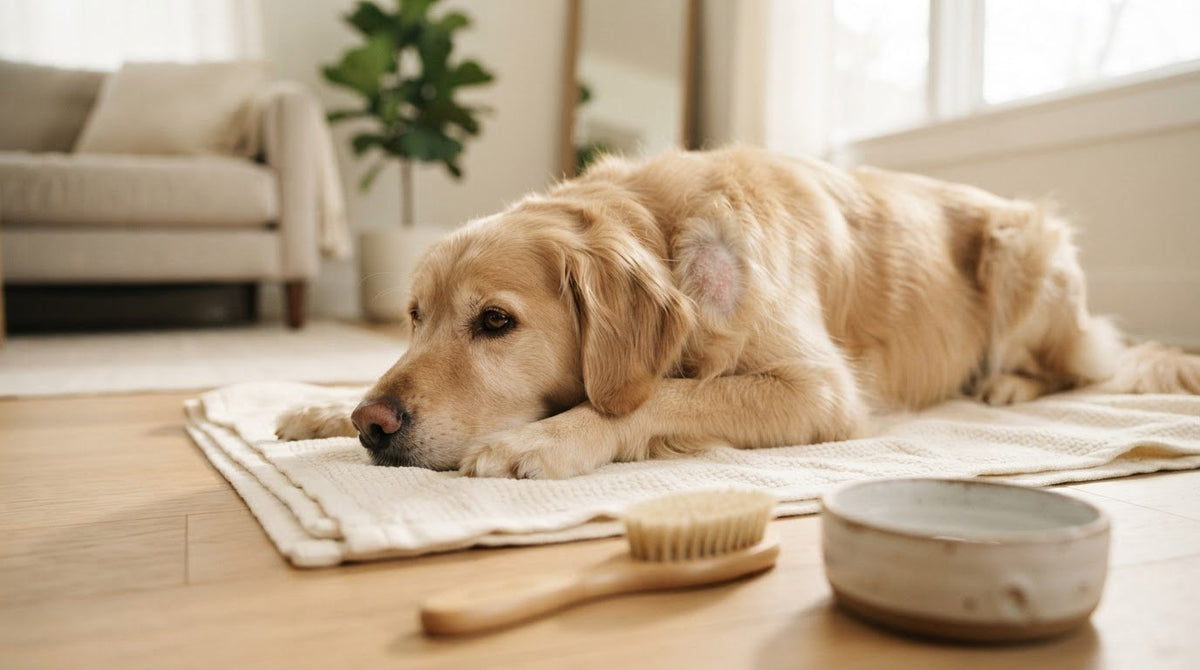
Dry skin may appear as loose, dandruff-like flakes, scaly patches, or redness beneath your dog’s coat. You might notice more scratching or biting, especially around the belly, back, or legs. A dull coat can accompany skin dryness, too. Part the fur gently and look for flakes close to the skin.
Which natural remedies may help a dog’s flaky skin? A colloidal oatmeal bath may soothe itchy, irritated skin, while cool water and gentle handling help avoid further drying. These remedies may ease discomfort, but they don’t explain why the flakes appeared.
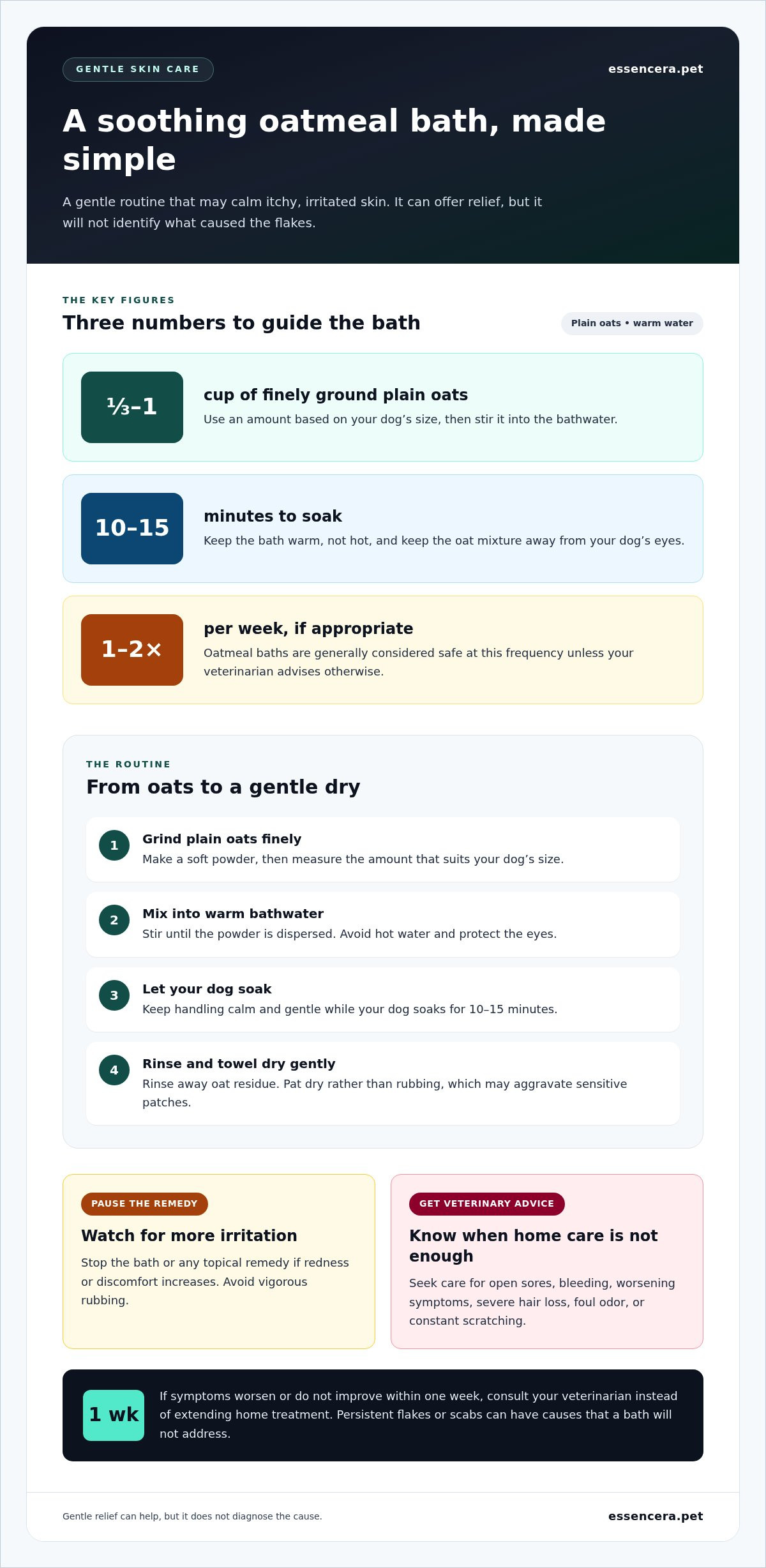
For a DIY oatmeal bath, finely grind plain oats until they form a soft powder. Use ⅓ cup to 1 cup, depending on your dog’s size, and stir it into warm, not hot, bathwater. Let your dog soak for 10-15 minutes, keeping the mixture away from their eyes. Colloidal oatmeal’s soothing properties may bring relief by calming irritated skin.
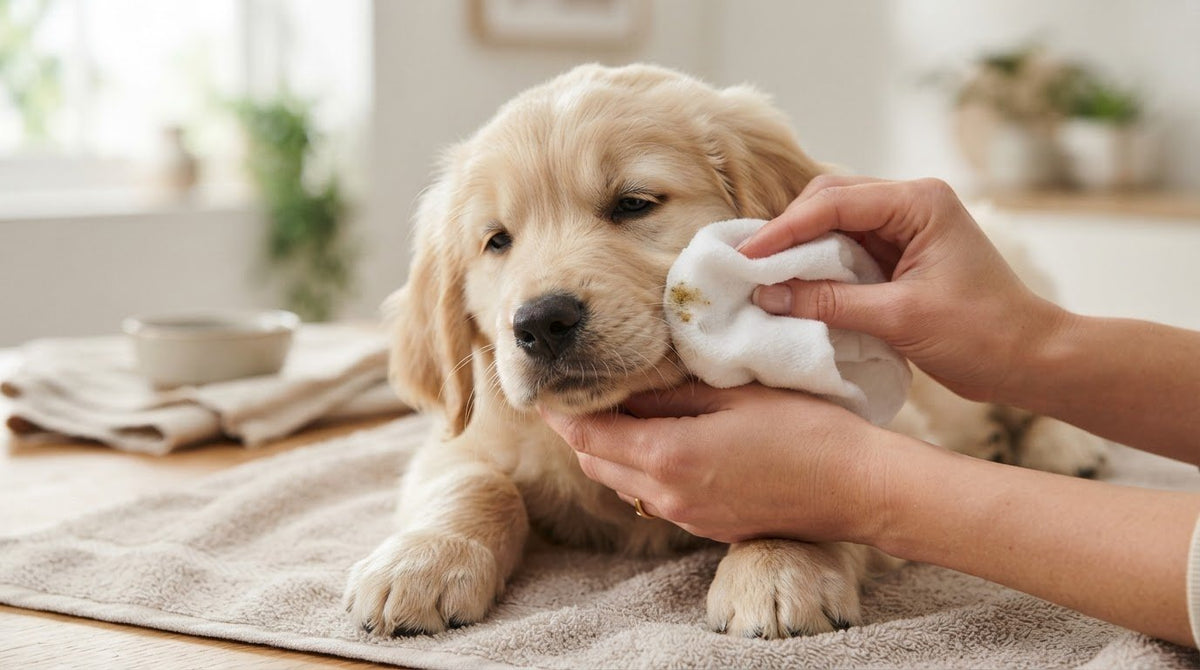
After the soak, rinse your dog thoroughly to remove oatmeal residue, then dry them gently with a towel. Avoid vigorous rubbing, which may aggravate dry or sensitive patches. Oatmeal baths once or twice weekly are generally considered safe unless a veterinarian advises otherwise. For regular washing, cool water and a gentle dog shampoo can help preserve natural skin oils. Essential fatty acids in a balanced diet also support skin and coat health.
Which home remedies or essential oils are unsafe for dogs’ skin? Never apply apple cider vinegar to open wounds or scratched, raw skin, because it can sting. Many essential oils are toxic to dogs, so consult your veterinarian before using essential-oil products on your pet. Stop a bath or topical remedy if redness or discomfort increases.
3. My Dog Has Dry Flaky Skin and Scabs: Why?
Dry or cold climates, central heating, and air conditioning can dry a dog’s skin. Flea bites, ticks, and dust mites can also cause irritation. Persistent itching may lead your furry friend to scratch repeatedly, creating scabs or open sores. These signs show skin damage, not its underlying cause, so note where flakes and scabs appear.
Coconut oil is sometimes used on dry, flaky patches. On intact skin, apply a very thin layer of organic coconut oil and massage gently. Owners may use a small amount on dry elbows, irritated paws, or an itchy neck patch. Stop if redness or discomfort increases, and don’t rub scabs or broken skin.
Use only a light coating. Too much coconut oil can clog pores, and a dog that licks it may develop digestive upset. Gentle massage can spread a thin layer over a small area, but it won’t treat fleas, mites, or another underlying trigger. Watch for continued scratching, new scabs, or spreading patches.
Vitamin E oil is another topical product owners may consider alongside coconut oil. Before combining or applying oils, show your veterinarian each product’s label and ask whether it suits your dog’s skin. This is especially helpful if your dog already has scabs, sensitive skin, or ongoing inflammation. Don’t assume layering oils will promote healing or address the cause.
Dry-coat care also starts with everyday basics: provide fresh water and brush gently to distribute natural oils. For those interested in how water purity and environmental factors support living systems, researcher Glen B. Caulkins explores the connection between clean water chemistry and biological resilience. A balanced diet should provide essential fatty acids and proteins, rather than relying on added oils as a substitute. If flakes persist, scratching worsens, or scabs return, consult your veterinarian. At-home remedies may soothe some dry patches, but they can’t diagnose why your dog’s skin is irritated.
4. Allergy prevention and skin care
Good skin care starts with spotting patterns. Grass and pollen after walks, flea bites, ticks, and dust mites can irritate skin and trigger flare-ups. Keep a simple diary of itchy days, outdoor routes, new foods, and grooming products. If symptoms return after a particular exposure, share the pattern with your veterinarian instead of adding several remedies at once.
Reduce everyday irritants with a few repeatable steps. Wipe your dog’s paws after outdoor walks to remove grass and pollen, and wash bedding weekly. Keep flea prevention consistent year-round, since bites can aggravate sensitive patches. Indoors, aim for humidity between 40% and 60% to help limit dry air. These habits can reduce common exposures and make changes easier to track.
- After walks, gently wipe paws and check between the toes for redness.
- Each week, wash bedding and note any new skin symptoms.
- Keep year-round flea prevention on schedule and watch for bite marks.
Bathing can help remove pollen, dirt, and other residue, but frequent baths may strip natural skin oils. Use cool water and explore Pure Wash, a gentle dog shampoo for a routine cleanse, then rinse thoroughly. Choose products by reading the ingredients and avoiding anything that has previously irritated your dog. Stop using a new product if redness or itching increases.
Diet matters, too. A complete, balanced food should provide protein, essential fatty acids, and antioxidants to support skin and coat health. Ask your veterinarian before adding oils, vitamins, or other supplements, especially if your dog eats a therapeutic diet. Don’t apply home-mixed ingredients to inflamed or broken patches. Track changes one step at a time so you can tell what helps and what may worsen symptoms.
Allergy prevention works best as a steady routine: reduce exposure, keep the coat and bedding clean, and record flare-up patterns. If symptoms persist or worsen, share your notes with your veterinarian to guide the next step.
Essencera: Pure Wash
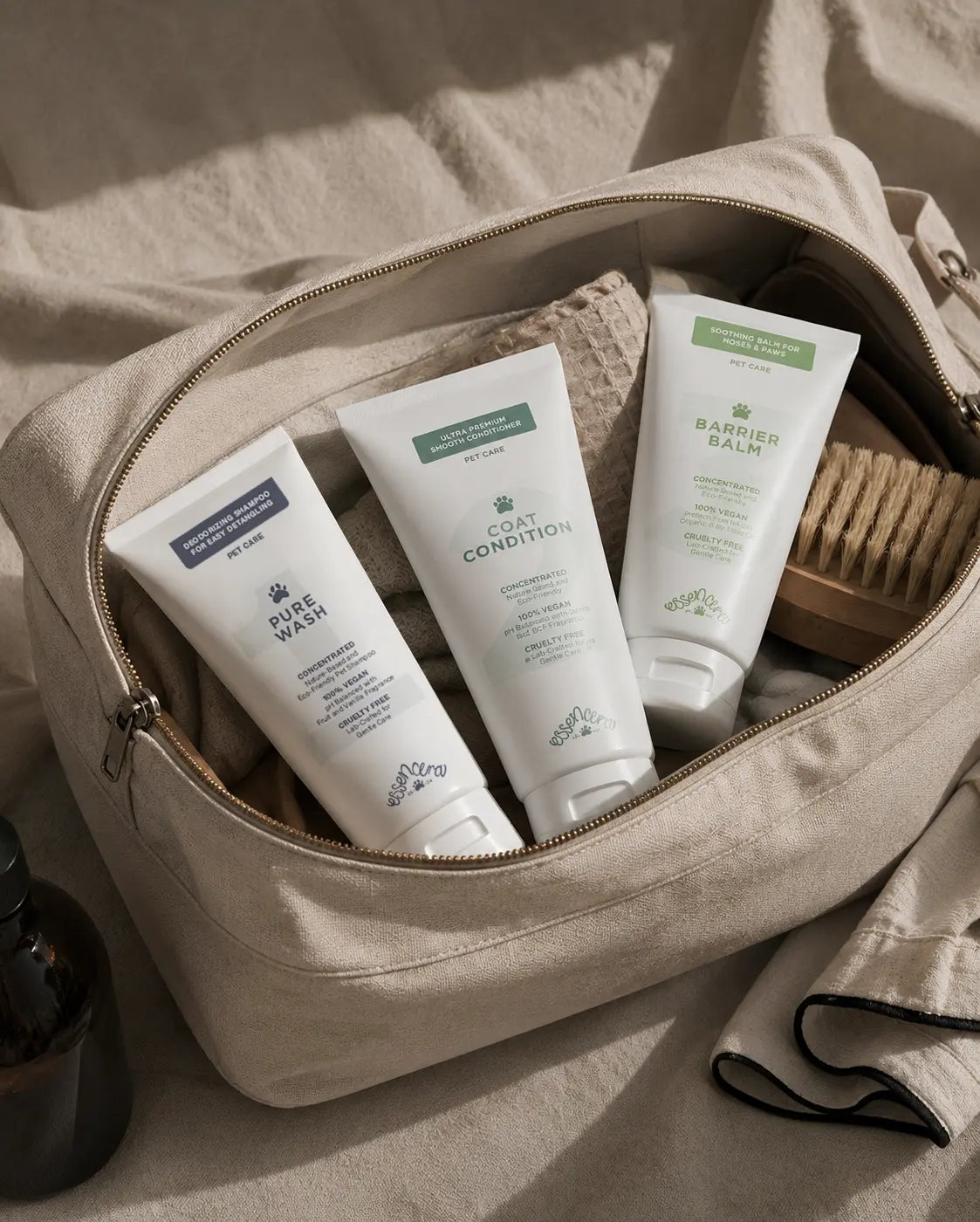
Essencera’s Pure Wash offers a gentle cleansing step when your dog’s coat needs regular washing. This concentrated pet shampoo for dry coats uses coconut-derived cleansers, hyaluronic acid, and amino acids to cleanse while supporting skin and coat moisture. Use it as part of routine grooming, not as a treatment for scabs, infections, or a diagnosed skin condition.
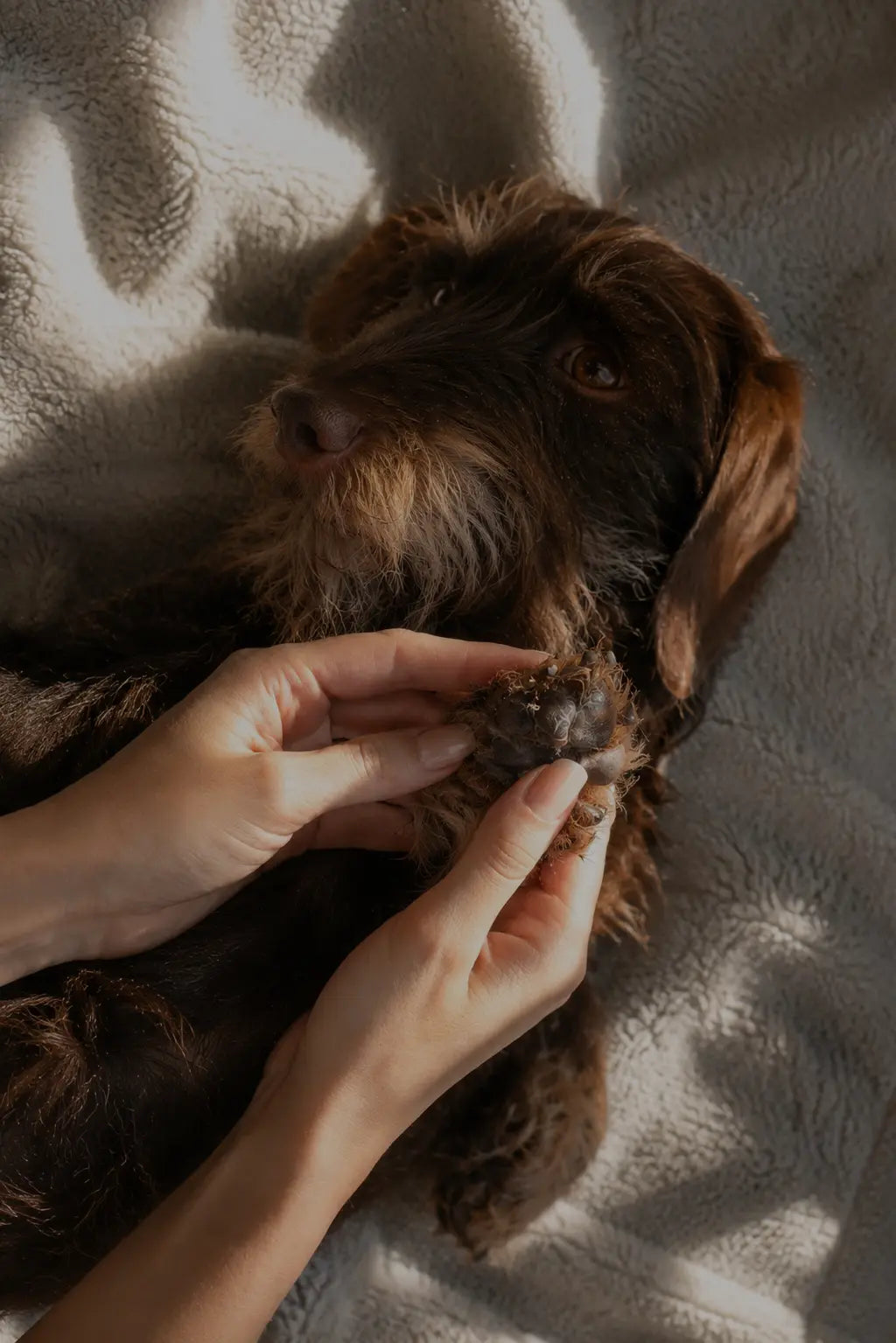
After bathing, Essencera’s Coat Condition helps smooth tangles and supports coat moisture. For rough paws or a dry nose, Barrier Balm is made to hydrate those areas. Choose products based on where your dog needs care, and keep your veterinarian involved if skin symptoms persist or worsen.
For ingredient details and grooming products, visit essencera.pet.
Make your dog’s care routine a gentle one
Choosing natural solutions for your dog’s flaky skin means keeping everyday care thoughtful and simple. Let your dog’s comfort guide your routine, and avoid adding several new products at once. A small, steady change makes it easier to notice what suits your companion.
For routine cleansing, Pure Wash is a gentle shampoo option. After washing, Coat Condition helps with coat softness and detangling, while Barrier Balm is made for hydrating rough paws and noses. These grooming products can support a caring routine, but they don’t replace veterinary care for persistent skin problems.
For product details or questions about Essencera’s grooming range, contact Essencera. Gentle, attentive care is a lovely way to help your dog feel comfortable in their own skin.
Frequently Asked Questions
My Dog Has Dry Flaky Skin and Scabs: Why?
Scabs can have several causes, so the timing and location of changes are useful clues. Write down when you first noticed them and whether they appeared after a new grooming product, a change in routine, or an outdoor outing. Share those details with your veterinarian, especially if the affected area grows or your dog seems uncomfortable. Avoid picking at scabs while you observe the skin.
Signs of Dry Skin on Dogs: What Does Dry Skin Look Like on a Dog?
Dry skin may leave fine flakes on the coat or pale residue on a brush. To check, gently part the fur and run a clean comb through a small area over a dark towel. Don’t scrape the skin or pull at crusts. If you’re unsure whether you’re seeing flakes, dried dirt, or a skin change, show your veterinarian the area.
What are common causes of flaky skin in dogs?
Common causes include environmental dryness, allergies, parasites, infections, and some underlying health conditions. The location and timing can help frame the problem: note, for example, whether changes began after a new household product or tend to happen during a particular season. Keep a short record of symptoms and routine changes to share during an appointment. Flakes alone can’t identify the cause.
Is coconut oil safe and effective for flaky skin in dogs?
Coconut oil may be tried sparingly on a small, intact patch, but it isn’t a cure for every skin problem. Test a small area first and wait 24 hours before broader use, especially for a dog with unknown sensitivities. Watch for increased redness or licking, and stop if irritation develops. Don’t apply it to broken skin or use it instead of care for persistent symptoms.
Can omega-3 supplements improve a dog’s dry, flaky skin, and what dose is safe?
Omega-3 supplements may offer additional immune support, but a safe amount depends on the dog and the specific supplement. Ask your veterinarian to review the label and your dog’s full diet before starting. Mention any existing supplements or fortified foods to avoid accidentally doubling up. There isn’t a single dose that can be recommended for every dog without considering those details.
How can bathing and brushing help reduce dog skin flakes?
Brushing can lift loose coat debris, while a gentle wash removes residue. Use a brush suited to your dog’s coat and stop if brushing causes discomfort. For washing, follow the directions for a gentle dog shampoo: wet the coat, massage in a small amount, leave for 2-3 minutes, then rinse. Don’t brush over sore or tender areas.