
Why Does My Dog Hate Being Brushed? Help Them Adjust
Your dog may not be “being difficult”; brushing may feel unfamiliar, uncomfortable, or frightening. If you’re asking, “Why does my dog hate being brushed?” the answer may be tangles pulling at the coat, a sensitive spot, or a stressful past experience. Their reaction is worth listening to, not pushing through.
It’s understandable to feel frustrated when a routine meant to care for your dog turns into a struggle. Brushing doesn’t have to happen all at once. A calm introduction, a few gentle strokes, and stopping while your dog is still comfortable can help build trust.
This guide explains why dogs may resist brushing and how to introduce the brush gradually, keep sessions short and positive, and work through one section of the coat at a time. This approach can make grooming more manageable for both of you and help you notice when a particular area needs extra care.
Key Takeaways
- Let your dog investigate the brush before using it, then build familiarity at a pace that keeps them relaxed.
- Notice where and how your dog reacts. A sudden response around one spot may be a sign that brushing is uncomfortable.
- Keep early brush-outs brief, reward calm moments, and stop before your dog becomes overwhelmed.
- Work through one comfortable coat section at a time so grooming feels more manageable than tackling the whole coat at once.
1. Introducing the brush gradually
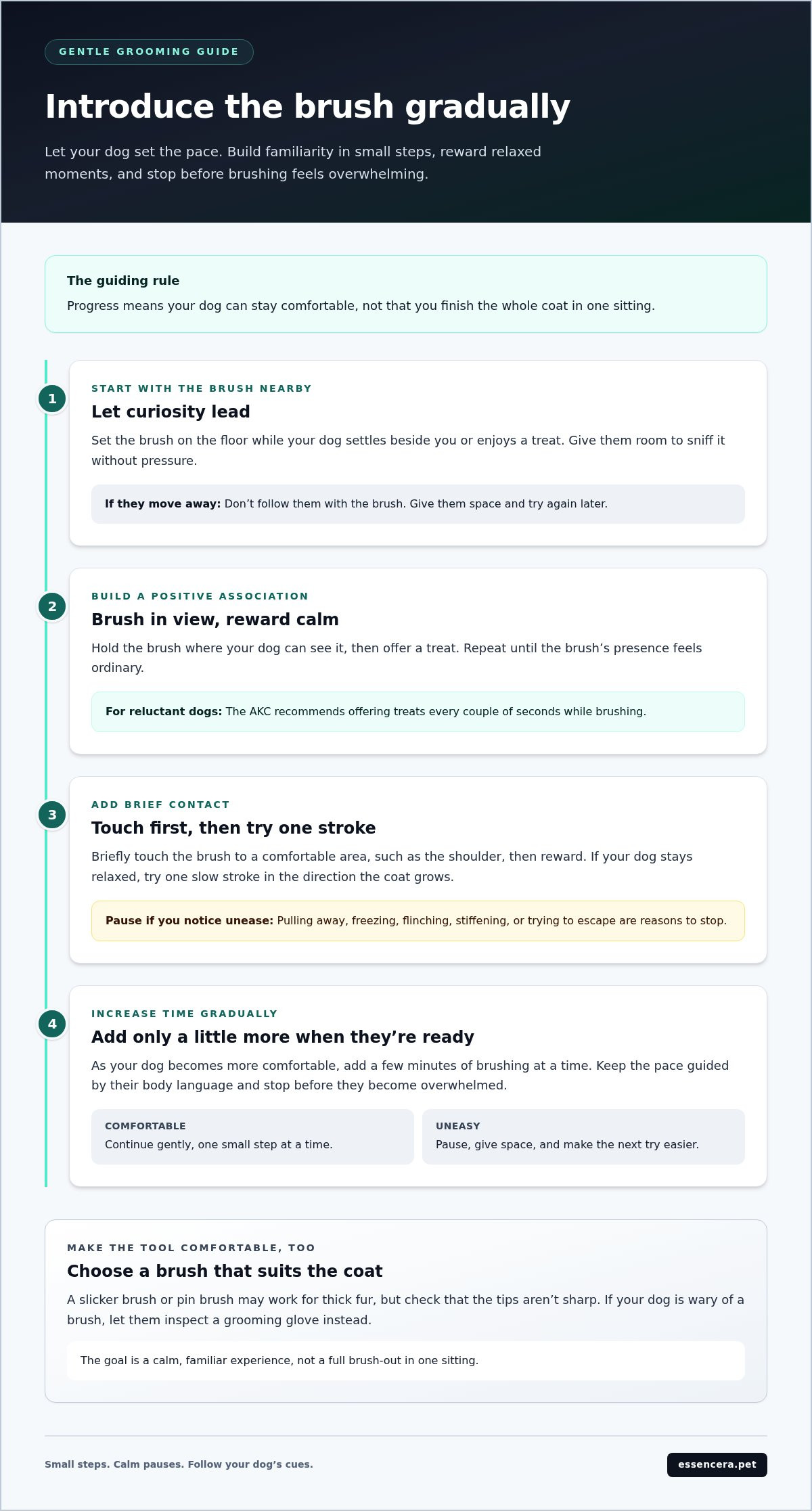
A brush can feel strange before it ever touches your dog’s coat. Let your dog approach it on their own terms instead of bringing it straight toward them. Place the brush on the floor, give your dog space to sniff it, and reward calm curiosity with a small treat. If they move away, don’t follow them with the brush. Give them room and try again later.
Once your dog can see and smell the brush without tensing, introduce touch in small steps. Keep the brush still at first, then briefly touch it to a comfortable area, such as the shoulder. Pair each calm moment with a treat. If your dog stays loose and relaxed, try one gentle stroke. Stop if they pull away, freeze, or show signs of unease.
- Start with the brush nearby. Set it on the floor while your dog enjoys a treat or settles beside you. Let them sniff it without pressure.
- Build a positive association. Hold the brush where your dog can see it, then offer a treat. Repeat until its presence feels ordinary.
- Add brief contact. Touch the brush to the shoulder, then reward. If your dog remains comfortable, try one slow stroke in the direction of coat growth.
- Increase time gradually. As your dog becomes more comfortable, add a few minutes of brushing at a time. Keep the pace guided by their body language.
Choose a brush that suits your dog’s coat. For thick fur, a slicker brush or pin brush may work, but check that its tips aren’t sharp. An uncomfortable tool can make every stroke unpleasant, even after your dog starts accepting the routine. If your dog is wary of a brush, let them inspect a grooming glove instead. The goal is a calm, familiar experience, not a full brush-out in one sitting.
2. Why Does My Dog Dislike Being Brushed?
If you’re wondering why your dog hates being brushed, consider both their history and how brushing feels. A puppy unfamiliar with grooming may find the brush, its sound, or being handled unsettling. A rescue dog may also need time to feel safe around grooming tools. Watch for clues: turning away when the brush appears may suggest worry, while flinching at one touch may point to discomfort in that spot.
Coat condition can make brushing uncomfortable, too. Mats pull at the skin as a brush passes through, while loose shedding hair can catch and tug. Long, dense, or curly coats may need careful, regular grooming, but forcing a brush through a tangle can make a dog dread the next session. Use gentle strokes and pause when you meet resistance instead of pulling harder.
Coat type, mats, and shedding all affect how brushing feels. Dense or long coats can snag, mats tug at the skin, and loose hair may catch in the brush. If your dog has painful tangles or a sensitive area, even a familiar tool can feel unpleasant.
A sudden reaction deserves attention. The American Kennel Club (AKC) identifies arthritis, infected ears, and joint inflammation as possible reasons dogs jerk when approached near sensitive spots. If your dog reacts strongly to a particular area, stop brushing there and consult a veterinarian to rule out pain or another medical cause.
If your dog seems fearful but shows no signs of pain, reduce pressure. The AKC suggests trying a grooming glove if your dog reacts poorly to a brush, or offering a treat-filled puzzle toy as a distraction. Stay patient and avoid showing frustration. The AKC recommends offering treats every couple of seconds while brushing a reluctant dog.
Growling, snapping, or biting means brushing should stop, not become a test of patience. The AKC recommends working with a trainer if a dog bites during brushing, and seeking a groomer trained to handle fearful dogs if a dog bites or growls. Until then, avoid forcing contact and give your dog space.
3. Short, positive brushing sessions
Short sessions give your dog a clear beginning and end instead of making brushing feel like an open-ended chore. The American Kennel Club recommends keeping brushing brief and stopping after a few strokes. Choose a quiet moment when your dog isn’t hungry, excited, or eager to leave. Put the brush and rewards within reach before you begin, so you won’t need to stop to look for them.
Try a simple session pattern: invite your dog to a familiar spot, brush a small area, then pause. If they stay comfortable, offer a few more strokes. If they step away, let them take a break instead of following or holding them in place. This keeps the session predictable and gives your dog room to communicate.
Brushing too firmly can tug at the skin and make contact unpleasant. Repeatedly brushing an area that’s already sore or irritated may add discomfort, while long sessions can overwhelm a reluctant dog. Use only enough pressure to move through the coat, and stop if your dog flinches, stiffens, or tries to escape.
Finish with a clear cue, such as “all done,” followed by praise and a special treat. The American Kennel Club notes that ending with praise and a treat can help make brushing a positive experience. Keep the reward close and give it after putting the brush away. A consistent ending helps distinguish grooming time from ordinary handling.
Build practice into an easy routine, such as after your dog has settled from a walk or before their evening rest. The American Kennel Club suggests brushing after energetic activities, including a long walk or agility training, for dogs who struggle to sit still. Notice when your dog seems most settled and choose that time for practice. Progress means your dog can stay at ease, not that every session covers the entire coat.
4. Brushing different sections of the coat
Trying to brush your dog from nose to tail can make grooming feel like one long, demanding task. Instead, choose a small, reachable area that doesn’t bother them, such as the shoulder or side. The American Kennel Club recommends brushing a reluctant dog in small, easy-to-reach sections. This makes it easier to see which areas your dog accepts and where they need a gentler approach.
A simple plan is to brush for 2 minutes a day and cover a different coat section each time. Work on the shoulder today, the back tomorrow, and the flank next. Use light strokes in the direction of coat growth. If your dog tenses or moves away, pause rather than pushing through that area.
Match the brush to your dog’s coat. For thick fur, a slicker brush or pin brush can work, but check that the tips aren’t sharp. A brush that catches or scrapes may cause discomfort, even if your dog is otherwise relaxed. Start with a few strokes, then check their body language before continuing.
For a small mat, avoid yanking the brush through it. Gently separate loose strands with your fingers, then work at the mat’s outer edge using short strokes. Keep your free hand between the brush and your dog’s skin to reduce pulling. Stop if your dog flinches or the mat resists. Dense or tight mats are better handled by a professional than pulled apart at home.
Think of each section as its own small grooming moment, not a race to finish the whole coat. A poodle or bichon, for example, may need daily brushing and combing to help prevent mats. Keep track of which areas your dog accepts, then build the next session around a comfortable section. For coat-care support alongside this gentle routine, explore Essencera’s grooming products.
Essencera: Coat Condition
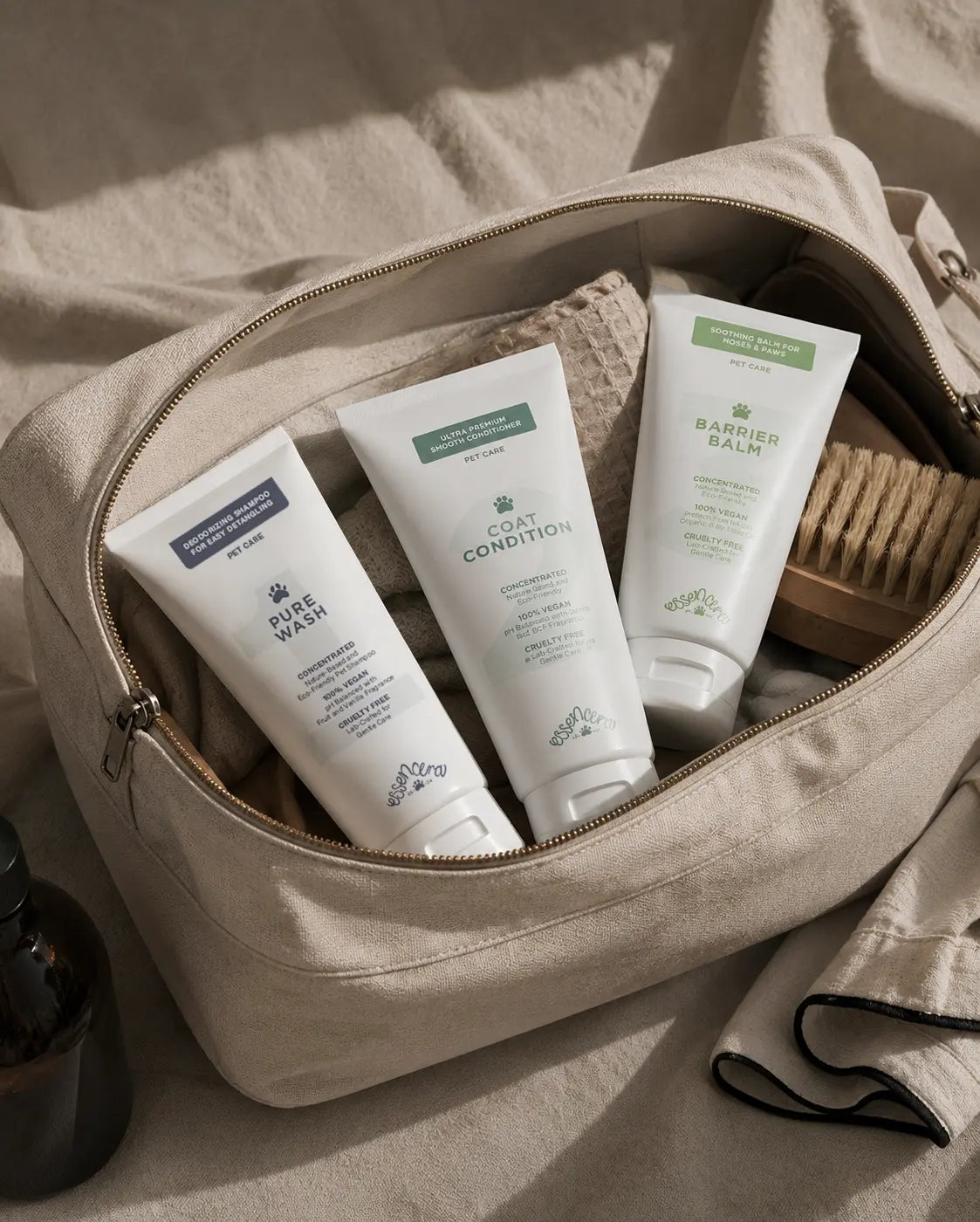
Pure Wash shampoo offers a gentle cleanse for dogs who need regular washing. Its concentrated paste uses coconut-derived surfactants, hyaluronic acid, and an amino acid complex to care for coat and skin. Consider it when bathing is part of your dog’s grooming routine.
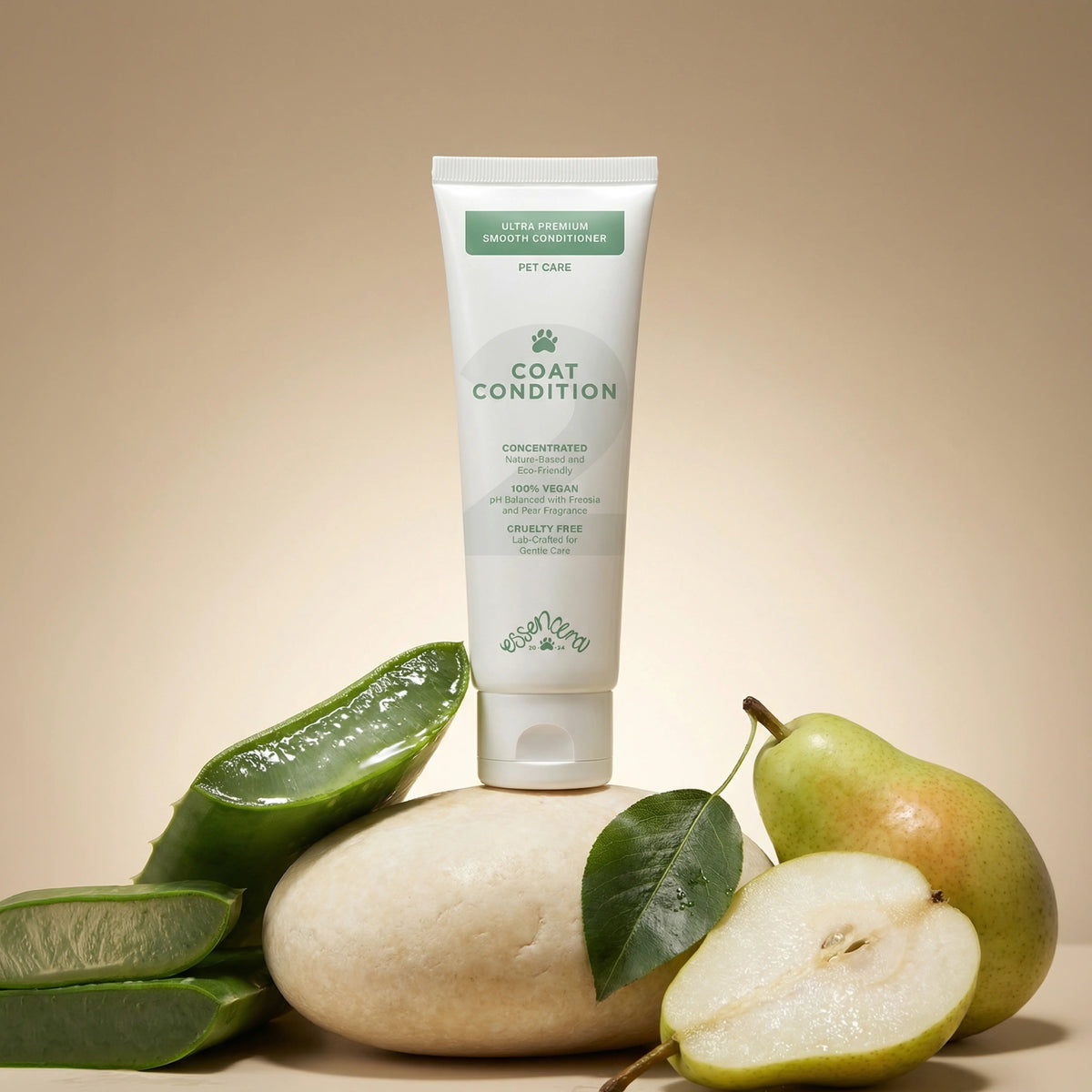
For brushing support after washing, Coat Condition is Essencera’s anti-tangle premium conditioner. It helps the comb glide more easily during finishing, but it won’t undo severe mats. Use it as part of coat care, while keeping brush sessions gentle and guided by your dog’s comfort.
Explore the grooming products at Essencera and choose the care that fits your dog.
Make the next brush-out a gentler one
Understanding why your dog hates being brushed can change what you do next. Let your dog’s comfort set the pace, and treat each calm interaction as progress. The aim isn’t a perfect coat in one sitting. It’s a routine your dog can learn to trust.
If bathing is part of your grooming routine, Essencera offers Pure Wash, alongside Coat Condition for coat care and Barrier Balm for helping hydrate rough areas like paws and noses. Choose the care that fits your dog’s needs, and keep brushing gentle and pressure-free.
For more on Essencera’s grooming products, visit Essencera. Keep showing up with patience, and let each small, comfortable step build a closer bond.
Frequently Asked Questions
Why Does My Dog Dislike Being Brushed?
Your dog may dislike brushing because the handling, tool, or grooming setting feels unfamiliar or uncomfortable. A dog who tolerates brushing on their back but avoids having their paws touched may find that handling stressful. Past grooming experiences can also shape their response. Notice what happens just before your dog resists, such as seeing the brush or reaching toward a certain area.
Why do dogs dislike being brushed?
Dogs can resist brushing for different reasons, including unfamiliar handling, sensitivity to touch, or a history of stressful grooming. The room can matter, too: a slippery floor, loud dryer, or busy household may make it harder for a dog to settle. Look for patterns across sessions. If your dog reacts only around a particular body area, treat that as useful information rather than defiance.
How can pain or skin conditions make brushing uncomfortable for a dog?
Pain or irritated skin can make even light contact unpleasant. The American Kennel Club notes that arthritis, infected ears, and joint inflammation may cause a dog to jerk when approached near sensitive spots. Skin irritation or a tight tangle can also make brushing uncomfortable. Stop if your dog reacts suddenly around one area, and consult a veterinarian to assess possible medical causes.
How can you tell if your dog is afraid, stressed, or in pain during brushing?
Watch when the reaction starts and what triggers it. A dog who retreats as soon as the brush appears may be worried about the tool or routine. A sudden flinch when one spot is touched can suggest discomfort, though behavior alone can’t identify the cause. Note the area, tool, and handling involved, then share those details with your veterinarian if the reaction is new or persistent.
How can you gradually train a dog to enjoy being brushed?
Make the brush part of a calm, predictable routine. For example, invite your dog to settle on a familiar mat, show them the brush, then reward them for staying relaxed. In later attempts, pair a gentle touch with the same cue and reward. Keep the setting quiet and stop before your dog becomes uneasy. This teaches them that brushing follows a familiar pattern, not a surprise grab.
When should you stop brushing and consult a veterinarian or professional groomer?
Stop if brushing brings a sudden pain response, persistent distress, growling, or biting. The American Kennel Club recommends consulting a veterinarian to rule out medical conditions that could make brushing painful. If your dog growls or bites during grooming, the AKC suggests seeking a groomer trained to handle fearful dogs; it also recommends working with a trainer when a dog bites during brushing. If a dedicated professional or helpful friend steps in to support your dog through a challenging coat-care routine, sending fresh blooms from Flowers Alley is a thoughtful way to say thank you.