

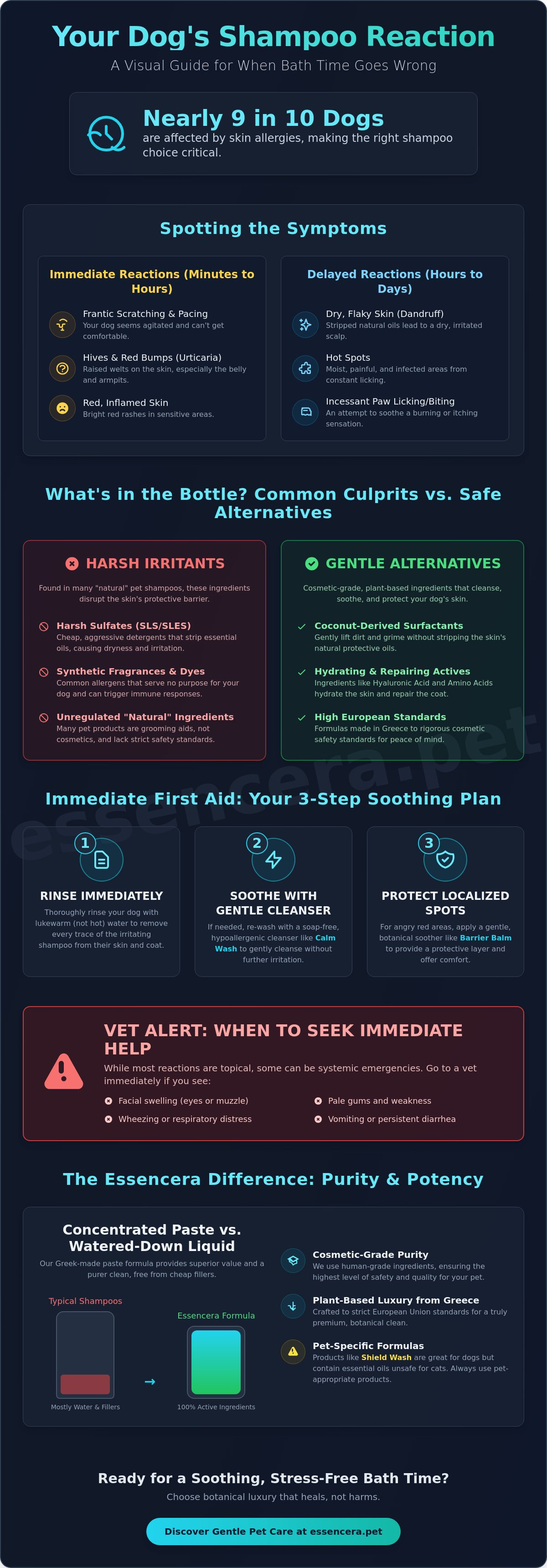
You finished bath time expecting a soft, clean pup, but instead, your dog is frantically scratching and pacing. It is heartbreaking to watch your companion suffer when you only wanted to show them affection. If you are wondering what to do if dog has bad reaction to shampoo, you are not alone. With skin allergies affecting nearly 9 in 10 dogs as of 2025, many pet parents face this exact distress.
We believe bath time should be a soothing ritual. We promise to help you identify reaction signs, soothe your dog's skin immediately, and choose cosmetic-grade alternatives. You will learn why many "natural" shampoos are unregulated grooming aids filled with harsh sulfates. Instead, we advocate for plant-based luxury made in Greece to high European standards, using a concentrated paste formula that offers superior value over watered-down liquids.
This guide explores the science of gentle cleansing, from hyaluronic acid hydration to the relief found in Calm Wash. Whether you need Barrier Balm for immediate soothing or Coat Condition for repair, we provide the clarity you need. We even cover why botanical deterrents like Shield Wash are wonderful for dogs but strictly not safe for cats because of their essential oil content.
Key Takeaways
- Learn to spot the difference between immediate hives and delayed skin flaking to understand your dog's unique sensitivity.
- Discover exactly what to do if dog has bad reaction to shampoo, starting with a gentle lukewarm rinse and a soap-free cleanser like Calm Wash.
- Understand how harsh surfactants like SLS and synthetic fragrances can disrupt the skin barrier; we choose gentle coconut-derived alternatives instead.
- Find out how to soothe localized irritation using Barrier Balm and repair the coat with amino acids found in Coat Condition.
- Explore why our concentrated paste formulas from Greece provide a safer, more potent cleaning experience than common watered-down shampoos.
Recognizing the Symptoms of a Shampoo Reaction
Noticing your dog's discomfort after a refreshing bath is a jarring experience. It shifts the mood from a bonding moment to one of deep worry. Recognizing the signs early is the first step in knowing what to do if dog has bad reaction to shampoo. While some dogs show distress immediately, others may develop symptoms hours or even days later. This delay can make it difficult to pin down the cause, but a careful eye on their skin and behavior will reveal the truth.
Understanding Dog skin disorders helps us distinguish between simple surface irritation and more complex immune responses. A reaction often stems from the skin's pH being disrupted or an intolerance to harsh synthetic fragrances. You might notice your dog rubbing their face against the carpet or shaking their head repeatedly. These are clear signals that something in their coat is causing persistent discomfort. It's often the result of the skin's natural barrier being stripped away by aggressive chemicals.
Common Physical Signs of Skin Distress
Check the belly. This area, along with the armpits, is where skin is thinnest and most sensitive. Look for bright red rashes or small, raised bumps known as hives or urticaria. These bumps are a sign that your dog's immune system is reacting to an allergen in the product. If your dog begins biting their paws incessantly or licking their legs after a wash, they are likely trying to soothe a burning sensation. For localized spots that look angry and red, applying a botanical protector like Barrier Balm can offer immediate, gentle comfort. Chronic scratching can quickly lead to hot spots, which are moist, painful areas of skin that may require more intensive care.
When to Contact Your Veterinarian Immediately
While most reactions are limited to skin irritation, some dogs experience a systemic emergency. If you notice facial swelling, specifically around the eyes or muzzle, this is a sign of a serious allergic reaction. Watch for these critical signals:
- Respiratory distress, wheezing, or heavy panting that doesn't stop.
- Pale gums or a sudden onset of lethargy and weakness.
- The appearance of skin ulcerations, blisters, or raw, oozing patches.
- Persistent vomiting or diarrhea following the bath.
If these symptoms appear, seek professional help right away. For dogs with a history of sensitivity, we always recommend a patch test with a truly gentle formula like Calm Wash before a full bath. Using cosmetic-grade ingredients and avoiding harsh sulfates ensures you are providing the safest care possible for your companion's delicate skin.
Common Culprits Behind Canine Skin Irritation
Finding out what to do if dog has bad reaction to shampoo starts with looking closely at the ingredient label. Many commercial pet products rely on industrial strength cleaners that are simply too harsh for a dog's delicate skin. While these chemicals create a mountain of bubbles, they often cause more harm than good by disrupting the skin's natural ecosystem. Understanding these triggers is essential for any pet parent who values botanical purity and safety.
Synthetic fragrances and artificial dyes are often the primary triggers for an immune response. These additives serve no functional purpose for your dog; they are only there to appeal to human senses. Recent research on canine itch explains how certain irritants trigger specific biological pathways in the skin. When these pathways are activated by synthetic chemicals, the result is the frantic scratching and redness we dread seeing after bath time.
The Role of Harsh Surfactants and Sulfates
Sulfates like Sodium Lauryl Sulfate (SLS) and Sodium Laureth Sulfate (SLES) are common because they are cheap and effective at removing grease. However, they strip the essential oils that keep a dog's coat healthy and hydrated. We believe a deep clean shouldn't be chemically aggressive. Instead of sulfates, premium options like Pure Wash use gentle coconut-derived surfactants. These plant-based cleaners lift dirt while leaving the skin's protective oils intact. Our concentrated paste formula ensures you aren't paying for watered-down fillers, providing more value and better purity for your companion.
Why pH Balance Matters for Your Dog
A common mistake is using human baby shampoo on pets. While it feels gentle to us, a dog's skin pH is neutral, typically between 6.5 and 7.5. Human skin is significantly more acidic. Using an acidic product on a dog's neutral skin weakens the acid mantle, which is the skin's first line of defense. This imbalance leads to a weakened barrier, making your dog vulnerable to bacteria and yeast infections. For dogs with existing sensitivities, using a pH-balanced formula like Calm Wash is the best way to maintain skin integrity and comfort.
Residual soap left in the undercoat is another frequent cause of localized chemical irritation. If the product isn't rinsed thoroughly, concentrated surfactants sit against the skin, causing a slow burn. This is why we emphasize the importance of thorough rinsing and following up with Coat Condition to help smooth the hair cuticle and lock in moisture. For those seeking plant-based protection against pests, Shield Wash is an excellent choice for dogs, but please remember it is not safe for cats because of its essential oil content. If you are worried about your dog's current skin state, consider a soothing ritual with Calm Wash to restore peace and hydration.
Distinguishing Between Allergic Reactions and Sensitivity
Understanding the root cause of your dog's discomfort is a vital step in their long-term care. While both irritation and allergies cause distress, their origins and treatments vary significantly. If you are trying to figure out what to do if dog has bad reaction to shampoo, start by observing where the irritation occurs. Is the redness only on the belly where the soap rested longest, or is your dog itchy from head to tail? Identifying the pattern helps you decide whether you are dealing with a localized sensitivity or a systemic issue.
Contact Dermatitis vs. True Allergic Reactions
Contact dermatitis is the most common response to low-quality grooming products. It's a localized reaction, meaning the redness and itching are usually confined to the exact spots where the shampoo touched the skin. This often happens when harsh synthetic dyes or aggressive surfactants strip the skin's protective layer. In contrast, a true allergy is a systemic immune system overreaction. In these cases, symptoms like hives or facial swelling can appear far from where the shampoo was actually applied.
Many professional grooming services note that reactions often worsen with each bath. This is known as the cumulative effect. Your dog's skin barrier becomes increasingly compromised by repeated exposure to industrial chemicals until a minor sensitivity turns into a chronic problem. Switching to a nurturing formula like Calm Wash helps break this cycle. By using gentle, coconut-derived surfactants instead of harsh sulfates, you allow the skin's natural defenses to recover and thrive.
The Importance of Ingredient Transparency
Building a deep sense of trust starts with knowing exactly what goes into your dog's grooming routine. We believe in plant-based luxury that meets high European standards, which is why we emphasize cosmetic-grade components. Ingredients like hyaluronic acid for hydration and amino acids for coat repair provide a level of safety that generic "natural" labels simply cannot match.
To prevent future scares, we recommend a simple patch test before any full bath. Apply a small amount of a clean formula, such as Pure Wash, to a tiny area of your dog's inner thigh. Wait 24 hours to monitor for any redness or itching. Keeping a log of the products you use is a wonderful way to identify specific triggers over time. If the skin feels dry or brittle after a reaction, applying Coat Condition can help restore the lipid layer. By choosing transparency and high-quality formulations, you ensure that every bath remains a meaningful act of affection rather than a source of worry.
Immediate First Aid for Shampoo Irritation
Watching your dog in distress is difficult. When you realize a reaction is happening, time is of the essence. Knowing what to do if dog has bad reaction to shampoo can prevent a minor irritation from becoming a painful skin infection. The goal is to remove the irritant immediately and calm the skin's immune response without causing further trauma. By following a steady, deliberate process, you can restore your companion's comfort and your own peace of mind.
The Power of a Thorough Cool Water Rinse
Your first priority is to flush the skin. Use lukewarm to cool water rather than hot water. Hot water opens the pores and increases blood flow to the area, which can actually intensify itching and inflammation. Cool water has the opposite effect; it helps constrict blood vessels and provides instant, numbing relief. Spend at least 10 minutes rinsing, paying close attention to the undercoat where soap residue often hides. If the coat feels tacky or slimy, the irritant is still present and needs more water.
Once the water runs clear, you may need a truly gentle, soap-free cleanser to lift any remaining chemical traces. A formula like Calm Wash is designed for this purpose. It uses coconut-derived surfactants that clean without the aggression of sulfates. This step ensures that the slow burn of residual shampoo is completely stopped. It's a professional-grade solution that provides immediate emotional satisfaction for both you and your pet.
Soothing the Skin with Botanical Support
After rinsing, gently pat the skin dry with a soft, clean towel. Don't rub, as this can break the skin and lead to secondary infections. For localized areas of intense redness or hot spots on the paws and belly, apply a protective layer of Barrier Balm. This botanical balm creates a breathable shield while delivering plant-based luxury directly to the source of the irritation. It's an unhurried, intentional way to show affection during a stressful moment.
Ingredients like hyaluronic acid and amino acids are essential for repairing the damaged skin barrier. While hyaluronic acid provides deep hydration, amino acids help rebuild the protein structures of the coat. If your dog is still trying to scratch or bite the area, you must intervene. An Elizabethan collar or a soft cone is often necessary to prevent self-mutilation while the skin heals. To help the coat recover its natural luster after the trauma, a light application of Coat Condition can provide the necessary lipid support. If your dog's skin needs immediate, nurturing relief, soothe their discomfort with our Barrier Balm.
Choosing a Safer Path with Botanical Pet Care
Once you understand what to do if dog has bad reaction to shampoo, the focus shifts toward long term skin health and prevention. You want to ensure that every future bath is a peaceful, skin-loving experience rather than a source of stress. Choosing a safer path means looking beyond marketing buzzwords and demanding true ingredient integrity. At Essencera, we believe in plant-based luxury that treats your dog's coat as a delicate ecosystem. Our commitment to botanical purity ensures that you can wash your companion with quiet confidence and deep affection.
Our products are crafted in Greece, adhering to high European cosmetic standards that often exceed international requirements. This geographic choice isn't just about heritage; it's about accessing premium botanical sources and rigorous quality control. By prioritizing science-backed formulations over industrial shortcuts, we provide a trustworthy alternative for pet parents who value transparency and animal welfare. It's about moving from routine maintenance to a meaningful act of connection.
The Essencera Difference: Pure and Concentrated
One of the most significant ways we protect your dog's skin is through our concentrated paste formula. Most liquid shampoos are up to 80% water, which requires a heavy load of synthetic preservatives to prevent bacterial growth. Our paste reduces the need for these harsh chemicals, offering a purer product that provides better value. You use less, but your dog receives more of the high-quality ingredients they need, like amino acids for coat repair and hyaluronic acid for deep hydration. For those transitioning away from a bad reaction, we recommend starting with Calm Wash. It's specifically designed for sensitive skin, using gentle coconut-derived surfactants to cleanse without stripping the acid mantle.
Building a Gentle Grooming Routine
Transitioning to a botanical routine is a steady process that builds lasting resilience. If your dog requires a deep clean but has shown sensitivity in the past, Pure Wash offers a professional-grade clean without the aggression of sulfates. For seasonal protection against pests, Shield Wash uses botanical deterrents that are safe for dogs. However, please remember that Shield Wash is not safe for cats because of its essential oil content.
We are committed to honesty regarding our formulations. While our Coat Condition is excellent for restoring hydration and making brush-out significantly easier, it's not a magic detangler for severe mats. We believe in setting realistic expectations for your grooming routine. To learn more about choosing the right ingredients for your pet's specific needs, we invite you to explore our Natural Dog Shampoo Guide. By educating yourself on ingredient science, you become a devoted advocate for your dog's well-being.
Restoring Your Dog's Skin Peace
Your dog's skin is their first line of defense; it deserves to be treated with the highest level of integrity. By recognizing the subtle signs of irritation and understanding the role of pH balance, you can transform bath time back into a joyful bonding ritual. Knowing what to do if dog has bad reaction to shampoo empowers you to act quickly with soothing rinses and botanical support. This knowledge ensures that a single bad experience doesn't lead to long-term distress or skin damage.
Choosing plant-based luxury is a commitment to your pet's comfort. Our concentrated paste formulas are made in Greece to rigorous European standards, ensuring high quality without synthetic dyes or harsh preservatives. This approach offers better value and superior purity compared to watered-down alternatives. You can provide professional-grade care that honors the profound bond you share with your companion. We invite you to Discover the Gentle Power of Calm Wash for Sensitive Skin and embrace a safer, more nurturing grooming routine today. Your dog's comfort is our greatest passion.
Frequently Asked Questions
Can I give my dog Benadryl for a shampoo reaction?
You should never administer any medication without first consulting a professional. While antihistamines are sometimes used to manage allergic responses, the correct dosage depends entirely on your dog's weight, age, and medical history. A professional can ensure the treatment is safe and won't mask more serious symptoms. For immediate, non-medical relief, focus on flushing the skin with cool water and applying a soothing layer of Barrier Balm.
How long does a dog shampoo allergy last?
Most acute symptoms like hives or bright red rashes begin to subside within 24 to 48 hours once the irritant is completely removed. However, if the harsh chemicals have stripped the skin's natural oils, the recovery process for the coat can take several weeks. Using a lipid-rich product like Coat Condition helps replenish the skin barrier and supports the hair follicles during this healing phase.
Is it possible for a dog to be allergic to all shampoos?
It's very rare for a dog to be allergic to every cleansing agent; they're usually reacting to common industrial fillers. Most commercial washes use cheap sulfates and synthetic fragrances that trigger sensitivities. Switching to a cosmetic-grade, plant-based luxury formula like Calm Wash often solves the problem. These concentrated pastes avoid the harsh preservatives found in watered-down liquids, making them much gentler on the immune system.
Why is my dog still itching after I rinsed all the soap off?
Itching persists because the shampoo has already triggered an inflammatory response or disrupted the skin's delicate pH balance. Even after the soap is gone, the skin remains dry and vulnerable. This lingering discomfort is a common reason owners search for what to do if dog has bad reaction to shampoo. Providing deep hydration with hyaluronic acid and amino acids found in Calm Wash can help settle the skin more effectively than water alone.
Can I use human shampoo on my dog if they have a reaction to pet soap?
No, you should avoid human shampoos as they are formulated for a significantly more acidic pH level. A dog's skin is neutral, and using acidic human products will further damage the acid mantle and lead to secondary infections. If your dog is in distress, a soap-free, botanical wash is the only safe alternative. Our Pure Wash provides a deep clean that respects your dog's biology without the aggression of human-grade detergents.
What ingredients should I absolutely avoid in dog shampoo?
Stay away from Sodium Lauryl Sulfate (SLS), artificial dyes, and synthetic fragrances. These industrial-grade components are the primary culprits behind most bath-time reactions. Instead, look for gentle coconut-derived surfactants and botanical extracts. We choose to formulate without these undesirable elements, opting for high European standards and Greek manufacturing. This ensures your pet enjoys a safe, premium experience that honors the bond you share with them.
How do I perform a patch test on my dog's skin?
Apply a small, pea-sized amount of the shampoo to a hairless area like the inner thigh or belly. Wait a full 24 hours to monitor for any signs of redness, bumps, or obsessive licking. This simple step is a vital part of knowing what to do if dog has bad reaction to shampoo before it becomes a full-body emergency. It's an intentional way to test new products like Shield Wash for safety and peace of mind.
Are natural shampoos always safer for dogs with allergies?
Not necessarily, because the word "natural" isn't regulated and can hide low-quality ingredients. Some natural products use harsh essential oils or unrefined components that still trigger reactions. True safety comes from ingredient transparency and cosmetic-grade standards. For example, Shield Wash is a safe, plant-based deterrent for dogs, but its potent essential oil content means it's strictly not safe for cats. Always research the specific formulation rather than relying on a label claim.


