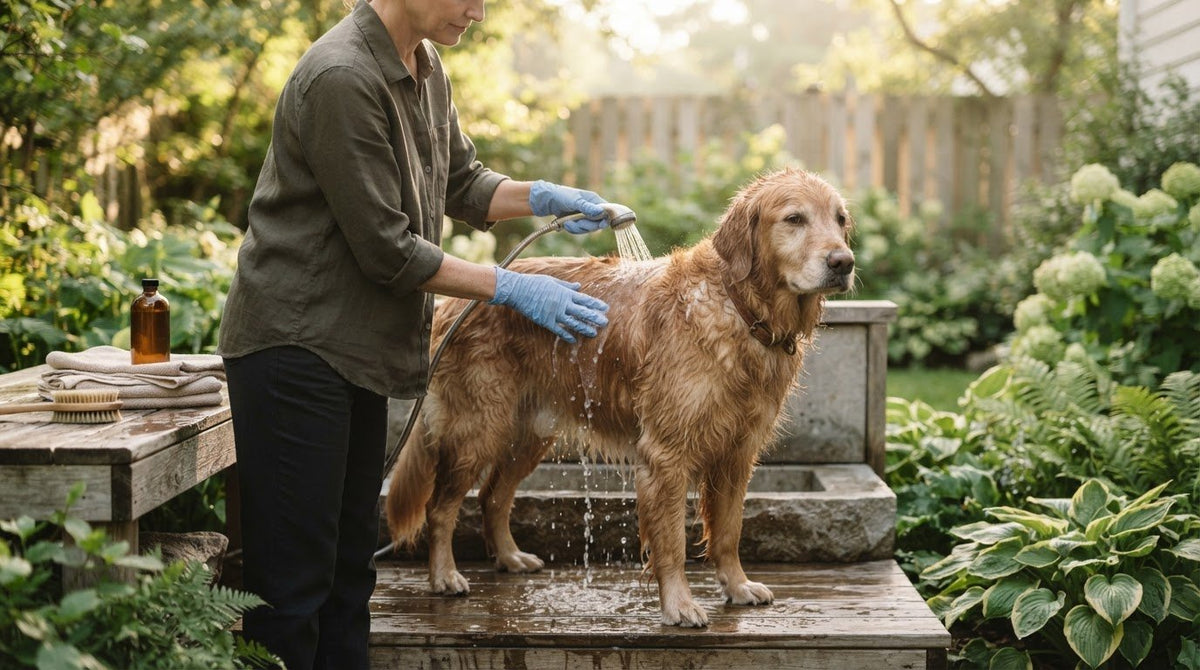
What to Do When Your Dog Gets Skunked: Odor Removal Guide
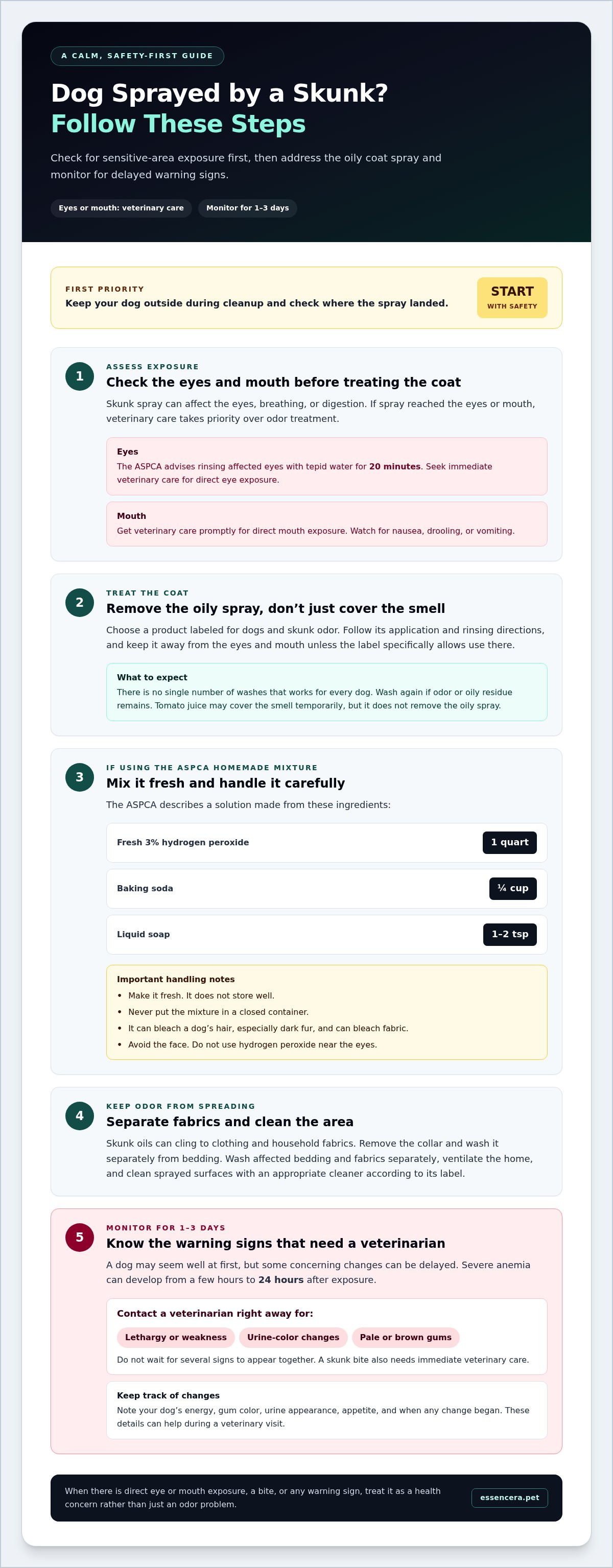
Skunk odor needs to be washed out, not covered with perfume. If you’re deciding what to do when your dog gets skunked, keep them outside, protect their eyes and mouth, and wash the sprayed areas with a skunk-odor treatment. If spray got directly into the eyes or mouth, seek veterinary care right away; the ASPCA advises rinsing affected eyes with tepid water for 20 minutes.
That sharp smell can make a stressful moment feel even worse, especially when you’re worried about your dog’s comfort and getting the odor out of your home. What to do when your dog gets skunked depends on where the spray landed and whether your dog has symptoms, so start by checking for exposure to the eyes or mouth before reaching for a product.
This guide explains how to remove skunk odor, what commercial odor removers may offer, and why homemade washes need extra care. You’ll also learn when skunks are more active and which signs mean it’s time to contact a veterinarian.
Key Takeaways
- Keep your dog outdoors during cleanup, and choose an odor remover made for skunk spray rather than relying on fragrance to mask it.
- Watch for changes in energy, gum color, or urine for 1-3 days after exposure, since some concerning signs can be delayed.
- Learn why a homemade odor-removal mixture needs careful handling, including how to avoid risks to your dog, clothing, and storage containers.
- Reduce the chance of another encounter by being cautious at dawn and dusk in warm-weather months and limiting attractants and shelter around your yard.
Delayed symptoms and veterinary care
Skunk exposure can affect more than your dog’s coat. Monitor your dog closely for 1-3 days after exposure, even if they seem well after washing. Signs of irritation may appear quickly, while changes linked to red blood cell damage can take longer. Keep your dog’s rabies vaccination up to date, since skunks in the United States can carry rabies.
Skunk spray can damage red blood cells and potentially lead to anemia. Severe anemia can develop a few hours to 24 hours after exposure, so a normal appearance right after an encounter doesn’t rule out a later problem. Check your dog’s energy, gums, and urine during the monitoring period. Note changes and when they began, so you can clearly describe them during a veterinary visit.
- Seek veterinary care immediately if a skunk bites your dog. A bite raises a separate concern from odor and warrants prompt attention.
- Contact a veterinarian right away for lethargy or weakness, or if your dog’s urine changes color.
- Check gum color gently. Pale or brown gums after exposure are warning signs, not grooming issues.
- Act on any of these signs even if they appear hours or days later. The ASPCA advises immediate veterinary care for lethargy, weakness, urine-color changes, or pale or brown gums after skunk exposure.
When deciding what to do when your dog gets skunked, treat new symptoms as a health concern, not simply a lingering odor problem. Don’t wait for several warning signs to appear together. For example, weakness alone after a skunk encounter merits prompt veterinary attention, according to the ASPCA’s advice. If your dog was bitten, report the bite and your dog’s vaccination status. During the 1-3-day monitoring period, keep track of appetite, energy, gum color, and urine appearance. Those details help you explain what changed and when.
When are dogs most likely to get sprayed by a skunk?
Skunks are most active at dawn and dusk during warm-weather months, so take extra care during those outings. Keep your dog close, avoid off-trail walks through dense woods, and scan the yard before letting them out in low light. A skunk can spray a target from 7 to 15 feet away, so distance alone doesn’t guarantee your dog will avoid the musk.
Skunk spray can affect your dog’s eyes, breathing, or digestion, depending on where the musk lands. Signs may appear immediately or within a couple of hours. Eye exposure can cause redness, swelling, corneal damage, or temporary blindness. Inhaled spray can irritate the respiratory tract. If your dog gets spray in their mouth, watch for nausea, drooling, or vomiting. Direct exposure to the eyes or mouth calls for immediate veterinary care.
- Eyes: Redness, swelling, or difficulty seeing after spray exposure needs prompt attention.
- Breathing: Watch for respiratory irritation after your dog inhales the mist.
- Mouth: Nausea, drooling, and vomiting can follow oral exposure.
To remove skunk smell from a collar, take it off and wash it separately from bedding. Wash affected bedding and fabrics separately, since skunk oils can cling to cloth, and keep your dog outside during cleanup. Ventilate the home and clean sprayed surfaces with an appropriate cleaner, following its label.
Tomato juice isn’t a reliable way to remove skunk odor. It may temporarily cover the smell, but it doesn’t remove the oily spray from your dog’s coat.
There’s no single number of washes that works for every dog. Wash again if odor or oily residue remains, while avoiding the eyes and mouth. If spray remains in the fur, your dog may still smell slightly skunky when wet for a few months. Thorough removal matters because damp fur can bring back the lingering odor.
Commercial skunk odor removers
Commercial skunk odor removers can be a practical option when spray persists in your dog’s coat. Choose a product labeled for dogs and skunk odor, then follow its application and rinsing directions. A deodorizing fragrance may cover the smell without addressing oily residue, so look for wording that says the product neutralizes or removes skunk odor.
Read the label before applying any product. Keep a commercial remover away from your dog’s eyes and mouth, and don’t use a coat product on those areas unless its directions specifically allow it. If spray reached the eyes or mouth, veterinary care takes priority over odor treatment.
For a homemade treatment, the ASPCA describes a freshly mixed solution containing 1 quart of fresh 3% hydrogen peroxide, ¼ cup of baking soda, and 1-2 teaspoons of liquid soap. The peroxide and baking soda can oxidize skunk-spray thiols into water-soluble sulfonates. The mixture may bleach a dog’s hair, especially dark fur, and can bleach fabric. The ASPCA says it isn’t toxic to skin, but it doesn’t store well and must never go in a closed container.
- Avoid hydrogen peroxide near the face. It can bleach fur, and the ASPCA recommends tepid-water rinsing for eye exposure.
- Don’t seal the homemade mixture. Make it fresh for use, and never put it in a closed container.
- Keep products out of eyes and mouth. If spray entered either area, get veterinary care promptly.
For safe face cleanup, don’t apply a coat remover around the eyes or inside the mouth. If the eyes were sprayed, rinse them with tepid water for 20 minutes, as the ASPCA advises, and seek immediate veterinary care for direct eye or mouth exposure.
Whether you choose a commercial remover or the ASPCA’s mixture, keep your dog outdoors during washing. Skunk oils can cling to clothing and household fabrics, so protect towels and bedding from contact. Never combine products or add ingredients to a labeled remover.
What should you do immediately after a dog gets sprayed by a skunk?
Start with safety, not the bath. Move your dog away from the skunk and keep them outdoors to prevent spray oils spreading onto furniture or clothing. Check whether the spray reached the eyes or mouth. If it did, contact a veterinarian immediately. Direct exposure to either area needs prompt veterinary care.
- Rinse affected eyes. If spray entered an eye, the ASPCA advises flushing it with tepid water for 20 minutes. Don’t put odor remover or soap near the eyes.
- Keep your dog outside. Choose a spot where you can wash them without bringing oily residue indoors. Wear clothes you can wash separately.
- Protect the face. Don’t pour a treatment over your dog’s head. Keep mixtures away from the eyes, nose, and mouth, and get veterinary guidance for facial exposure.
- Treat the coat carefully. For a skunk-spray bath, the ASPCA’s mixture uses 1 quart of fresh 3% hydrogen peroxide, ¼ cup of baking soda, and 1-2 teaspoons of liquid soap. Apply only to sprayed coat, avoiding the face.
- Rinse thoroughly. After the mixture sits for five minutes, rinse the coat well, following the ASPCA’s timing advice.
Mix the solution only when you’re ready to use it. The ASPCA warns that it doesn’t store well and must never be placed in a closed container, because the ingredients can build pressure. The mixture may bleach hair and fabric, so take care around dark coats, towels, and clothing.
When cleanup is finished, dry your dog and monitor them for new symptoms. A skunk encounter can involve more than odor: vomiting, breathing irritation, or eye discomfort needs attention. If your dog was bitten, seek veterinary care immediately. These first steps help contain the spray while putting urgent health concerns ahead of coat cleanup.
Essencera: Pure Wash
Essencera Pure Wash is a coat-care option to consider after immediate skunk cleanup. It isn’t a skunk-odor remover, so it shouldn’t replace a treatment intended for skunk spray or veterinary care if symptoms appear.
For ongoing grooming, Pure Wash is a concentrated formula with coconut-derived surfactants and amino acids. Its ingredients are designed to support coat hydration and a soft afterfeel. Follow the product directions, and stop use if irritation develops. If your dog has ongoing symptoms after exposure, contact a veterinarian rather than relying on a grooming product.
For rough paws or a dry nose after cleanup, Barrier Balm can help hydrate those areas. Coat Condition is a leave-in or rinse-out conditioner that provides slip, shine, and easier brushing. Visit essencera.pet to explore Essencera’s coat-care products.
Make the next bath part of a calmer routine
Knowing what to do when your dog gets skunked can help you make calmer choices after an unpleasant encounter. Once the immediate odor treatment is complete, turn your attention to your dog’s comfort and everyday coat care. Pure Wash is a gentle grooming option for supporting a soft, hydrated coat, not a treatment for skunk spray or exposure symptoms.
Coat Condition provides slip, shine, and easier brushing as part of routine coat care. Barrier Balm can help hydrate rough paws and noses. These products are for grooming care, not urgent treatment when a dog seems unwell. Prioritize veterinary care if symptoms arise.
Choose the care that fits your companion’s needs, and give them time to settle after the encounter. Contact Essencera for help exploring gentle grooming options. Small, thoughtful steps can make the return to your usual routine feel easier for you both.
Frequently Asked Questions
How can I get rid of the skunk odor on my dog?
Use a treatment formulated to neutralize skunk odor and follow its label closely. Avoid vigorous scrubbing, which can spread oily residue across the coat. Work in small sections so the product reaches the affected fur, especially around a thick ruff or tail. Keep grooming tools used during cleanup separate until they’re cleaned, so they don’t transfer odor to clean areas.
What makes skunks’ smell so hard to get rid of?
Skunk odor can linger when residue remains hidden in dense fur, particularly beneath the topcoat or around the neck and tail. Your dog may seem clean on the surface while odor persists deeper in the coat. Careful, section-by-section coverage matters more than adding a stronger scent. Thick or long coats may need extra attention during cleanup.
How do you make a safe homemade skunk odor remover for dogs?
Use the ASPCA mixture described in the odor-removal section, following its proportions and directions exactly. Don’t add other household cleaners or combine it with a commercial product. Prepare it only for immediate use, and protect nearby clothing and surfaces during application. If your dog has sensitive skin or a known skin condition, seek veterinary guidance before applying a homemade treatment.
Can skunk spray harm a dog's eyes or cause other health problems?
Yes. Skunk spray can irritate the eyes, breathing, or digestive tract, and health concerns may go beyond the coat. Treat exposure as more than a smell problem. If your dog seems unwell or develops an unusual change after the encounter, seek veterinary advice rather than applying more grooming products or waiting for odor removal to solve it.
When should you take a dog sprayed by a skunk to a veterinarian?
Arrange veterinary care for a bite, facial exposure, or any concerning change after the encounter. When you call, explain when contact happened, where the spray landed, and whether your dog was bitten. Share your dog’s rabies vaccination status if known. These details give the veterinary team useful context and help distinguish routine coat cleanup from a health concern.
What should you do if a skunk sprays your dog in the mouth or eyes?
Prioritize veterinary care and don’t apply odor-removal products to the face. Avoid rubbing the affected area or using household products to clean inside your dog’s mouth. If the eyes were exposed, follow the eye-rinsing guidance given earlier, then seek veterinary care. Tell the veterinarian whether the spray reached the eyes, the mouth, or both.