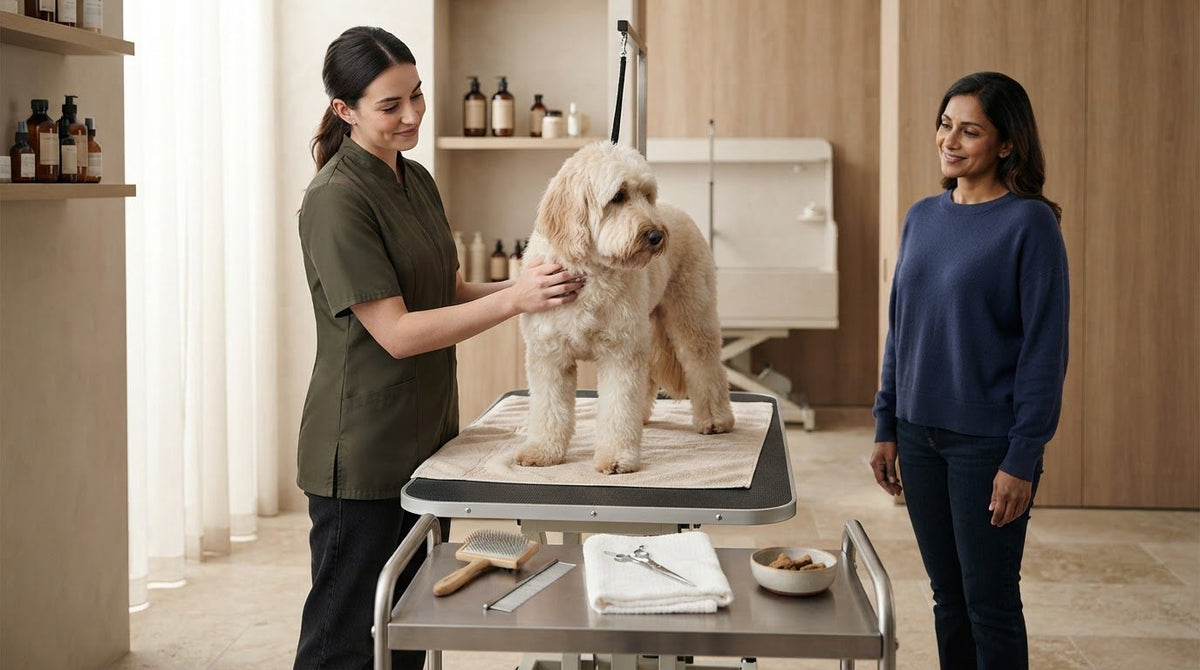
Building Trust With Your Dog During Grooming: What Helps
Staying with your dog during grooming may help them feel secure, but some dogs settle more easily when their person steps away. Building trust with your dog during grooming means noticing your dog’s response and respecting their comfort, rather than assuming one approach suits every pup.
It’s natural to want to stay close when your dog seems unsure. Watch for signs of stress, such as a stiff body, tense face, or growling, and give your dog space if they seem uncomfortable. A calm, predictable approach can make grooming feel less overwhelming.
This guide explains how to prepare at home, recognize stress, and approach sensitive tasks like nail trims, face care, and drying patiently. You’ll also learn how to tell whether staying during the appointment helps your dog feel safer or makes it harder for them to relax.
Key Takeaways
- Notice what triggers discomfort and share those details before grooming begins.
- For sensitive tasks, use brief, gentle handling and pause when your dog needs a break.
- Build familiarity at home by introducing grooming touch and equipment sounds gradually.
- Keep appointment-day routines calm and predictable, and reward small moments of cooperation.
- Decide whether to stay by observing how your dog responds to your presence and the grooming process.
Assessing pain, triggers, and stress thresholds
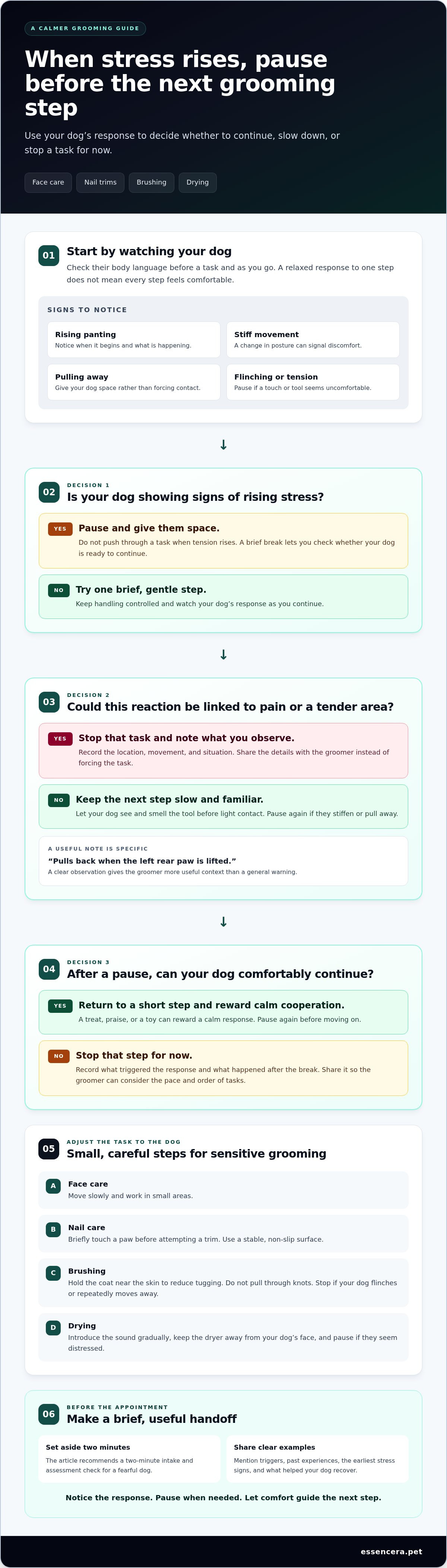
Building trust with your dog during grooming starts with noticing what feels uncomfortable and when stress begins to rise. A brief assessment can help you share useful details before grooming starts.
Trigger Identification
A grooming trigger is a specific touch, sound, tool, or handling position that causes a dog discomfort or worry. Identifying it helps you prepare for moments that call for a slower approach. Note what happens before your dog tenses: touching a paw, lifting an ear, hearing clippers, or standing near a dryer. Compare their response in different situations, and share clear examples instead of describing your dog only as “difficult.”
Stress Thresholds
A stress threshold is the point where your dog’s discomfort starts to outweigh their ability to cope. Watch for changes such as rising panting, stiff movement, or pulling away, then note what was happening at that moment. In an example grooming note, panting rose at 25 minutes, followed by a two-minute break before the dog recovered. That pattern can help identify when a pause may support a calmer return.
Look for Signs of Pain
Pain can make routine handling feel threatening, so consider whether a new reaction might relate to discomfort. For example, a dog who previously accepted paw handling may suddenly pull away when one foot is touched. Note the location, movement, and situation rather than forcing the task. A specific observation, such as “pulls back when the left rear paw is lifted,” gives the groomer more useful information than a general warning.
Include a Health Check
Groomers check dogs from ear to paw and may be the first to notice a potential health issue. Before an appointment, note visible changes such as a tender area, irritated skin, or a patch of coat that feels different. These observations don’t establish a diagnosis, but they can guide how handling proceeds. Sharing the location and your dog’s reaction helps avoid treating a sensitive spot like an ordinary grooming task.
Use a Brief Intake
For a fearful dog, the page recommends a two-minute intake and assessment check before grooming. Use that time to describe triggers, previous experiences, and the earliest signs of stress you’ve observed. Mention whether your dog reacts to the table, clippers, face handling, or a specific body area. A focused check gives the groomer a starting point for adjusting the order and pace of tasks.
Keep a Simple Record
After each appointment, record the task, your dog’s response, and what helped them recover. For instance, note when panting began, which area was being handled, and whether a break changed your dog’s response. Grooming reports can also alert pet parents to skin or coat conditions, alopecia, or infections. Together, your observations and the report can build a clearer picture of triggers and comfort over time.
Managing high-risk tasks such as face work, nail trims, and drying
Face handling, nail trims, and dryer noise can feel intense because they limit movement or involve sensitive areas. Short, careful sessions help keep each task manageable.
Rewards and Positive Reinforcement
Positive reinforcement means rewarding a behavior you want to see, such as standing calmly while a paw is touched. Small, timely rewards can make the experience more predictable. Use a favorite treat, praise, or a toy after a calm response. For example, reward your dog for allowing one gentle paw touch, then pause before continuing.
High-value treats can help when a task may hurt or feel unfamiliar. Pair each brief step with food and praise, and stop if your dog’s tension rises. Give the reward after calm behavior; don’t use it to lure your dog into enduring more than they can handle.
Safe Tools and Handling
Safe handling means using familiar tools gently and keeping each movement controlled. For an anxious dog, introduce a brush, nail trimmer, or dryer without rushing into the task. Let your dog see and smell the tool, then begin with light contact. Avoid punishment or force, which can deepen fear and strain trust.
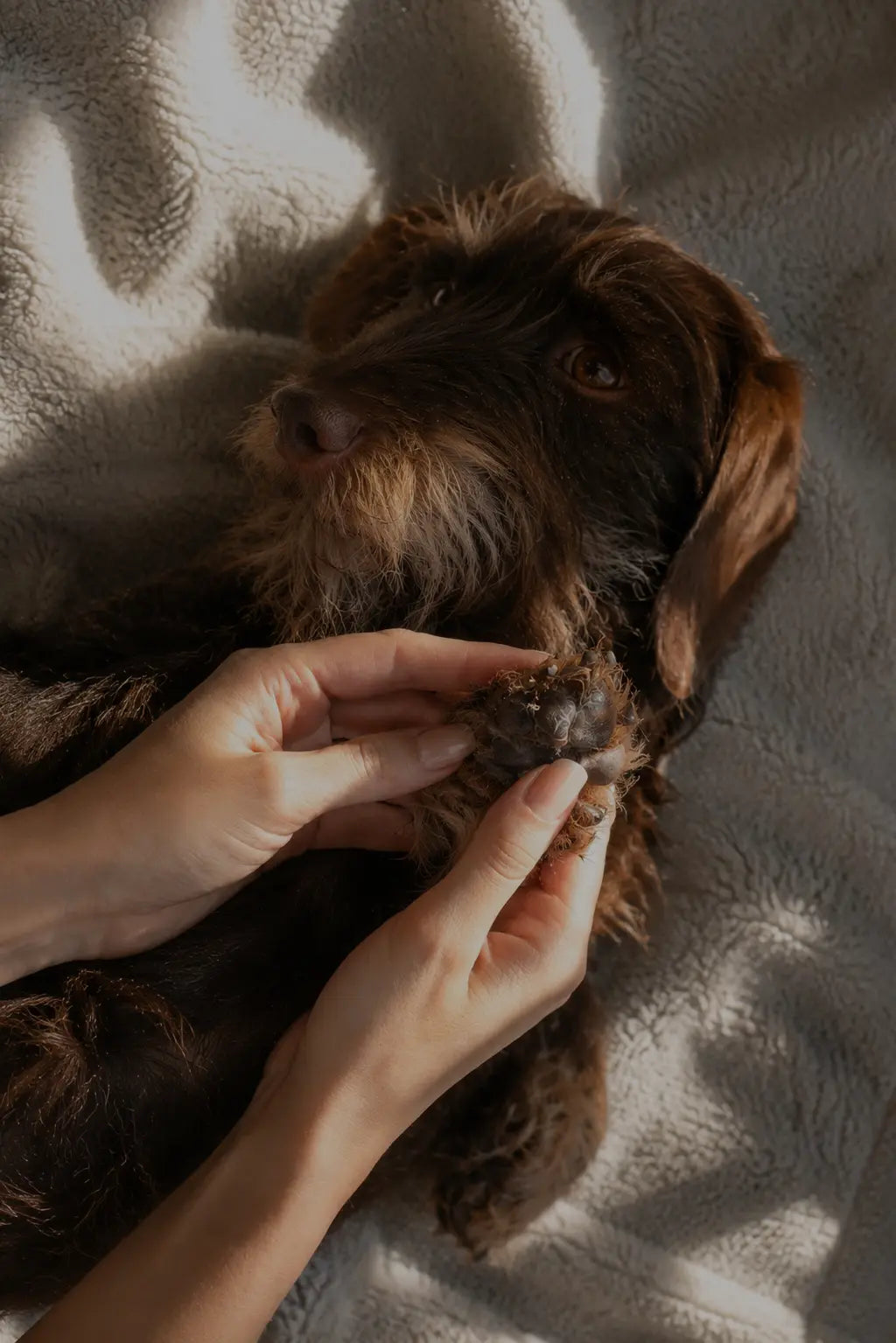
For face care, move slowly and work in small areas. During nail care, briefly touch a paw before attempting a trim. Choose a stable, non-slip surface so your dog doesn’t have to struggle to keep their balance. If your dog pulls away or stiffens, pause and give them space.
When a procedure may hurt, work slowly, take breaks between short sessions, and pair it with high-value treats. This approach can help with a tender tangle, a sensitive paw, or a dog who finds face handling difficult. A haircut doesn’t need to happen all at once if your dog is becoming overwhelmed. Short pauses let you assess whether they can comfortably continue.
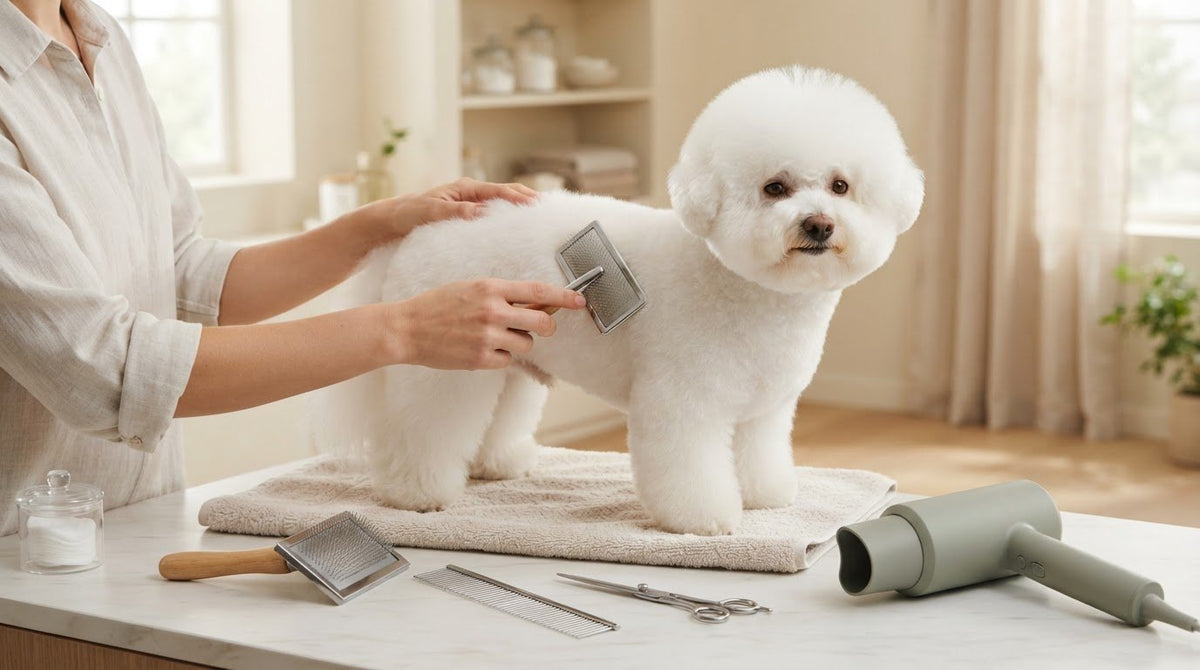
Brushing can also prepare a dog for hands-on grooming, but avoid pulling through knots. Hold the coat near the skin to reduce tugging, and use gentle strokes over an area your dog already accepts. If brushing causes flinching or repeated attempts to move away, stop rather than letting the brush become a source of fear.
Drying brings a different challenge: sound, airflow, and unfamiliar sensations. Keep the dryer away from your dog’s face, and introduce its sound gradually. Groomers have noted that dogs may be easier to handle when their ears are covered while dryers are on, according to Noise & Health. Watch your dog’s response and pause if they seem distressed.
Read your dog’s body language and movement. A relaxed stance during one step doesn’t mean every task feels comfortable. If your dog starts resisting during a nail trim, return to calm handling and take a brief break instead of pushing through. Respecting that limit can help your dog approach future sessions with more confidence.
Practicing touch and sound exposure at home
A familiar home environment gives your dog room to explore grooming sensations without the pressure of appointment day. Keep practice consistent and brief, and adapt it to your dog’s response.
Introducing Grooming Tools
Introducing grooming tools means letting your dog notice each object before it touches their body. This gradual start can make brushing, nail care, and dryer sounds feel less unfamiliar. Choose a quiet space with a non-slip mat, then place one tool nearby. Let your dog approach, sniff, or look away freely, and reward calm interest with praise or a treat.
On Days 1-2, try 30-60 seconds of calm brushing and gentle neck or collar touch. Keep the brush still at first, then make a few soft strokes across an area your dog enjoys. For a dryer, begin with a low-intensity sound for 5-10 seconds on Day 4, at a distance that allows your dog to remain relaxed.
Gradual Grooming Desensitization
Desensitization means introducing grooming sensations in small, manageable steps and progressing only while your dog stays comfortable. Brushing, paw handling, and bathing involve different sensations, so comfort with one doesn’t automatically mean comfort with another. Start by petting the chest, shoulders, and spine before moving toward more sensitive areas.
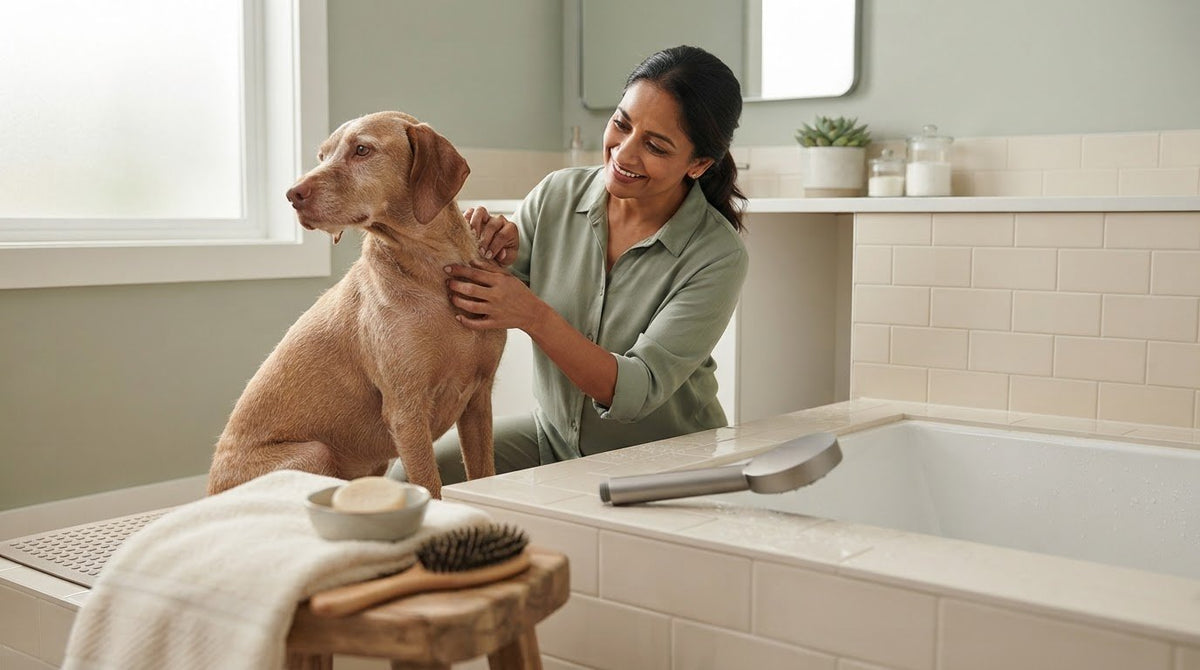
For paw practice, gently hold a paw briefly, release, and reward your dog. Keep brushing practice short and stop while your dog is still comfortable. To prepare for bathing, let your dog stand on a non-slip mat and explore the dry tub or bathing area before adding water.
Use 10 to 15 minutes each day for home grooming practice, but keep each handling exercise short. You can also practice one comfort exercise for 60 seconds, three times a week. The aim isn’t to complete a full groom during every practice period. A few calm brush strokes, a brief collar touch, or stepping onto the mat can be enough.
Recorded dryer or clipper sounds can help your dog become familiar with noise. Play them at very low volume, then increase the volume gradually over days or weeks while watching your dog’s response. If your dog moves away, freezes, or stops taking a reward, lower the sound or end the session. Don’t bring the recording closer to force exposure.
Keep notes on the tool, touch, or sound you practiced and how your dog responded. For example, record whether your dog accepted a brush near the shoulders but moved away when it approached the legs. This detail can help you choose the next small step, keep sessions consistent, and build a positive association at a comfortable pace.
Preparing a dog for a grooming appointment
A predictable routine can make the trip and appointment feel less unfamiliar. Your behavior matters too: dogs notice relaxed posture, quiet speech, and gentle movement.
Building Pre-Grooming Trust
Building pre-grooming trust means making care predictable and rewarding small moments of cooperation. Familiar steps can help grooming feel less like a surprise. Keep the same brush in an easy-to-reach spot, use the same gentle cue, and praise your dog for approaching it. A family member can help keep the routine consistent.
Before the appointment, brush your dog two or three times a week if their coat needs it. Regular brushing can remove dirt, debris, and loose fur, and may feel soothing for many dogs. Keep the experience gentle, and stop if your dog starts pulling away. Offer praise or a favorite toy after calm behavior, even if brushing lasts only briefly.
On appointment day, let your dog follow familiar parts of their routine, such as a quiet walk or settling on their usual mat. Speak slowly and move calmly while preparing the leash and carrier. Share specific information with the groomer, including which areas your dog accepts being touched and which sounds or handling positions worry them.
Grooming Comfort Timeline
There’s no fixed timeline for a dog to feel comfortable with grooming. Progress depends on your dog’s past experiences, the task, and how their behavior changes during practice. Look for observable steps, such as staying relaxed while the brush is nearby or allowing gentle contact with a paw. Those responses matter more than completing a full groom quickly.
Keep appointments and home practice low-pressure, with breaks when your dog shows discomfort. If a task feels difficult, make the next attempt easier rather than repeating the same challenge. For example, return to handling the shoulder before approaching a sensitive paw. When you explain what your dog accepts and where stress begins, the groomer can adapt the order of tasks.
Use a professional groomer when your dog needs a haircut, nail care, or other grooming tasks you can’t safely manage at home. For intense or persistent fear, or behavior that includes snapping or biting, seek help from a veterinary behaviorist. Share your dog’s triggers and previous responses so the professional can understand the situation and plan suitable handling.
Recognizing canine stress signals
Read your dog’s responses as a sequence, not as isolated moments. During grooming, notice whether they keep turning away, try to step off the table, or stop engaging with you. A single movement can have several causes, but repeated avoidance during the same task is a good reason to pause and reconsider your approach.
Notice what changes when the tool or task changes. For example, your dog may stay beside you while you brush their back, then repeatedly turn away when you move toward the face. That difference helps pinpoint the difficult part. Return to a familiar area or stop the task rather than assuming your dog is comfortable with the whole grooming process.
Look for patterns across the appointment. A dog might start out participating, then begin moving away after several grooming steps. That shift can signal that the current pace or sequence is becoming too much. Make the next step smaller, offer a pause, and see whether your dog chooses to re-engage before continuing.
Notice how your dog responds to choices. If they move away when you offer a brush, don’t follow them with it. Give them room, then offer the tool again without touching their coat. If they approach, let them investigate. Their willingness to return can help you decide whether to continue or end the session.
Different grooming settings can affect how a dog participates. A dog who accepts handling at home may hesitate on a raised table or in a busy salon. If the hustle of a commercial facility causes anxiety, mobile grooming options like Pawgo can provide focused, one-on-one care right outside your home. Compare the setting, task, and people present. This can help distinguish discomfort with a particular grooming step from difficulty with the surrounding environment.
Agree on a clear pause rule with anyone helping. For example, decide that repeated attempts to leave mean the current task stops. This keeps everyone’s response consistent and prevents one person from continuing while another tries to comfort the dog. A predictable response can help your dog learn that moving away will be respected.
Over time, learning your dog’s individual patterns can guide gentler grooming choices. Before the next session, decide what response means “pause,” and tell anyone handling your dog. If they keep avoiding the same task, change its timing or break it into smaller parts. The goal isn’t to interpret every movement perfectly, but to respond thoughtfully when your dog shows they need a change.
Essencera: Pure Wash
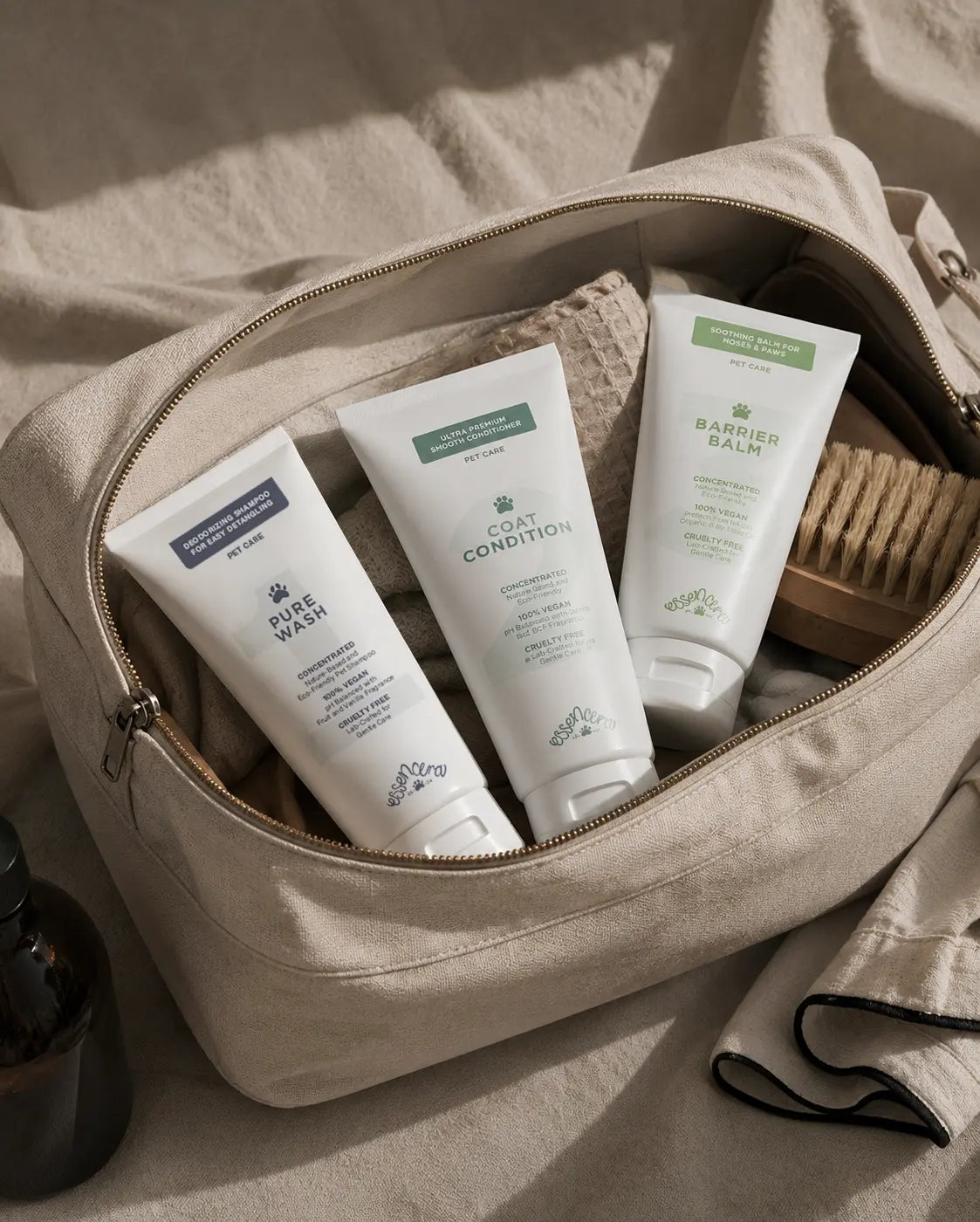
Pure Wash offers a gentle cleanse for dogs who need regular bathing, with a concentrated paste designed for all coat types. Its amino acid complex supports coat care, while hyaluronic acid helps hydrate without heaviness. A familiar bath routine can complement trust-building techniques, but it doesn’t replace patient handling or a pause when your dog feels uncomfortable.
After washing, Essencera’s Coat Condition is a premium conditioner designed to help smooth the coat for brushing during finishing. Barrier Balm provides care for rough paws or noses with a lightweight protective layer without a heavy or greasy finish. Choose care that suits your dog’s coat and routine, and keep each grooming experience calm and gradual.
Visit essencera.pet to explore grooming care for your dog.
Make the Next Grooming Moment a Little Easier
Choose one small change for your dog’s next grooming experience, such as a quieter approach or a familiar cue. Building trust with your dog during grooming comes from the choices you make together, not from rushing to finish every task. Let your dog’s response guide what feels manageable.
Explore Essencera’s thoughtful grooming care and choose products that suit your dog’s routine, from Coat Condition to Barrier Balm.
Explore Essencera’s grooming care, and keep making room for small, positive steps together.
Frequently Asked Questions
Can I stay during the groom?
Stay if your presence helps your dog remain settled and the groomer’s setup allows it. Watch your dog’s response: if they keep turning toward you, try to leave the grooming area with you, or become more restless, stepping out may help them focus. Agree on a plan before grooming starts, then follow the groomer’s directions around equipment and handling.
How Often Should Anxious Dogs Be Groomed?
Anxious dogs generally do well with appointments every 4-8 weeks, depending on coat type and lifestyle. Curly or long coats generally need grooming every 4-6 weeks to help prevent matting. Double coats generally need grooming and de-shedding every 6-8 weeks, while smooth or short coats can have a bath and tidy every 6-8 weeks to maintain nails, ears, and skin.
What if my dog gets stressed?
Pause the grooming task and reduce what your dog needs to manage in that moment. For example, if your dog becomes unsettled during a haircut, stop the current section and let them regain composure before deciding what to do next. Don’t insist on completing every task in one visit. Note what happened so the next appointment can start with a more manageable plan.
What if my dog has skin issues or pain?
Pause handling around a sore or irritated area and seek veterinary advice before grooming it further. Tell the groomer where your dog reacts and what you’ve noticed, such as flinching when a leg is lifted. Groomers check dogs from ear to paw and may be the first to notice a potential health issue. Share any grooming report with your veterinarian.
Why Is Bonding With Your Dog Important?
Bonding helps you learn how your dog communicates, making it easier to notice when a familiar touch or routine feels different. Shared activities can also build connection outside grooming. A walk gives you time together, while fetch or tug can offer opportunities to practice cues such as “drop it.” These positive interactions help make care part of a trusting relationship.
How can you tell if a dog is stressed or afraid during grooming?
Compare your dog’s posture with how they usually stand and move. Stiff movement, tense muscles, or a tight facial expression can signal discomfort. A relaxed or neutral posture, an unstrained face, and ears and tail in natural positions suggest a calmer response. Notice what changes as a task begins, such as your dog stiffening when you reach toward their ears.
What should you do if a dog growls, snaps, or panics during grooming?
Stop the grooming task, give your dog space, and avoid scolding or trying to hold them in place. A growl is a warning to change what’s happening, not a cue to push through. Punitive techniques and tools can increase fear and anxiety, and may contribute to aggressive behavior toward family members. Tell the groomer about the incident before another appointment.