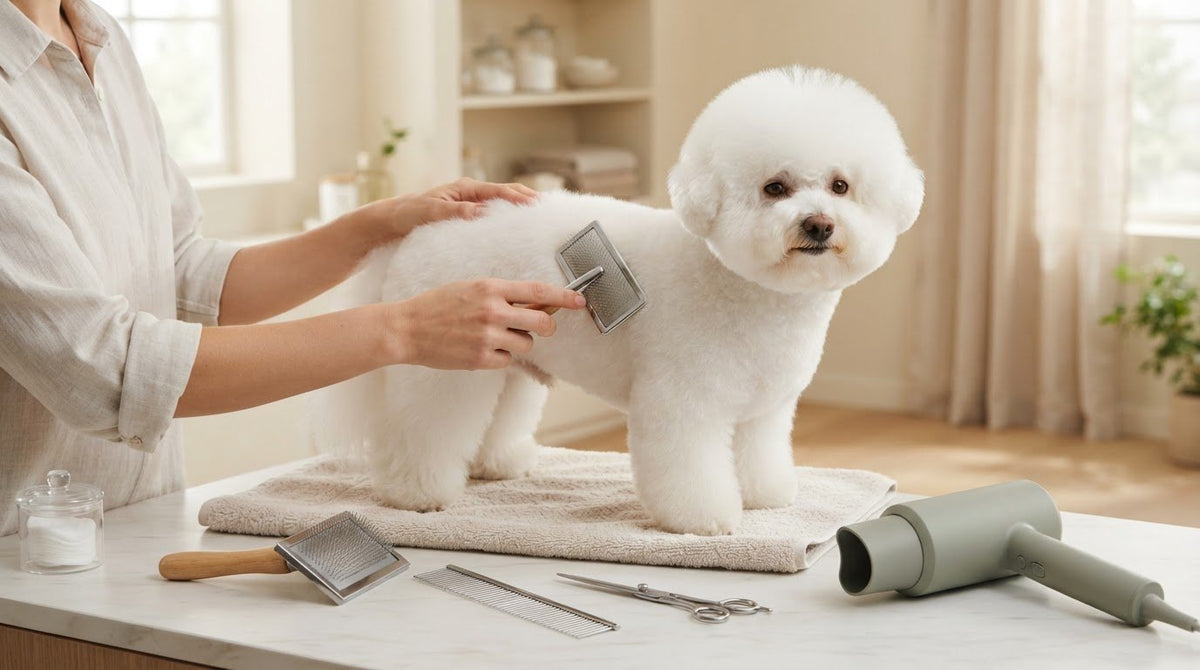
How to Make My Dog Look Like They Left the Groomer at Home
A salon-fresh look starts with a simple routine: brush your dog before the bath, wash when needed, then dry and brush the coat with care. If you're wondering how to make my dog look like they left the groomer, aim for a clean, fully dried coat without overbathing. A bath every 4-6 weeks works as a general guide, though your dog’s coat and lifestyle matter.
It’s understandable to want your dog to have that soft, fluffy, just-groomed finish at home, especially when tangles or a damp coat leave them looking less than their best. Careful bathing, thorough drying, and a tidy finish can make a noticeable difference without complicated techniques. Start by brushing out tangles, then cleanse and condition the coat, dry it fully, and finish with a careful comb-through. The aim is a neat, comfortable look that suits your dog’s coat.
Key Takeaways
- Match your brush and grooming routine to your dog’s coat type to help keep it smooth and manageable.
- Choose clipper guards and sharp blades carefully, and use thinning shears to soften visible clipper lines.
- For a fluffy finish, dry the coat on a low setting while keeping the dryer moving and away from your dog’s skin.
- Avoid trimming around the eyes, ears, paws, groin, or underarms without proper training.
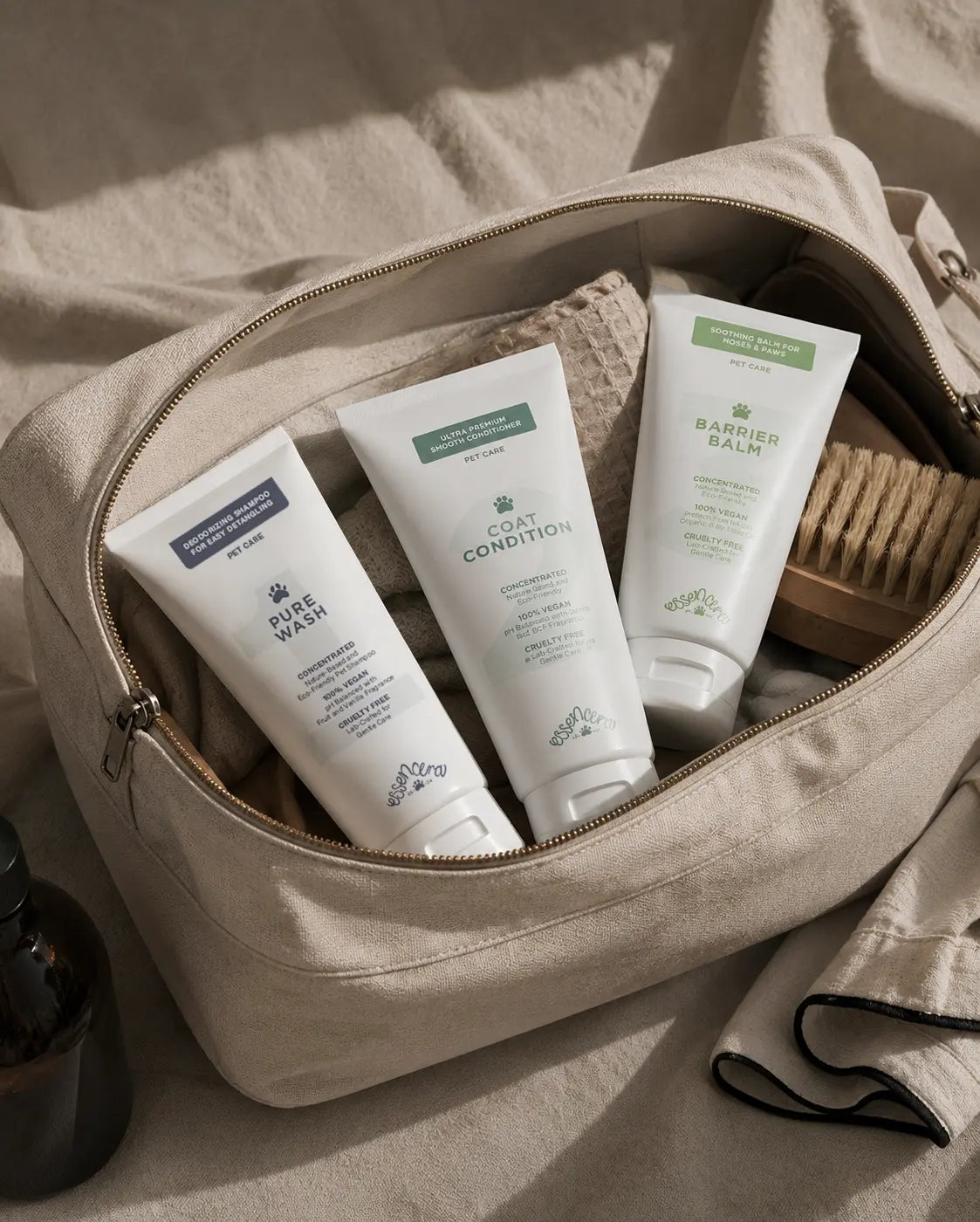
- Use Coat Condition after bathing to help the brush glide during drying, and apply Barrier Balm to dry paws or noses.
Bathing and drying
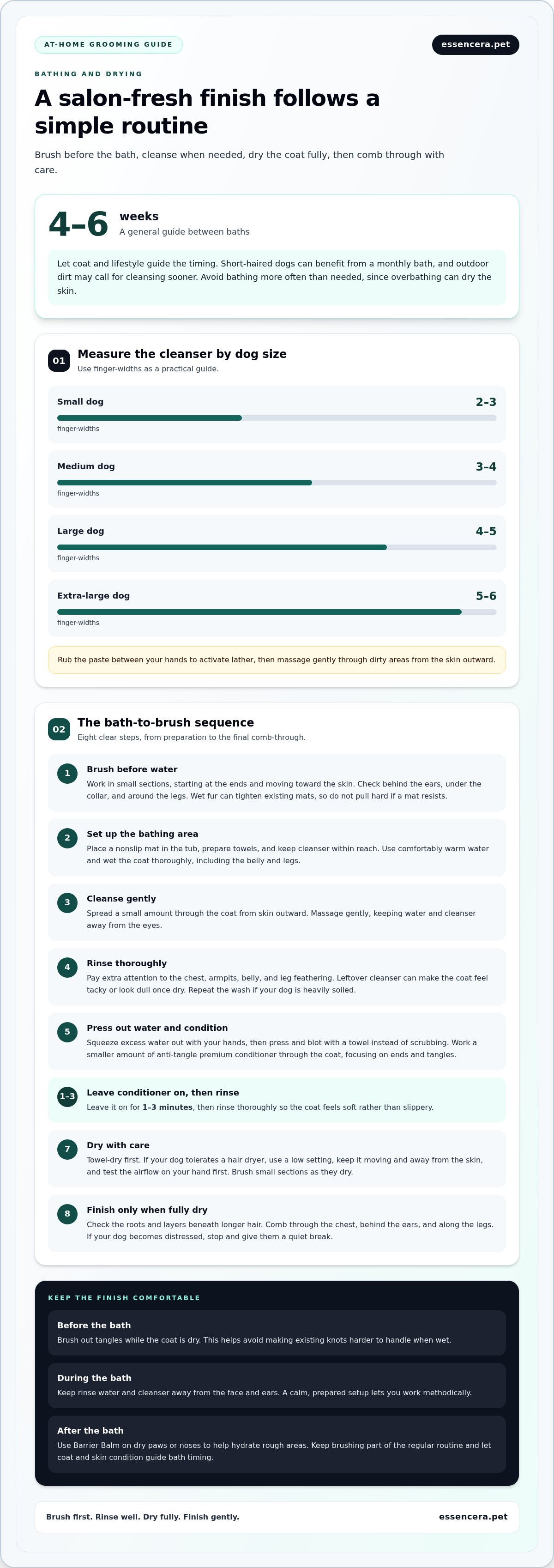
- Brush your dog before turning on the water. Wet fur can tighten existing mats, making them harder to loosen gently. Choose a brush suited to the coat and work in small sections, starting at the ends and moving toward the skin. Check behind the ears, under the collar, and around the legs, where knots often hide. If a mat resists, don’t pull hard on the skin.
- Choose the bath interval around your dog’s coat and routine. A general guide is every 4-6 weeks, while short-haired dogs can benefit from a monthly bath. Dogs who spend time outdoors may need cleansing sooner when dirt builds up. Avoid bathing more often than needed, since overbathing can dry the skin. A clean coat should feel comfortable, not stripped or itchy.
- Set up the bathing area before your dog gets wet. Put a nonslip mat in the tub, prepare towels, and keep the cleanser within reach. Use comfortably warm water and wet the coat thoroughly, including the belly and legs. Keep water and cleanser away from the eyes. A calm, prepared setup lets you work methodically instead of leaving your dog wet while you look for supplies.
- Apply a small amount of gentle dog shampoo and spread it through the coat from skin outward. Product amounts depend on size: use 2-3 finger-widths for a small dog, 3-4 for a medium dog, 4-5 for a large dog, and 5-6 for an extra-large dog. Rub the paste between your hands to activate lather, then massage gently through dirty areas.
- Rinse thoroughly, paying close attention to dense areas such as the chest, armpits, belly, and feathering on the legs. Leftover cleanser can leave the coat feeling tacky or looking dull once dry. If your dog is heavily soiled, repeat the wash if needed. Keep the rinse gentle, and avoid directing water into the face or ears.
- After washing, squeeze excess water from the coat with your hands before using a towel. Press and blot rather than scrubbing, which can encourage tangles in longer coats. If you use conditioner, work a smaller amount through the coat, focusing on ends and tangles. Leave it on for 1-3 minutes, then rinse thoroughly so the coat feels soft rather than slippery.
- Towel-dry first, then use a hair dryer on a low setting if your dog tolerates it. Keep the dryer moving and away from the skin to help prevent burns. Test the airflow on your hand before bringing it near your dog. As the coat dries, brush small sections and direct the airflow along each one rather than concentrating heat in a single spot.
- Finish only when the coat is fully dry, including the roots and the areas beneath longer hair. Damp undercoat can lie flat and conceal tangles, so part the fur to check the layers near the skin. Comb through the chest, behind the ears, and along the legs. If your dog becomes distressed, stop and give them a quiet break before continuing.
Make brushing the first step whenever you plan a bath, rather than trying to manage mats once the coat is wet. The order is simple: loosen tangles before introducing water, then bathe when needed. This helps you clean the coat without making existing knots more difficult to handle.
Let your dog’s coat and skin condition guide the timing between baths. Washing more often is not automatically better, and frequent bathing can leave a dog’s skin dry. Bathe only when needed, and keep brushing as part of the regular routine to maintain a comfortable, tidy coat.
Grooming tools and equipment
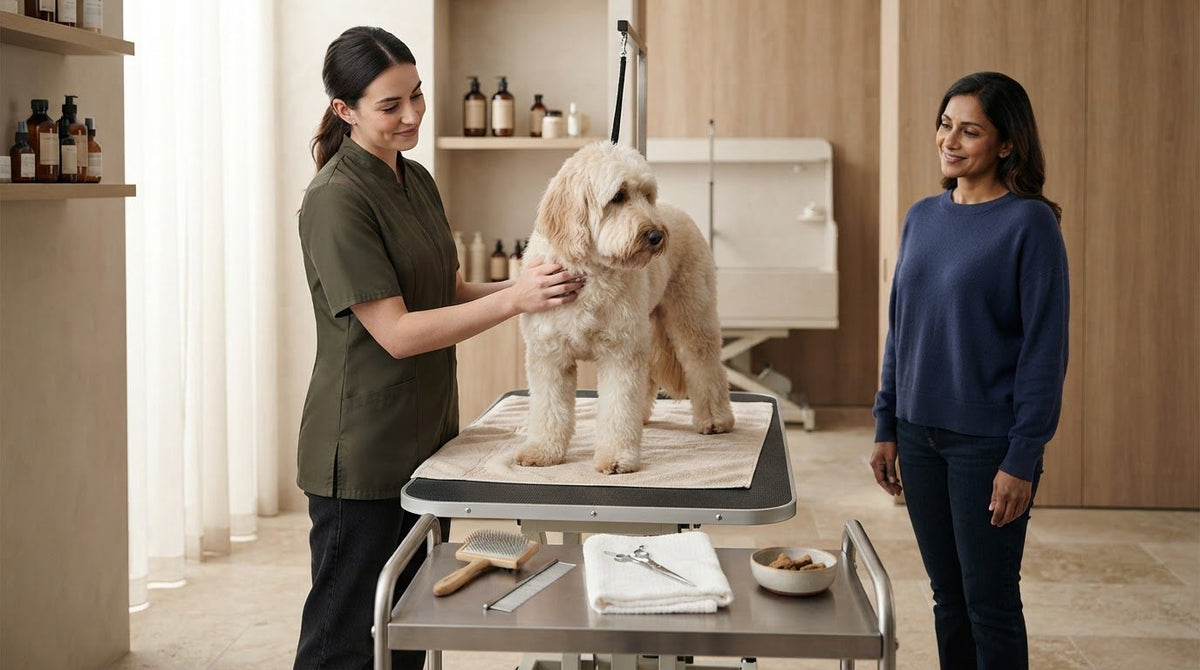
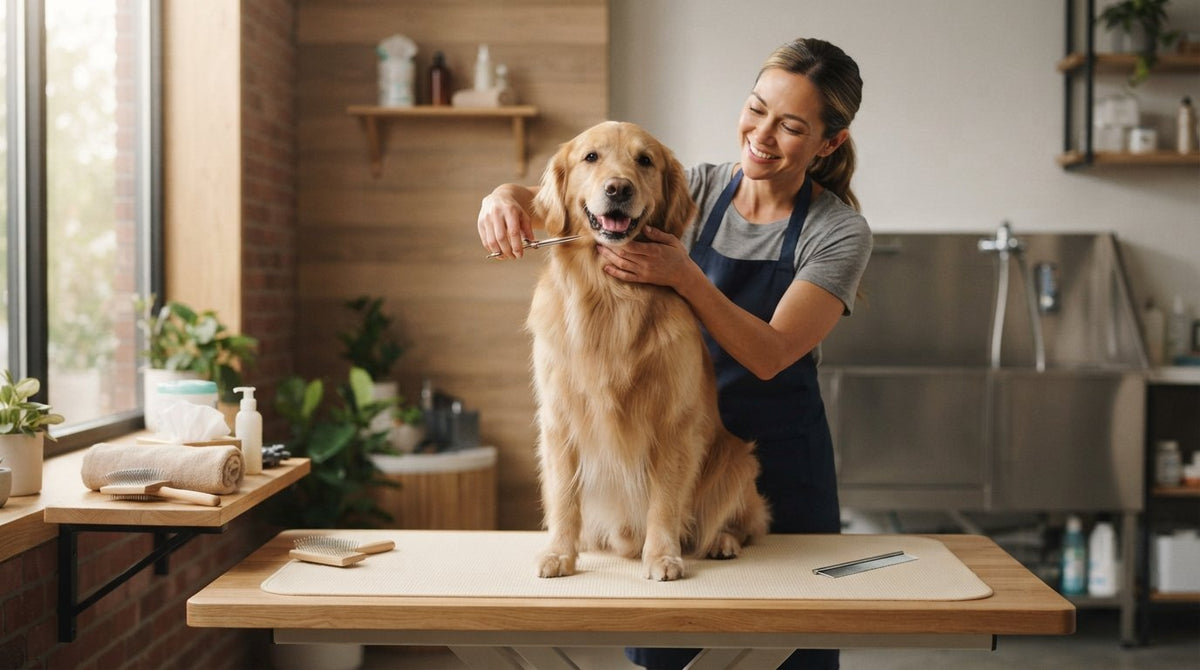
- Match each tool to the coat and task before you begin. A slicker brush can help separate loose hair, while a comb checks whether you’ve worked through the coat. Keep a towel nearby for loose fur and set tools on a stable surface. With a curly coat, work in small sections so you can see where the brush has passed.
- Choose clipper guards to suit your dog’s size and coat length. Shorter guard combs can suit smaller dogs, while longer combs can suit large Doodle dogs. The guard determines how much coat remains, so don’t choose one by appearance alone. Make sure it sits securely on the clipper before bringing the tool near your dog.
- Use a number four blade as one possible choice for an overall trim. A number 10 blade may suit delicate areas, but careful handling matters more than speed. Keep your dog still and your hand steady. If you’re uncertain about close clipping, leave that area alone rather than trying to correct an uneven patch.
- Check blade condition before each trim. Sharp clipper blades help create a faster, smoother cut, while dull blades can snag coat and leave an uneven finish. Inspect the cutting edge and remove loose hair before use. If the blade pulls at the coat or stops moving smoothly, pause instead of pressing harder.
- Select a clipper with enough power, speed, and torque for your dog’s coat density. Thick hair can slow an underpowered clipper, making it tempting to go over the same area repeatedly. Work in controlled passes and let the tool move smoothly. If the coat resists, stop and brush out the section before trying again.
- Keep the clipper’s path consistent for a more even result. A #7F blade used in reverse can cut too short on the coat described in the grooming guidance. A #4F blade in reverse may create the desired length and smoother finish. Reverse clipping cuts closer than clipping with the grain, so choose a blade two lengths longer.
- Fine-detail thinning shears can soften visible clipper lines by removing only the high points and blending a ridge. Back-comb the coat to reveal uneven spots, then trim only the areas that stand out. Make small cuts and reassess the shape before another pass.
- Check the finished coat from different angles with a comb. Run it through the trimmed area to find snags, missed patches, or differences in length. For example, inspect the sides of the body in natural light before moving to the legs. A comb can reveal small inconsistencies that disappear when the fur lies flat.
- Set tools down between sections and keep blades pointed away from your dog. Place scissors and clippers where they can’t slide off the grooming surface. Before trimming, confirm the guard is secure and the coat is free of tangles. A careful setup supports controlled handling and helps prevent rushed, uneven clipper work.
Using a clipper with enough power, speed, and torque helps it move smoothly through a thick coat. Let that match guide your choice: the goal is steady movement through the coat, rather than trying to make an unsuitable tool work by applying more pressure. If movement becomes difficult, pause and reassess the clipper’s suitability before resuming. Keep each pass deliberate, and avoid treating extra force as a replacement for the power, speed, and torque needed for the coat.
Let your dog’s coat, not the clipper’s appearance, guide your choice of tool. The goal is a smooth, controlled path. If you can’t maintain one, stop rather than pushing through the same section. Reconsider the equipment, and continue only when the clipper moves smoothly. Matching the tool to coat density helps you work with the coat instead of forcing the clipper through resistance.
How to groom different dog coat types at home
- Identify your dog’s coat before setting a brushing routine. Brush short, smooth, and wiry coats once a week. Long, silky, or curly coats need daily brushing. Double coats need regular brushing and gentle weekly de-shedding. These routines help manage loose hair and catch tangles before they tighten.
- Brush a short, smooth coat in the direction the hair lies. Use steady strokes across the back, sides, chest, and legs, then check for loose hair around the collar and tail. A wiry coat also benefits from weekly brushing. Pay extra attention to friction-prone areas, such as behind the elbows and beneath a harness.
- Work through a long, silky coat in small sections each day. Start at the ends and move toward the skin, checking that the comb passes through without catching. Pay close attention to the ears, armpits, belly, and leg furnishings. Long-haired dogs generally need a full professional or at-home grooming, including a bath and haircut, every four to eight weeks.
- Divide a curly coat into manageable sections before brushing. For a pet trim, shape the front legs into cylinders rather than cutting them close and flat. A rounded outline helps the legs look balanced beside a fuller body. Around cowlicks, follow the direction of coat growth where possible, since cutting across the lay can leave visible track lines.
- Care for a double coat with gentle, regular brushing and weekly de-shedding. Work through the outer coat without pressing hard against the skin, then check dense areas for loose undercoat. Heavy shedding is not a reason to shave the coat. Its natural structure affects how it looks, so focus on removing loose hair and keeping it orderly.
- Keep the chest length balanced with the legs. When shaping a haircut, trim the chest to the elbow to avoid a short-legged, frumpy outline. Tidy the feet with bevels so the coat doesn’t drag on the floor. Check each paw while your dog stands naturally, and remove only the coat that extends beyond a neat foot shape.
- Shape the face conservatively around the eyes and ears. Trimming hair at the outer sides of the eyes can open up the expression while leaving the lashes. Keep the front ear hair for a softer look, or work with the grain using thinning shears if you’re comfortable handling them. Don’t cut close to the eyes or ear leather without training.
- For drop-coated dogs such as Shih Tzus, Lhasas, and Malteses, brush the ear furnishings regularly to prevent tangles. A short, layered ear style can make care easier, keep hair out of food and water dishes, and reduce matting. This style may also suit dogs with straight, wavy, or curly coats when their ears fall close beside the jowls.
- Check the finished shape from the front and back. Look for straight lines from the shoulders and hips toward the floor, tidy feet, and an even outline. Rear angulation can make a dog appear shorter and help balance the body. For a final coat check, brush along the natural lay and look for tangles beneath the surface.
What are the risks of using clippers or scissors on a dog at home?
- Set a clear boundary before trimming: don’t cut hair around the eyes, ears, paws, groin, or underarms without training. These spots have delicate skin and contours that can be difficult to see beneath the fur. A small movement can shift the skin toward a blade or scissor tip. Leave these areas to a trained groomer rather than attempting a close DIY trim.
- Skip the haircut if your dog can’t stay comfortably still. A head turn while scissors are near the eyes, or a paw jerk during a foot trim, can turn a careful movement into a cut. Use a quiet room and a stable, nonslip surface. If your dog pulls away, pants heavily, or struggles, put the tools down and give them a break.
- Don’t pull a mat tight to cut through it. Skin can lift into the knot, making it hard to tell where fur ends and skin begins. Scissors slipped beneath a mat can cut the skin along with the hair. Gently brush out loose tangles before trimming. Leave tight mats to a trained professional rather than forcing them apart.
- Move clipper blades at a steady pace, and don’t press harder when the coat resists. Repeated passes over one small spot can create an uneven patch and increase discomfort. If the clipper snags, stop and check for a tangle or an unsecured guard. Never use a blade or comb attachment that shifts while you work.
- Protect skin folds and loose areas before using a clipper. The armpit, groin, and folds around the neck can bunch beneath the coat, so a surface that looks flat may not be. Don’t stretch or tug the skin to get a closer cut. Without hands-on training, leave these areas untrimmed and focus on brushing accessible parts of the coat.
- Hold scissors with the tips directed away from your dog’s body. When tidying longer hair, keep your fingers between the blades and the skin, and make small cuts instead of one deep snip. Don’t cut close to the eyes, ear leather, paws, or underarms. If your dog shifts, close the scissors and wait until they settle.
- Use a guard comb only when it fits securely and suits the coat length. A loose guard can expose more blade than expected, while an unsuitable comb may pull rather than glide. Test the clipper on a broad, easy-to-reach area first. If the tool catches or your dog reacts, stop and reassess the coat and equipment before continuing.
- If you’re new to home clipping, choose a modest tidy-up instead of attempting a full-body haircut. Leave sensitive areas and complex shaping alone, especially around the face, feet, and sanitary areas. Grooming styles take practiced control to keep lines balanced. If you’re unsure how to use clippers or scissors safely, skip the trim and arrange professional grooming.
- Make nail trimming a separate, gradual routine rather than adding it to a rushed haircut. Start by touching a paw or pretending to trim one nail, then offer praise and a treat. As your dog becomes comfortable, build toward one nail per day. This gives you time to learn the tool and your dog’s response without forcing a long session.
Essencera: Pure Wash
Pure Wash is a gentle cleansing step for dogs of all coat types, including those that need frequent baths. Its concentrated paste uses coconut-derived cleansers, hyaluronic acid, and amino acids to clean while supporting a soft, hydrated-feeling coat. Use it as directed, then rinse thoroughly before drying and brushing.
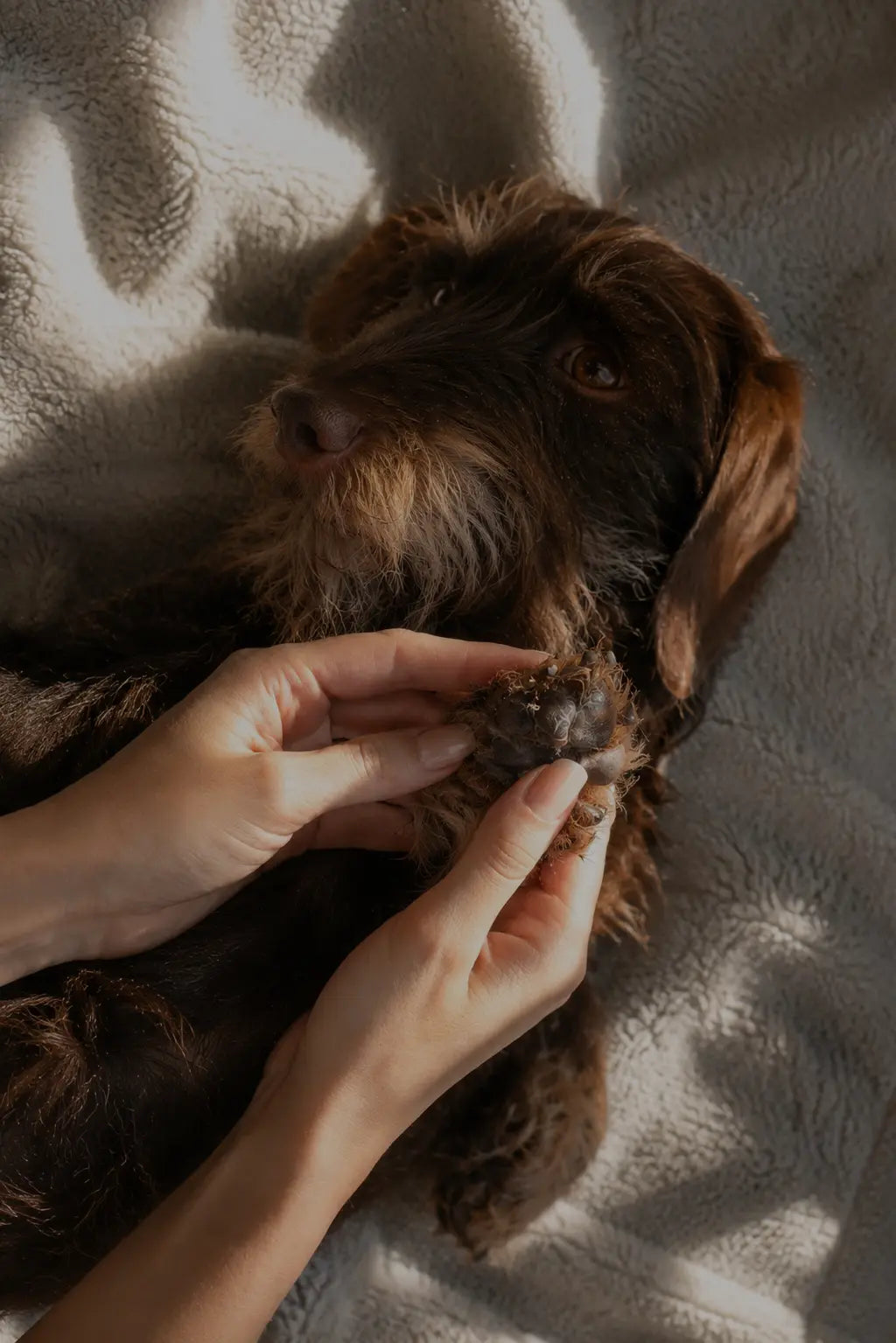
For a smoother brush-out, follow the bath with Coat Condition, Essencera’s anti-tangle premium conditioner. If your dog’s paws or nose feel rough after grooming, Barrier Balm helps hydrate those areas with a lightweight protective layer without a heavy or greasy finish. These products complement home care, but they don’t replace careful brushing or skilled clipping.
Explore Pure Wash dog shampoo and visit Essencera to find a gentle fit for your grooming routine.
Make Home Grooming a Comfortable Routine
A polished finish matters, but your dog’s comfort should guide each grooming choice. Keep sessions calm and manageable, and treat brushing, bathing, and coat care as small acts of connection. As you refine how to make your dog look like they left the groomer at home, focus on a routine that suits your dog, not a perfect salon-style result. If clipping feels uncertain, choosing not to trim is a thoughtful part of caring for your companion.
Essencera offers Pure Wash, Coat Condition, and Barrier Balm for at-home coat and skin care. Explore the products or contact Essencera for help choosing a fit for your grooming routine. Take it one gentle step at a time, and enjoy the extra closeness that comes with caring for your dog.
Frequently Asked Questions
How can I groom my dog at home to look professionally groomed?
If you’re wondering how to make your dog look like they left the groomer, aim for a neat, comfortable finish rather than a complex haircut. Before a family photo, for example, brush the coat and check its outline in natural light. Keep the style simple and your dog relaxed. Tight mats and precise breed-specific shaping are best left to a trained groomer.
What tools and products do I need for a professional-looking dog groom at home?
Start with a brush and comb suited to your dog’s coat, absorbent towels, and a dryer your dog can tolerate. For cleansing, Pure Wash Shampoo is a concentrated option for dogs of all coat types. Add clippers only for areas you’re confident trimming, and keep scissors away from sensitive spots. Clean and dry your grooming tools after each session.
How do I bathe, dry, and brush my dog for a salon-fresh look?
Learning how to make your dog look like they left the groomer starts with helping them feel comfortable at each step. Let your dog investigate the brush, then introduce the dryer’s sound from a comfortable distance. Offer a treat during calm moments and pause if they seem unsettled. After bathing, gently part the coat beneath the collar and along the legs to check for damp spots.