

That constant slurp, slurp, slurp sound can be more than just distracting-it can be a source of deep concern for any loving pet owner. When you notice your dog's persistent feet licking, and see their paws becoming red and sore, your heart naturally goes out to them. You're left wondering: is this just a quirky habit, or a sign that they're in pain or discomfort? It's a worry that many of us who consider our pets family know all too well.
We understand, and we're here to offer gentle guidance and peace of mind. This guide was created to help you understand the root causes behind this common behavior. We will walk you through everything from simple allergies and irritants to underlying health triggers. Most importantly, we'll share kind, effective, and natural solutions to soothe their paws and bring them lasting relief. Let's turn that concern into confident care and help your best friend get back on four happy, healthy feet.
Key Takeaways
- Understand the key differences between physical and behavioral causes of feet licking to provide the right kind of support.
- Learn simple, at-home care techniques to gently soothe your dog's irritated paws and provide immediate comfort.
- Gain peace of mind by learning to spot the clear signs that indicate a visit to the vet is needed for your dog's well-being.
- Create a simple and loving paw care routine to help prevent future irritation and keep your dog's feet healthy and strong.
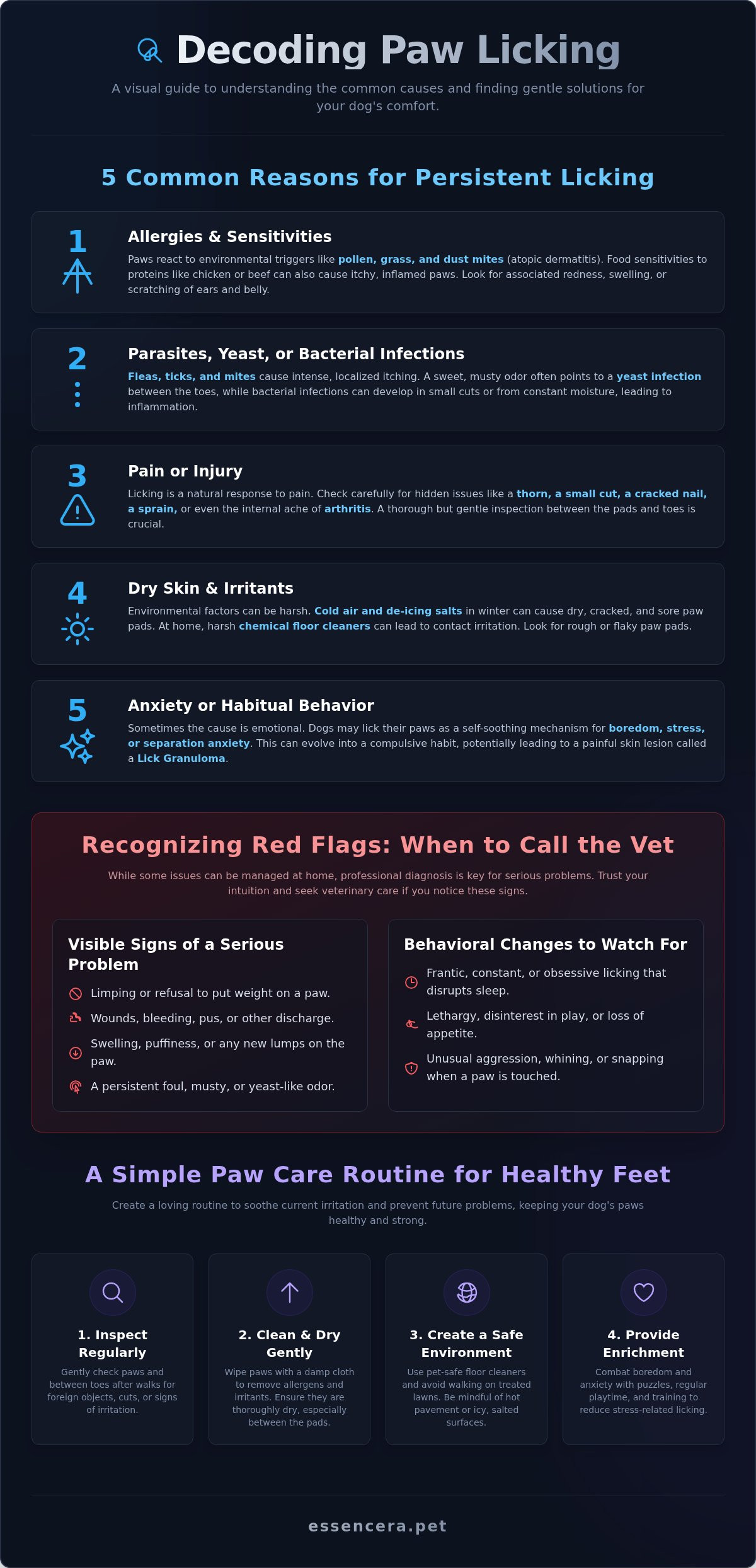
Decoding the Lick: 5 Common Reasons Your Dog Licks Their Paws
As devoted pet parents, we notice every little habit our companions have. While occasional paw grooming is perfectly normal, persistent licking is your dog's way of communicating that something isn't quite right. This behavior can signal anything from a minor irritation to a deeper medical concern. Understanding the "why" behind their constant feet licking is the first gentle step toward providing them with the comfort and care they deserve. Let's explore the most common reasons, both medical and behavioral, for this common canine habit.
1. Allergies and Sensitivities
Just like us, our dogs can suffer from allergies. Their paws are constantly in contact with environmental triggers like pollen, grass, and dust mites, which can cause an itchy reaction known as atopic dermatitis. Food sensitivities, often to common proteins like chicken or beef, can also manifest as itchy, inflamed paws. If you notice redness and swelling, or if your dog is also scratching their ears or belly, allergies could be the culprit.
2. Parasites, Yeast, or Bacterial Infections
Unseen pests can cause significant discomfort. Fleas, ticks, and mites can create an intense, localized itch that your dog tries to soothe by licking. Sometimes, the problem is microscopic. A distinct sweet or musty odor often points to a yeast infection thriving in the warm, damp spaces between their toes. Similarly, bacterial infections can take hold in small cuts or from constant moisture, leading to inflammation and obsessive licking.
3. Pain or Injury
Often, licking is a direct response to pain. Your dog may be trying to soothe an unseen wound, like a thorn, a small cut from a sharp rock, or a cracked nail. The discomfort could also be internal, such as a sprain or the ache of arthritis in their joints. It’s always wise to gently and carefully inspect their paws, including between the pads and toes, for any foreign objects or signs of injury.
4. Dry Skin and Irritants
The world can be harsh on a dog's paws. In winter, cold air and de-icing salts can strip moisture from their delicate paw pads, leaving them dry, cracked, and sore. Back at home, harsh chemical cleaners used on your floors can also cause contact irritation. If their pads feel rough to the touch or appear flaky, environmental irritants may be the simple reason for their discomfort.
5. Anxiety or Habitual Behavior
Sometimes, the root cause of feet licking is not physical but emotional. Dogs may lick their paws as a self-soothing mechanism to cope with boredom, stress, or separation anxiety. What starts as a coping tool can become a compulsive habit. If this behavior is left unchecked, it can sometimes lead to a painful skin lesion known as a Lick granuloma, which requires kind and patient intervention to heal.
When to Call the Vet: Recognizing Red Flags
As a loving pet parent, you know your dog's habits better than anyone. While occasional grooming is perfectly normal, persistent licking can sometimes be a quiet call for help. Some issues can be managed at home with gentle care, but others require a veterinarian's expertise to prevent them from becoming more serious. A vet is the only one who can perform the right tests to accurately diagnose the many potential medical causes for paw licking, giving you true peace of mind. Don't hesitate to seek professional advice if you notice any of the following signs.
Early intervention is an act of love, ensuring a small discomfort doesn't turn into a bigger problem. Trust your intuition-if something feels wrong, it’s always best to check.
Visible Signs of a Serious Problem
Take a moment to gently inspect your dog's paws. Your loving eyes can spot issues that need immediate attention. Look for clear physical symptoms that point to pain or infection, such as:
- Limping or Hesitation: Your dog may refuse to put weight on the affected paw or seem reluctant to walk or play.
- Wounds or Discharge: Any signs of bleeding, open sores (often called hot spots), pus, or clear discharge are red flags.
- Swelling or Lumps: The paw, toes, or nail beds may appear puffy, swollen, or have a noticeable lump that wasn't there before.
- A Persistent Odor: A strong, foul, or yeast-like smell coming from the paw often indicates a bacterial or fungal infection.
Behavioral Changes to Watch For
Sometimes, the most telling signs are in your dog's spirit and behavior. A change in their daily routine or temperament can signal that their discomfort is growing. Be mindful of shifts in their mood, including:
- Obsessive Licking: The licking is no longer casual but has become frantic or constant. This obsessive feet licking may keep them (and you) from sleeping.
- Lethargy or Appetite Loss: Your dog may seem unusually tired, uninterested in their favorite activities, or refuse to eat.
- Pain-Related Aggression: They may whine, growl, or snap when you gently try to touch or examine the paw they have been licking.
Gentle At-Home Care for Soothing Irritated Paws
When you notice your dog’s persistent paw licking, providing immediate, gentle care at home can make all the difference for minor irritations. The goal is to create a simple, soothing routine that cleanses, moisturizes, and protects their delicate paw pads. Always choose pure, pet-safe products to avoid causing more discomfort. It’s also important to remember that a calm, reassuring environment can help reduce stress-related licking, turning a moment of care into a bonding experience.
Follow these simple steps to bring your companion relief and show them a little extra love.
Step 1: Gently Clean the Paws
Start by washing away potential irritants like pollen, dirt, or grass. Use lukewarm water and a mild, organic dog shampoo to gently cleanse their paws. For a truly soothing experience, consider a product like Essencera's Calm Wash, which is formulated with pure, plant-based ingredients to calm sensitive skin. After washing, carefully pat the paws completely dry with a soft towel, paying special attention to the areas between their toes where moisture can get trapped.
Step 2: Moisturize and Protect
After cleaning, applying a natural, lick-safe paw balm is essential. This step not only hydrates dry, cracked paw pads but also creates a gentle barrier against rough surfaces and environmental allergens. Apply a thin, even layer to each pad. Our Barrier Balm is specifically designed with organic ingredients to heal and protect, giving you peace of mind that you're using only the good stuff.
Step 3: Discourage Licking
While the balm works its magic, it’s helpful to redirect your dog’s attention. Offer them a favorite chew or a puzzle toy to keep their mind occupied. Because constant feet licking can be a self-soothing habit, it's crucial to approach this with kindness. As experts from The Kennel Club note, there are many behavioral reasons for licking tied to stress or anxiety. Never scold your dog for this behavior; it's a symptom, not a choice. If the licking persists, a soft cone or a comfortable dog bootie can be used temporarily to allow the paws to heal.
Preventive Paw Care: A Routine for Healthy Feet
The kindest way to address paw problems is to prevent them before they start. While it's important to understand the causes of irritation, proactive care is the foundation for your dog's comfort and well-being. A simple, loving routine can keep their paws strong, healthy, and free from the discomfort that often leads to excessive licking.
By integrating regular inspections, gentle grooming, and thoughtful environmental management into your schedule, you can protect the delicate pads that carry your best friend through every adventure. Healthy paws are the foundation for a happy, active dog, and these small acts of care make all the difference.
Regular Paw Inspections
Making a quick paw check part of your daily routine, especially after walks, is one of the most effective preventive habits. This simple moment of connection allows you to catch minor issues before they become serious problems.
- Look and Feel: Gently spread their toes and check the pads for cuts, cracks, thorns, splinters, or any signs of redness and swelling.
- Nail Health: Keep their nails trimmed to a comfortable length. Overly long nails can affect their posture and gait, causing joint pain and making paws more prone to injury.
Consistent, Gentle Grooming
Grooming is an act of love, and a consistent routine helps remove potential irritants that can trigger obsessive feet licking. Wiping your dog’s paws with a soft, damp cloth after every walk is a wonderful way to remove environmental allergens like pollen, dust, and grass.
For a deeper clean, always choose a gentle, moisturizing shampoo free from harsh chemicals. A great option for routine cleaning is our organic Pure Wash shampoo, which uses pure, plant-based ingredients to soothe and protect delicate skin without stripping natural oils.
Managing Your Dog's Environment
Your dog’s surroundings play a huge role in their paw health. Being mindful of the surfaces they walk on and the products you use at home can significantly reduce irritation and the urge for feet licking.
- At Home: Opt for pet-safe, non-toxic floor cleaners. Harsh chemicals can be a major source of contact dermatitis.
- Outdoors: Avoid lawns recently treated with pesticides or fertilizers. In winter, always rinse their paws with lukewarm water after walking on salted or icy surfaces to prevent chemical burns and dryness.
- From Within: Ensure your dog’s diet is rich in omega-3 and omega-6 fatty acids, which are essential for promoting strong, healthy skin from the inside out.
Behavioral Licking: Is It Anxiety or Boredom?
Sometimes, the reasons behind your dog’s constant paw licking aren’t found on their skin, but in their heart and mind. After you and your veterinarian have carefully ruled out any physical causes like allergies or injuries, it’s time to consider their emotional well-being. For some dogs, licking is a self-soothing mechanism, much like how a child might suck their thumb for comfort. This is often called psychogenic licking.
This behavior is a signal that your dog may be feeling overwhelmed, anxious, or understimulated. Addressing this type of feet licking requires a different kind of care-one focused on patience, understanding, and gentle adjustments to their daily life. Before assuming the cause is behavioral, it is essential to have a thorough veterinary exam to ensure no underlying medical condition has been missed.
Common Triggers for Behavioral Licking
Understanding what might be causing your dog's stress is the first step toward helping them feel more secure. These triggers often stem from an unmet need for comfort or engagement:
- Boredom: A lack of physical exercise and mental stimulation can leave a dog searching for ways to occupy themselves, and licking can become a go-to activity.
- Anxiety: Separation from you, loud noises like thunderstorms, or even small changes in their daily routine can trigger anxious licking as a coping strategy.
- Compulsive Habit: What starts as a response to a trigger can sometimes develop into a compulsive habit that persists even after the initial stressor is gone.
How to Gently Address Anxiety and Boredom
Creating a soothing and enriching environment can bring your dog immense peace of mind. The goal is to replace the need to lick with positive, calming experiences:
- Increase Daily Activity: Add an extra walk, a game of fetch, or a trip to the park to their day. A tired dog is often a more relaxed and contented dog.
- Provide Mental Enrichment: Puzzle toys, snuffle mats, and simple training games give their mind a gentle workout, preventing boredom and building confidence.
- Create a Safe Space: Ensure your dog has a quiet, cozy den or bed where they can retreat and feel completely safe and undisturbed.
- Seek Professional Guidance: If the licking is compulsive, a certified dog trainer or veterinary behaviorist can provide kind, effective strategies tailored to your dog’s needs.
Nurturing your dog’s emotional health is a beautiful expression of love. By providing comfort, engagement, and a stable routine, you help them feel safe and understood. Creating moments of gentle care is at the heart of what we do. Discover our pure, plant-based grooming essentials at essencera.pet.
Your Path to Happier Paws and Peaceful Days
Understanding the root cause of your dog's feet licking is the first step toward providing them with gentle, effective relief. As we've explored, this common behavior can stem from anything from environmental allergies and minor irritants to feelings of anxiety. By paying close attention to your furry friend's habits and knowing when professional advice is needed, you can address the issue with confidence and care. A proactive routine built on soothing, natural ingredients is one of the kindest ways to prevent discomfort before it begins, turning paw care into a loving moment of connection.
For those moments when their paws need extra love, we're here to help. Our Dermatologist Inspired. Pet Approved. formulas are thoughtfully crafted with Organic & Clean Ingredients to soothe and protect. We believe in care that is kind to your pet and the planet, which is why our products are always Vegan, Cruelty-Free, and Eco-Conscious. Explore our gentle, organic solutions for happy paws.
Here's to many more comfortable walks and happy, healthy steps together.
Frequently Asked Questions About Paw Licking
Can my dog's food cause them to lick their feet?
Yes, absolutely. Food sensitivities are a very common reason for itchy paws. Ingredients like chicken, beef, dairy, or wheat can trigger an allergic reaction that manifests as skin inflammation, leading your dog to lick for relief. If you suspect a food-related issue, it's a kind and gentle step to speak with your vet. They can help you explore a special diet to identify the cause and bring your companion comfort.
Is it normal for a dog to lick their paws, or is it always a problem?
A small amount of paw licking is a perfectly normal part of a dog's self-grooming routine, especially after a walk. However, when the licking becomes constant, intense, or causes redness, sores, or hair loss, it signals a deeper issue. This shift from gentle cleaning to obsessive behavior is a key indicator that your beloved pet needs a little extra help to feel comfortable and happy in their own skin.
How can I stop my dog from licking off paw balm after I apply it?
The kindest way to prevent this is through gentle distraction. Try applying the soothing balm just before feeding time, a favorite walk, or a fun play session. This gives the natural ingredients time to absorb while their mind is happily occupied. A few minutes of distraction is often all it takes to allow the balm to work its magic, turning a moment of care into a positive experience for you both.
Are certain dog breeds more prone to paw licking and skin issues?
Some breeds are indeed more susceptible to the allergies and skin sensitivities that cause paw licking. Breeds like West Highland White Terriers, French Bulldogs, Golden Retrievers, and Boxers often have a genetic predisposition to atopic dermatitis. Providing these dogs with gentle, supportive skin care from the start is a wonderful way to help manage their comfort and well-being, giving them the happy paws they deserve.
What harmful ingredients should I avoid in dog paw care products?
For your peace of mind, always choose products free from harsh chemicals. Look for and avoid ingredients like parabens, phthalates, artificial dyes, and synthetic fragrances, as these can worsen irritation. It's also wise to steer clear of products with zinc oxide, which can be toxic if ingested during obsessive feet licking. Opting for pure, plant-based formulas ensures you are providing the safest, most gentle care possible for your pet.
Could my dog be licking their paws simply to groom themselves?
Yes, gentle grooming is a natural and healthy behavior. You may notice your dog briefly cleaning their paws after coming inside, much like we wash our hands. This type of licking is usually quick and purposeful. The concern arises when the licking is prolonged, frantic, or seems to be a response to discomfort. Paying loving attention to the frequency and intensity will help you know the difference between simple hygiene and a call for help.


